Archive for the ‘Reviews’ Category

Criminal Records – 12th June 2026

Christopher Nosnibor

It’s a pretty bold move to open an album with a slow-paced and pretty bleak-sounding song which is more about dolorous atmosphere than chorus or hook. But then, Argonaut’s latest offering is pretty bold – albeit in an understated sort of a way. That likely sounds oxymoronic, so let me unpack it a bit.

After something of a purple patch, with the prolific spate of post-lockdown output which, over the course of a year and a bit and a new song each month saw the development of open-ended album Songs from the Black Hat (which ended up with a total of twenty tracks, with the inclusion of a couple of remixes), Argonaut were forced to make a change of pace. Life has a way of doing that – and events also resulted in a change of focus. The result is Interrupted – an album two years in the making, and by far the darkest and most introspective set of songs they’ve released. It’s not that the London DIY trio have always skirted darkness or introspection, but historically, it’s been balanced by lighter, poppier indie tunes. Now, though, they’ve embraced what one may call the therapeutic benefits of creativity, channelling – and coming to terms with – real-life issues and even trauma through those outlets.

As the accompanying notes lay things out quite plainly, Interrupted offers ‘Ten songs from the past year’s abyss, documenting breakdown, burnout, dementia, depression, memory, hope and healing’. This in itself is bold. Again and again, the conversation is ‘we need to talk about these things’, but the moment we do, there’s a sort of collective wince in society, on social media, among our friends even. We’re still not societally conditioned to deal with the difficult stuff. I can speak from experience here: following the loss of my wife at the age of 44, and finding myself as a single parent, I’ve had enough ‘well, I could be worse’ type responses to articulations of struggle to fill a book. And now, while witnessing the mental and physical decline of one of my parents, I’m finding a similar reluctance among friends to engage on a meaningful level on the subject.

Thankfully, there are always artists who are – not necessarily willing, but perhaps more compelled – to pour all of this into their work, perhaps because those in immediate proximity are found wonting when it comes to conversation, meaning that creative channels are the only channels available. The Twilight Sad’s latest album, The Long Goodbye is perhaps the most harrowing thing I’ve heard in years, but James Graham’s dealing with the loss of his mother to dementia through the songs is powerful beyond belief.

Interrupted, too, confronts real-life anguish. And so, after some digression, we return to that opening track. ‘We’re Not Hungry Anymore’ is a remarkable hybrid of jangly indie and post-grunge – the heavily chorused guitar carrying hints of Soundgarden’s ‘Black Hole Sun’, but mournful strings bring a different shade of melancholy, and Lorna’s vocal somehow manages to be cutesie and scared, giving vibes of Alison Shaw of Cranes. It culminates in a monumental crescendo.

Lead single ‘Leaves’ – which lands towards the end of the album – is similarly bleak, particularly Cure-esque and direct in its addressing emotional distress, here specifically on the topic of dementia. As Lorna writes on the single’s video, “I was thinking about the moon cycle and the new moon and wanted to incorporate that feeling into the music. The lyrics are about somebody who is getting older and their mind is starting to deteriorate. They can remember the past more than the present. I had the image of being lost in the woods and trapped inside their memories. It’s quite a personal song.”

AA

And in the personal lies the universal, the relatable. The last few times I’ve seen my mother, she’s talked mostly about her school days and her job. She’s 79, and has nothing much to talk about, and actually seems to recall very little, from any time since. She gets lost going to the village shop, despite having lived in the same village for a good twenty-five years. So yes, this resonates, and increasingly, friends – or friends of friends – tell of relatives – no longer just grandparents, but parents suffering a painful mental unravelling.

‘Hats Off’ lands in the region of Daisy Chainsaw remixed by The Cure, with a bassline that’s got the vibe of ‘Let’s Go to Bed’ while casting a nod to the niggly guitar bit in Prince’s ‘Kiss’ which fits with the post-punk pop funk vibe which goes some way to break the tension, and ‘I’m Not Getting Up After This’ is the perfect summary of a depressive episode, the encapsulation of both physical and mental exhaustion. ‘Sugarfree’ is one of the songs closest to what we’re familiar with from Argonaut, with Nathan’s gravelly, weary-sounding monotone providing a magnificent contrast to Lorna’s sweet, flighty tones, but something about it feels leaden, weighted – not in a lethargic way, but as if pulled by an emotional drag. ‘This Means Something, This is Important’, released a year ago while the album was still evolving, is another of the more upbeat, fizzy indie moments we’re used to, and ‘Unpredictable’ showcases their irrepressible pop penchant. The final track, ‘Rewind’ is heavy, Siouxsue and The Banshees gone sluge – it makes for a hard-hitting, climactic  finale.

AA

Interrupted is often dark, bleak, intense, and incredibly sad, but still packs its fair share of poppy punk tunes to provide some balance. It’s a difficult album, and rightly so. It’s not meant to be easy listening. It’s taut, its pop moments propelled by a thunking bass and motorik grooves. It’s also an album with many depths. It’s perhaps not an album we’d have expected from Argonaut, and it’s likely not an album they themselves expected, or would have wanted to make. But it’s emotionally honest, and that is bold. It’s also probably their strongest release yet.

AA

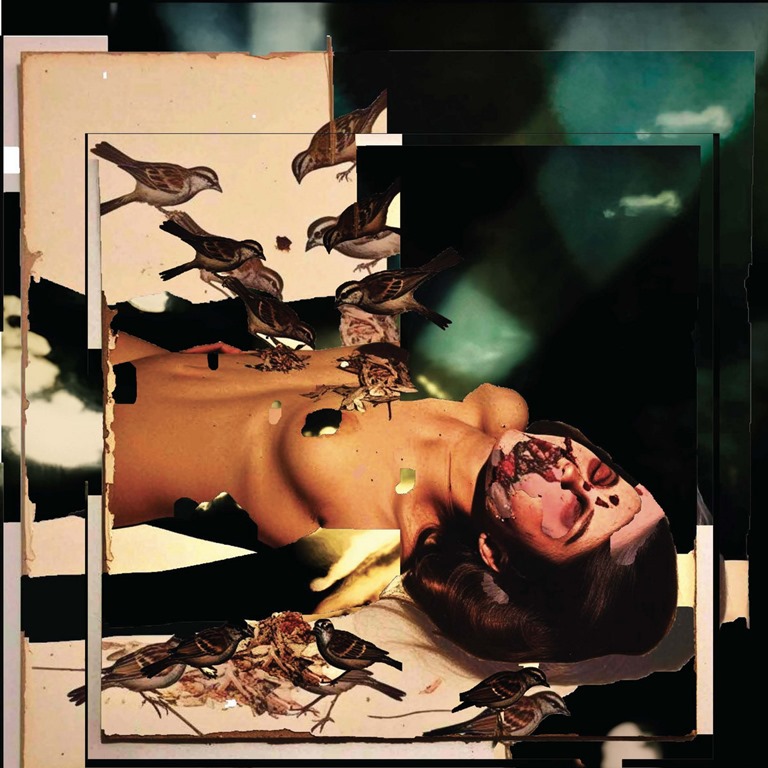
Argonaut, Interrupted Album_ Front

Greedy Media – 5th June 2026

Christopher Nosnibor

Fuck me, a new album by The Dwarves? They’ve now been going fully forty years. How? How is Blag Dahlia even still alive? They may have reined things in around the turn of the millennium, but no act this controversial, this wild, this excessive has a right to still be here after all this time. But we should be grateful that they are. The 80s were very different times, and while being perverse, gruesome, antagonistic, and all the rest for its own sake is a good thing – and G.G. Allin style shock for the sake of causing offence, disgust, or revulsion was never big or clever, and that we’ve moved on is a good thing… but. The danger is that we’ve come to a point where challenging artistic expression can be too readily conflated with misogyny or other discriminatory practices. No question, it’s a fine line, but confrontational art, at its best, challenges us to confront not only what’s socially acceptable but also our own boundaries and prejudices. Moreover, right now, is fringe art which is ugly and repulsive any more ugly and repulsive than mainstream discourse in politics or social media?

Unless it’s expounding ideologies of hate, is it perhaps not a function of art to test the boundaries still, as was always the case? The very purpose of punk was to raise a middle finger to the establishment, to be offensive to cultured sensibilities. Punk was rebellion. Somewhere along the way, something’s been lost. In truth, much was lost early on, when many punk acts signed to major labels in ’77 and ’78, but the spirit of punk remained, but underground. Now, much of what passes as punk is pathetically tame. Sure, Green Day gave us American Idiot, and used a major label platform to bring us their social and political critiques, but they were essentially no more than Clash copyists and fairly mild in their expostulations in real terms. The extent to which one can call the work of The Dwarves art is debatable, but it’s unquestionably punk in ethos.

The band which gave us gore, nudity, and an actual dwarf on the cover of their 1990 album Blood, Guts & Pussy (which packed twelve songs into just shy of thirteen minutes), and whose guitarist HeWhoCannotBeNamed performs live wearing a jockstrap at most, do what they’ve always done here: short, fast, abrasive punk songs about drugs and death and drugs and more drugs. The longest of the album’s fourteen songs is two minutes and two seconds long (‘Damned if I Do’, one of the album’s most accessible, catchy, and commercial songs, which packs in verses, choruses and a guitar solo); and the rest sit around the minute and a half mark.

And while PC is still not a concern for Dwarves, opener ‘Confused’ takes a balanced approach to gender confusion, touching on hypermasculinity within its squalling minute and eight seconds. ‘We Are The Scene’ melts together The Dead Kennedys and hardcore with some unexpected melody while flexing muscles.

AA

‘I’m Dead’ (which brings a heavy hint of The Ramones) and ‘I Wish You Were Dead’ seem to offer common thematic ground, albeit from different sides of the fence, and ‘Bad Drugs’ (a poppy tune about prescription drugs like Adderall), ‘Drug Lust’, ‘Too Messed Up’ and ‘Psychosis Tripping’ are all self-explanatory in their focus and frenzy, and much of this hopped-up set sits between The Dead Kennedys and Black Flack. It’s the quintessence of old-school punk, fast and furious, but with melodies packed and stacked, fun takes priority over shock or offence.

AA

12IN_JACKET

1st May 2026

Christopher Nosnibor

It’s a strange world. Especially the one of music, where, residing in York, I receive a promo pitch from a PR in Madison County, Illinois, for an artist based in Sheffield, where I studied for my PhD and worked for some time after. It’s about an hour away by train, yet the music of IAmImperfect had to travel halfway across the planet and back to land in my inbox.

Their latest offering is sold as being for fans of Solar Fake, The Birthday Massacre, Faderhead, Depeche Mode, ‘and just a little bit of Iron Maiden’. How’s that for a hybrid, eh? There’s certainly a fair bit going on across the EP’s five tracks. ‘Surviving Is Not Living’ makes for a bold opener, spanning almost seven minutes and riding in on an atmospheric intro which brings together electronica and prog with sweeping synths, stuttering beats and – wait for it – a soaring guitar solo, before getting down to more conventional darkwave with an anthemic pop leaning.

‘The Fallen’ manages to perfectly balance driving beats and pumping pop form with a sense of deep melancholy, and this, in many ways, encapsulates the essence of the work. As they explain it, ‘Ghosts represents the awful feelings nagging at you, never leaving you a moment of peace. Whether it’s the pressure to make yourself fit in with your peers, the competitor who is always doing it better, or the constant reminder of how everyone else is coping and you really can’t… Ghosts is about trying to live your life while everything else fights for your attention. It pulls you down, pushes you to conform, and drags you back into the dark. It is about what it takes to keep going anyway, as the world around us continues to spiral. Ghosts represents moments of quiet introspection along with flashes of hope and bursts of frustration’.

These are complex and conflicting emotions, not easily articulable. And what Ghosts does is navigate these nuances from a range of angles, but wrapped in an accessible pop-tinged package. The stomping beats of ‘Conversion Therapy’ are very much late 80s disco, while the synth lead is more 90s dance in origin, and if ‘Solitary Shell’ is sonically euphoric, lyrically it’s altogether darker.

A part of me struggles to reconcile these paradoxical positions, in that I expect dark emotional states to be paired with dark musical accompaniment. I acknowledge that there’s no real reason for this. Sure, when experiencing a dark mood, I will delve into overtly dark music, but it’s very much my own short-circuiting which finds if difficult to extrapolate dark moods from more uptempo tunes, despite being abundantly aware that ‘Emma’ by Hot Chocolate is one of the bleakest songs lyrically, in contrast to the slick disco groove of the backing.

The EP’s final track, ‘Ghosts of the Past’, is evocative, brooding, the lyrics dark, anguished, and the slow- to mid-tempo and rippling synth backing reflects the mood perfectly. And just as we’re plodding along, heads down, a blistering guitar solo break out. It’s a different kind of mood articulation, a fleeting moment of escapism, even. But this is the beauty of Ghosts. Just like moods, it switches unexpectedly, in an instant. One moment you’re laughing uncontrollably, the next the tears are flowing, almost inexplicably. IAmImperfect have forged a suite of songs which capture this contradictory psychological conundrum.

AA

DCTH FLIM SCAN

Thrill Jockey – 12th June 2026

Christopher Nosnibor

A new release by BIG|BRAVE is a significant event – always. Sure, a new Sunn O))) album will attract way more clamour and excitement overall, since they’re simply so much bigger in terms of fanbase and press attention, but with Sunn O))), it’s fair to say that within certain parameters, you know what you’re going to get. And there’s no question that Sunn O))) continue to push those parameters. But equally, they’re the drone / doom Jane Austin, carving on their two inches of ivory. I love it, but when it comes to sonic exploration, BIG|BRAVE simply spread their range that much wider, and each release sees them venturing into new territory.

It’s hard to credit that they started out as a folk band, who by some chance discovered amps that got all the way to eleven. Their last three albums have not only been progressively heavier, but more experimental, and more emotion ally fraught. A Chaos of Flowers very much raised the question ‘where do they go from here?’ in grief or in hope provides a robust reply – and it’s quite a departure – but at the same, time, sees something of a return to their folk roots. It’s just not folk in the form most would recognise, twisted and bent as it is here.

As they note, longtime touring bassist Liam Andrews (MY DISCO, Aicher) joins guitarist/vocalist Robin Wattie and guitarist Mathieu Ball in the studio for the first time – and the result is a tempestuous, percussion-free work, which melds drone and folk and explosive noise together to powerful effect.

The songs are less overtly structured, and yes, we do miss the drums, which were so integral to the pulverising force of Vital (2021) and nature morte (1993). But in grief or in hope is nothing short of immense, and the droning squall of ‘a shape of shame’ is exemplary. Slow-burning drones are paired with splintering feedback, while Wattie breaks from a measured tone to something akin to a breakdown while stepping into the skin of Siouxsie Sioux. The guitars sculpt walls of dense, shimmering noise which possess the force to melt your face, and the levels of distortion are off the scale, both speaker-trashing and brain-melting. Amidst wails of feedback and a vocal which sounds bereft and sort of abstract, ‘verdure’ incorporates industrial grind and heavy, distorted drone and marks another shift in the trajectory not only of the album, but the band’s sound. It’s a different kind of heavy, and it’s suffocating in its dense intensity, particularly after a couple of minutes.

AA

The production is incredible, capturing the force of amps cranked up hard – the organic nature of the sound, the crackle and hum, the way the frequencies rub and resonate against one another, the integrity of volume to achieving certain sounds, particular and specific resonances. Lately, I’ve had a number of discussions with people who’ve held the position that volume in itself is not a goal. I do understand their perspective, but there are certain sounds, certain frequencies, certain sensations – and not only physical ones – which simply cannot be achieved unless there’s a level of volume which achieves a level of structure-shaking, shivering vibration. in grief or in hope is an album which simply wouldn’t have the impact it does were it not for the amps being dialled up and engineers and producers who appreciate that those frequencies, those moments of distortion, that wall of noise which at times almost submerge the vocals is exactly the objective.

‘skin ripper’ goes full Sunn O))) in its crushing, obliterative drone, each chord hitting like a tsunami, a tectonic tremor. Wattie’s vocal, however, remains composed, melodic, amidst the howling tempest, and the impact and power of the track lie in this contrast.

There’s no denying that in grief or in hope sees BIG|BRAVE explore new musical avenues, but the absence of percussion does nothing to diminish the band’s immense sonic force. In fact, when it comes to that, they seem unstoppable. In exalting the autotune on ‘an uttering of antipathy’, it should, by rights, result in a shrugging departure – but in their hands, the result is a monumental work, with Watties’s vocal wandering amidst a n obliterating blast of feedback and distortion.

The semi-ambient title track offers some relief from the pulverising force of the as album, and become lost in a swamp of flange and feedback.

Everything about this album is obliterative. It may be a very different sound for BIG|BRAVE, but it’s very much the sound of them at their best.

AA

AA

a3846375388_10

Christopher Nosnibor

It’s bank holiday Friday in May. It’s exam season at university, and York Races on Saturday. And it’s the first day of a heatwave, which hits after three weeks of rain and temperatures which have struggled to make double figures. These could all be factors in explaining tonight’s turnout. But because it’s absolutely melting, I probably go a fair way to compensating any fall in bar sales just to put fluid in as fast as it’s pouring out of me, and I can only imagine how hot it would have been if the place had been packed.

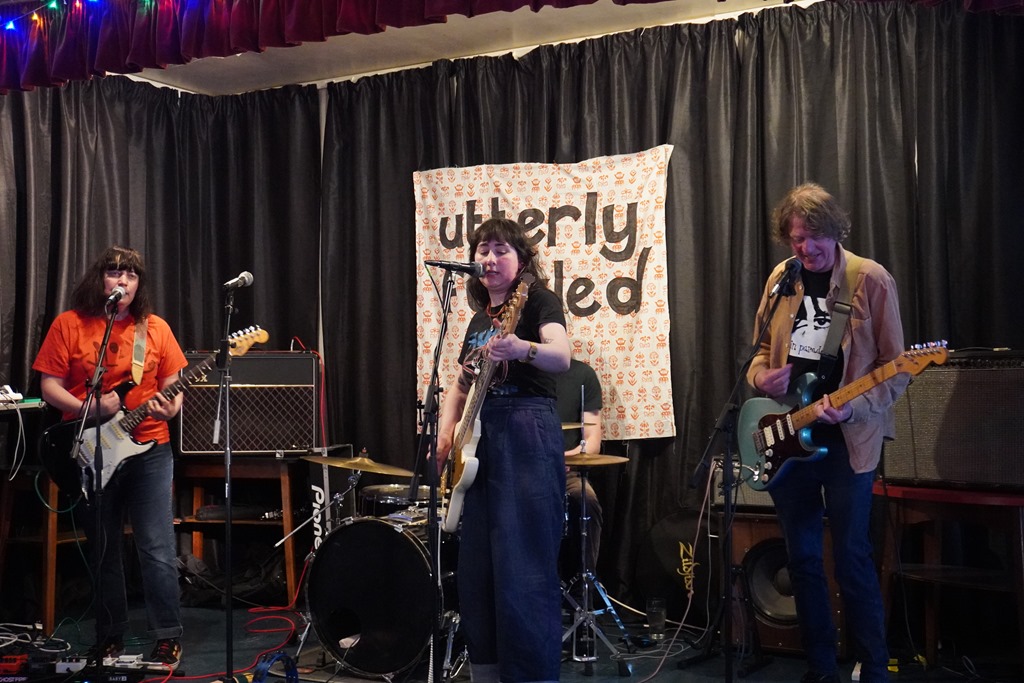
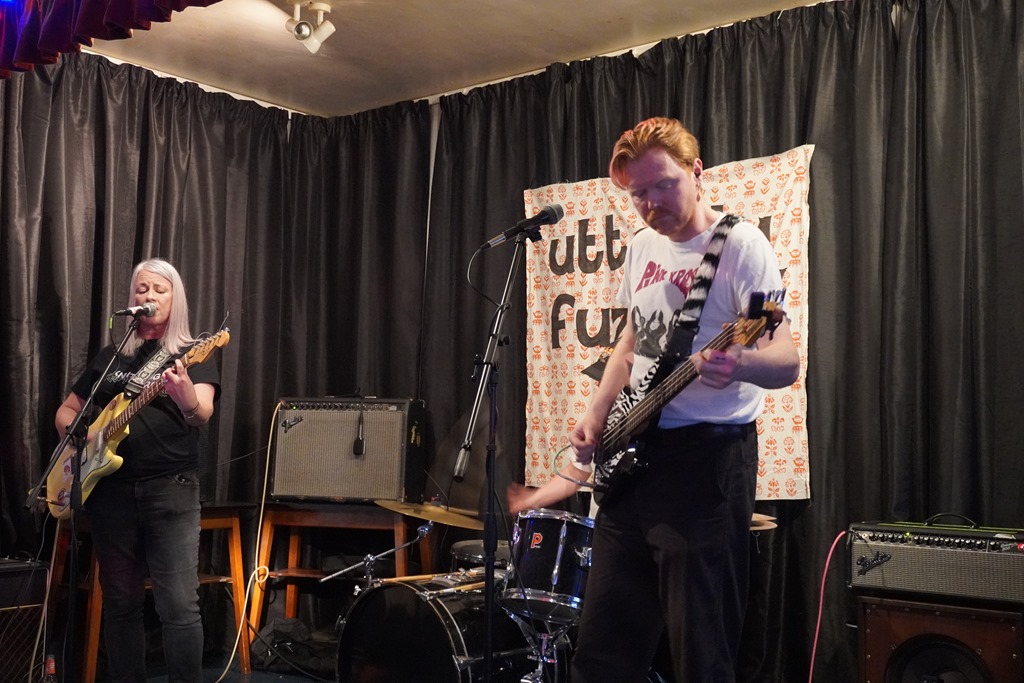
Rodentia are a late addition to the lineup, which has been subject to a number of revisions. They open their set with a cover of ‘Harness Your Hopes’ by Pavement. It seems a curious choice, although having gone viral on TikTok and become their most streamed song on Spotify, meaning it’s probably a lot better known than I appreciate. They’re a three-piece, and the singer/guitarist is a lanky sod who’s vocal style is a croaky drawl. He asks us if we’ve heard of a band called Radiohead before they play ‘Just’. I hope he’s kidding. It’s a passable rendition. On their second original song, ‘Never Left’ (the set alternates a 50/50 split of originals and covers), the bass and guitar part ways in playing the same key around a minute in, and the discord become increasingly apparent as the set progresses. Then there’s a cover of Viagra Boys ‘Worms’. It’s all very much geared towards the lower end of mid-tempo, and as such lacks dynamic and energy. They finally find the accelerator at the end of the last song, ‘Borat’, and go pedal to the metal before a hard stop which feels like driving straight into a wall. There’s potential, but considerable work needed.

DSC00512DSC00520

Rodentia

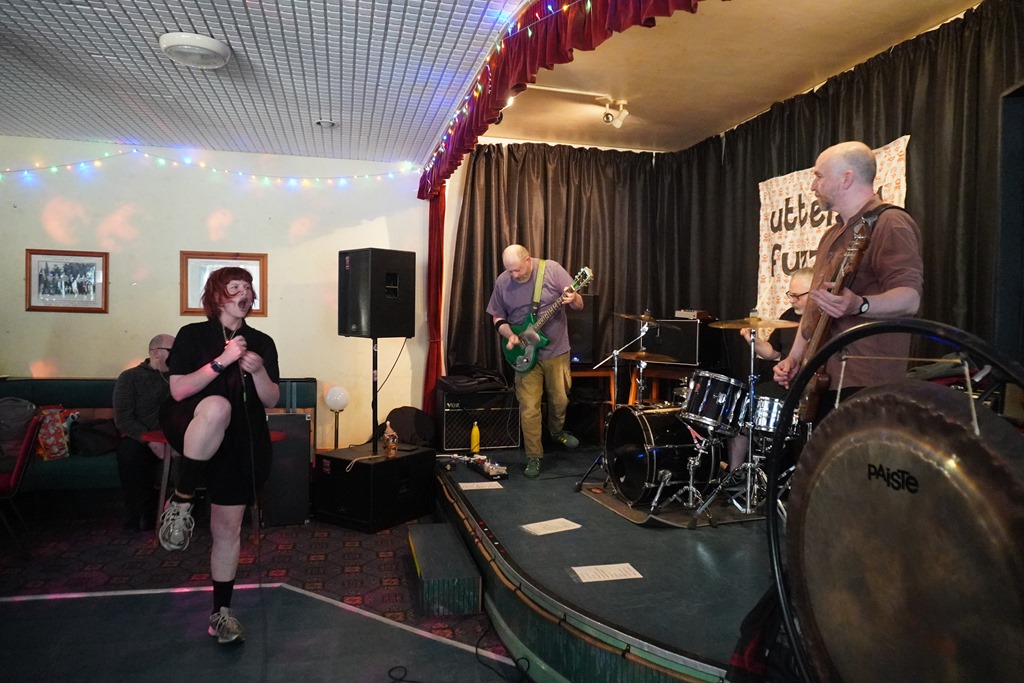
Sheffield’s Imaginary Friends gave the initial impression they were going to be a bit pop-punk, but immediately unleashed a bass-heavy grunged-up wall of noise. At times more straight punk, and in places proper heavy, their invitations to come forward become a running joke throughout the set. Because it’s not especially busy, the space in front of the stage is quite sparsely populated, but half of those present are pinned to the walls in the face of the sheer volume. Apparently, they’ve got merch, too.

DSC00571DSC00561

Imaginary Friends

This is a power trio for whom power is the operative word, with a wild flanged guitar sound. It seems I’m too old to know ‘All Star’, the cover they closed with. Apparently, it’s by Smash Mouth, according to a younger mate. Would see again.

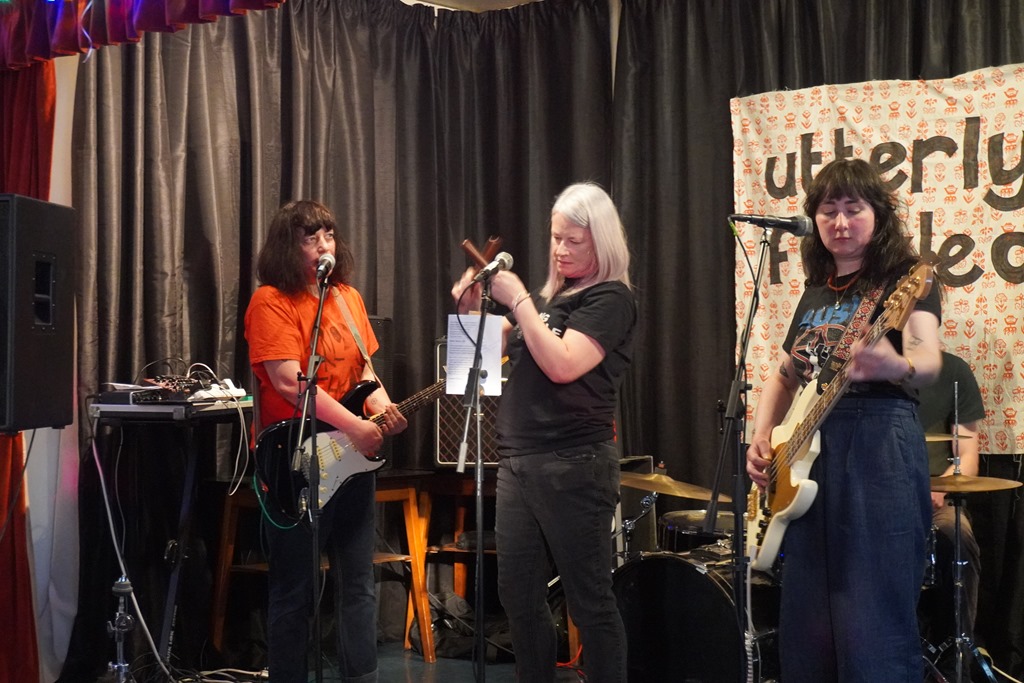
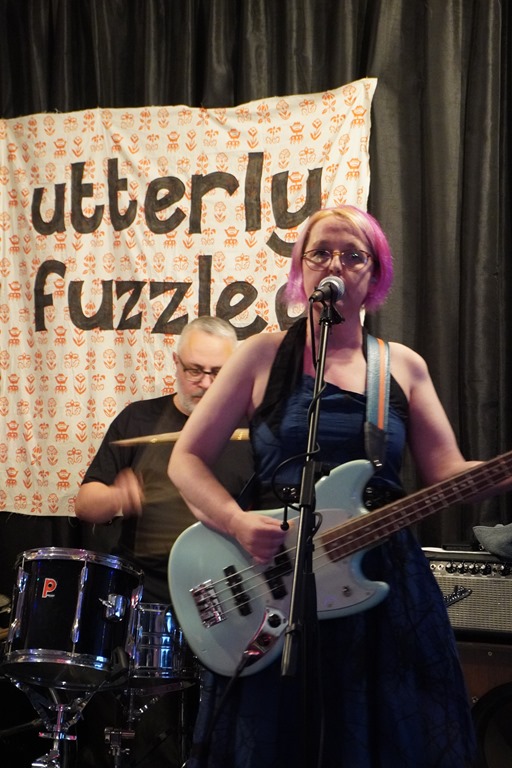
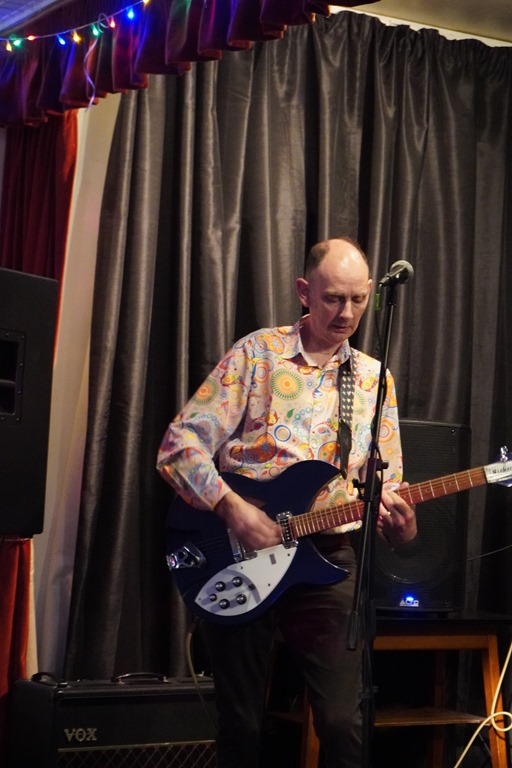
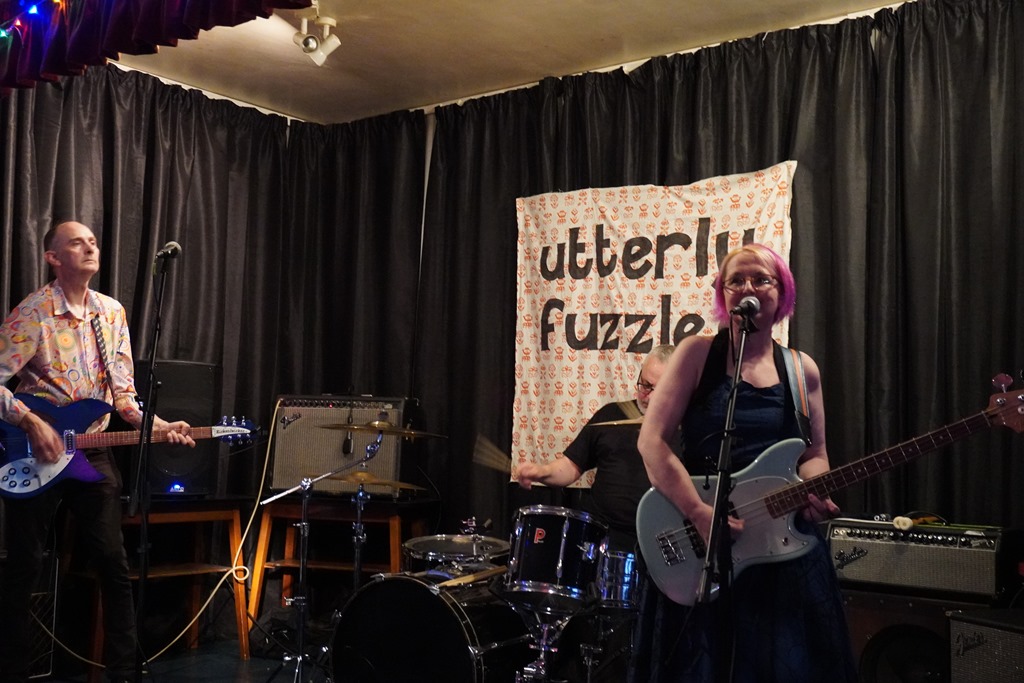
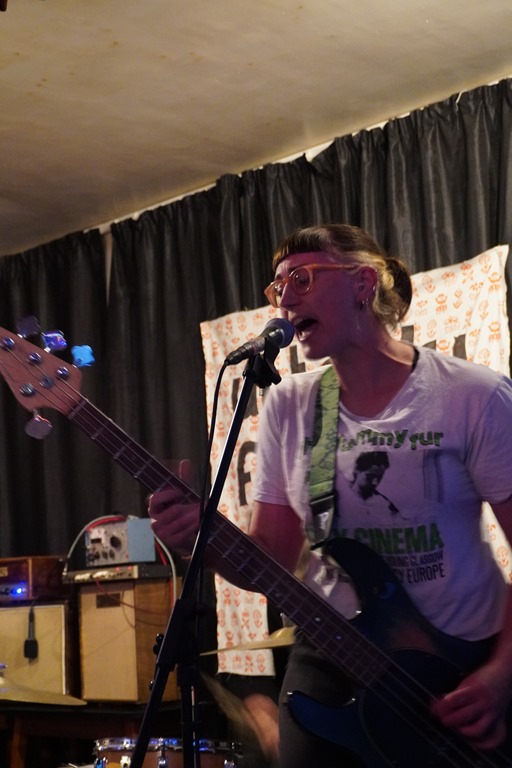
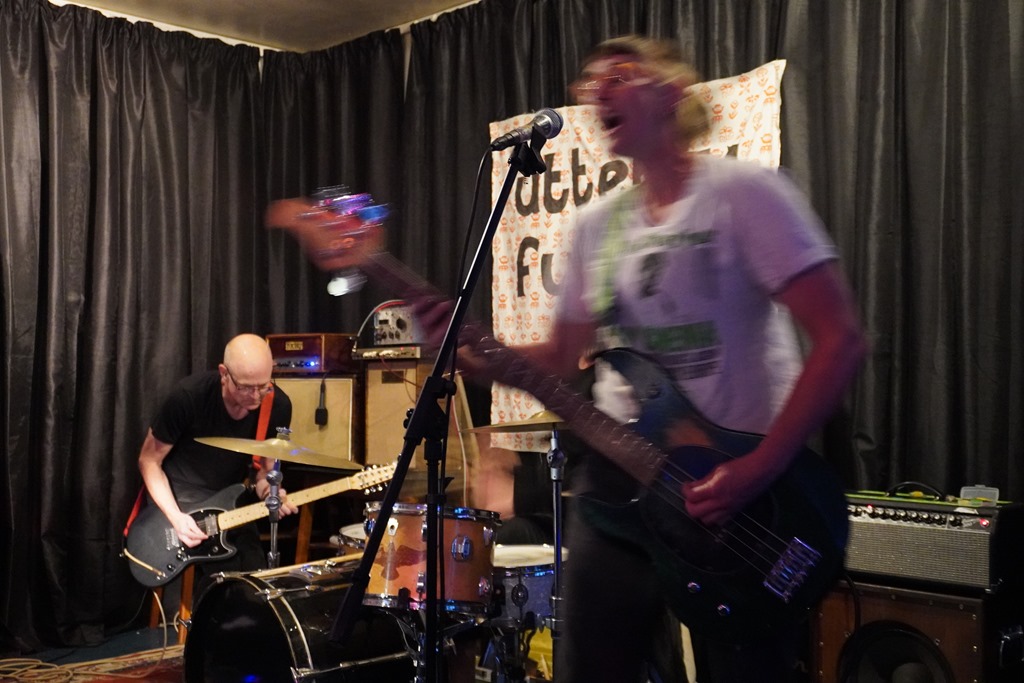
The Bricks I would always see again, and by now I’ve lost count of the number of times I’ve seen them. The thing is, they’re always bloody good – and tonight is no exception. Whether it’s packed to the rafters or half empty, they always give everything, and there are few bands who are this consistent, both in terms of performance and the standard of the material. However, because the audience is a bit sparse, the vibe is notably relaxed, with more direct interaction between band and audience.

DSC00641DSC00628DSC00624

The Bricks

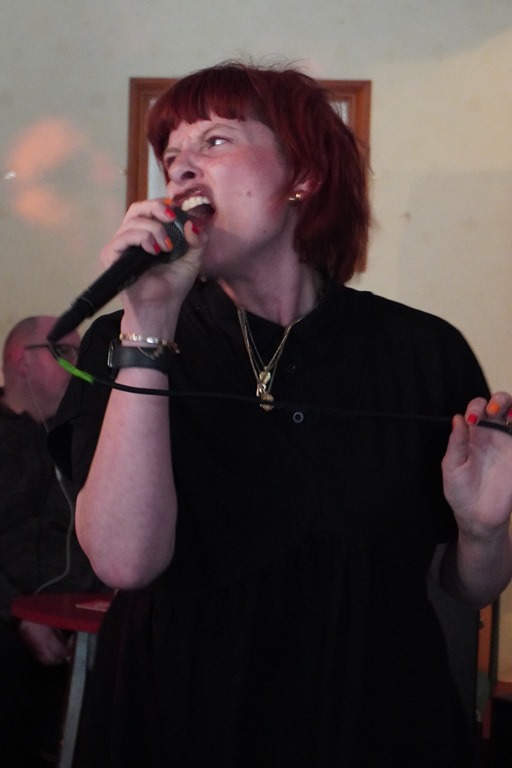
Their songs are short and fast, and there’s no way they could play with such intensity for an hour even if they had the material. But Gemma’s on chatty form, and while she may be utterly fearsome while singing, between songs her persona’s more akin to Mrs Merton (more so now she’s wearing glasses), and utterly hilarious at times. Because it’s all so natural and unfiltered, not to mention the diametric opposite of the music and the performance, which is full-on, stomping, aggressive, it’s all the more endearing. The bottom line is that they’re a great band. Will definitely see again – next month.

Sub Rosa – 15th May 2026

Christopher Nosnibor

Mick Harris may have left Napalm Death some thirty-five years ago, but it’s still for his work with them – and his coining of the term ‘grindcore’ – that he’s largely known. There are, of course, far worse things one could be known for, particularly as this meant that he featured on the band’s seminal debut album, Scum. While having participated in numerous projects in the years since, Scorn will forever be an enduring standout in cult circles, but beyond this, Harris has explored far further-flung corners of the musical spectrum on many occasions with comparatively little recognition, with dark atmospherics having been his primary focus for a good number of years now.

The fact that this is the third instalment of Murder Ballads, recorded in collaboration with Martyn Bates and released on estimable Sub Rosa label in Belgium – which has released albums by William S. Burroughs, Brion Gysin, Test Dept, Oren Ambarchi, David Toop, Bill Laswell, Asian Dub Foundation… the list goes on – is a measure of how Harris has transitioned to what one might call more ‘arty’ territories, which may sound snobby or poncey to some, but let’s focus on the work at hand – at least, in due course.

Although murder ballads are likely most commonly associated with Nick Cave in popular culture, they have a long cultural heritage, with roots in the folk history of Scandinavia, England, and lowland Scotland reaching back as far as the 1750s. The entire premise of murder ballads is bleak and grim, and Harris and Bates remain true to this principle here, on an album which is mercilessly dark and lugubrious.

There’s no avoiding the fact that the subtitle brings an element of discomfort. We’re in a strange place right now, culturally, in that half of the world – or maybe that’s just half of the US and those in the UK who for inexplicable reason who describe themselves as ‘patriots’ while also being fans of Donald Trump – seem to think that paedophilia is just fine, and in many states, marrying cousins is similarly just fine. Similarly, incest porn and step-sibling porn is all the rage. Why? What is wrong with people? But then, history is built on tales of incest, going right back to Greek mythology. This is no more than an observation, and to note that as a species, we’ve been warped for the entirety of our existence. That discussion is an entire thesis in itself, though.

Murder Ballads [Incest Songs] is a long way from Peter Sotos territory. But what it is, is four ominously-shaded longform compositions which are uncomfortable and uneasy. As they pitch it, ‘Incest Songs is the final chapter of the Murder Ballads trilogy, and its most fully realized expression. Where Drift and Passages explored the post-isolationist frame through voice and single instrument, this third volume dispenses with that approach entirely, opening instead onto a more labyrinthine sonic architecture – one built from overlapping, saturating, blurring voices, all of them Martyn Bates’.

Bates does indeed prove to be versatile, and capable of conjuring the most moving vocal evocations. ‘The Bonny Hind’ is essentially a folk song, a shanty, even, at heart, but the lilting vocal, which would work as readily acapella as against conventional instrumentation – flute, or fiddle, for example – takes on a more ominous shade when pitched against groaning, shape-shifting drones. The result is unsettling, and would sit within the soundtrack of a folk horror movie in the way a warped, discordant rendition of a nursery rhyme would in more mainstream projects.

‘Sheaf and Knife’ is notable for its sparse nature. Bates’ voice is practically in your ear – and this ism no small feat of the production. Whispers, echoes, and reverberations echo around, and it’s not immediately apparent that most of this is Bates, the wind and the air, and the dank, low drones which define this album. ‘The Two Brothers’ – a seventeen-minute monster of a composition – drifts into moments of space-age spin, flanged swirl and fractal details turning a textured sonic nebula behind the vulnerable vocals – and the narrative said vocals deliver is chilling, a tale of a stabbing, whereby the narrator washes the blood off and goes about his business. Or something. While the lyrics sometimes trail away in swathes of reverb the auditory experience is gripping in itself. This is the sound of heavy fog, and of silent decomposition. This leads us to the album’s final cut, ‘Edward’, extending beyond seventeen and a half minutes is magnificently haunting. At times so sparse as to be barely there, it’s a trawl into the darkest of spaces, suffocating, claustrophobic. Bates croons and quavers with a detachment which accentuates the sense of disconnection. There’s something in the way he delivers the words, against sparse, eerie, near-ambient backdrops of difficult drones, that is quite chilling: calm, soft, psychopathic. Enjoy, but watch your back.

AA

AA

SRV514 front

29th May 2026

Christopher Nosnibor

Abrasive Trees’ evolution continues with the arrival of Light Remaining. Over the last seven years, they’ve released a steady stream of EPs, a compilation album gathering material from the early EPs, a live album, and an hour-long drone album recorded by the project’s core member, Matthew Rochford during lockdown. While the lineups have been markedly different, expanding and contracting along the way, there has always been a sense of continuity, a commonality across their catalogue (beyond Rochford himself), and that’s an attention to detail, and a keen awareness of atmosphere, and of balance. Light Remaining, however, is their first full-length studio work conceived as such and recorded as a band.

The single releases, ‘Carved Skull’ and ‘Tao to Earth’ set a certain expectation and tone for the album – dark, tense, layered, and unashamedly arty, even literary in their leanings. And this is very much what Light Remaining gives us – a work that’s sonically immersive, engaging, but also contemplative, cerebral. There’s much to absorb.

With a spoken word introduction delivered over minimal instrumentation, ‘No Solace’ draws the listener in gently – you may even find yourself leaning in, ear cocked to the poetry – before the fireworks begin, an explosive sustained crescendo of rolling drums and soaring, searing guitars, amidst which Rochford maintains a near-monotone delivery amidst the ever-building surge of chaos. It’s difficult to distinguish whether this is a display of serenity or the paralysis of shock. ‘Star Sapphire’ brings contrasting, conflicting tones, textures, and moods, with some pleasant, shoegazey, post-rock chime and jangle paired with some dark, driving distorted chords, perfectly illustrating the attention to detail – and dynamics – mentioned earlier.

There’s something of the feel of Fields of the Nephilim at their most lugubrious and atmospheric to ‘Flickering Flame’ – think ‘Vet for the Insane’, perhaps – before it slowly grows in density and fogginess, and it flows into the rolling swell and surge of ‘Carved Skull’.

If the title suggests something of a slow fade, a diminishing time – and while I may well be overreaching in my interpretation – the very phrase, with its implications of a setting sun feels weighty and weighted, and to carry connotations of an eternal night, the light fading on a dying planet. And this feels like the mood which hangs over the album – a sense of the finite, of impending doom, even. It’s oblique, it’s indirect, but it nags away in the shadows of a work which is certainly darker than it is light. Yes, the light remaining is limited, and the shadows loom ever more darkly.

It’s on the final composition, ‘I Didn’t Mean to Hurt You’ that everything comes together. It’s nearly eleven minutes long, and they make full use of that time to gradually develop the mood, from an understated, picked guitar, rippling in reverb, slowly adding the layers and increasing the volume and density and drums and strings add more and more, picking up pace over time. It’s just shy of the midpoint that it really begins to race forward, and the adrenaline builds in line with the pace and intensity. And finally – finally – the levee breaks, leading out with a slow, deliberate trudging riff topped with a solo from the stars.

Light Remaining feels like the release Abrasive Trees have been building up to since their inception. It’s a sustained work of remarkable detail, nuance, but also density and force. Everything is perfectly realised. It’s huge. Sonically, conceptually, in terms of ambition and execution, the production… this is a peak, a new pinnacle.

AA

AA

a3937139449_10

Lay Bare Recordings – 9th May 2026

Christopher Nosnibor

One may be inclined to jest that a release like this should carry a warning – but the joke falls flat when technically, it does: the notes which accompany the release on Bandcamp sets the scene for the debut EP from Dutch experimentalists of A Plague of Lighthouse Keepers thus:

Whilst most drone-metal outfits focus on creating atmosphere by composing ambient compositions with tremendous power and volume, the Lighthouse Keepers use more traditional doom/sludge metal as a starting point and explore its differences and similarities with genres such as free jazz, raga, noise and classical minimalism.

Elsewhere, they’re described as sounding like ‘a disturbed lovechild of OM, Sumac, Swans, Miles Davis, and Pandit Pran Nath, combining lengthy improvisations with ear-shattering explosions of intensity’. How could a lovechild of that lot be anything but disturbed?

And so it is that we enter by way of ‘The Massacre of Flour’, a title of which conjures images of a bloodbath in a bakery. What is sounds like is…. nothing short of wild. Its seven minutes leads the listener through a series of conjoined segments, arriving in a crazed blast of shrieking noise, a frenzied cacophony of feedback and squealing sax before lunging into a thick, sludge riff, which in turn yields to a slow, almost ambient drone passage with mystical swirls which rise like desert mirages. Each is gripping itself, and the transition to the next takes place almost imperceptibly: one moment you’re here, then, somehow, you’re there, in a completely different scene with no recollection of how you came to be here – rather like the way scenes change in dreams. And suddenly, the hazy serenity is torn asunder, lurching into a tectonic rift from which burst larval torture resembling Swans circa the Young God EP. It’s absolutely fucking brutal, the sound of pain, distilled and amplified

‘I Fuck People’, the shortest song on the EP, goes in hard on the avant-jazz noise chaos, forming a heavy undulation of bleats and shrieks by way of a backdrop to savage, ravaged, demonic vocals. It’s the sound of purgatorial torment. But all of this is simply a prelude to the main event, the nine-minute ‘Towers of Silence’, on which they really flex all of their muscles. Easing in gently with some abstract desert folk with hints of Eastern esotericism, it’s a slow, gradual build. There’s something meditative, spiritual in the vocals, until things begin to get twisted, mangled, and tangled. There’s anguish, there’s tension, and unease grows… breathe. But ululations which begin soothingly grow tense, and things spiral to a hypnotic cathedral of sound.

Towers of Silence may only contain three tracks with a combined duration of just over twenty minutes, but its range and intensity are something to behold. It’s drone metal, but not as we know it.

AA

AA

892210

22nd May 2026

Christopher Nosnibor

After last summer’s Saving Lilibet EP, Chess Smith continues her march back toward life-reclamation and self-possession with another slice of sparse yet crisp pop with intensely personal, autobiographical lyrics, in the form of ‘I’m Dead to You (And That’s OK)’.

It’s worth quoting the statement which accompanies the release, as it not only articulates the song’s meaning beyond the lyrics, but it’s an incredibly bold insight into an experience which few would be willing to articulate – and, essentially, she recognises that her experiences possesses a relatability. As I often say, within the personal lies the universal:

The single explores the very relatable fallout that occurs when relationships break down – and how women in particular often suffer the loss of friendships, support networks, and even their careers, as sides are taken, battle lines are drawn, and the people who you thought you could trust show their true colours… The people who you gave so much of yourself to, only for them to treat you like you never existed – or worse, tear you down, and drag your name through the mud.

More importantly though, I’m Dead to You is about turning these often painful realisations into positive self-affirmations – those people were never your friends… so don’t waste your energy missing something that you never truly had, and instead be happy that they’re no longer part of your life. Take away their power, take back your name, and eventually they’ll be consumed by their own toxicity… just as surely as they once tried to consume you. 

While I can in no way claim to have experienced a precisely parallel journey, the loss of my wife at the age of 44, leaving me as a single parent with a ten-year-old daughter taught me lessons I had never expected. For example, when everyone says in the first couple of weeks ‘if there’s anything you need’ or makes some comment about keeping in touch, either they’re just saying it to fill the conversational space and sense of obligation, or they mean it until after the funeral, when everything returns to normal -at least for them. Supposedly close friends evaporate, and fast.

‘Took a break to give myself time,’ she begins her story, and we know straight away that this is a straight narrative. Some of the words are lost in the rush of energy and autotune, but the sentiment is clear: she’s not going to dwell on the people who don’t bother. Life’s too short, and friendship is a two-way street. It certainly shouldn’t be the one who’s experienced a major life event who should have to reach out and beg.

It may be that those ‘friends’ go about their lives in the assumption that if the persons doesn’t ‘reach out’ that they’re ok, but that demonstrates a lack of understanding. It’s much harder to ‘reach out’ in a time of crisis than it is to check in on someone who’s in the midst of one. So what do you do? Sink or swim. It’s not easy to cast off the people you’ve ached to hear from but who seem deaf to any previous intimations of struggle. But that is the only way to stay afloat. Grow a thicker skin. Fuck ‘em.

The fact that ‘I’m Dead to You’ is delivered as a bubbly, energetic, uptempo, and really quite busy pop tune is a double-edged: on the one side, there’s possibly an element of masking the anguish of abandonment beneath a polished pop surface, but on the other, and this is the top side, it’s a sassy celebration of empowerment, of cutting loose, separating from the wheat from the chaff, and recognising who your real friends are.

AA

669769427_985481847329951_6421340878331877860_n