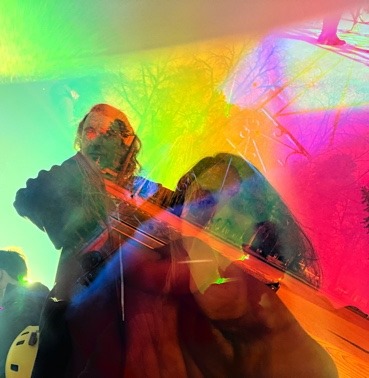
TWICE A MAN unveil a beautiful visualiser for ‘Desert Snow’, the first to be plucked as an advance single from the electronic environmentalists’ forthcoming album Reveries Before Silence. The Swedes’ new full-length has been chalked up for release on November 20, 2026.
Parallel to their new album, Twice A Man will also release a collection of rare tracks revolving around marine themes that have been gathered in a 48-page 2CD artbook under the title The Marine Trilogy on November 20, 2026
AA
Twice A Man comment: “The first single track, ‘Desert Snow’, is one of our musical footprints in a time marked by uncertainty, division, and change”, Karl Gasleben explains on behalf of the band collective. "This song reflects on the world we live in today while reminding us that hope and positive thinking can still be a path toward unity. As modern societies continue to challenge our sense of human connection, we need to find what brings us together rather than what drives us apart. If we can discover a common voice that leads us away from war, polarisation, and the climate crisis, there is still a future worth believing in. We want to be able to look our children in the eyes and speak about tomorrow with honesty, responsibility, and hope. ‘Desert Snow’ is our contribution to that conversation – a song that carries both reflection and faith in a better future.”
Irish synthwave outfit Tiny Magnetic Pets return with ‘Lost My Guiding Light (Again)’, a stellar single that reflects the search for hope and direction in an increasingly uncertain world, inviting listeners to consider what their own guiding light might be.
A compelling preview of their coming three-track ‘Astralux’ EP, slated for release on July 21, this is a bold reinvention of one of their most-loved tracks and Blending cinematic synth textures, soaring melodies and an irresistible electronic pulse, they transform the original into a vibrant new anthem.
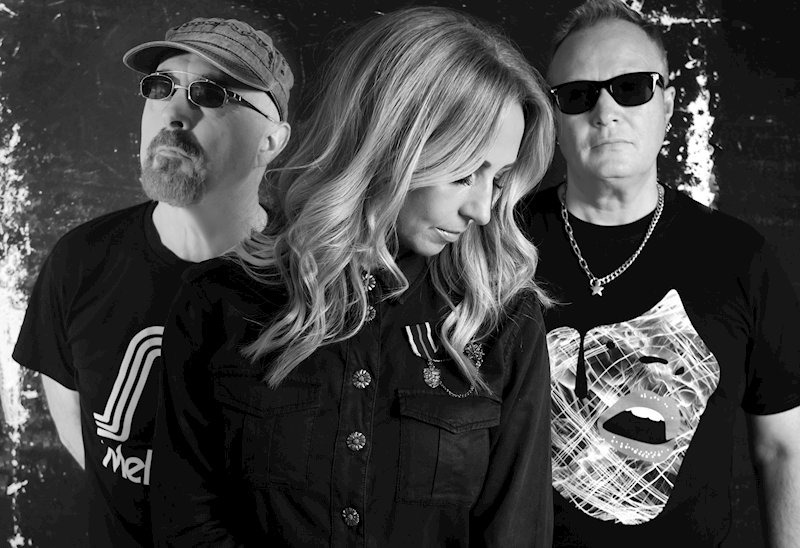
Based between Dublin and Belfast, Tiny Magnetic Pets has become one of the most distinctive voices in contemporary electronic music since emerging in 2015. Here, vocalist Paula Gilmer, keyboardist-guitarist Sean Quinn and drummer Eugene Somers are joined by Seamus Quinn on bass.
Mixed and mastered by Tim Dorney, whose music career includes time as keyboardist of Republica, in addition to Flowered Up and Tin Gun, this release combines classic synth-pop songwriting with contemporary electronic production, bringing together melodic depth and club-ready energy.
“When we play live we like to do different versions from the records. Last year, we were asked to play a dance music festival in Dublin, so we re-arranged the opening track from our second album ‘Deluxe/Debris’ for an EDM audience, and it has now become the opening tune to our live shows,” explains Sean Quinn.
“We re-recorded this new version in 2026 and we feel it is significantly different from the original to warrant its own release and slight re-title: Lost My Guiding Light (Again) – a wee nod to Bowie’s John I’m Only Dancing (Again)…”
Paula Gilmer adds, “A re-imagining of two of our most popular live tracks for the 21st century dancefloor, this song is about how everyone at some point loses their way – in life, in work, in relationships, in faith but the theme carries more weight in 2026 with the whole world seemingly losing its way! What is your “guiding light” in 2026? Morality? Truth? Honesty? Love? Empathy? Compassion? Fill in the blank, post it on TikTok and hope it goes viral.”
AA
The Astralux EP also features two remixes of ‘Low Places’ by pioneering producer and DJ Paul Dakeyne, whose innovative work has helped shape electronic dance music for over three decades. A Ministry of Sound resident DJ, he has played sets for U2 and Kraftwerk. Endorsed by Paul Oakenfold and Fatboy Slim, he has created 250+ remixes, including for George Michael, The Cure, Tori Amos, New Order, Enya, Soft Cell, Erasure, Nancy Sinatra, Yello, and The Housemartins.
Combining the melodic songwriting and electronic textures that have defined Tiny Magnetic Pets’ sound, infused with adventurous new energy, ‘Lost My Guiding Light (Again)’ is a confident statement of where they are heading next, towards what promises to be the band’s most ambitious chapter yet.
A glimpse of the next phase in Tiny Magnetic Pets’ musical evolution, its rhythms and emotional core point towards the darker, more cinematic sound of their coming fourth studio album, A Black Frame. Out later this year, it is produced by Gareth Jones, whose work with Depeche Mode, Wire, Interpol and Nick Cave has made him one of alternative music’s most respected producers.
Of this new release, Electronic Producer and DJ Huw Cadwaladr, says, ‘I Believe’, never originally intended for public release, offers the first glimpse into the world of Cambria Nocturna. The track marks a departure from the electronic work Gruff and I previously created as Carcharorion, moving toward a more songwriting-driven and lyrically expressive approach. While evolving creatively, the project continues to explore our shared love of cinematic electronic sound through experimental tape loops, field recordings, analogue instrumentation, and richly textured production. Originally conceived as a post-punk composition before transforming into a driving techno piece, ‘I Believe’ evolved over many months into its final form — a confessional and emotionally charged work. Recorded by Gruff and myself, and mixed by Alexander Green at The Zoo, the track became the first true catalyst and creative foundation for what would eventually become Cambria Nocturna.
Cambria Nocturna itself emerged from a period of profound personal trauma. During this time, I reconnected with Gruff after more than a decade apart, and together we began experimenting once again. What started as artistic collaboration quickly became something deeper: a source of healing, catharsis, and genuine therapy.
Through channeling these emotions creatively, Cambria Nocturna was born — a sonic tapestry of deeply atmospheric electronic music shaped by raw emotion, human connection, and resilience. By merging analogue electronics with acoustic instrumentation, we drew from a broad spectrum of influences, spanning 90s trip-hop, techno, electro, 80s Italo, and alternative electronica, alongside the work of artists such as John Cale and Nick Cave.
‘I Believe’ marks the beginning of a new chapter: emotionally resonant electronic music rooted in vulnerability, transformation and defiant survival— with further releases set to follow.
Hear ‘I Believe here:
AA
Emerging from a period of profound personal upheaval, Huw has created a sonic tapestry of deeply atmospheric electronic music shaped by raw emotion, resilience, and human connection.
During a time of recovery and reflection, music became both an escape and a lifeline. Around this time, he reconnected with Gruff, his longtime creative partner in Carcharorion. After more than a decade away from creating together, the pair began experimenting once again, discovering that the process offered not only artistic fulfilment, but genuine therapy.
The result is Cambria Nocturna: a deeply personal project born from vulnerability, reflection, and survival. Never originally intended for public release, the project became an honest exploration of emotional darkness, connection, and self-expression.
The debut single, ‘I Believe’, marks the beginning of this new chapter – emotionally charged electronic music rooted in atmosphere, honesty, and catharsis, with more releases set to follow.
Outside of his own music, Huw is also a presenter on Radio Sudd, where he hosts a show focused primarily on club-based electronic music.
Despite our reputation, it’s not just us Brits who have a weather fixation, and the fact of the matter is, the weather has a baring on our daily lives, perhaps more than many of us even recognise – and that’s without considering the effects of weather events on the likes of transport and food production. On a primal, human level, weather conditions affect our moods, and even our health.
I myself recorded a longform piece, ‘January Can’t Last Forever’ from a bleak place in early 2023, when weeks of rain had caused widespread flooding locally, and a few particularly heavy downpours overwhelmed the guttering at the front of the house. Those weeks, in the darkest days of winter, felt like a lifetime, and it was all I could do to get through it by reminding myself that these things do pass, eventually. April and May of this year saw rain most days, too, although I’m writing this as sweat pours off me at the tail end of the second heatwave of 2026, during which a couple of brief thunderstorms have only contributed to ramping up the already suffocating levels of humidity.
As such, there’s a particular relatability, on a personal level, with the inspiration for melondruie’s Sound of Rain: the Seattleite’s latest work of minimalist ambient electronical was ‘made in the spring of 2025 during various rainy days’. As the liner notes explain, ‘The record frames rain as a calming, almost therapeutic force – masking the noise and tension of human life with a steady, immersive sonic wash’, with ‘a focus on texture, atmosphere, and subtle emotional resonance.’
There’s a certain playfulness about some of the compositions: ‘Washed Away’ bounces and ripples with something of a lightness, and the rhythmic nature of the notes interplay through patterns which shift gradually and with a liquid ease.
Despite the angry and negative connotations of titles like ‘Red Mist’ and ‘Destroyed Again’, the heavier, darker undercurrents of rumbling bass and wraith-like howls which resemble thin, chilling winds are counterbalanced by soft sounds which seem to connote the relief of shafts of light breaking through the cloud cover, or a vague hint of a rainbow. Consequently, and album which could have been rendered relentlessly bleak, gloomy, oppressive, is anything but.
On Sound of Rain, melondruie explores the interplay between gentle textures, with smooth, gliding drones interacting and interpolating with rippling, bubbling layers. ‘Falsehoods’, the final track, expands on this territory with the gush of a torrent to begin, gradually tapering from a current of sweeping tension towards something altogether calmer.
The rhythmic cadences of the pieces give them a sense of movement, of flow, even a kind of groove at times, which draws the listener in and holds the attention in a way which is rare – in my experience – for an ambient work. The conception and execution is inspired, and while the extent to which it evokes rainy days will vary according to one’s own experience and perception, Sound of Rain cannot fail to inspire reflection and contemplation.
‘Inside’ is the latest music video by Ships In The Night, the ethereal darkwave project of Alethea Leventhal. Renowned for her distinctive electronic production technique and delicate yet mesmerising voice, Ships in the Night creates dark pop songs that feel both intimate and cinematic.
Included on the 2025 album Protection Spells, a bold and powerful collection informed by trauma, magic, darkness and hope, ‘Inside’ balances opposing forces of stillness and tension, vulnerability and resolve. The video for it is a glimpse into a world of transformation, with creatures hatching, plants unfurling and everything growing and finding its way.
“This song is about looking for feelings of safety and comfort in a world that is out of our control,” explains Leventhal. "It’s about finding places where you can just exist and be yourself. It’s about nurturing community, lifting up queer spaces and reaching for utopia.”
The pioneering electronic dance act Lords of Acid have released their third single of 2026. Blending infectious electronic beats, Latin-inspired hooks and the tongue-in-cheek attitude that has made the group a cult favourite all over the globe, ‘El Mundo Está Loco’ (The World Is Crazy) is a dance floor anthem for a world that seems to be getting crazier by the day.
Driven by an irresistible chorus and a playful exchange between Lords of Acid and the New York City-based duo Tony & The Kiki, the song captures the chaos, absurdity and excitement of modern life while inviting listeners to do the only sensible thing left….dance. Because, when the world goes crazy, turn up the music.
Tony & The Kiki blend gritty NYC glamour, disco decadence, punk, soul and high-voltage anthems into an unapologetically queer rock-and-roll spectacle. Channelling the spirit of Blondie, Queen and Scissor Sisters through a modern, theatrical, arena-ready lens, they have built a significant cult following and been praised by icons that include Lady Gaga, Celine Dion, Cyndi Lauper, Grace Slick and even Fred Durst.
It quickly became clear that Tony & The Kiki belonged in the Lords of Acid universe, so the idea of having them guest on ‘El Mundo Está Loco’ felt like the perfect collaboration – loud, chaotic, sexy, theatrical and completely unhinged in all the right ways. The duo also performed as one of the guest acts on the recently completed ‘Cheeky Freaky Tour’ of the USA with Lords of Acid.
Neo Dimes, the musical identity of Denver-based musician Stephen Edmunds, has released the debut album Alone, available on vinyl, cassette, and digital platforms as of 19 May 2026. The music video for ‘Trigger,’ directed by Ty Borkowski, is also now streaming, bringing the song’s themes of isolation, shame, and emotional fracture into stark visual form.
Media outlets like Discipline Mag and Post-Punk.com consider Neo Dimes an artist unafraid to tackle the social ills of the digital age with both sonic innovation and lyrical directness. Reflecting that, his debut full length Alone stands as much a critique of music consumption as it is a sonic statement. Physical copies (vinyl and cassette) of Alone was made available ahead of its digital release, pushing back against the industry’s usual consumption model.
“A song chronicling my lifelong fear of being alone,” says Stephen of the song ‘Trigger.’ “Alcohol is the trigger that brings on all kinds of other issues (addiction, anxiety, depression, suicidal ideation) but all of that pales in comparison to how terrifying loneliness and both physical and emotional isolation is to me.”
Speaking about the album as a whole, he shares: “The album concept and the release itself is a fuck you to the tech overlords and the world they have foisted on all of us.”
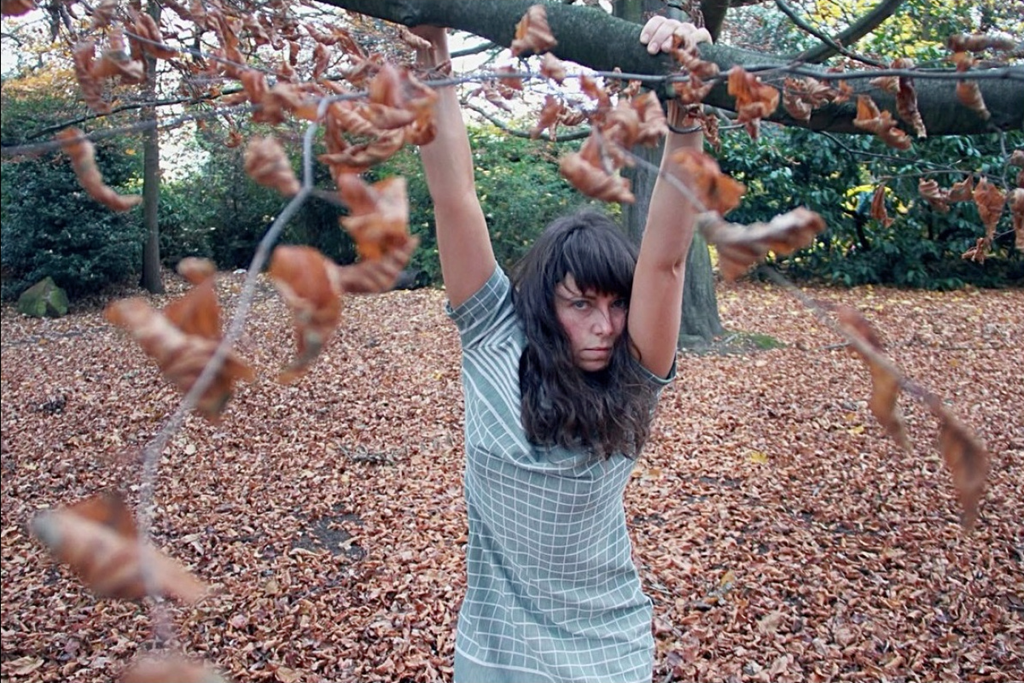
O.R.G.II is an immersive musical work that brings the traditional pipe organ into dialogue with electronic and drone compositions, unfolding within a liminal soundscape — a space of transition and encounter orchestrated by Puce Moment.
In February 2019, Nicolas Devos and Pénélope Michel first engaged with the organ through a 1942 mechanical instrument. From this encounter emerged the album O.R.G., which laid the foundation for their distinctive approach to the organ as both a sonic and conceptual medium.
Longtime collaborator and choreographer Christian Rizzo, aware of Puce Moment’s ongoing exploration of pipe organs, invited them to compose the music for his new piece à l’ombre d’un vaste détail, hors tempête, premiered at the Biennale de Lyon in September 2025.
Ahead of the release of O.R.G.II on 12th June, they’ve unveiled a video for ‘Simoon’. Watch it here:
AA
PUCE MOMENT is the artistic duo of Nicolas Devos and Pénélope Michel, combining visual and sound arts. With backgrounds in fine arts, contemporary arts, and classical music, they founded the experimental electronic group Cercueil in 2005, gaining recognition in the French contemporary music scene through extensive touring. Parallel to this, they launched Puce Moment, a platform for sound research and interdisciplinary experimentation.
Their creations, blending fictional ethnology with diverse musical and visual forms, are characterized by emotional intensity and ritualistic structures, ranging from harmonic clarity to raw distortion. Using electronic and electroacoustic arrangements, they craft immersive soundscapes that merge traditional instruments (like limonary organs or Japanese gagaku) with innovative interpretations. Their work invites active audience participation through spatialized and immersive sound experiences.
Hunter As a Horse (HAAH) is the South African musician and vocalist Mia van Wyk. Based in the Western Cape, she has spent the last few years self-releasing a diverse series of singles and EPs that combine electronically-focused songs with intense, thoughtful lyrics that are given a darkly cinematic production.
HAAH signed to Metropolis Records in early 2026 and have released a fourth single on the label entitled ‘Obey’. “It comes from a place of integration rather than surrender and is a conversation between past and present selves, the fragments that once felt chaotic now finding form within something chosen and intentional,” says van Wyk of the downtempo, moody yet rhythmic electronic song. “What might sound like submission on the surface is, for me, an exploration of trust, control and the quiet strength in allowing oneself to be seen and shaped without fear. The song moves through tension and release, discipline and desire, capturing that paradox where restraint becomes freedom. It’s less about giving something away, and more about stepping fully into a self that no longer needs to resist its own nature.”
Given the diminishing number of grassroots venue and the changing nature of live music consumption – whereby the masses flock to £60+ arena shows, and are happy to pay £20 or more to see a third-rate tribute act while swilling £8 pints and yammering away loudly to their mates for the entire evening, with barely one ear on the music, it’s small wonder acts who are new and / or more niche struggle to get bookings. And without taking your music to a new audience through live shows, if you can’t afford PR to plug your music to radio stations and the like, how are artists ever to break through the algorithmic recommendations and reach people? This is even more of a challenge for experimental electronic acts, as most small venues are more likely to showcase ‘bands’ or guitar-based music in the main, unless they’re doing something that’s promotable as ‘electropop’ or similar.
It’s thanks to the EMOM (Electronic Music Open Mic) network, and, in particular, the EMOM nights in York, hosted by North Facing Garden at The Fulford Arms – one if the most accommodating venues there is, who don’t only welcome weird and experimental shit, but have sound engineers who are up to the job of facilitating the kind of noise the acts who play such events are striving for, that I’ve caught TSR2 live on numerous occasions. These nights don’t only host bedroom explorers just starting out, but acts with respectable recording careers who simply can’t get a foothold on the regular gig circuit. And TSR2 certainly have quite a recording career already.
A yin / yang / pro / con of the EMOM format is that each performer gets just fifteen minutes, which is great by way of a showcase, a taster, and also great if you’re not digging it as no act is on long enough for it to get boring, but of you are digging it, or the music itself requires a more expansive set…
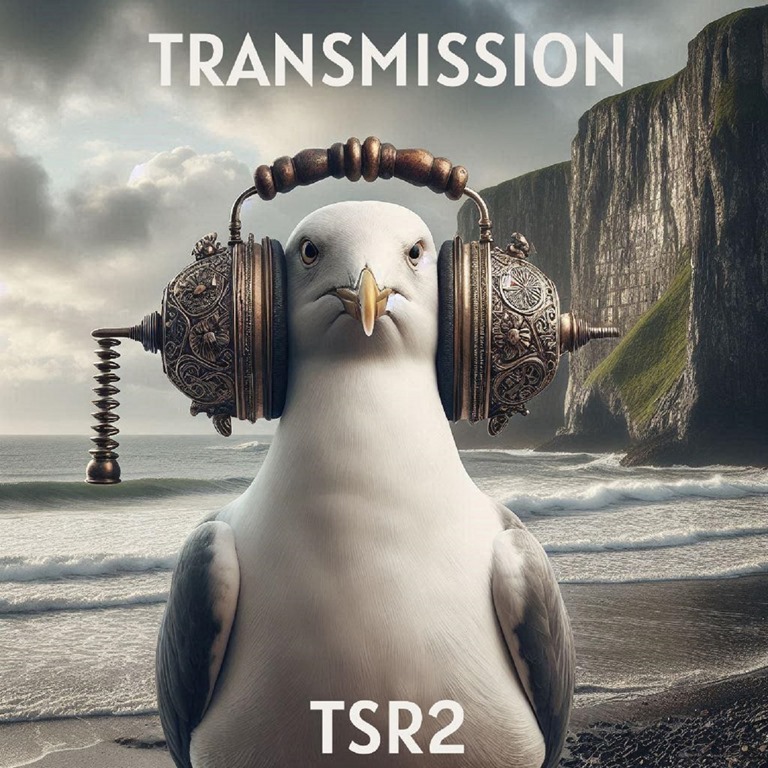
Transmission is TSR2 serving a more expansive set, with ten tracks and a running time in the region of an hour. It’s their second release on Lancashire label Wormhole World, following Birdstrike! in 2024, and it brings full-spectrum bleeps, churn, and imaginative abstraction, and the first composition – which is also the title track – brings all of this simultaneously, with space-age heavy drone given structure by some industrial strength beats which hit hard.
There’s ambient abstraction and swirling spaciness in abundance, all the oscillations and layers bouncing back and forth off one another, skittering and surging, with moments which elicit the essence of R2D2, others which are more like wading through long grass while struggling to find the path.
Muffled samples merge with the delirious digital meltdown that is ‘Modern Life’ and while it does have me briefly contemplating ‘Darker Avenues’, samples float and echo around the darker ambient spaces of ‘The Salt Marsh’. The ten-minute ‘Sewer Lawyer Logic’ is a dark, detailed exploration which ventures into dank sonic territories, and ‘Some Of You Had Better Go Home’ wanders between the terrains of Krautrock and Industrial – specifically at the point where Chris and Cosey make their departure to spawn techno.
Transmission evokes the atmosphere of space travel – but more in the sense we imagine than of the latest vanity loop around the moon – and laser-squirting sci-fi explorations. It’s a varied album, which presents shades of both light and darkness and ever-shifting moods.