Archive for June, 2026

12th June 2026

Christopher Nosnibor

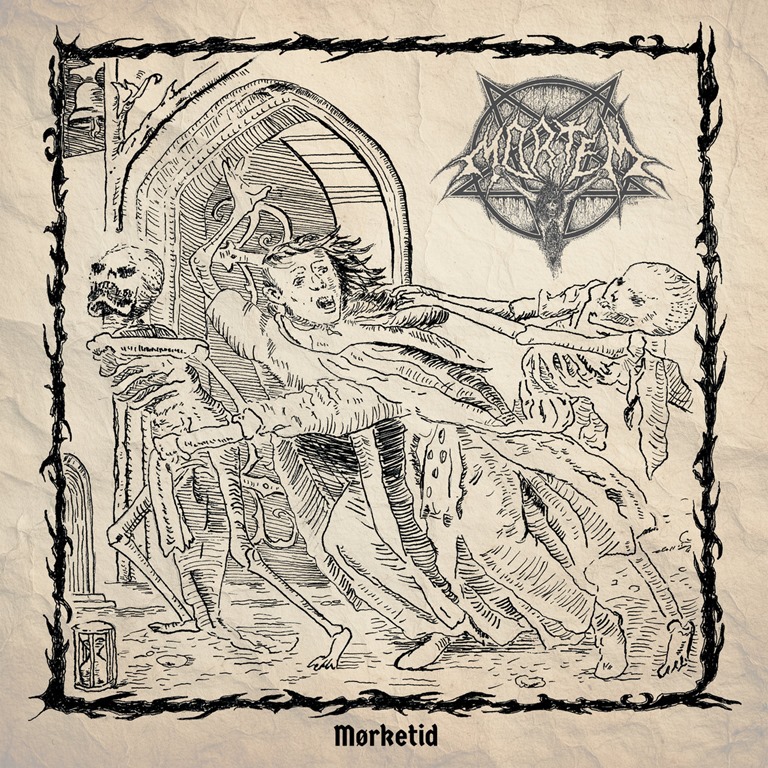
Picastro may not have the swiftest workrate – it’s been three years since their last release, the single ‘Earthseed’ / ‘Tacitus’ and four and a half since their EP of cover versions, I’ve Never Met a Stranger. But they’ve maintained a steady flow for the best part of three decades now, evolving through manifold permutations and carving time out for creative endeavours among the usual obstacles which face most adults, including, but no limited to, day-jobs and simply life itself.

At their (slow) core has always been Liz Hysen, vocalist, composer, and multi-instrumentalist, and this time around she’s joined by longstanding contributor Tim Condon (synth, acoustic guitar, electric guitar, bass, harmonium, piano) and Alex Fournier (double bass). Together, they’ve created a set of songs which – recorded primarily in their homes – conjures a weirdy, warping, lo-fi ethereality. ‘Fell the Family Tree’, centred around a stuttering discordant piano loop, laced with tremulous strings, is stark and revels in the perversely awkward nature of the way in which the elements rub against one another. ‘Remember who you are my son,’ Hysen croons, her meandering vocal swerving around a melody rather than holding one, in a way that’s haunting, the way sing-song tunes sung off-key in thrillers and horror movies are employed as a way of alluding to emotional disturbance, or being psychologically unsettled. I’m not actually sure it happens so much in real life, but the effect is unnerving.

‘Chance Striker’ is droney and foggy, and drags a deep weight, low and slow, and in this context, the skipping lightness of ‘Ring Description’, which clocks in at exactly just two minutes sounds and feels like a different band entirely. With a soaring vocal delivery which has a certain jazziness to it, the pulsing keyboards almost lean into a kind of groove. To describe it as ‘fun’ might be a bit of a stretch, but these things are relative, and it happens to land bang in the middle of an EP that, while moving, emotionally powerful, and inventive, is by no means designed with entertainment in mind.

Pairing acoustic guitar with strings and extraneous clanking and noise, ‘Move Fast, Break’ is a mournful folk song at its heart – but it’s a challenging listen, and not only because all the elements appear to be battling against one another to play different tunes. Hysen sounds emotionally hollowed out, before dragging herself through the moody piano murk of ‘Believer End’ with a tense, breathy performance.

Nothing about Double On Time is comfortable or easy: it leaves you feeling somewhat stricken – somewhat lost for words, and short on breath. It may be superficially simple in its instrumental arrangements, but the extent to which Picastro explore dissonant tunings and atonality is affecting. It feels wrong. And it’s this wrongness which is very much its strength, in that is hauls the listener from whatever comfort zone they might be lounging in, and into a space that forces them to look directly at scenes they might find hard to process. In doing so, Picastro give us true art.

AA

a0485695570_10

‘Inside’ is the latest music video by Ships In The Night, the ethereal darkwave project of Alethea Leventhal. Renowned for her distinctive electronic production technique and delicate yet mesmerising voice, Ships in the Night creates dark pop songs that feel both intimate and cinematic.

Included on the 2025 album Protection Spells, a bold and powerful collection informed by trauma, magic, darkness and hope, ‘Inside’ balances opposing forces of stillness and tension, vulnerability and resolve. The video for it is a glimpse into a world of transformation, with creatures hatching, plants unfurling and everything growing and finding its way.

“This song is about looking for feelings of safety and comfort in a world that is out of our control,” explains Leventhal. "It’s about finding places where you can just exist and be yourself. It’s about nurturing community, lifting up queer spaces and reaching for utopia.”

AA

bcf60b313d0f68a0a5e9bee04709062932a08595

Room40 – 26th June 2026

Christopher Nosnibor

It’s rare that an album sits so far beyond the realms of any genre that it’s difficult to know where to start in discussing it. Helen Svoboda’s Headwater is one such rare album.

The pitch describes Headwater as ‘a stream of fragmentation, individuality and wholeness, shaped by disparate and complementary aspects of Helen Svoboda’s solo practice. Sixteen threads or ‘earworms’ run throughout the record to form an abstracted picture of self, rooted in a devolved songform. It can be experienced as a tapestry that blurs the edges of identity; strange, beautiful, evaporative, and fluid, like memory itself’.

Lately I’ve been quite amazed by how little people I know can actually remember from times past. I don’t mean the fact that friends from school can’t remember people from our year we weren’t eve n friends with (although I do), but just events and things in general. I find myself haunted by memories stretching as far back to when I was just three, but most people I know can barely remember what they did last week, or what they had for dinner. Seeing my mother slide rapidly into a haze of dementia forgetfulness in recent months, I’ve spent a lot of time lately reflecting on memory on many levels. I’ve long considered it analogous to a vast ROM drive, but have wondered about the means of access to the stored files. And as much as these contemplations have led to some dark places, I’ve become more accepting of different capacities for recollection, while still feeling a degree of fear for the future.

The ensemble she’s has assembled certainly makes for an unusual combination, consisting as it does of Helen Svoboda (double bass, voice, composition) with close collaborators Jacques Emery (double bass), Finnish vocalist Selma Savolainen (voice), and Tilman Robinson (electronics, production). Double bass is rare. Two double basses – in a quartet – is unheard of, and makes for some incredibly unconventional instrumental interplay across the sixteen compositions.

Many of those compositions are brief – under two minutes in duration – but convey so much.

‘Veins’, released in advance of the album and featuring vocals from Selma Savolainen is sparse, ethereal, and is representative – to some extent, although the range of the compositions is such that no one piece could ever truly summarise its contents.

The album’s first song, ‘If’, is a deeply atmospheric amalgamation of stylistic elements. In many respects, it’s predominantly a folk song, and one built on foundations of curving drones and rousing vocals. It’s stirringly evocative, and calls to mind in some ways the earthy feel of Wardruna, only without the tribal percussion or sense of the cinematic. This feels more inwardly-focused and reflective, but is certainly no less powerful.

AA

‘Child’ begins almost acapella save for a sparse, low-key drone, but builds to a wailing crescendo, and Svoboda’s voice is nothing short of captivating, conveying so much more than the words alone. In contrast, the instrumental ‘Blur’ is a sawing strain of dissonance as a cacophony of strings scrape and scratch discordantly to create a nerve-jangling tension. It may only be two minutes in duration, but it’s ten minutes in intensity.

There’s spacey experimentalism and loose jazz leanings on ‘Void of Space’, and ‘Evening Hepuli’ brings high drama and breathy, operatic hysteria over stop/start strings which ring and reverberate. The final piece, ‘Hepuli Earworm’ is commanding, in places a wild jazz frenzy, occasionally inviting comparisons to The Necks, in others conjuring expansive soundscapes and moments with real emotional edge.

Headwater is not a straightforward album: it’s quirky and unconventional, and not always immediately accessible. But it’s inventive, imaginative, truly unique in composition and delivery, and, in parts, incredibly powerful.

AA

Celeste_de_Clario_347301

Photo: Celeste de Clario

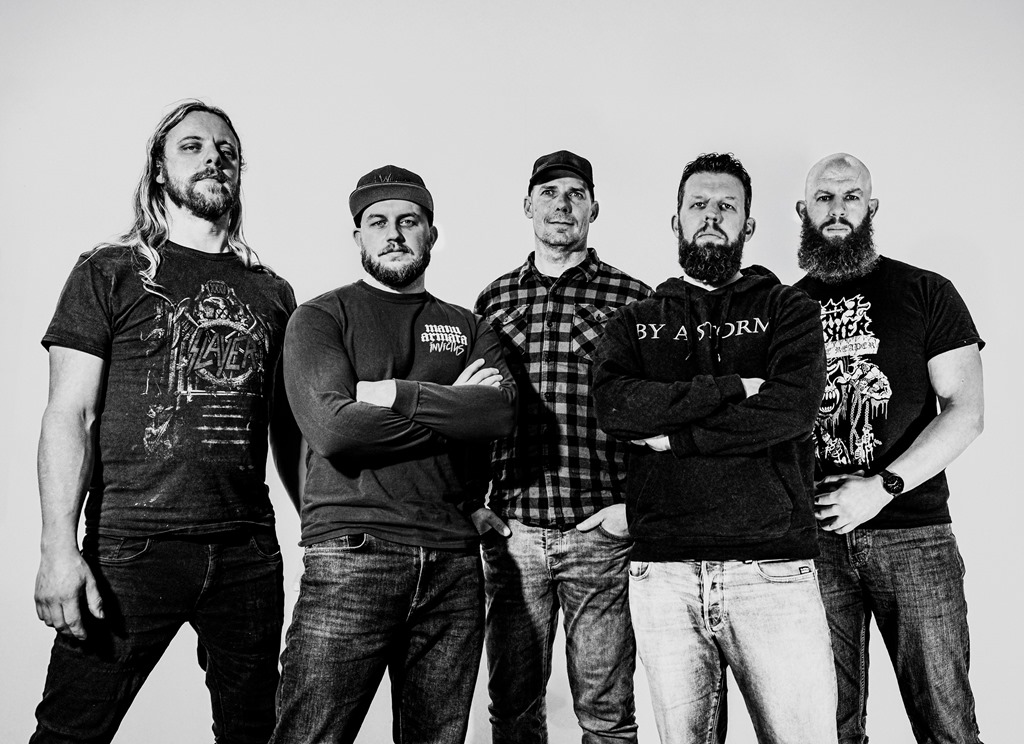
TEMPLE OF DREAD reveal the crushing music video ‘Rites of Blasphemy’ as the second advance single taken from the forthcoming new full-length Dreadspawn Dominion. The East Frisians’ sixth album has been chalked up for release on August 7, 2026.

TEMPLE OF DREAD comment: “Who is a true believer, and who is a blasphemer?”, guitarist Markus Bünnemeyer asks rhetorically. “This is always the most difficult question when you want to start a new religion. This track is a typical Temple of Dread ‘ballad’, and it will go straight to your hearts. No surrender, no prisoners!”

AA

Like a mighty battle trireme, TEMPLE OF DREAD are leaving their port on the East Frisian island of Spiekeroog to deliver brutal death metal with the new massive ram bow Dreadspawn Dominion to all that dare to try and block their course.

Musically, TEMPLE OF DREAD remain true to their old school death metal roots but continue to expand their sonic range by further honing their cinematic aspects with even more dark and heavy elements that began to receive special attention on the previous albums Beyond Acheron (2023) and God of the Godless (2024). These veterans are making full use of their vast experience and audible confidence in their deadly craft to add true emotions into their often rather technically focussed genre.

Once again, these hardy islanders make use of classical themes from the ancient world with lyrics penned by their friend and long-time collaborator, the psychologist Frank “Doc” Albers. Followers of TEMPLE OF DREAD will recognise familiar threads, particularly the continuation of the clash between Charon, the ferryman of the souls across the River Styx and the personalised deity of the underworld, Hades.

The stunning cover artwork of Dreadspawn Dominion was again created by celebrated Italian artist Paolo Girardi and the resoundingly sharp-edged production also returned into the most capable hands of TEMPLE OF DREAD drummer Jörg Uken, whose renowned Soundlodge Tonstudio has also been frequented by such acts as DEW-SCENTED, GOD DETHRONED, OBSCENITY, and SUICIDAL ANGELS.

The most obvious change that has affected TEMPLE OF DREAD between the recording of God of the Godless and Dreadspawn Dominion is the addition of second guitarist Daniel Maurer and bass player Andi Bauer, who enhance the Frisian band with even more punch – both live and in studio.

TEMPLE OF DREAD were founded on the island of Spiekeroog in 2017 by Markus Bünnemeyer with the intent to play old school death metal. The guitarist was soon joined by vocalist Jens Finger, who also plays guitar in SLAUGHTERDAY, and drummer Jörg Uken. Both musicians have remained in the line-up ever since.

Already the first TEMPLE OF DREAD full-length, Blood Craving Mantras (2019), hit the scene hard. Their excellent reputation grew with the next albums World Sacrifice (2020) and Hades Unleashed (2021) that followed in rapid succession.

With Dreadspawn Dominion, TEMPLE OF DREAD do not just deliver about everything that their old school death metal following might desire but also invite listeners from other realms on the darker and harder side of metal to lend an ear. Listen and behold: an ancient darkness is rising to claim your souls!

AA

5a77a545-13b4-7b80-301b-43004caef3be

27th March 2026

Christopher Nosnibor

The two single cuts from this eponymous debut couldn’t have been much more different, with ‘No one home but me’ taking the form of an epic, fuzzed out stomper that straddled authentic post-punk and second- or third-wave goth, while ‘Just Begun’ ventured into more epic, emotive territory.

I was intrigued as to the extent to which they represented the album as a whole – while at the same time harbouring certain misgivings over the use of AI for the videos and graphics. It was immediately obvious that the lyrics on the lyric video for ‘No one home but me’ weren’t entirely accurate, and while visually striking, the vid for ‘Just Begun’ was a bit ‘off’, straying into the same territory as the comeback by SPK / SPKtR. I get the appeal, particularly for self-releasing artists with no budget who can’t afford to pay professionals to do artwork and make videos… The spirit of DIY was always to find a workaround, to make something crappy yourself and be proud of the often amateurish results, whether it was a record sleeve made with a pencil sketch and stencils or a video shot in the back alleys near your house. There’s the argument that no artists are losing out, since no artists would have been employed anyway, but as much as AI stuff looks slicker, at the same time, it’s also lacking in soul and in that respect looks no more pro than the self-made work that accepts individual limitations. And that’s before we consider the environmental impact.

It may sound like it, but I’m not judging Ryan Michalski here – he’s only doing what everyone else is doing, and musically, he’s doing a lot more than most, covering quite literally everything: voice, guitar, synth, bass, drum, programming. Apart from the intro and outro, which take the form of dark rumbling noise courtesy of Clint Listing, aka The Slumbering. And he does a decent job of it, too.

The pitch for Sinister Shadows is as a ‘Gothic Death Rocker meets Post Punk project .Think Bauhaus , The Mission, Sisters of Mercy meets Wire and Killing Joke’, and there’s plenty of all that in the mix – as well as something quite unique – and much of the appeal is in the homespun and raw nature of the recordings. The songs don’t so much end as simply cut off and slam into the next one – no fade-outs or full stops – and it’s kinda cool in its primitivism. Similarly, the sound and mixing is a bit more advanced than the four-track tape recoding of old, but not much, and again, this is integral to the sound. The guitars are gritty, the drums / drum machine crisp but often partially submerged bar the crack of the snare which cuts through the welter of thick distortion.

‘Kiss the Dead Gothic Girl’ is expansive, emotive, with the layers of synth often washed away by a tsunami of overdriven guitar. ‘Day go by’ very much showcases the same sound as ‘No one home but me’, Michalski’s baritone vocal bathed in reverb, low in the mix amidst a tumult of fuzz and a soaring lead line, as he intimates dark thoughts. ‘I’ll make you suffer / I’ll make you bleed…’ he croons menacingly.

The guitars dominate, and showcase a distinctive sound that suits the material well, and the album favours mid-pace brooding. As such, the variety comes not from variations in pace but mood. ‘Lost My Mind’ is sparse in its arrangement but dense in its sound, and it finds Michalski pouring anguish, sounding brittle and vulnerable amidst a deluge of distortion, through which cheap synths blip and bleep through on occasion. This is the prelude to ‘No one here but me’, a song that reminds me of how desperate I was for a few minutes with the house to myself during lockdown. Yes – I was waiting for no-one home but me. It also reminds me that you should be careful what you wish for. It’s a killer tune, six minutes of relentlessly grinding away at a maxed-out riff while Michalski growls amidst cavernous reverb about waiting like a disease. The album’s worthwhile just for this.

The last couple of ‘proper’ songs, ‘Waiting here alone’ and ‘Your Breath’ round the album off nicely: the former is particularly dark, dense and sludgy, and arguably the album’s most Killing Joke / late 90s goth moment, the latter brings a lighter sensation, before another abrupt cut, and we’re thrown into the dolorous doom of ‘Outro’.

Sinister Shadows is everything the singles promised – bold, dark, guitar-driven, textured, deep. Exciting. The videos and cover art do the album a disservice. Raw, immediate, driving, this is killer.

AA

a1086563873_10

Chicago-based dark synth / industrial artist Tatv Gral (ˈtätü ˈgräl) announces the release of the Treachery EP, a new remix EP featuring the original version of the ‘Treachery’ single, produced by William Faith at 13 Studio, alongside exclusive remixes by DSTR (Daniel Myer of Haujobb), Tweaker (Chris Vrenna of NIN), and fellow Chicago underground denizens, [melter]. The EP is released on 6 July 2026, with presales available on Bandcamp now. The EP release is also flanked by the new video for the DSTR remix of the track, following on the heels of the video for the original single version in June.

Thematically, ‘Treachery’ emerged from a chance encounter that led Tatv Gral’s Allen Addington deeper into the symbolic world of Hellenistic astrology, as Addington explains: “It was a discovery in the ancient texts that unlocked the whole song – both Saturn and Mars independently carry the signification of ‘Treachery’, translated directly from the Ancient Greek. Two malefic forces, each already marked by betrayal, meeting in the same charged space. Following Richard Tarnas and James Hillman, I wanted to explore that archetypal collision phenomenologically – the Old Man and the Young Man, bondage and erotic force – seen through a gay male gaze and the cinematic shadow world of William Friedkin’s Cruising.”

Drawing on the archetypal psychology of James Hillman, who argued that images arising from the psyche carry their own intelligence and must not be immediately moralized, Tatv Gral uses music as a container for difficult energies rather than a platform to promote them. This approach places ‘Treachery’ in a lineage that runs through Coil’s ritual electronics, Kenneth Anger’s astrologically-timed film workings, and the Jungian shadow work that informs all of them. The queer lens is not incidental: it is the specific viewpoint through which these archetypal forces become visible.

Musically, Tatv Gral draws on the colder edges of industrial, EBM and dark electronic music, combining mechanical rhythms, claustrophobic textures and cinematic tension with an emotionally exposed vocal approach. Coil’s occult philosophy as genuine practice is at the centre of Tatv Gral’s frame of reference, while other influences range from Chicago’s industrial lineage via WAX TRAX! Records, through to the brutalist intersection of early British and German electronic music, shaped by the severity of Kraftwerk and DAF, while also maintaining a distinctly personal and contemporary perspective.

AA

Allen Treachery 96dpi

Sound in Silence – 18th May 2026

Christopher Nosnibor

Sound in Silence produce nice releases. Like the Loom label and early Gizeh releases, they disprove the notion that the CD format is impersonal, no more than mass-produced plastic. The latest offering from Death-Static, released as a run of 200 handmade, hand-stamped, and hand-numbered copies is exemplary. It’s more than just a CD. It’s art, and an artefact, and one worthy of the music it houses.

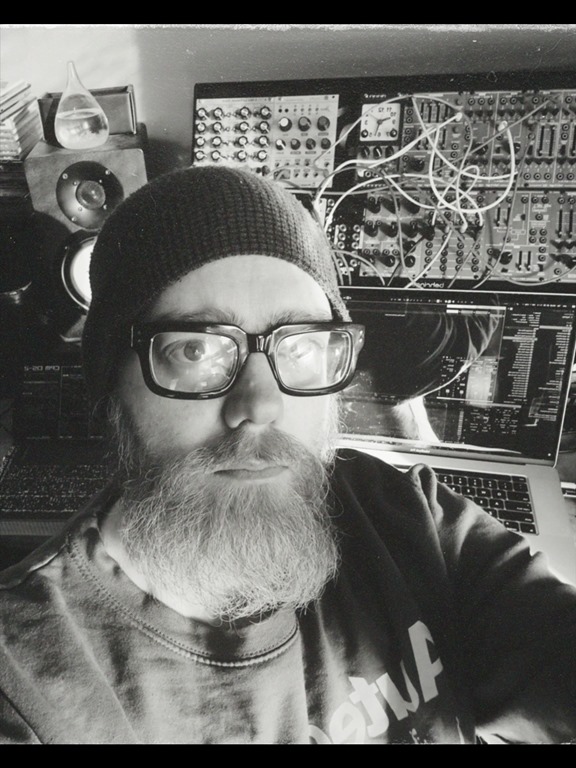
Death-Static is the solo project of Gareth S. Brown, who has no small catalogue of output to his credit, having previously released music as a member of the bands Hood, The Declining Winter and Memory Drawings, and solo under his real name and various aliases. We learn that Red Fire In The Open, his second full-length album, ‘is more drone-based than his last year’s debut Time Is Ignorance and consists of three tracks… conceived as a prelude, interlude and main piece, using bellows instruments, organs, cellos and field recordings’.

The prelude takes the form of the fourteen-minute ‘Blackhorse Infirmary’ and it starts out as a quavering analogue drone which stutters and stalls in between undulations. It’s the kind of warm tone that’s eerily close to the human voice. Organs and bellows are uncannily breath, and the polyphonic exhalation which defines this piece is uncanny and somewhat discomfiting. It swells like a chorus of voices humming, wordless, all around you, as trilling synth drones and elongated scrapes ripple, with feedback occasionally rising up through the slow, dense drift. The final minutes are a rustling, rupturing cacophony of churching chaos and discord. Although not entirely unpleasant, it is challenging, and feels like being assailed by a storm.

In context, the interlude, in the form of ‘The Last Days of Light’ is welcome. It’s a piano-led moment of reflection. Quiet, calm, with a hint of melancholy, it’s soothing, and extremely emotive. I feel a certain sadness. Not in having been manipulated to sadness, but because there is simply something about it. Life is sad. The world is sad.

The title track, ‘Red Fire In The Open’ is the main event – a composition which stretches beyond thirty-four minutes in an exercise in patience. It’s pitched as being ‘like a guided meditation, using bellows instruments, organs, cellos, and field recordings to move the listener from the grimy, urban trudge of a major metropolitan train station to a woodland dawn chorus – and at the same time towards a sense of possibility and hope.’ It very much marks a shift in tone, but at the same time expands on the gentle drone forms of the previous pieces.

Like cheese, or for some, bacon, birdsong always makes everything better. I used to march into town to get a bus to the office on the city’s outskirts on the opposite side from where I live under the power of the MP3. Since lockdown, I’ve sought silence and felt the need to keep my ears open, and to venture into nature as much as possible. This has been a huge life change in many ways. I actually appreciate the sound of the breeze, the ripples of air though the leaves of trees, now, not because I’ve turned into some massive hippy, but because I crave the sounds of life, and feel I need that connection. The nature on my doorstep has become far more meaningful to me than any David Attenborough documentary. Whales are cool, but so are bees and birds and green spaces closer to home. We live in the most horribly overstimulated of worlds. We’re far beyond the postmodern blizzard Lyotard and Jameson wrote of, in that we’re in a place where we’ve devolved, concentration spans have been diminished to mere seconds and most people use AI to do their thinking for them. We’re so fucked, in so many ways, and on so many levels. But Red Fire In The Open reminds us that there is an alternative, and that there is more. It reminds us that it’s still possible to step outside, and to open your eyes and open your ears, and open your lungs. Please, do, while you still can.

AA

a3054815221_10

On the trail of the Low Sunday Ghost Machine – Black EP, newly released via Projekt Records, Pittsburgh darkwave-shoegaze pioneers Lowsunday present ‘You’re So Wired’, with the video produced by Jer Herring. Capturing the roller-coaster experience of being drawn to a highly energetic, erratic individual, who blurs the line between imagination and everyday life, this song channels a vibrant, alternative rock spirit that ultimately celebrates breaking free into a state of liberated peace.

“’You’re So Wired’ is a song that touches on a manic type of experience. It also touches on the  classic Chuang Tzu question, after having had a vivid dream: "am I man dreaming I am a butterfly or am I a butterfly dreaming I am a man?" — The experience of not knowing if you’re awake or dreaming. In this case, the rapid eye movements shown in the video capture both dreaming and erratic behavior, making it hard to interpret which is which,” says Shane Sahene.

“In the video, I love the way Jer shows the subject looking through a camera – like a search for honesty or an altered reality. It relates to the song like a form of detachment – just one step removed. Ultimately it’s the experience with this type of person – that when they’re gone, you miss the excitement they create and when you’re together, the unpredictably can feel overwhelming. I enjoy the idea of being in a permanent dream state, like an overlay to reality, where one is only stabilized by their dreams.  The beauty of the video comes when the escape has been made – just as the song opens up in the bridge – it captures a freedom that had been searched for and finally found.”

AA

Formed in 1994, Lowsunday (initially Low Sunday Ghost Machine) emerged as a “retro-futurist” pioneer, blending darkwave and shoegaze long before the genres saw their modern revival. The ‘Black EP’ is their second release of all-new material released since 1999, previewed by the darkly fascinating lead track ‘This Is Not Heaven’ and focus track ‘Shattered’.
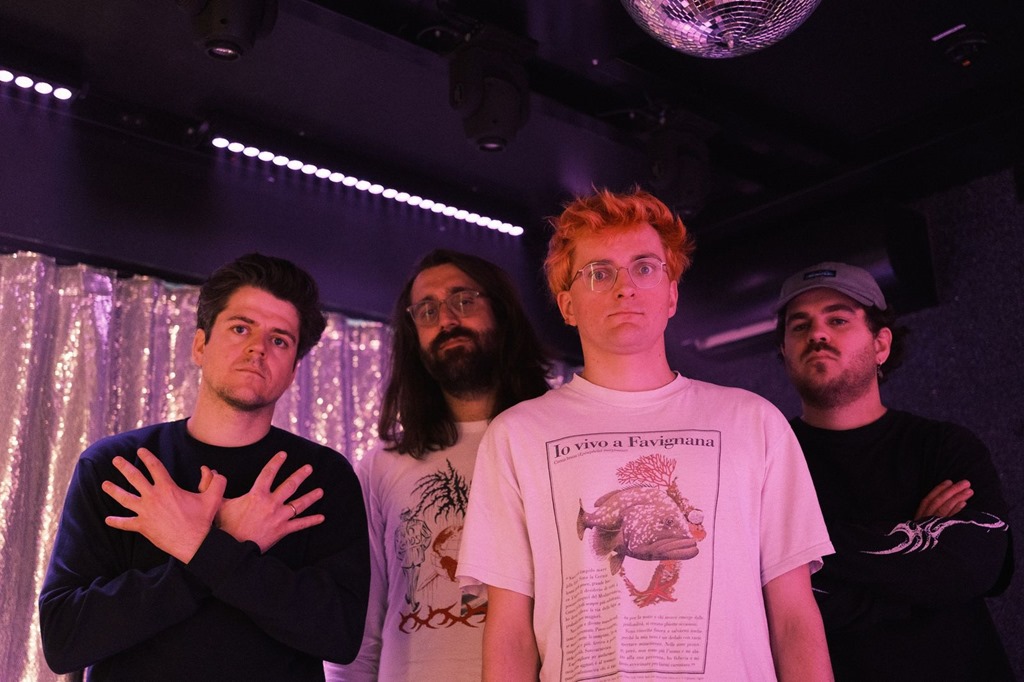
Their legacy was cemented with their 1996 debut album Low Sunday Ghost Machine and the 1999 masterpiece Elesgiem, both with extended re-releases out via Projekt Records in the past 18 months (for the 30th and 25th anniversaries, respectively). With a cult reputation for mercurial sounds and blistering guitar work, their music set the stage for subsequent generations of alternative artists. Following a nearly 25-year hiatus, the band resurfaced as the duo of original member Shane Sahene (vocals, guitar, synth, bass, drums) and Bobby Spell (bass, guitar, drums).

At the end of 2025, Lowsunday released their Low Sunday Ghost Machine – White EP, ranked second among Post-Punk.com’s Best EPs of 2025, and showcased by the singles ‘Love Language’, ‘Soft Capture’ and ‘Nevver’. Both a reflection and a resurgence, Lowsunday’s two new EPs usher in a welcome return, marked by superb production and a renewed creative clarity, bridging three decades of distinct sonic legacy with balanced doses of escapism, dreamlike sounds, drones and feedback.

With a sound defined by atmosphere, precision, and heartfelt shadow and depths, Lowsunday is now asserting their presence with new strength. While the White EP explored light and texture, the Black EP is the darker counterpart and definitive statement. Shadow and intensity, layered guitars, tight rhythms, and austere synths, this new EP distills the duo’s vision into a sharper, more potent form — a bold declaration of their enduring artistic power.

AA

Lowsunday again

28th May 2026

Christopher Nosnibor

It may only be three minutes and twenty seconds long, but this latest offering from Lumirex – an Italian musician based in Munich – has a lot happening. It’s dark and stark, with low, stealthy industrial bass tones strolling and bubbling. So far, so much standard dark electronica, the kind of stuff that’s been circulating since the late 80s when Wax Trax! created the template for all things of an electronic industrial persuasion. But with ‘Hurts’, Lumirex take that template and expand on it in the most unexpected of ways.

It begins with stealth, before building… and then something happens. That something is a magnificent vocal which soars and glides – not quite operatic, but every inch classical and the perfect contrast. Compressed and breathy, it suddenly soars skywards in a departure from this domain, while the beats flurry faster, evermore glitchy, evermore tense.

There’s a break where things clamour down to a hushed moment of breathing – a tense gasping, where the word ‘kill’ is repeated, and it feels dangerous, before, out of nowhere, a banshee scream erupts and the beats flitter in again and you find yourself in a total spin.

Sure, it incorporates myriad things you’ve heard before, so much so that it’s not only familiar, but borders on the cliché – but these are just the elements. The way Lumirex draws them together is something else, and ‘Hurts’ is nothing short of mind-blowing. It has to be heard to be believed.

AA

a2384340999_10