Archive for March, 2026

Room40 – 31st March 2026

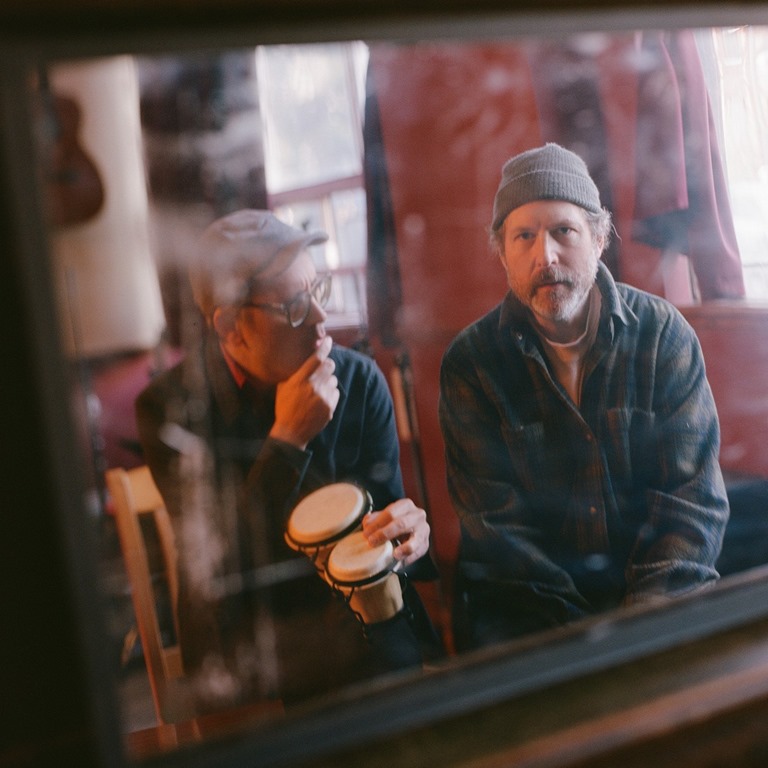
Room40 announces a new album by the Finnish/Australian award-winning double bassist, vocalist and composer Helen Svoboda, arriving on the 26th June.

The distinctive sonic world of Headwater weaves sixteen threads or ‘earworms’ built around two double basses, two voices, and electronics; heard as singular and combinatory bodies of material. The album forms an abstracted picture of self, rooted in a devolved song form. It can be experienced as a tapestry that blurs the edges of identity; strange, beautiful, evaporative, and fluid, like memory itself.

On revealing the album opener, ‘If" today, Svoboda says “’If’ explores a dream shaped by constant interruptions. The sleeper is caught in a series of jolts, driven by the fear of losing precious hours of consciousness within a fleeting human life. Each disturbance prevents a descent into deeper sleep, yet the body never full awakes.

“The video, directed and filmed by Angus Kirby, captures this state between rest and recurring subconscious thoughts. We filmed this around the corner from my house in Melbourne during, and after, a stunning summer sunset.”

AA

Songs are glued together by extended instrumental practice, improvisation, and strands of Svoboda’s cultural heritage. As a Finnish-born artist who has lived in Australia since the age of five, Svoboda delves into her Nordic background largely through the album’s vocal work, which carries echoes of Finnish folk harmony and traces of invented “Finnish” words, explored in collaboration with Savolainen as the second-voice. Svoboda notes that she does not seek to emulate or replicate this style of music, but has taken and nurtured the seeds of its influence on her musical language into something deeply personal and intuitive.

The instrumental pieces reveal an articulate language, with an expanded approach to the melodic and textural qualities of the double bass. Svoboda’s fascination with timbre is explored with collaborator Jacques Emery through the interplay of the two basses and Robinson’s electronics, extending traditional understandings of how the double bass might typically operate in a chamber context. The result is a different sound-realm entirely – traversing between spaces of lightness and weight, bound by a sense of youthful curiosity.

The ensemble features Helen Svoboda (double bass, voice, composition) with close collaborators Jacques Emery (double bass), Finnish vocalist Selma Savolainen (voice), and Tilman Robinson (electronics, production). 

AA

AA

000088690003-990000079e04513c

Photo credit: Celeste de Clario
EMI North / Launchpad+ – 30th March 2026

Christopher Nosnibor

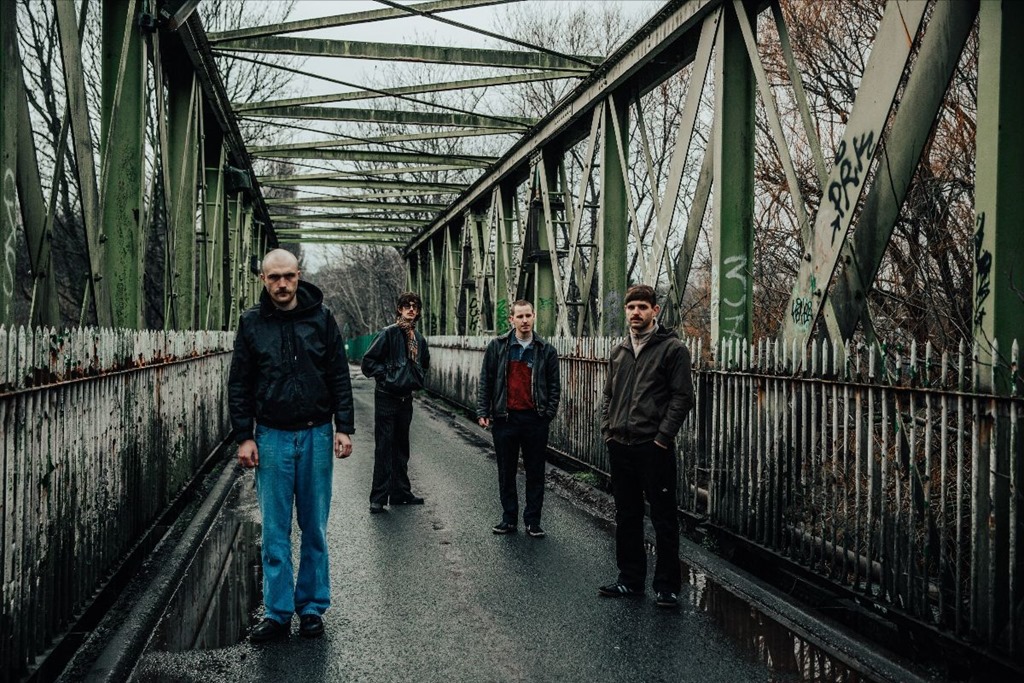
The 113 have done it again – only this time, more so. Like its predecessors, single ‘When I Leave’ is take from the forthcoming debut EP, The Hedonist, which is due to land on 17th April. And once again, it steps things up.

It follows the noisy path of debut, ‘Leach’, a vitriolic blast which powers in on a thick, thunderous overdriven bass, paired with an attack of heavy-hitting, cymbal-smashing percussion, slamming in with hard impact in the opening bars. Immediately, it’s the sound of a band that means business and arrives with a physical force. The vocals are straight in with a pumped-up spleen-venting tone of disaffection, and on this outing, the focus of their dissection and dissatisfaction with the conditions of contemporary living is lasered in on ‘the personal, exploring the gamified and repetitive nature of dating apps, where every interaction can seemingly begin to blur into the next’.

The accompanying notes expand on this, explaining how ‘the track captures that specific sense of cyclical monotony; scripted conversations, fleeting intimacy, and the almost inevitable feeling of disillusionment that can occur following the search for something real within systems designed with the purpose of endless scrolling: “Nice to meet you! Scratch the skin and we’re done, and hold the stench of a thousand pros playing for fun”.

Does anyone actually gain anything but grief and stress from dating apps? A few shit experiences, perhaps gathering a stalker or pest along the way, but really, how many find love – versus how many find nothing but the dregs of humanity?

It’s perhaps relevant to mention here that I met my (now late) wife online, in a music chatroom, at the turn of the millennium, before dating sites existed and before it was socially acceptable to meet people from online in real life. Her friends and parents were far from encouraging about her meeting me: back in 2000, the perception was that the Internet was full of weirdos, creeps, stalkers, and worse. Now… perhaps we’re more willing to take those gambles with the ever-expanding creep of isolation as a result of floating office hours, where people only see one another occasionally, the death of after-work drinks, and social media taking precedence over in-person interaction. How do you meet new people nowadays? Is this really what we’ve come to? It would seem the answer is yes….

And then, the guitar kicks in over that thick bass and pounding percussion, and it’s squalling and dissonant and then everything hits a laser focus to drive home a blistering chorus – their strongest yet – and POW! ‘When I Leave’ is two minutes and thirty-seven seconds of concentrated, distilled intensity.

AA

AA

0d196b4a-4c79-956e-eb71-fd2197f121c9

Credit: Naomi Whitehead

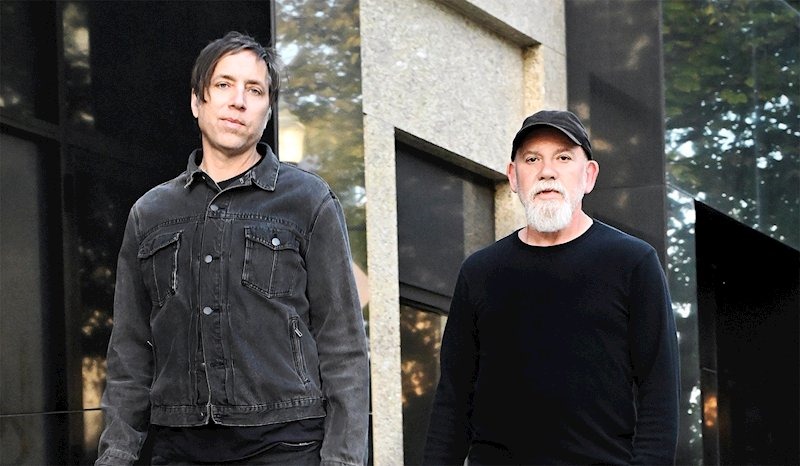
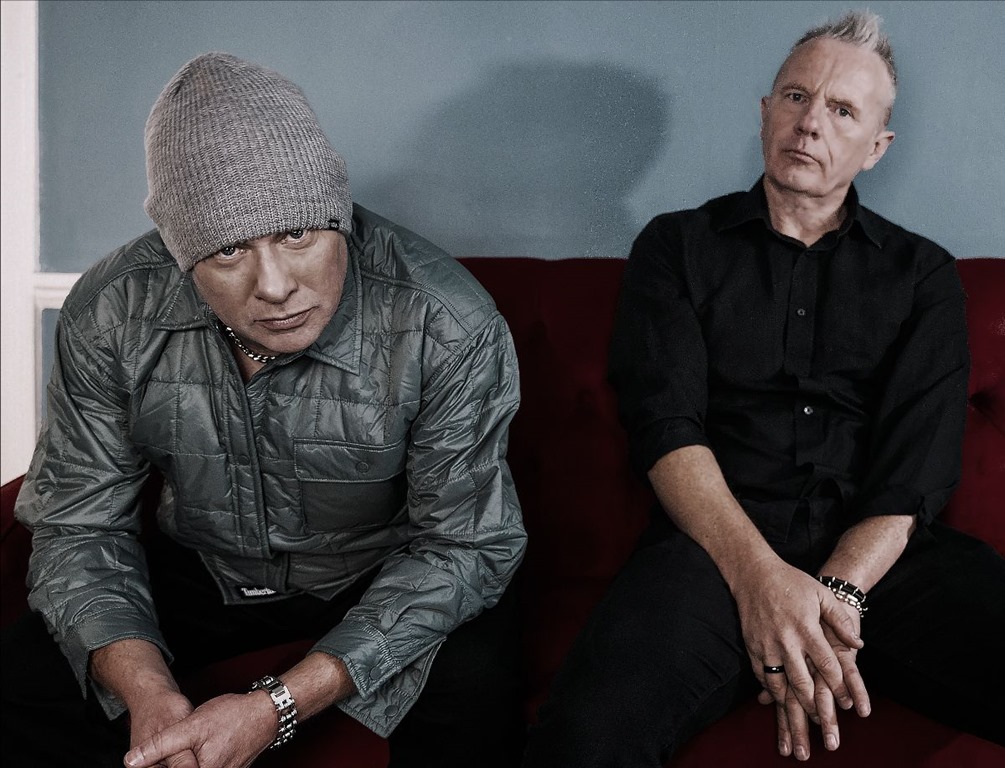
The exploratory electronic duo of Craig Dunsmuir and Sandro Perri returns 20 years after its self-titled debut. G70 2: Bones Of Dundasa is out  on 1st May 2026.

Hear the skittish industrial stutter of ‘Aquatint’ and fractured beats of ‘Pad Tide’ here:

AA

AA

20 years after its self-titled debut, Glissandro 70’s follow-up straddles the Album and Archive: a decade’s worth of recordings that were abandoned, lost in a hard drive mishap, recovered in the form of rough stereo mixes, reappraised with the balm of time, and restored/augmented/enhanced to forge a captivating new LP.

Glissandro 70 is the collaboration between Toronto musicians Craig Dunsmuir and Sandro Perri, first formed in 2003 as a mostly studio-based project of longform loop-based guitar and rhythm-driven experimentation. An eponymous (and up to this point singular) album appeared on Constellation in 2006, blending Dunsmuir’s afrobeat and Perri’s tropicalia influences through their shared reverence for Arthur Russell and dub techno.

While continuing to collaborate musically and foster a close friendship, Dunsmuir and Perri largely went on to helm their own projects thereafter. Perri transitioned from his ambient electronic sobriquet Polmo Polpo to a string of acclaimed singer-songwriter albums under his own name starting in 2007, with a side quest as ringmaster for the inscrutably leftfield electronic collaborations of Off World. Meanwhile Dunsmuir continued deploying lo-fi loops and broken beat iconoclasm as Guitarkestra and Kanada 70 (whose early tracks provided the original birthplace of Glissandro 70) and intermittent live concert Hi-life extravaganzas at the head of Toronto’s Dun-Dun Band (recently captured on wax for the first time by Ansible Editions).

G70 2: Bones of Dundasa arrives 20 years after the Glissandro 70 debut as an archival celebration, revisiting unfinished paths and re-assembling rediscovered recordings originally made between 2005 and 2015. The new album includes a cover of Arthur Russell’s ‘Lucky Cloud’ (augmented by Peter Zummo’s trombone newly recorded in 2025) and a previously unreleased Dan Bodan remix of the debut record’s ‘Bolan Muppets’, alongside 10 tracks of sample- and beat-based vignettes brimming with skittish guile.

AA

images.disco

Photo by Colin Medley

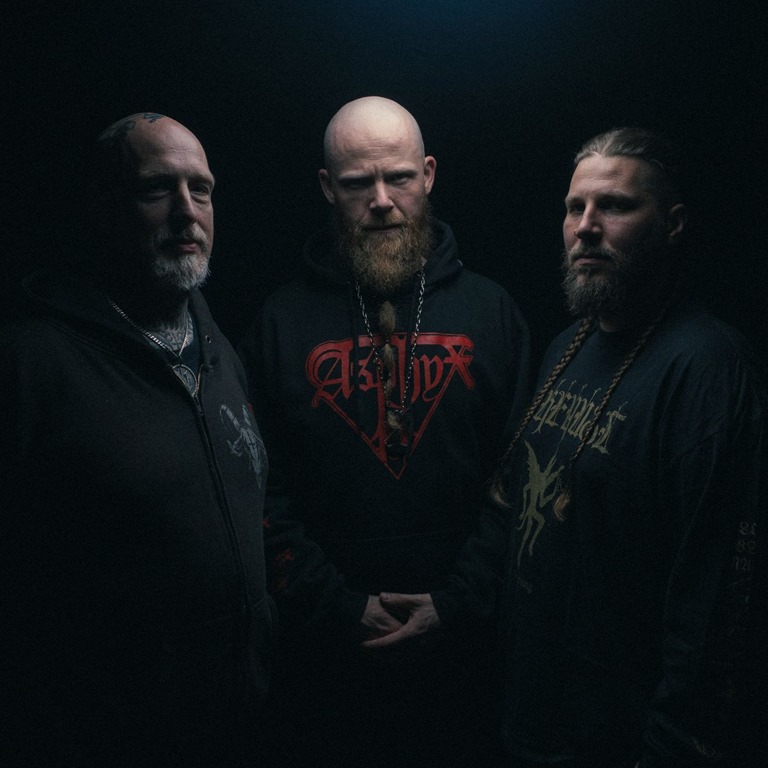
ARROGANZ reveal the next advance single ‘Under Scarred Skin’ taken from the forthcoming new album Death Doom Punks in the shape of an eruptive music video. The seventh full-length of the German death doom punks has been slated for release on May 15, 2026.

ARROGANZ comment: “In terms of the music, this song is not just a tribute to such legends as Carcass, Dying Fetus, Six Feet Under, and even Slayer – it is also a further proof that funky basslines work exceedingly well in death metal”, frontman -K- explains on behalf of the trio. “You want to have groove, feeling, and brutality all in one song? Here you go! Regarding the lyrics, well, you’ll be happy to read that they will drown you in utter despair. Enjoy!”

AA

AA

5402c3f1-6893-e549-c7a1-c44db796142b

Pittsburgh’s LOWSUNDAY presents ‘Nevver’ single (via Projekt Records).

Low Sunday Ghost Machine – White EP, their first all-new material in 25 years, is out now.

AA

Legacy postpunk-shoegaze outfit Lowsunday presents‘Nevver’, the final single from their new Low Sunday Ghost Machine – White EP, following the earlier-released ‘Love Language’ and ‘Soft Capture’. Released via Projekt Records and ranking second among Post-Punk.com’s Best EPs of 2025, this is the band’s first record of all-new material since 1999.

With early gothrock underpinnings, here Lowsunday capture a different energy than other tracks on this EP, with a slightly more down tempo and driving rhythm. Itt is uniquely sparse and delicate at times, relative to the band’s typically multi-layered approach regarding atmospherics and dense noise. The accompanying video, produced by Jer Herring, drifts between dark postpunk atmosphere and a homage to classic outsider cinema.

Born in the mid-1990s within the local Pittsburgh scene, Lowsunday (initially known as Low Sunday Ghost Machine) emerged as a "retro-futurist" pioneer, blending darkwave and shoegaze long before the genres saw their modern revival. Their legacy was cemented with their debut album Low Sunday Ghost Machine and the 1999 masterpiece Elesgiem, both of which were re-released via Projekt Records over the past 18 months (for their 30th and 25th anniversaries, respectively).

The band dissolved, leaving behind a cult reputation for mercurial sounds and blistering guitar work that set the stage for subsequent generations of alternative artists. Following a nearly 25-year period of inactivity, the band resurfaced as a duo in 2025—consisting of original members Shane Sahene (vocals, guitar, synth, bass, drums) and Bobby Spell (bass, guitar, drums).
”This is one of my favorite songs on the White EP. These lyrics are related to an increasing sense of apathy in the world – how it feels like even love isn’t enough sometimes and yet, the only fate worse is to let go of it. The feeling that happiness can be delicate and unhappiness can be so determined to take its place,” says Shane Sahene.

“This song touches on very early influences and the recording captured some of the most unique guitar tones we’ve ever used. What’s unusual is that, separately, Bobby had been working on a bass line and I had been playing this guitar part. It was serendipitous in how well they went together to form this song.”

‘Nevver’ is a case in point, showcasing the band’s legacy of creative experimentation and talent for weaving counter-culture cadences and weightless production with a sense of visceral vulnerability.

Bobby Spell shares, “’Nevver’ was enjoyable for the two of us to compose. I had been playing with this menacing bass line that happened to be a perfect match for a guitar part Shane had been working on. It gave us an opportunity to explore darker tones and indicated the need for a more sparce production. The almost plodding tempo made this song more challenging and fun, imbuing it with a combination of creepy darkness with a dash of humor.”

AA

lowsunday

Dependent Records – 27th March 2026

Christopher Nosnibor

Now in their thirty-fifth year, MESH have always unapologetic in the way their music reflects and incorporates their influences, spanning Yazoo, Depeche Mode, Giorgio Moroder, Massive Attack, and Depeche Mode. It’s the latter that seems to cast the longest shadow over their latest offering – an album brimming with uptempo anthems propelled by driving beats, urgent synth bass grooves and busy sweeping lead lines.

In this context, it’s often all too easy to get swept along on the tide of electric energy and skim over the lyrical content, which is considerably darker, as the title reflects. As they summarise, ‘This is the age of post-factual lies…’ and as they grapple with difficult times, there’s ‘a dark undertone that occasionally seeps into their new songs’. There’s a feeling that anyone who isn’t affected by the current state of the world is either ignorant or in denial, and for those operating within the arts or any creative fields, I would question how it’s possible to create without these external conditions filtering into the work. And how can anything not be political right now? Time was – not so long ago – when a lack of acceptance or belief in official versions of events was the domain of fringe conspiracy theory. Now governments blatantly lie to our faces: Israel are adamant that every death in Gaza was a member of Hamas, or otherwise a ‘human shield’, the USA insist that they’ve won the war with Iran and have decimated their nuclear capabilities which were likely to destroy the entire Western world tomorrow, and the UK government insists it’s in no way involved or even complicit in any of this. Meanwhile, there’s nothing to see in the Epstein files. Right.

For all that, there’s a lot of emphasis on relationships and the like. Timeless issues, which cut to the core of the human condition, but not necessarily hitting the heart of the zeitgeist. But it’s impossible to be contemporary and timeless, I guess.

On The Truth Doesn’t Matter, MESH are straight out of the traps with a brace of back-to-back anthems, before arriving at the slower ‘I Lost a Friend Today’, which conveys a deep, painful sincerity – but at the same time it emotes with the dramatic flourishes that only a band with gothier leanings could pull off. But then the buoyant disco beat and skittering, soaring synths of ‘Trying to Save You’ somewhat undermine the sentiment. The same is true of ‘I Bleed Through You’, on which some heavy words are diminished by a poppy disco backing.

‘Kill Us With Silence’ follows the same template, but the dark shades are overtones rather than undercurrents: the gothier leanings work well here, as do the more experimental shades of the sample-soaked ‘1031030’, which has a read 80s vintage feel to it.

MESH are definitely at their best when they go dark, and when they go experimental. Single cut ‘This World’ straddles the different aspects of the album, and as such, is arguably the single song which most accurately represents what The Truth Doesn’t Matter. The same is true of ‘Exile’: it’s a belting dark pop tune, but it’s a bit too Erasure to really reach those emotional depths.

There’s no lack of quality or consistency here in terms of songwriting or production, so the only issue is its stylistic focus, or lack of, and just how poppy it is for an album which aims to venture into dark domains. But sixteen tracks is a lot, especially when the majority are four or even five minutes long. The Truth Doesn’t Matter, but focus does, and while it’s not a bad album, trimming it down and concentrating on the theme of its title would have likely made for a more focused album, and one with greater impact.

AA

AA

af604c57-2ed8-c083-9aaf-bcbf9dce4061

Today, experimental Hip-Hop legends dälek release their latest full-length album, Brilliance of a Falling Moon.

Conceived, composed, and produced by Will Brooks (aka MC dälek) and Mike Mare, Brilliance of a Falling Moon is a sprawling, uncompromising record that speaks to the political timbre of the day. Taking its name from a section of Erik Larson’s 2011 novel In The Garden of Beasts, the album paints a fiery portrait of life and resistance in fascist America.

Recorded in the group’s Deadverse Studios over the course of 2024 and 2025, Brilliance of a Falling Moon’s beats are propelled by brutal, dust-caked drum breaks and cloaked in an ominous, otherworldly atmosphere. Taking aim at everything from The State’s suppression of information to colonialism and Trump’s demonization of immigrants, Brooks’ rhymes are practically burning with outrage at the current state of the world.

“When you listen to this, I hope you walk away with hope because we’re still fighting, building, and pushing.”

Check out the new video for ‘Normalized Tragedy’ below:

AA

Not only has dälek always presented an undiluted political stance in their music, the band is part of the continuum of bold, revolutionary hip-hop pioneered by Public Enemy and The Bomb Squad. dälek has spent decades carving out a unique niche fusing hardcore Hip Hop, noise and a radical approach to sound.

Founded by Will Brooks (aka MC dälek) and Alap Momin (aka Oktopus), dälek debuted in 1998 with Negro Necro Nekros, a sonic tour de force built upon thunderous drums, blissful ambient sections, and gritty, insightful lyrics. On watershed albums like 2002’s From Filthy Tongue of Gods and Griots (2002), Absence (2005), Abandoned Language (2007), and 2009’s Gutter Tactics (2009), dälek laid a template that added completely new textural and structural dimensions to rap music.

With this kind of musical and political pedigree, it makes sense that dälek would return with such a timely record that reflects all of our frustrations.

Once again the band has teamed up with artists Paul Romano and Mikel Elam for the striking package artwork.

AA

dalek---2026---4---credit-Jonny-Scala-990000079e04513c

Photo credit: Jonny-Scala

Dragon’s Eye Recordings – 20th March 2026

Christopher Nosnibor

The sad fact is that many of us have become somewhat numbed by the endless live rolling news of war in recent years. It’s easy to do when smoke and rubble and statistics are standard. In some ways, COVID – or more specifically, the media coverage of the pandemic – prepared us for it, by keeping us in isolation with only the TV and Internet to connect us to the outside world. As the numbers kept ticking up, as the number of deaths grew, so did our panic, but equally, so did our sense of distance. Unless we had directly lost a friend or relative, it wasn’t quite real.

And now, Russia’s invasion of Ukraine, and the genocide in Gaza – it’s not a war – and its escalation to surrounding areas, plus in recent weeks Iran and the whole middle east exploding, our shock and alarm gradually becomes mutes by overexposure and – worse – for many, a lack of concern over something that’s so distant. There’s annoyance at rising prices, particularly of fuel, but little more: people go about their lives as normal and don’t give too much thought to what life must be like for the people living in these places – or how it must be to have friends and family in constant fear for their lives, what it must be like for those who have fled to witness the scenes and the news reports, and likely see a huge disparity between the versions.

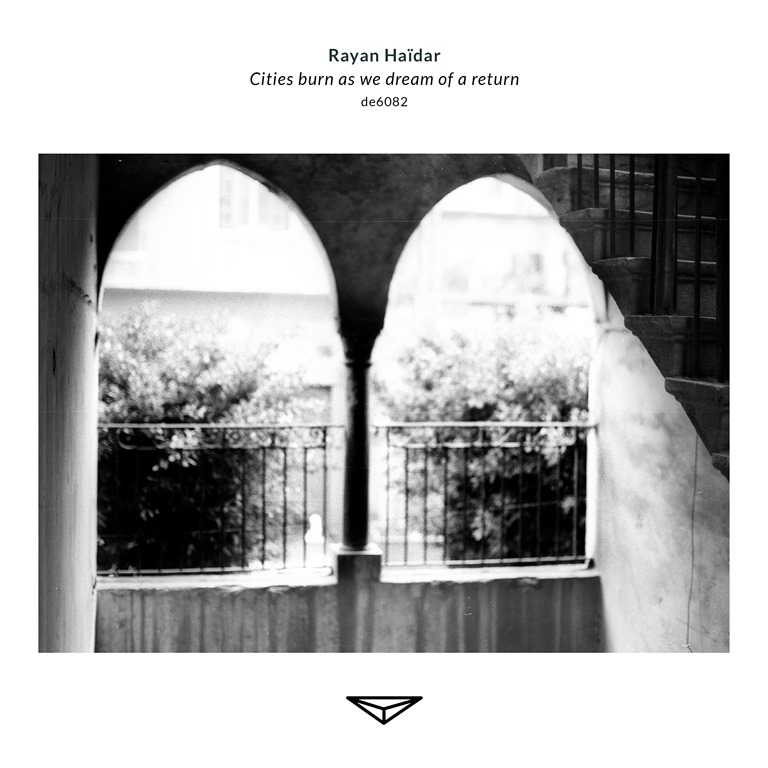
Cities burn as we dream of a return gives pause for thought and to reflect on these things. He’s a Beirut-born, Paris-based multi-instrumentalist, and the album is described as ‘a profound meditation on displacement, longing, and the impossible distance between memory and its aftermath’.

As the accompanying notes detail, ‘The album began as home recordings in 2024 — fragments inspired by Beirut and the quiet melancholy that had always permeated Haïdar’s childhood place. Shortly after beginning work, the aggression against Lebanon escalated, and Haïdar found themselves in the surreal position of documenting their relationship to home while watching that same place be destroyed from afar. The recordings became inseparable from the violence unfolding in real time, each track absorbing the grief and anger of witnessing loved ones continually hurt with no ability to intervene.

‘As Haïdar entered 2025, they continued recording, carrying more grief and anger than when they had begun. What emerged is not simply an album about a place, but about the way we carry our homes and the people we love within us—how they become part of our interior landscape regardless of physical distance or destruction.’

In context, what’s perhaps surprising about Cities burn as we dream of a return is just how gentle it is. Each piece takes the form of a masterfully spun cloud of abstract ambience, the layers and textures twisting and merging and separating, a constant flux, as distant samples echo through the mists.

The tone does, however, shift somewhat as the album progresses. Although indistinct, the samples appear to convey a narrative of increasing anxiety, as do the titles. The title track’s serenity is broken by the sound of panicked voices, while ‘On people we once met and places we once saw’ is imbued with a heavy air of melancholy beneath its soft flow. With it comes the realisation that many of those people and many of those places either no longer exist, or are otherwise altered beyond recognition. Everything changes, everyone changes, but the difference between growth and progress over time, and absolute destruction is beyond compare.

‘At dusk, looking down’ draws the album to a close with an achingly haunting atmosphere and a sense of loss that’s difficult to define but nevertheless inescapable. The album’s six pieces are subtle, gentle, and comparatively sparse, and much of the emotion they convey is indirect and implied. Cities burn as we dream of a return is nuanced and contemplative, and quietly moving.

AA

de6082 art

22nd March 2026

Christopher Nosnibor

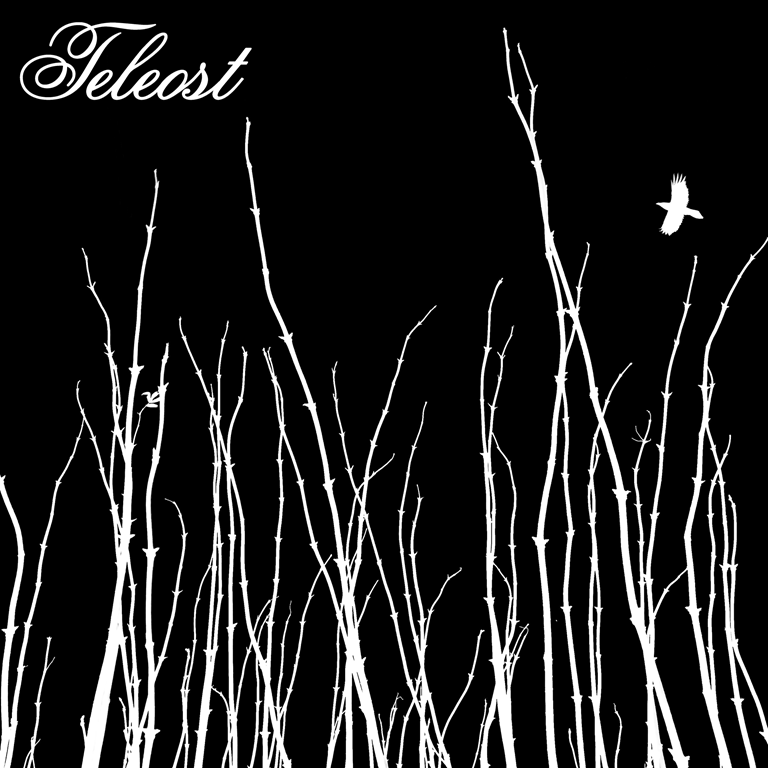
After an eon evolving their sound with comparatively little to show in terms of releases, Teleost have really picked up the pace of late: Three Originals was released in January 2025, followed by ATAVISM in December of last year, and here we are barely three months on faced with a new eponymous EP. Clearly, they concentrate their mental energy into the music rather than the naming of their EPs – and rightly so. The title is inconsequential: the music is what this is all about. moreover, what this, and what Teleost are all about, is exploring those dark tones and the ways in which frequencies resonate against one another, particularly at volume.

Live shows – particularly of late – have more than attested to the necessity for volume for Teleost, in the same was as is true for Earth, and Sunn O))). The simple fact is that some sounds, some frequencies, some resonant interplays, simply cannot occur at low volumes. Anyone who suggests that these bands – and Swans and A Place to Bury Strangers, among others – exploit volume gratuitously simply doesn’t understand the way in which vibrations change things. Teleost, however, very much do. And with their ultra-slow doom-drone, this is a band who really go into microcosmic detail when it comes to tonal shifts and reverberations within their great wall of sound.

This – their second EP, and sixth release in all – features three tracks. And once again, epic is the word. The four-and-three-quarter-minute sludgefest that is ‘Palanquin’ feels like a brief bridging piece between the megalithic ten-minute ‘Navigator’ and the eight-minute ‘Standing Stone’. And holy shit, is this heavy.

With Telost, the guitar has always been heavy, thick, grinding, the sound more akin to two guitars – or more – grinding out a speaker-shredding tsunami. But this… this takes it up several notches. It’s not just the guitar sound itself, of course: the production achieves the rare feat of capturing not just the rib-rattling, lung-shredding sound of a duo that take Melvins’ reattenuation of Black Sabbath to a skull-crushing level of pain.

With Teleost, there’s a clear sense of structure, of linear progression, too. ‘Navigator’ starts out gently, a textured hum, a buzzing drone, clean strings strummed but resonating. Low tom beats enter the mix and the build is slow, deliberate. Leo Hancil’s vocals reverberate – detached, a pagan-like incantation low in the mix. The suspense builds. Dissonance chimes, but still we traverse through deep fog and mud-thick tracks. And then at five minutes, it hits. And it hits so hard but so sweetly. The impact is immense. THAT is a riff, and how to land it. It completely knocks the air from your lungs, then proceeds to tear your limbs off, one by one, while shredding your skin with blunt but brutal claws.

How two people can create this organ-bustingly megalithic noise is unfathomable. But they do, time and again, growing ever more immense with each show, and with each recording. Yes, I say it every time, but every time, it’s true: Teleost have transcended to another echelon with this release: denser, heavier, louder, more punishing – and at the same time more immersive and transportative.

AA

AA

cover

25th March 2026

Christopher Nosnibor

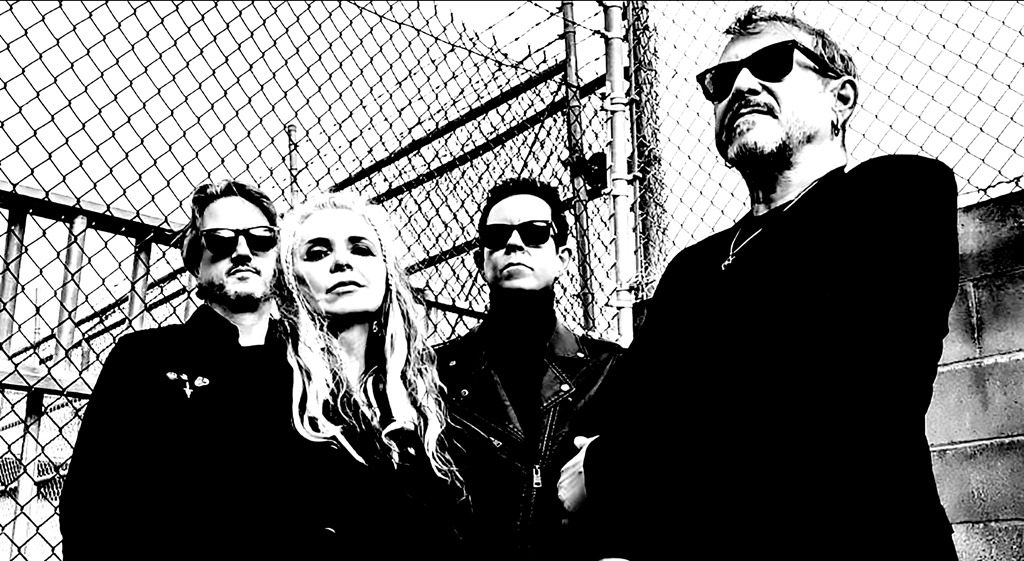
Pitched as ‘one of the most exciting new bands on the North American dark post-punk scene’., Octavian Winters formed – or, as their bio would have it – ‘was born into the ghostly isolation of San Francisco’ in 2022. Already, the pandemic seems to have receded into a past which feels like a fever dream. The fact that German post-punk legends Pink Turns Blue dig them enough to have picked them as support for their tour of the western US in April speaks for itself, and in many respects, so does this single, a thick slice of classic vintage-style gothiness that’s cooked to perfection.

Frontwoman and lyricist Ria Aursjoen says: “‘Elements of Air’ is about how we see the world, our chosen frame of reference, and how much power that holds over us — including the power to destroy things we value. The direct inspiration was someone I knew who chose to view the world through a lens of hate, and how that ultimately cost the friendship.”

In these times of extreme division, this is likely to be a scenario which is relatable to many. While the arrival Trump in the Whitehouse (and the advent of Brexit here in the UK) was an obvious moment of rupture, the pandemic proved to be a defining moment in time where people seemed to take more polarised positions. And since emerging from the successive lockdowns, the world feels like a different place – a place not only in the grip of war, but a place where people seem intent on causing anguish, antagonism, and aggravation, as if they’re spoiling for a fight, and if it’s not over immigration or race or the like, then they’ll settle for sparking a dispute over car parking or dustbins. Disharmony dominates the social discourse, and many have found themselves having to sever ties to once-close friends in the interests of self-preservation.

Driven by rolling drums and a dense bass, it’s topped by a choppy, metallic, flange-coated guitar, reminiscent at times of X-Mal Deutschland, which scratches and scrapes it way through the track. And then there’s Ria Aursjoen’s airy vocals which breeze in and weave a spellbinding melody. Part Toni Halliday (Curve), part Maria Brannigan (Sunshot), she brings an almost poppy vibe to the dark-edged post-punk party. Sure, it’s a formula that has its roots much further back, with The March Violets and Skeletal Family incorporating an accessible, pop-with-a-twist vocal, with snaking melodies steeped in Eastern mysticism.

Listening to any ‘new’ goth inevitably leads me down a rabbit hole of memory lane excursions into ‘old’ goth: the genre is rich in intertext and references, influences and appropriations, and it was ever thus, the early 80s acts who were goth before the label existed – Bauhaus, The Sisters of Mercy, Siouxsie – all belonged to the post-punk milieu, which draw on Bowie, The Doors, The Stooges. Perhaps more than in any other genre, there’s a lineage and a trajectory which can be traced back through the decades to its musical prehistory and which has remained quite intact through the various waves, of which there have now been several.

As such, it’s not so much about breaking new ground, but how inventively the tropes are used, and how well-crafted, how well-executed the songs are. And in the case of ‘Elements of Air’, the crafting and execution is spot on.

AA

AA

Octavian Winters band photo (greyscale)