Posts Tagged ‘goth’

Christopher Nosnibor

This is one of those occasions where music critique intersects with personal experience. I make no apology for this. I’ve long maintained that one’s relationship with music is personal, and it goes beyond the fact that the soundtrack of your life is something which evolves in ways beyond your control.

The first time I saw Salvation was ay my first ‘proper’ gig, when I was 14: they were supporting The Mission at Sheffield City Hall in March 1990. I didn’t know who they were at the time. But I soon discovered that they were an integral part of the early 80s Leeds milieu, and they’re noteworthy for having their first two singles produced by different members of The Sisters of Mercy, among other things.

The last time I saw them was at The Brudenell in Leeds, the day after the Queen died, and ahead of it, my wife bought me one of their T-shirts. It turned out to be the last birthday present she bought me, as she died just four months later. So here I am, wearing that shirt, to see a band I first saw thirty-six years ago, playing just fifteen minutes from my house in a 150-capacity pub venue. It’s a big deal, but also an occasion which lands with mixed emotions.

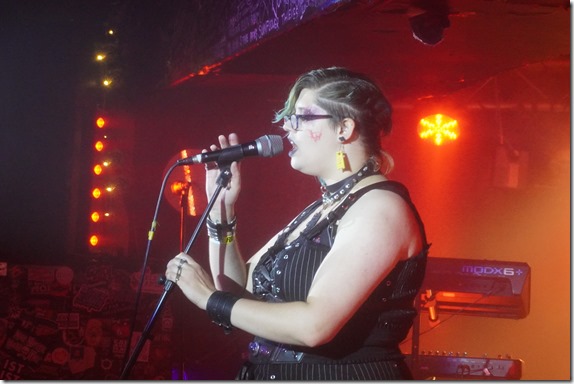
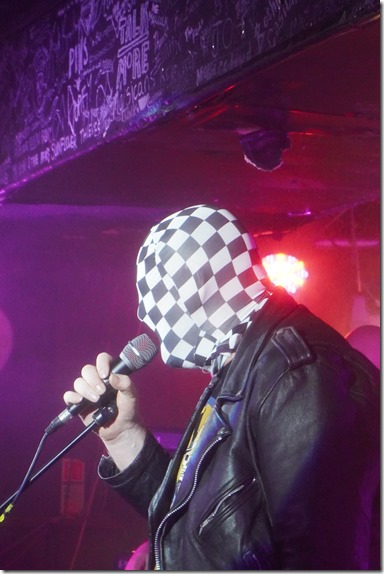
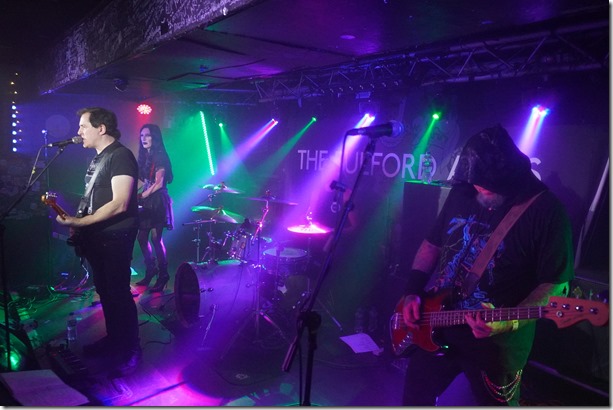
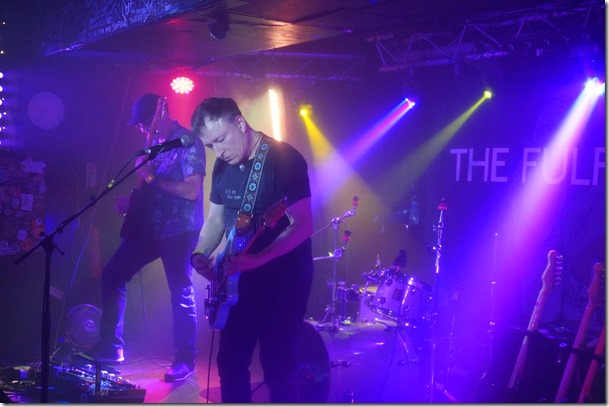
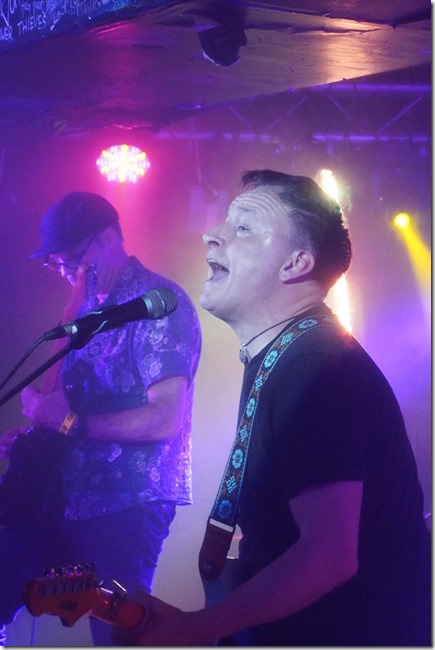
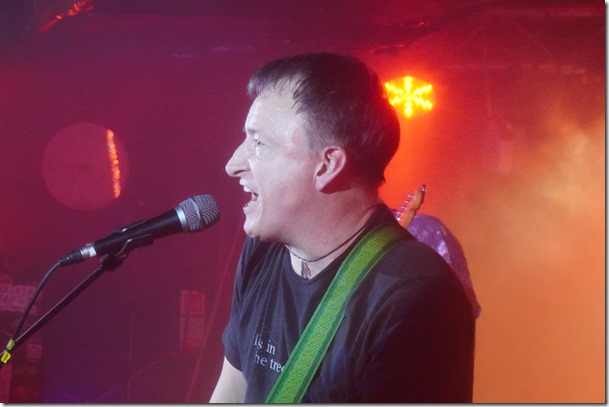
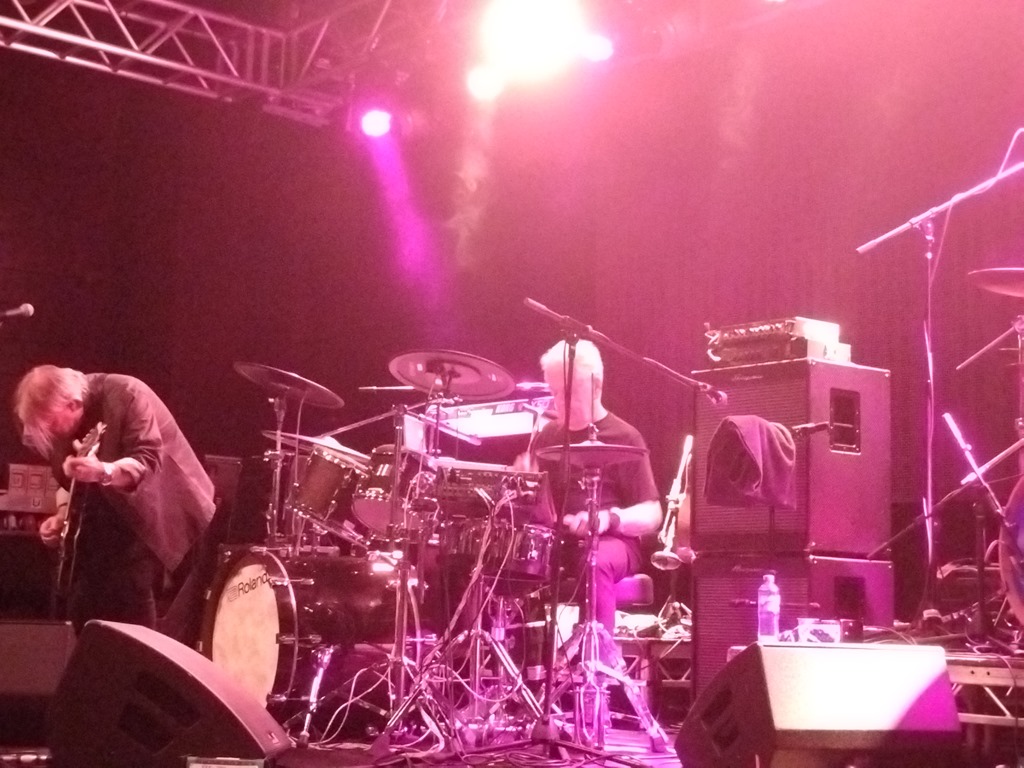
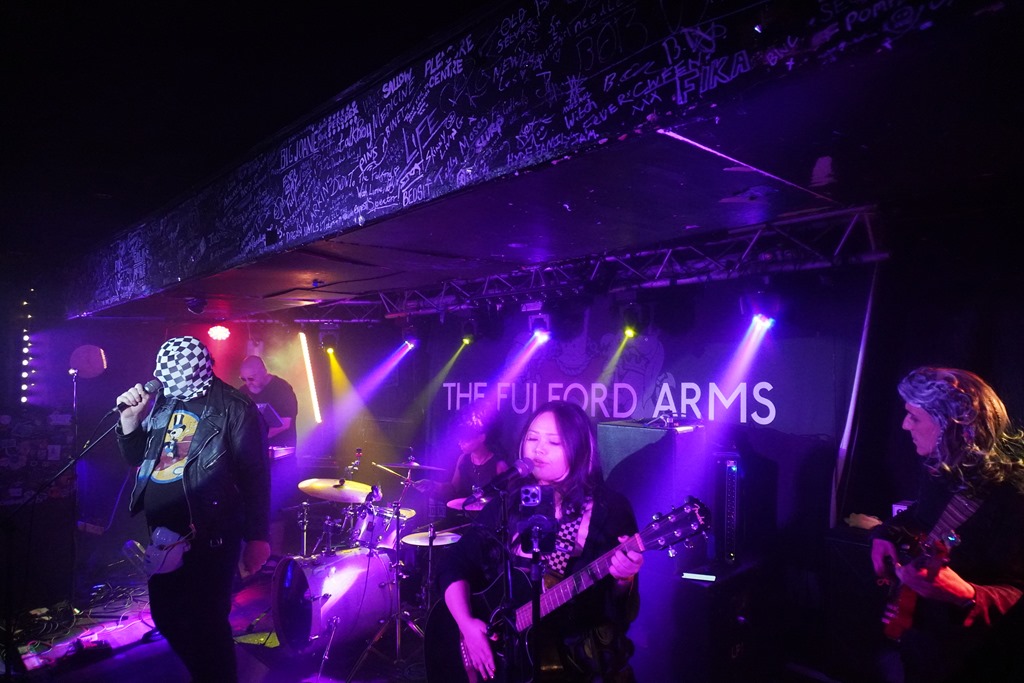
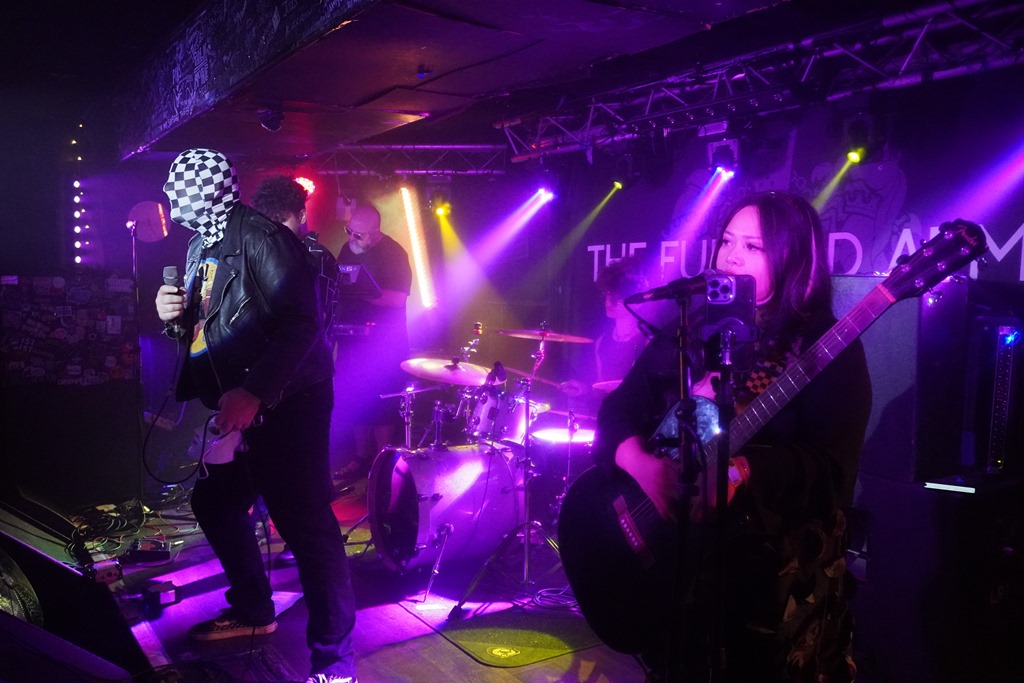
The Scarlet Hour are a duo with programmed synth and drum backing and live bass. But there’s an awkwardness about them and their set. The sound is a bit thin – that’s thanks to the bass and backing track being proportionally quiet, and the fairly clean vocals being a bit high in the mix, meaning the cliché lyrics are more audible than is desirable, and the vocals – trying and failing to sound menacing and tortured don’t help. Tim Synistyr (who really is anything but) has the poses – not to mention the leather jacket, open snakeskin-patterned shirt and ‘Body Electric’ T-shirt – but no aspect of the performance feels natural, the poses come across as being forced as the off-key singing. Dose makes the poison, and the naffness has a cumulative effect, making for a long half hour. ‘Stay Awake’ sounds like New Order circa ’83 and ‘Afterlife’ calls to mind the flimsy pop of Depeche Mode’s ‘New Life’ – novel, and a decent enough tune, but it would be a long time before they got interesting. Unfortunately, that’s something The Scarlet Hour never do. The applause is more polite than enthusiastic.

DSC09080DSC09035

The Scarlet Hour

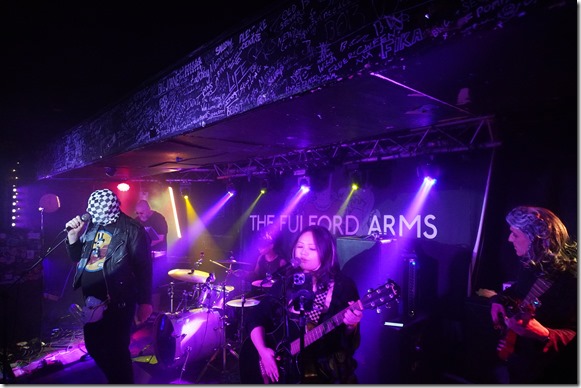
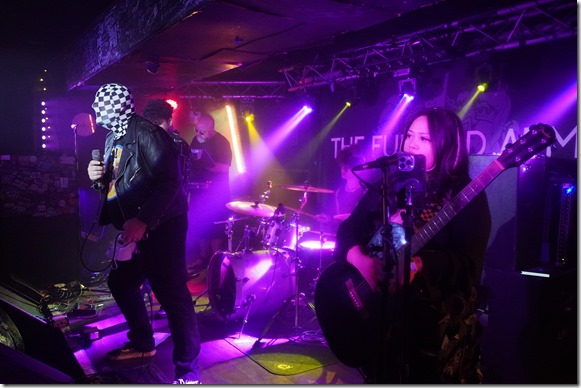
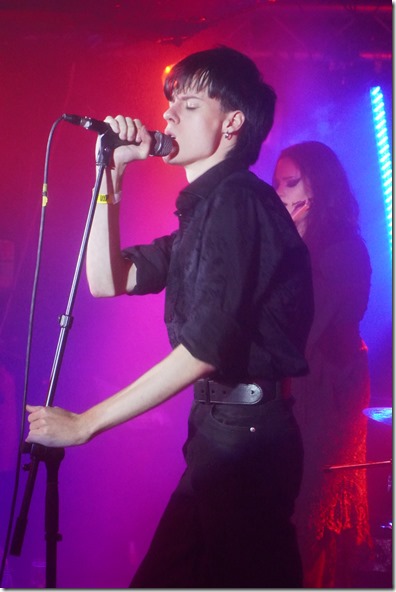
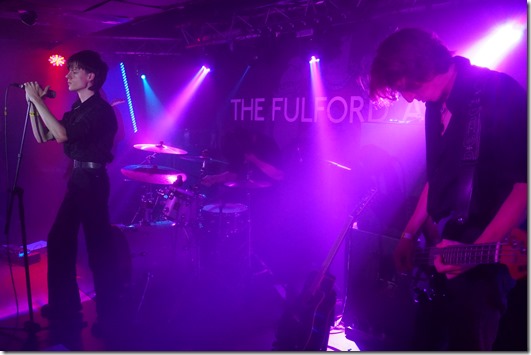
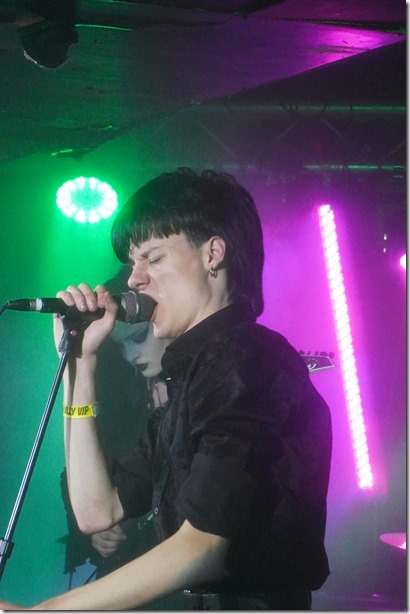
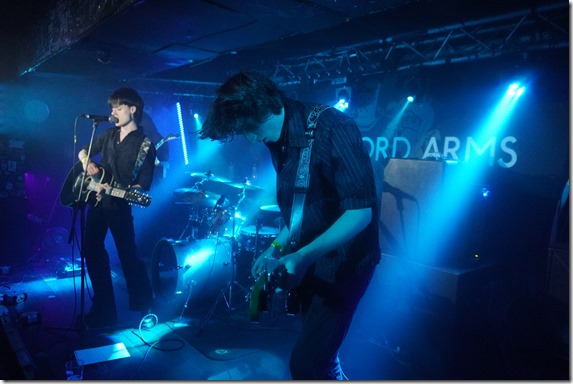
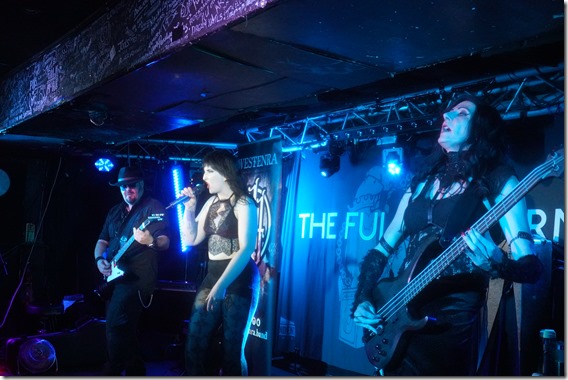
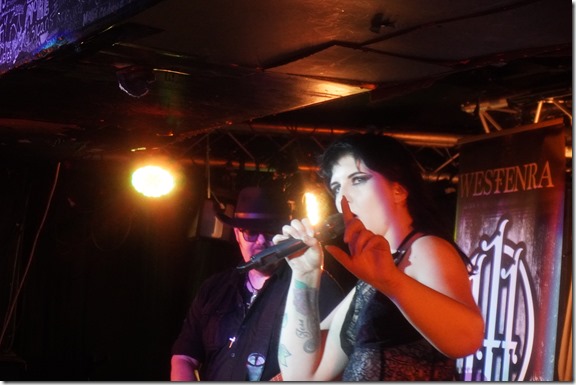
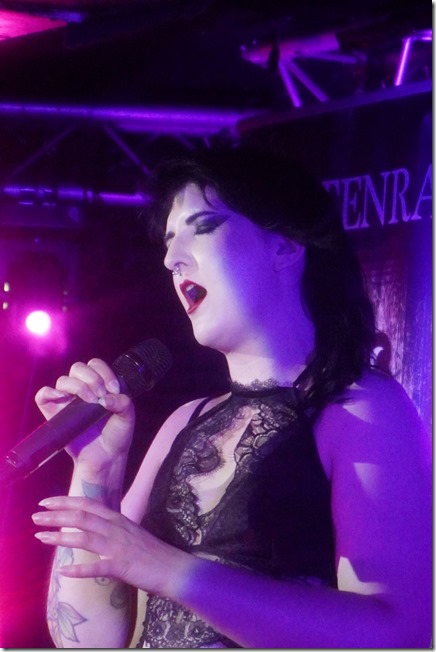
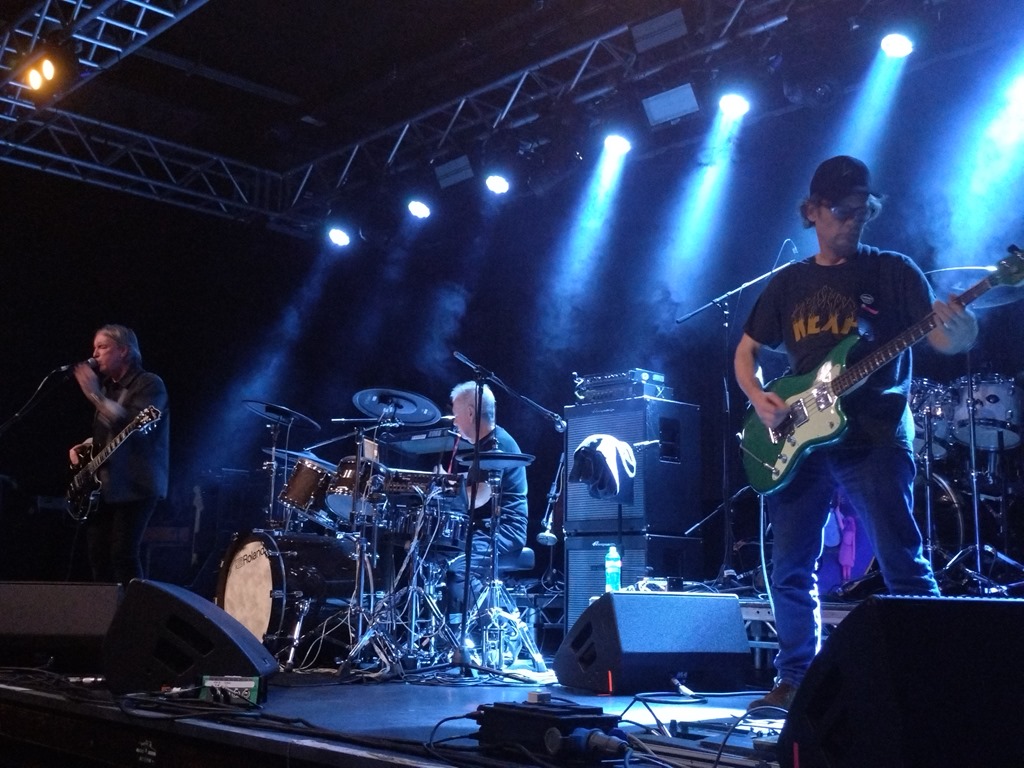
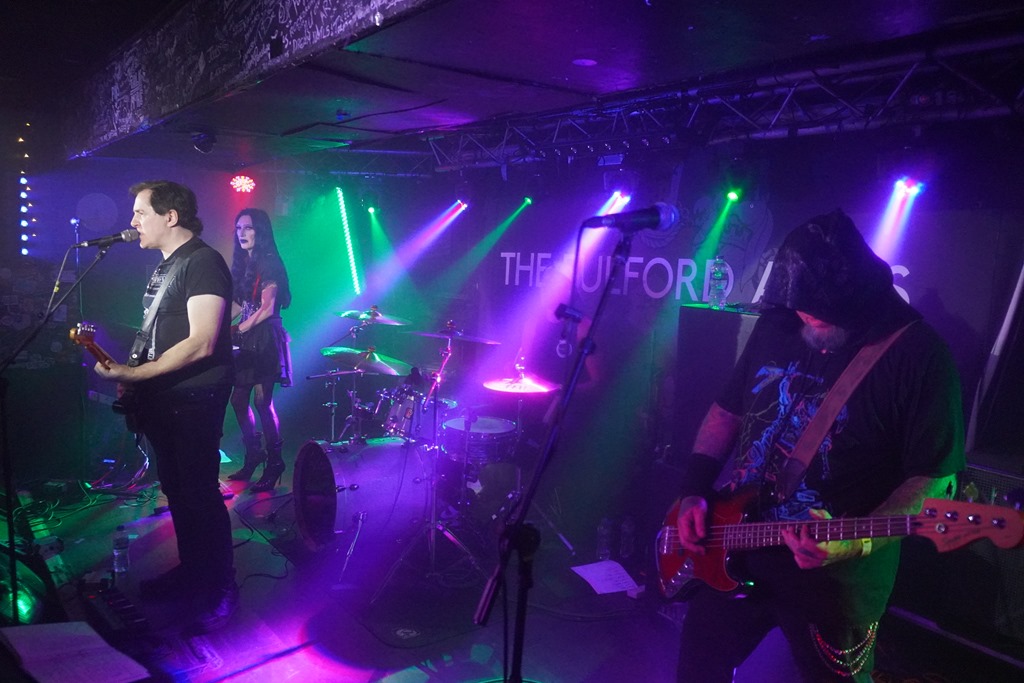
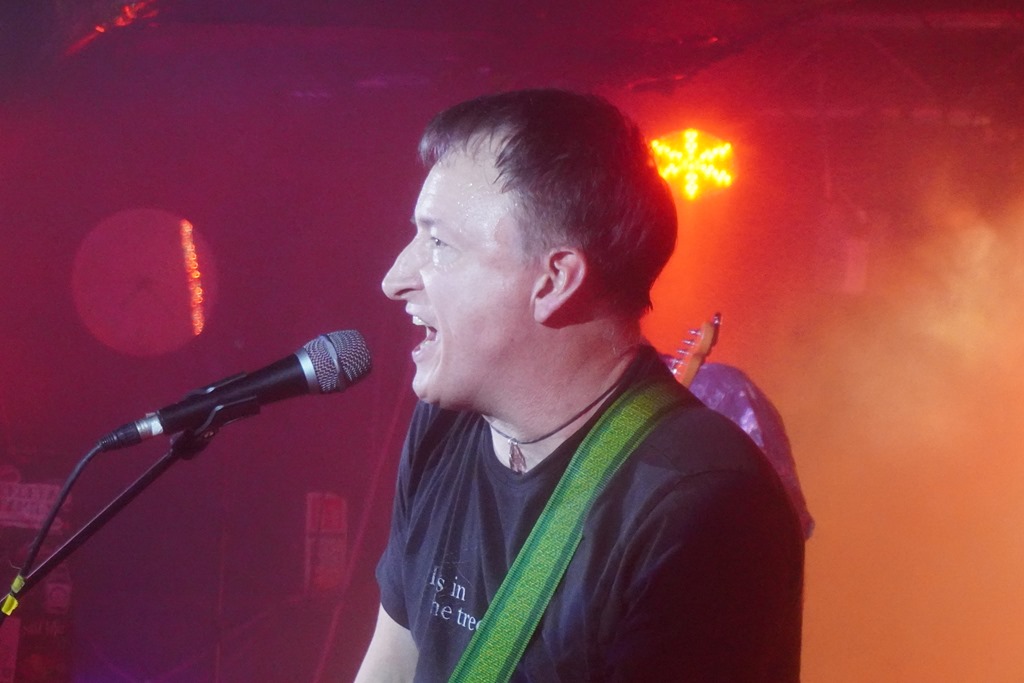
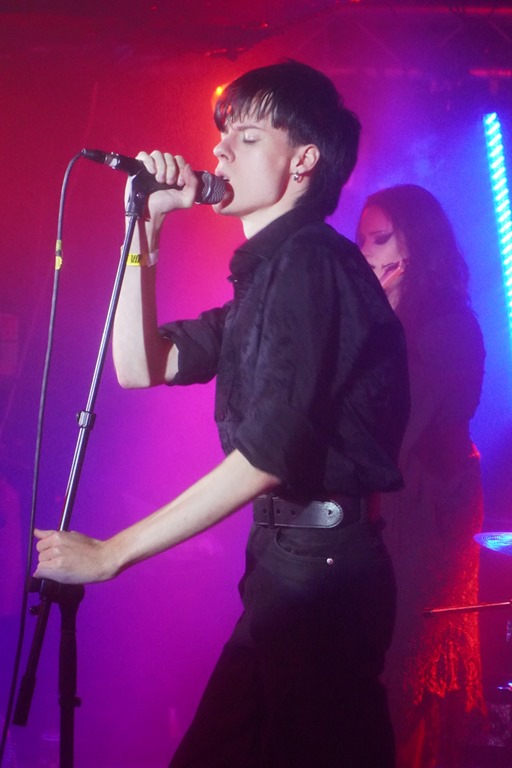
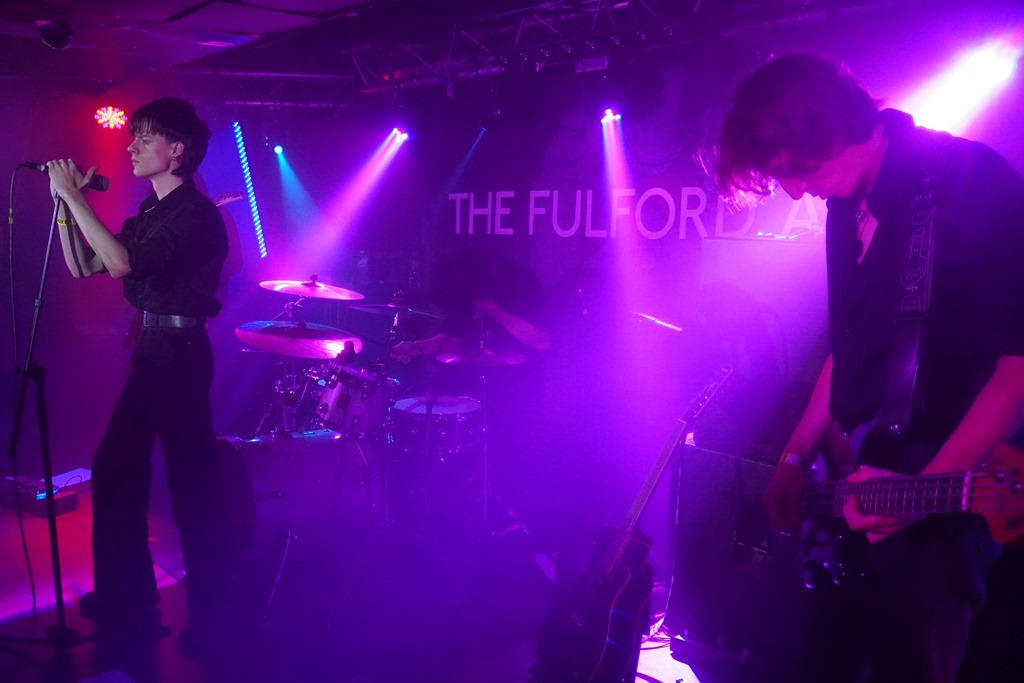
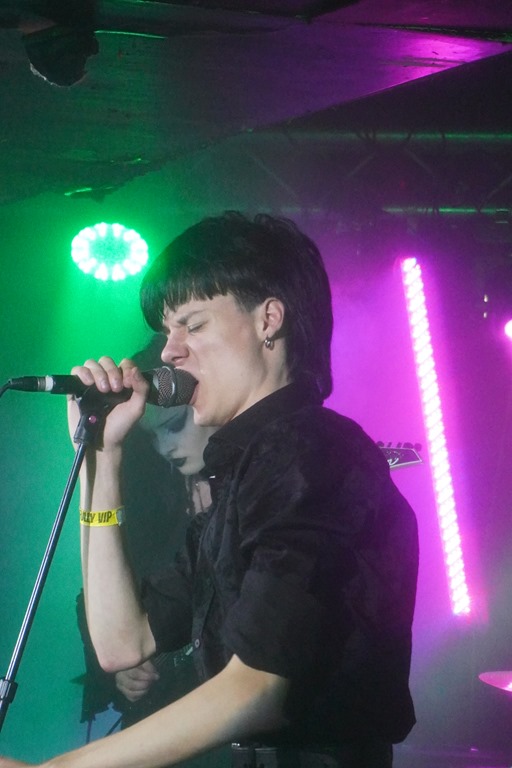
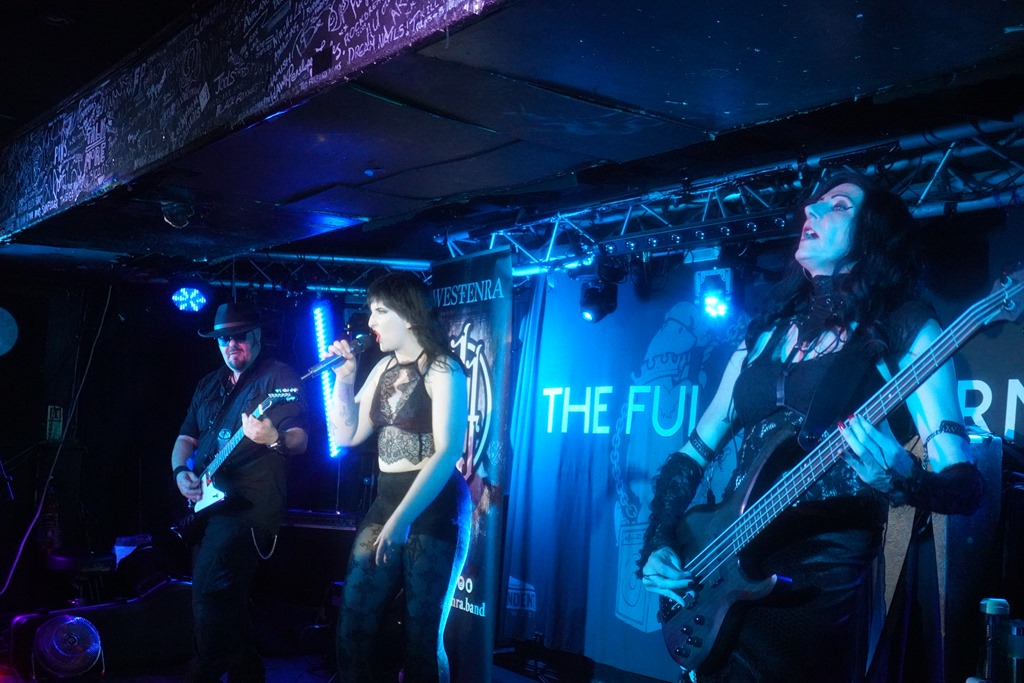
The InSect, who released their debut album As It Ever Was a week ago, have a much more elaborate stage show and a full band lineup. Despite the fact I’m a fan of drum machines myself, their performance strikes a huge contrast with The Scarlet Hour’s in terms of dynamics, volume, sonic density, and energy, and much of this is on account of the band-ness they present. In terms of presentation, they’ve a lot more going for them, too: The Insect are flamboyant and theatrical, and look comfortable acting up and bringing the show to the audience. Ed Banshee is a natural from man who spends a good portion of the set among the crowd, and Athena FireChild provides the perfect interplay. Instrumentally, they’re tight, and compositionally and stylistically, there are strong hints of Bauhaus. They go all out to put on a show, to entertain, with bright white lights and various other accoutrements adding to the atmosphere. But ultimately, it’s their energy that makes their set what it is.

DSC09123DSC09190

The InSect

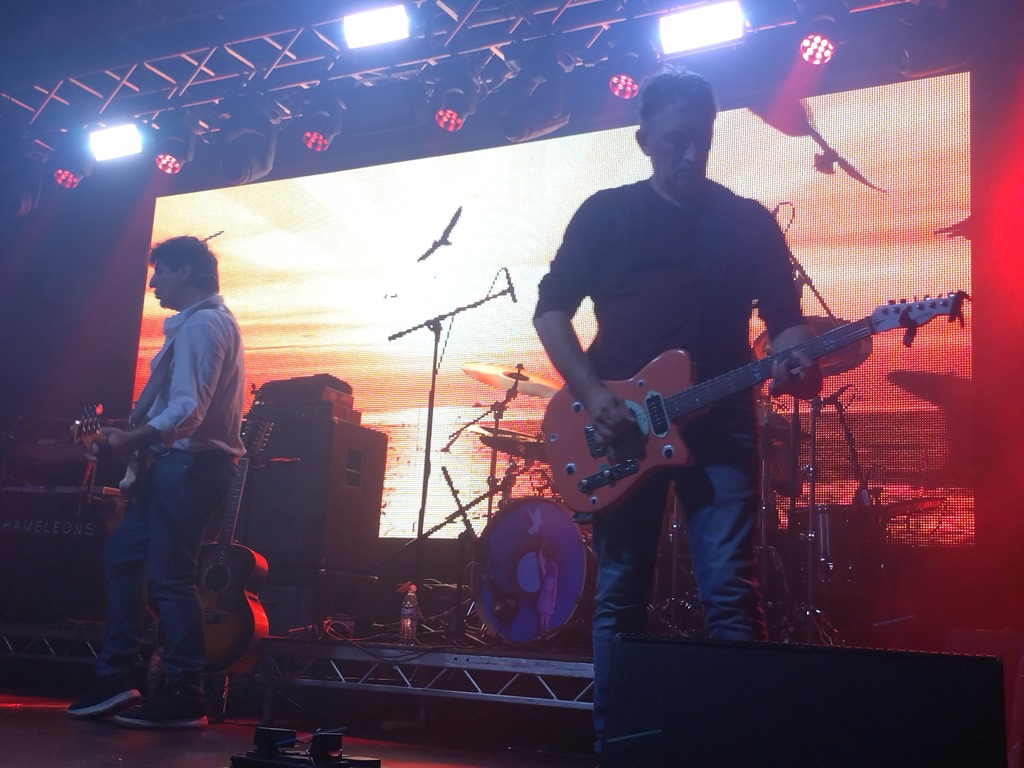
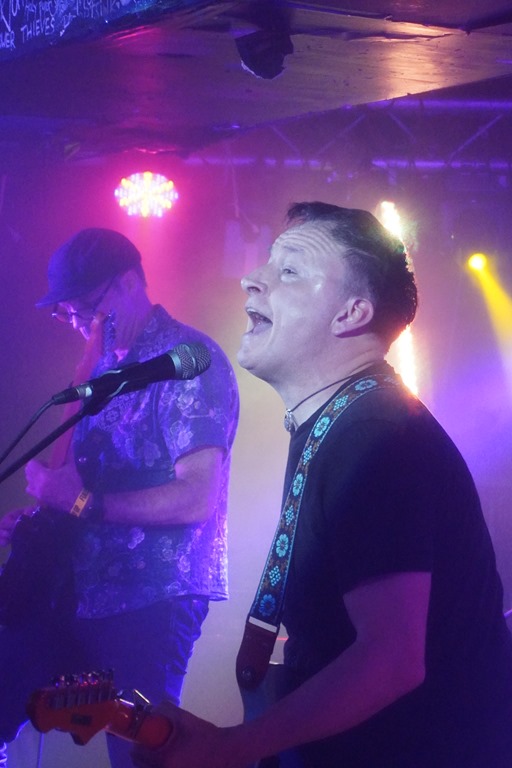
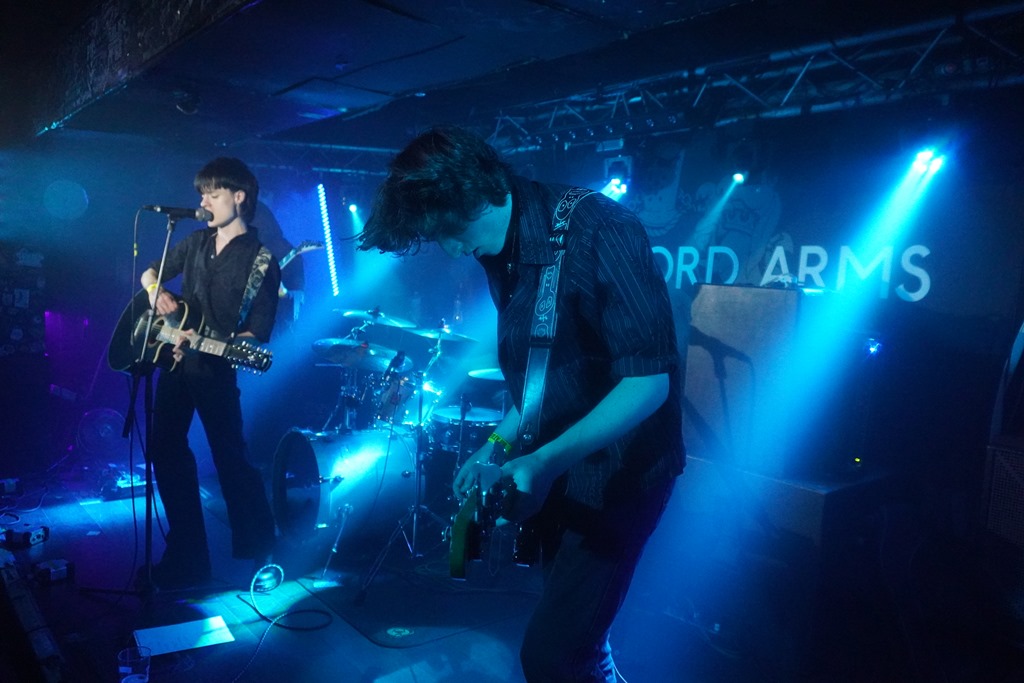
And so, to Salvation. For tonight, SASS-era guitarist Adam Clarkson is back in the band at short notice, and this has necessitated a revised set-list from the one played at The Old Woollen in Farsley a week or so previous – but as this seemingly means the reintroduction of ‘Jessica’s Crime’ in place of a cover of ‘Don’t Change’ by INXS, it’s hardly a bad thing. They confess to a few slips during the set, but it’s unlikely anyone out front noticed: the keenest of fans are getting down and busting moves at the front from the start, and this is a relaxed show, with some good-natured back-and-forth between band and audience throughout.

DSC09214

Salvation

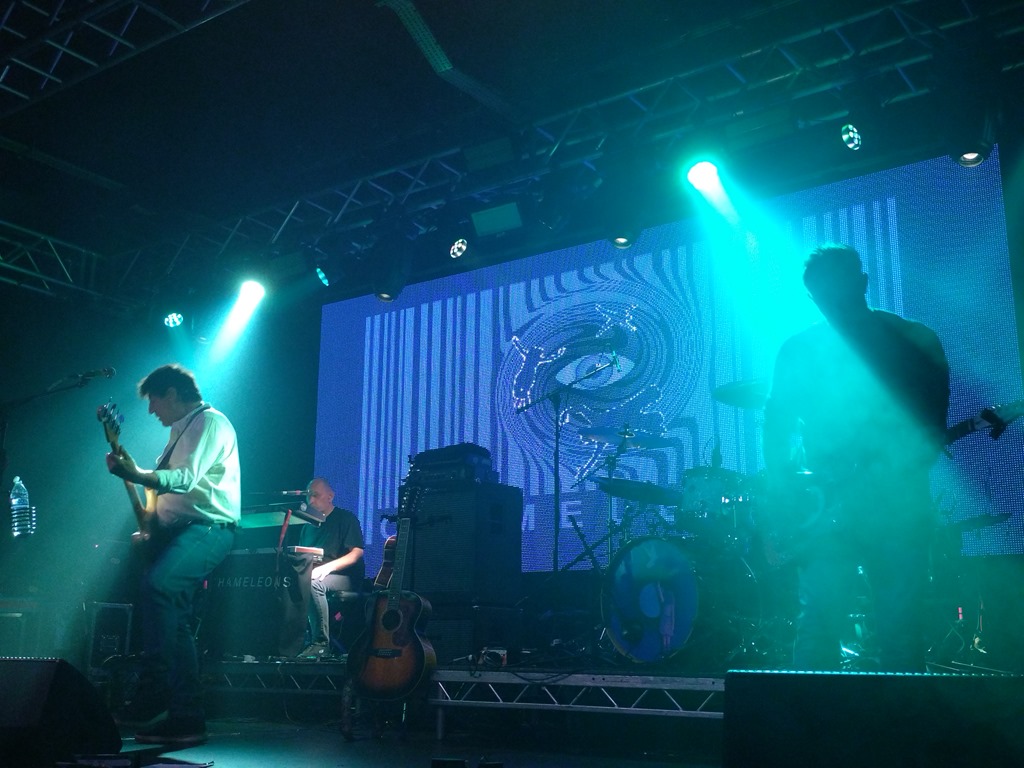
Salvation sound absolutely fantastic, and again highlight the difference between the old-school drum machine bands and more recent ones: they know how to crank up the beats – and the synth bass – to create a full sound which is at least equal to live instrumentation. Perhaps more specifically it’s an early 80s Leeds thing, but they, like The March Violets at The Warehouse last year, sound loud and vibrant, with a bass drum sound that truly kicks and a snare that cracks right into the cranium, punching through the interweaving mesh of the dual guitars.

DSC09281DSC09288

Salvation

They were always at the more accessible end of the spectrum in comparison to The Sisters and The Violets, but at the heart of songs like ‘The Shining’, there’s that solid bass groove, pumping drum sound, and nifty guitar work – and live, the guitars pack more punch than on the recordings. Tonight’s rendition of ‘Jessica’s Crime’ lands between the more guitar-orientated version recorded for she shelved Clash of Dreams album for Merciful Release, and the Wayne Hussey produced viola-soaked rerecording, released as a single in 1985, and it’s nothing short of killer. ‘All and More’ lands near the end of the set, which closes with ‘Why Lie’, and the pretence of an encore is tossed aide as they leap into a fun, chuggy cover of ‘Kids in America’ which brings the set to an elated conclusion.

And for all the weight of personal history pressing into this outing for me, I’m more than glad I turned out.

8th April 2026

Christopher Nosnibor

Six months on from Benefactor, and Washington D.C. improvisational psychedelic outfit Zero Swann are back again with Ones Who Love. This marks quite a step up in output following a two-year gap after 2023’s Amon Zonaris.

Once again, it’s a set built around theatrical, gothic vocals, drones and cacophonous percussion, feedback, and more drones, all wrapped in layer upon layer upon layer upon layer of reverb.

On first hearing the album’s first song, ‘Chrisom’, I had to hit the pause button a few times to check there wasn’t some other music playing on one of my open browsers. There wasn’t. One might reasonably draw parallels to Captain Beefheart’s Trout Mask Replica, which to my ear (an ear which has been exposed to one hell of a lot of strange experimental shit) sounds like people playing different tunes in different rooms of the house, with the doors all open while you’re standing in the hallway. But the experience is truly more akin to MySpace circa 2007, when every post and profile would be playing music and you’d spend an age trying to figure what you needed to mute while slowly going mad. The drums don’t seem to be in time with themselves, let alone the abstract instrumentation, and the vocals float around in that sea of reverb as if in another dimension entirely. It’s not only disorientating, but quite quease-inducing.

This is – as anyone familiar with Zero Swann will know – the template for the album. The hectic, multi-layered percussion on ‘White Lips’ splashes around in a swirl of treble, reverb, and phase or flange, while amidst a stuttering bass throb and chaotic mess of noise. This is lo-fi to the max: black metal production values applied to Batcave-era goth with a heavily experimental edge.

It’s all going on with ‘Shrine Slavery’: drum ‘n’ bass beats put through the mangle and a thousand effects are paired with haunting, howling layers of shoegaze guitars, while Jeremy Moore comes on like Michael Gira in his messianic mode circa Children of God, calling the end of days while all burns around him. The title track is a towering, hypnotic monster of sound on sound, and it feels huge, not to mention apocalyptic and terrifying.

The derangement continues on the murky ‘Pig Scalder’ with echo-soaked guitars to the fore – the quintessential US ‘death rock’ sound (something that very much separates the UK and US interpretation of ‘goth’) – but with swirling chaos behind it all. With so much going on, and in all directions all at once, it’s virtually impossible to concentrate on or otherwise pick out the lyrical content, and while this may be detrimental in some respects, the fact of the matter is that this is Zero Swann’s sound – messy, multiplicitous, discontiguous. And it’s best approached by simply letting it all happen, immersing oneself in the mayhem. It’s impossible to pick apart the separate elements – and equally impossible to piece them together.

‘Tidal Skull’ again brings a dingy, doomy, gloomy gothy morass which is hard to penetrate and even harder to decipher and unravel, and ‘Storage Organ’ is a riot of sludgy, sepulchral darkness. Ones Who Love is hard going. And I actually dig it – but it’s one seriously challenging listening experience. The last song, ‘What You Never Wanted’ lurches and lumbers its way through five and a half minutes of sludge that stands practically waist-deep, and you slosh and crawl and trudge your way to the end. There are no short cuts, no easy routes, no alternative directions.

Whichever way you look at it, there’s no other act around which sounds like Zero Swann. On Ones Who Love, Moore goes deep and goes dark. Spectral structures emerge from thick fogs of noise and reverb, very like ruins looming through gloom. Gloom and ruins essentially summarise what Ones Who Love gives us. As was the case with its predecessor, Ones Who Love is not an easy or accessible album – to the extent that it often feels like a test, a challenge: enjoyment and appreciation are not the same thing.

AA

a1686268212_10

Christopher Nosnibor

Much as the whole ‘sounds like’ and ‘for fans of’ thing has become a standard shortcut which is, all too often, reductive and plays into the algorithmic feeding of artists by streaming platforms, it can be useful, at least when the references are accurate. Sometimes, a misrepresentative comparison can come to define an act’s entire career. I can’t be the only one who investigated Interpol because of the endless comparisons to Joy Division – and while I quickly grew to love Interpol, they’re as much like Joy Division as Suede are The Smiths. Sometimes these disparities are the result of poor journalism or sloppy PR, others they’re the consequence of a band’s own lack of self-awareness, confusing the input from their influences with what their music actually sounds like. Nevertheless, when a band is pitches as being ‘for fans of Faith or Disintegration-era Cure, and Closer-era Joy Division’, the connotations of glacial synth-orientated bleakness suggest they’re worth investigating.

And so I arrive at F.I.V.E. Fear Increases Violent Emotions (released in January), by Italian dark / new wave band Christine Plays Viola via the album’s fourth single, ‘Desolate Moments’ – in an example of an old-school promo cycle, where a single or two in advance would hype the album, and a trailing single or two would sustain momentum and (hopefully) grab some people who’d missed the initial build-up and release. This one’s had a long run-up, with ‘Jackie’s Curse’ surfacing way back in 2024.

AA

AA

‘Desolate Moments’ is a spacious slow-builder, and fulfils the promise of some cold synths, the brooding vocals paired with some rolling percussion and throbbing bass. In many respects, it’s a quintessential slice of modern goth, in the vein of Corpus Delicti, with some hints of Depeche Mode swirling around in the mix. That’s not all that’s swirling around: the video, which is designed to replicate their live performance, finds the band members partially obscured by billowing smoke, clearly taking cues from The Sisters of Mercy’s seminal stage shows.

AA

AA

It turns out that ‘Desolate Moments’ is representative of the album, too, certainly in terms of quality (one thing about old-school promo before the advent of the Internet is that you’d often rush to buy an album based on the lead single, only to find that it was the only decent track, and that the rest of the album was turd… this was particularly prevalent in the ‘80s, but I’d venture that Depeche Mode’s Ultra would have been better whittled down to an EP of the singles). And it’s an album that radiates darkness and classic goth vibes and sounds.

Opener ‘Sprout of Disharmony’ is nothing short of an instant classic in the vein of Rosetta Stone and Susperia, with spindly guitar work, sturdy on-the-beat bass grooves and metronomic percussion, and with a seven-minute run time, it certainly qualifies as epic. ‘My Redemption’, released as a single six months ago goes darker, more overtly electro, and brings in elements of industrial while still reflecting the goth sound of the late 90s and the turn of the millennium, and packing some strong hooks, too.

There’s a keen sense of theatre about Christine Plays Viola’s sound: they’re certainly not afraid to go big and play up the drama with finesse. ‘Confession’ lands with a sense of urgency, and is again driven by bold tribal beats reminiscent of vintage acts like Danse Society and Skeletal Family, while ‘There’s No Going Back’ swerves into early Nine Inch Nails territory, only more overtly gothy. While operating around elements taken from some well-established blueprints, Christine Plays Viola manage to offer no shortage of variety on F.I.V.E., the jittery ‘Black Noise’ changing tack halfway through, and the seven-and-three-quarter-minute ‘The Crypt of Mystery’ explores altogether more expansive territory which teeters on the progressive.

As an album, F.I.V.E. feels like a big work: it may only contain ten songs, but a fair few run well over the five minute mark, and the variety is indicative of the scale of the band’s ambition to articulate and explore the theme of ‘fear not as weakness, but as a force that shapes who we become’ in multi-faceted detail. And they succeed in their objective, with some great songs, too.

AA

AA

cover

Dependent Records – 27th March 2026

Christopher Nosnibor

Now in their thirty-fifth year, MESH have always unapologetic in the way their music reflects and incorporates their influences, spanning Yazoo, Depeche Mode, Giorgio Moroder, Massive Attack, and Depeche Mode. It’s the latter that seems to cast the longest shadow over their latest offering – an album brimming with uptempo anthems propelled by driving beats, urgent synth bass grooves and busy sweeping lead lines.

In this context, it’s often all too easy to get swept along on the tide of electric energy and skim over the lyrical content, which is considerably darker, as the title reflects. As they summarise, ‘This is the age of post-factual lies…’ and as they grapple with difficult times, there’s ‘a dark undertone that occasionally seeps into their new songs’. There’s a feeling that anyone who isn’t affected by the current state of the world is either ignorant or in denial, and for those operating within the arts or any creative fields, I would question how it’s possible to create without these external conditions filtering into the work. And how can anything not be political right now? Time was – not so long ago – when a lack of acceptance or belief in official versions of events was the domain of fringe conspiracy theory. Now governments blatantly lie to our faces: Israel are adamant that every death in Gaza was a member of Hamas, or otherwise a ‘human shield’, the USA insist that they’ve won the war with Iran and have decimated their nuclear capabilities which were likely to destroy the entire Western world tomorrow, and the UK government insists it’s in no way involved or even complicit in any of this. Meanwhile, there’s nothing to see in the Epstein files. Right.

For all that, there’s a lot of emphasis on relationships and the like. Timeless issues, which cut to the core of the human condition, but not necessarily hitting the heart of the zeitgeist. But it’s impossible to be contemporary and timeless, I guess.

On The Truth Doesn’t Matter, MESH are straight out of the traps with a brace of back-to-back anthems, before arriving at the slower ‘I Lost a Friend Today’, which conveys a deep, painful sincerity – but at the same time it emotes with the dramatic flourishes that only a band with gothier leanings could pull off. But then the buoyant disco beat and skittering, soaring synths of ‘Trying to Save You’ somewhat undermine the sentiment. The same is true of ‘I Bleed Through You’, on which some heavy words are diminished by a poppy disco backing.

‘Kill Us With Silence’ follows the same template, but the dark shades are overtones rather than undercurrents: the gothier leanings work well here, as do the more experimental shades of the sample-soaked ‘1031030’, which has a read 80s vintage feel to it.

MESH are definitely at their best when they go dark, and when they go experimental. Single cut ‘This World’ straddles the different aspects of the album, and as such, is arguably the single song which most accurately represents what The Truth Doesn’t Matter. The same is true of ‘Exile’: it’s a belting dark pop tune, but it’s a bit too Erasure to really reach those emotional depths.

There’s no lack of quality or consistency here in terms of songwriting or production, so the only issue is its stylistic focus, or lack of, and just how poppy it is for an album which aims to venture into dark domains. But sixteen tracks is a lot, especially when the majority are four or even five minutes long. The Truth Doesn’t Matter, but focus does, and while it’s not a bad album, trimming it down and concentrating on the theme of its title would have likely made for a more focused album, and one with greater impact.

AA

AA

af604c57-2ed8-c083-9aaf-bcbf9dce4061

25th March 2026

Christopher Nosnibor

Pitched as ‘one of the most exciting new bands on the North American dark post-punk scene’., Octavian Winters formed – or, as their bio would have it – ‘was born into the ghostly isolation of San Francisco’ in 2022. Already, the pandemic seems to have receded into a past which feels like a fever dream. The fact that German post-punk legends Pink Turns Blue dig them enough to have picked them as support for their tour of the western US in April speaks for itself, and in many respects, so does this single, a thick slice of classic vintage-style gothiness that’s cooked to perfection.

Frontwoman and lyricist Ria Aursjoen says: “‘Elements of Air’ is about how we see the world, our chosen frame of reference, and how much power that holds over us — including the power to destroy things we value. The direct inspiration was someone I knew who chose to view the world through a lens of hate, and how that ultimately cost the friendship.”

In these times of extreme division, this is likely to be a scenario which is relatable to many. While the arrival Trump in the Whitehouse (and the advent of Brexit here in the UK) was an obvious moment of rupture, the pandemic proved to be a defining moment in time where people seemed to take more polarised positions. And since emerging from the successive lockdowns, the world feels like a different place – a place not only in the grip of war, but a place where people seem intent on causing anguish, antagonism, and aggravation, as if they’re spoiling for a fight, and if it’s not over immigration or race or the like, then they’ll settle for sparking a dispute over car parking or dustbins. Disharmony dominates the social discourse, and many have found themselves having to sever ties to once-close friends in the interests of self-preservation.

Driven by rolling drums and a dense bass, it’s topped by a choppy, metallic, flange-coated guitar, reminiscent at times of X-Mal Deutschland, which scratches and scrapes it way through the track. And then there’s Ria Aursjoen’s airy vocals which breeze in and weave a spellbinding melody. Part Toni Halliday (Curve), part Maria Brannigan (Sunshot), she brings an almost poppy vibe to the dark-edged post-punk party. Sure, it’s a formula that has its roots much further back, with The March Violets and Skeletal Family incorporating an accessible, pop-with-a-twist vocal, with snaking melodies steeped in Eastern mysticism.

Listening to any ‘new’ goth inevitably leads me down a rabbit hole of memory lane excursions into ‘old’ goth: the genre is rich in intertext and references, influences and appropriations, and it was ever thus, the early 80s acts who were goth before the label existed – Bauhaus, The Sisters of Mercy, Siouxsie – all belonged to the post-punk milieu, which draw on Bowie, The Doors, The Stooges. Perhaps more than in any other genre, there’s a lineage and a trajectory which can be traced back through the decades to its musical prehistory and which has remained quite intact through the various waves, of which there have now been several.

As such, it’s not so much about breaking new ground, but how inventively the tropes are used, and how well-crafted, how well-executed the songs are. And in the case of ‘Elements of Air’, the crafting and execution is spot on.

AA

AA

Octavian Winters band photo (greyscale)

Florida’s death rock/goth artist SINISTER SHADOWS has released a music video for the song ‘Just Begun,’ taken from the self-titled debut album out on March 26th via The Doorway To label.

It’s quite a shift in style from its predecessor, ‘No One Home But Me’. Watch the video for ‘Just Begun’ here:

AA

Sinister Shadows was created out of the love of death rock and goth rock from the Eighties and Nineties – bands like Bauhaus, The Cure, Sisters of Mercy, The Mission, and Nick Cave.

Sinister Shadows ‘ mastermind, Ryan Michalski (Idiot Robot, Ryan Cosmonaught), ran a video magazine called The Gothic Box in Tampa Florida years ago and went to such venues as The Orpheum and The Castle. Sinister Shadows wants to bring back the darkness, romance and flair that has been long missed of this sound and movement.

The album was recorded at Ryan’s RPM Studios in Tampa throughout 2025. The album sees the participation of Ryan’s longtime music partner Clint Listing (The Slumbering) for an intro and outro to the record.

AA

Ryan Of Sinister Shadows, Photo by Ryan Michalski(1)

3rd February 2026

Christopher Nosnibor

Founded in 2002 by Brendan Ross, Frontal Boundary have been mining a seam of aggrotech, synth-pop, and raw emotional expression for almost a quarter of a century (mid 00’s hiatus notwithstanding, which meant that it wasn’t until 2012 that debut album Electronic Warfare emerged).

As the title of their latest offering indicates, this is an album brimming with nihilism, frustration, darkness. The expansive-sounding ‘Remember’ is one of those intro tracks which in a way create a false expectation of something a bit mellow, a robotix voice announcing ‘We are Frontal Boundary’ over a cinematic, semi-ambient drift and an easy, mid-tempo beat. And of course, this all changes with ‘Burn’, which slams in hard with a heavy stomp and snarling, distorted vocals, with words like ‘destruction’ and ‘corruption’ emerging and essentially telling you what you need to know.

While decidedly dancey in its synths which soar and stab across thumping basslines and relentless thudding beats, there’s something unflinchingly dark and nasty about Failure, not least of all the heavily-processed, dehumanised vocals, but equally, the sample selections are unsettling – even seemingly innocuous snippets take on sinister overtones in context, in the way that children’s voices sound menacing in horror movies.

Failure is very much cut from the same cloth as Controlled Bleeding and Mussolini Headkick and a bunch of late 80s / early 90s Wax Trax! stuff, and in places – as on ‘Hollow’ and ‘Hate’ Frontal Boundary really go all out on the aggressive rave stylings. The latter feels perhaps a shade light for the subject – musically that is: the vocals are strangled, scorched, demonic. Is black metal rave a thing? If not, Frontal Boundary may be pioneers of a new genre.

It’s high octane, Hi-NRG, and while the lead synths are poppy and dancey as anything, the overall vibe, with the contrasting vocals in particular, is gnarly, and harsh. It’s a juxtaposition which works well: although the musical style and vocal delivery are both genre tropes, the way in which Frontal Boundary draw them together feels fresh, innovative, powerful, and proof positive that there is no success like failure.

AA

AA

410825

27th February 2026

Christopher Nosnibor

After standalone single ‘Apart’, which featured Jaani Peuhi, at the end of February last year, Finnish dystopian industrialists The Fair Attempts, set to building anticipation for their next album with the release of ‘Anniversary of Our Destruction’ in December. And followed up with ‘Ghost Within’ in January.

‘Nothing’s Gonna be Alright’ sets the album’s level of optimism with a title that speaks for itself. It also sets the tempo and energy level, too, hitting hard in the form of a pounding, abrasive aggrotech stomp with snarling distorted vocals. But it’s far from devoid of melody, and boasts a chorus that’s an instant grab. ‘Freedom is Just a Word’ brings the roar and rage – not to mention the dynamics of Downward Spiral era Nine Inch Nails, with ‘Heresy’ making a particularly obvious touchstone.

‘Ghost Within’, then, marks a change of tone, dialling down the aggression for a poppier sound taking a step back from raging outward to turn the focus inward for a moment of reflection. And what we find is dark and paranoid, the affects of the grim world we live in on the psyche:

The ghost within

Under your skin

Feeding of your fear

Inside your mind

Like a parasite

It’s waiting

Of course, this is precisely how the mechanisms of control operate. Keep the people scared, keep the people compliant. We’re seeing this the world over now. People are scared of their own governments – and if they’re not, they’re either ignorant or deluded.

‘It’s All Fraud’ covers so many bases, but the phrase essentially summarises the foundations of capitalism and global power right now. Never before has the corruption ruled so completely. The song itself is a pure blast of industrial dance which hits hard.

Slowing things for another goth-tinged anthem with ‘Shadowplay’ (not a cover of the Joy Division song), the pace and power suddenly step up in the closing minute for a driving finish. These guys really know how to whip up a frenzy and get the blood and the adrenaline pumping with persistent, pulsating beats and throbbing bass grooves.

The title track again marks a shift in tone towards a more melancholic atmosphere, drawing together allusions to later Depeche Mode, only denser and more industrial, and it leads a closing triptych of dense, dark atmospheric songs. This softer conclusion in the wake of all the flames and all the rage is welcome, and by no means feels like an easing of tension – or an anticlimax – but instead feels like an opening up to reveal a fragility hitherto covered by the armour of anger. In closing, a calmness descends, and it’s tinged with sadness, a sense of submission, even – maybe.

Null Guide is a powerful album, and the source of that strength shifts over its course, demonstrating considerable sonic and emotional versatility, with a tangible sense of there being an arc of progression between beginning and end.

AA

AA

936231

AA

88d56739-16e8-40a1-fa3d-d926ea811cf7

Christopher Nosnibor

A couple of mates had picked this one out and suggested I might like it, and, as my diary was looking pretty sparse at the time, I thought ‘why not?’ Some brief scanning of releases led me to expect a night of electro-based post punk, some synth-pop of a darker persuasion. The reality was considerably darker than that, and pretty much straight-up goth, even if the majority of the crowd didn’t recognise it as such – by which I mean, they looked more like they’d be into Gary Numan than The Sisters of Mercy. So where are we at? Goth by stealth? Said crowd was an interesting mix, an almost even split of old sods, and lanky buggers young enough to be their kids – or mine, I suppose.

The Sick Man of Europe – raved about by a mate who’s more of an indie persuasion – are in some respects reminiscent of early Depeche Mode but darker, heavier, more industrial. They bring the pulsating repetition on Suicide, with a heavy leaning towards DAF. For the second song, they segue ‘Movement’ and ‘Obsolete’. The studio versions are tight slices of Krautrock, and nice enough. Live, everything is amped up and the result is something more like covers of ‘Ghostrider’ as performed by The Sisters of Mercy, or even Foetus. The flat baritone monotone of the studio recording takes on a new dimension live, too, at times reminiscent of the booming grave-and-gravel drawl of Chris Reed of Red Lorry Yellow Lorry. The sick singer spends considerable time charging back and forth in front of the stage and occasionally ventures further into the crowd. They take things up a good couple of notches live in comparison to the studio recordings, the clinical sterility converted to crackling energy. They’re tight, tense, and gothy as hell.

DSC07837DSC07852

The Sick Man of Europe

The same is true of TVAM, an act I’d always taken as being a bit 6Music electro-indie. Again, the difference between their studio work and live show is the key here. The work of just one guy in the studio, the live act is transformative, with live drums and guitar. They play the new album, Ruins, in full and in sequence. It takes confidence in an album to do this, but it’s an album to have confidence in, without a weak track. The song titles and lyrics flash on the screen at the back of the stage in real time, with striking images projected during instrumental passages. In combination with the lighting and smoke, it makes for a strong visual performance. The sound, too, is fantastic, the swirling guitars hazy, the drums crisp and bright.

DSC07875DSC07897

TVAM

On the bass-led ‘Real Life’ they perfectly replicate the drums from ‘Lucretia My Reflection’, and ‘Powder Blue’ is indisputably a dark pop gem with a dense shoegaze feel.

The final segment of the set piles into the depths of the back catalogue with relish, hitting us with ‘Porsche Majeure’ and ‘Double Lucifer’, before closing with ‘Total Immersion’, the last track from their 2021 debut Psychic Data.

DSC07918DSC07916

TVAM

Oftentimes, studio-based projects can lose something in the translation to the live setting, but by taking a completely different approach to the format, TVAM show different aspects of the songs and imbue them with new depth and energy.

As a lineup, the two acts compliment one another well, and in both delivering punchy sets (Sick Man’s set was bang on half an hour, TVAM played for 45 minutes), they gave us an exhilarating night.

24th February 2026

Christopher Nosnibor

It may only be February, but 2026 is looking like the year of the long-threatened goth renaissance. It’s been bubbling for a while, with first-wave bands like Red Lorry Yellow Lorry releasing new material for the first time in decades late last year, as well as second wave names such as Corpus Delicti making strong comebacks. And what’s noticeable is that their audiences don’t consist entirely of old bastards who’ve been adherents of the scene since the 80s: on recent ventures to see Corpus Delicti and Skeletal Family – whose current singer, it has to be said, is considerably younger than the rest of the band – I’ve witnessed first-hand a substantial proportion of the audience represented by under thirties, even under twenty-fives and teens – and they’re getting into the dressing up, the hair and makeup, too. Why? A vaguely educated guess based on observation and an A-Level in Sociology taken just over thirty years ago suggests that there are a number of factors involved here: what goes around comes around – this always happens – with an element of kids raiding their parents’ music collections or otherwise becoming nostalgic for the music they heard growing up (thanks to my parents, I have records by Barbara Dixon and Phil Collins, although I drew the trauma line at Steeleye Span and The Bee Gees) – and also the times in which we live. Depression, oppression… post-punk and the substrain that would become goth emerged from pretty bleak times – and we once again find ourselves in bleak times, bleaker, if anything. We no longer live under the shadow of the bomb as we did during the Cold War. Instead, we live in a world at war, a world where AI is taking over in a way that resembles the maddest sci-for dystopia, and where the prospects of work and home ownership for those finishing school and college are nothing short of abysmal.

It’s not all gloom and doom, though, because… no, wait. It is, but Licorice Chamber are coming through on the emerging wave of bleak bands to provide a fitting soundrack to existential mopery.

Licorice Chamber perhaps isn’t the greatest band name ever, but it’s in keeping with the latest influx of goth and goth-adjacent acts like Just Mustard (and also reminds me of Fudge Tunnel), and since band names are inherently stupid by nature if you pause and reflect on it in any depth – dissect any band name and conclude that it’s not at least vaguely stupid, is my challenge – it’s fair to let it ride. After all, it’s the music that matters.

On Remnants, Licorice Chamber serve up three brooding slices of classic contemporary goth which are thematically linked under the banner of the EP’s title, as they explain: “The EP title Remnants suggests aftermath, what survives destruction. Rather than romanticizing despair, the songs feel like they’re exploring what’s left when illusions fall away.”

‘Feign’, the first of these three cuts, is magnificently understated, a mid-tempo song that’s as much about the space between the sound of the instruments as the instruments themselves, and while there’s a heap of reverb around everything, something in the production calls to mind the quiet flatness of The Cure’s Seventeen Seconds. But the backed-off drums and fractal guitars serve to place Layla Reyna’s powerful, emotive vocals to the fore.

Heavy by name and heavy by nature, the second song packs a far greater density, a cinematic rock workout, which builds to a climactic finale and finds Layla floating majestic through a sonic maelstrom.

The final cut, ‘Never the Same’, is the longest of the three, and is a slow-burner rendered more kinetic by some busy drumming moments, and with its picked guitar and dark atmospherics, it finds Licorice Chamber inching into the kind of territory occupied by doom / goth acts like Cold in Berlin and Cwfen – and that’s not simply a case of lumping heavy bands with female vocalists into a bracket together: there’s positive commonality here.

Remnants is dark, but bold, and in its own way, uplifting.

AA

a2548418784_10