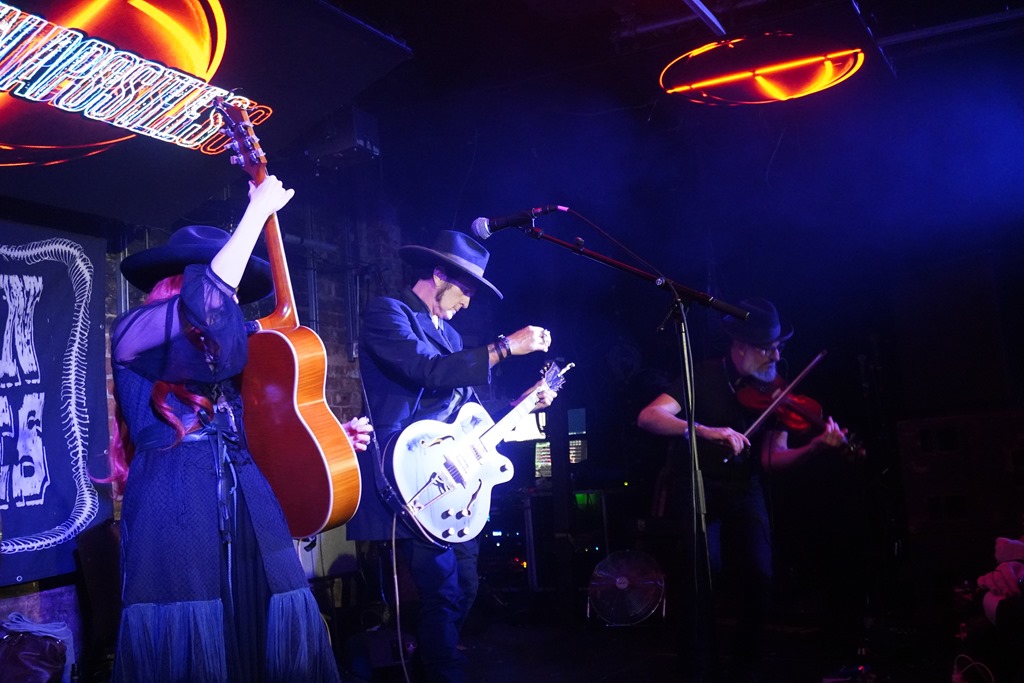
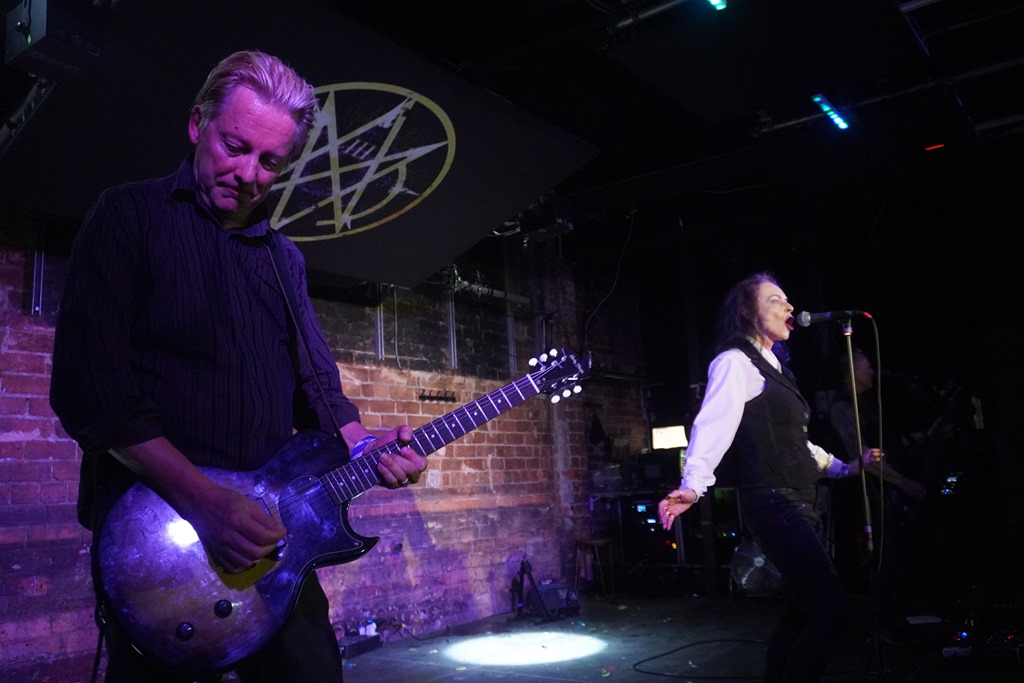
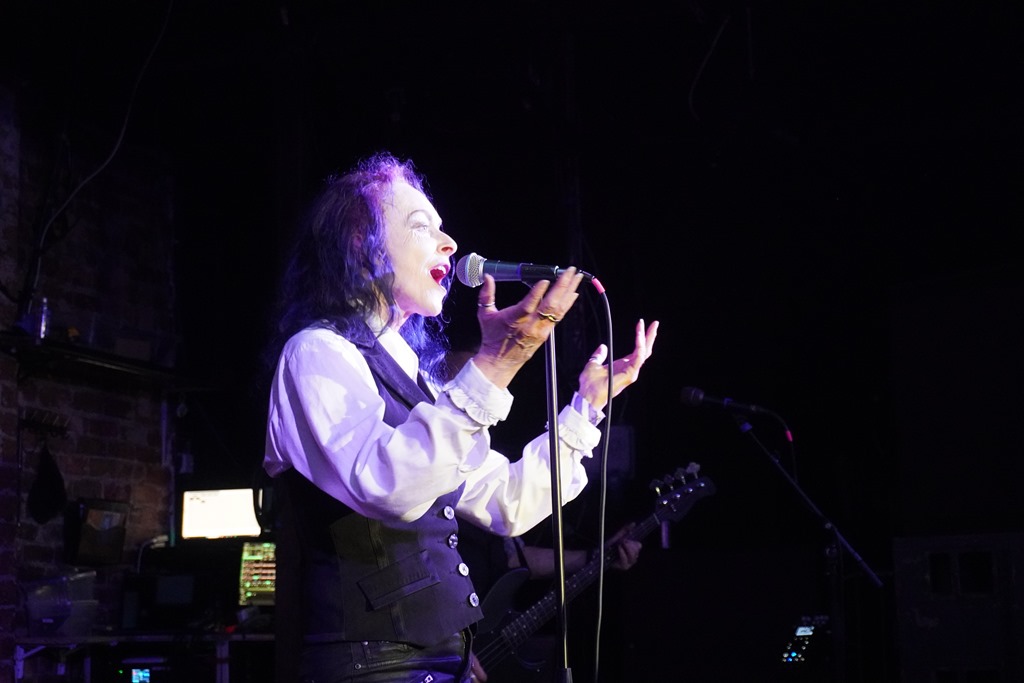
Neo Dimes, the musical identity of Denver-based musician Stephen Edmunds, has released the debut album Alone, available on vinyl, cassette, and digital platforms as of 19 May 2026. The music video for ‘Trigger,’ directed by Ty Borkowski, is also now streaming, bringing the song’s themes of isolation, shame, and emotional fracture into stark visual form.
Media outlets like Discipline Mag and Post-Punk.com consider Neo Dimes an artist unafraid to tackle the social ills of the digital age with both sonic innovation and lyrical directness. Reflecting that, his debut full length Alone stands as much a critique of music consumption as it is a sonic statement. Physical copies (vinyl and cassette) of Alone was made available ahead of its digital release, pushing back against the industry’s usual consumption model.
“A song chronicling my lifelong fear of being alone,” says Stephen of the song ‘Trigger.’ “Alcohol is the trigger that brings on all kinds of other issues (addiction, anxiety, depression, suicidal ideation) but all of that pales in comparison to how terrifying loneliness and both physical and emotional isolation is to me.”
Speaking about the album as a whole, he shares: “The album concept and the release itself is a fuck you to the tech overlords and the world they have foisted on all of us.”
It’s a pretty bold move to open an album with a slow-paced and pretty bleak-sounding song which is more about dolorous atmosphere than chorus or hook. But then, Argonaut’s latest offering is pretty bold – albeit in an understated sort of a way. That likely sounds oxymoronic, so let me unpack it a bit.
After something of a purple patch, with the prolific spate of post-lockdown output which, over the course of a year and a bit and a new song each month saw the development of open-ended album Songs from the Black Hat (which ended up with a total of twenty tracks, with the inclusion of a couple of remixes), Argonaut were forced to make a change of pace. Life has a way of doing that – and events also resulted in a change of focus. The result is Interrupted – an album two years in the making, and by far the darkest and most introspective set of songs they’ve released. It’s not that the London DIY trio have always skirted darkness or introspection, but historically, it’s been balanced by lighter, poppier indie tunes. Now, though, they’ve embraced what one may call the therapeutic benefits of creativity, channelling – and coming to terms with – real-life issues and even trauma through those outlets.
As the accompanying notes lay things out quite plainly, Interrupted offers ‘Ten songs from the past year’s abyss, documenting breakdown, burnout, dementia, depression, memory, hope and healing’. This in itself is bold. Again and again, the conversation is ‘we need to talk about these things’, but the moment we do, there’s a sort of collective wince in society, on social media, among our friends even. We’re still not societally conditioned to deal with the difficult stuff. I can speak from experience here: following the loss of my wife at the age of 44, and finding myself as a single parent, I’ve had enough ‘well, I could be worse’ type responses to articulations of struggle to fill a book. And now, while witnessing the mental and physical decline of one of my parents, I’m finding a similar reluctance among friends to engage on a meaningful level on the subject.
Thankfully, there are always artists who are – not necessarily willing, but perhaps more compelled – to pour all of this into their work, perhaps because those in immediate proximity are found wonting when it comes to conversation, meaning that creative channels are the only channels available. The Twilight Sad’s latest album, The Long Goodbye is perhaps the most harrowing thing I’ve heard in years, but James Graham’s dealing with the loss of his mother to dementia through the songs is powerful beyond belief.
Interrupted, too, confronts real-life anguish. And so, after some digression, we return to that opening track. ‘We’re Not Hungry Anymore’ is a remarkable hybrid of jangly indie and post-grunge – the heavily chorused guitar carrying hints of Soundgarden’s ‘Black Hole Sun’, but mournful strings bring a different shade of melancholy, and Lorna’s vocal somehow manages to be cutesie and scared, giving vibes of Alison Shaw of Cranes. It culminates in a monumental crescendo.
Lead single ‘Leaves’ – which lands towards the end of the album – is similarly bleak, particularly Cure-esque and direct in its addressing emotional distress, here specifically on the topic of dementia. As Lorna writes on the single’s video, “I was thinking about the moon cycle and the new moon and wanted to incorporate that feeling into the music. The lyrics are about somebody who is getting older and their mind is starting to deteriorate. They can remember the past more than the present. I had the image of being lost in the woods and trapped inside their memories. It’s quite a personal song.”
AA
And in the personal lies the universal, the relatable. The last few times I’ve seen my mother, she’s talked mostly about her school days and her job. She’s 79, and has nothing much to talk about, and actually seems to recall very little, from any time since. She gets lost going to the village shop, despite having lived in the same village for a good twenty-five years. So yes, this resonates, and increasingly, friends – or friends of friends – tell of relatives – no longer just grandparents, but parents suffering a painful mental unravelling.
‘Hats Off’ lands in the region of Daisy Chainsaw remixed by The Cure, with a bassline that’s got the vibe of ‘Let’s Go to Bed’ while casting a nod to the niggly guitar bit in Prince’s ‘Kiss’ which fits with the post-punk pop funk vibe which goes some way to break the tension, and ‘I’m Not Getting Up After This’ is the perfect summary of a depressive episode, the encapsulation of both physical and mental exhaustion. ‘Sugarfree’ is one of the songs closest to what we’re familiar with from Argonaut, with Nathan’s gravelly, weary-sounding monotone providing a magnificent contrast to Lorna’s sweet, flighty tones, but something about it feels leaden, weighted – not in a lethargic way, but as if pulled by an emotional drag. ‘This Means Something, This is Important’, released a year ago while the album was still evolving, is another of the more upbeat, fizzy indie moments we’re used to, and ‘Unpredictable’ showcases their irrepressible pop penchant. The final track, ‘Rewind’ is heavy, Siouxsue and The Banshees gone sluge – it makes for a hard-hitting, climactic finale.
AA
Interrupted is often dark, bleak, intense, and incredibly sad, but still packs its fair share of poppy punk tunes to provide some balance. It’s a difficult album, and rightly so. It’s not meant to be easy listening. It’s taut, its pop moments propelled by a thunking bass and motorik grooves. It’s also an album with many depths. It’s perhaps not an album we’d have expected from Argonaut, and it’s likely not an album they themselves expected, or would have wanted to make. But it’s emotionally honest, and that is bold. It’s also probably their strongest release yet.
It’s a strange world. Especially the one of music, where, residing in York, I receive a promo pitch from a PR in Madison County, Illinois, for an artist based in Sheffield, where I studied for my PhD and worked for some time after. It’s about an hour away by train, yet the music of IAmImperfect had to travel halfway across the planet and back to land in my inbox.
Their latest offering is sold as being for fans of Solar Fake, The Birthday Massacre, Faderhead, Depeche Mode, ‘and just a little bit of Iron Maiden’. How’s that for a hybrid, eh? There’s certainly a fair bit going on across the EP’s five tracks. ‘Surviving Is Not Living’ makes for a bold opener, spanning almost seven minutes and riding in on an atmospheric intro which brings together electronica and prog with sweeping synths, stuttering beats and – wait for it – a soaring guitar solo, before getting down to more conventional darkwave with an anthemic pop leaning.
‘The Fallen’ manages to perfectly balance driving beats and pumping pop form with a sense of deep melancholy, and this, in many ways, encapsulates the essence of the work. As they explain it, ‘Ghosts represents the awful feelings nagging at you, never leaving you a moment of peace. Whether it’s the pressure to make yourself fit in with your peers, the competitor who is always doing it better, or the constant reminder of how everyone else is coping and you really can’t… Ghosts is about trying to live your life while everything else fights for your attention. It pulls you down, pushes you to conform, and drags you back into the dark. It is about what it takes to keep going anyway, as the world around us continues to spiral. Ghosts represents moments of quiet introspection along with flashes of hope and bursts of frustration’.
These are complex and conflicting emotions, not easily articulable. And what Ghosts does is navigate these nuances from a range of angles, but wrapped in an accessible pop-tinged package. The stomping beats of ‘Conversion Therapy’ are very much late 80s disco, while the synth lead is more 90s dance in origin, and if ‘Solitary Shell’ is sonically euphoric, lyrically it’s altogether darker.
A part of me struggles to reconcile these paradoxical positions, in that I expect dark emotional states to be paired with dark musical accompaniment. I acknowledge that there’s no real reason for this. Sure, when experiencing a dark mood, I will delve into overtly dark music, but it’s very much my own short-circuiting which finds if difficult to extrapolate dark moods from more uptempo tunes, despite being abundantly aware that ‘Emma’ by Hot Chocolate is one of the bleakest songs lyrically, in contrast to the slick disco groove of the backing.
The EP’s final track, ‘Ghosts of the Past’, is evocative, brooding, the lyrics dark, anguished, and the slow- to mid-tempo and rippling synth backing reflects the mood perfectly. And just as we’re plodding along, heads down, a blistering guitar solo break out. It’s a different kind of mood articulation, a fleeting moment of escapism, even. But this is the beauty of Ghosts. Just like moods, it switches unexpectedly, in an instant. One moment you’re laughing uncontrollably, the next the tears are flowing, almost inexplicably. IAmImperfecthave forged a suite of songs which capture this contradictory psychological conundrum.
Mick Harris may have left Napalm Death some thirty-five years ago, but it’s still for his work with them – and his coining of the term ‘grindcore’ – that he’s largely known. There are, of course, far worse things one could be known for, particularly as this meant that he featured on the band’s seminal debut album, Scum. While having participated in numerous projects in the years since, Scorn will forever be an enduring standout in cult circles, but beyond this, Harris has explored far further-flung corners of the musical spectrum on many occasions with comparatively little recognition, with dark atmospherics having been his primary focus for a good number of years now.
The fact that this is the third instalment of Murder Ballads, recorded in collaboration with Martyn Bates and released on estimable Sub Rosa label in Belgium – which has released albums by William S. Burroughs, Brion Gysin, Test Dept, Oren Ambarchi, David Toop, Bill Laswell, Asian Dub Foundation… the list goes on – is a measure of how Harris has transitioned to what one might call more ‘arty’ territories, which may sound snobby or poncey to some, but let’s focus on the work at hand – at least, in due course.
Although murder ballads are likely most commonly associated with Nick Cave in popular culture, they have a long cultural heritage, with roots in the folk history of Scandinavia, England, and lowland Scotland reaching back as far as the 1750s. The entire premise of murder ballads is bleak and grim, and Harris and Bates remain true to this principle here, on an album which is mercilessly dark and lugubrious.
There’s no avoiding the fact that the subtitle brings an element of discomfort. We’re in a strange place right now, culturally, in that half of the world – or maybe that’s just half of the US and those in the UK who for inexplicable reason who describe themselves as ‘patriots’ while also being fans of Donald Trump – seem to think that paedophilia is just fine, and in many states, marrying cousins is similarly just fine. Similarly, incest porn and step-sibling porn is all the rage. Why? What is wrong with people? But then, history is built on tales of incest, going right back to Greek mythology. This is no more than an observation, and to note that as a species, we’ve been warped for the entirety of our existence. That discussion is an entire thesis in itself, though.
Murder Ballads [Incest Songs] is a long way from Peter Sotos territory. But what it is, is four ominously-shaded longform compositions which are uncomfortable and uneasy. As they pitch it, ‘Incest Songs is the final chapter of the Murder Ballads trilogy, and its most fully realized expression. Where Drift and Passages explored the post-isolationist frame through voice and single instrument, this third volume dispenses with that approach entirely, opening instead onto a more labyrinthine sonic architecture – one built from overlapping, saturating, blurring voices, all of them Martyn Bates’.
Bates does indeed prove to be versatile, and capable of conjuring the most moving vocal evocations. ‘The Bonny Hind’ is essentially a folk song, a shanty, even, at heart, but the lilting vocal, which would work as readily acapella as against conventional instrumentation – flute, or fiddle, for example – takes on a more ominous shade when pitched against groaning, shape-shifting drones. The result is unsettling, and would sit within the soundtrack of a folk horror movie in the way a warped, discordant rendition of a nursery rhyme would in more mainstream projects.
‘Sheaf and Knife’ is notable for its sparse nature. Bates’ voice is practically in your ear – and this ism no small feat of the production. Whispers, echoes, and reverberations echo around, and it’s not immediately apparent that most of this is Bates, the wind and the air, and the dank, low drones which define this album. ‘The Two Brothers’ – a seventeen-minute monster of a composition – drifts into moments of space-age spin, flanged swirl and fractal details turning a textured sonic nebula behind the vulnerable vocals – and the narrative said vocals deliver is chilling, a tale of a stabbing, whereby the narrator washes the blood off and goes about his business. Or something. While the lyrics sometimes trail away in swathes of reverb the auditory experience is gripping in itself. This is the sound of heavy fog, and of silent decomposition. This leads us to the album’s final cut, ‘Edward’, extending beyond seventeen and a half minutes is magnificently haunting. At times so sparse as to be barely there, it’s a trawl into the darkest of spaces, suffocating, claustrophobic. Bates croons and quavers with a detachment which accentuates the sense of disconnection. There’s something in the way he delivers the words, against sparse, eerie, near-ambient backdrops of difficult drones, that is quite chilling: calm, soft, psychopathic. Enjoy, but watch your back.
It’s been fully three years since we last heard from Lunar Twin, and 2023 seems like a long time in terms of the scheme of things. Aurora was a showcase of shimmering blissed-out melancholia. Yes, a contradiction in terms, but one that made sense, with rippling synths, as well as sweeping waves which hinted at Disintegration era Cure paired with elements of sparse electropop and the softer end of the dance spectrum. It was the sound of the beach, but also of the sun setting, and bringing with it a low ebb, a ponderous emptiness, Bryce Boudreau’s vocals evoking the spirit of Mark Lanegan over a shuffling desert electro backing. Before that, Ghost Moon Ritual explored recent bereavements, and plundered particularly bleak terrain.
‘Disappear into the earth’ doesn’t deviate a million miles from this template, and that’s all to the good. It’s a shade more uptempo than much of both Ghost Moon Ritual and Aurora, an undulating bass groove paired with a vintage electro beat reminiscent of The Human League.
But beneath the seeming optimism of the lyrics and the buoyant retro drum rolls – we’re talking circa ’83 pow pow pow pseudo toms here – there’s a certain sense of pessimism, a low-level gloom. As such, this is a song which presents a duality. It’s not quite the quintessential sex and death equation, but most definitely delves into the territory whereby optimism and pessimism, fatalism and euphoria collide at a crossroads that’s both literal and philosophical.
‘gonna lay right down it the dirt disappear in the earth we are forever when it rains when it’s dark the spirits in your heart, we can be anything that we can dream’, Boudreau sort of rasps, sort of rumbles, sort of croons: again, the delivery hangs in some sort of intersectional space.
‘Disappear into the earth’ is a deft slice of dark electropop which captures the vintage vibe to a rare extent, but goes far beyond that. The form and delivery is low-key, understated, but it lands, coming in below the radar and resonating in subtle ways. It’s a welcome return.
“What does a trip towards another world sound like? We’re about to find out. The master of tension, melancholy, and the deranged is back after a long period working in the worlds of theatre and cinema. Last seen on Miasmah with the grief stricken The Summoner, Kreng now returns with Wormhole, following closer in the footsteps of the cult classics L’Autopsie Phénoménale de Dieu and Grimoire.”
This is how we’re introduced to the first new album from Kreng in a decade, and Wormhole is appropriately titled. Immediately, the listener is drawn into a hinterland of suspense and ominous tension, a path beset by ever thickening trees and a creeping mist. You feel an urge to retreat, but as early as the second composition, the dark, jittery ‘Nachtzweet’, with dank creaking sounds and dissonant piano notes which are the pure quintessence of ‘eerie’, you find you’re incapable of turning back. The only way is forward, further into the forest – it doesn’t seem to be enchanted, but something isn’t right either: something is lurking, and it feels menacing, sinister, dangerous. Your heart’s in your mouth, and you’re no longer in control of your decisions and all you can do is creep onwards, down the wormhole, riven with trepidation.
It’s like the soundtrack to a film, but it’s hard to imagine that the visuals could be anywhere near as unsettling as this accompaniment. In the same way that films are rarely as scary as books, because films render and thus create boundaries when it comes to expressing The Terrible Thing, the monster, the ghost, the object of fear, the mind’s capacity to experience fear goes far beyond the visual. As such, a strong soundtrack has the capacity to heighten the fear factor of a movie. But the soundtrack alone, when the only visuals are those conjured in the mind’s eye… the scope is without boundaries. And these compositions distil the very essence of fear, of dread.
Many of the titles offer little by way of clues as to their meaning, or the scenes they would accompany if this were a film. ‘Cepheid’ is an American molecular diagnostics company, and what’s so scary about that? You may well ask. It also happens to be a pulsating star, which changes not only in brightness, but also diameter and temperature, too, which is in keeping with the space journey theme of the album’s title and other tracks, such as ‘Vacuum’.
The piano-led ‘Entropy’ is a soaring choral work, albeit one that elicits thoughts of death and afterlife. And if ‘To Yield’ is soothing, and allows the listener time and space to recover their breath and the heart to return to a more normal rate, the aforementioned ‘Vacuum’ is five and a half minutes of suffocating fear, and ‘Donker’ is an extended exercise in orientation-twisting, brain-bending torture.
In places conventionally ‘filmic’, with strings and piano taking the lead, there are extended passages of creeping dark ambience, the sonic origins of which are unclear, adding to the unease of the pieces – because so much fear stems from the unknown, the unseen, the inexplicable. Sounds of unknown and inexplicable origin are inherently disturbing: if you know that wail is from an owl, you can compartmentalise it, accept that it’s an owl, and move on. When you don’t know what that haunting sound it… it gives you the willies.
Wormhole is creepy, unsettling. It chills more than it thrills, and instils a deep discomfort. Close your eyes and breathe slowly. Feel the fear. Embrace it.
Pentagram-shaped goat heads adorn Hellripper’s website and Bandcamp. “All hail the goat” is a band slogan of sorts, and is emblazoned on the body of the compact disc, which depicts a goat in an approximation of a lion rampant stance, thus combining James McBain’s strongly Scottish identity (the album comes in ‘Wild Thistle’ pink, ‘Saltaire’ blue, ;’Highland Mist’ grey and ‘Black Cuillin’ vinyl editions’ and Baphomet, adopted as something of a mascot within the black metal community since the dawn of the genre with Venom’s Black Metal in 1982, and Bathory’s genre-defining eponymous debut in ’84. there’s a giant goat forged from mist and cloud on the moody, mountainous cover art, too.
The ‘one-man black/speed metal band formed by Scottish musician James McBain in 2014’ has been crowned ‘Scotland’s King of the arcane mosh’ by Metal Hammer magazine, with a style which is very much rooted in 80s black metal, and, as the Hellripper website states, ‘heavily inspired by witchcraft and the supernatural, Hellripper is also deeply rooted in its Scottish origins, using the landscape and historical events as a backdrop for its lyrics and imagery’.
Coronach is Hellripper’s fourth full-length album, and features eight riff-ripping songs with a total run time of forty-four solo-centric minutes. The instant ‘Hunderprest’ powers in at a hundred miles an hour, McBain is straight in with the flamboyant fretwork, and some of it is just wildly excessive. ‘Less is more’ is not a motto Hellripper abide by. But the riffs themselves are killer, and she snarling, rasping vocals may be of the genre, but add to the gnarliness of the dark whirlwinds which blast through each and every song. The pace is relentlessly fast and furious and the style cohesive throughout.
That said, as much as I say that this is ‘of the genre’, Coronach does show ambition and awareness when it comes to composition and arrangement: ‘The Art of Resurrection’ starts with a delicate, atmospheric piano passage, while the title track includes Sir Walter Scott’s poem of the same title (Scott was Scottish) and bagpipes (of course).
‘Baobhan Sith (Waltz of the Damned)’, the first of the album’s two bona fide epics, with a span of six and a half minutes, rounds of the first half, and with the fancy fretwork reined in (a bit, at least) in favour of driving riffery, it’s a powerful, pounding beast of a tune, while the title track, which draws the curtain on the album, is a towering, monumental nine-minute monster which goes all-out anthemic and which flies the flag of tartan black metal with pride.
Trowser Carrier – formerly of Leeds and now of Värmland, Sweden – is a genre unto himself, being, to my knowledge the sole exponent of polite harsh noise on the planet. And if that seems like an oxymoron, that’s entirely the point: 2013’s A Flower for My Hoonoo (reissued in expanded form in 2023) offered up musings on cups of tea and tablecloths and all manner of English manners against backdrops of raw, skull-shattering abrasive noise.
For this release (I won’t suggest, as music journos so often do, that it’s long-awaited, as I doubt more than five people have noticed the time between Trowser Carrier releases), TC has paired up with fellow Värmland resident Fern (whose error was released by Dret Skivor a couple of years ago).
The compositions are considerably longer than on the previous releases by either artist, with Helping Old Ladies Cross The Road containing four new compositions, each four to nine minutes in length, plus a thirteen-minute remix courtesy of horse funeral.
It’s the title track which lifts the curtain on this characteristically quirky set, and it seems that Fern’s input has tempered the harsh noise of Trowser Carrier, replacing blanket distortion and abrasion with muffled, exploratory, experimental electronica, which swims casually between space-age weirdness, semi-ambient Krautrock, and sci-fi drones reminiscent of the BBC Radiophonic Workshop. TC’s vocals are low in the mix and masked and mangled by distortion and a host of other effects, barely discernible and wholly indecipherable amidst layers of reverb and tremolo. It all sound quite polite and considerate in the delivery, though.
‘Lovely show pillows’ is a work of dank, dark ambience which is unnerving, unsettling. The lyrics are completely beyond unravelling, the voice serving more as another instrument in the slow swirl of sound, but the title speaks for itself, as is also the case on ‘Nearly clean? No really clean!’ a slow drift of cloudlike ambience with submerged vocals which likely references a TV advert from the 80s or perhaps early 90s, the specifics of which elude me. It sounds like a disjointed message beaming in via satellite from a space mission circa 1970, crackling through space and time against a backdrop of whale song. Maybe I need to clean my ears: perhaps they’re only nearly clean. But then a barrage of noise like a thunder storm breaking hits with the arrival of ‘The smell of a lawn at dawn’. This is, of course, peak absurdism, and precisely what one would expect from the label, and in particular Trowser Carrier, whose objective is essentially to take the piss out of harsh noise and power electronics and industrial ambient and all the rest, while exploiting the form with a commendable aptitude.
Horse funeral’s remix of ‘TC + Fern’ appears to meld down the album in its entirety to a single seething morass of undifferentiated slow-moving sonic gloop. Here, any vocals are boiled down and simmered to mere bubbles in a broiling broth, and the track eventually evaporates to nothing.
What to make of this? Well, it’s not designed to meet conventional musical standards. Quite the opposite, in fact. But Helping Old Ladies Cross The Road sees Trowser Carrier + Fern belongs to a territory all of its own, dismantling the tropes and forms of the genres to which the album belongs. It would be commercial suicide if commercial potential was an issue. As it is, it’s simply a magnificent example of obstinate perversity – and good noise.
Prior to the release of FLESH FIELD’s stunning new album’s physical edition, the US-industrial act drops the bonus track ‘Hegemony’ featuring ASSEMBLAGE 23 frontman Tom Shear. ’Hegemony’ is available as part of the album premium download and on the bonus CD of the lavish ltd. 2CD artbook deluxe edition, which will hit stores on May 22, 2026.
FLESH FIELD comment: “I wanted to have some cool remixes but also exclusive tracks for the deluxe edition of On Enmity”, mastermind Ian Ross explains. “As I had already received the fun remixes by Mildreda, Omen Code, Lost Signal, Schneider, and 16 Volt, I contacted my old friend Tom Shear from Assemblage 23 about adding his voice to a track that had not made it onto the album as I was kind of lost for fitting words. Tom did not ‘only’ come up with excellent lyrics but he also contributed his awesome voice to our track – which makes it a really special bonus for the collectors’ edition.”
The album On Enmity was digitally released on February 20, 2026. Hear ‘Hegemony’ here:
The singles leading up to the release of The Hedonist, the second EP by The 113 have very much been cause for excitement and built a buzz about the band. Each of the four songs is tense, taut, edgy, quickfire vocals spitting lyrical depictions of the grim present in which we find ourselves with a splenetic urgency against a noisy backdrop where the combination of bass, drums, and guitar – in themselves, completely conventional – meld to forge a dense, unified aural assault.
As they put it, The Hedonist ‘revolves thematically around an anti-technology sentiment, raising questions about data, online worlds and how these can be weaponised against you.’ This – and various surveys and reports – is indicative of an increasingly anti-technology (and certainly an anti-AI) sentiment among younger generations. They have reason for concern, and it’s hard to decide what’s scarier, the prospect how personal data will be used, or how entire swathes of jobs will cease to exist in the imminent future. Anyone who blithely pisses about making caricatures and action figures in the name of fun is not only missing the point: they’ve already sold their soul and more. They’re part of the machine.
We’re living in every single dystopian fiction ever created all at once, right now. This isn’t hyperbole. And it feels as if we’re all trapped and helpless. It’s small wonder we’re experiencing a mental health crisis as we see an entire generation coming through paranoid and scared as we witness an existential threat in many ways worse than the cold war, inasmuch as it’s a war on all fronts.
The 113 recognise this, and The Hedonist is an articulation of this infinitely-faceted terror. Every single track is a standout, and in sustaining the high level of intensity across the whole EP, the potency of the material is amplified. Where The Hedonist succeeds is in the way it doesn’t depart from the blueprint of the debut, To Combat Regret, but instead builds on it.
It’s by no means music to chill out to: quite the opposite, in fact. It’ll likely raise your blood pressure and make you clench your jaw and fists. But if there’s a band that encapsulates the zeitgeist, it’s The 113.