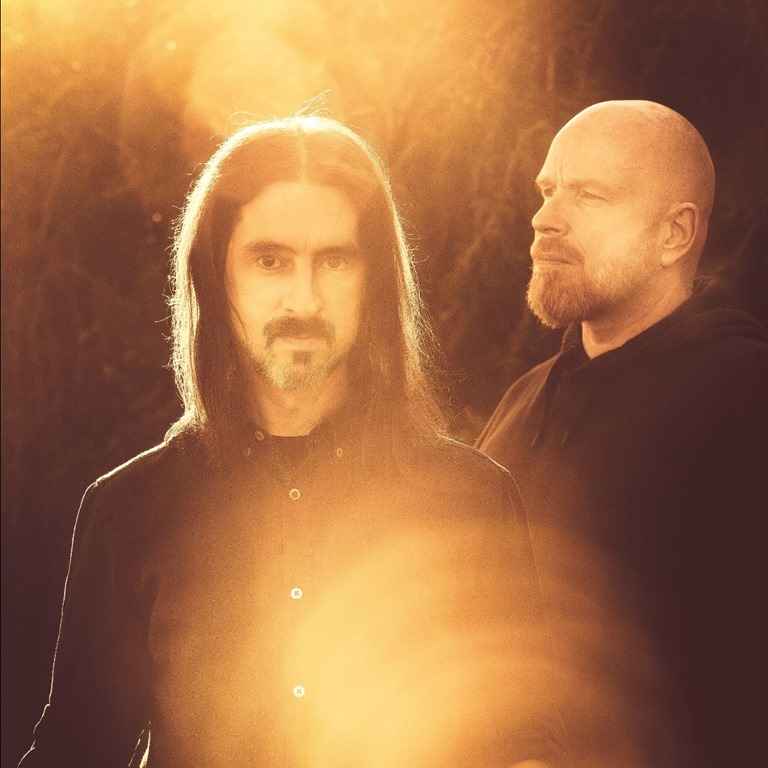
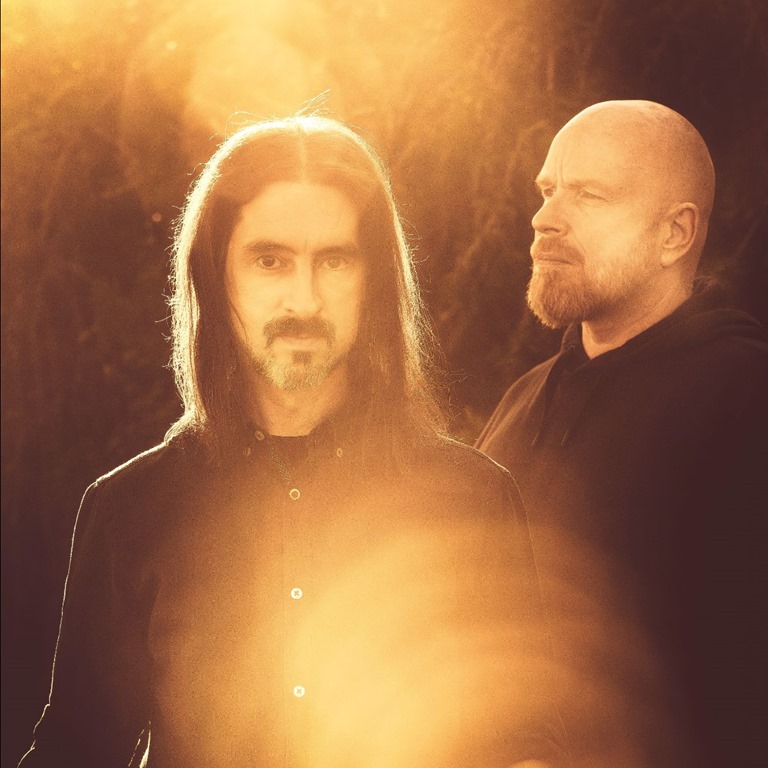
XASTHUR reveal the next advance single, ‘Nothing in the Dark’, taken from their forthcoming new album Open to Misinterpretation. This self-recorded exploration of Dark American Folk is scheduled for release on October 2, 2026.
Xasthur comment: “The song ‘Nothing In The Dark’ deals with the emptiness that people meet whenever they go looking for answers in darkness and suffering”, mastermind Scott Conner explains. “In the lyrics, I am asking what is really waiting in the darkness and whether misery can ever truly become the company that people imagine it to be.”
Earlier this year, we received news that Belarus metal band Dymna Lotva were in some bother when some of their music videos were declared by a court in their home country to constitute ‘extremist materials’. As vocalist Katsiaryna “Nokt Aeon” Mankevich explained at the time, “This means that fans from our home country, who liked, reposted or commented on these videos in the past are now facing a real risk to disappear into a prison. The rule of law does not apply in Belarus. Just one like under a video that has only now been designated as ‘extremist material’ might mean time in jail”.
Having fled the country, they’ve continued to work, and work hard, and are now unveiling their fourth full-length album to the world, following a succession of killer singles, including ‘The Boat of Despair’ , featuring Aaron Stainthorpe, formerly of My Dying Bride.
AA
And now, on the eve of the new album’s release, Mankevich has been charged with ‘extremist activity’, ‘financing terrorism’, and three more criminal charges in her home country. The Investigative Committee of the Sovietsky District of Minsk officially opened a case against Mankevich, who lives in exile in Poland, in June. She has now been summoned to appear in the Minsk City Court for a hearing on August 14th.
Mankevich explains how this has come about, and remains defiant, writing ‘It is clearly connected to my participation in protests against the regime and to my support for Ukraine. To me, it feels even somewhat flattering that this regime is still keeping an eye on us six years after the protests and five years after I was forced to leave Belarus. This confirms that I am on the right path and also provides me with a strong motivation to keep going. Please do not worry about me. Poland has granted me international protection status because of such political persecution. As a result of this trial, Belarus could seize all my properties still remaining in the country. Well, spending my money on creating music turned out to be a great idea after all. And to the Investigative Committee of the Sovietsky District of Minsk I say: Kiss my extremist ass!’
Some say that politics has no place in music or the arts. Those people are ignoramuses. Even as far back as Shakespeare, art has been the vehicle by which political commentary – and dissent – has been disseminated, often via coded or allegorical means. And this context is essential in understanding the band, what they stand for, and why. And, within this context, the arrival of Vyraj is an achievement which is nothing short of phenomenal.
Dymna Lotva are staunch in their rebellious, dissident stance: as their bio states, ‘their name means “Swamp in Smoke”, which relates to the atrocities surrounding the burned villages of Paliessie, which has endured bloody massacres and brutal conflict in the past. Their lyrics are often based on Belarusian tales filled with accounts of sorrow gleaned from historical archives, folklore, and new horrors that are committed in their home country at the present’.
Black metal is clearly an appropriate medium for all of this, but they describe Vyraj as ‘a musical kaleidoscope’, a work which pushes far in myriad stylistic directions, and it’s not an album built around protest and anger, but an exploration of what they call ‘Belarusian ethno-astronomy,’ explaining that ‘in Slavonic legends, the starry sky is associated both with the afterlife and with journeys, which becomes closely intertwined with the musicians’ personal experience of forced emigration’.
The album itself delivers on everything it promises, and more. The first track, ‘Zory’ begins gently before sliding into an almost Swans-like hypnotic groove, before finally the black metal blast powers in. But there’s a twist: the demonic howls and thunderous drums are paired with a sense of expanse that offers hints of prog bombast and symphonic glory. incredibly, it not only works, but is a complete rush.
‘Veha’, which clocks in at over seven minutes, is a multi-faceted epic in every sense, with some dainty chiming notes offering a melodic delicacy which contrasts significantly with the blistering guitars and throat-ripping vocals, finally yielding to a softer closing passage which borders on the ambient.
The aforementioned ‘The Boat of Despair’, which bears one of only two titles in English, is a definite standout, not least of all because it represents such a stylistic shift, introducing hunts of post-metal alongside hints of Amenra, and offers so much emotional depth.
It’s the range and dynamics of Vyraj which make it such a gripping listen, as you find yourself wondering what the next twist or turn will be, and amidst the flaming fury, there are moments or transcendental beauty which are truly elevating. There are still plenty of rabid, raving black metal blastout passages on offer here, and when they go all out, Dymna Lotva really do go all out with face-melting ferocity. But ‘Niamah Darohi’, with its sweeping operatic vocal contrasting with a hellish howl, a rolling piano paired with shuddering rapidfire kick drum is exemplary of the album’s immense range and the remarkable vision when it comes not only to the songwriting, but its execution.
The closer, the eight-minute ‘Return My Coffin Home’ is the very definition of ‘epic’, and reminds us that this may be the only way they will ever return home, at least as long as the current regime is in place. That they have produced such a remarkably detailed, intricate, and impactful work against all the odds is testament to the artistic spirit. Long may it continue to represent the instinct for survival. Whatever happens next, with Vyraj, Dymna Lotva have determined their legacy as innovators within the sphere of black metal.
XASTHUR premiere the track ‘Put You Out of Your Misery’ as the first advance single taken from the forthcoming new album Open to Misinterpretation. This self-made recording of Dark American Folk is chalked up for release through Prophecy Productions on October 2, 2026.
Xasthur comment: “Wherever you go, there you are – and you have to live with yourself”, mastermind Scott Conner writes about ‘Put You Out of Your Misery’. “This song revolves around reaching that inner crossroads where something has to give, and you either confront the issues that make you miserable or you are allowing them to destroy you.”
AA
The eminent French philosopher and Literature Nobel Prize laureate Albert Camus posed and taught that the key in dealing with the absurdity of life and the universe is acceptance. Xasthur founder Scott Conner, an astute chronicler of the dark side of the American dream, has come to terms with that idea in his own way.
Conner has learned the hard way that his work can confuse people and be misread. He has come to accept that. This notion is clearly expressed in the title of his new work Open to Misinterpretation. This insight has also firmed his resolve to neither change his artistic direction nor to attempt making his music easier for people to access. Conner is just not interested in chasing what has worked for other people or fitting neatly into a genre.
This does not mean that Xasthur are standing still. Open to Misinterpretation represents a deeper and more developed version of what Conner already does. He keeps honing his expression and to find new sounds and moods for his ideas. As a result, his songwriting has become equally more detailed as well as harder to predict at the same time. The bass is used more prominently and also more technical on this album. A greater variety of guitar tunings opens up new possibilities, while the drum programming has become a serious part of how the songs are built.
The production has audibly been cleared up, even though Conner still aims for the recording process to feel live, organic, and real. Open to Misinterpretation probably feels more complete because these songs have already been performed live on stage due to Xasthur’s prior touring activities on both sides of the Atlantic. This means that the reactions of the audience have become a part of the tracks.
Up-and-coming Nordic doom adventurers MAUNAH unveil their first music video ‘Heimaland’ (‘Homeland’) as the first advance single taken from their forthcoming debut full-length Hjarta ("Heart"). The Danes’ first album has been scheduled for release on September 18, 2026.
MAUNAH comments: “To us, ‘Heimaland’ feels like a signature track for Maunah that captures our urge to let beauty and doom coexist”, vocalist Søren Sol Koldsen-Zederkof muses. “The song carries the feeling of belonging to a place, but it also reflects the more difficult search for a home within oneself. We have lived with ‘Heimaland’ for a long time, shaping and fine-tuning the song until it finally became as it is now. We are deeply excited to finally release it into the world and hope that you will like it as much as we do!”
AA
How on earth can any debut album sound as complete and sophisticated as Hjarta from Danish doom newcomers MAUNAH? How can a band that seemingly just appeared out of the blue deliver such a modern doom metal masterpiece?
Valid questions. The answer lies in the fact that although it is technically correct to label MAUNAH as a new band, the truth is that the members are veterans of the Danish rock, folk, and metal scenes.
MAUNAH’s popular frontman, Søren Sol Koldsen-Zederkof, has toured extensively with the beloved Nordic folk band KRAUKA, and he has also released several critically acclaimed albums under the artist’s name LOS. His fellow musicians come with experience as well. Guitarist Mads MP Laursen has, for example, played guitar with IRONGUARD and ENCYRCLE.
As it turns out, the chemistry was just right. All the stars aligned – and remarkable talent, fresh musical ideas as well as mature songwriting flowed together naturally in MAUNAH. The positive interaction of the band members became the catalyst for an alchemical transformation that turned music into sonic gold.
Although the roots of Hjarta reach deep into the melodic Scandinavian doom tradition, there is so much more happening on this album. A dash of Nordic folk here, a pinch of modern metal there, which is boosted by renowned producer Tue Madsen (THE HAUNTED, MOONSPELL, HEAVEN SHALL BURN et al.) being responsible for recording the groove parts with the Danes’ rhythm section.
With each new spin, Hjarta keeps giving as MAUNAH have crammed their album with excellent ideas and layers of details. Yet the Danes have not fallen into the trap of drowning out their own ideas by wanting too much in too short of a time. Their songs are allowed to breathe, develop cinematic moments, and unfold, before sinking captivating hooks into the ears. That MAUNAH are a perfect example of the notion that the sum can become greater than its parts was already audible on the band’s digital EP Heimaland, which came out on June 20, 2025. Enriched versions of the songs found their way onto the debut album.
Another element that sets MAUNAH apart from their peers in doom is the absence of a lexical language. The vocals are built on tone, feeling, and rhythm – in an echo of human speech. This creates a space for a more direct connection between vocals and music that reaches beyond the limits of rational language.
In the Danes’ own poetic words: “Maunah is the sound of despair and open skies. Maunah is leaves crunching underfoot, the cold of the forest floor seeping through the soles. And Maunah is the warmth of the sun on the face and oxygen filling the lungs. In the music, the cold of winter meets the summer warmth in the chest, where Maunah pumps blood through the body and music into the air.”
With Hjarta, MAUNAH offer a remarkable debut that goes well beyond the average and exceeds expectations. How far can these Danes get? Only time will tell!
Rome’s post-rockers KLIMT 1918 reveal their ethereal and minimalist aspects with the sky-gazing advance track ‘Petricore’ as the final single taken from their forthcoming new full-length Àmor. The Italians’ fifth album has been chalked up for release on June 12, 2026.
KLIMT 1918 comment: “’Petricore’ is the story of a realisation: the sense of inadequacy that has been with me since I was born and that will never leave me”, frontman Marco Soellner reveals. “It will always be the ghost that is lurking behind the words, the shadow on sunny summer days, and the loneliness creeping into my body even when I’m surrounded by people. Like petricore after a storm, it seeps into the air, haunts memories, disarms and numbs. It turns me once again into the person that I used to be, and the very one that I never wanted to be again.”
Be the aftermath. Be everything you feared you’d become. Be the wound that never healed. Be the ghost you thought you’d buried.
SLEEPING PULSE present the storytelling lyric video ‘Two Wreaths’ as the final advance single, which is lifted from their forthcoming new album: Dreams & Limitations. Gentle Northern English melancholia meets Portuguese longing with a bittersweet drop of hope.
The sophomore full-length from the English-Portuguese duo has been chalked up for release on June 5, 2026.
AA
SLEEPING PULSE comment: “The song ‘Two Wreaths’ revolves around the seeing a dead loved one in a dream, and the joy and panic that ensues”, frontman Mick Moss reveals. “We realise that we are experiencing a gift of a moment, yet our instinct tells us that the moment will be over very soon.”
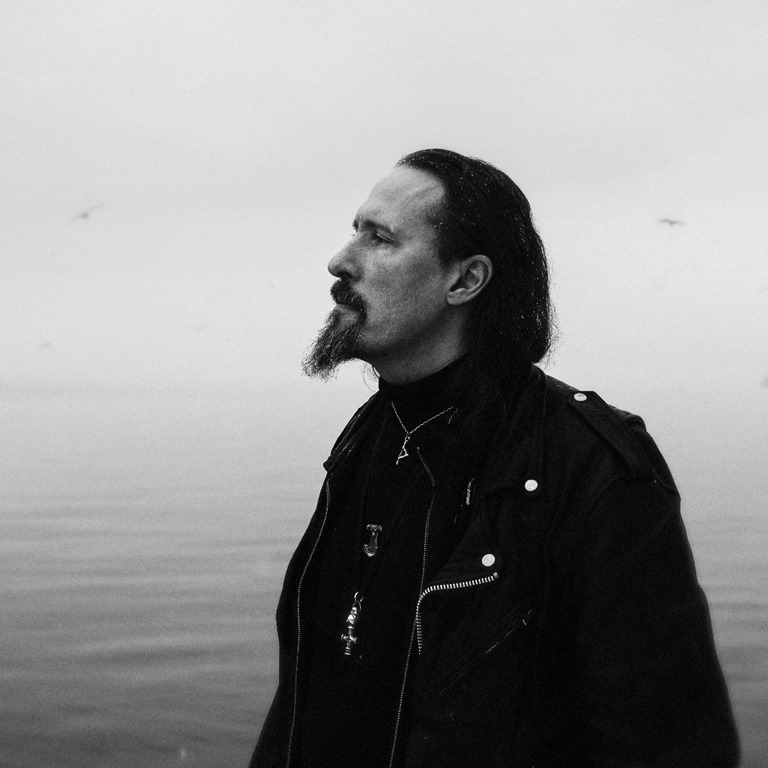
Iconic Norwegians TRELLDOM, founded by legendary vocalist Gaahl, now reveal the eerie advance single ‘I Speak Forgotten Voices’ as the final track selected from their forthcoming new full-length: …by the word…
…by the word… has been chalked up for release on May 29, 2026.
TRELLDOM do neither comment on their music nor explain their art.
AA
With …by the word…, TRELLDOM are pushing forward hard into their new musical era that was ushered in by the previous full-length …by the shadows… (2024), which ended a 17-year hiatus of the Norwegian band.
Mastermind Kristian Eivind Espedal aka Gaahl and his diligently selected collaborators have gone even beyond the complex yet sinister sound that they established with …by the shadows… The exponentially grown confidence and hard-gained experience of joining together seemingly quite different musicians is reflected clearly in each track of …by the word… TRELLDOM have concluded the process of escaping the narrowest definition of black metal without compromising their artistic mission. Their music does not only stay loyal to the spirit of their black metal roots, but the Norwegians are making a solid point that their new sound is even more dark and fierce than ever before – just in more twisted and unhinged ways. …by the word… is the result of Espedal expanding the immense range of his vocals even further into unexplored territories. And it should be noted that this was partly achieved by his return to the famous Grieghallen Studios in Bergen to work again with legendary producer Eirik Hundvin aka Pytten, who was instrumental in the creation of the ‘Norwegian black metal’ sound.
Although Espedal remains firmly at the helm of TRELLDOM, the current line-up plays a massive part in the fresh exploration of musical extremes. Guitarist Stian “Sir” Kårstad (formerly also in DJERV) guarantees a form of continuity as he already contributed to the second and third album of the band. Furthermore, the new constellation features renowned percussionist Kenneth Kapstad, formerly of MOTORPSYCHO and hammering the drums in SPIDERGAWD, MØSTER!, and THORNS. Kapstad brought the internationally acclaimed jazz musician and saxophone player Kjetil Møster (MØSTER!, RÖYKSOPP, THE END) along. Bass player Eirik Øien is the latest addition to the cast of characters.
TRELLDOM were founded by Gaahl in Sunnfjord, Vestland in 1992. The band’s early trilogy of albums, Til evighet… (1995), Til et annet… (1999), and Til minne… (2007) are all regarded as underground milestones of black metal history. Espedal is widely accepted as one of the leading figures of the Nordic black metal scene. The enigmatic vocalist joined the notorious Bergen outfit GORGOROTH in 1998 but soon contributed to a wider range of projects that include Einar Selvik’s WARDRUNA, GOD SEED, and in 2015 he also launched his new band GAAHLS WYRD.
TRELLDOM continue in the tradition of all of Espedal’ art, which asks to always expect the unexpected. With …by the word… the exploration of avant-garde dissonance, wicked rhythm patterns, and wild ideas again destroys preconceptions and demands intense listening. Better prepare to be challenged by every note!
I seem to be on something of an inadvertent black metal trip this bank holiday weekend, and, peculiarly, one devoted to black metal forged on this small island, for following my review of Hellripper’s Coronach – black metal that’s staunch in its Scottishness – we have Prophecy Productions pitching the new album from West Yorkshire (Leeds, of course, where else) act A Forest of Stars as being uniquely British in their branding.
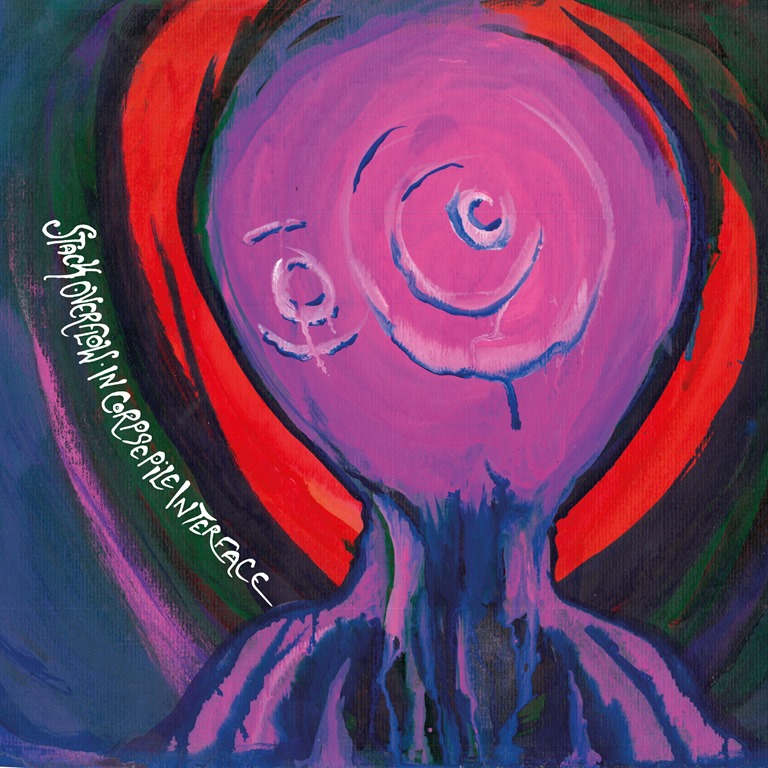
It’s tempting to unpack the importance of national identities here, particularly at a time when ‘British’ identity – at home, far more than away – carries some toxic connotations, and the majority of Scots are keen to claim independence from the government of the United Kingdom – in short, to become dis-united, but this is such complex and boggy terrain that there simply isn’t the time or space, even if it were appropriate here. And so I will return to the seemingly flippant word selection concerning ‘British branding’, for while – as is a central trope of black metal – A Forest of Stars’ album titles are strewn with corpses, death, and decay (their debut was entitled, perhaps somewhat oxymoronically, The Corpse of Rebirth, while their last was called Grave Mounds and Grave Mistakes, which sounds probably more humorous in its punning wordplay than intended), Stack Overflow in Corpse Pile Interface sounds like corporate speak. If a there was multinational corporation that dominated the industry of funeral directors, Stack Overflow in Corpse Pile Interface could well be the title of a report for the executive committee. Or perhaps Pure Cremation have already written it and had that meeting concerning their strategy in the event of another pandemic, replete with an array of graphs and graphics, pie charts and flow charts, costings and projections. Because capitalism exploits everything there is to exploit.
As such, the language of capitalism sits very much at odds not only with a metal band, but a band so immersed in art and poetry, whose biography goes to significant effort to point out that ‘in his recitative mode, vocalist Curse is even reminiscent of electro poet Anne Clark – after a steady diet of prescription drugs and rusty nails. On the other hand, his singing voice evokes memories of a young Martin Walkyier. The impressive command of the English language by that great metal bard, his plentiful plays on words and subtle multi-layered meanings also have a place in the poetic lyrics of A FOREST OF STARS – yet in different, often far more neo-dadaist ways, in which tiny twists of spelling can have surprisingly dark effects’ (suggesting, at the same time, that the wordplay of Grave Mounds and Grave Mistakes was entirely intentional after all).
The regular release of the album contains six songs, the shortest of which is the opener, ‘Ascension of the Clowns’ at a hefty nine minutes, and with the last two stretching beyond the fifteen-minute mark. The deluxe edition adds three more tracks – by most standards, an additional EP, or even an album of bonus material.
‘Ascension of the Clowns’ is grand and theatrical: Curse brings the metal fury, but emotes and enunciates, his words not only audible but clear above the spacious guitar work – which, over the course of the album’s expansive compositions – are accompanied by an array of instruments from piano to violin, as well as acoustic guitar. There’s a strong orchestral leaning – not to mention folk elements – to incredibly ambitious work, and it’s hard to fault the musicianship or arrangements, although the instrumentation is often dialled down to accompany the vocals, rather than the elements merging to create a sonic whole.
There are obvious reasons for this: Stack Overflow in Corpse Pile Interface is as much like a musical as it is a metal album. Without wishing to sound in any way mocking, one can almost picture Curse lofting a skull and affecting his most dramatic Hamlet-inspired gushings as he proclaims in the most thespy rendition of anguish, “Shit of that shit! The enshitenment!” on ‘Street Level Vertigo’. Yes, he knows his words and wordplay, and clearly revels in the way words reverberate and resonate and rub against one another to conjure layers of meaning and heightened drama.
‘Mechanically Separated Logic’ references the processes of the meat industry, applied to the psychology of late capitalism, and while the instrumentation is subtlety detailed and softly picked for the most part, only bursting into cathedrals of sound in places, again, the vocals are pure theatre, bold, exaggerated, and it’s hard to know quite how to take it, to deduce how serious this preposterously excessive style is. But even assuming there is a knowingness, a joyful revelling in the absurdity of all of this, it feels more like a work to respected and admired rather than enjoyed. No, that’s not entirely accurate: it’s enjoyable, even entertaining, particularly with its folk flourishes and revelling in the excremental, but it’s enjoyable as a performance, rather than as a set of songs which resonate on an emotional level.
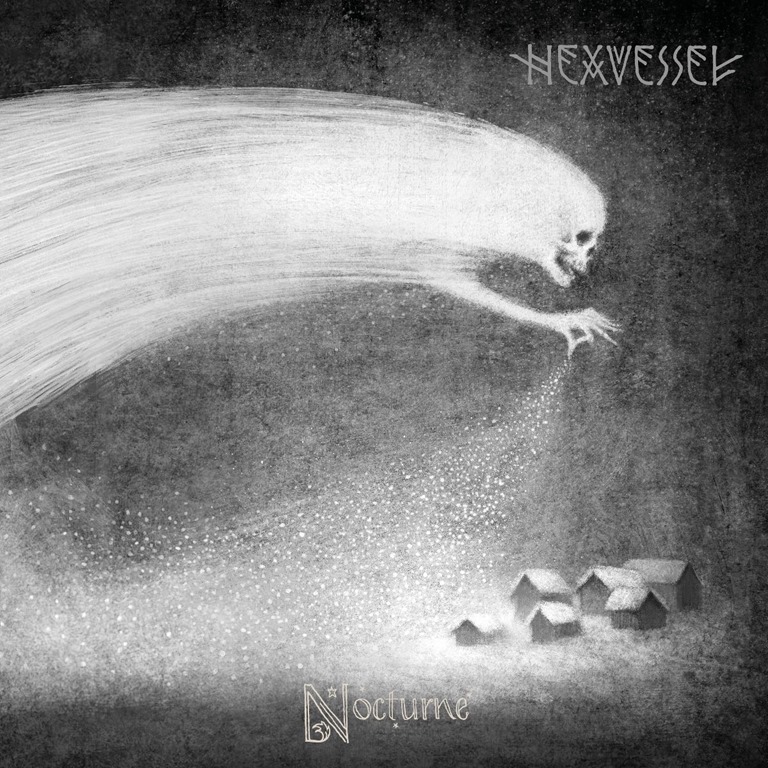
HEXVESSEL drop the digital single ‘Horse Tears’, which was previously only available as a bonus song with the premium edition of Finnish psych-folk and occult doom band’s latest album Nocturne. ‘Horse Tears’ is a cover track taken from British electronic duo GOLDFRAPP’s debut album Felt Mountain (2000) and features the original former IN THE WOODS… vocalist Jan Kenneth Transeth.
HEXVESSEL comment: “Me and Jan Kenneth Transeth go way back”, singer and songwriter Mat “Kvohst” McNerney writes. "I have toured Europe with In The Woods… in 1996, a stowaway in their van, after tracking them down to Kristiansand as a young blackpacker (as Black Metal tourists to Norway are now commonly known, myself being one of the first in the mid-90s). I have always adored Jan’s voice and the early In The Woods… demo and records are so important to me. It is such a high honour to have him sing this song, one of my most favourite singers of all time doing a cover with us of one of my favourite songs, ‘Horse Tears’ on one of my favourite albums, Goldfrapp’s Felt Mountain! To have his daughter Lea join him, singing this song with him, makes it even more touching. Those that have missed Jan’s voice with that old sound, can take a trip with us to a time when Avantgarde Black Metal was truly influential and alive. For me those albums and sounds, Jan Kenneth’s voice and the atmosphere that goes with it has never stopped being so vital. Let the shivers take possession!”
SLEEPING PULSE unveil the beautiful lyric video ‘The Butterfly Collector’ as the next advance single taken from their forthcoming new album: Dreams & Limitations. This melancholic yet dynamic and strangely also upbeat track is shaped by a fluttering flute melody.
SLEEPING PULSE comment: “The title, ‘The Butterfly Collector’, is a metaphor for desperately holding onto memories”, frontman Mick Moss explains. “Our main character sees various moments in his past as being perfect and he works hard to create a place in his mind where they are archived and stored. Yet for all his efforts, the sadness that comes with knowing that he can never truly relive those moments again becomes overwhelming.”
AA
When you allow Northern English melancholia from valleys of green and gray to get married to the eternal longing of Portuguese Fado from where the raging Atlantic meets the heat of summer at the end of the world, SLEEPING PULSE is what you get.
Portugal has a reputation for people casually talking about death when going about everyday life like other folks talk about the weather. England is regarded as a stoic place, which makes it hardly surprising that SLEEPING PULSE explore the profound struggle of staying sane whilst navigating the heartbreaking truth that all existence is not just brief – but also one fraught with personal loss and an inability to hold on to the people that you love.
So far so good, but what sets the duo of vocalist Mick Moss, who is best known for his work with ANTIMATTER, and Portuguese guitarist Luís Fazendeiro apart, is their artistic achievement to make this existential pain audible with every note on their sophomore album Dreams & Limitations. Using a form of doomy progressive or even post-rock as their sonic foundation, SLEEPING PULSE compose music that is in the best way deeply emotional while remaining exciting. The duo’s songs do not wallow in sorrow; they rather embrace the inevitable and live through it for as long as it lasts.