Prophecy Productions – 8th May 2026
Christopher Nosnibor
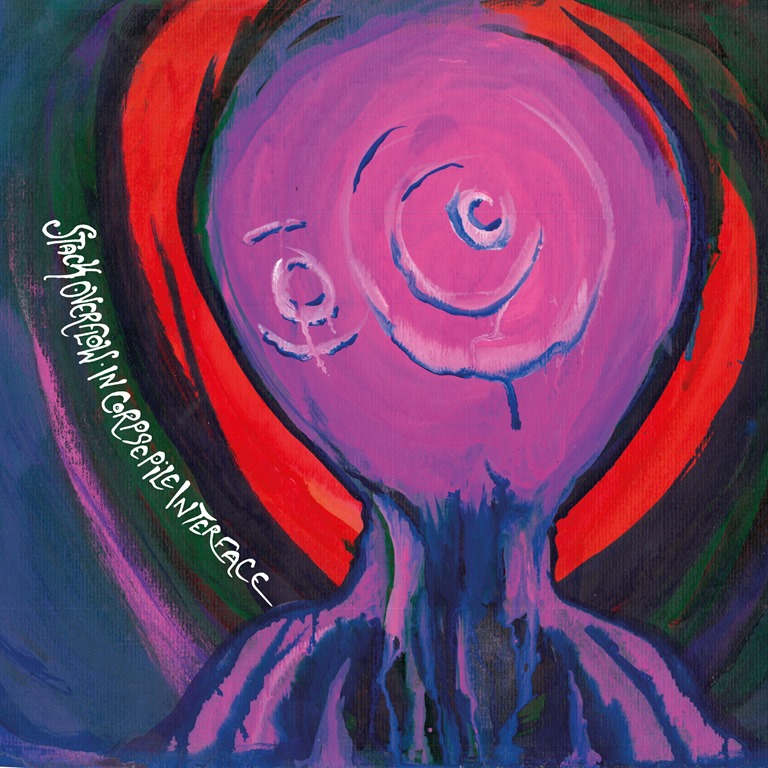
I seem to be on something of an inadvertent black metal trip this bank holiday weekend, and, peculiarly, one devoted to black metal forged on this small island, for following my review of Hellripper’s Coronach – black metal that’s staunch in its Scottishness – we have Prophecy Productions pitching the new album from West Yorkshire (Leeds, of course, where else) act A Forest of Stars as being uniquely British in their branding.
It’s tempting to unpack the importance of national identities here, particularly at a time when ‘British’ identity – at home, far more than away – carries some toxic connotations, and the majority of Scots are keen to claim independence from the government of the United Kingdom – in short, to become dis-united, but this is such complex and boggy terrain that there simply isn’t the time or space, even if it were appropriate here. And so I will return to the seemingly flippant word selection concerning ‘British branding’, for while – as is a central trope of black metal – A Forest of Stars’ album titles are strewn with corpses, death, and decay (their debut was entitled, perhaps somewhat oxymoronically, The Corpse of Rebirth, while their last was called Grave Mounds and Grave Mistakes, which sounds probably more humorous in its punning wordplay than intended), Stack Overflow in Corpse Pile Interface sounds like corporate speak. If a there was multinational corporation that dominated the industry of funeral directors, Stack Overflow in Corpse Pile Interface could well be the title of a report for the executive committee. Or perhaps Pure Cremation have already written it and had that meeting concerning their strategy in the event of another pandemic, replete with an array of graphs and graphics, pie charts and flow charts, costings and projections. Because capitalism exploits everything there is to exploit.
As such, the language of capitalism sits very much at odds not only with a metal band, but a band so immersed in art and poetry, whose biography goes to significant effort to point out that ‘in his recitative mode, vocalist Curse is even reminiscent of electro poet Anne Clark – after a steady diet of prescription drugs and rusty nails. On the other hand, his singing voice evokes memories of a young Martin Walkyier. The impressive command of the English language by that great metal bard, his plentiful plays on words and subtle multi-layered meanings also have a place in the poetic lyrics of A FOREST OF STARS – yet in different, often far more neo-dadaist ways, in which tiny twists of spelling can have surprisingly dark effects’ (suggesting, at the same time, that the wordplay of Grave Mounds and Grave Mistakes was entirely intentional after all).
The regular release of the album contains six songs, the shortest of which is the opener, ‘Ascension of the Clowns’ at a hefty nine minutes, and with the last two stretching beyond the fifteen-minute mark. The deluxe edition adds three more tracks – by most standards, an additional EP, or even an album of bonus material.
‘Ascension of the Clowns’ is grand and theatrical: Curse brings the metal fury, but emotes and enunciates, his words not only audible but clear above the spacious guitar work – which, over the course of the album’s expansive compositions – are accompanied by an array of instruments from piano to violin, as well as acoustic guitar. There’s a strong orchestral leaning – not to mention folk elements – to incredibly ambitious work, and it’s hard to fault the musicianship or arrangements, although the instrumentation is often dialled down to accompany the vocals, rather than the elements merging to create a sonic whole.
There are obvious reasons for this: Stack Overflow in Corpse Pile Interface is as much like a musical as it is a metal album. Without wishing to sound in any way mocking, one can almost picture Curse lofting a skull and affecting his most dramatic Hamlet-inspired gushings as he proclaims in the most thespy rendition of anguish, “Shit of that shit! The enshitenment!” on ‘Street Level Vertigo’. Yes, he knows his words and wordplay, and clearly revels in the way words reverberate and resonate and rub against one another to conjure layers of meaning and heightened drama.
‘Mechanically Separated Logic’ references the processes of the meat industry, applied to the psychology of late capitalism, and while the instrumentation is subtlety detailed and softly picked for the most part, only bursting into cathedrals of sound in places, again, the vocals are pure theatre, bold, exaggerated, and it’s hard to know quite how to take it, to deduce how serious this preposterously excessive style is. But even assuming there is a knowingness, a joyful revelling in the absurdity of all of this, it feels more like a work to respected and admired rather than enjoyed. No, that’s not entirely accurate: it’s enjoyable, even entertaining, particularly with its folk flourishes and revelling in the excremental, but it’s enjoyable as a performance, rather than as a set of songs which resonate on an emotional level.
AA
AA