Archive for May, 2026

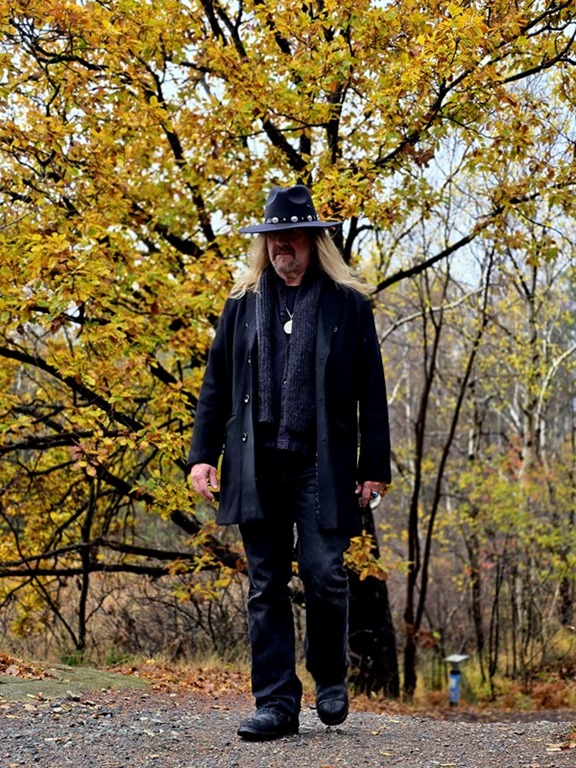
Mirror of My Soul, the solo project of Patrik Andersson Winberg (Dun Ringill, ex-The Order of Israfel, Doomdogs), has just shared a new video for ‘The One Who Sings The Songs’, the latest single taken from the forthcoming debut album October is Rising, due out June 12 via Majestic Mountain Records.

Describing the track, Winberg states:  “A song for the unseen. A voice for the unheard. What if music could carry more than melody? What if a song could feel your sorrow, walk beside your struggle, and remind you that love still speaks louder than fear? ‘The One Who Sings The Songs’ is more than a track, it’s a moving anthem of compassion, resilience, and shared humanity. Inspired by those fighting invisible battles, it speaks for the voiceless, stands with the fallen, and offers hope to every soul still searching. With raw, heartfelt lyrics on empathy, strength, and the courage to keep going, this is music that lingers long after the last note. For the dreamers. For the survivors. For anyone learning how to love again. Join the song. Feel the story. Become part of something bigger.”

With deeply emotional lyrics and a powerful sense of empathy, the track stands as an anthem for anyone navigating loss, struggle, or personal transformation. It is a reminder that even in our darkest moments, connection remains possible and love can still be found amid uncertainty.

AA

3e0e3a85-e5ae-738f-76a8-9e7493e48d66

26th June 2026

Christopher Nosnibor

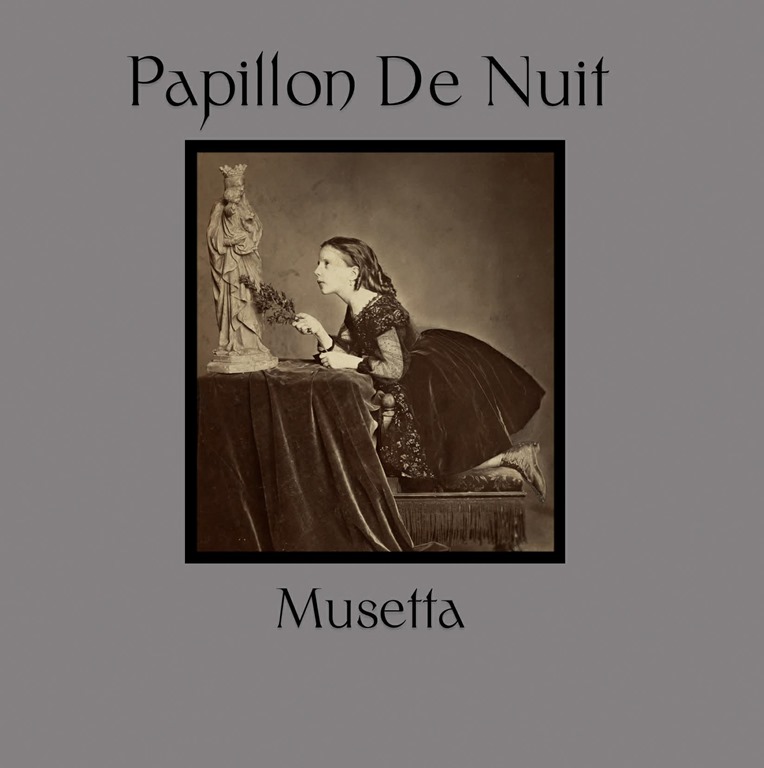
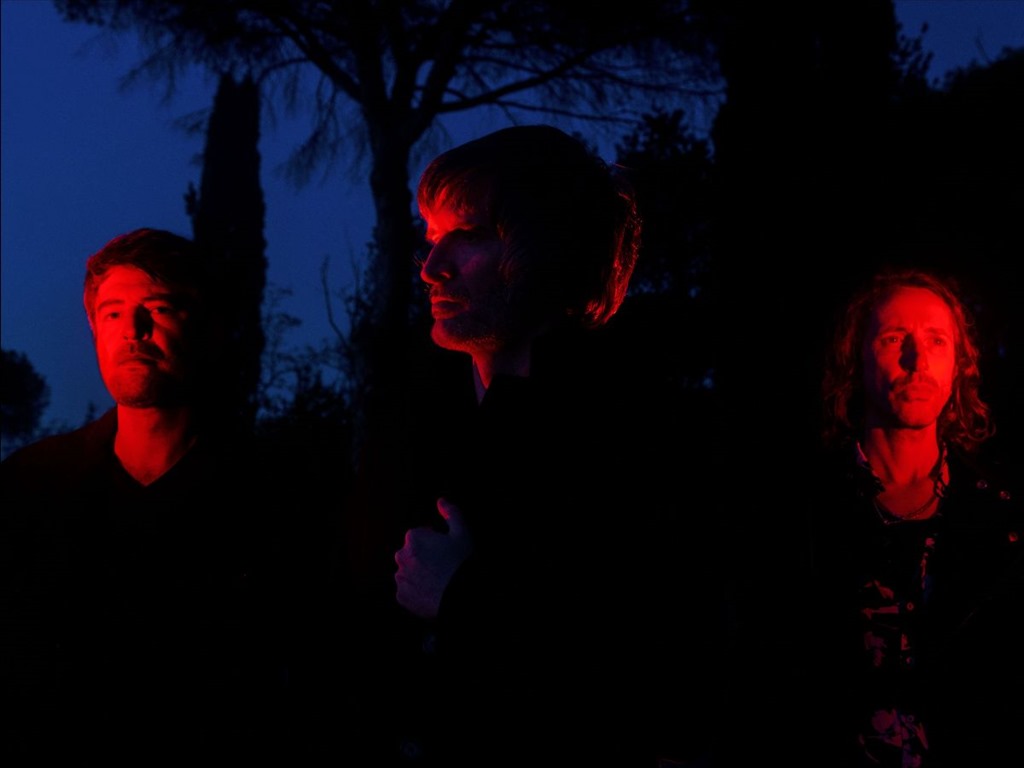
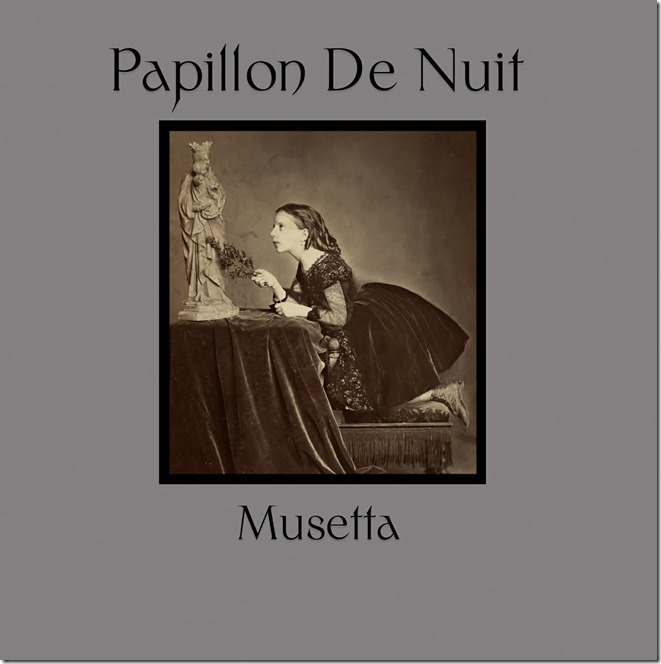
Although they may have seemingly risen out of nowhere a couple of years or so ago, Papillon du Nuit, the ever evolving, ever-expanding musical project revolving around Stephen Kennedy, alongside Mika, Steve, and Karen (who between them cover vocals, cello, grand piano, guitars, keyboards, and percussion) is a coming together of individuals who have been on and around the ‘goth’ and adjacent scene in the north for some considerable time, to form a loose collective. Having debuted in October 2024 with ‘Scarlet’, they’ve built a body of work through a succession of singles – eight in all. Most acts would have simply compiled said singles to assemble an album – but not Papillon du Nuit, and certainly not Stephen Kennedy – because he likes to do things the hard way. The proper way. And because his roots lie in that 80s goth era where bands like The Sisters of Mercy grew their fanbase through a series of ever-evolving single releases but saw the album as a different medium, a means of creating a specific, thematically unified document. As it happens, Musetta sits somewhere between the compilation and standalone document, plucking a selection of those previous singles and placing them amidst the new songs, meaning that of the album’s nine tracks, five have been previously released, although sitting in the context of an album they feel different somehow. And as much as Papillon du Nuit embrace some elements of goth – or perhaps, more accurately, the gothic (think brooding atmosphere, haunting imagery, a sense of drama) – this is a project which goes far beyond genre, with strong leanings towards neoclassical, chamber pop, the theatrical, even the operatic.

As they explain, ‘The album is named after Musetta, one of the major characters in the opera La Boheme, who is enshrined with all the qualities, and all the follies, that make us who we are. Many of the songs here explore a mythical, almost mystical journey, with life displayed more as an inevitably straight path, rather than something circular. The songs are not about death, but many of them lead there’. Some may mock with a ‘pretentious, moi?’, but Musetta is a work which is fully committed to art, and therefore sweeps pretence aside in being the real deal. That Steve Whitfield (The Cure / The Mission) produced, and co-wrote some of the tracks is nothing if not proof of pedigree, as well as their commitment to delivering an album which goes to great lengths to realise strong intent.

Heavy breathing, a panting even. Tension. Suspense. Then comes the panicked whisper: ‘is it dark, or am I blind?’ It has a decidedly Beckettean feel to it. A piano begins to reverberate. This is ‘Jude.’ As a single, it arrived as a stark and curious hybrid of poetry, theatre, and folk with a prog-rock leaning and a sense of the epic. In a revised context as an album opener, it feels very much like an introduction, a passage into a vast musical world. ‘Pilgrim’s Arc’, the most recent single, released in October, is driving, dynamic, tempest of a composition, and makes for a stark contrast arriving immediately after. Immediately, it’s apparent that there’s no small consideration been given to the album’s flow and shifts in mood and pace, and even this early, themes of time and mortality emerge.

AA

The first of the unreleased, album-specific songs, ‘Natalie’, follows, and it’s cinematic, widescreen-even, with its string-soaked chorus, again building to a spectacular finale. It’s no criticism to say it sounds like an album track: it’s magnificently executed, and offers some respite from the experimental intensity of the songs which precede it, and the cello-forward ‘A Sea Within An Ocean’ is the work of a band spreading out and settling, stretching their limbs and simply composing to make music, free from the (self-made) pressure to record a single in a day, or whatever their previous process was. It feels looser, more relaxed, and the result is a rolling, hypnotic wave of a song.

‘Cello Poem’ – at a mere two and three-quarter minutes – feels like more of a narrative bridge than a song in its own right, and the spoken word segue links single cuts ‘Amber’ and ‘Ariadne’ – and does so quite effectively, in truth. It does, however, keep death as its focus. And I suppose this is the core of the matter. As they say, ‘The songs are not about death, but many of them lead there’. How many of the great plays, novels, or poems aren’t about death, at least in some way? Death is, after all, the only certainty in life.

AA

Where Musetta differs from other albums where death is a preoccupation or a focus is that this is an album which carries a weight. It’s in no way frivolous or posturing, it doesn’t take death simply as a motif: it’s a soul-felt meditation on the end of life. No glorification, no stylisation, but a philosophical contemplation. It’s this which makes Musetta so impactful. Not only is youth wasted on the young, but life is wasted on the living, by and large. That is to say, it’s hard to appreciate what you have until it’s gone, or slipping away, and while so much goth – and metal, and so much music of many styles, for that matter – is preoccupied with death in a conceptual way, there comes a point where it comes all to near, all too real, and here it gets scary – rather than a game of lofting skulls and a flamboyant delivery. Shit does get real, and we all have to face the reality of mortality. And at this point, it’s not cool, it’s not dramatic, it simply becomes a heavy reality. We start by losing grandparents, and parents, and often, in between, friends and peers. And when it’s your peers, you start to worry. And if you don’t, you probably should.

Musetta is packed with heavy moments – not so much sonically, but emotionally, philosophically – and it’s woven with a fabric rich in literary allusions and diverse stylistic influences. ‘Visionary’ is a word I’m cautious in applying to anything, particularly anything contemporary – but ambitious and accomplished, wide-ranging, powerful, and moving… Musetta is all of these things, and more.

AA
Album Cover

Rome’s post-rockers KLIMT 1918 reveal their ethereal and minimalist aspects with the sky-gazing advance track ‘Petricore’ as the final single taken from their forthcoming new full-length Àmor. The Italians’ fifth album has been chalked up for release on June 12, 2026.

KLIMT 1918 comment: “’Petricore’ is the story of a realisation: the sense of inadequacy that has been with me since I was born and that will never leave me”, frontman Marco Soellner reveals. “It will always be the ghost that is lurking behind the words, the shadow on sunny summer days, and the loneliness creeping into my body even when I’m surrounded by people. Like petricore after a storm, it seeps into the air, haunts memories, disarms and numbs. It turns me once again into the person that I used to be, and the very one that I never wanted to be again.”

Be the aftermath.
Be everything you feared you’d become.
Be the wound that never healed.
Be the ghost you thought you’d buried.

AA

6e3ec3b3-854d-3a3b-b3c1-a45075d5587b

Criminal Records – 12th June 2026

Christopher Nosnibor

It’s a pretty bold move to open an album with a slow-paced and pretty bleak-sounding song which is more about dolorous atmosphere than chorus or hook. But then, Argonaut’s latest offering is pretty bold – albeit in an understated sort of a way. That likely sounds oxymoronic, so let me unpack it a bit.

After something of a purple patch, with the prolific spate of post-lockdown output which, over the course of a year and a bit and a new song each month saw the development of open-ended album Songs from the Black Hat (which ended up with a total of twenty tracks, with the inclusion of a couple of remixes), Argonaut were forced to make a change of pace. Life has a way of doing that – and events also resulted in a change of focus. The result is Interrupted – an album two years in the making, and by far the darkest and most introspective set of songs they’ve released. It’s not that the London DIY trio have always skirted darkness or introspection, but historically, it’s been balanced by lighter, poppier indie tunes. Now, though, they’ve embraced what one may call the therapeutic benefits of creativity, channelling – and coming to terms with – real-life issues and even trauma through those outlets.

As the accompanying notes lay things out quite plainly, Interrupted offers ‘Ten songs from the past year’s abyss, documenting breakdown, burnout, dementia, depression, memory, hope and healing’. This in itself is bold. Again and again, the conversation is ‘we need to talk about these things’, but the moment we do, there’s a sort of collective wince in society, on social media, among our friends even. We’re still not societally conditioned to deal with the difficult stuff. I can speak from experience here: following the loss of my wife at the age of 44, and finding myself as a single parent, I’ve had enough ‘well, I could be worse’ type responses to articulations of struggle to fill a book. And now, while witnessing the mental and physical decline of one of my parents, I’m finding a similar reluctance among friends to engage on a meaningful level on the subject.

Thankfully, there are always artists who are – not necessarily willing, but perhaps more compelled – to pour all of this into their work, perhaps because those in immediate proximity are found wonting when it comes to conversation, meaning that creative channels are the only channels available. The Twilight Sad’s latest album, The Long Goodbye is perhaps the most harrowing thing I’ve heard in years, but James Graham’s dealing with the loss of his mother to dementia through the songs is powerful beyond belief.

Interrupted, too, confronts real-life anguish. And so, after some digression, we return to that opening track. ‘We’re Not Hungry Anymore’ is a remarkable hybrid of jangly indie and post-grunge – the heavily chorused guitar carrying hints of Soundgarden’s ‘Black Hole Sun’, but mournful strings bring a different shade of melancholy, and Lorna’s vocal somehow manages to be cutesie and scared, giving vibes of Alison Shaw of Cranes. It culminates in a monumental crescendo.

Lead single ‘Leaves’ – which lands towards the end of the album – is similarly bleak, particularly Cure-esque and direct in its addressing emotional distress, here specifically on the topic of dementia. As Lorna writes on the single’s video, “I was thinking about the moon cycle and the new moon and wanted to incorporate that feeling into the music. The lyrics are about somebody who is getting older and their mind is starting to deteriorate. They can remember the past more than the present. I had the image of being lost in the woods and trapped inside their memories. It’s quite a personal song.”

AA

And in the personal lies the universal, the relatable. The last few times I’ve seen my mother, she’s talked mostly about her school days and her job. She’s 79, and has nothing much to talk about, and actually seems to recall very little, from any time since. She gets lost going to the village shop, despite having lived in the same village for a good twenty-five years. So yes, this resonates, and increasingly, friends – or friends of friends – tell of relatives – no longer just grandparents, but parents suffering a painful mental unravelling.

‘Hats Off’ lands in the region of Daisy Chainsaw remixed by The Cure, with a bassline that’s got the vibe of ‘Let’s Go to Bed’ while casting a nod to the niggly guitar bit in Prince’s ‘Kiss’ which fits with the post-punk pop funk vibe which goes some way to break the tension, and ‘I’m Not Getting Up After This’ is the perfect summary of a depressive episode, the encapsulation of both physical and mental exhaustion. ‘Sugarfree’ is one of the songs closest to what we’re familiar with from Argonaut, with Nathan’s gravelly, weary-sounding monotone providing a magnificent contrast to Lorna’s sweet, flighty tones, but something about it feels leaden, weighted – not in a lethargic way, but as if pulled by an emotional drag. ‘This Means Something, This is Important’, released a year ago while the album was still evolving, is another of the more upbeat, fizzy indie moments we’re used to, and ‘Unpredictable’ showcases their irrepressible pop penchant. The final track, ‘Rewind’ is heavy, Siouxsue and The Banshees gone sluge – it makes for a hard-hitting, climactic  finale.

AA

Interrupted is often dark, bleak, intense, and incredibly sad, but still packs its fair share of poppy punk tunes to provide some balance. It’s a difficult album, and rightly so. It’s not meant to be easy listening. It’s taut, its pop moments propelled by a thunking bass and motorik grooves. It’s also an album with many depths. It’s perhaps not an album we’d have expected from Argonaut, and it’s likely not an album they themselves expected, or would have wanted to make. But it’s emotionally honest, and that is bold. It’s also probably their strongest release yet.

AA

Argonaut, Interrupted Album_ Front

What happens when the release of a band’s debut exceeds their wildest dreams of what’s possible? 12 months ago, Cwfen (pronounced ‘Coven’) released their first album, Sorrows, which emerged from attempts to demo some material at a friend’s studio in a remote Scottish farmhouse. The results received unexpected and widespread acclaim, enjoying glowing reviews in the heavy music press (Metal Hammer, Kerrang!) and featuring in album of the year lists at the close of 2025.

Fast forward 12 months and the band have toured extensively with Paradise Lost and Faetooth, and played countless festival stages, crushing audiences and gaining new fans with consistently powerful performances of the Sorrows material.

This journey is captured beautifully in the form of a new video for the song ‘Whispers’, perhaps the most gut-wrenching and dynamic track from the band’s debut. Juxtaposing the stunning landscapes of northern Europe in winter shot from Cwfen’s tour van, with footage of the band’s dynamic live performances across Finland, Norway, Sweden, Denmark and Ireland, the Whispers video shows the band doing exactly what they love – presenting their songs to wrapt audiences while they reach new musical and emotional heights. Shot and edited by Amy Greenbank, the video shows the band at their very best.

The release of the ‘Whispers’ video is accompanied by specially designed ‘Whispers’ merchandise, which comes with previously unheard live and studio recordings of the song.

‘Hell, they were great before. Now they’re on another level.’ Out of Rage, review of Cwfen at Desertfest 2026.

Lead vocalist and guitarist Agnes Alder said:

"It’s taken a while to feel comfortable releasing Whispers as its own thing. The song itself, lyrically, came from a very personal place, in contrast to the broader themes elsewhere on the record. This, for me, is a song that cuts right to the bone; it might not be too obvious in the lyrics themselves, but it’s taken a year of seeing the fans respond to it, watching it become one of their favourites, to really have the courage and the confidence to give it some of the love it deserves.

The screams weren’t planned. They weren’t on the first version, but when we went back into the studio after a few weeks, that’s what had to come out, so what you hear in this song is the depth of that feeling. It’s one of the most cathartic, tender, and ultimately visceral songs on the album, and deciding to release it now feels like the acceptance of a direction in my songwriting that I feel ready to explore on the next record.

We were so lucky that our Creative Scotland funding allowed us to take this tour and to bring Amy Greenbank with us. We got to work with an incredibly talented videographer, and we made a friend for life. She’s someone who will always be part of the Cwfen family. We made incredible memories on this tour and it’s so lovely to see some of them here.’"

Guitarist Guy DeNuit had this to say:

"Following an unexpectedly busy and wonderful 12 months since the release of Sorrows, we’re proud to share our new video for ‘Whispers’. This song has become a live favourite with the band and audiences, and we are so fortunate to have had this documented and beautifully presented by our videographer and dear friend, Amy Greenbank.”

Watch the video now:

AA

Forthcoming shows:

Wed 10th June – Download Festival, Donington, UK

Sat 6th July – Resurrection Fest, Galacia, Spain

Sun 16th Aug – Dynamo Metalfest, Eindhoven, Netherlands

Sun 15th Nov – Core Festival, Glasgow, Scotland

Cwfen

Within the broad church of metal and its many offshoots – rock, doom, stoner and all the rest – it remains a minor thrill to stumble across a group who seem to exist at a slight tangent to everything else. Crumbling Ghost is one such anomaly and an irresistible one at that: a group who feel less like a discovery than a secret belatedly shared. Hopefully, a secret no longer as New Heavy Sounds is proud to present to you their latest album ‘Four’.

Crumbling Ghost are not newcomers. They’ve been operating for some time, releasing records sporadically, Four is in fact their fourth release.  Along the way they’ve accumulated a fervent coterie of followers, not to mention the occasional nod of approval from tastemakers such as Stuart Maconie, Stewart Lee and Tom Ravenscroft. And though they’ve appeared at Roadburn, shared stages with Hawkwind and even Damo Suzuki, they remain (possibly by design) curiously under‑the‑radar. That might change with the quite wonderful Four.

The group’s core idea is deceptively simple: traditional folk material rearranged and refracted through the haze and heft of heavy, fuzzy stoner rock with a  chunk of psyche and a smattering of doom. But crucially, this is done without the costumery and theatrical tics that often accompany such collisions.  No mock‑pagan pageantry, no graveyard cosplay, no cartoon Satanism.

What Crumbling Ghost latch onto is not folk as a museum piece, but as a lived experience, the dramas rooted in the culture, stories, and daily lives of ordinary people, the folklore, the tales of love and death, murder and adultery, freedom and oppression.

On Four those narratives are dragged into the present via churning distortion, hypnotic repetition and a sense of looming atmosphere. Fairport Convention with fuzz. Trees with heft. A pastoral Sonic Youth.

Singer Katie Harnett says, “Doting mothers, possessive, violent partners, vulnerable women, seasonal workers and Royal scandals this album is our representation of the trials and tribulations of human existence and universal experiences that still feel relevant today, an interpretation of traditional tales  along with original compositions presented in our own Crumbling Ghost style”.

Guitarist John adds, “Themes of murder, betrayal, loss, jealousy, and love are found across the record.  In particular, the songs of Martin Carthy have been a particular source of inspiration”.

The result is a set of murder ballads, supernatural reckonings and cautionary tales, all wrapped in slabs of heavy, thumping fuzz and atmospheric sonics. Harnett’s voice sits at the centre: unmistakably folk‑rooted, but shorn of prettification, melodic yet capable of real bite. There’s no “hey nonny nonny” here.

Musically, it’s a combination that really does work, and it’s delivered in some style too. And to fully appreciate the world of Crumbling Ghost, listening closely pays dividends, and those stories come to life.

First single, ‘Bill Norrie’ follows, a hooky melody propelled by an insistent bassline and a haunting psych tinged haze punctured with sheets of noise… The story of young Bill Norrie who sends a token to a married woman, whose jealous husband beheads him, without knowing he was his wife’s son from an earlier affair. Vocalist Katie Harnett commets,

“Bill Norrie is about a young woman, who has been taken  advantage of, who has hidden a pregnancy, probably because having a  child out of wedlock would have brought shame on the family. Her  illegitimate son Bill has remained in her heart all this time and even  when he is cast down by her jealous husband she defiantly kisses his  severed head ‘cheek and chin’ and vows to never kiss man again, which to  be honest I don’t blame her, given the circumstances. The vocals  start  by setting the scene and gradually builds to its dramatic conclusion. I attempted to capture her sadness, devotion, resilience and ultimate defiance in the face of adversity.”

Guitarist Donny Hopkins adds,

“John (guitarist) saw Martin Carthy play his version of Bill Norrie live at the Cumberland Arms in Byker, Newcastle and fell in love with it. So he adapted a version from Martin Carthy’s 1988 Right of Passage album. As  is often the case, I’d not heard it (still haven’t actually) and worked out some heavy delay parts over the verse around Johns more classic folk  style. I added in the heavy ‘Drop A’ breaks between the verses as a nod to Miami band Torche and their ‘bomb string’.”

AA

Crumbling Ghost

Greedy Media – 5th June 2026

Christopher Nosnibor

Fuck me, a new album by The Dwarves? They’ve now been going fully forty years. How? How is Blag Dahlia even still alive? They may have reined things in around the turn of the millennium, but no act this controversial, this wild, this excessive has a right to still be here after all this time. But we should be grateful that they are. The 80s were very different times, and while being perverse, gruesome, antagonistic, and all the rest for its own sake is a good thing – and G.G. Allin style shock for the sake of causing offence, disgust, or revulsion was never big or clever, and that we’ve moved on is a good thing… but. The danger is that we’ve come to a point where challenging artistic expression can be too readily conflated with misogyny or other discriminatory practices. No question, it’s a fine line, but confrontational art, at its best, challenges us to confront not only what’s socially acceptable but also our own boundaries and prejudices. Moreover, right now, is fringe art which is ugly and repulsive any more ugly and repulsive than mainstream discourse in politics or social media?

Unless it’s expounding ideologies of hate, is it perhaps not a function of art to test the boundaries still, as was always the case? The very purpose of punk was to raise a middle finger to the establishment, to be offensive to cultured sensibilities. Punk was rebellion. Somewhere along the way, something’s been lost. In truth, much was lost early on, when many punk acts signed to major labels in ’77 and ’78, but the spirit of punk remained, but underground. Now, much of what passes as punk is pathetically tame. Sure, Green Day gave us American Idiot, and used a major label platform to bring us their social and political critiques, but they were essentially no more than Clash copyists and fairly mild in their expostulations in real terms. The extent to which one can call the work of The Dwarves art is debatable, but it’s unquestionably punk in ethos.

The band which gave us gore, nudity, and an actual dwarf on the cover of their 1990 album Blood, Guts & Pussy (which packed twelve songs into just shy of thirteen minutes), and whose guitarist HeWhoCannotBeNamed performs live wearing a jockstrap at most, do what they’ve always done here: short, fast, abrasive punk songs about drugs and death and drugs and more drugs. The longest of the album’s fourteen songs is two minutes and two seconds long (‘Damned if I Do’, one of the album’s most accessible, catchy, and commercial songs, which packs in verses, choruses and a guitar solo); and the rest sit around the minute and a half mark.

And while PC is still not a concern for Dwarves, opener ‘Confused’ takes a balanced approach to gender confusion, touching on hypermasculinity within its squalling minute and eight seconds. ‘We Are The Scene’ melts together The Dead Kennedys and hardcore with some unexpected melody while flexing muscles.

AA

‘I’m Dead’ (which brings a heavy hint of The Ramones) and ‘I Wish You Were Dead’ seem to offer common thematic ground, albeit from different sides of the fence, and ‘Bad Drugs’ (a poppy tune about prescription drugs like Adderall), ‘Drug Lust’, ‘Too Messed Up’ and ‘Psychosis Tripping’ are all self-explanatory in their focus and frenzy, and much of this hopped-up set sits between The Dead Kennedys and Black Flack. It’s the quintessence of old-school punk, fast and furious, but with melodies packed and stacked, fun takes priority over shock or offence.

AA

12IN_JACKET

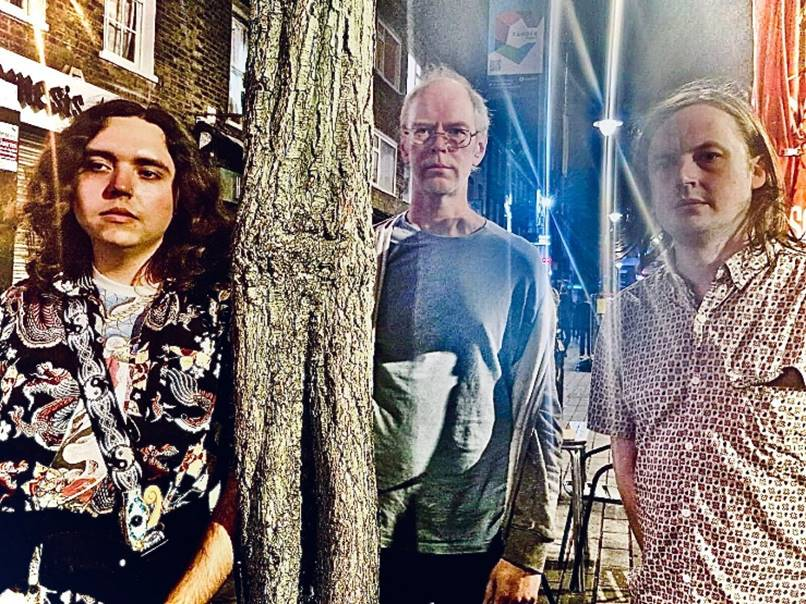
Sometimes London based three-piece Best Band’s band name genuinely angers people and they think that the band are being cocky and are exclaiming that they are the ‘best band’ ever created. However, the name came about after drummer Simon and guitarist Richard were inspired both personally and creatively with the goal to make the ‘best band’ that they possibly could.

The pair first met as members of improvised band ‘Improvisi’ and then they formed ‘Baffy’, a surreal band with a dada approach and a failed musical. Then came punk / free jazz band ‘Madchen 84’ and instrumental / experimental project ‘Stan Dingwater’. ‘Best Band’, however is the evolution of these previous incarnations, with the name being a triumphant marker of Simon and Richard’s journey to date.

“It was always a dream to do this- the ‘best band’ that we could make”, explains Simon. “After failing many times to try and find singers and band members for all the cool instrumentals Richard makes, eventually after some debating and persuasion, I just said, “Fuck it, I’ll sing and put poems to it”, which makes things easier for everyone. We are finally living our dream, with also Cai, who was the ONLY person to answer our advert for bassist”, he further adds.

With their drummer also being their singer, Best Band have an unconventional and chaotic presence, both live and in the studio. The three members also span three different generations: one being from Gen Z, one being a millennial and one being from Gen X. It’s an unlikely combination that somehow works awesomely and has given birth to two albums Life as a Baby (2024) and Go In Rooms (2025), with the third, The People’s Cub, now ready to be unveiled.

Musically, Best Band are influenced by post punk, disco and drone rock methods and emerge as an intoxicating blend of outsider pop / avant punk, groove rock, pub rock and weird pop which they themselves describe as ‘Zolo dada no-wave avant bogrock’. The tracks on the ‘The People’s Cub’ all have a looping bassline to make a sort of hypnotizing repetition, instead of conventional verse-chorus-verse changes, which the band find more interesting and fun to play. The People’s Cub himself is a quasi-political figure, with many of the tracks on the album involving creature characters. There’s a flea, a hedgehog, voles, owls, vultures and beasts.

Album opening track and first single, ‘Broken Coast’ is a scrappy blast of energy that is both strangely catchy and weirdly poetic in its own eccentric way. The track is about personal legacies, ideals, beliefs and opinions and humans wanting to be perceived / remembered in certain ways, then that being juxtaposed with not being able to get out of bed in the morning due to depression. The band use a flea as a metaphor for believing in an idea of who you are and how you’re perceived/remembered, and your integrity, beliefs and ideals. In the song, the flea is eventually killed as the band break free from living up to any imagined idea of themselves and the created self.

AA

Elsewhere on the album, ‘Boghouse’ is an ode to the lower ‘toilet venue’ end of the London music scene, describing all the little events, actions and intentions of any small rock band playing in Boghouses. It features wailing guitar solos all over the track, as a tongue-in-cheek homage to many of the bands Best Band have played with over the years on the circuit. The title track ‘The People’s Cub’ is an off kilter discordant yet cuddly political satire featuring the main character and mascot of the album. ‘The People’s Cub’ is an MP / Mayor but is also a little cub so he needs to stand on a tub to make speeches and he cuts the ribbon on new a village pub/cultural hub with his little furry stub.

Overall, the record is a bizarre and surreal journey through Best Band’s own disturbed inner psyche, set within erratic fuzzy rock styles that veer between 70s / 80s punk and 90s lo-fi indie worlds. With its offbeat themes of psychosis, unironic irony, modernity, depression, pathetic love, street nomadism, smelting, the afterlife, bus journeys, dread and defiance, ‘The People’s Cub’ is an excellently odd and candidly potent soundtrack to the times in which we all now live.

Catch Best Band playing the following shows in London:

27th May Dublin Castle, Camden

30th May Dash The Henge, Camberwell (early 3pm show)

17th June- Old Dispensary, Camberwell

AA

Best Band

Press shot by Claire C

British artist, producer and composer Tom Furse, celebrated for his work with The Horrors and MIEN (alongside The Black Angels’ Alex Maas and Elephant Stone’s Rishi Dhir), shares a transformative remix of’ ‘Monopolar’ for dreamgaze outfit Strange Fruit. Featured on their Drips EP, newly released via Gentle Tuesday Recordings, Furse’s re-envisioning strips back the original’s sensory explosion to reveal a deeper, darker core—infusing the track with slow-burning breakbeat grooves, abrasive ambient textures, and a distinct acid house pulse. Furse lends his signature atmospheric lens to this centerpiece, immersing Strange Fruit in UK electronic innovation.

AA

Furse has also built a solo and scoring practice, developing immersive, cinematic compositions rooted in texture and atmosphere. As a producer and remixer, he’s worked with Depeche Mode, Charlotte Gainsbourg, Franz Ferdinand, Tame Impala, Temples and The Twilight Sad. A resident on NTS Radio and active visual artist, with commissioned work including projects involving Fatboy Slim and The Rolling Stones, his practice bridges audio and visual worlds, exploring narrative, abstraction, and sensory experience through a distinctly atmospheric lens.
Based in Jakarta, Strange Fruit is Baldi Calvianca (vocals & synth), Irza Aryadiaz (synth), John Tampubolon (guitar), Nabil Favian (bass) and Dino Kristianto (drums). Since their 2015 debut EP Dolphin Leap, they’ve moved fluidly between noise pop, krautrock, shoegaze and electronica. Now converging into a more focused, hybrid sound with deeper integration of electronic elements, this EP is driven by machine-led rhythms and analog textures, fusing emotional depth with rhythmic precision.

A lucid trip to the edge of sonic consciousness, the Drips EP is a defining moment in the band’s evolution, unifying fragments of their kosmische experimentation to achieve a more cohesive sonic identity. Apart from joining an exclusive lineage of artists who have received the Furse treatment, this EP also involves renowned UK producer Sean Johnstone a.k.a. Hardway Bros (co-founder of A Love From Outer Space with Andrew Weatherall) with his downtempo club atmosphere and Jonathan Kusuma of Jakarta’s Dekadenz collective with his leftfield disco echo-rich bass drum tempos.

Produced by Strange Fruit and electronic producer Bernardus Fritz, the EP is driven by machine-led rhythms and analog textures, fusing emotional depth with rhythmic precision. The title track ‘Drips’ blends shoegaze textures and electronic elements in a dense, immersive soundscape, while ‘Pouvoir Moteur’ brings steady motorik rhythms that flow seamlessly down an endless highway.  ‘Iridescent’ channels dancefloor euphoria through minimalist beats and atmospheric layering, balancing introspection with forward momentum while finding luminosity within adversity.

The album’s lead track ‘Monopolar’ is a sensory explosion suspended between dream and awareness, and between the surreal and radiant. Gradually fading and blurred in technicolor, the video was directed by Mellow Splice, who also created the EP cover artwork, reflecting the track’s fluid and surreal qualities through abstract, water-like imagery.

AA

Strange Fruit

1st May 2026

Christopher Nosnibor

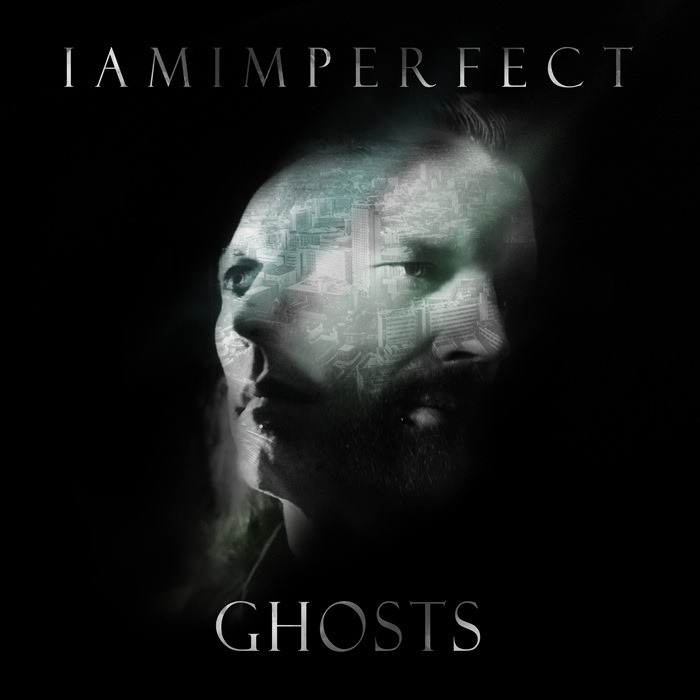
It’s a strange world. Especially the one of music, where, residing in York, I receive a promo pitch from a PR in Madison County, Illinois, for an artist based in Sheffield, where I studied for my PhD and worked for some time after. It’s about an hour away by train, yet the music of IAmImperfect had to travel halfway across the planet and back to land in my inbox.

Their latest offering is sold as being for fans of Solar Fake, The Birthday Massacre, Faderhead, Depeche Mode, ‘and just a little bit of Iron Maiden’. How’s that for a hybrid, eh? There’s certainly a fair bit going on across the EP’s five tracks. ‘Surviving Is Not Living’ makes for a bold opener, spanning almost seven minutes and riding in on an atmospheric intro which brings together electronica and prog with sweeping synths, stuttering beats and – wait for it – a soaring guitar solo, before getting down to more conventional darkwave with an anthemic pop leaning.

‘The Fallen’ manages to perfectly balance driving beats and pumping pop form with a sense of deep melancholy, and this, in many ways, encapsulates the essence of the work. As they explain it, ‘Ghosts represents the awful feelings nagging at you, never leaving you a moment of peace. Whether it’s the pressure to make yourself fit in with your peers, the competitor who is always doing it better, or the constant reminder of how everyone else is coping and you really can’t… Ghosts is about trying to live your life while everything else fights for your attention. It pulls you down, pushes you to conform, and drags you back into the dark. It is about what it takes to keep going anyway, as the world around us continues to spiral. Ghosts represents moments of quiet introspection along with flashes of hope and bursts of frustration’.

These are complex and conflicting emotions, not easily articulable. And what Ghosts does is navigate these nuances from a range of angles, but wrapped in an accessible pop-tinged package. The stomping beats of ‘Conversion Therapy’ are very much late 80s disco, while the synth lead is more 90s dance in origin, and if ‘Solitary Shell’ is sonically euphoric, lyrically it’s altogether darker.

A part of me struggles to reconcile these paradoxical positions, in that I expect dark emotional states to be paired with dark musical accompaniment. I acknowledge that there’s no real reason for this. Sure, when experiencing a dark mood, I will delve into overtly dark music, but it’s very much my own short-circuiting which finds if difficult to extrapolate dark moods from more uptempo tunes, despite being abundantly aware that ‘Emma’ by Hot Chocolate is one of the bleakest songs lyrically, in contrast to the slick disco groove of the backing.

The EP’s final track, ‘Ghosts of the Past’, is evocative, brooding, the lyrics dark, anguished, and the slow- to mid-tempo and rippling synth backing reflects the mood perfectly. And just as we’re plodding along, heads down, a blistering guitar solo break out. It’s a different kind of mood articulation, a fleeting moment of escapism, even. But this is the beauty of Ghosts. Just like moods, it switches unexpectedly, in an instant. One moment you’re laughing uncontrollably, the next the tears are flowing, almost inexplicably. IAmImperfect have forged a suite of songs which capture this contradictory psychological conundrum.

AA

DCTH FLIM SCAN