Posts Tagged ‘Dramatic’

26th June 2026

Christopher Nosnibor

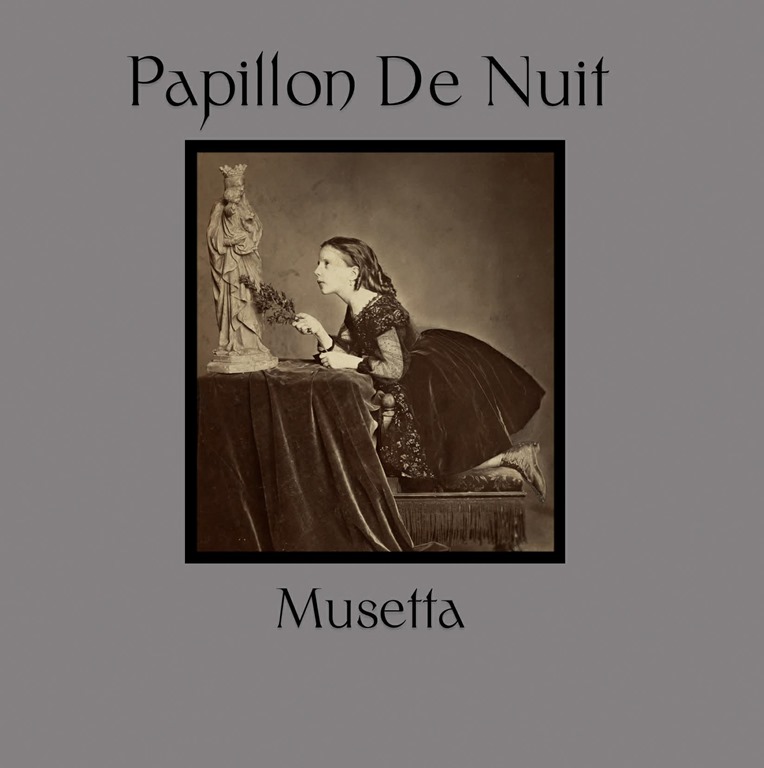
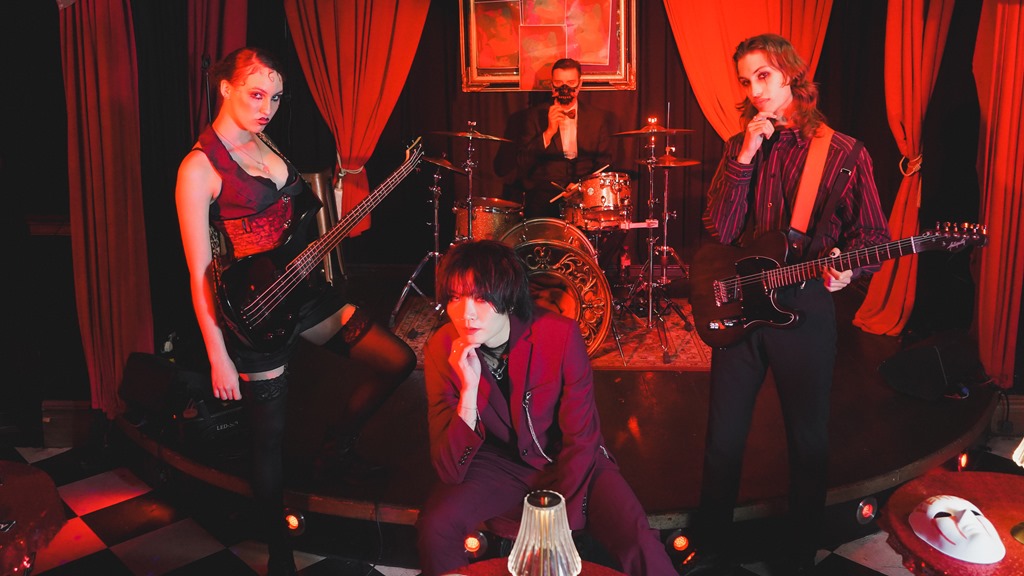
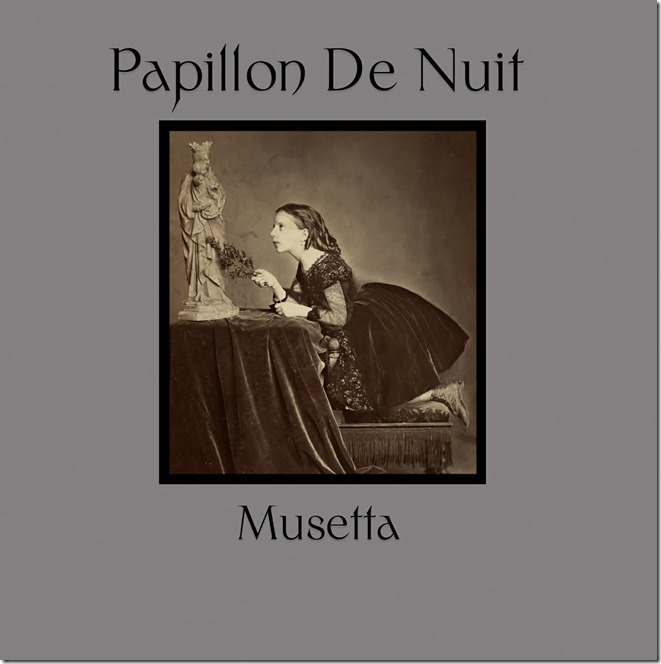
Although they may have seemingly risen out of nowhere a couple of years or so ago, Papillon du Nuit, the ever evolving, ever-expanding musical project revolving around Stephen Kennedy, alongside Mika, Steve, and Karen (who between them cover vocals, cello, grand piano, guitars, keyboards, and percussion) is a coming together of individuals who have been on and around the ‘goth’ and adjacent scene in the north for some considerable time, to form a loose collective. Having debuted in October 2024 with ‘Scarlet’, they’ve built a body of work through a succession of singles – eight in all. Most acts would have simply compiled said singles to assemble an album – but not Papillon du Nuit, and certainly not Stephen Kennedy – because he likes to do things the hard way. The proper way. And because his roots lie in that 80s goth era where bands like The Sisters of Mercy grew their fanbase through a series of ever-evolving single releases but saw the album as a different medium, a means of creating a specific, thematically unified document. As it happens, Musetta sits somewhere between the compilation and standalone document, plucking a selection of those previous singles and placing them amidst the new songs, meaning that of the album’s nine tracks, five have been previously released, although sitting in the context of an album they feel different somehow. And as much as Papillon du Nuit embrace some elements of goth – or perhaps, more accurately, the gothic (think brooding atmosphere, haunting imagery, a sense of drama) – this is a project which goes far beyond genre, with strong leanings towards neoclassical, chamber pop, the theatrical, even the operatic.

As they explain, ‘The album is named after Musetta, one of the major characters in the opera La Boheme, who is enshrined with all the qualities, and all the follies, that make us who we are. Many of the songs here explore a mythical, almost mystical journey, with life displayed more as an inevitably straight path, rather than something circular. The songs are not about death, but many of them lead there’. Some may mock with a ‘pretentious, moi?’, but Musetta is a work which is fully committed to art, and therefore sweeps pretence aside in being the real deal. That Steve Whitfield (The Cure / The Mission) produced, and co-wrote some of the tracks is nothing if not proof of pedigree, as well as their commitment to delivering an album which goes to great lengths to realise strong intent.

Heavy breathing, a panting even. Tension. Suspense. Then comes the panicked whisper: ‘is it dark, or am I blind?’ It has a decidedly Beckettean feel to it. A piano begins to reverberate. This is ‘Jude.’ As a single, it arrived as a stark and curious hybrid of poetry, theatre, and folk with a prog-rock leaning and a sense of the epic. In a revised context as an album opener, it feels very much like an introduction, a passage into a vast musical world. ‘Pilgrim’s Arc’, the most recent single, released in October, is driving, dynamic, tempest of a composition, and makes for a stark contrast arriving immediately after. Immediately, it’s apparent that there’s no small consideration been given to the album’s flow and shifts in mood and pace, and even this early, themes of time and mortality emerge.

AA

The first of the unreleased, album-specific songs, ‘Natalie’, follows, and it’s cinematic, widescreen-even, with its string-soaked chorus, again building to a spectacular finale. It’s no criticism to say it sounds like an album track: it’s magnificently executed, and offers some respite from the experimental intensity of the songs which precede it, and the cello-forward ‘A Sea Within An Ocean’ is the work of a band spreading out and settling, stretching their limbs and simply composing to make music, free from the (self-made) pressure to record a single in a day, or whatever their previous process was. It feels looser, more relaxed, and the result is a rolling, hypnotic wave of a song.

‘Cello Poem’ – at a mere two and three-quarter minutes – feels like more of a narrative bridge than a song in its own right, and the spoken word segue links single cuts ‘Amber’ and ‘Ariadne’ – and does so quite effectively, in truth. It does, however, keep death as its focus. And I suppose this is the core of the matter. As they say, ‘The songs are not about death, but many of them lead there’. How many of the great plays, novels, or poems aren’t about death, at least in some way? Death is, after all, the only certainty in life.

AA

Where Musetta differs from other albums where death is a preoccupation or a focus is that this is an album which carries a weight. It’s in no way frivolous or posturing, it doesn’t take death simply as a motif: it’s a soul-felt meditation on the end of life. No glorification, no stylisation, but a philosophical contemplation. It’s this which makes Musetta so impactful. Not only is youth wasted on the young, but life is wasted on the living, by and large. That is to say, it’s hard to appreciate what you have until it’s gone, or slipping away, and while so much goth – and metal, and so much music of many styles, for that matter – is preoccupied with death in a conceptual way, there comes a point where it comes all to near, all too real, and here it gets scary – rather than a game of lofting skulls and a flamboyant delivery. Shit does get real, and we all have to face the reality of mortality. And at this point, it’s not cool, it’s not dramatic, it simply becomes a heavy reality. We start by losing grandparents, and parents, and often, in between, friends and peers. And when it’s your peers, you start to worry. And if you don’t, you probably should.

Musetta is packed with heavy moments – not so much sonically, but emotionally, philosophically – and it’s woven with a fabric rich in literary allusions and diverse stylistic influences. ‘Visionary’ is a word I’m cautious in applying to anything, particularly anything contemporary – but ambitious and accomplished, wide-ranging, powerful, and moving… Musetta is all of these things, and more.

AA
Album Cover

SLEEPING PULSE present the storytelling lyric video ‘Two Wreaths’ as the final advance single, which is lifted from their forthcoming new album: Dreams & Limitations. Gentle Northern English melancholia meets Portuguese longing with a bittersweet drop of hope.

The sophomore full-length from the English-Portuguese duo has been chalked up for release on June 5, 2026.

AA

SLEEPING PULSE comment: “The song ‘Two Wreaths’ revolves around the seeing a dead loved one in a dream, and the joy and panic that ensues”, frontman Mick Moss reveals. “We realise that we are experiencing a gift of a moment, yet our instinct tells us that the moment will be over very soon.”

AA

bc11e7c8-87fe-68b9-29ed-272a12b5951b

15th May 2026 – noot moon records

Christopher Nosnibor

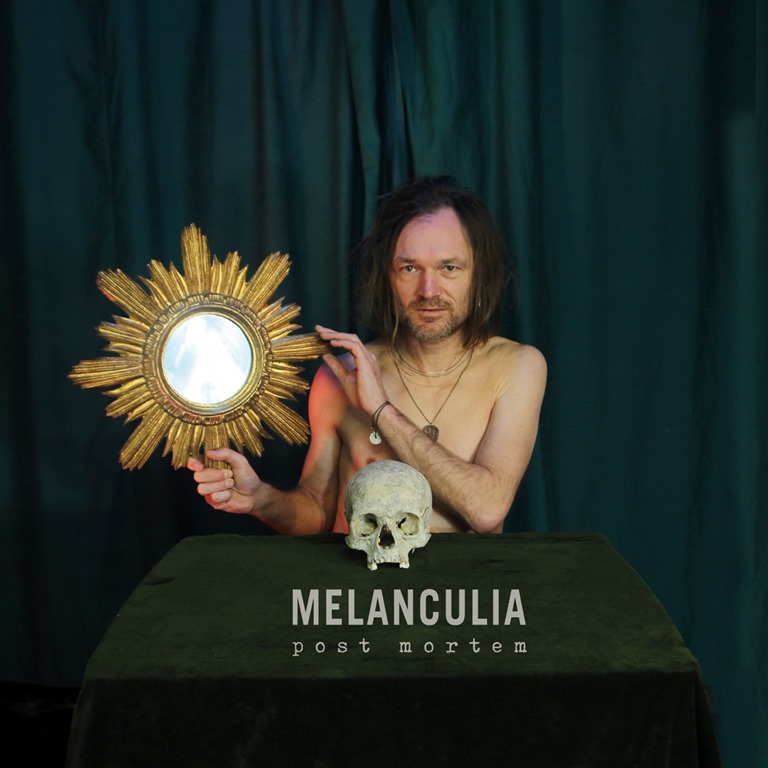
The term ‘post mortem’ has come to bare a number of meanings, not least of all the connotations of autopsy, but ultimately, it boils down to being something after the fact, specifically, after death, as the phrase implies. I suppose what it is that happens after death does vary between individuals, but it doesn’t necessarily mean being carved up.

By way of context, Melanculia is the solo project of Nino Sable, front man of goth act Aeon Sable, and the release of post mortem marks the first new album under the Melanculia name since 2018’s Seventh Circle. The accompanying notes inform that ‘The album expands further into a melancholic palette shaped by Nino’s strong sense of post-punk melodicism, while also drawing on dark psychedelia and indie-folk textures.’ And there’s more: Sable says that ‘Freed from the constraints of collaboration and compromise, the album focuses on a more direct and personal approach, centred on acoustic guitar, haunting synths, and sharply focused lyrics that cut to the bone: fragile and unfiltered.’

If I were collaborator or bandmate, I might take this statement with a pang of annoyance, or feel it to be a slight sleight, but as I’m not, I can take it at face value, intending that for all the fun of collaboration, it’s empowering to cut loose and fly free every now and again.

And, indeed, with the freedom to explore any and all directions, that’s exactly what Sable does here: the fourteen songs on post mortem are varied, not only stylistically, but in terms of mood and emotional range.

post mortem’s first song is something of a sad song: ‘Dark Days’ blends acoustic guitar and sweeping retro synths to strong effect, and that effect is downbeat and melancholy. The first song sounds like an album closer, and starting on a downer with a slow fade is a bit of a risky way to start an album, but when that’s pretty much par for the course, what else are you going to do? This set of songs is very much set on the downbeat, the wistful, the melancholy, brimming with reflection and gloomy nostalgia. ‘The Tower’ steps up into another level of theatricality, and over the course if fourteen songs – which does make for a long album – post mortem dredges the depths of the soul.

AA

It’s hard to put your finger on exactly what it does or how it registers: post mortem finds Melanculia strolling quite confidently around the territories of alt-rock and post-punk, while also incorporating folk elements – repetitive chord sequences thrummed out on acoustic guitar may be simple, but utterly gripping, and never more so than on the haunting ‘Runaways’. The folksiness goes a bit pirate folk in places, but ‘The Healer’ drips emotion and brings mid-tempo theatrics propelled by a metronomic and insistent mechanised beat with a vintage snare sound that cuts through and hits hard. ‘Emptiness’ drips heavy emotive swooning, as Sable croons in a quivering Pete Murphy inspired intonation, ‘I wish you were dead now’. No doubt there’s someone in all of our lives that this sentiment applies to.

Standing in the centre of the album like a towering monolith, the seven minute epic that is ‘We Are Only Human’. Hearing the words, laced with a grace and ache, ‘I’m only human, so mall, insignificant’ against a backdrop of rolling piano played in waltz-time is unexpectedly impactful, and also reminds me of another song I simply can’t place. It doesn’t matter: what matters is that the way the atmosphere builds.

There are echoes of Chris Isaak’s ‘Wicked Game’ about the reverb-soaked sadness of ‘Confessions’, and ‘Sabiaoa’ scrapes the dark terrains of the whispering undulations that creep underground.

It’s perhaps fair to say that in terms of instrumentation and musical style, post mortem explores a narrow space in microcosmic detail. This is their two inches of ivory, if you will. Consequently, it’s an album which benefits spending time with, uncovering the details and the delicate differences. In capturing moods and atmospheres, post mortem is highly accomplished, filling every moment with a sense of poignancy, a swooning sadness.

AA

a3468220053_10

10th April 2026

Christopher Nosnibor

Postmodernism supposedly not only marked, but celebrated, the death of originality. Some time after the turn of the millennium, postmodern irony and the wit of parody began to evaporate, and now everything simply draws on explicitly stated influences. Art has become an endless treadmill of predictable recycling. There are rare exceptions, of course, and Chaidura is rare indeed.

Chaidura has been on the scene for a couple of years now, during which time he’s birthed an EP, Temple Paradise, and some standalone singles, showcasing styles ranging from JRock to emo, with his bio describing this work as ‘blending visual kei, emo, and alternative rock into a sound that’s heavy, emotional, and honest’.

Now resident in London, but raised in Asia, where, he says ‘beauty is often weaponized as a prerequisite for success’, ‘Plastic Beauty’ is the third single to be taken from forthcoming EP, Liminal. And what a single it is! It’s nothing short of an explosion of ideas– an entire album’s worth and more (hell, many bands with careers spanning decades don’t demonstrate this many ideas), packed into less than four minutes – leaping wildly yet also effortlessly and immaculately from one genre to another with each of the multitudinous segments.

And yes, the presentation is stunning – musically, of course, but also visually – taking cues from Adam Ant and Falco’s ‘Rock Me Amadeus’ – to forge something that is nothing short of spectacular, while at the same time presenting a strong message. Opening with a soft piano intro, we’re soon thrown into some loungey jazz with an understated drum ‘n’ bass beat before – a mere thirty seconds in – being hit with a ferocious blast of metal. The experience is akin to watching Roger Moore as James Bond being spun at organ-damaging speed in a centrifuge in Moonraker, one where you mind feels as if it’s been separated from your body and transported to another dimension. It’s like all of the new year’s fireworks from around the globe going off simultaneously. And yet, incredibly, it’s got a huge chorus with an instant hook that’ll be an earworm for a week. Nothing short of phenomenal. Now, excuse me while I go and lie down for a bit.

AA

AA

Landscape

The catalogue of material released by Papillon de Nuit, the ever-shifting, ever-evolving musical project of Stephen Kennedy, continues to expand with the release of single number eight.

Kennedy’s approach to the project is both interesting and unusual, with each song recorded at a separate session, often not even fully-formed in terms of writing and arrangement beforehand, and realised with various guest musicians and vocalists. Retuning once more to Young Thugs studio in York, ‘The Pilgrim’s Arc’ again sees Stephen handle a considerable range of duties, from drums to grand piano and providing spoken and sung vocals, as well as writing and arranging the song itself, while joined by Michalina Rudawska (cello) and Karen Amanda O’Brien (spoken word).

The Exceptional Mr Hyde make a guest appearance here, providing ‘menacing spoken word’, while Steve Whitfield  added bass and guitar, as well covering production work

The result is a striking, dramatic, percussion-driven piece with some chunky bass, and layered vocals creating an almost schizophrenic mutter behind a soaring melody.

AA

a2654860644_10

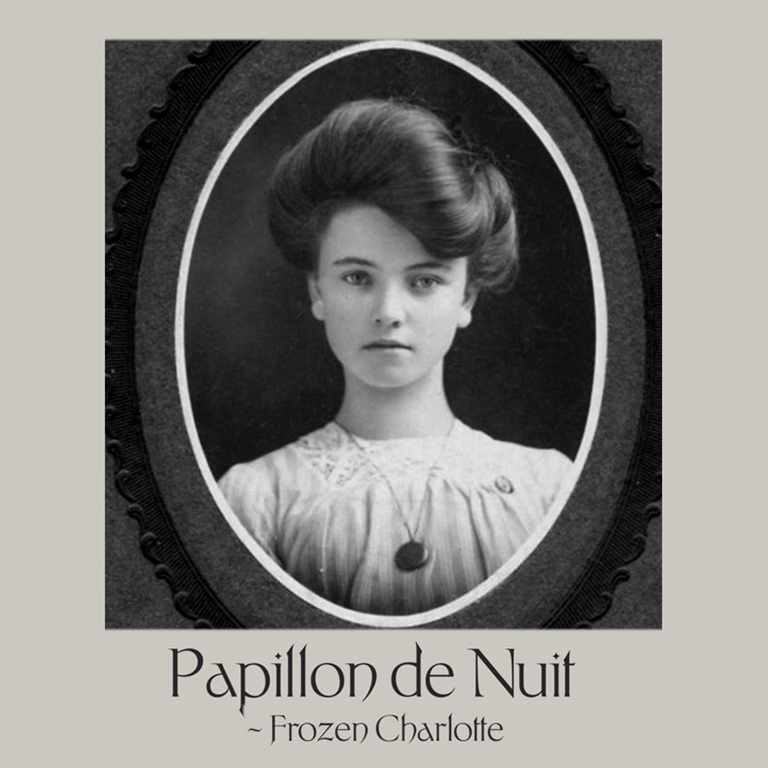
Papillon de Nuit’s latest single, ‘Frozen Charlotte’ recently got a straight-up rave review here on its release just over a week ago. They’ve since released a magical, haunting video to accompany it. Check it here:

AA

Frozen Charlotte artwork

Following recent tours with Wardruna and God is an Astronaut, composer and sound designer Jo Quail is set to release her 7th album Notan on 12th September.

Notan is the seventh album from composer and sound designer Jo Quail—a work of striking contrast and graceful power. Drawing its name from the Japanese concept that explores the interplay of light and dark, the album unfolds as a deeply personal journey through polarity: presence and absence, softness and intensity, expansion and return.

What began in June 2023 as a series of raw, looped improvisations evolved into something far larger: a symphonic tapestry titled Ianus, now destined for recording with full orchestra in late 2025. But Notan is not that orchestral vision—it is the source from which it sprang, and the space to which it returns.

In these solo iterations, the music breathes with both intimacy and grandeur—cello, electric cello, and piano intertwine in richly layered textures. The sounds Jo creates on both acoustic and electric cello range from the traditional to the highly sculpted; all sound design and modelling is her own, forming the distinctive sonic identity that makes her music instantly recognisable. Each track is a live take, with every looped section performed in full, capturing the immediacy of live performance while allowing for a more considered control of sound—one that honours the context of making a record.

Across its arc, Notan evokes archetypal energies. ‘Butterfly Dance’ embodies matriarchal authority—stately and untouchable in its raw grace. First single, ‘Rex’, by contrast, traces Jo’s own evolution. First appearing on her 2010 debut as a tentative, fragile offering, the piece was left untouched for years. Reawakened during the solitude of lockdown, it transformed—emerging here as something altogether more commanding: majestic, grounded, and complete. Jo comments,

The first single from Notan is Rex, some of you who’ve been with me since the early days might remember it first appearing back in 2010. It’s a piece I’ve returned to in live performance, and over time it’s evolved and reshaped itself. This version is something quite different: a reimagining that feels both familiar and entirely new. I’m really proud to be releasing it now — and yes, it’s over 9 minutes long (a bold choice for a single, I know!).

AA

AA

Jo Quail is also set to tour the UK in September to support the release:

12/09 – Manchester – Deaf Institute

13/09 – Newcastle – Cluny 2

14/09 – Glasgow Core Fest

15/09 – Edinburgh – Voodoo Rooms

16/09 – Nottingham – Bodega

17/09 – Bristol – Jam Jar

18/09 – Leicester – The Big Difference

19/09 – Southampton – Joiners

20/09 – London – Omera

AA

toVUUoGA

Photo: Jiawei Zhang

Dark-electro artist, MARIE ANN HEDONIA has unveiled her new cinematic video, ‘Eve Had the Metallic Shine of Summer’.

The video concept was inspired by Ingmar Bergman’s film, Persona. Eve, our mannequin represents a toxic relationship. Eve is a person we pour our whole self into, a person who takes all of our energy, time, money, soul, and gives nothing back.

MARIE ANN HEDONIA’s collaborator, BLACK KITE, states, “This song is about the potency and allure of destructive, codependent relationships and how they require us to self-abandon. It speaks to both addiction and toxic relationships that masquerade as love or comfort, but are actually antithetical to both.” The ending is completely dependent on the viewer’s point of view: Do I go mad? Am I the bad guy? Am I free now?

The video was shot over a period of 13 to14 hours during one day of “guerrilla” style film making, all over Baltimore city and county. Director Alex Shaak was pivotal in creating the striking visuals seen throughout the video, bringing the concept to life. The weather was completely coincidental. The energy of the thunderstorm very much translates the powerful ending of the video.

AA

43e9626f-77df-e124-7ba6-09dbb18ce542

Pennsylvania-based artist Celeste Corsano presents her new single ‘Nightbird’, the dark side of the ying-yang, following her recently-released debut single ‘Sunlight Gazing’. An innovative singer-songwriter, Corsano is the latest artist to be added to the growing roster of the blossoming Montclair, NJ-based indie label Magic Door Record Label.

Corsano’s music blends poetic lyricism with adventurous arrangements, unexpected rhythms and a distinct emotional range — from ethereal and moody to playful and bold. With a natural use of mixed meters and layered vocal timbres, her fearless approach to storytelling conveys a deeper truth.

“I live in a rural area. There’s nights when I can’t sleep, thinking about my living dreams, desires and worries… the noise and chaos of my circumstances and feelings crowd my mind. When that happens, I lie in bed and look out my window and see the shadows of trees, lightning bugs flash, and sometimes hear the cry of a fisher cat… so eerie and wild. I hear the call of an owl, or see a bird that’s been disturbed from its perch and fly to another spot. The sights and sounds become part of a message to me…. a nightbird… calling to me,” says Celeste Corsano.

AA

For the past year, Corsano has been working with renowned producer Ray Ketchem (Guided by Voices, Elk City, Gramercy Arms, Luna, Crash Harmony) at Magic Door Recording Studio, who produced, recorded, mixed and mastered this release, as well as several recordings to follow.

With Ketchem also on drums, this single also features fantastically notable guitarist James Mastro (The Bongos, Mott the Hoople, Ian Hunter, Patti Smith, John Cale) and keyboardist-bass player David Nagler of Nova Social (who has also played with Joan Baez, Aaron Neville, Rosanne Cash, Andrew Bird, Steve Earle and Yo La Tengo).

“I came to Ray Ketchem with iPhone recordings of my keyboard, voice, lyrics and a dream…. and for the next few months I traveled 1 1/2 hours one way to have one of the best times and learning experiences of my life. Ray was the producer, drummer and engineer for my songs, He created the fundamental groundwork and direction for Nightbird with his distinctive drum riff,” says Celeste Corsano.

“Besides my demo, the drums were a catalyst and inspiration for guitarist James Mastro and synth player-bassist David Nagler to create the full tapestry, against which I could express myself vocally when it came time to record my tracks. I remember feeling so elated and on a musical high watching and listening to Mastro record the tracks for ‘Nightbird’. Those hours are unforgettable. He was a part of the music, his entire body and expression connected to his guitar, rippling like water to its sounds. The guitar work expresses the lyrics so perfectly. It was very moving to watch.”

She adds, “David Nagler selected the coolest sounds and added so much to the attitude of this song. When the bass first comes into the song it sends chills. Working with Ray, James and David was such an inspiration. All three of them are so down to earth, personable and into the music. They are all legendary in the music realm and I’m so fortunate to have worked with them.”

Corsanoa1664326607_10