Posts Tagged ‘Riffs’

Century Media – 23rd October 2026

Christopher Nosnibor

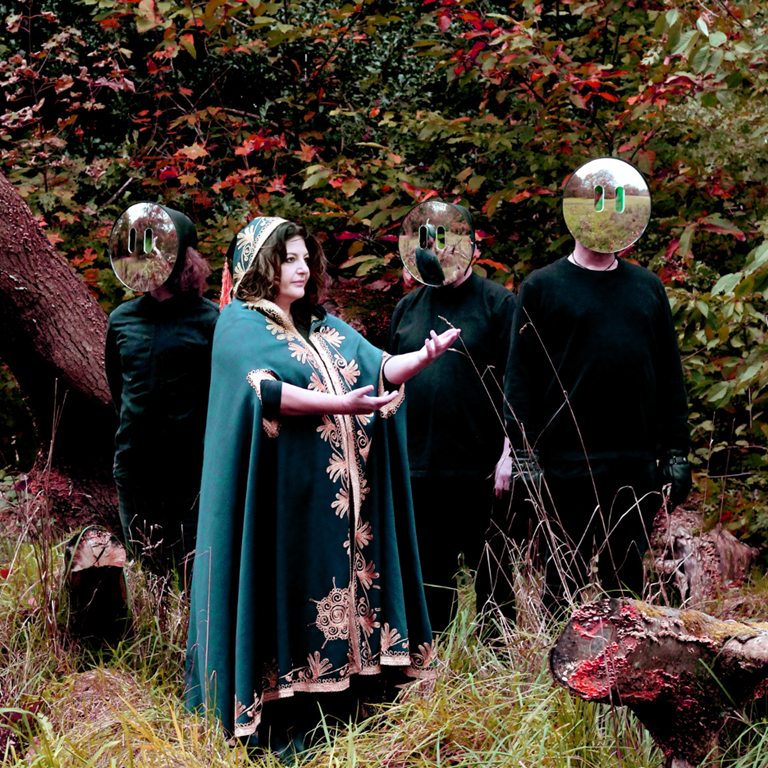
Estuary: the short dictionary definition being the part of a river or other area of water where it joins the sea, and where fresh water and salt water are mixed. An expanded encyclopaedic definition is perhaps more instructive when it comes to the latest album by ‘Heretics of the Black Metal genre and the Kings of USBM’, Wolves in the Throne Room’, which details ‘a partly enclosed coastal body of water in which river water is mixed with seawater. In a general sense, the estuarine environment is defined by salinity boundaries rather than by geographic boundaries. The term estuary is derived from the Latin words aestus (“the tide”) and aestuo (“boil”), indicating the effect generated when tidal flow and river flow meet’.

Described as ‘their most ferocious and genre-bending record to date’, it does veritably boil, a collision of analogue haze and crystal-clear, razor sharp focus. While black metal as a genre is very much centred around stylistic tropes – not least of all the frantic pace, snarling, raspy vocals, and detailed lead guitar work – all of which are entirely present and correct here – Wolves in the Throne Room have always pushed the parameters in various ways, from taking those commonplace stylistic elements toward their logical conclusions, to incorporating elements from beyond the established sphere of reference. And so it is with Estuary, which, as they put it, ‘is resonant with that hardwiring; rawer, more volatile with the storming sensuality of noisy industrial elements, evolving through the domain of warm rain, majestic forests and diffused starlight. Massive percussion and seething gothic guitars wipe the listener’s psyche clear of all stagnation, transforming them into active, evolutionary conduits’.

Oh yes, and it’s a concept album based on post-apocalyptic survivalism. To return to the accompanying material for a final time, Nathan Weaver (lead vocals, guitar) comments: “Estuary takes place 1,000 years in the future, after the death of civilization. I’ve always felt such calm at the idea of humanity vanishing from the world, and nature reclaiming everything. I dream of being alone in this setting and experiencing total calm and peace. This has been a recurring theme in all of Wolves’ music but for Estuary, it is at the forefront.”

Personally, I think 1,000 years in the future is an extremely generous timescale, and wonder if the wake of the environmental apocalypse will be quite as rapturous. Nature always wins, that much is true, and there will be life on earth long after humans have become extinct – and the sooner the better would probably be ideal for every other species on the planet – but the post-human environment (I mean that in the sense of an environment post-human extinction, rather than the transcendental, technologically-evolved sense of posthuman) – is likely to be a dark and inhospitable one, where large segments of the current land mass is submerged by significantly higher sea levels following the melting of polar ice. But this is black metal with a concept, not a calculated environmental sci-fi novel. And it’s a monster, with just six tracks, but a running time of some forty-nine minutes, and only one of the songs clocking shy of seven minutes.

It’s the title track which blasts in first, a snarling frenzy of post-apocalyptic noise, which, despite some elements which border on shoegaze and some major chords and soaring lead work, is drenched with melancholy and despair. The hints of a sunrise optimism are countered by a soul-crushing weight, and the end of the track carries the listener on a swell that leads outwards, to the vast oceanic expanse.

Following a grand, almost ceremonial opening, ‘Knights of Tiamat’ goes widescreen expansive, but at the same time into no-pissing-about heads-down, hundred-mile-an-hour fury. It’s five minutes into this blistering beast of a track that they bring the first foray into the kind of frenzied fretwork solo common to black metal. Elsewhere, there are sedate strolls and layers of enticing detail, with picked, chorus-treated guitar which is decidedly goth – perhaps more Field of the Nephilim than, say, The Sisters, but gothy and atmospheric nevertheless.

‘Foretold in Reflections’ is the album’s indisputable centrepiece – a dingy, dark, but extravagantly theatrical composition, spanning beyond ten minutes and with a particularly flamboyant and detailed bassline beneath the blanket of guitar fury. It’s truly peak black metal, but it’s also more, particularly in the mid-section where synth-like sounds come to the fore and the drums slow to a crawl before the double-pedal power returns.

The attention to detail here is outstanding. The percussion dominates throughout, and even that ranges from all-out frantic black metal frenzy to more measured, quite tempered work.

‘The Orca Cliffs’ lunches the first of a trilogy of roaring behemoths that run the album to the close. And there’s so much texture, so much detail to be found during this run. Of course there are chthonic, demonic, rasping vocal utterances, but there are (brief), passages – particularly in ‘The Orca Cliffs’, but also the extended mid-section of ‘Ghosts Among the Obelisks’ that they produce music which is truly beautiful, even melodic.

In contrast, there are also segments which are nothing short of sickening, abrasive churning industrial loops. Estuary is never predictable, and never lets up in the way it seems to broaden horizons. With Estuary, Wolves in the Throne Room give us black metal, but expanded. And then some.

AA

AA
Photo_supplied_by_the_band_702301

Humus Records – 6th November 2026

Christopher Nosnibor

You want noise rock with a fierce punk edge? Yes? Good. Coilguns are the band for you. No? Guess again. Everything We Love, We Destroy is a fierce blast of guitar-driven punk-infused noise, and you need to hear it. We’ve been plugging these guys for a while through their single releases – each one a ferocious blast of adrenaline, and now we finally have the album. And it doesn’t disappoint.

‘Imagine The Armed, Converge and METZ thrown into a blender and cranked up to eleven!’ says their bio. And, unusually, it’s not hyperbole. Everything We Love, We Destroy, is positively explosive, a succession of high-impact detonations. ‘NO POLISH. NO COMPROMISE. JUST PURE SONIC MAYHEM!’ they say: it’s a promise and a threat, and they deliver on both. But for all the mayhem, they cram in a superabundance of nagging guitar lines, and even some sharp hooks.

In the wake of the full-throttle post-hardcore blast of the title track, which fires in all directions, while underpinned by a thick, maxed-out bass, ‘Peace Trader’ arrives on a well-trodden path of lolloping drums and loud / quite dynamics. ‘Replication Crisis’ takes things up a good notch or three, a furious speaker-rattling sonic riot. As with the majority of the songs on the album, it’s tightly-structured, flipping through multiple segments, the switches coming from out of nowhere, but landing every time. Yes, it’s noisy, but it’s by no means without focus: in fact, Everything We Love, We Destroy demonstrates just how technically adept Coilguns are, and how inventive and imaginative their approach to songwriting is. every moment brings a new element of surprise, an unexpected twist, a sweet melodic breakdown, a brief ear-catching harmony.

While the lyrics aren’t always easy to make out, the song titles build around the theme of the album’s title – that is, environmental issues and human destruction of its own habitat, as well as the ever-evolving and increasingly challenging digital landscape in which we find ourselves. They’ve got plenty to go at. Everything We Love, We Destroy is a critical assessment of / anxietised spasm in the face of the crisis in which we find ourselves in the midst of.

You didn’t think an album with songs called ‘Forever Chemicals’ and ‘Platform Decay’ (the more polite and technical term for ‘enshittification’) was going to be celebrating any of these things, did you? ‘I can’t compute! I can’t compute!’ is the frenzied refrain in the latter, and by the band’s own admission, the album as written and recorded at pace only last month, and its raw, untempered energy is integral to what it’s about. The medium is indeed the message, to reference Marshall McLuhan. These are insane times, and it feels as if we’re in a spiralling freefall towards unspeakable catastrophe. It’s clear that Coilguns aren’t only aware of this, but are driven. As artists, there’s nothing within their capacity to slow this terrifying trajectory, and so the only way to deal and remain remotely sane is to live every day as if it could be your last, and channel that overwhelming panic into creating something, if only because putting it out there has therapeutic benefits.

‘Punisher Disclaimer’ is a frenetic, kinetic collision of noise-rock and post-hardcore, while the introspective acoustic song, ‘Days Before the War’, a mere minute and a half in duration, offers a rare respite at the album’s mid-point.

It’s that churning bass which again dominates the spindly, sinewy ‘Teach Ourselves’, which grows in intensity as it progresses towards its squalling finale. Holy fuck: it’s immense. ‘Carbon Magic’ goes headlong into knotty, noodly math-rock played at a hundred miles an hour before lurching into a megalithic riff which slays. But it also does so much more besides. The album’s last track, ‘Perfect Fit Content’ is a sprawling six-minute monster. They slow the pace and again, it’s rolling drums and chiming, angular guitar which mark the first section, then the pace accelerated, and by two minutes in, we’re dragged into the midst of a fully-swirling maelstrom, which in turn evolves into a proper chant-along chorus. And then it’s off again.

Everything We Love, We Destroy is one of those albums which has a wide range, and a lot of energy, and is not easy to place. It’s neither one thing nor the other. But it is the sound of the now, and the sound of a band wrestling with the complexities of these baffling, bewildering, brain-melting times. It’s a statement on the fucked-up world we live in, and the dissolving state of humanity, and it’s delivered with a raw honesty and passion which is utterly compelling.

AA

Andy_Ford_203290

Photo: Andy Ford

Human Worth – 13th November 2026

Christopher Nosnibor

HR and managers will often say that work/life balance is important, and harp on about how they, and the company, value their ‘colleagues’, their most important commodity. They’ll say it, but their actions will demonstrate that it’s a massive lie. They don’t give a shit. Employees are expendable, and if you don’t like the conditions, there’s always another sucker desperate enough to put up with them in order to keep a roof over their head. It’s not simply that they as individuals, or as a company, don’t give a shit: capitalism doesn’t give a shit. In fact, the system is purely one of exploitation, where those at the top – not just CEOs, but major shareholders, which include pension funds – seek to extract maximum profit at any cost. This is why the majority of benefits claimants in the UK are actually in employment, and why so many professionals in full-time jobs are dependent on food-banks just to survive. Capitalism actually demands that the workers do work themselves to the bone: as a consequence, they’re too busy – and too exhausted – just staying alive to push back, to seek change.

On Work Yourself to the Bone, Black Groove capture the soul-crushing experience of the daily grind, where there is no hope of a better life, because simply existing saps every ounce of strength. From the opening track – lead single cut, ‘Mutton’, they plough into a deep trough of sludgy dirges, and going in slow and heavy with a six-and-a-half-minute punisher makes for a strong start which sets the tone – and tempo – for the album. The vocals are shared between bassist Gareth Hellings and guitarist Jake Packham, and each possesses a truly purgatorial scream, conveying the existential anguish of a living hell. It’s a full-on, gut-wrenchingly heavy doomfest, a veritable endurance test of a tune, and the reward for making your way through it is more of the same.

AA

What do you call a man with a penis in the middle of his face? Fuck nose. Boom boom. It’s also the title of the album’s second song, which brings a big-bollocked swaggering riff, played with a proper sense of groove. Then the pace slows… and slows… until it’s a crawl. It recreates the experience of the working week. How is it only Tuesday? How is it only 10:30am? Fuck nose… The weight increases as the riffing gets slower, and the extended solo is simply wild, and strangely fitting.

Things only get slower and heavier and more oppressive with the arrival of ‘Robert’s Johnson’, a sonic experience which is like being kicked in the ribs repeatedly with steel-toed boots. Only very slowly, at fifteen-second intervals. Of course, after six minutes of this punishment, you’re fucked.

At just a minute and a half, and sitting bang in the middle of the album, you could be forgiven for expecting ‘Little Jimmy’ would provide some respite from the heavy slog, but no: it’s every bit as much of a slow slugger, only shorter, before the piledriving ‘Sloggers’ lurches in. it’s pacier, landing between Mötörhead and Napalm Death and dominated by a bowel-loosening bass. In my twenty-eight years of corporate drudgery, my bowels became my friend, as I would on occasion sit, basking in a few moments away from the noise of the open-plan office floor, and entertain myself by calculating how much I was being paid to take a shit on company time, and considering the use of as much bog roll as I wished a minor act of rebellion. Yeah! Sticking it to the man! I might have liberated some stationery, too.

‘Looking Thin’ hits a new earth-shattering level of doomy droney gnarliness, but it’s merely a prelude to the album’s ten-minute finale, and the title – ‘Dave the Double Shift Slave’ speaks for itself. This is an absolute monster. And in its bludgeoning away for what feels like an eternity as that thick, slow, sludgy riff, over which the vocals scream in perpetual, torturous pain, it creates perfectly, through the medium of sound, the hell of long hours performing repetitious tasks.

We are all slaves to the grind, hamsters on the wheel of the capitalist machine, and with Work Yourself to the Bone, Black Groove deliver the purest aural articulation of the agony of dragging your sorry carcass through endless drudgery, day after day, week after week, month after month, year after year, until you fucking die, just to eat, and just to make money for millionaires. It’s brutal, and unflinching, and expresses the deepest, most existential pain with a rare precision.

AA

BlackGroove_PressShot2

26th October 2026

Christopher Nosnibor

‘Hypnotic’ and ‘sensual’ aren’t adjectives one tends to associate with grunge – but then, how many French grunge bands do you know? ‘Unholy Addiction’ is the lead single from Pythies’ upcoming debut album, Suck It. Pythies are from Paris. I say ‘are’, but the band is essentially the solo vehicle and vision of Lise. L, who draws influence from Veruca Salt, Sonic Youth, and Hole, with the assistance of additional musicians. Debut EP, Disillusion (2024) was a blast of feedback, fast and furious riffery, and stealthy hooks all delivered with a punky edge, and which fulfilled the title’s promise in terms of sentiment.

By way of a taster for the follow-up, Unholy Addiction suggests something of a progression. It arrives in a trilling wail of feedback, but the overall sound is denser and more polished. The heavily chorused guitar owes as much to Soundgarden’s ‘Black Hole Sun’ as anything else, but Lise’s vocal delivery, alongside the structure – which is quintessential grunge, with its quite / loud dynamics and the explosive, driving riff that defines the chorus – means that the vibe is very much Hole circa Live Through This.

The timing of that album’s release meant that its greatness was eclipsed to some extent by circumstance – but history has seen some justice done, and it’s come to be recognised as a true classic of the time, and in its own right.

Paving the way for the new album with a slower song may seem an unusual choice, but then, the first single from Live Through This was the comparatively sedate ‘Miss World’ – a song which was unexpectedly accessible, and brought a sting in the tail. And so it is with ‘Unholy Addiction’, which places more emphasis on melody, both in terms of the guitar line and the multitracked vocal, showcasing a more evolved approach to songwriting and arrangement for Pythies.

Packing in some serious power, accelerating to the finish with driving guitar, thumping bass and a crashing crescendo of drums, ‘Unholy Addiction’ not only recreates the energy and excitement of 1994, but hits like an instant classic.

AA

Pythies Lise L image

27th October 2027

Christopher Nosnibor

The name Little Window conveys almost childlike, playschool connotation. Or, certainly something vaguely idyllic, a sense of the safe, the cozy. Meanwhile the band describe their debut album as ‘a cure for societal heartburn’. Who hasn’t been suffering from that of late? It’s been absolutely relentless for six years now. It seems as if the world was biding its time during lockdown – which was nuts – to go full-blown crazy, and none of it has been pleasant.

And, indeed, it so happens that Red Ant emerged from some pretty dark places, as the band’s bio outlines: ‘Written through cycles of insomnia, grief and self-destruction, Red Ant embraces the horror and chaos of death and transmutation. “Explorations of the fracture and intensity of death’s confrontation had given way to a sort of expansiveness”, explains Eli. “I had not had that kind of levity in a long time, and it triggered a childhood memory of climbing up a steep rock face with my siblings barefoot. We climbed to the highest ledge, feigning the courage to jump into the lake below from the extreme height. Crowded on the small ledge together, we all looked down with sudden shock. Dozens of red ants were stinging our bare feet, having disturbed their nest under the moss. Our eyes locked for a millisecond in midair. A euphoric moment of synchronized recklessness, all having made the same ridiculous decision to immediately jump.’

It’s a common scenario. Traumatic and challenging experiences inspire the best art. For some, creativity is the best therapy – or perhaps, for some, the only way of dealing with such things. On a personal level, it’s relatable, too. I only specifically recall wearing shorts other than for PE on three occasions. On one of them, in school, I received a major telling off because the teacher didn’t like the way I had completed a design project. On another, my legs got so badly sunburned, the skin peeled for weeks. And on the other, I stood on a manhole cover by the front lawn. I’d have been about four. And suddenly, red ants were crawling all up my legs, like a scene in a horror movie.

Working through trauma by focusing and interrogating it by means of creative processes can be immensely beneficial. And Red Ant deals with those real-life experiences head-on, in that Little Window make some crunchy, riff-driven noise. And make no mistake, while some of the titles may on the surface seem twee, there’s nothing twee about anything on this album.

The album’s first track, ‘Dirty Bookshelf’ starts low and grungy with a dash of wonky math-rock and a vaguely jazz slant. It’s largely innocuous in real terms, but then Eli Howey’s tremulous vocals arrive, and suddenly, he’s an undeniable force of nature everything changes, and the result is something like a heavy psychedelic Melvins-inspired outtake from Bleach. This is very much the angle that pervades the album as a whole – raw, urgent, and driving, and with production to match the low-budget values of the early days of grunge before it got co-opted by major labels.

It’s by far the album’s longest song, meaning that following the slow-burn, the floodgates open for a succession of sub-three-minute riff-heavy cuts. But that isn’t to say they’re lacking in emotional depth or any sense of softer feelings: moreover, Red Ant is an exploration of contrasts and juxtapositions: the breakdown moments in ‘Weeks’ are poignant and emotionally resonant, Howey confiding ‘I can’t go to sleep / ‘cause sleep makes me weak / I can’t go to bed / ‘cause bed makes me sad’. And instead of the throaty roar which is commonplace in this kind of context, he swoops and soars. But nor it his style really emo, although it is disarming in its unpolished immediacy, its quavering tones almost folky in places – something perhaps most apparent on the haunted-sounding ‘Get You Good’, a tense, acoustic-led sliver of a song.

‘Goldenrod’ is a decorative yellow plant, and the title again connotes something delicate and wistful, contrasting significantly with the sonic manifestation of this full-throttle guitar blast. It’s all leading toward the bass-booming, blown-out fuzzfest of the title track, which rips through like a forest fire in under two and a half minutes, crashing straight into the wild and desperate ‘So Many Times’.

AA

I suspect that for some, Howey’s voice may be an obstacle for some, simply because it’s not the conventional style for this kind of big guitar noise. But then I remember as a teen struggling with Dinosaur Jr at first, because J. Mascis’ voice seemed so weak and reedy against the backdrop of so much loud guitar. It was only when I tuned into the way this almost piteous whine, coupled with such expressive solos, carried so much more emotional weight than the more overtly masculine rage of other guitar bands that it all made sense. And while Little Window sound nothing like Dinosaur Jr, it’s this rare quality, the emotional openness and fragility, which gives Red Ant its unique impact.

AA

LWPhoto_horizontal_2 (Credit- Starlyn Lu)

Pic: Starlyn Lu

16th October 2026

Christopher Nosnibor

I’m likely one of the last people to champion anything retrograde, cliché, whatever. I don’t hate nostalgia, but I absolutely detest the nostalgia industry that’s grown over the years which specifically exploits the latest cohort of an ever-ageing population. Gen X used to scoff at Boomers listening to golden oldies radio shows and watching nostalgic cack like The Golden Oldies Picture Show. Now we’re all splashing out hods of cash on thirtieth anniversary expanded reissues and spending long weekends at festivals like Shiiine On and packing out arenas to see acts from the 80s going through the motions as they crank out all the hits. I like hearting my favourite songs as much as anyone, but to live in the past is tantamount to being dead. As such, I’ve not much truck with acts who continue to exist solely to play the nostalgia circuit. But bands who continue to face forward, and to create, even when they’re beyond any career peak? I have more timer for them. A fair bit more.

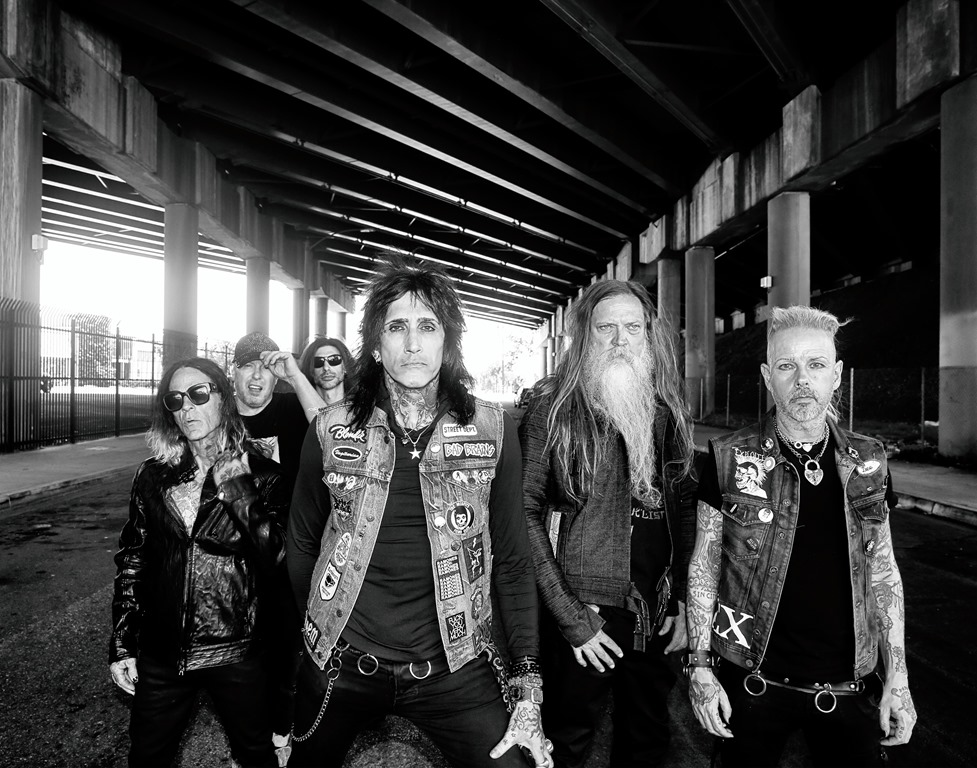
LA hard rock / punk act Blacklist Union are marking twenty years as they release ‘Heavy Is The Crown’, the third single from their forthcoming album, The Good, The Bad And The Notorious, due for release in spring 2027.

I shall momentarily defer to the press release for more context, before coming to the single: “‘Jackson’, the first collaboration between Blacklist Union frontman Tony West and Femme Fatale’s Lorraine Lewis, saw the pair reimagine the Johnny Cash and June Carter classic, blending outlaw country, punk attitude and rock ’n’ roll swagger. It was followed by ‘Madame Butterfly’, an open love letter from West to Lewis, and it seems the song did the trick. After completing Blacklist Union’s recent UK & European tour with Faster Pussycat and Femme Fatale, during which Lorraine joined the band on stage at the end of every Blacklist Union set to belt out ‘Jackson’, Tony and Lorraine headed to Paris, where Tony proposed at the top of the Eiffel Tower. She said yes.”

Who saw that coming, eh? But ‘Heavy is the Crown’ sees them resume business as usual: unreconstituted hard rock riffery collides with punk and there’s a dash of post-punk style and some big-bollocked swaggering attitude behind it all. As much as it’s old-school, it’s got a dash of contemporary industrial going on, which gives it that vital edge. It’s that edge that pushes ‘Heavy is the Crown’ into a place where it matters, and is worthy of the ear of new listeners.

AA

Blacklist Union - 2 - George Reed photography

Photo: George Reed photography

French melodic death metal/metalcore quartet GATES OF AUTRICON have released a music video for their new single ‘Seven,’ a hard-hitting blast of relentless riffs, guttural vocals and epic melodic leads, fusing melodic death metal with modern metalcore muscle.

AA

Hailing from France’s Franche-Comté region, GATES OF AUTRICON bring together the melodic aggression of death metal with the immediacy and power of modern metalcore. Drawing influence from bands including Trivium, Malevolence and Children of Bodom, the quartet balance crushing riffs and visceral vocals with soaring melodies, guitar solos and an unmistakable desire to tear things apart on stage.

With ‘Seven’ that aggression is matched by an equally confrontational subject.

“This song is about our leaders’ disregard for the voice of the people and social peace,” says the band. “It crystallizes 10 years of mounting tension. It was important for us to record it in the studio and pay special attention to our sound. It’s a hard-hitting track that encapsulates what we do best.”

The band’s roots stretch back to Chartres, known as Autricon in the Celtic language, where its members spent years developing their shared musical identity and love of aggressive riffs and guttural vocals. It was later in Belfort that GATES OF AUTRICON fully brought the project to life, eventually releasing their debut EP Reclaim.

Since then, the band have steadily established themselves within the eastern French metal scene. With artistic support from Belfort venue La Poudrière, they opened the Sapins Metaliks Winter Fest in November 2025 alongside Assigned Fate, Fractal Universe and Gorod, closed the Fête de la Musique at the legendary Atelier des Môles in June 2026, and most recently headlined La Poudrière’s Support Your Local Bands event in October 2026.

At the heart of GATES OF AUTRICON is a constantly evolving take on modern metal, pairing ambitious songwriting and an aggressive, melodic sound with socially conscious lyrics rooted in anxiety, frustration and growing social tension.

AA

52faeefb-a55c-cc93-dc9a-634de9907f7a

18th September 2026

Laaandaaan! Init? Heart of rock ‘n’ roll shizz… well, perhaps when Britpop was all the rage, but the new generation is seemingly more likely to turn up and sweep your doorstep with a dustpan and brush than to puke on it while staggering home from a club at 2:30am. There are good reasons for this: they may well be pissed off with the state of everything, because everything’s shit, just as it was in the 90s and 00s when grunge and nu-metal were all the rage – and rage is indeed the word – but they’ve been told repeatedly to quit the lattes and smashed avocado toasts if they want to get on the property ladder. It’s pretty rich advice from people who could spend Friday night down the pub and go on holiday (without feeling guilty over contributing to climate change) and still buy a house for just four times their salary. Put another way, the grunge and nu-metal revivals have been driven by the same shit conditions which inspired nihilistic anger thirty and forty years ago, only now the conditions are actually shitter.

In the face of that, what do you do? How do you even keep going on a day-to-day basis? Wages aren’t keeping up with inflation, and everything just gets shitter by the day. But do SmutClub Ldn want to break stuff? Maybe, but for this single release, SmutClub Ldn go light: as we learn, ‘Limp Bizkoff is all about appreciating time with your friends, while playfully “begrudging” duties like having to clean up the mess. The climax of the song encapsulates the joy of a good tea and snacks gathering with your loved ones around you’. I mean, Biscoff is in itself pretty middle class, but then so is owning musical instruments these days, and, I dunno, having the heating on or affording new clothes.

‘Limp Bizkoff’ is pretty heavy, sonically., with three minutes chunky, chugging, nu-metal grind. The chords hit like slabs of concrete, the churn in harsh and heavy, there are discordant notes and sinewy chimes from the spindly guitar. Lyrically, it’s altogether lighter, providing an unusual juxtaposition. Good clean fun, yes, but… first world issues for sure. And not only is dunking biscuits grim, it leaves a crumb sludge in the mug, which is even grimmer.

AA

Smutclub Ldn Promo image

Peaceville  – 28th August 2026

Christopher Nosnibor

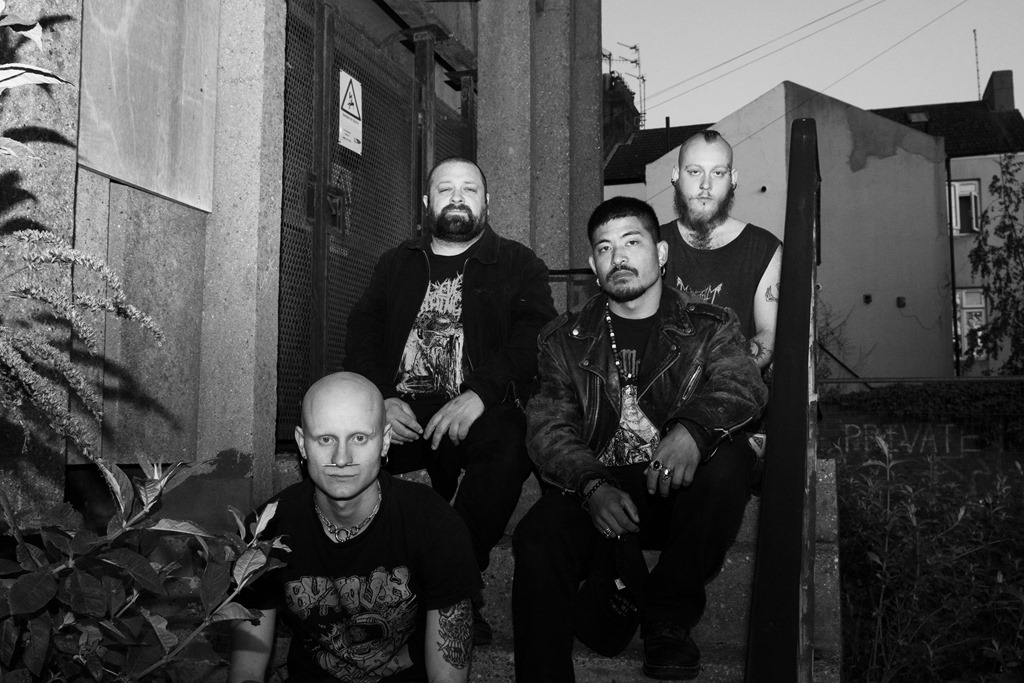
The Dying Hunt is the third album by Static Abyss, who feature Autopsy’s Chris Reifert and Greg Wilkinson. They describe themselves as ‘a monstrous hybrid of twisted, doom-laden brutal death’. And brutal it is.

On this outing, they note the addition of Chad Gailey of fellow death merchants Necrot on drums, and promise an album that ‘plummets the listener again into the festering, psychedelic swamps of lunacy, with the spiralling melodies texturing the relentless savage riffs for an effective nightmare-inducing trip through the sonic abyss. Continuously and relentlessly flitting between brutal passages and hypnotic otherworldly craziness, The Dying Hunt reflects the ailing world and the unravelling of the psyche of its inhabitants in this darkly dystopian landscape, for a masterful descent into sick Death Metal combined with Crust and Doom elements.’

Yeah. That ‘darkly dystopian’ thing… it’s the world we live in now. There’ no escaping it. It’s no longer a fringe thing. environmental disaster isn’t a conspiracy theory. Rogue AI and WW3 are no longer the domain of sci-fi and speculative fiction: governments across Europe are recommending people take peremptory action and are preparing for war. And this isn’t even the tip of the iceberg. The bottom line is – and I’ve doubtless said this before – is that we’re fucked. I don’t mean this dramatically, or in any way hyperbolically.

On The Dying Hunt, Static Abyss articulate the anxiety over the sense of impending doom through the most rabid, raging, nihilistic blasts of hellish metal imaginable. The first track, ‘Skull Blasted’, is a sub-two-minute blast of scorching, soul-ripping fury. You don’t need the words, you just need to feel the force, and it tears its way through your very being like a wildfire. You feel your inner being scourged away in a mere moment.

And hell, do these mofos bring the riffs – but they also bring some psychedelic weirdness. ‘Lobotomized at Last’ swerves from relentless grind to a rather pleasant passage. It’s one of only a few. ‘Wall of Delusion’ is nothing short of overloading riff-mania, the band launching headlong into a relentless, brutal sonic assault. ‘Bleeding in the Fog’ starts out a bit mor melodic, a bit more liker it’s a lean to the raw, spitting depths. ‘Sinew Leech’ is it’s harsh and it’s brutal and the force and depth of the gut-churning grind only grows as the song and the album progresses. And it’s hellish, harsh, face-melting fury from the get-go. The face-melting ‘Bleeding in the Fog’ is exemplary. The Dying Hunt is relentless is its riffery. It’s one of those albums that is so heavy it slowly saps the life out of you.

AA

Static