Posts Tagged ‘Sludge’

Warren Records – 7th July 2026

Christopher Nosnibor

I’ve written extensively on the topic of formats before, and having grown up in the 80s and 90s when the physical single was still a dominant format – in particular the 7” single, which could be purchased cheaply (and with wide availability on the high street from not just Our Price and HMV, but also Woolworths and WH Smith) for a quid or two, the whole experience of the A-side and B-side, or a double-A-side is scored into my psyche. Most digital singles now only contain one track, and while I get it, it’s just not the same – and nor is paying a tenner or more for a lathe-cut limited edition of twenty. It feels as if the market has split in directions which are diametric opposites, and neither is particularly satisfying.

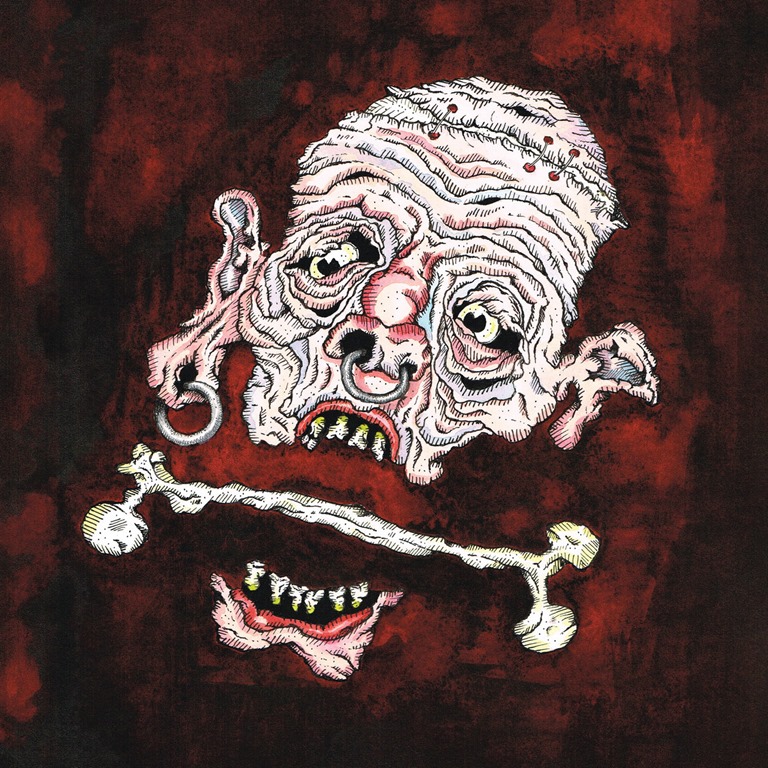
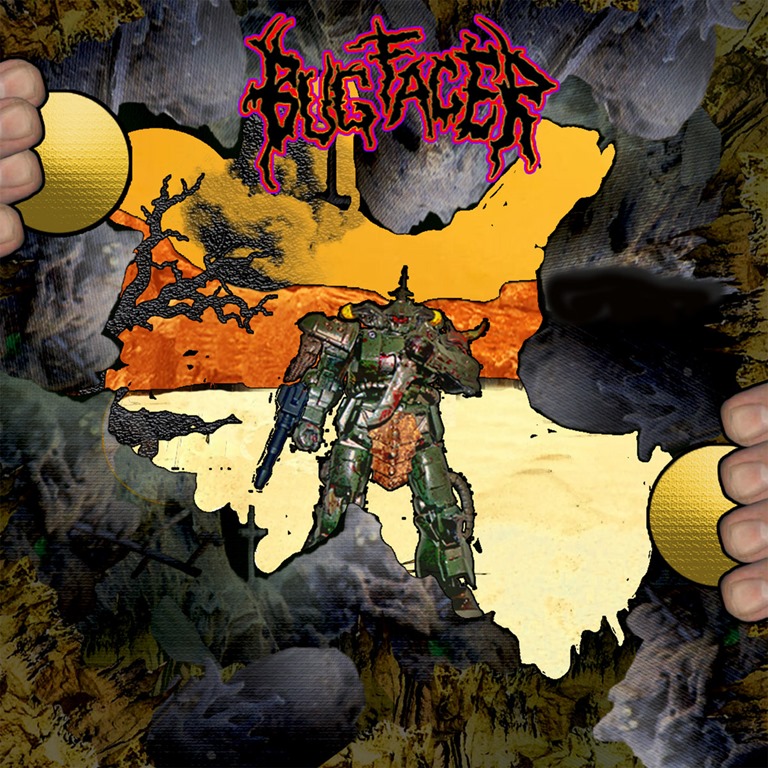
The latest release from Hull’s Bug Facer manages a satisfactory compromise, in the current economic climate: a digital single release with two tracks for four quid. Because another thing that’s largely been forgotten is that the cost of production of a physical release is not all of the cost involved – in fact it’s only a fraction. A studio, an engineer, a producer, all cost. Rehearsal space. PR. And so on. All of these things are expenses involved in being a band and recording and releasing music. This is the reason that Spotify sickens me, and the culture whereby people believe music should be free blows my mind. Home taping didn’t kill music. Illegal sharing via Napster and Soulseek didn’t kill music. Legitimate corporate-driven platforms, however, really fucked things, especially for smaller artists. The industry co-conspired, and didn’t so much shoot itself in the foot as hug a landmine.

Imagine being buzzed about starting a new band and getting your music out there, and then the few hundred streams you get after some heavy plugging and a PR scoring a review or two and maybe a couple of radio plays, to receive absolutely nothing, while your fraction of a penny that actually goes to the artists rather than the platform has been dripped into the pool that’s divvied out between Ed Sheeran, Coldplay, and U2. So yes, £4 for a digital release in 2026 is probably fair – especially when it’s a proper two-song single which replicates the 7” experience of the A-side and B-side, and especially when both songs are killer.

And here, both songs are indeed killer. ‘Nuclear Bounty Hunter’ stars slow, with a tense build-up and an intimation of a riff, squirming its way to a thick, gnarly riff that’s halfway between raging punk and sludgy noise. Sling the Melvins together with Slaughter and the Dogs and you’re in the right domain. It’s heavy, hefty, rabid, and gloriously messy.

‘Beggar’s Last Words’ is an entirely different proposition: it’s nearly seven minutes long for a start, and sashays in with soft instrumentation over a waltz-time beat. It’s kinda hazy, kinda droney, deeply psychedelic, and very much of an experimental bent. In short, it couldn’t be more contrasting. The vocals, when they finally arrive, are heavily treated, warped, and woozy, and are half-submerged among the ever-rising cacophony which is building, and almost out of nowhere, we’re four minutes in and find ourselves in the midst of a sonic maelstrom. After this crescendo of chaos, everything gradually winds down, wheezing, wasted, to a slow fade.

The fact that this release showcases two vastly divergent styles is a strength. It’s a release that shows a band willing to take risks, to challenge themselves – and their listeners. It’s so easy – and tempting – for artists to create a template early in their careers and say with them. It works, the band and any PR they might have gets to tout them as X or Y, everyone knows what they’re going to get, they find their niche, find their audience, however small, until boredom sets in and / or fashion changes. It takes a different kind of band to eschew genre limitations, and particularly to go this far out on a limb with a single release. Bug Facer are that different kind of band, and their continued evolution is a joy to observe.

AA

a2825862493_10

‘Survival of the Shittest’ is the brand new EP from party doom band GURT.

Two original tracks and a cover of the 1993 dance floor classic ‘No Limit’. With a busy live schedule in 2026, including their third appearance at Bloodstock Festival and many other independent festivals including Uprising, Cult fest and Mangata festival, GURT thought it was about time for some new material.

The lead single is a cover of ‘No Limit’. This reimagining features a guest appearance from ‘Black Mist’, lead vocalist for the greatest hardcore band of all time THE HELL! The band comment, “As a band we have a real mix of musical tastes, from the heaviest of heavy to the cheesiest of cheese. We’ve always loved to do unexpected and weird covers and have a firm belief that a good riff is a good riff regardless of where it’s from. No Limit has always gone hard and we’re proud to say that our version goes even harderer!!”

Listen to ’No Limit’ now:

AA

1_JxupYQ

Christopher Nosnibor

Suspicious Liquid had originally been down to open this evening’s dark proceedings, but they’ve been replaced by Troll Mother. While not getting to see Suspicious Liquid again is disappointing, southern power sludge duo Troll Mother are everything their name suggests… or are they? They’re more Mötörhead than Melvins, with a hardcore punk edge in places. They also boast an absolutely fucking MASSIVE drum kit, meaning that when the drummer takes on vocal duties – something they share – it’s not always immediately obvious because he’s largely obscured by a huge bank of toms and a swathe of cymbals. They make a cracking racket, too, with next to no pauses for the full duration of their half-hour set.

DSC09312

Troll Mother

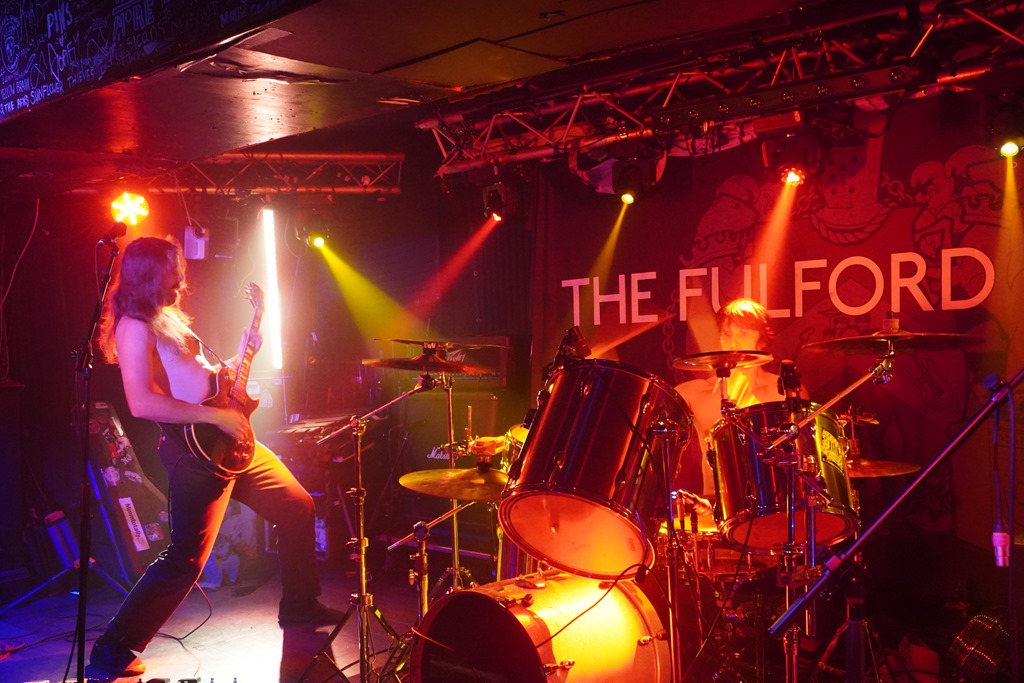
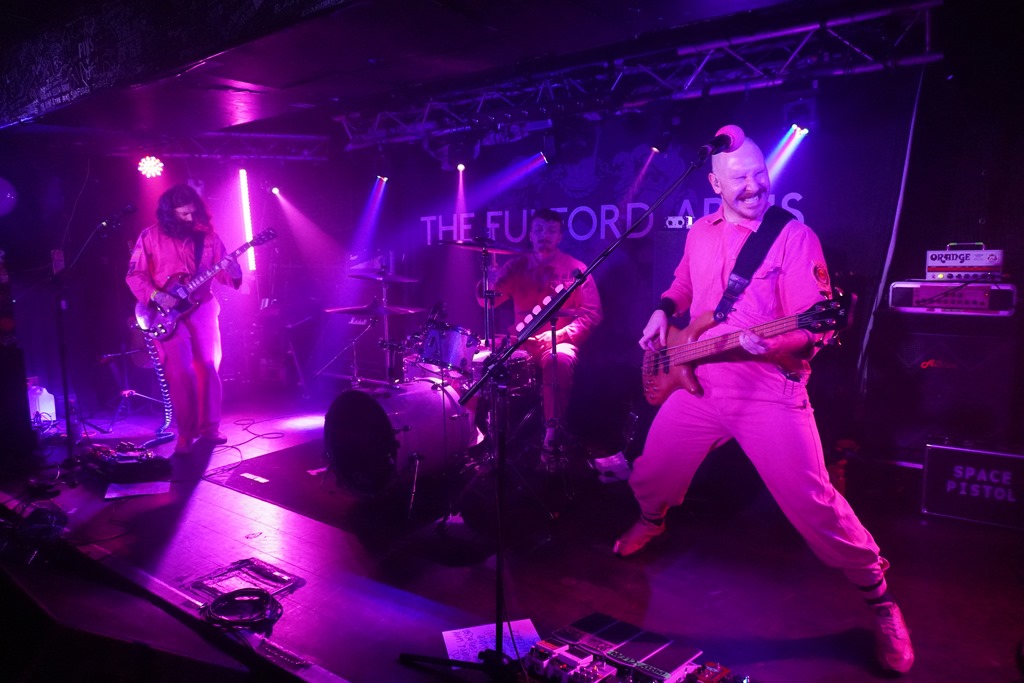
Space Pistol bring the riffs, and they do evoke Melvins, as well as Faith No More, and Hawk Eyes, among others. The three are decked out in matching orange boiler suits and the bassist, who has a board with about 36 pedals plays with his face. He also leaps and bounds – and yes, positively cavorts – about the stage with a flamboyance that’s uncommon to a bad that are this big on hefty riffs. There are false endings galore, and at one point they lock statue-like positions and maintain silence for maybe a good twenty seconds, during which time you could hear a pin drop. They absolutely love this, to the extent that it seems that this moment is a career high point for them. Since they’ve come all the way from Milton Keynes for this, we’re pleased that York is a memorable show for them, and I’m pretty sure they’d be welcome back up here any time.

DSC09331DSC09390

Space Pistol

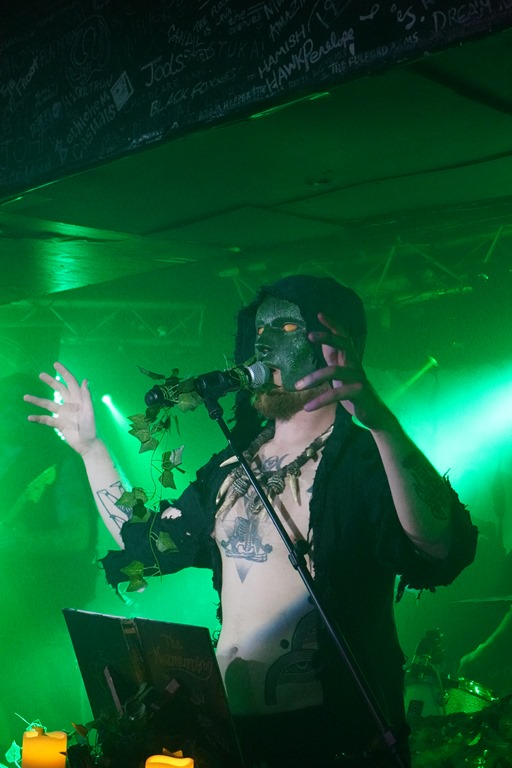
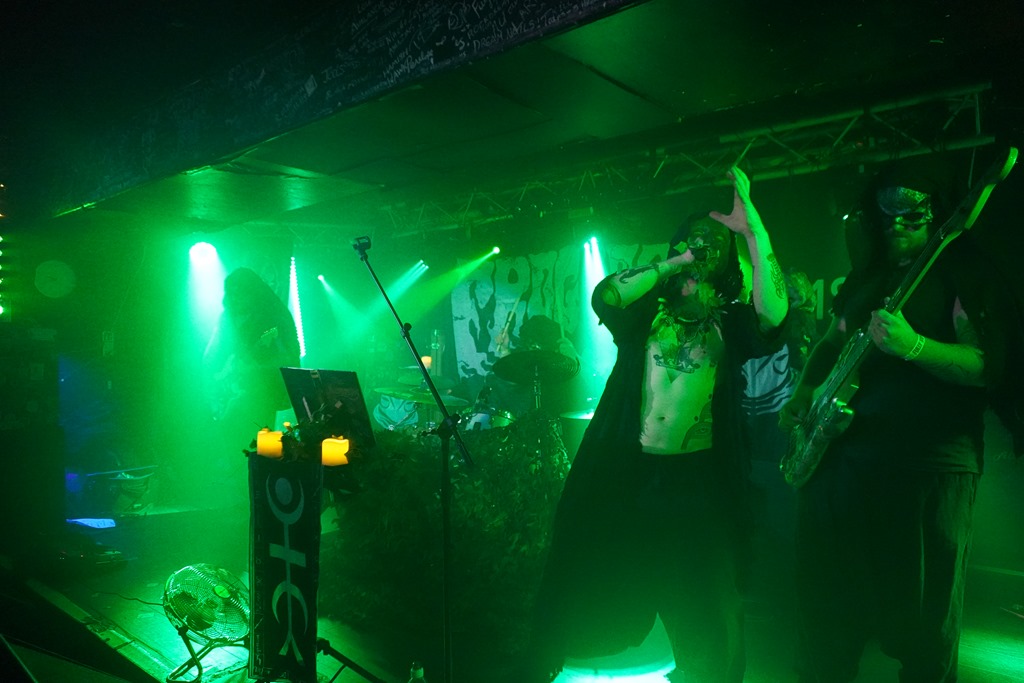
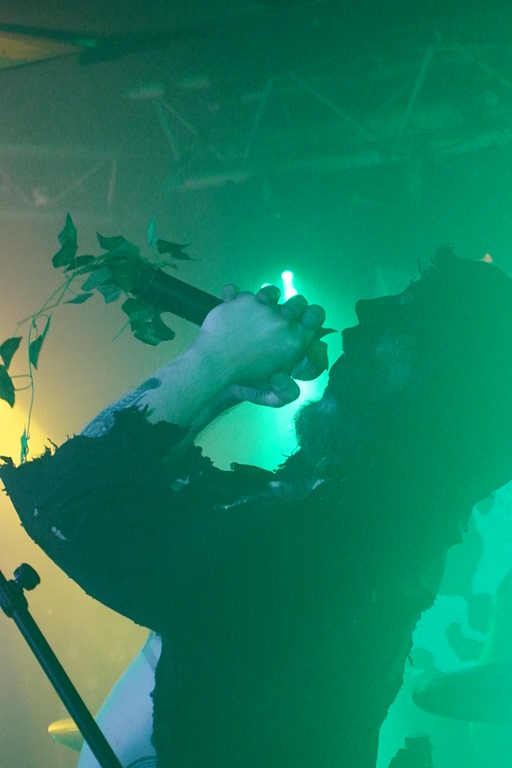
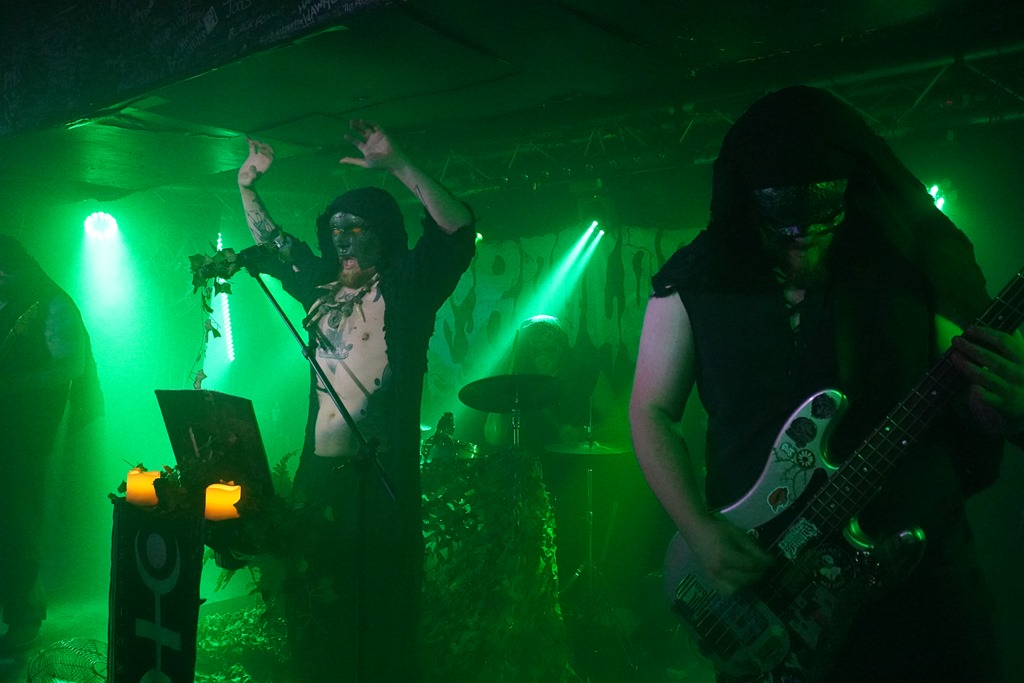
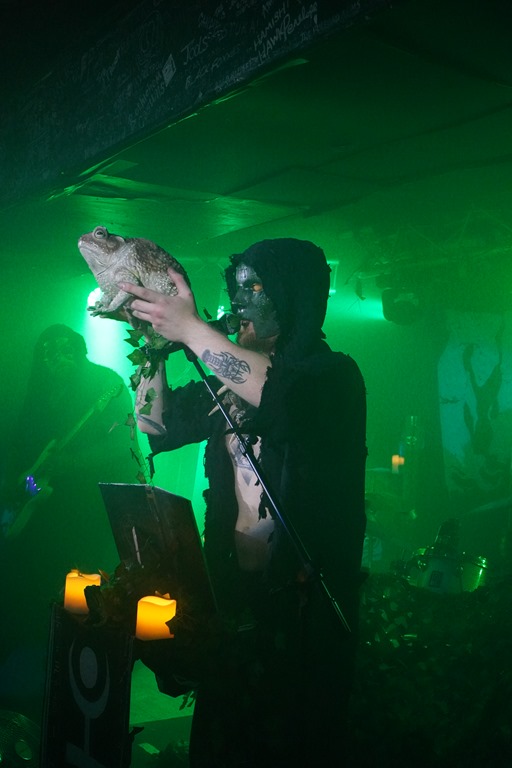
Froglord, meanwhile, are making a return visit after just eleven months. The concept is pretty ludicrous, the stage show even more so: a stoner / doom band all about amphibians, kitted out in masks and arranging their sets as some form of swamp-centric ritual. The fact that they’ve eked this out across six albums now is nothing short of remarkable. But the fact that every show is an event, shaped by that sense of occasion and ritual is part of the appeal – that and the fact the performances are entertaining and they really know how to riff.

DSC09406DSC09410

Froglord

But there is a certain serious element to the band (not that heavyweight sludgy riffs in themselves aren’t serious), in that they’re genuinely eco-conscious, and their frog fixation isn’t all just japes, with 100% of the proceeds from digital sales of their new album, Lower & Slower Vol 1, released in March, are being donated to the Waterfowl & Wetland Trust (WWT) – the wetland charity, as well as 50% of all physical media and merch profits. Or, as they put it, ‘At it’s [sic] core, Froglord have always been an environmentally [sic]-driven band. Through their fundraising and tale of an amphibious deity, reeking vengenace [sic] on humanity for the environmental destruction they caused.’ Personally, I like them even more for this. Once could reasonably argue that just a handful of the world’s billionaires could eradicate poverty and save the planet and not even notice a reduction in lifestyle and that Froglord’s sales aren’t even a drop in a puddle in comparison, but that’s not the point: the point is that these guys actually care, and are using their platform for good.

DSC09438DSC09464

Froglord

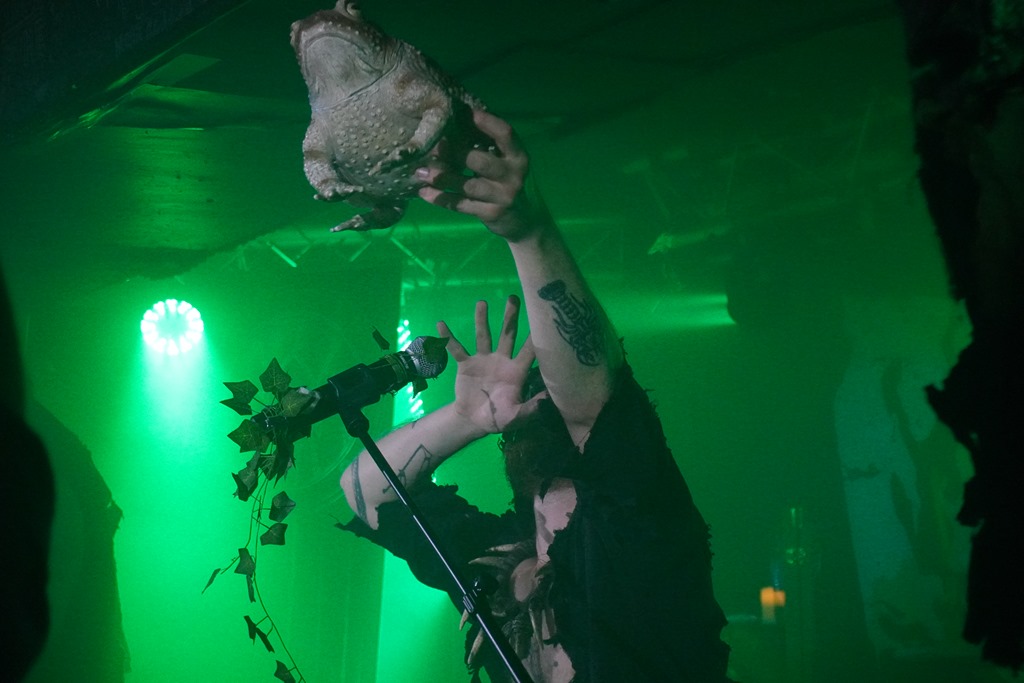
They also put on a great show. It’s no huge development on the last time around: their website positions it as follows: ‘Returning with brand new masks, costumes, and a 6th studio album, Froglord deliver another massive offering of amphibious swamp doom. Recorded live in the studio in a single take, Lower & Slower briefly pauses the band’s concept storytelling of the Tale of The Froglord saga, instead revisiting six previously released tracks from across their discography’. And the fact is, it works: tonight’s performance feels very much like a consolidation, and they seem particularly focused, the set’s structure absolutely honed to perfection in every way. They drop a powerful cover of ‘Iron Man’ early in the second half of the set, and in many ways, this speaks for itself. The bassist plays wearing a frog glove puppet for a while, and after the ritual circulating of the giant rubber toad later in the set, said toad is then used to bash bass strings before eventually tucked in the crook of an elbow in a more friendly fashion for a time.

DSC09511DSC09531

Froglord

Admirably, they never break character for a moment: this is outstanding theatre. It’s also outstanding, riff-driven fun. All hail the Froglord!

17th April 2026

Christopher Nosnibor

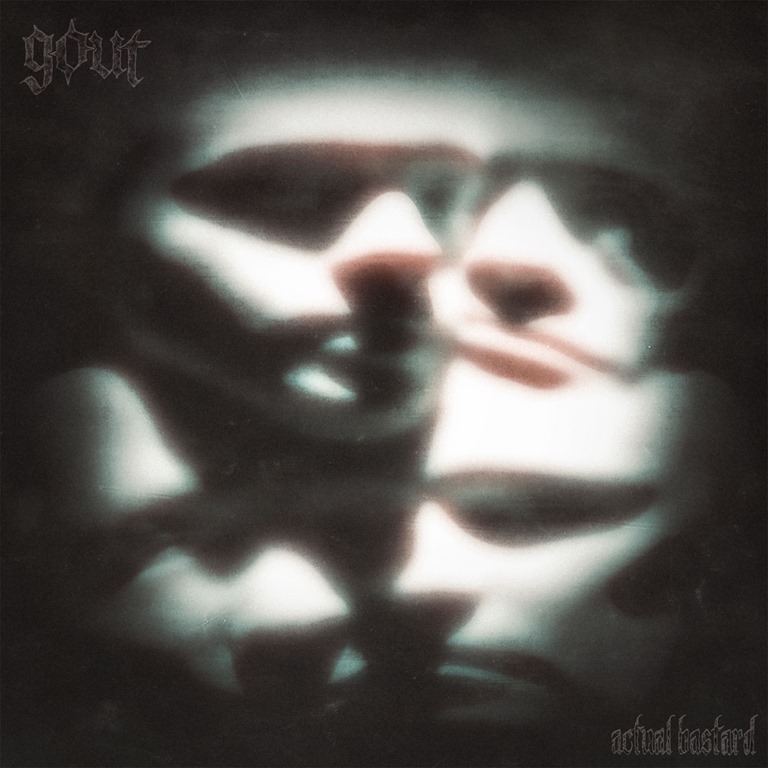
I happen to know a fair few people who suffer from gout – which may be an indication of my age and the people I associate with – and they will all attest that it really is an ‘actual bastard’. But the title of this EP is also so, so Glaswegian. Living in Glasgow for four years, I came to appreciate that not only is Scotland culturally very different from England – something tourists probably don’t get to absorb in a week or two – but Glasgow has a culture, and a dialect, and countless turns of phrase which are unique to Glasgow. Following my time there, ‘Actual Bastard’ sounds like Glasgow, and the only way it could sound more Glasgae is if it was called Pure Bastard, Pure Wee Bastard¸ or maybe Fuckin Bawbag Cunt Bastard. Glasgow’s probably the only place on the planet where you can call a colleague a cunt in the office and not get into trouble because it’s a term of endearment as well as an insult.

Gout features members of Glasgow bands Lucia & the Best Boys and The Ninth Wave. As the bio notes, though, Gout is ‘a far cry from these projects, however’ (And having caught The Ninth Wave at Live at Leeds (I think) many moons ago, I can attest to this), Gout distils the intensity of hardcore with the low, driven crush of sludge forebears’.

No two ways about it: Actual Bastard is an absolute rager, with rabid, throat-ripping vocals raving and raw over filthy, low-slung churning riffs. The first track, ‘nmate’ lurches headlong into punishing, sludge-laden dirt, calling to mind The Jesus Lizard and the like, but scratcher, heavier, more overtly metal. ‘Too Bleak’ ratchets up the savagery, making for an eardrum-busting assault – but it’s tame in the face of ‘I Am A Beacon of Health and Wellbeing’ which sees the riffery go straight-up Godflesh and the tuning go way down to conjure the most ferocious hybrid of 90s noise rock and extreme metal.

AA

If ‘Junk Sick’ goes a bit easier, with clean chorus-tinged guitar and a slugging bass, it’s not without a brutal lurch into extremity, going early Pitch Shifter meets Fudge Tunnel around the midway point.

‘Tarmac’ brings peace at last with a spoken word narrative and clean guitar strum. ‘I’m the eldest of two / You’re the youngest of three / I’m just tarmac to you / you can walk all over me… just walk all over me’, Ally Scott mutters tensely. Here, it registers that this is not just a band doing it for a bit of a laugh: there’s real emotional depth buried amidst the tempest of noise. But of course this revealingly introspective moment is swiftly swallowed in a welter of noise. What does cut through is pure rage and anguish, a cathartic offloading of trauma, amidst a swirl of metal meets shoegaze. The impact level is high, and ‘Tarmac’ only elevates the power of Actual Bastard. I’m foraging for words here, in the face of overwhelming musical might.

Gout sure as hell don’t hold back, and Actual Bastard is a flailing, furious, rampant, relentless beast of an EP.

AA

ACTUAL_BASTARD_EP_COVER_ART

Ipecac Recordings – 10th April 2026

Christopher Nosnibor

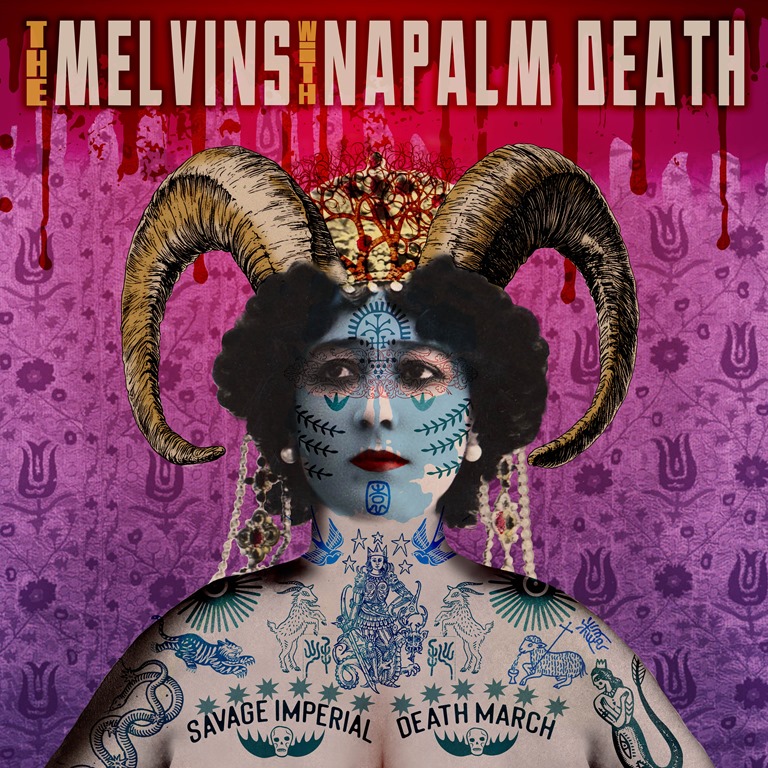
What better pairing could there possibly be than the gods of grindcore paired with the supreme lords of sludge? It’s hard to think of one. They’ve toured together under the Imperial Death March banner in 2016 and 2025, but this is their first release together – and it’s not a split album, but a truly collaborative work, featuring members of both bands. It was recorded at the Melvins’ Los Angeles studio, with Buzz Osborne (vocals/guitar) and Dale Crover (drums) joined by Napalm Death’s Barney Greenway (vocals), Shane Embury (bass), and John Cooke (guitar).

And as advance single releases ‘Tossing Coins into the Fountain of Fuck’ and ‘Rip the God’ forewarned, so it is that Savage Imperial Death March is one absolute fucking beast of an album. It’s ‘Tossing Coins’ that kicks it off, a rabid overload of guitar mayhem, grindy riffery and wild guitar breaks underpinned by dingy riffs, all played at breakneck speed. Greenway gives guttural growls all the way and it’s nothing short of a sonic blitzkrieg. It’s very much a positive to summarise it as being a sum of the parts.

AA

AA

The nine and a half minute ‘Some Kind of Antichrist’ is much more Melvins – with the weight of Bullhead, but as if the 33rpm album was being played at 45: thick, megalithic, speaker splitting riffs, but on Red Bull, and Buzzo’s hyper vocal countered by Greenway’s salivating growl. It’s a wild, filthy mess, and it goes on, and on, and it’s fucking fantastic – even when, or especially when, it goes weird about four minutes in. because weird is, good, and Melvins are good at being weird. Sometimes, they’re not quite so good at being weird, as the Prick and the ‘Cowboy’ single attest, but like they give a fuck. Melvins have always pleased themselves, and that’s reason enough to love them, if not necessarily all of their releases. You could hardly call Napalm Death crowd pleasers, either, and their lineup’s as been as evolutionary as their sound.

‘Awful Handwriting’ is a brief experimental electro-led interlude that’s daft and noisy in equal measure, and stands in total contrast to the grungey post-metal crossover of ‘Nine Days of Rain’ which immediately follows. Credit where it’s due, this album brings some stylistic surprises which sound like neither band, let alone what you’d expect from the two combined, and this is very much one of those songs.

After the sludge-grunge of ‘Rip the God’ which marks the start of the album’s second half and is very much on the side of the Melvins’ style, there’s a rush into the fast and furious, and while it’s wild and heavy and full-on and loud, it’s also fun, and entirely serious, it is not. With operatic vocals and bold, cinematic synths, ‘Comparison is the Thief of Joy’ leans very much toward the experimental side, while the final track, ‘Death Hour’ just goes all out of the riffery and guitar overload, with raving raw-throated vocals courtesy of Greenway sitting alongside Buzzo giving it his most Ozzy, before once again, shit gets weird. It’s as if they can’t help themselves. Ach, we’ve done some riffs, let’s fuck shit up and go weird… yeah, man. And why not? Neither band has anything to prove after all this time. And now it’s time to embrace the strange… but the keyboard riff from Van Halen’s ‘Jump’ played limply at the end…? That might be a step too far.

AA

AA

990162

22nd March 2026

Christopher Nosnibor

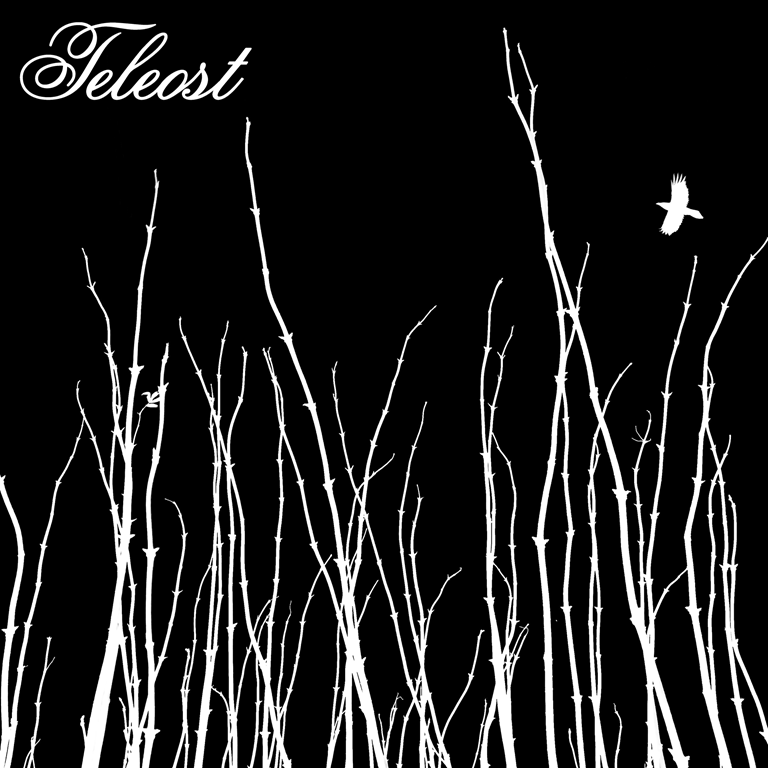
After an eon evolving their sound with comparatively little to show in terms of releases, Teleost have really picked up the pace of late: Three Originals was released in January 2025, followed by ATAVISM in December of last year, and here we are barely three months on faced with a new eponymous EP. Clearly, they concentrate their mental energy into the music rather than the naming of their EPs – and rightly so. The title is inconsequential: the music is what this is all about. moreover, what this, and what Teleost are all about, is exploring those dark tones and the ways in which frequencies resonate against one another, particularly at volume.

Live shows – particularly of late – have more than attested to the necessity for volume for Teleost, in the same was as is true for Earth, and Sunn O))). The simple fact is that some sounds, some frequencies, some resonant interplays, simply cannot occur at low volumes. Anyone who suggests that these bands – and Swans and A Place to Bury Strangers, among others – exploit volume gratuitously simply doesn’t understand the way in which vibrations change things. Teleost, however, very much do. And with their ultra-slow doom-drone, this is a band who really go into microcosmic detail when it comes to tonal shifts and reverberations within their great wall of sound.

This – their second EP, and sixth release in all – features three tracks. And once again, epic is the word. The four-and-three-quarter-minute sludgefest that is ‘Palanquin’ feels like a brief bridging piece between the megalithic ten-minute ‘Navigator’ and the eight-minute ‘Standing Stone’. And holy shit, is this heavy.

With Telost, the guitar has always been heavy, thick, grinding, the sound more akin to two guitars – or more – grinding out a speaker-shredding tsunami. But this… this takes it up several notches. It’s not just the guitar sound itself, of course: the production achieves the rare feat of capturing not just the rib-rattling, lung-shredding sound of a duo that take Melvins’ reattenuation of Black Sabbath to a skull-crushing level of pain.

With Teleost, there’s a clear sense of structure, of linear progression, too. ‘Navigator’ starts out gently, a textured hum, a buzzing drone, clean strings strummed but resonating. Low tom beats enter the mix and the build is slow, deliberate. Leo Hancil’s vocals reverberate – detached, a pagan-like incantation low in the mix. The suspense builds. Dissonance chimes, but still we traverse through deep fog and mud-thick tracks. And then at five minutes, it hits. And it hits so hard but so sweetly. The impact is immense. THAT is a riff, and how to land it. It completely knocks the air from your lungs, then proceeds to tear your limbs off, one by one, while shredding your skin with blunt but brutal claws.

How two people can create this organ-bustingly megalithic noise is unfathomable. But they do, time and again, growing ever more immense with each show, and with each recording. Yes, I say it every time, but every time, it’s true: Teleost have transcended to another echelon with this release: denser, heavier, louder, more punishing – and at the same time more immersive and transportative.

AA

AA

cover

Glasgow-based post-metal collective Void of Light have unveiled the new video for ‘Mirrorings,’ the lead single from their forthcoming debut full-length album Asymmetries, set to be released on April 3 via Ripcord Records.

Clocking in at a towering ten minutes, ‘Mirrorings’ first premiered at Decibel Magazine, who praised the track saying: “Clocking in at 10 minutes, ‘Mirrorings’ offers a pretty solid introduction to these gloomy Glaswegians, a dynamic epic that shifts from pummeling sludge to melodic shoegaze-inspired dynamism.”

AA

The band had this to say about the new album and new song: “Asymmetries is the culmination of two years of hard work and exploration. Across the album’s five tracks, we set out to shape our own sound within a well-established scene, creating something that genuinely feels like ours. The closing track, ‘Mirrorings,’ brings the album’s introspective themes into a final, defining moment and represents what we feel is our strongest offering so far.”

Void of Light are a six-piece post-metal force built on contrast. Brutal yet deeply atmospheric, their sound fuses crushing riffs and thunderous drumming with melodic leads and carefully layered arrangements. Rooted in post-metal’s foundations but shaped by a wider spectrum of influences, the band carve out a sound that feels vast and aggressive, yet intricate and finely balanced through a keen sense of dynamics.

Following the release of their self-titled EP in 2022 and the two-track EP Enshroud in 2023, Void of Light completed a short UK tour and quickly established themselves as a powerful live presence across local venues and festivals. Renowned for their formidable performances, the band deliver an imposing wall of sound that is both overwhelming and precisely measured, drawing audiences into an intense, captivating experience.

On Asymmetries, Void of Light turn inward. Exploring themes of perspective, reflection, and internal conflict, the album charts a journey of reconciliation between the masks of the past and the truths of the present. 

To celebrate the release, Void of Light will perform their album release show on April 3rd at The Flying Duck in Glasgow with support coming from Codespeaker & Obsidian Sand.

AA

09099a46-7335-e61a-22e1-559fee39d577

Christopher Nosnibor

It’s a cold and very wet Thursday night in December. The kind of night that would validate the narrative that music venues go bust because they’re not supported, and people want to see bands they know over local acts and so on – if the place had been quiet. But there’s nothing quiet about tonight., in terms of turnout or decibels. Ok, it’s not rammed, but it’s respectably busy, and as for the volume… These guys take it all the way to eleven.

The promoter’s strategy of booking a local / student / uni band to open up is one that rarely fails, and there’s a significant turnout early doors for ATKRTV. It helps that they’re good, albeit an acquired taste and not your average uni band. Operating in the classic power trio format, their primary inspirations are clearly US noise rock and grunge – there’s a bit of the Jesus Lizard here, a dash of Sonic Youth and Shellac there – as well as UK 90s noise that makes nods to the likes of Fudge Tunnel and Terminal Cheesecake – but there’s a lot going on, with hints of avant jazz in the blend, too. They’re a bit rough round the edges, but there is a musical style which is forgiving of this, and the jagged jarring juxtapositions of squalling guitar work with some meaty bass work evidences a technical ability beneath the surface of the feedback-strewn tempest. And while the banter might need some work, the songs are a glorious angular explosive racket, and they give them a hundred percent. And this is why it’s always worth getting down early doors. Every headliner was a support act once, after all.

DSC05224DSC05185

In my recent review of that debut album, Atavism, I commented on how the challenge would be for them to replicate the live sound in the studio. This is because their life sound is simply immense. There really is no other word for it. And this is not volume simply for the sake of it: this is volume as an expression, volume which renders the music physical, volume without which certain frequencies and tonalities, so integral to their sound, would not be achievable. Their performance in this same venue back in February was spellbinding, and I came tonight in the hope of replicating that experience. And oh yes, I did, and then some: Teleost seemed to take things to the next next level tonight.

Theirs is a subtly different take on the whole droning doom / stoner form, incorporating almost folky elements in the way that more recent Earth albums do. And instead of being solely about bludgeoning riffery – and hell, there’s plenty of that – there’s a rare attention to detail, not just in the delicate picking and soft cymbal splashes in the quieter moments, but in the full-spectrum sonic experience they conjure. And yes, conjure is the word: this is a world of magic made with a mystical blend of musicianship, amps, pedals, and something else quite indefinable. The way Leo Hancill uses a standard guitar, played through a substantial but not extravagant pedal set and two amps, to cover the range of both guitar and bass is spectacular in itself, but what really makes their sound unique, and it’s so easy to lose yourself in the timbre and texture, the way the sounds reverberate against one another to create this sensurround experience.

DSC05272DSC05244DSC05267

Teleost

Once again, I find myself truly mesmerised by Cat Redfern’s ultra slow drumming. What’s most remarkable is how effortless she makes it appear. Granted, her sticks are batons, but she is still an immensely hard hitter please with absolute precision. Yet she plays with an order of serenity, her expression calm, almost a smile, although it’s clear that’s behind this is intense concentration, and perhaps an element of telepathy between herself and Leo. Certainly the intuition between pair is remarkable, and no amount of rehearsal alone can achieve this level of tightness. The way they navigate the peaks and troughs, spinning elongated quiet passages, where they reduce everything to a hushed hum and the tinkle of a cymbal before bringing in a cataclysmic riff with pinhead precision is nothing short of phenomenal. And for all the noise, the experience is remarkably calming.

Before Teleost, there was PAK40. But with basis / vocalist Andy Glen now resident in Germany, and Leo Hancill living in Glasgow, activity from this former York duo is now extremely rare. That they’re touring with Teleost, having released a new EP simultaneous with the Teleost album makes economical sense, but also represents a significant feat of co-ordination.

It’s not difficult to identify the origins of Teleost when listening to pack 40. They’re certainly slow and heavy. But their style draws more overtly on the Sabbath-based doom sludge template, and there much more overtly metal. In places, they present a sort of blackened New Age metal hybrid. There’s also something more direct about their drum / bass combination. But oh, that bass. The thick, tearing distortion when the riffs kick in are agonisingly close to brown note territory: you feel your ribs rattle and your skin quivering.

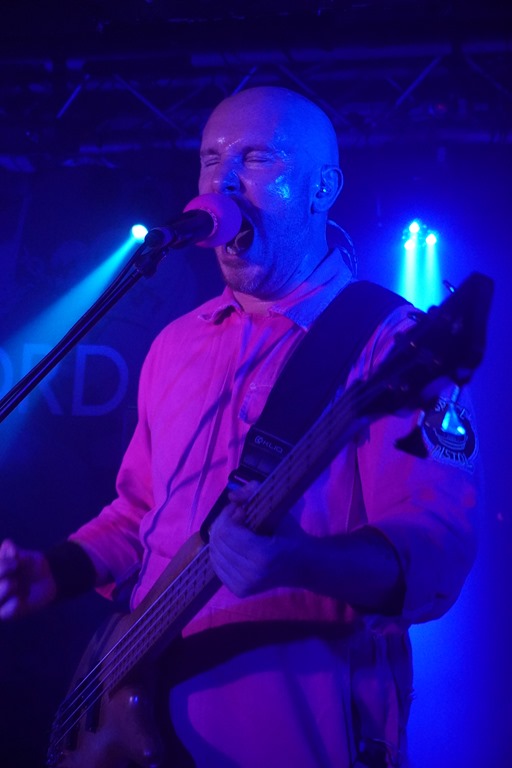
In contrast to Cat Redfern’s zen drumming, Leo drums with his face, and in contrast to Hanclil’s slow nodding guitar style, Andy Glen goes all out with some unrestrained headbanging as he unleashes the most pulverising bass riffs. PAK40 are harder, and more abrasive. And this is why the double-header works: for all of their similarities, the two bands bring different shades of heavy. And they’re both intense, physical forces.

DSC05300DSC05280

PAK40

I babble some shit to people on the way out. I think I got away with it, because everyone is equally dazed. We’ve been blitzed, blown out of our minds and shaken out of our skins tonight by a musical experience that borders on transcendental. It’s a cut above your average wet Thursday night in December, for sure.

1st December 2025

Christopher Nosnibor

Since relocating to Glasgow, Teleost have been forging ahead, first with the release of the Three Originals EP at the start of the year, and now, bookending 2025 – which has seen the duo venturing out live more often – with their full-length debut. And it’s definitely got length: five tracks spanning a full fifty minutes. But it’s got girth, too. Atavism is everything they promised from their early shows – amplified. In every way. With five tracks, and a running time of some fifty minutes, Teleost have really explored the epic space they conjure with their monolithic, crawling riffery, pushing out further than ever before – and with more gear than ever before.

Despite there only being two of them, you have to wonder how they fit all that kit into a studio, let alone a van. They’re not quite at the point of Stephen O’Malley – who had to play to the edge of the stage at the Brudenell when playing solo in Leeds some years ago because the backline barely fit – but at the rate they’re amassing equipment, it’s probably only a matter of time. But this isn’t the accumulation of stuff for the sake of it: this is a band obsessed with perfecting its sound, and then going beyond and taking it to the next level. Volume is integral to that, in the way that it is for Sunn O))) and Swans – and again, not for its own sake, but for the purpose of rendering the sound a physical, multisensory experience. And also because volume facilitates the creation of tones and frequencies simply not possible at lower volumes.

The challenge for any band who rely on these quite specific conditions live is to recreate not only the sound, but the sensory experience, the full impact, when recorded. Recording compresses, diminishes, boxes in and packages something immense, compacting it to something… contained, confined, in a way that a live show simply isn’t. Live, there is movement, there is the air displaced from the speakers, there are vibrations, there is an immediacy and margin for error, all of which are absent from that ‘definitive’ documented version.

‘Volcano’ conjures atmosphere in spades, a whistling wind and tinkling cymbals delicately hover around a softly-picked intro, before a minute or so in, BAM! The pedals go on and the riff lands, and hard – as do the drums. Slow, deliberate, atomic detonations which punctuate the laval sludge of the guitar, which brings enough low-end distortion to bury an entire empire. The vocals are way down in the mix and bathed in reverb, becoming another instrument rather than a focal point. The pulverizing weight suddenly takes an explosive turn for the heavier around the mid-point, and you begin to fear for your speakers. How is this even possible? They do pair it back in the final minutes, and venture into the earthy, atmospheric, timbre-led meanderings of Neurosis. By way of an opening, this twelve minute track is beyond monumental.

They may have accelerated their work rate, but certainly not the tempos of their tunes: ‘Bari’ – which may or may not hark back to the band’s genesis, when they performed as Uncle Bari – rides in on a wall of feedback and then grinds low and slow. They really take their time here, with ten full minutes of jarring, jolting riffery that’s as dense as osmium. Turn it u and you can feel the hairs in your ears quiver and your cells begin to vibrate.

Where Teleost stand apart from other purveyors of slow, droning doom is in their attention to those textures which are grainy, thick, and each chord stroke hits like a tsunami making land reach, a full body blow that almost knocks you off your feet.

But for all of the annihilative volume and organ-bursting weight, Atavism is not an angry or remotely violent record: these are compositions concerned with a transcendent escape, and this is nowhere more apparent than on the mid-album mellow-out, ‘Life’, which offers strong parallels to more recent Earth releases. A slow, hypnotic guitar motif is carried by rolling cymbal-dominated drums. I find myself yawning, not through boredom, but relaxation – until four and a half minutes in when they bring the noise once more, and do so with the most devastating force.

AA

Penultimate track, ‘Djinn’ is contemplative, reflective at first and then goes on an all-out blow-out, seemingly more intense and more explosive than anything before it. While growling droning rumbling is the album’s defining feature, there does very much feel like there’s an arc of growing intensity over its course. Here, the vocals feel more skywardly-tilted, more uplifting in their aim to escape from the planet, and closer, ‘Canyon’ returns to the mesmeric, slow-creeping Earth-like explorations before slamming all the needles into the red. The result is twelve minutes of magnificent calm juxtaposed with earth-shattering riff heaven.

The fidelity is fantastic, the perfect realisation of their head-blastingly huge live sound captured. The chug and trudge cuts through with a ribcage-rattling density, and there is nothing else but this in your head. You mind is empty, all other thought blown away. It’s a perfect escape. And this is – at least in its field – a perfect album.

AA

a0002754035_10

Human Worth – 14th November 2025

Christopher Nosnibor

Human Worth seems like a comfortable place for the latest album by sludge behemoths GHOLD. The band has forged a remarkable career to date, with each album showing development and progression, building on previous works – and as they’ve been going for some thirteen years now, that’s some significant expansion. PYR (2016) saw the duo expand to a trio, and Stoic explored the potentials of the three-way interplay in much greater depth. INPUT>CHAOS took the band in a rather different direction, fully embracing the avenues of straight-up noise while bringing, at times, almost accessible shades to the monstrous riffery that defines the GHOLD sound. So many bands spend their entire career recreating their first and second albums because they’re so desperate to appease their fanbase, and while that might be alright for acts who’ve sold their soul and their lives to major labels and likely have no say in the matter, any act who has artistic freedom who peruses such a creatively limiting course is likely doing it for the wrong reasons.

GHOLD’s unpredictability, then, is a strong positive. And Bludgeoning Simulations is bursting with surprises, and none greater than the tremulous piano opening on the first track, ‘Cauterise’. It’s tense and dissonant, but at the same time, soft, reflective… and then the monstrous, churning riff crashes in and lays waste to everything which stands before it. The guitar and bass are welded together tight to forge a solid wall of sound, and it’s delivered with attack., a raw, barrelling intensity. You don’t just hear the volume from the speakers: you feel it.

Without a moment’s pause, a thick, lumbering bass riff crashes in hard, and leads ‘Lowest’ into spectacularly Sabbath territory – it’s hard and heavy, but also captures both raw contemporary feel and that vintage 70s sound. Sabbath as played through a filter of Melvins goes some way to explaining where they’re at. It sound like abrasive hardcore played slow.

The ridiculously long and sludgy single cut, ‘Place to Bless a Shadow’ s a beautiful slow-burner, expanding everything they’ve ever done to a new and remarkable breadth. There’s detail here, and deep, dark, whispering atmosphere, before ultimately, after some sparse, slow-building tribal beats and simmering tension, not to mention vocals that start gently but gradually come to resemble the rage of Trent Reznor on The Downward Spiral, they finally go full Melvins sludge mania just after seven and a half minutes. It’s heavy, and it’s wild. And – alright, sit down and take it – it’s solid GHOLD.

‘Fallen Debris’ is a fast-paced, buzz driven blast, and a contrast in every way – hard, driving, it’s a tabid blast of a punk / gunge / metal hybrid that hits like a kick in the stomach. Whipping up a stomach-churning maelstrom in the last couple of minutes, we find GHOLD hitting peak energy, before the slow-churning Sunn O))) ‘inspired ‘Leaves’ drifts in and drives hard. It’d s heavy as fuck. And it hurts.

There are no simulations here: this real bludgeoning, from beginning to end. Bludgeoning Simulations is heavy, and make no mistake, there are no simulations here: this is fucking REAL. The album’s second monumental beast of a track is the groaning, droning, nine-minute monster that is ‘Leaves’, and it’s nine minutes of sepulchral doom fully worthy of Sunn O))). It’s heavy shit, alright, but the reason it hits so hard is because of the context: Bludgeoning Simulations is remarkably nuanced, inventive, a questing work that seeks new pathways, new avenues, and shows no interest in genre boundaries of conformity. ‘Rude, Awaken’ brings the dingy riffs that will satisfy thirsty ears, but again, there’s a stylistic twist that’s truly unique, in a way that’s not even easy to pinpoint. It’s simply something different.

Bludgeoning Simulations is inspired, and inspiring, and finds GHOLD conjuring sonic alchemy with a visionary take on all things doomy, sludgy, low, slow, and heavy.

AA

a0166716374_10