Posts Tagged ‘Drone’

Sound in Silence – 18th May 2026

Christopher Nosnibor

Sound in Silence produce nice releases. Like the Loom label and early Gizeh releases, they disprove the notion that the CD format is impersonal, no more than mass-produced plastic. The latest offering from Death-Static, released as a run of 200 handmade, hand-stamped, and hand-numbered copies is exemplary. It’s more than just a CD. It’s art, and an artefact, and one worthy of the music it houses.

Death-Static is the solo project of Gareth S. Brown, who has no small catalogue of output to his credit, having previously released music as a member of the bands Hood, The Declining Winter and Memory Drawings, and solo under his real name and various aliases. We learn that Red Fire In The Open, his second full-length album, ‘is more drone-based than his last year’s debut Time Is Ignorance and consists of three tracks… conceived as a prelude, interlude and main piece, using bellows instruments, organs, cellos and field recordings’.

The prelude takes the form of the fourteen-minute ‘Blackhorse Infirmary’ and it starts out as a quavering analogue drone which stutters and stalls in between undulations. It’s the kind of warm tone that’s eerily close to the human voice. Organs and bellows are uncannily breath, and the polyphonic exhalation which defines this piece is uncanny and somewhat discomfiting. It swells like a chorus of voices humming, wordless, all around you, as trilling synth drones and elongated scrapes ripple, with feedback occasionally rising up through the slow, dense drift. The final minutes are a rustling, rupturing cacophony of churching chaos and discord. Although not entirely unpleasant, it is challenging, and feels like being assailed by a storm.

In context, the interlude, in the form of ‘The Last Days of Light’ is welcome. It’s a piano-led moment of reflection. Quiet, calm, with a hint of melancholy, it’s soothing, and extremely emotive. I feel a certain sadness. Not in having been manipulated to sadness, but because there is simply something about it. Life is sad. The world is sad.

The title track, ‘Red Fire In The Open’ is the main event – a composition which stretches beyond thirty-four minutes in an exercise in patience. It’s pitched as being ‘like a guided meditation, using bellows instruments, organs, cellos, and field recordings to move the listener from the grimy, urban trudge of a major metropolitan train station to a woodland dawn chorus – and at the same time towards a sense of possibility and hope.’ It very much marks a shift in tone, but at the same time expands on the gentle drone forms of the previous pieces.

Like cheese, or for some, bacon, birdsong always makes everything better. I used to march into town to get a bus to the office on the city’s outskirts on the opposite side from where I live under the power of the MP3. Since lockdown, I’ve sought silence and felt the need to keep my ears open, and to venture into nature as much as possible. This has been a huge life change in many ways. I actually appreciate the sound of the breeze, the ripples of air though the leaves of trees, now, not because I’ve turned into some massive hippy, but because I crave the sounds of life, and feel I need that connection. The nature on my doorstep has become far more meaningful to me than any David Attenborough documentary. Whales are cool, but so are bees and birds and green spaces closer to home. We live in the most horribly overstimulated of worlds. We’re far beyond the postmodern blizzard Lyotard and Jameson wrote of, in that we’re in a place where we’ve devolved, concentration spans have been diminished to mere seconds and most people use AI to do their thinking for them. We’re so fucked, in so many ways, and on so many levels. But Red Fire In The Open reminds us that there is an alternative, and that there is more. It reminds us that it’s still possible to step outside, and to open your eyes and open your ears, and open your lungs. Please, do, while you still can.

AA

a3054815221_10

Karlrecords – 22nd May 2026

Christopher Nosnibor

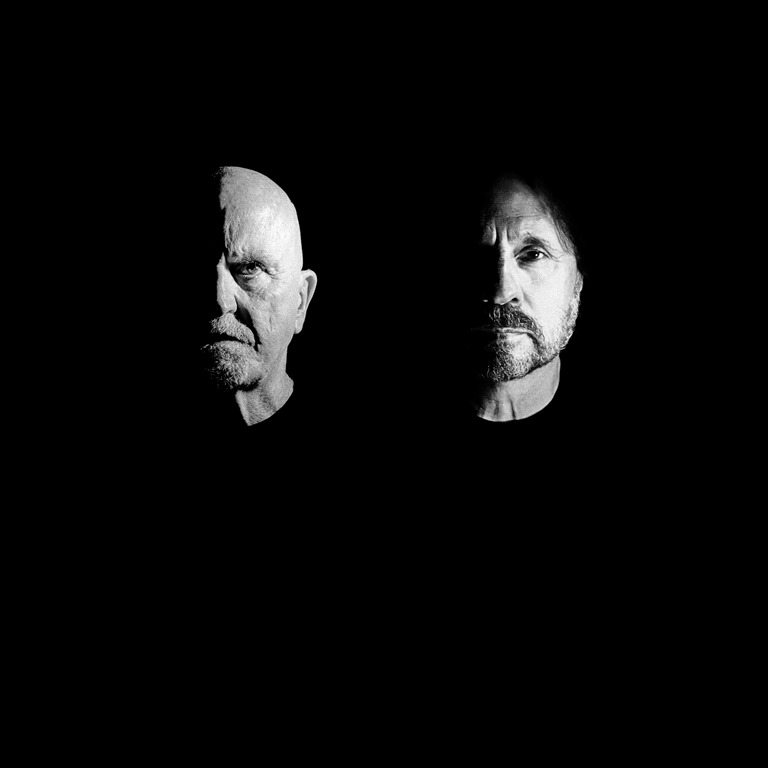
Flocks is the duo consisting of drone specialist Werner Durand and percussionist Uli Hohmann, and their second album, Lagoon, we’re informed that ‘the duo further explores the aesthetics it has crafted on its selftitled debut (2023, on the now defunct ZEHRA imprint): DURAND and HOHMANN shape drone-y soundscapes based on their self-built wind- & stringed instruments, Persian percussion and subtle electronics, drawing additional inspiration from Krautrock (listen to the irresistible, hypnotique, ever-changing rhythmic pattern of the title track) as well as JON HASSELL’s “fourth world” aesthetics, placing the duo nicely between tradition and experiment!’

For those unfamiliar with the fourth world concept, it can be traced to the 1980 collaborative album Fourth World, Vol. 1: Possible Musics by Hassell and Brian Eno, with the former defining the fourth world as “a unified primitive/futuristic sound combining features of world ethnic styles with advanced electronic techniques.” And it does very much describe the sounds on Lagoon, where electronic drones and quavering digital textures are melded with percussive forms of ancient origin. Indeed, Hohmann’s credits on the album include kanjira, riq, ghatam, Tibetan bells, Venetian shells, and bamboo tube zither. And the result is nothing short of hypnotic.

The three longform tracks share aquatic-themed titles, matched with gloopy tones and fluid forms. Side one contains two ten-minute pieces in the form of ‘Whirls’ and ‘Tidal’, while the twenty-minute title track fills the entirety of side two.

The length of the pieces means they each have time – and space – in which to fully explore the tones and textures of the instruments involved, and to create fully immersive soundscapes. There are breathy stutters amidst the wavering undulations, and sounds which evoke the sound of waves lapping the sides of a small boat. There are gentle ripples, ebbs and flows in these extensive sonic expanses, and it’s not difficult to let go and simply succumb to the drift.

The arrival of some quite smooth sax in the middle of ‘Tidal’ is something of a surprise and feels kind of incongruous at first, but in time it manages to nestle in nicely. ‘Lagoon’ features stronger, busier, percussion and denser, more claustrophobic drones, and is also the most overtly ‘jazz’ of the three compositions due to the more prominent sax work. Over its extended duration, it builds a solid groove, and seems to quicken in pace, although it may only be an increasing density and the tension of eternal repetition. Eleven minutes in, and you really begin to feel it: the relentless rhythm and eternally monotonous drone which underpin all of the additional layers have a cumulative effect. As horns and clients and an array of extraneous sounds from twittering to laser-like bleeps come and go, it becomes increasingly disorientating, and while the experience is by no means unpleasant, it does fully envelop the mind and body.

The combination of sci-fi sounds and weird electronica with urgent polyrhythmic percussion does, indeed, feel other-worldly – of this planet, and not, of the distant past and the equally-distant futures of imagination. And among it all, the listener finds themselves lost, adrift between the two, in time and space unknown.

AA

AA

KR120 front

Saccharine Underground – 9th June 2026

Christopher Nosnibor

I like my shit weird and experimental, and so it is that AD Ozium’s In the Style of Dead Sparrows is both weird and experimental, and needless to say I like it – but with the caveat that listening to it is an experience akin to being dragged through an near-endless nightmare, and every time you think you’ve woken up, you discover that you’re simply in another level of this multi-faceted anxiety dream.

The pitch is that ‘In the Style of Dead Sparrows is the latest transmission from the outer edge of instrumental music – a fractured, hallucinatory convergence of freak folk textures and no wave dissonance that dissolves the boundary between sound and psyche. Created by Washington D.C.-based solo musician Jeremy Moore (Zabus, Zero Swann, Bell Barrow) under the name AD Ozium, the album operates at the intersection of freak folk, no wave, avant-garde drone and experimental instrumental music.’

But this barely scratches the lumpy, irregular, alien, fog-covered surface of this album. The first composition, ‘Lifespring’ is exemplary in its exploratory nature. It begins subtly, some desert rock twang in a drift of breeze and warping ambience. With tweets and yawns, it feels as if the tape is stretched in places, and there’s a crackle and hiss reminiscent of that old four-track tape noise and plunging synth rumbles. Discord builds as the sound swells, unsettlingly. It continues in this way for the first six minutes or so, until the nerve-jangling tension and suspense breaks into a brief but thunderous rupture.

The ten-minute ‘Tender Loving Seed’ is swampy, straggly, churny, a mangled mess of broken-sounding country guitar and fractured electronics, not so much a whistle of feedback as the sound of circuitry melting amidst a swell of distortion. It sounds like fucked-up flamenco, it sounds like dialling through radio stations and managing to tune into none of them, it sounds like a cerebral spasm. It’s a slow unwinding of discordant chaos.

I’ll take a stab that ‘Whore of Sound’ is perhaps a reference to ‘Whorle of Sound’ by Throbbing Gristle, which appeared on their First Annual Report, and was subsequently reprised in a radically altered but altogether more brutal form as Walls of Sound on DOA: The Third and Final Report of Throbbing Gristle. Certainly, the sonic parallels are apparent: this is seven minutes of gnarly noise which swells to head-shredding intensity with hints of Lou Reed’s Metal Machine Music.

‘Faith is a Hole’ brings new layers of discomfort, the overloading low frequencies creating mic distortion and the most hellish vibrations, making for a long seven and a quarter minutes, before ‘Portents of the Terminal Mind’ ripples and reverberates a whirlpool of the wrongest confusion.

Confusion, contusion… ‘The Nazarene Distortion’ is gentle at first, but again, discord and chaos and blasting lasers reign… and all the while, there is a background rumble, a tape his that never stops. The background noise at times reminds me of Rudimentary Peni’s Pope Adrian 37th Psychristiatric – not because its similar in musical terms, but that endless, nagging background sound gnaws away at your ears and your brain. It’s not the most abrasive or attacking nine minutes of noise, but it’s a heavy slog of the most difficult atonality. It’s stomach-lurchingly messy. At times, you just want it all to stop.

This is challenging. It’s woozy, head-spinning. It simply sounds wrong. It’s not some Beefheart-style cacophony. It’s darker, the lo-fi leanings and atonality only amplifying the tension. Drones and buzzes, hums and fleeting phases are interspersed with annihilative blasts of noise, and the guitar notes simply echo out into the void.

In the Style of Dead Sparrows isn’t simply weird or experimental – it’s harsh and abrasive, and it will assail your intestines and hollow you out.

AA

a0516470554_10

Sub Rosa – 15th May 2026

Christopher Nosnibor

Mick Harris may have left Napalm Death some thirty-five years ago, but it’s still for his work with them – and his coining of the term ‘grindcore’ – that he’s largely known. There are, of course, far worse things one could be known for, particularly as this meant that he featured on the band’s seminal debut album, Scum. While having participated in numerous projects in the years since, Scorn will forever be an enduring standout in cult circles, but beyond this, Harris has explored far further-flung corners of the musical spectrum on many occasions with comparatively little recognition, with dark atmospherics having been his primary focus for a good number of years now.

The fact that this is the third instalment of Murder Ballads, recorded in collaboration with Martyn Bates and released on estimable Sub Rosa label in Belgium – which has released albums by William S. Burroughs, Brion Gysin, Test Dept, Oren Ambarchi, David Toop, Bill Laswell, Asian Dub Foundation… the list goes on – is a measure of how Harris has transitioned to what one might call more ‘arty’ territories, which may sound snobby or poncey to some, but let’s focus on the work at hand – at least, in due course.

Although murder ballads are likely most commonly associated with Nick Cave in popular culture, they have a long cultural heritage, with roots in the folk history of Scandinavia, England, and lowland Scotland reaching back as far as the 1750s. The entire premise of murder ballads is bleak and grim, and Harris and Bates remain true to this principle here, on an album which is mercilessly dark and lugubrious.

There’s no avoiding the fact that the subtitle brings an element of discomfort. We’re in a strange place right now, culturally, in that half of the world – or maybe that’s just half of the US and those in the UK who for inexplicable reason who describe themselves as ‘patriots’ while also being fans of Donald Trump – seem to think that paedophilia is just fine, and in many states, marrying cousins is similarly just fine. Similarly, incest porn and step-sibling porn is all the rage. Why? What is wrong with people? But then, history is built on tales of incest, going right back to Greek mythology. This is no more than an observation, and to note that as a species, we’ve been warped for the entirety of our existence. That discussion is an entire thesis in itself, though.

Murder Ballads [Incest Songs] is a long way from Peter Sotos territory. But what it is, is four ominously-shaded longform compositions which are uncomfortable and uneasy. As they pitch it, ‘Incest Songs is the final chapter of the Murder Ballads trilogy, and its most fully realized expression. Where Drift and Passages explored the post-isolationist frame through voice and single instrument, this third volume dispenses with that approach entirely, opening instead onto a more labyrinthine sonic architecture – one built from overlapping, saturating, blurring voices, all of them Martyn Bates’.

Bates does indeed prove to be versatile, and capable of conjuring the most moving vocal evocations. ‘The Bonny Hind’ is essentially a folk song, a shanty, even, at heart, but the lilting vocal, which would work as readily acapella as against conventional instrumentation – flute, or fiddle, for example – takes on a more ominous shade when pitched against groaning, shape-shifting drones. The result is unsettling, and would sit within the soundtrack of a folk horror movie in the way a warped, discordant rendition of a nursery rhyme would in more mainstream projects.

‘Sheaf and Knife’ is notable for its sparse nature. Bates’ voice is practically in your ear – and this ism no small feat of the production. Whispers, echoes, and reverberations echo around, and it’s not immediately apparent that most of this is Bates, the wind and the air, and the dank, low drones which define this album. ‘The Two Brothers’ – a seventeen-minute monster of a composition – drifts into moments of space-age spin, flanged swirl and fractal details turning a textured sonic nebula behind the vulnerable vocals – and the narrative said vocals deliver is chilling, a tale of a stabbing, whereby the narrator washes the blood off and goes about his business. Or something. While the lyrics sometimes trail away in swathes of reverb the auditory experience is gripping in itself. This is the sound of heavy fog, and of silent decomposition. This leads us to the album’s final cut, ‘Edward’, extending beyond seventeen and a half minutes is magnificently haunting. At times so sparse as to be barely there, it’s a trawl into the darkest of spaces, suffocating, claustrophobic. Bates croons and quavers with a detachment which accentuates the sense of disconnection. There’s something in the way he delivers the words, against sparse, eerie, near-ambient backdrops of difficult drones, that is quite chilling: calm, soft, psychopathic. Enjoy, but watch your back.

AA

AA

SRV514 front

O.R.G.II is an immersive musical work that brings the traditional pipe organ into dialogue with electronic and drone compositions, unfolding within a liminal soundscape — a space of transition and encounter orchestrated by Puce Moment.

In February 2019, Nicolas Devos and Pénélope Michel first engaged with the organ through a 1942 mechanical instrument. From this encounter emerged the album O.R.G., which laid the foundation for their distinctive approach to the organ as both a sonic and conceptual medium.

Longtime collaborator and choreographer Christian Rizzo, aware of Puce Moment’s ongoing exploration of pipe organs, invited them to compose the music for his new piece à l’ombre d’un vaste détail, hors tempête, premiered at the Biennale de Lyon in September 2025.

Ahead of the release of O.R.G.II on 12th June, they’ve unveiled a video for ‘Simoon’. Watch it here:

AA

PUCE MOMENT is the artistic duo of Nicolas Devos and Pénélope Michel, combining visual and sound arts. With backgrounds in fine arts, contemporary arts, and classical music, they founded the experimental electronic group Cercueil in 2005, gaining recognition in the French contemporary music scene through extensive touring. Parallel to this, they launched Puce Moment, a platform for sound research and interdisciplinary experimentation.

Their creations, blending fictional ethnology with diverse musical and visual forms, are characterized by emotional intensity and ritualistic structures, ranging from harmonic clarity to raw  distortion. Using electronic and electroacoustic arrangements, they craft immersive soundscapes that merge traditional instruments (like limonary organs or Japanese gagaku) with innovative interpretations. Their work invites active audience participation through spatialized and immersive sound experiences.

AA

Puce Moment1_©Puce Moment

Cruel Nature Records – 27th March 2026

Christopher Nosnibor

This one’s been out for a bit, but was too good to let go without comment. Some will likely thank me for this: others may be less grateful as they sit, hands over their ears, wondering why they should ever pay heed to a word I write. It’s niche and it’s noisy – as the notes which accompany the release on Bandcamp make clear from the outset:

Gnarled Fingers and Picking are two artists drawn together by a shared love of bleak, crushing, low-end oblivion.

Picking is a new raw doom / noise / drone project from Charlie Butler inspired by lifelong incessant excessive picking of nails.

Gnarled Fingers is an experimental, ambient drone project, relentless wall of fuzz and atmosphere, no escape, created after growing up in Somerset Levels with stories of witchcraft and pagan superstition.

The Picking track, ‘Toenail’ sits in the droney doom bracket dominated by Sunn O))), but there’s something magnificently lo-fi about this, which adds a layer of filthy muck and treble distortion that conveys a performance which is of a volume just beyond the capacity of the equipment used to record it. It’s fourteen minutes of raw, howling guitar noise, and because of the way in which they seem to be struggling to contain the feedback while ploughing relentlessly at a loose semblance of a riff, the result is something along the lines of Earth 2 crossed with Metal Machine Music. ‘Uncompromising’ is a word that music journalists and bands alike chuck about, but this is the absolute epitome – although something about this recording is possessed of a primitivism that suggests they don’t know how to do it any other way. Is it uncompromising if that’s the case? Feel free to make that question a topic for debate next time you’re down the pub with your coolly opinionated music-loving mates, but whatever side of the fence you find yourself on, Picking make a gnarly noise, and if your toenails ever bear visual comparison to this, I would strongly recommend consulting a podiatrist, and sooner rather than later, before your entire foot rots off the end of your leg.

Gnarled Fingers showcase a more polished form and a sound which sits closer to the Sunn O))) template of ribcage-rattling density, whereby a chord struck every twenty seconds conjures an atomic detonation that hangs heavy in the air. Downtuned and distorted to the max, their track ‘Echoes from Futures Past’ is a wall of crushing devastation. Sixteen and a half minutes of guitar noise so weighty it feels like how one might imagine being trapped under rubble after a nuclear bomb. Feedback scrapes so abrasively that it strips the skin, and all the while you’re slowly suffocating. It’s brutal.

While some split releases benefit from contrast, this is one where similarity is strength. This type of music is most effective when subjected to prolonged periods of exposure, ideally at high, even extreme volume. The desired effect is complete immersion, to reach the point where your body feels detached, as if its floating. This is some heavy-duty drone shit, and it sure hits the spot.

AA

AA

a2050053662_10

Christopher Nosnibor

It may be numbered 7.5 in the Utterly Fuzzled catalogue, but there’s nothing ‘half’ about this event. Showcasing quieter and more acoustic-based acts than usual, it does mark something of a departure from their usual mix of indie / alternative / different / stuff, but this stacked five-act bill still brings variety and quality in equal measure.

The joy of these nights is that you can turn up without knowing anything about the majority of the acts and still know there’ll be plenty of interest, even if it’s not all to your taste. Put another way, an Utterly Fuzzled night is not dissimilar to how it was listening to John Peel: a mixed bag, you might not love all of it, but it would never be dull and you’d always come away with something new that made an impression. And tonight is absolutely no exception.

Jo Dale – event co-organiser and bassist with local favourites Knitting Circle is on early doors, nervous and questioning the wisdom of putting herself on for a solo acoustic set – doesn’t make the obvious choice of playing versions of Knitting Circle songs. Oh no. Instead, it’s a whole new set of songs played on acoustic bass, one of which was penned mere hours before when she realised her set was too short. The combination of nerves and newness make for a slightly shaky start, but she’s a deft tunesmith and the audience is behind her (metaphorically speaking, that is) and she finds her feet and confidence over the course of her handful of songs.

DSC09538

Jo Dale

Andrew DR Abbot is an old hand, and a longstanding feature of the DIY scene in the North. It was more than a quarter of a century since I first stumbled upon him playing baritone guitar as one half of That Fucking Tank, supporting Whitehouse at The Grapes in Sheffield. Whitehouse were too quiet and rather disappointing on that occasion, and TFT were the act of the night by miles. While now performing – again with James Islip, and still with the baritone guitar – as Lands and Body, he’s also doing solo stuff which is an electroacoustic sort of set up, involving field recordings by way of a backing to guitar that’s looped and layered. He’s at ease on stage, and the set simply flows. Starting with a 12-string guitar and switching to an eight-string, Abbot deploys a bottle, a tiny bow, and various other tools to augment some technically proficient picking and fretwork. Cascading notes create an immersive, atmospheric continuous piece which transitions through a sequence of passages. To say that it’s ‘nice’ may sound weak and noncommittal, but as a listening experience, that’s exactly what it is, and I find myself feeling calm but subtly exhilarated.

DSC09539DSC09551

Andrew DR Abbot

Piró – over from Spain and touring alongside Andy Abbott – plays vibrant folksy songs with a Latin flavour, routing an acoustic guitar through some pedals with loops and distortion making for some interesting sounds. His set was marred somewhat by some noisy sods at the back who talked and laughed constantly, and talked and laughed louder during the louder parts. But like a pro, he kept a level head and simply played on, and gave us some nicely worked loops and guitar detail in songs performed with heart.

DSC09555

Piró

Lou Richards’ set was a compact affair comprising just four songs, the last of which was a John Cale cover performed alongside one of her former bandmates. But less is more, particularly when it comes to poetical words paired with delicately picked clean electric guitar. It’s pleasant, a very different kind of folk, about hedgerows and heritage, nature and nurturing.

DSC09572

Lou Richards

Bhajan Boy is sporting a Fall T-shirt and brings big drones which form the basis of a set that builds slowly and deliberately, with some clattering and clanking that adds considerable texture. It’s only gradually that the drone evolves into a dense noise, as the set bhuilds subtly in layers and volume. Twenty minutes in and I’m wondering how much further he can take it, how much more he can add. That’s when he starts on the bellows and the sound really swells to a huge swashing sonic tide, rendered all the more full-spectrum by bleeps and crackling distortion, before gradually pulling back through a very long tapering wind down.

DSC09579DSC09597

Bhajan Boy

It’s an immersive soundscape, which is very different from the rest of the lineup. This in itself is the quintessence of the Utterly Fuzzled ethos, and in a time where live music is struggling and touring is difficult, a night like tonight stands as a beacon.

Room40 – 31st March 2026

Room40 announces a new album by the Finnish/Australian award-winning double bassist, vocalist and composer Helen Svoboda, arriving on the 26th June.

The distinctive sonic world of Headwater weaves sixteen threads or ‘earworms’ built around two double basses, two voices, and electronics; heard as singular and combinatory bodies of material. The album forms an abstracted picture of self, rooted in a devolved song form. It can be experienced as a tapestry that blurs the edges of identity; strange, beautiful, evaporative, and fluid, like memory itself.

On revealing the album opener, ‘If" today, Svoboda says “’If’ explores a dream shaped by constant interruptions. The sleeper is caught in a series of jolts, driven by the fear of losing precious hours of consciousness within a fleeting human life. Each disturbance prevents a descent into deeper sleep, yet the body never full awakes.

“The video, directed and filmed by Angus Kirby, captures this state between rest and recurring subconscious thoughts. We filmed this around the corner from my house in Melbourne during, and after, a stunning summer sunset.”

AA

Songs are glued together by extended instrumental practice, improvisation, and strands of Svoboda’s cultural heritage. As a Finnish-born artist who has lived in Australia since the age of five, Svoboda delves into her Nordic background largely through the album’s vocal work, which carries echoes of Finnish folk harmony and traces of invented “Finnish” words, explored in collaboration with Savolainen as the second-voice. Svoboda notes that she does not seek to emulate or replicate this style of music, but has taken and nurtured the seeds of its influence on her musical language into something deeply personal and intuitive.

The instrumental pieces reveal an articulate language, with an expanded approach to the melodic and textural qualities of the double bass. Svoboda’s fascination with timbre is explored with collaborator Jacques Emery through the interplay of the two basses and Robinson’s electronics, extending traditional understandings of how the double bass might typically operate in a chamber context. The result is a different sound-realm entirely – traversing between spaces of lightness and weight, bound by a sense of youthful curiosity.

The ensemble features Helen Svoboda (double bass, voice, composition) with close collaborators Jacques Emery (double bass), Finnish vocalist Selma Savolainen (voice), and Tilman Robinson (electronics, production). 

AA

AA

000088690003-990000079e04513c

Photo credit: Celeste de Clario

22nd March 2026

Christopher Nosnibor

After an eon evolving their sound with comparatively little to show in terms of releases, Teleost have really picked up the pace of late: Three Originals was released in January 2025, followed by ATAVISM in December of last year, and here we are barely three months on faced with a new eponymous EP. Clearly, they concentrate their mental energy into the music rather than the naming of their EPs – and rightly so. The title is inconsequential: the music is what this is all about. moreover, what this, and what Teleost are all about, is exploring those dark tones and the ways in which frequencies resonate against one another, particularly at volume.

Live shows – particularly of late – have more than attested to the necessity for volume for Teleost, in the same was as is true for Earth, and Sunn O))). The simple fact is that some sounds, some frequencies, some resonant interplays, simply cannot occur at low volumes. Anyone who suggests that these bands – and Swans and A Place to Bury Strangers, among others – exploit volume gratuitously simply doesn’t understand the way in which vibrations change things. Teleost, however, very much do. And with their ultra-slow doom-drone, this is a band who really go into microcosmic detail when it comes to tonal shifts and reverberations within their great wall of sound.

This – their second EP, and sixth release in all – features three tracks. And once again, epic is the word. The four-and-three-quarter-minute sludgefest that is ‘Palanquin’ feels like a brief bridging piece between the megalithic ten-minute ‘Navigator’ and the eight-minute ‘Standing Stone’. And holy shit, is this heavy.

With Telost, the guitar has always been heavy, thick, grinding, the sound more akin to two guitars – or more – grinding out a speaker-shredding tsunami. But this… this takes it up several notches. It’s not just the guitar sound itself, of course: the production achieves the rare feat of capturing not just the rib-rattling, lung-shredding sound of a duo that take Melvins’ reattenuation of Black Sabbath to a skull-crushing level of pain.

With Teleost, there’s a clear sense of structure, of linear progression, too. ‘Navigator’ starts out gently, a textured hum, a buzzing drone, clean strings strummed but resonating. Low tom beats enter the mix and the build is slow, deliberate. Leo Hancil’s vocals reverberate – detached, a pagan-like incantation low in the mix. The suspense builds. Dissonance chimes, but still we traverse through deep fog and mud-thick tracks. And then at five minutes, it hits. And it hits so hard but so sweetly. The impact is immense. THAT is a riff, and how to land it. It completely knocks the air from your lungs, then proceeds to tear your limbs off, one by one, while shredding your skin with blunt but brutal claws.

How two people can create this organ-bustingly megalithic noise is unfathomable. But they do, time and again, growing ever more immense with each show, and with each recording. Yes, I say it every time, but every time, it’s true: Teleost have transcended to another echelon with this release: denser, heavier, louder, more punishing – and at the same time more immersive and transportative.

AA

AA

cover

6th March 2026

Christopher Nosnibor

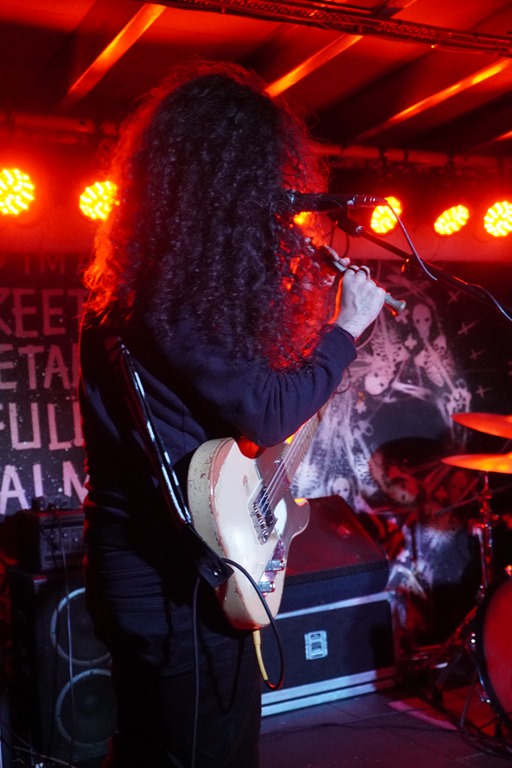
My first encounter with The Sunken Land was at the York EMOM (that’s Electronic Music Open Mic) at the start of the month. There were looks and mumblings of surprise, confusion, and even consternation within my vicinity. These events attract makers of a broad spectrum of music, from those who dabble to the obsessives, from laptops to modular setups to self-made kit, and from pop to ambience to far more experimental stuff. Often, there’s much interest and conversation in the gear being used, particularly as a fair bit of the kit is rather novel. ‘What is that?’ began to be asked around as The Sunken Land’s set started. There was incredulity, amazement at the instrument being wielded on stage, something alien to these night. It was a guitar.

The man playing, it, one David Martin, was conjuring layered soundscapes, pleasant to the ear, but underpinned with a physical density. It was well executed, and powerful, and distinct.

worm moon sessions, released the following day, captures the sound of that live performance well.

While there’s apparently no scientific evidence, there is plenty of anecdotal indication that people feel different on and around full moon. Werewolf mythology is but one example of the way the power of the moon seems to affect us, and since this satellite planet drives the Earth’s tides, it’s hardly surprising we also feel that we sense its force. There’s also something compelling, mesmerising, hypnotic, about a large, bright moon, or a moon with an aura, or displaying an unusual hue. This year’s worm moon, on 3rd March, was particularly unusual, emerging a fiery red from a total lunar eclipse, and perhaps some of this rare power filtered into The Sunken Land’s recordings here. While worm moon sessions may not represent an immense leap from demos 2026, released in February, there’s most definitely evidence of a gradual honing of the ‘bedsit doomgaze’ form here.

AA

AA

‘worm moon’ brings the heavy drone of Sunn O))) but with elements of melody rising out of the dense sonic swamp. These melodic details, in context, evoke the form of later Earth. It’s the kind of slow, deliberate guitar work that compels the listener to really hone in on the textures and tonality, the way the notes of a struck chord – thick with distortion and expanded with reverb – interact with one another.

The shorter ‘almost true’ is altogether lighter, more graceful, emphasising the ‘gaze’ aspect of the self-made genre tag. It’s still dense and underpinned with slow, droning distortion, but there’s a soft, almost ethereal hue around it, and the experience is ultimately uplifting, like the first signs of spring.

AA

AA

a3144201409_10