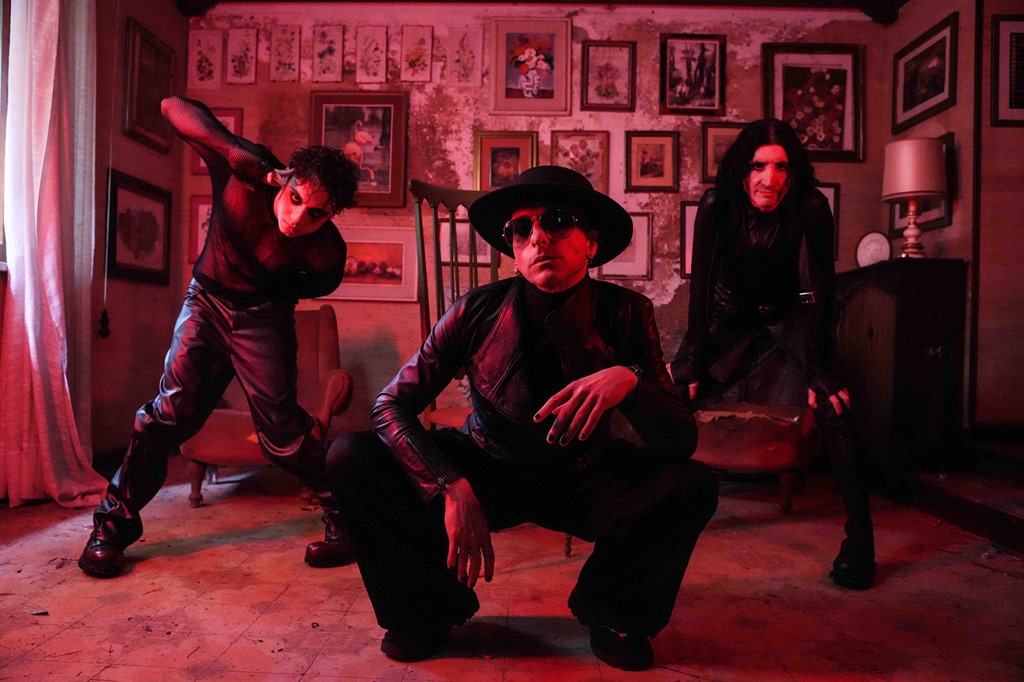
Louisville, Kentucky – based industrial punk band, VIRGIN BIRTH has just returned with a new six-song EP, The Dead End.
The Dead End continues VIRGIN BIRTH’s fascination with the darker corners of electronic music, punk, and the increasingly strange world we all find ourselves living in. Where previous releases looked outward at collapse on a larger scale, these songs feel closer to the ground… more immediate, claustrophobic, and personal.
The Dead End is a collection of songs about exhaustion, isolation, dread, and the feeling that the path forward has narrowed considerably. It’s industrial punk for a world that seems to be running on fumes. There’s no solution waiting for you at the end of these songs… only a dead end.
Watch the video for the title track here:
AA
VIRGIN BIRTH is an industrial punk trio consisting of Phillip Olympia (vocals, synth, drum machines), Jake Miller (guitars, synth) and Matt Haas (bass) based in Louisville, Kentucky. All three bring deep roots in punk and indie rock, having played in various bands over the years. Their shared appreciations for the industrial scene of the ’80s and ’90s sparked numerous conversations, which eventually led them to aggressively experiment with drum machines, synthesizers and sampling.
Industrial rock/metal band, OUR FRANKENSTEIN has just unveiled their new single and video for ‘Jealous God’ in anticipation of their forthcoming EP, Comedy.
Addressing envy and devotion: OUR FRANKENSTEINn tackle spiritual imprisonment. ‘Jealous God’ harkens back to the old gnostic belief that our reality is secretly under the control of a malevolent demiurge named, Yaldaboath. The song and music video contrast the false god’s wrath with real world catastrophe in a style that could only be viewed as satire.
The ‘Jealous God’ video invites the question that if our fate is in the hands of the powers that be…what happens if we (the people) obtain the crown? The video was shot by Pablo Salamone and directed / edited by Ryan Laney.
AA
OUR FRANKENSTEIN is a Gothic Metal band that was formed in Orange County, CA in 2013. Drawing influences from both cinema and the gothic music scene, the band has quickly evolved to what it is today. With one foot rooted in myth and the other in reality, OUR FRANKENSTEIN creates music that tells a story.
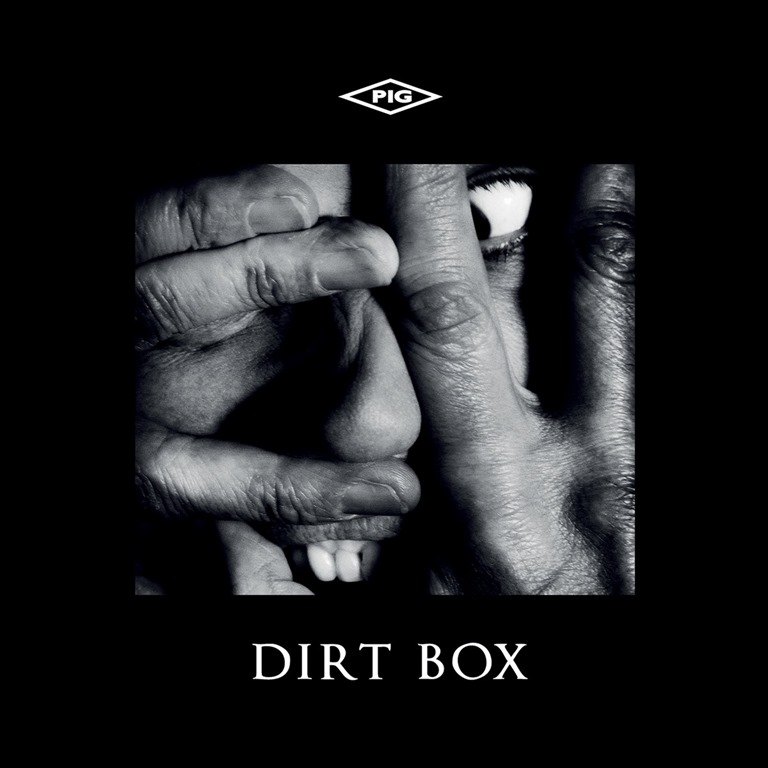
Lately, PIG’s rate of output has been nothing short of phenomenal. Having released the album Hurt People Hurt in May, they’ve just embarked on a substantial, two-month long tour of North America and Canada, and to coincide with that, they’ve not only got a remix EP, but also Dirt Box, which features four new songs paired with a remix of each, making for another album-length release.
There is, to an extent, a sense that if you’ve been following recent PIG releases, you’ll have a reasonable idea of what to expect. Since resurrecting his porcine project in 2016, Raymond Watts has discovered that the swine yields pearls when plundering a seam which places a uniquely gritty spin on glam ground up with industrial and greased with S&M sleaze and a dash of religion for that extra spice. This isn’t to say that PIG albums have fallen to the formulaic, so much as the fact that they’ve found their groove, and the new material over the last ten years hasn’t so much flowed, as been in full spate. It’s working out petty nicely, too. Despite touring as the support for Nine Inch Nails on the seminal Downward Spiral tour and having albums released on Reznor’s label in the mid-90s, PIG remained eternal outsiders, perhaps being just that bit too weird and eclectic for the prevailing tastes at the time. So while NIN were hailed by the press as being groundbreaking, Watts’ work, which tossed in classical samples, strings and all sorts into the grinding industrial mix, taking cues from mentor and collaborator JG Thirlwell, AKA Foetus, the outsider’s outsider – was simply three steps too far. But now… it seems that having tempered the hybridity and experimentalism a shade, the world has finally come around to PIG, with the likes of Classic Rock and Vive Le Rock raving about Hurt People Hurt. I think it was Genesis P-Orridge who made a comment along the lines that if you stick around long enough, you’ll come to be accepted, and whoever it was, this certainly seems true of PIG, who’ve been going nearly forty years now, with the release of debut single ‘Never for Fun’ and album A Poke in the Eye… With a Sharp Stick being released in 1988.
Lead single and EP opener, ‘An American Ideal of Beauty’ starts out sounding like Watts may have jumped the shark – or the wall of Marshall stacks – and gone straight-up spandex hair metal on us, or perhaps even all-out Kiss, but then the quintessential guitar chug of Jim Davies cuts in and grinds hard and we get to breathe a sigh of relief. And here we go: religious-sounding ululations ring out against a bubbling synth bass. ‘Put up, shut up! Do your duty!’ Watts snarls against a backdrop of chugging rhythm guitars and layer upon layer of detail – and the truth is, this is as boldly extravagant in its sonic span as the most revered work among fans, namely the material which featured on Red, Raw and Sore, Sinsation, and Wrecked, which saw Watts colliding insane ambition with some inspired songwriting. Yep, he’s still got it, and any recognition, however belated, is well-deserved. But does this mean that PIG are mainstream now, and beyond the remit of Aural Aggravation? I don’t think so. They’re not about to be played on the Radio 1 breakfast show, I’ve been a fan since the early 90s, and Raymond Watts will forever be one of my favourite interview subjects when we met in York a few years ago.
AA
After the rabid industrial glam grind of ‘Your Reptilian Overlord Presents’, ‘Infidel’ slows the pace and finds Watts go Bowie circa Outside with a heavy dose of darkwave in the mix. With a strong hook and a poppy undercurrent, it showcases the range and quality of the songwriting that sets PIG apart from many of their peers – not that they really have any at this point. They’ve diverged a long way from the acts that emerged around the same time on Wax Trax! evolving along a very different trajectory from, say, KMFDM (of whom Watts was a member) or Ministry. ‘Butterfly’ is a churning, mutant beast of a tune, and has the makings of a future classic given time to embed.
The remixes… well, they’re remixes. In their favour, they’re very different from the original versions. The Cyanotic remix of ‘Your Reptilian Overlord Presents’ is up first, and it’s a noisy, fucked-up industrial blast reminiscent of JG Thirlwell’s remixes of NIN. Admittedly, it’s nowhere near a extreme as his contributions on Fixed, but they set new precedents when it came to remixes, and the world has never been the same since. The beat calls to mind early 00s Pitch Shifter, and it makes for an intense four and a half minutes. The surprisingly mellow Combichrist remix of ‘Butterfly’ is the other standout: in stripping the song back and going for a more darkwave backing to Watt’s gnarly vocal, it makes for a radical transformation.
What’s remarkable is that in producing an album a year – give or take – plus EPs of offcuts and remixes in between – the standard of PIG releases hasn’t only been consistent, but continues to reach new heights. Instead of running out of ideas, PIG are surging with creativity and riding the crest of a wave.
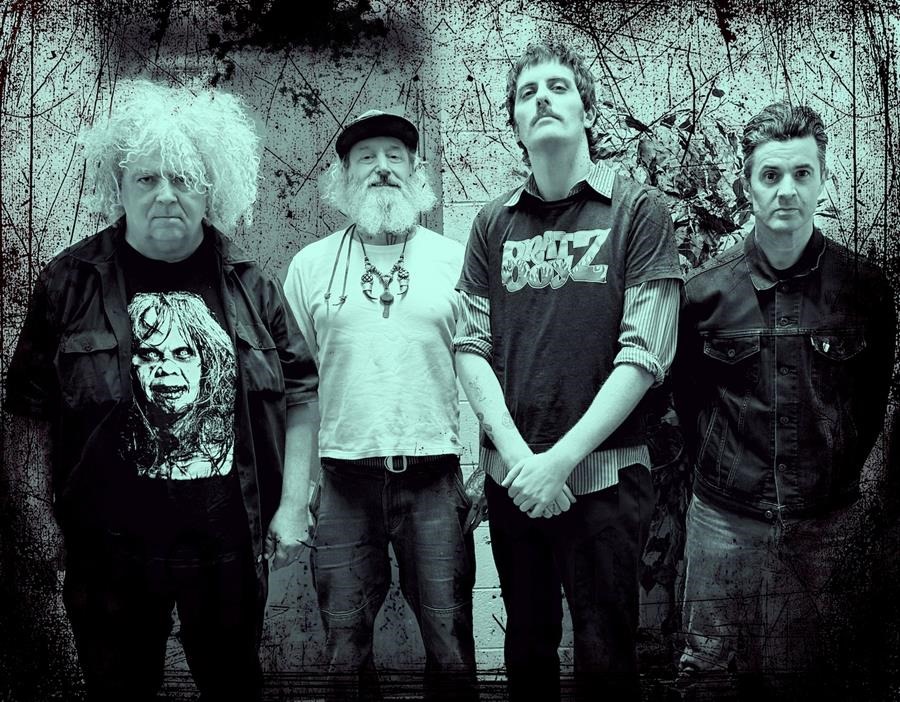
Buzz Osborne didn’t need another band. JD Pinkus didn’t need another band. Coady Willis didn’t need another band. Together with Clinton Jacob, they started one anyway. Meet Gatta Morta.
The quartet makes its debut today with Burn Witch Burn, a 4-song EP, available now via Amphetamine Reptile Records. Listen to the single ‘Black Hall’, which accompanies the release, here:
AA
“It’s always a good time for the world to embrace a new heavy/weird band,” Osborne says. “I had the idea for Gatta Morta while touring last fall. I realized I needed to start a band with these three. Seemed like a no brainer. Solidly weird rock music that needs to happen.”
Butthole Surfers bassist Pinkus agrees: “It’s been way too long since I got to write a heavy album from scratch with such high caliber players with such complimentary styles… and we’re just cat scratching the surface of what we got goin’ on!”
Rounding out Gatta Morta is Clinton Jacob, the creative force behind Chicago’s weirdo, pop-noise rock duo Mr. Phylzzz. “I just had this feeling that one day we would work together. I became friends with Buzz over the past few years doing shows together and having him play guitar on a Mr. Phylzzz song. When I was asked to be a part of Gatta Morta, I was speechless, but I was 100% ready for it.”
Burn Witch Burn lurches between thick, riff-driven heaviness and warped, psychedelic passages, with Osborne, Pinkus, Willis, and Jacob creating music that’s simultaneously reminiscent of their previous work and entirely new.
Having thoroughly enjoyed the churning racket of Leeds grindcore / sludge / infernal racket duo Pleb when they opened for Unsane at The Brudenell in April, the announcement of their debut EP being released on the esteemed Human Worth label came as excellent news. And even better news is that they absolutely deliver on the promise of the live show here.
The credits very much summarise the two players’ contributions, with D. Fraser providing ‘Guitar / Feedback Hell’, and S. Myles doing ‘Drums / Squawks / Grunts’.
This is one serious fucking racket, and it would be a massive letdown if it was anything else, with eight songs and a total run time of just over ten minutes. There’s no pissing about here, just squalls of feedback and rasping, rabid vocals barking away low in the mix amidst the churning dingy noise. But then, this was always going to be the case. Check their pedigree: between them, their CVs list Cattle, Grub Nap, Groak – luminaries of the Leeds DIY noise scene that’s been thriving in tiny pub venues and basements and rehearsal rooms and the like for an age. It’s a tight-knit, but incredibly welcoming scene that’s spawned countless bands all committed to making the most ferocious, ugly noise imaginable. And with Grease Trap, you don’t have to imagine it.
And despite being just the two of them, it sounds like a full band, the guitar signal split to provide grinding low end and raging feedback at the top simultaneously. The result is a devastating sonic blast that assaults the senses with all frequencies. But why Grease Trap? The band explain:
“A grease trap is a tank that folks stick under the sink in a place that deals with food, it’s supposed to stop clumps of food and fat from going down the drain. There was one down our gaff and we had to empty it when we first moved in and I’ve never smelt owt like it. Me and our lasses dad were boaking the whole time while carrying buckets of foul stinking water up and down the corridor to try and wash the bloody thing out. Feels like that’s where we’re at as a society at the moment, we had all this stuff in place to try and stop things from going wrong but everything is rotting from the inside out and it’s poisoning the water supply. Greed is absolute, hatred is being weaponised and apathy is apparently cool again somehow. These songs are about the world wide descent into Fascism, the dutty roz, that orange bastard, our entire generation not breeding cos we’re in a hostile environment, technology turning us inside out, our inability to face our own problems without decking it and a bunch of other fun stuff. It doesn’t offer any solutions but sometimes you need to scream into the abyss eh?”
Lacking a grease trap myself, and my house having been built circa 1890 and still connected to the original ceramic Victorian plumbing which connects to the (also Victorian) drain system, I’ve had to invest in a set of drain rods, which are subject to regular usage to unclog backups that threaten to plug my back yard. they seem to be caused predominantly by mini fatbergs congealed around masses of hair (which evidently aren’t mine). And I can confirm that the job is nothing short of rank, dragging out clods of stinking clumps of sludge. it still doesn’t stink as badly as Reform, though, or, judging by footage online, as much as Trump when he nods off and soils himself. Rotten politics, rotten behaviour, rotten intestines, it would seem.
This is all of the above compacted into the most intense sonic explosion. It distils the rage at the fetid state of Western culture and the sewer state of our politics, our media, social media and blasts with complete abandon, and titles like ‘CLODS OF SHIT AND BONE’, ‘THE BRUISES MEAN IT’S ON THE WAY OUT’ and ‘THE EYES MELT FIRST’ sound exactly as you’d expect. With Grease Trap, Pleb vent the rage in the rawest, most direct fashion. And it absolutely hits the spot.
Italian industrial rock / alternative act Noir Addiction have wasted no time since the release of their debut album in September, swiftly knocking out three singles in quick succession. Now, they’re gathering these singles together, along with a further three unreleased songs to bring us Pretty Things Don’t Last, which they say is ‘an EP about impermanence, distortion, and the beauty found in what’s unstable, broken, and intense. It moves through chaos, desire, power, disillusionment, and rebellion, tracing a journey where control is questioned and identity is constantly reshaped’.
Opening with ‘Serve Me Some Crime’, the first of the singles, which was released back in March, we arrive in familiar territory (if we’ve been keeping up, that is), and it makes for an instant grab, with its uptempo beat, melded with an insistent bass throb and dirty, driving guitar sound, that crunches away, hard, and the whole thing has got ‘anthem’ and ‘high impact’ stamped all over it.
Starting this strong means they’ve set themselves a real challenge to maintain the standard and the solidity over the course of the remaining five songs. It’s like when you see an amazing band at the start of the evening: the first thought, after ‘woah’, ventures towards ‘I wouldn’t want to follow them’, to the acceptance that the night has likely peaked early.
Not so Noir Addiction. They bring the fire for the EP’s entire duration. The sound and formula is fundamentally set, but how they work within the template is with confidence and consistency, keeping on with back-to-back hard grooves.
Of the previously unreleased songs, ‘Toxic Twins’ is something of a standout, quite boldly leaning into a more overtly hard rock sound, complete with muscular lead guitar work which thrusts its way to the fore over a grinding bass before they go all out on the kind of chorus that would be at home in an arena setting, and has the big-balls swagger of a band like Shotgun Messiah or Zodiac Mindwarp – absorbing all the cliché and throwing it back with a knowingness but also a straight face.
Similarly, ‘Cold Habit’ stomps hard and brings the almost inevitable nods to Depeche Mode and Nine Inch Nails, while being more ‘rock’ in its delivery, and a chorus that’s brimming with hooks and accessibility. Recent single ‘Money for the Honey’ packs the sleaze in tight and hard, and while there are hints of spandex in the execution, there’s no debate to be had here: this is a solid rock banger.
‘Radio Funeral’ brings a dash of country and grunge to a mid-pace closer to an EP that’s bursting with confidence – and tunes.
Chicago-based dark synth / industrial artist Tatv Gral (ˈtätü ˈgräl) announces the release of the Treachery EP, a new remix EP featuring the original version of the ‘Treachery’ single, produced by William Faith at 13 Studio, alongside exclusive remixes by DSTR (Daniel Myer of Haujobb), Tweaker (Chris Vrenna of NIN), and fellow Chicago underground denizens, [melter]. The EP is released on 6 July 2026, with presales available on Bandcamp now. The EP release is also flanked by the new video for the DSTR remix of the track, following on the heels of the video for the original single version in June.
Thematically, ‘Treachery’ emerged from a chance encounter that led Tatv Gral’s Allen Addington deeper into the symbolic world of Hellenistic astrology, as Addington explains: “It was a discovery in the ancient texts that unlocked the whole song – both Saturn and Mars independently carry the signification of ‘Treachery’, translated directly from the Ancient Greek. Two malefic forces, each already marked by betrayal, meeting in the same charged space. Following Richard Tarnas and James Hillman, I wanted to explore that archetypal collision phenomenologically – the Old Man and the Young Man, bondage and erotic force – seen through a gay male gaze and the cinematic shadow world of William Friedkin’s Cruising.”
Drawing on the archetypal psychology of James Hillman, who argued that images arising from the psyche carry their own intelligence and must not be immediately moralized, Tatv Gral uses music as a container for difficult energies rather than a platform to promote them. This approach places ‘Treachery’ in a lineage that runs through Coil’s ritual electronics, Kenneth Anger’s astrologically-timed film workings, and the Jungian shadow work that informs all of them. The queer lens is not incidental: it is the specific viewpoint through which these archetypal forces become visible.
Musically, Tatv Gral draws on the colder edges of industrial, EBM and dark electronic music, combining mechanical rhythms, claustrophobic textures and cinematic tension with an emotionally exposed vocal approach. Coil’s occult philosophy as genuine practice is at the centre of Tatv Gral’s frame of reference, while other influences range from Chicago’s industrial lineage via WAX TRAX! Records, through to the brutalist intersection of early British and German electronic music, shaped by the severity of Kraftwerk and DAF, while also maintaining a distinctly personal and contemporary perspective.
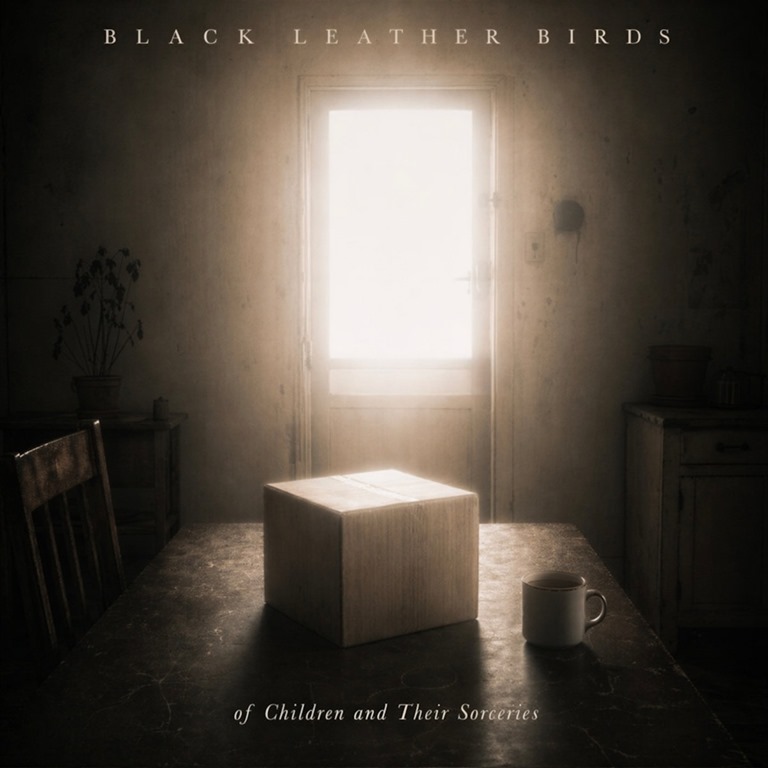
Black Leather Birds – the musical vehicle of A.G. Syjuco, based in Chicago, IL., like so many projects, began during the pandemic. Unlike so many projects, Syjuco has not only kept things going, but remained incredibly prolific.
He describes this new five-tracker, of Children and Their Sorceries, as ‘a deliberate piece of work — heavy on atmosphere and slow-building tension. Themes of anxiety and existential dread run throughout, handled with a literary sensibility that places spoken word, prose poetry, and ritual chant alongside more conventional song structures’.
Straight from the off, it’s heavy and intense. A thick, grinding bass greets us – that is to say, it churns our guts out – and a back-and-forth spoken word dialogue paints a bleak scene. The mellow breakdowns between verses include vinyl crackles and a low ache of nostalgia, before that heavy grind returns twice as heavy, twice as dense, and twice as ugly. In combining elements of Beat-influenced spoken word, trip-hop, and industrial, ‘Nothing Ever Grows Here’ makes for a dizzying and hard-hitting first four minutes.
At just over a minute, ‘Monster’ is but an interlude, but it’s a dark one, which culminates with crashing, crushing beats reminiscent of Dälek, and it segues into the narrative-centred ‘The Box’, a piece where noise rock meets spoken word. It’s actually been a while since I heard anything so narrative-orientated. More than anything, I’m reminded of Enablers – the words are first and foremost, and the atmosphere is tense, and there is noise, and there’s a certain sense of a duel for dominance between the words and the accompaniment. There are elements of jazz and noise rock and post-punk bubbling and jostling away behind Syjuco’s nonchalant narrative, which at times spins some pretty grim imagery – grimagery, even, if you’re so inclined (and I am). I’m also reminded of the smart-witted spoken word of King Missile, only with less of the sassy wordplay.
This is some pretty dark, bleak shit. ‘Almost’ is the most conventionally song-structured piece of the set, and ventures into industrial territory, with mechanical whirrs and dark electronic sounds, not to mention thudding mechanised beats, before the slow, melancholic ‘Goodnight My Darling’ lowers the curtain on this visionary work with a sadness that’s difficult to define. But sad it is.
of Children and Their Sorceries is inspired and inspiring: it’s wide-ranging, and straddles numerous genres. I have no idea where to locate it – but it’s good. And that’s what you need to know.
The Los Angeles-based riot grrrl/punk band Sour Tongue fuse hardcore punk, country, grunge and disco, utilising humour and a degree of sonic absurdity to convey a deeper message of angst and desperation.
Formed in 2020 by Satori Marill and John Murphy, they have issued several singles collected together on two EPs, the most recent being Final Girl (July 2025). A story in four songs/parts, it is about the intersection of grief, betrayal and heartbreak, but loving throughout. It’s dark, angry, funny and heartbreaking, like a horror comedy.
A video for song/part 3, ‘Me-Mania’, has been issued to coincide with the announcement of a Sour Tongue live date at the Belasco Theater in Los Angeles on 20th June. It sees them open a Summer School show that also features Honey Revenge, South Arcade, Winona Fighter and more.
AA
Final Girl also includes the bright and breezy single‘I Thought You Liked Me!’, which was written about an experience felt by most girls. “It’s about being manipulated and lied to, getting fed up and reversing the roles,” states vocalist Marill. “I think anyone who has ever had their heart broken and done something stupid in return can relate to it.”
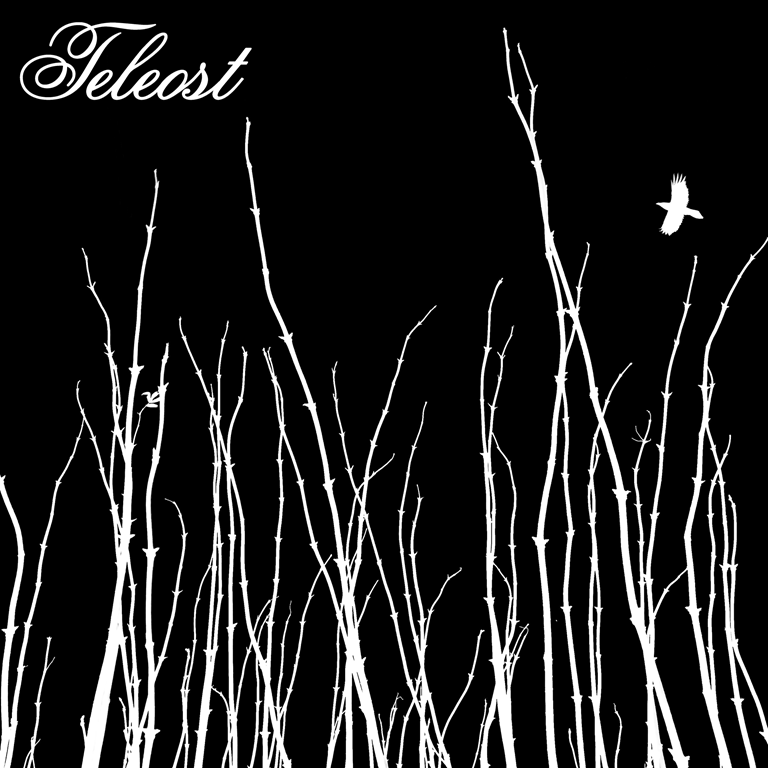
After an eon evolving their sound with comparatively little to show in terms of releases, Teleost have really picked up the pace of late: Three Originals was released in January 2025, followed by ATAVISM in December of last year, and here we are barely three months on faced with a new eponymous EP. Clearly, they concentrate their mental energy into the music rather than the naming of their EPs – and rightly so. The title is inconsequential: the music is what this is all about. moreover, what this, and what Teleost are all about, is exploring those dark tones and the ways in which frequencies resonate against one another, particularly at volume.
Live shows – particularly of late – have more than attested to the necessity for volume for Teleost, in the same was as is true for Earth, and Sunn O))). The simple fact is that some sounds, some frequencies, some resonant interplays, simply cannot occur at low volumes. Anyone who suggests that these bands – and Swans and A Place to Bury Strangers, among others – exploit volume gratuitously simply doesn’t understand the way in which vibrations change things. Teleost, however, very much do. And with their ultra-slow doom-drone, this is a band who really go into microcosmic detail when it comes to tonal shifts and reverberations within their great wall of sound.
This – their second EP, and sixth release in all – features three tracks. And once again, epic is the word. The four-and-three-quarter-minute sludgefest that is ‘Palanquin’ feels like a brief bridging piece between the megalithic ten-minute ‘Navigator’ and the eight-minute ‘Standing Stone’. And holy shit, is this heavy.
With Telost, the guitar has always been heavy, thick, grinding, the sound more akin to two guitars – or more – grinding out a speaker-shredding tsunami. But this… this takes it up several notches. It’s not just the guitar sound itself, of course: the production achieves the rare feat of capturing not just the rib-rattling, lung-shredding sound of a duo that take Melvins’ reattenuation of Black Sabbath to a skull-crushing level of pain.
With Teleost, there’s a clear sense of structure, of linear progression, too. ‘Navigator’ starts out gently, a textured hum, a buzzing drone, clean strings strummed but resonating. Low tom beats enter the mix and the build is slow, deliberate. Leo Hancil’s vocals reverberate – detached, a pagan-like incantation low in the mix. The suspense builds. Dissonance chimes, but still we traverse through deep fog and mud-thick tracks. And then at five minutes, it hits. And it hits so hard but so sweetly. The impact is immense. THAT is a riff, and how to land it. It completely knocks the air from your lungs, then proceeds to tear your limbs off, one by one, while shredding your skin with blunt but brutal claws.
How two people can create this organ-bustingly megalithic noise is unfathomable. But they do, time and again, growing ever more immense with each show, and with each recording. Yes, I say it every time, but every time, it’s true: Teleost have transcended to another echelon with this release: denser, heavier, louder, more punishing – and at the same time more immersive and transportative.