Posts Tagged ‘static’

28th August 2026

Christopher Nosnibor

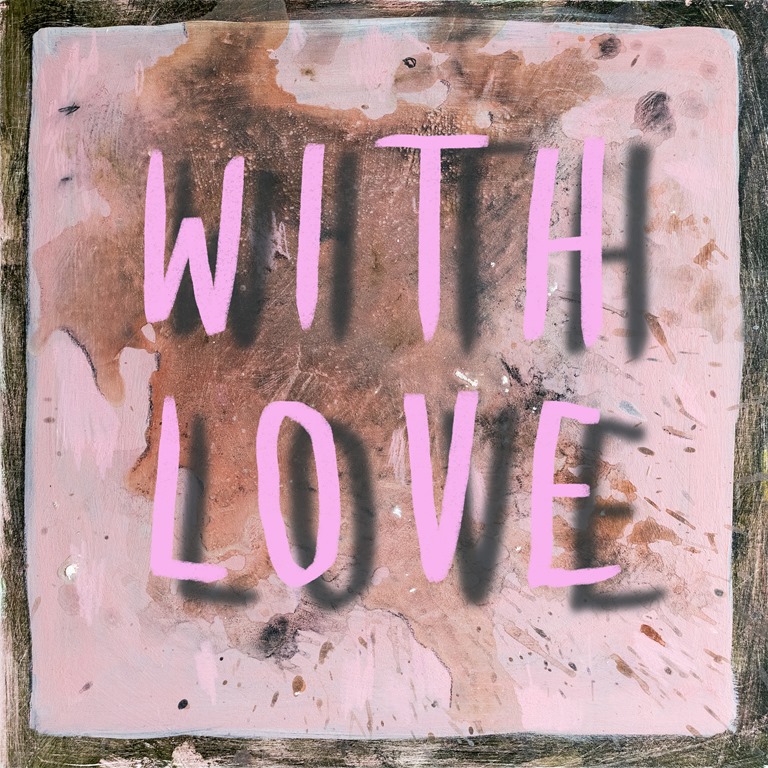
Time has a habit of evaporating, and life has a tendency to obstruct plans, and so it is that the latest offering from twisted jazz weirdos, with the slightly slushy, smushy loved-up Clintons Cards connotations of its title was intended to land on Valentine’s Day. Oh well, it’s perhaps for the best. I’m picturing a scene where a couple are enjoying a romantic evening in, a candlelit dinner with some nice food, a glass of wine, and after maybe a Rom-Com they’re getting in the mood, but instead of Barry White or something smooth and sultry, one of them says “I know just the thing. There’s this new album by Sly and the Family Drone…” Fuck knows how the scene ends, but it’s certainly not with the blissful soft-focus union of an 80s romance – more likely indescribably carnage, likely unspeakable gore, probably even at least one death.

As ever, most of the titles are random or otherwise inexplicable, although I’m sure they have their reasons, but unusually, the crazy puns and wordplay are largely absent, suggesting perhaps a newfound seriousness – although that seems unlikely. And what of ‘Cloth Control’, the album’s final piece? There’s probably something wrong with me that I’d leap to ‘touching cloth’, but from a band with songs with titles like ‘Handed Cack’ and ‘Sunken Disorderly’

‘Psychic Surgery’ begins innocuously enough, although, being Sly and the Family Drone, it’s more dark atmospheric sax and swampy drone with a reverb-soaked abb and flow, than it is smooth, seductive sax: there’s a noirish hint to the opening minutes, before supernatural skitters begin to creep in at a low level, and the percussion begins to clatter with unsettling irregularity – but increasing urgency – a couple of minutes in. It conveys the sense of a gathering storm, and noise begins to swell… but it passes without breaking. However, any sense of relief is but brief, as things get weirder and more tense with the more electronic ‘The Guts of Albion’. It starts with a murky, muffled-sounding pulsation, and a metallic clatter that calls to mind Neubauten or Test Dept. It’s against this tense backdrop, with heavy hints of another growing tempest, that the sax arrives – and this time, it is actually pretty smooth. I mean, it’s hardly 80s Tina Turner, or Dave Brubeck for that matter, but it’s by no means disagreeable. But as the beats build, and the sonorous drone sustains, so sax becomes more fragmented and the tension grows, and around halfway through the track’s seven and a half minutes, a plateau is attained, and you feel a shift as static and distortion creep in… and finally, it hits like a tidal wave. It’s the perfect release.

As a title, ‘Over the Rainbow’ instantly calls to mind the song from The Wizard of Oz. A ballad, but one flavoured with hope and optimism for another place, a brighter future. But while that motif is actually present, it’s distorted and stretched and played against a backdrop of three and a half minutes of crackling distortion: it’s more like hearing a lullaby or the tinkling of a child’s music box when it appears on the soundtrack to a horror movie. The context shifts, and something light and innocent becomes something dark and ominous. And here, we feel that disconnect, that discomforting disjointedness. Here, it’s quite subtle, but in some respects, that renders it all the more unsettling.

‘In The Oils’ goes for the low, heavy drone – and you feel it in our gut, a slow churn. There are some vocals swimming low in the mix, and there are moments where if feels like listening to Throbbing Gristle where the speaker’s submerged in a domestic aquarium. Plus, the final three minutes bring more drumwork than anyone would ever need in a lifetime. It’s not beats, it’s an explosion. But it feels good, because yes, finally, we get it: a climactic, pummelling blast of tribal drums and a rising drone that feels more like a jet engine warming up for take-off. It’s a climax which is a mind-bending crescendo that feels like the end of days.

The last track, ‘Cloth Control’ is built on a slow, rolling drone and reverberating, echo-swamped sax hum and grinding electronics which lead the listener into an otherworldly space of abstraction and strangeness. And what’s strangest of all is that feels like a different album with every play, and different layers, different aspects, reveal themselves.

Overall, the percussion is much less prominent on With Love than on many previous releases, but the abstract jazz meanderings and overall sense of musical exploration is significantly greater than ever. The only thing that’s really predictable about Sly and the Family Drone is their unpredictability, and With Love ventures into new realms of weirdness.

AA
WithLoveDigiArtwork

r-ecords – 19th December 2025

Christopher Nosnibor

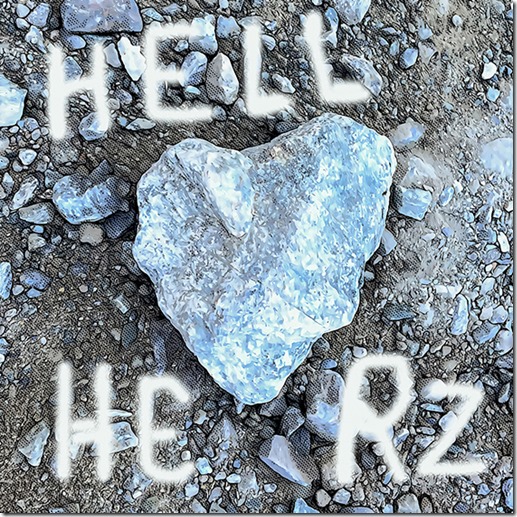
A crackle of static washes in and obfuscates the murky bass and beats which begin to emerge. It’s a strange experience, like listening to a tune while under water. Over time, this shifts: hypnotic beats with clicking, cracking snares and low, thwocking bass drum sounds cut through the curtain of hiss which hangs like heavy rain. And so it is that ‘Waiting for nothing’, the first of the three compositions on R. Schappert’s Hellherz EP. It’s an intriguing piece, layered and unpredictable and multi-faceted.

In context of his bio, which informs us that ‘Roland Schappert pursues border crossings in the form of an “organic digitality” oscillating between melos, sound and rhythm’.

The EP’s accompanying notes are somewhat winding, kind of cryptic: ‘Where do we put all the words that held us captive? We put them in a bottle post and send them out into the open sea. Back on land, there is fluttering in the space of spaces. Corners and edges crumble away in tumultuous layers. Let us take the time that the melos urges us to take, let us entrust him with our voice.

Sensually coded sequences of notes disrupt the free flow of our thoughts. Cranes hop and counter common notions of progress. Hopping instead of marching. Jumping instead of stomping. Up into the sky. From 3/4 to 4/4 time and back again. With hissing and quiet humming. Do we like it better up here? Where do we come from, where are we flying to for the winter? No more getting lost: Wrap your words. Our hearts are light.’

It appears that much of this is cultivated around the EP’s centrepiece, ‘Wrap your words’, the credits for which draw my attention in a way which imbues me with a certain unease:

Lyrics by R. Schappert

Vocals: revised AI voice

AI’s ubiquity is cause for concern in itself, and the reasons for this are a thesis in themselves. But specifically, given the way AI trains itself, voluntarily feeding it words to recycle and regurgitate feels like an abandonment of artistic ownership. When William Burrroughs cut up existing texts in order to form new ones, he questioned the notion that anyone ‘owned’ words, contending that the act of writing was simply the selection and manipulation of words in differing sequences. But this is not the same challenge of ownership and methods of creativity, because the application of AI serves to remove the artist from the process, partially or even wholly. Moreover, while AI is being used for military and medical purposes (and fears over where that may lead again are another thesis worth of debate at least), in the day-to-day, AI for the everyman seems to be about creative applications. Personally, I would rather AI did my admin and cleaned the oven in order to give me more time for creative pursuits. The idea that an artist would delegate any part of their creative work to AI is something which I find truly bewildering. Yes, there are skills we may lack, but the joy of art, in any medium – is learning those skills, or collaborating with other creatives to fill those skills gaps. There are real people with real skills, and working with them and learning from them is how we grow as artists.

So, AI voice? Why? Why not find a vocalist? Why not even apply autotune to a real vocal if that’s the desired effect? The warbling, autotuned-sounding digital vocalisations sound pretty naff, if truth be told, and add little to a tune which clops and thuds along with some retro synth sounds hovering vaguely around a beat which stutters along in soft focus. But as I listen, the whole AI vocal thing gnaws at me: has AI been utilised, uncredited, to the instrumentation too? What can we trust, what can we believe now?

The title track draws the EP to a close, with some brooding, quavering organ sounds and glitchy beats and more static, returning things full-circle before an abrupt end. It’s atmospheric, and a shade unsettling, too.

It may be brief, but there are many layers to this. As a whole, Hellherz provides much to ponder.

AA

(Click image to link to audio)

r-ecords 06 art

28th July 2025

Christopher Nosnibor

Beauty, as they say, is in the eye of the beholder. Certainly, it requires a fairly specific subjective standpoint to hear the beauty in a bleeping rush of effervescent electronic froth, but there is something in it – and yes, it is intense – to the extend that it’s like a fizzing chemical reaction, like vinegar and bicarbonate of soda, exploding in your brain. And it’s quite a high.

Intense Beauty finds Gintas Kraptavičius (Gintas K) in his most common setting, with the album being fully improvised, ‘recorded live, using computer, midi keyboard & controller’. Recorded in June 2025 of this year, by the power of the Internet and micro-labels, it was released as a limited cassette on Tokyo-based label Static Disc just weeks later on 10th July, before also becoming available on Gintas’ own Bandcamp page.

As is common to many of Gintas K’s works recorded in this manner and with this – seemingly unique setup, there’s something playful, even joyful and uplifting about the sound. It is chaotic, but it’s also carefree, and it’s not remotely dark or heavy: there’s nothing harsh or abrasive to be heard here. ‘intense’ is skittery and skittish, off-key electric piano thumps and stomps erratically, glitching in and out throughout, while cellular sounds fly around all over like plankton in a storm before gradually slowing, tinkling and flitting at a more sedate pace until grinding to a halt.

‘harmony’ isn’t particularly harmonious, instead merging static and drone with groaning whirrs before yielding to discordant bent notes playing across one another. One thing that is a constant throughout Intense Beauty is a sense of movement. There isn’t a moment is stillness, as sounds and ideas flit from one place to another with no discernible flow, and th9is is nowhere more apparent than on the shifting sonic collage of ‘gal bet’. It’s hyperactive, and should be exhausting, but the sheer energy is contagious and uplifting.

Watching the accompanying video of Gintas recording for the album is illuminating, particularly the vigour with which he plays, simultaneously striking keys on the keyboard with hands, wrists, forearm, seemingly at random, but with remarkable speed and dexterity, while cranking knobs hard and fast: the camera and table shake under his frenetic kinetic activity. K isn’t one of those who creates sound simply by pushing buttons here and there: this is a full-body physical performance. This, too, is an example of intensity, and the artist pours it into the act of artistic creation.

There are a lot of experimental electronic artists around, but no-one else sounds quite like Gintas K.

AA

AA

a3925363230_10