Archive for August, 2026

The Flenser – 4th September 2025

Christopher Nosnibor

Chat Pile have only been around for seven years, but in that time they’ve cemented themselves as among the leading exponents of contemporary noise rock. Timing, when even accidental, counts for so much, though. Their debut EP landed in the spring of 2019, with the follow-up coming towards the end of the year. They were hardly a hit on their local scene, and then there was the pandemic, which did nothing for any band looking to build a fanbase through live shows. They managed to get signed, but it seems that the key element in their favour was the fact that since the pandemic, everything has been utterly fucked. Fucked beyond words, fucked beyond comprehension. And this is why the world has been crying out for horrible, sludgy noise to give a voice or a home to those myriad confused emotions, for a band that speaks both to and for them.

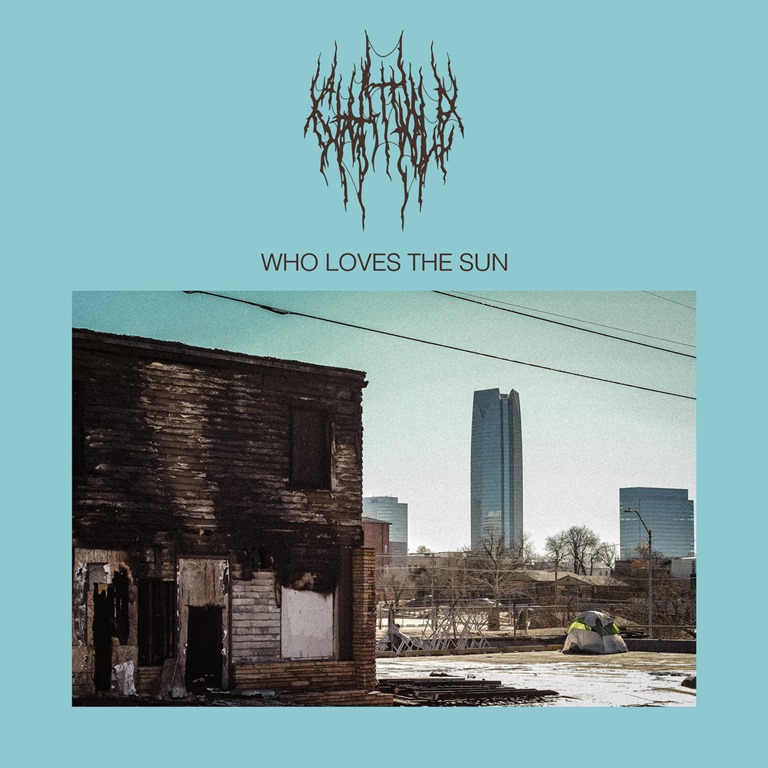
Who Loves The Sun is their third album, and it’s worth stepping back from my review to quote from the bio which accompanies the album, since it provides valuable context and traces the band’s evolution: ‘Whereas their debut album God’s Country depicted a particularly American flavor of dread, and the follow up Cool World showed a cruel planet defined by global systemic violence, Who Loves The Sun now peels back the skin on how a collective indifference for a decaying world defines this new century. Touring off the back of their previous albums in part lent itself a confidence in the universality of their music. Stin comments, “I’ve always felt that Chat Pile is such an American concept thematically, but it seems like that’s not particularly true – people all over the world are resonating with what we have to say.” Spanning imagery of coastlines devouring cities as a result of inaction on climate change, the dread of working dead-end jobs, and the species’ collective submission to data-driven inauthenticity, Who Loves The Sun depicts the common experience of existing in a doom loop which feeds the malaise that permeates all aspects of our lives.’

And yes: these are global issues they tackle here. America might be a bit more fucked than some other places, but ultimately, we’re all fucked (in part because of America, although that’s no fault of these guys).

It’s a murky, rolling drum, bouncing around in a sea of reverb which launches the album, ‘Creature’ lurching in mid-pace with a filthy bass and some sinewy guitar. The atmosphere is tense, the vibe mid-90s gnarly. I’m straight back to Touch ‘n’ Go and underground scuzz, the grainy gritty heft of Tad, Oil Seed Rape, Zoopsia, It’s heavy, alright, but it’s more than that: it’s sweaty, greasy, and it’s intense. The walls move closer, the air becomes denser, and it’s harder to breathe.

Who Loves The Sun isn’t a hooks and choruses album. It’s a thick, treacle-like trudge through a succession of gut-churning riffs. As such, it’s very much the soundtrack to the trawling through doom loops. On the face of things, they don’t sound like a band with massive international appeal, but the same was true of Nirvana and Slipknot. It’s more Bleach than Nervermind, though. The world at large massively underestimates the need to vent complex emotions through difficult, heavy music, and if anything, the last few years have elicited the need for music that’s darker and heavier than ever. It feels like we’re living in the end of times, and we need music that reflects it.

‘Break my face and call me your friend,’ Raygun Busch sings in a cracked, tired voice during a quiet moment on ‘Deep Blue’. Most of the vocals are either screams or otherwise buried amidst the wall of jagged riffery. ‘Same Rules’ starts quiet and dungy, and explodes into a nihilistic roar. Neither are friendly, but both articulate the existence within dark spaces, both internal and external.

AA

Landing mid-album, ‘Shrine’ is a classic quiet / loud composition , and it captures the grunge feel but with additional metal fury, and a harsh hybridization that blends metal with grunge filth. The same could be said of most of Who Loves The Sun. It’s dark, it’s jarring, and is heavy. It’s bleak and does nothing to entice you out to a brighter space. ‘Influence’ simply becomes more claustrophobic over its four-and-a-half-minute duration as it stomps its concentric circles of anger and anguish. ‘Family Funeral’ strays towards Shellac territory as it builds a bludgeoning wall of noise ahead of closer ‘October all the Time’. This is not an accessible or easy album. But it’s the album we need to express all of the angst that’s pouring in all directions right now. It’s also the answer to how we will get through it all. More big riffs. And more again.

AA
a1878873385_10

Audiobulb – 22nd August 2026

Christopher Nosnibor

Every town, every city has its own unique vibe. Some we acclimatise to, others, we find uncomfortable. Others still, scary. Myself, I am not a fan of big cities, but have always felt comfortable in Leeds, but always feel on edge in Manchester. I can’t explain this. apart from the fact it’s rained almost every time I’ve been in Manchester, I’ve never had a bad experience there. In fact, I’ve had many positive experiences there, but still just feel something… it doesn’t sit with me, and I can’t settle. My experience of ‘international’ cities is limited: the only time I visited New York was when I was three, and beyond that, I’ve only been to London and Paris. I’m not sure Nicosia counts, being international in a different sense, and I expect that that’s perhaps another discussion altogether – although, for what it’s worth, while my fellow conference delegates proffered their passports to venture through the military checkpoints to cross the border into the Turkish territory to enjoy a meal, I remained in the pub in the Greek side of the Old Town with a book while I awaited their return. I have no regrets about this seven years on. But I digress. Every city has a feel, and not just a vibe, but a vibration. And big cities are in essence the same as smaller cities when you’re there, since they’re divided into various communities, segments, quarters, districts, whatever.

Nonturn’s Repeating Town is a work which is an assemblage of sound which captures, one way or another, the essence of Koenji, Tokyo. This is quite specific, and only highlights my observation that large cities are generally comprised of zones and areas within, and this is true of Koenji, which – and I make no apologies for turning to Wikipedia for into here –‘was largely unaffected by the 1980s building boom and therefore many of the houses and shops in the area are small and reflect the character of ‘pre-boom’ Japan. Due to its aging retail district and location on a major commuter route, the station area has become a center for small restaurants and ‘Live Houses’ which offer live music.’ It sounds pretty cool on paper.

Precisely how representative Nonturn’s Repeating Town is, I can’t really say. However, as Nozom Yoneda, aka Nonturn explains, ‘Every sound on the album was captured in and around Koenji, Tokyo: traffic signals, footsteps, air conditioners, construction, passing cars and fragments of conversation. These recordings are traces of real places, but they are not presented as documentary evidence or atmosphere. They are cut, repeated, layered and placed on a 96 BPM grid as sampling material.’

He goes on to add, ‘The title points to the method. The everyday city is already full of repetitions: signals return, footsteps pass, machines hum, routes repeat, voices appear and disappear. Nonturn listens to those repetitions not as background, but as a musical condition. Once removed from their original setting, the sounds stop describing where they came from and begin to act as rhythm, texture, accent, resonance and silence.’

Repeating Town contains seven pieces, each around five or six minutes long and each of which pulls together a host of drones and clanking percussion, interwoven with weird electronica. At times is ripples and weaves, at others, it jogs, picking up pace and evolving technoindustrial beats as it does so. Field recordings aren’t particularly apparent at in this hybrid of mixes, and as tone and texture from other sources build, there’s a creeping discomfort which builds. It’s an album which is built on glitches and trilling synth loops, whirring buzzes and the occasional explosive blast which disrupts an otherwise smooth surface. But there are whirring dentist drills and all sorts, all seemingly looped together and otherwise spun into a strange, soporific blend.

AA

a3487997111_10

17th August 2026

Christopher Nosnibor

We’ve spent the last few decades with the present time being described as ‘post-something. Postmodernism made sense in terms of the lineage of artistic phases, coming, as it did, after modernism. But things did get murky , in that postmodernism wasn’t only about art, but culture, society, and the way technology has infiltrated all aspects of these. The arrival of the post-truth age must surely mark one of the most unedifying and shameful in centuries. I qualify this with the observation that we have spent our entire evolution seeking knowledge, enlightenment, progress. And here we are, in the twentieth century, and instead of advancing these things, we have an ultra-rich elite whose sole interest is self-interest, and with a love of money over all else, including knowledge and intellect – in fact, they despise knowledge and intellect, to the extent that they will chop the legs off every advancement we’ve made in the last two hundred years and rewrite history for nothing more than their own fiscal gain. This includes the denial of genocides and climate change. And what’s worse, people fall for this entirely false narrative and endlessly regurgitate the lies, on social media, and in conversation with families and friends.

So where does this all actually bring us – when it’s impossible to believe in anything, or even anyone? Well, Ashley Reaks pretty much captures that all-pervading sense of gloom and despondency with the title of his latest – his twentieth – solo album, Post-Hope World. Because yes, the fact of the mater is that we’re fucked. The question now is, what’s going to finish us first? World war? Climate change? AI going rogue and pushing the button or something? The world is on fire and missiles are poised in all directions, and it’s starting to feel like a race of the worst kind.

But for the everyday person, 2026 carries echoes of 1976 and the early 80s. Economic depravity, social unrest were the conditions which inspired the punk revolution and the rapid emergence of post-punk shortly after. And so it is that with Post-Hope World, Reaks gives us ‘nine songs about outsiders, damaged childhoods, authoritarian fathers, King Babies, conspiracy nuts, religious zealots, sneaky cunts, the end of one world and the start of another’, which are ‘musically rooted in late-70s /early-80s punk — Ruts, Ramones, Sex Pistols, Killing Joke, Dead Kennedys and Nirvana (not that Nirvana were 70s or 80s punk, but were borne of that same frustration at the sameness of cardboard culture in the late 80s and early 90s).

And so it is that Reaks channels that spirit of rebellion and disaffection through the album’s twelve tracks – rather than a spirit of resignation. Lead single ‘In With the Out Crowd’ kicks things off in energetic style, fizzing with energy, its intricately woven blanket of fretwork coupled with layered vocal melodies, before things lunge deeper and darker with the bass-driven title track – although the chorus again provides a powerful injection of melody that’s not a million miles away from The Stranglers, but equally could be seen as owing some small debt to The Adverts.

AA

It’s inevitable that any Reaks release will venture into dub and / or reggae at some point, and ‘I Wanna Be a Stain on Society’ leans unashamedly into the aforementioned Ruts influence. And that’s to the good: if you’re going to take inspiration from forebears, make it the good ones. The Ruts belonged to the first wave of punk, the class of ’77, but it was clear from the outset that they stood apart from their peers. They remain criminally underrated, but it’s clear why they’re henry Rollins’ favourite band, and anyone familiar with Reaks’ work will have made the connection between their punk / dub crossover and his unique genre hybrid style.

But nothing Reaks does is ever just a gathering together of ideas lifted from his various influences. These are always a conduit to him delivering his own ideas – both lyrical and musical – and in this context, he has long offered a unique voice. Yes, ‘King Baby’ may be an unexpectedly straightforward poppy punk tune, but its three-chord thrashalong and sing-song vocals provide the perfect platform, for his powerhouse takedown of the orange clown currently occupying the Whitehouse.

AA

In the spirit of punk, Post-Hope World pulls no punches, but does bring some heavy-slugging riffs, with some hefty drumming behind them, ad never more so than on ‘Daddy Was’. It’s The Damned in the 80s that come to mind listening to ‘War On the Home Front’, another high-octane kicker, and the same is also true of the infectiously poppy final song, ‘Sneaky Cunt’. If it was called anything else, and had a different refrain, it would be all over the radio, or would have been or should have been, if radio networks still existed. But true art refuses to censor or self-censor, and that’s as it should be.

Post-Hope World feels like one of Reaks’ more accessible albums, but in terms of messaging, it’s one of his most vital.

AA

Cover

NYC art-rockers Ecce Shnak is bombastically stoked to present ‘Anna O’, the third single from their much-anticipated full-length record Dandy Variances, slated for release on October 23rd via Records, Man Records. With its ferocious blend of art-rock swagger, grunge grit, and theatrical ambition, ‘Anna O’ offers a raucous first taste of the sonic unruliness in store on the album.

Recorded and produced by Jeff Lucci, this single was mixed by Grammy award-winning producer Mario McNulty (David Bowie, Prince, Nine Inch Nails, Julian Lennon) and mastered by multi-platinum engineer Kris Crummett.

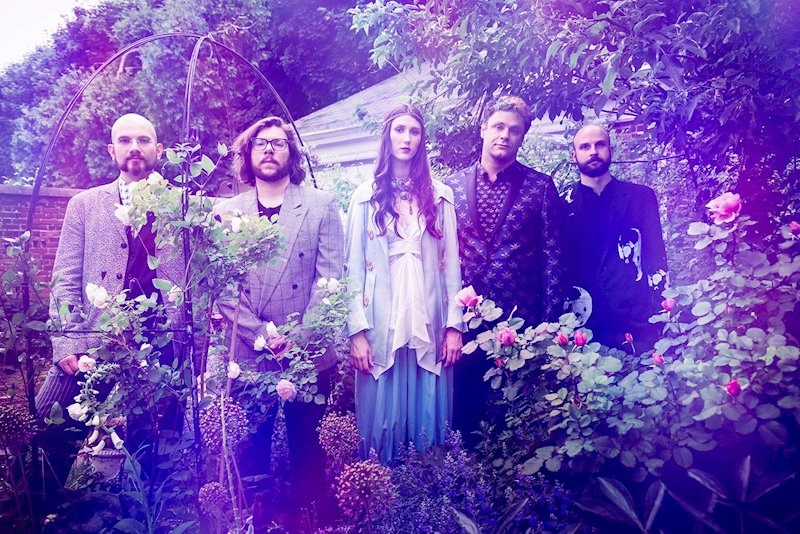
Formed in 2011 and forged in NYC’s experimental scene, Ecce Shnak (pronounced Eh-kay sh-knock) is made up of David Roush (composer, bassist and baritone vocalist), Bella Komodromos (vocals), Chris Krasnow (guitar), Gannon Ferrell (guitar), and Henry Buchanan-Vaughn (drums).

‘Anna O’ is a jump-off-the-couch, roaring-the-hook anthem with big grunge energy. For the first time, Ecce Shnak’s composer-baritone-bassist defers his lyric-writing duties to someone else. His mother, Robin Kneubuhl, wrote a poem months before he and his producer, Jeff Lucci, cooked up a noisy instrumental in March 2019. Roush and Lucci tried the poem out as a lyric, and it fit just right.

Kneubuhl has described her poem as “a lament about tragic contradictions in contemporary feminist thought and practice”. While Kneubuhl wholeheartedly believes in feminism’s ideals, she is concerned that it is misused toward nefarious ends, to the detriment of women and others alike.

“The song’s tragic hero embodies both a noteworthy psychoanalytic patient of Freud’s protégé Josef Breuer and the real-life gun-slinging heroine Annie Oakley. Though Anna is beleaguered by the contradictions Kneubuhl observes in the poem’s story, she ultimately emerges triumphant in the fight against patriarchy by the song’s end,” explains David Roush. “Though we are in the process of firming up the specifics, we can’t wait to play this for the Shnakiverse and music lovers generally on tour this fall!”

The music video is a third collaboration between Ecce Shnak and LA-based film producer DJay Brawner, who also directed the videos for the album’s first two singles, ‘Vincent’ and ‘Eddie, Legalistic Homeslice’. Ecce Shnak’s soprano, Bella Komodromos, plays the role of Anna, who is deeply distressed in captivity, as she seems wrongfully entrapped in an asylum. However, through an act of heroic resistance, she overthrows her abusive doctor and his servile aide. She sets herself free while the mighty rock band Ecce Shnak plays her homage as loudly and wildly as they can.

While Ecce Shnak’s songs draw on a wide array of styles, fans of Nirvana, the Pixies, and the Jesus Lizard will likely latch onto ‘Anna O’ quite tenaciously. With a reputation for astounding performances, Ecce Shnak’s music a volatile yet meticulously crafted ecosystem, where technical precision meets inspired mayhem.

AA

EC

A Cheery Wave Records – 28th August 2026

Christopher Nosnibor

As bands dissolve, and / or their members’ interests expand new bands emerge. A collaborative post-rock band featuring members of Flies Are Spies From Hell, Din Of Celestial Birds and Monsters Build Mean Robots, who also include Human Worth alumni A. L. Lacey among their ranks, Winter at Sea are one of those bands. And while those bands are many, some offer more than others. And among those are Winter At Sea, whose field is ‘staggering, earthy, post-rock that moves from ghostly ambient stretches through to dense thundering cacophonies’.

Hearts is an EP which contains just the one track, which plays for just shy of twenty-one minutes. That said, it is presented as a suite in five pieces, individually marked as ‘Glimpse Of The Horizon’, ‘Heart In Mouth’ ‘Gathering Dark’, ‘A Sleeping Mist’, and ‘Descent Into The Undertow’. What’s more, there is a moment where it tapers to near-silence around the mid-point, and as such, does feel like a work of two halves.

It begins with soft, airy synth notes which wander here and there, in a fashion very much reminiscent of the likes of Tangerine Dream, before gradually unfurling to expand the instrumental palette, with delicate guitar work, before finally breaking into a grand wash of sound some three minutes or so in. it’s here that they attain peak post-rock, and I find myself transported to what now feels like a golden age, a spell where Explosions in the Sky, Her Name is Calla, and I Like Trains were offering different shades of kaleidoscopic crescendo, some of which would last for what would feel like a blissful eternity.

Returning from the low ebb, it’s a delicate, graceful combination of subdued piano and yawning woodwind which sets the scene for the next surge… which abruptly halts, leaving a hanging suspense amidst chiming picked guitar notes. This segment feels like it should have more emotional resonance than it does, and perhaps I need to spend more time in its company in order to feel it rather than simply admire its musicality, the attention to detail. Or perhaps I’ve simply been overexposed to pleasant, atmospheric post-rock passages, and now it’s just something that washes over me. It’s nice, but it doesn’t grip me… but then the swell begins as the final couple of minutes or so approach, and while they resist the urge to really let fly, there is a clear climax to this ambitious work. The fact that it’s the second in a trilogy is worthy of note, too: as a standalone, it showcases texture and range, but it could well be quite the experience to hear all three EPs as a single, continuous work.

AA

a0337126294_10

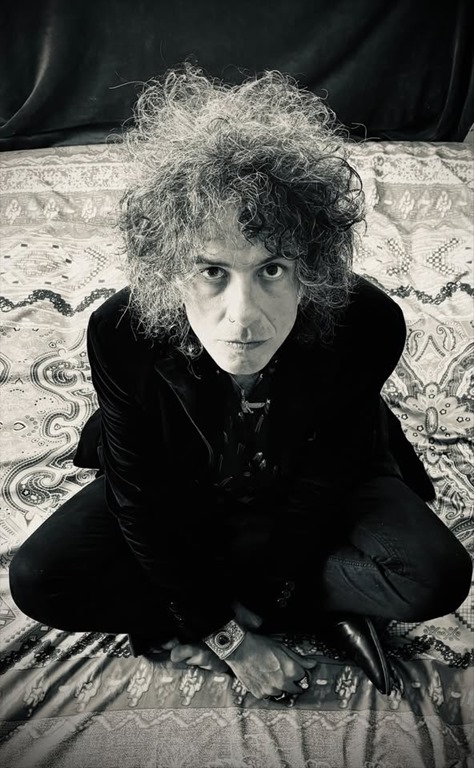
With its name inspired by a dream, October By Name marks out a new chapter in the career of Kavus Torabi. – a psychedelic polymath increasing stretching out his creativity via co-ordinates entirely of his own. This has been a decade so far in which his prolific artistry has only been matched by an equally turbulent period in his personal life. Yet the alchemical charge that has resulted matches the mystical origins of the album’s title with six songs that inhabit a similarly surreal and transcendental landscape. As Kavus reckons “If you can’t trust your subconscious, who can you trust?”

Not merely a more optimistic and beatific sounding record than its cathartic and intense predecessor The Banishing, October By Name sees Kavus evolving as an artist in ways he maybe didn’t even predict himself. Both inspired by his recent work with Gong and Cardiacs, and inhabiting a serious change of modus operandi via his work to date with the improvisational project The Utopia Strong, he created a new method of writing where all styles converge and overlap "As with the first time I heard Cardiacs at the age of sixteen and thinking ‘Oh! You can make stuff like this’, so I had a similar epiphany three decades on"

Somewhat in the great lineage of British psychedelic pathfinders through the ages (the triumvirate of Syd Barrett, Robyn Hitchcock and Julian Cope being an example) It’s at heart a bittersweet yet optimistic reverie that is pure Torabi. "Perhaps there is no free will and we’re all just playing out the consequences of our genes, insecurities and childhood damage" he reflects on the fundamentals of this song “But I have to believe change is possible because, honestly, what’s the point in anything if it isn’t?”

The openers ‘Signals Shine’ and ‘In Her Radiance’’, meanwhile, in all their luminous glory, see him writing love songs. “No big deal in the wider pantheon of music, but a very big deal to me in that I’ve never written this way before,” he notes. “There’s a different energy in writing romantic verse from the position of a man of my age and experience as opposed to when I was in my twenties. I was far too self-conscious and critical to even attempt anything like this back then and genuinely didn’t feel the pull of the love song like I do now. Writing about being on acid made much more sense”. Crucial to October By Name – which Kavus sees as the third part of a trilogy of solo albums is its very specific way of working. “This wasn’t necessarily a contrived plan when I started making solo records but the model I used on my debut Hip To The Jag; performing and recording everything using only instruments available to me, writing songs of an autobiographical and personal nature and drawing and lettering everything by hand seemed to be the right way to go” he notes “This was a way to put all of myself into something, allowing my shortcomings to define the outcome. I’m not a great drummer or letterer, for example, but the way I play drums or hand-letter, sing, or mix becomes the thing”.

“Increasingly, I’m becoming more solipsistic, going further into my own world creatively. As long as the bubble I’m in keeps giving me songs, I’m OK with that. Honestly, every one I get over the line, that still excites, thrills and engages me is a blessing”.

‘My Shameful Namesake’ is the second album to be released in advance of the album. Check it here:

AA

original-4e07d548-52d1-41df-888d-f25836a3a83f

Photo: Layla Sunshine

Live:

10/08 – BOURNEMOUTH – @The Underground – TICKETS

10/09 – BRIGHTON – @Daltons – TICKETS

10/10 – GLASTONBURY – @King Arthur – TICKETS

10/11 – HEREFORD – @De Koffie Pot – TICKETS
10/13 – STRATFORD UPON AVON – @Stratford Sound Pathways – TICKETS

10/14 – NOTTINGHAM – @Billy Bootleggers – TICKETS

10/15 – MANCHESTER – @The Yard – TICKETS

10/16 – MOLD VOD Music – Free Entry

10/17 – NORTHUMBERLAND – @Sinderhope High Forest Community Centre – TICKETS

10/18 – EDINBURGH – @Speakeasy Voodoo Rooms – TICKETS

10/19 – GLASGOW – @Nice N Sleazy – TICKETS

10/21 – BRISTOL – @Cube Cinema – TICKETS

10/22 – SWANSEA – @Down By Here – TICKETS

10/23 – LONDON – @West Hampstead Arts – TICKETS

10/24 – DEAL – @The Lighthouse – TICKETS

Blaggers Records – 13th August 2026

Christopher Nosnibnor

When I was in my teens and early twenties, I got quite hung up on an existential anguish that no two people perceived things in exactly the same way. It wasn’t completely unfounded: there’s empirical evidence that shows that there is no such thing as a reliable witness. Particularly in moments of heightened stress or panic, the brain will scramble to process what it sees, while at the same time juggling the options of fight or flight. As such, it will assemble a narrative from fragmentary snippets, and attempt to fill in the gaps. But even more fundamentally, no two people will perceive something as fundamental colour in the same way. I have a mug which I consider to be grey; the rest of my family tell me it’s blue. And while I concede it’s perhaps a gunmetal shade, I still consider it to be grey. And so it is that two parties engaged in conversation will simultaneously experience completely different conversations.

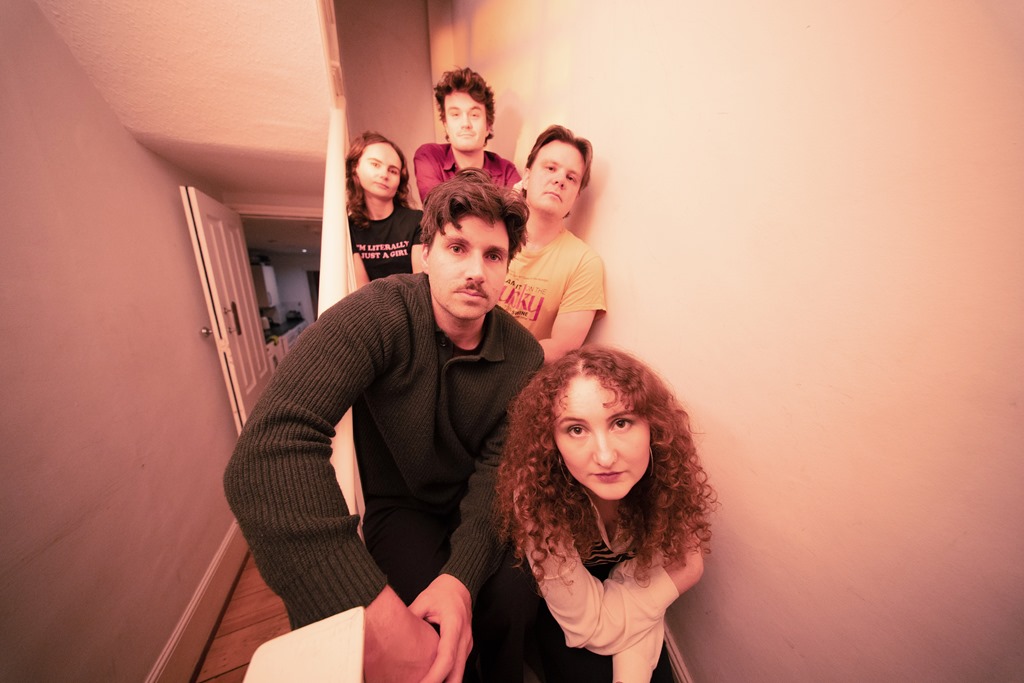
This is the premise of the third single from London-based, New Zealand-formed five-piece Not My Wife, which explores ‘the duality of relationships, and how two people can be living within the same reality, while experiencing it quite differently. The verses detail one person sitting in the bliss of new love, while the choruses expose the narrator’s realisation that their partner may not have been feeling the same way. The song explores the theme of memory, interpretation and how we can put another person at the centre of our world without wanting to see them clearly’.

Driven by a crunchy bassline, ‘Best Friend’ nags away nicely, managing to be both breezy and somehow claustrophobic, and to meld postpunk with a wistful indie sensibility. The guitar is stop / start, choppy, and there’s a subtly melancholic hue in Olivia Mercer’s vocals. There’s something about this single that’s quite touching, in ways that aren’t readily articulable, much in the same way a vague memory will linger on the edge of your recollection, and while you experience it as a sensation, somewhere in the gut, you simply can’t place it, chronologically, locationally, or any other way. It offers a sense of dappled shade and wistfulness, and also of a certain self-disconnect, wrapped in a hazy melody which reflects the fact that in ten years, this will all seem as a dream, or another life.

AA

Not My Wife_Press shot 2

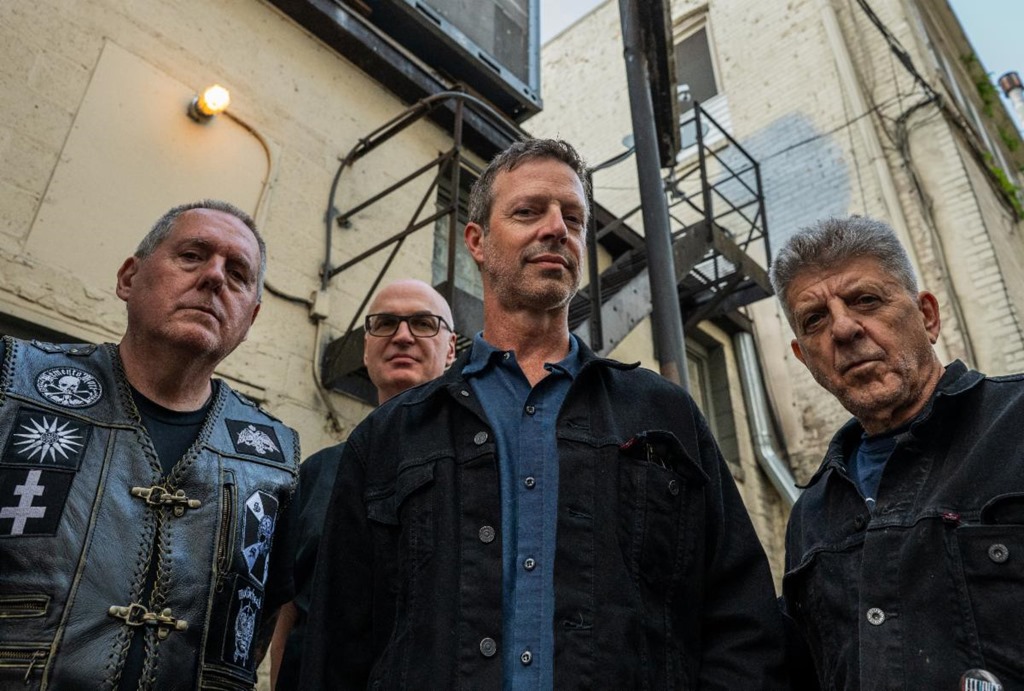
‘Hallucinations’ is the first single and video from Fire Aim Ready, the sixth album from seminal Chicago punk band The Effigies. This is their first release featuring new lead vocalist Geoff Sabin, who took over following the tragic death of founding lead singer John Kezdy in 2023.The new album was recorded at Million Yen Studios in their hometown, and was produced, engineered and mixed by their guitarist Andy Gerber. The album is being released on 12” LP vinyl, CD, digital download and streaming services by the venerable Chicago independent label Pravda Records October 23.

Following writing sessions between live dates in late 2025, the album came together featuring the riff heavy punk metal the band became known for in the 80s with sharp lyrics and aggressive vocals showcasing a clear-eyed worldview on the current state-of-affairs. Written and recorded quickly to capture the moment, the album also includes a cover song from the Stranglers as a nod to the band’s early influences. This is the band’s first release since Burned in 2024, the last album to feature Kezdy.

AA

Formed in 1980, The Effigies are recognized as one of Chicago’s pioneering punk bands, shaping the Midwest punk scene with their aggressive sound and captivating lyrics. The band’s DIY ethos and commitment to authentic themes about corruption and urban alienation positioned them as a seminal influence on the punk scene for generations. Led originally by vocalist John Kezdy, bassist Paul Zamost, drummer Steve Economou and guitarist Earl Letiecq, the band’s early work blended the raw energy of classic punk with a distinct Midwestern working class sensibility, setting them apart from the coastal scenes of New York and Los Angeles. Their early performances in small Chicago clubs energized a local community of fans and helped establish the city as a notable hub for punk and alternative music. Early releases such as 1981’s Haunted Town EP, 1982’s 7” single “Body Bag” b/w “Security”, and 1983’s “We’re Da Machine” cemented the band’s significance in the expanding scene.

Throughout the 1980s and 1990s, The Effigies shared stages with many prominent acts, including local favorites Naked Raygun and Big Black, as well as national acts The The, Circle Jerks, Black Flag, The Cramps and PIL. Their live shows became legendary for their intensity and were seen as a threat to the local rock establishment still mired in tribute and cover bands. Renowned record engineer Steve Albini writes that “The Effigies were absolutely essential to development of a healthy punk scene in Chicago. Between them and Naked Raygun in the early 80s they basically kept the scene going until it developed momentum beyond them. The Effigies were a moving force during a crucial and exhilarating time.”

While the band drew inspiration from post-punk, hardcore and metal, they have always maintained that, at heart, they are a punk band. Their music consistently embodies the core values of the punk movement: celebration of individuality, egalitarian ideals, and the power of a committed supportive community.

In 2023, the band emerged from a period of relative inactivity to record a new album. They teamed with Andy Gerber at Million Yen Studios, who also produced the 2007 release Reside, and would go on to take over lead guitar duties with the band. The tragic death of founding member John Kezdy in August of 2023 marked a deeply emotional turning point for the band – Kezdy’s vision and charisma had been central to the Effigies identity. In honor of his legacy and last works, Burned was released in October of 2024 on BFD Records followed by reissues of 1984’s For Ever Grounded and 1985’s Fly on a Wire. To support the album releases and continue moving the legacy forward, the band enlisted a new vocalist, Geoff Sabin, whose energy and passion have reinvigorated the group. Their return to the stage has featured festival sets at RiotFest, Rebellion, and PunkRockBowling, a regional tour with The Black Crowes, and coast to coast shows including prominent clubs like Metro, The Whiskey, Sainte Rock, and The Middle East. The live sets have been embraced by long-time fans and critics alike, signaling that The Effigies are poised for a new chapter while maintaining the spirit and integrity that Kezdy helped establish. As of 2026, The Effigies are touring extensively, with plans to continue reaching audiences worldwide.

AA

Effigies CLR2 pc Karl Spiekerman

4th September 2026

Christopher Nosnibor

When selling themselves – or however else you may describe what bands or their PR do with their biographies and the blurbs which accompany releases – acts tend to go either one way or another. The first is to focus on context and heritage, and locate the music within a lineage amidst a list of touchstones. The second is to cast all of that aside, and accentuate the innovation, the difference, and the departure from all of that. Both approaches come with risks, albeit quite different ones. The former suggests that the band is derivative, and builds a certain expectation before the listener has heard a note. Not that it was Interpol’s fault that every critic under the sun sold them as Joy Division clones, which meant that I was sorely disappointed the first time I heard Antics. It sounded like so much indie, and I felt hugely let down. I came around pretty swiftly, but only once I’d come to terms with the fact they were, in reality, fuck all like Joy Division. Meanwhile, the latter sets the expectation that you’re about to hear something that’s nothing like anything you’ve heard before, and as a jaded critic of many years, I find myself sitting at my desk, adopting a mindset which is visually represented by arms folded, torso tilted back away, face wearing a light sneer that says ‘come on then, let’s have it,’ or perhaps even ‘here we are now, entertain us’. More often than not, these artists, too, fall short, as I find myself wondering if they live in a cultural vacuum, and how they could have possibly not heard X, Y. or Z, whom they sound so very like.

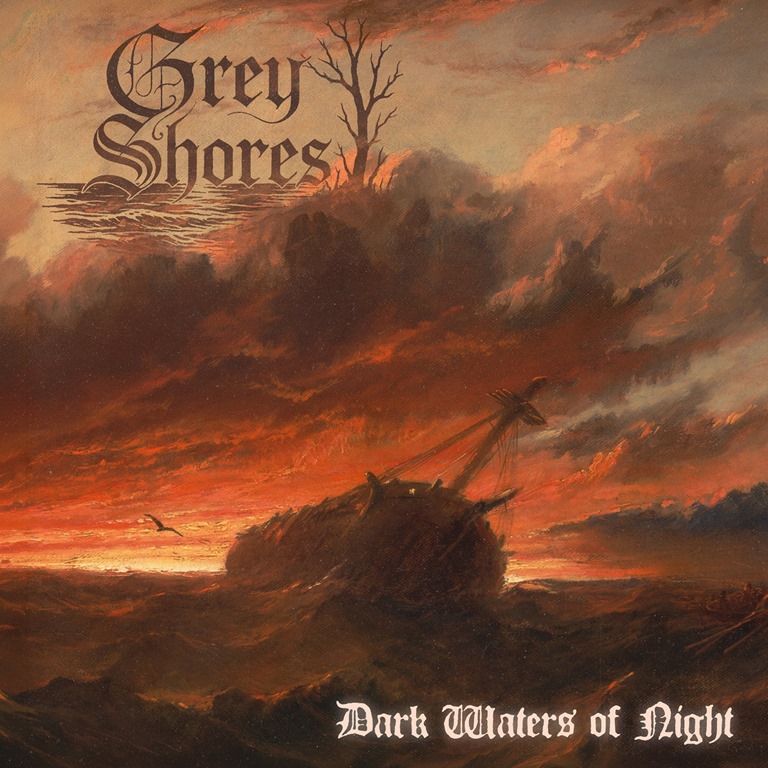
It’s in this latter category that Stockholm’s Gey Shores fall, when they forewarn that ‘a new voice is about to emerge from the depths of the Swedish underground. Grey Shores, the atmospheric black metal duo formed by Martin Andersson and Vilhelm Andersson, are preparing to release their debut album, Dark Waters of Night, a work that merges the emotional depth of post-rock with the cold intensity of black metal… Musically, Grey Shores inhabit a space where black metal, post-rock, and melancholic metal converge. Vilhelm Andersson’s background in atmospheric and post-rock music brings layers of texture, melody, and emotional nuance, while Martin Andersson contributes the harsher elements that form the album’s backbone.’

Don’t get me wrong: I’m genuinely thrilled by the prospect, but am equally prepared to be disappointed within the first three songs. Because not only am I jaded, I’m being sucked into the world of the ever-diminishing attention span. But hey, I can usually manage three songs rather than three seconds before making my mind up and hitting skip (boycotting Spotify likely helps with that, as does being old enough to remember buying an album and playing it several times even if you hated it at first and finding that over time, you quite liked it after all).

Dark Waters of Night contains just seven songs, and while the majority are around the five minute mark, there are a couple which are substantially under three.

Funnily enough, the opening bars of ‘Nothingness by My Side’ evoke the rippling chimes of ‘Untitled’, the first track on Interpol’s Antics, before drifting into a spacious, atmospheric soundscape – before, a mere fifty seconds in – rasping black metal vocals ride in on a wave of overdriven power chords. The song certainly exploits the dynamics of post-rock, with melodic, dreamy vocals washing across delicately picked clean guitar, propelled by jittery, almost jazzy drumming in the verses, and there are hints of Oceansize and Explosions in the Sky here, but instead of surging crescendos, we get screaming black metal fury. I’m sure if I spent long enough searching, I could find something akin to this, but right here, right now, to my ears, this does offer something different and sees the band deliver on their promise, and it’s exciting.

Amidst the raging metal tempest of ‘The Withering Tree’ arrives a moment of calm which is almost folk in flavour alongside the chiming post-rock atmospherics, while ‘In The Pale Light’ offers a sound that’s quintessentially post-metal, and brings some magnificent lead hooks. The demonic howls provide quite the contrast, and then the mid-section makes an unexpected switch toward the expansive, and brings with it clean, melodic vocals. It borders on the schizophrenic, but it works, as they stitch the transitions practically seamlessly, sometimes overlapping.

‘Herald the Dark’ hints towards the territory of lighter-waving anthem, at least to begin with. But what starts out as pretty tame, swiftly gets gnarly, while preserving the anthemic qualities. Nevertheless, while it’s perhaps the album’s most ambitious track – at least commercially – it’s also the weakest musically.

On ‘Sights of Woe’ they step up the cinematic aspects with the introduction of choral backing – and some classically overblown fretwork. At this point, it’s clear that Grey Shores really are committed to pushing black metal to new places, and the gentle instrumental fade of ‘January Wolves’ is simply a perfect post-rock wind-down. Dark Waters of Night is not only a great album – detailed, textured, varied, dynamic, incendiary – but one which delivers on its promise.

The quality cover art warrants a bonus thumbs-up, too.

AA

a0768668631_10

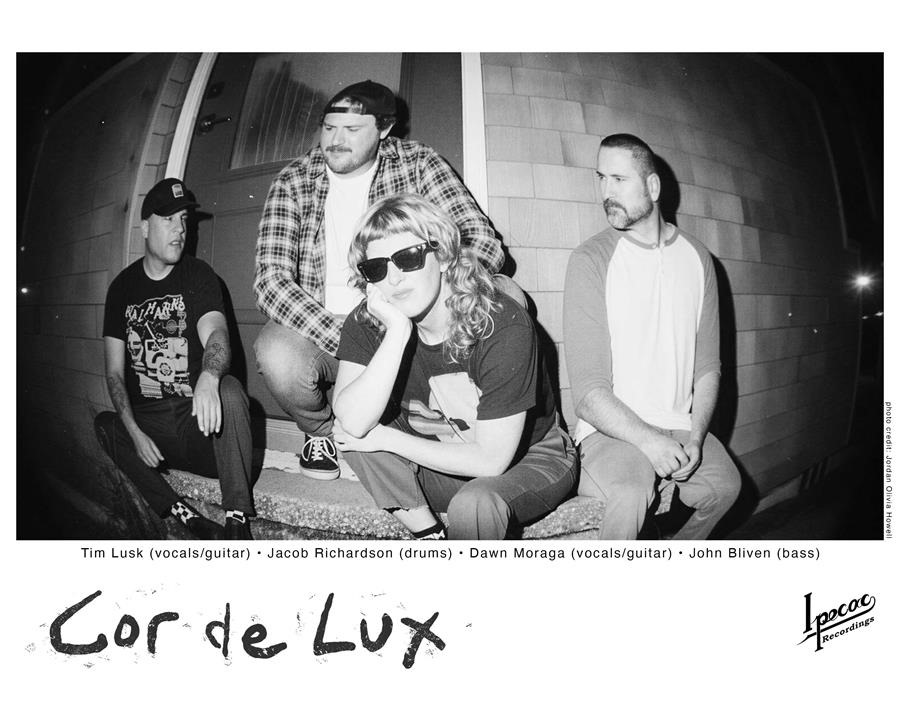
Cor de Lux are getting closer to releasing their Ipecac Recordings debut album, YEAR OF THE HORSE, on 18th Sept, which captures their competing impulses: abrasion and melody.
Across nine songs, the Kill Devil Hills quartet balances post-hardcore urgency, shoegaze bliss, and guitar-driven catharsis. Recorded and produced by J. Robbins (War on Women, Mary Timony), YEAR OF THE HORSE preserves the raw chemistry that defines the band while pushing their songwriting into sharper, more immediate territory.

Today the band share a final preview of the album with the release of ‘Blind Smile’, a track about the beauty in the complete freedom to be who you are.

“The blind man smile, the deaf laugh for all to hear, to be so brave, you can’t hear anyone”

AA

About the track, Dawn Moraga says, “My cousin is deaf and his true laugh that isn’t altered from what he thinks he should laugh like is one of the most joyous sounds. I think this song is about for me personally trying to find that freedom to not care about what people think of me and to dig deep to find the real. It came together with John and I talking about the beauty from a true smile.. the blind smile.”

John Bliven adds, “The title for ‘Blind Smile’ came about because I wanted to illustrate an event that inspired and humbled me when I was a videographer during a Visually Impaired Persons (VIP) Fishing Tournament, an event that brings hundreds of VIPs to the Outer Banks every year. I got to witness the most joy filled smiles I’ve ever encountered as they felt the scales of the fish and commented about the texture and sliminess as they saw with other senses.”

COR DE LUX LIVE:

Aug. 29, 2026 Raleigh, NC Lump Gallery

September 10 Raleigh, NC Hopscotch Festival @ Kings
September 20 Durham, NC Stanczyks +
October 7 Philadelphia, PA Ortlieb’s
October 8 Brooklyn, NY The Broadway
October 10 Toronto, ON Lee’s Palace *
October 11 Detroit, MI El Club *
October 13 Chicago, IL Outset *
October 14 St. Paul, MN Turf Club *
October 15 Davenport, IA Raccoon Motel
October 17 Louisville, KY Whirling Tiger
October 18 Asheville, NC Static Age

* supporting Slift
+ supporting W.I.T.C.H.

AA

Cor-de-Lux-Glossy-creditJordanOliviaHowell-990000079e04513c