Posts Tagged ‘Tokyo’

Audiobulb – 22nd August 2026

Christopher Nosnibor

Every town, every city has its own unique vibe. Some we acclimatise to, others, we find uncomfortable. Others still, scary. Myself, I am not a fan of big cities, but have always felt comfortable in Leeds, but always feel on edge in Manchester. I can’t explain this. apart from the fact it’s rained almost every time I’ve been in Manchester, I’ve never had a bad experience there. In fact, I’ve had many positive experiences there, but still just feel something… it doesn’t sit with me, and I can’t settle. My experience of ‘international’ cities is limited: the only time I visited New York was when I was three, and beyond that, I’ve only been to London and Paris. I’m not sure Nicosia counts, being international in a different sense, and I expect that that’s perhaps another discussion altogether – although, for what it’s worth, while my fellow conference delegates proffered their passports to venture through the military checkpoints to cross the border into the Turkish territory to enjoy a meal, I remained in the pub in the Greek side of the Old Town with a book while I awaited their return. I have no regrets about this seven years on. But I digress. Every city has a feel, and not just a vibe, but a vibration. And big cities are in essence the same as smaller cities when you’re there, since they’re divided into various communities, segments, quarters, districts, whatever.

Nonturn’s Repeating Town is a work which is an assemblage of sound which captures, one way or another, the essence of Koenji, Tokyo. This is quite specific, and only highlights my observation that large cities are generally comprised of zones and areas within, and this is true of Koenji, which – and I make no apologies for turning to Wikipedia for into here –‘was largely unaffected by the 1980s building boom and therefore many of the houses and shops in the area are small and reflect the character of ‘pre-boom’ Japan. Due to its aging retail district and location on a major commuter route, the station area has become a center for small restaurants and ‘Live Houses’ which offer live music.’ It sounds pretty cool on paper.

Precisely how representative Nonturn’s Repeating Town is, I can’t really say. However, as Nozom Yoneda, aka Nonturn explains, ‘Every sound on the album was captured in and around Koenji, Tokyo: traffic signals, footsteps, air conditioners, construction, passing cars and fragments of conversation. These recordings are traces of real places, but they are not presented as documentary evidence or atmosphere. They are cut, repeated, layered and placed on a 96 BPM grid as sampling material.’

He goes on to add, ‘The title points to the method. The everyday city is already full of repetitions: signals return, footsteps pass, machines hum, routes repeat, voices appear and disappear. Nonturn listens to those repetitions not as background, but as a musical condition. Once removed from their original setting, the sounds stop describing where they came from and begin to act as rhythm, texture, accent, resonance and silence.’

Repeating Town contains seven pieces, each around five or six minutes long and each of which pulls together a host of drones and clanking percussion, interwoven with weird electronica. At times is ripples and weaves, at others, it jogs, picking up pace and evolving technoindustrial beats as it does so. Field recordings aren’t particularly apparent at in this hybrid of mixes, and as tone and texture from other sources build, there’s a creeping discomfort which builds. It’s an album which is built on glitches and trilling synth loops, whirring buzzes and the occasional explosive blast which disrupts an otherwise smooth surface. But there are whirring dentist drills and all sorts, all seemingly looped together and otherwise spun into a strange, soporific blend.

AA
a3487997111_10

‘Dröm Sång’ emerges as a poignant ballad from Këkht Aräkh, blending melancholic melodies with an introspective narrative. Rooted in a draft originally conceived during the Pale Swordsman sessions in 2021, the song carries a familiar resonance, particularly reminiscent of the track "Swordsman" from the same album. However, its creation followed an unconventional path, with recording taking place under spontaneous, often cramped conditions across Berlin, Germany, and Tokyo, Japan.

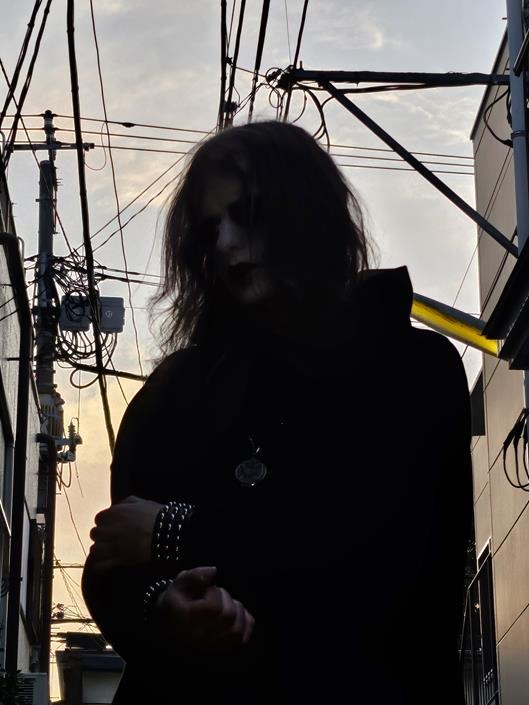
The accompanying music video was shot entirely in Tokyo and features scenes filmed by Nick from the electronic duo IC3PEAK and additional footage self-recorded by Dmitry, all using a handheld camcorder to create a raw, personal aesthetic.

Dmitry explains:

“There’s a deeper reason behind choosing Tokyo as the location for the music video, beyond my admiration for Japan. This particular place is often idealized by people around the world who have never lived there, making it a perfect fit for the song’s escapist theme. The song reflects on life, with all its hardships and evils, as nothing more than a dream from which you’ll eventually wake into a peaceful world.”

AA

ka_drom-sang21-9903cf045103cf3c

Photo credit: Nick Kostylev (IC3PEAK)

Bam Balam Records –12th June 2021

Christopher Nosnibor

Two names to conjure with collided live in Tokyo on 14th March 2019, with sprawling psychedelic masters Acid Mothers Temple coming together once more, a full decade after the release of the live album Underdogg Express in 2009, with the founder of the legendary Krautrock band Guru Guru. ‘A fiery psychedelic collaboration recorded in the spirit of early Guru Guru’ ensued.

Edited neatly into four tracks – two per side of vinyl – it’s being released on limited edition vinyl for the French ‘Disquaire Day’ June 2021 (French Record Store Day 2021).

In recent years, I’ve come to despise Record Store day: after all, a record store is for life, not just for RSD, and the whole thing reeks of exploitation, from the retail prices being set as a level that means stores themselves make next to nothing from any sales, many fans are priced out – assuming they aren’t geographically advantaged – and then they’re shafted once more when those who had both the benefit of cash and location resell at even more exorbitant prices. Yes, one could discus free markets and supply and demand and how buyers choose to pay those prices – and I personally choose not to – but ultimately, a lot of the fun has gone out of it since the early years.

It doesn’t help that RSD has been swamped by reissues by major labels, meaning completists and hardcore collectors of some very popular acts are climbing over to buy new editions of old records, and none of them really give a fuck about independent stores, labels, or artists.

In this context, this release is a welcome one. It’s also a good one, and finds the collaborators veering from wildly chaotic and discordant free-jazz to muted, atmospheric ambience, with the fifteen-minute ‘Electric Junk’ spanning both, and beyond, exploding as it does into a searing proggy / post-rock crescendo in the closing couple of minutes.

‘The Next Time You See the Dalai Llama’ is built around a cyclical motif that whirls like a kaleidoscope over a throbbing reception of pounding drums and bass that lock into a relentless groove for the first four of is nine minutes. The title track closes with a mash-up of classic rock and wild desert psych, with some wild guitar work going fret crazy over an insistent, monotonous bass groove and thumping percussion that pounds and crashes relentlessly, and it even get on quite a swagger and swings into a full strolling jazz workout in the second half.

Tokugoya doesn’t bring any real surprises, and is, really, exactly what you’d expect – but then it doesn’t disappoint… although its limited availability might (but there is still a CD version).

BBLP085_front