Archive for July, 2026

Trans-Atlantic dark-electronic duo DEATĦ B¥ LØVE presents their new single ‘n Unity (WIELORYB Remix and Tribute)’ which is dedicated to Wieloryb a.k.a. Paweł Kmiecik, a groundbreaking music and video artist, known forhis aggressive brand of industrial music and post-apocalyptic videos and who also, tragically, passed away just a month ago.

This two-track offering consists of "In Unity (WIELORYB Power Noise Remix)" and "In Unity (WIELORYB vs. PSYCHOTRIBE Tribute Remix)", for which the accompanying video was created by Wieloryb. This single arrives soon after the release of DEATĦ B¥ LØVE’s debut album 444, released via Distortion Productions.

A talented artist, Wieloryb was the dark pulse of Poland’s industrial music scene, emerging in Gdańsk in 1994 during an era of concrete, rust, and cold electronics. From his first recordings, Wieloryb struck without compromise. Electro industrial, EBM, and techno merged with noise, metallic rhythms, and haunting ambient soundscapes. The debut cassette "I" earned a Fryderyk Award nomination and opened a new chapter in Polish electronic music that was brutal, uncompromising, and devoid of light.

For decades, Wieloryb’s music has existed where aggression meets trance, and destruction gives way to contemplation. It is more than sound. It is a complete mechanical ritual, where raw electronics intertwine seamlessly with Paweł’s experimental visual art and video work, creating a singular aesthetic language of industrial melancholy.

“We dedicate this release to Wieloryb, Paweł Kmiecik, an extraordinary artist, producer, and video creator, whose vision left a lasting mark on the industrial scene. ‘n Unity’was the final remix he completed before his sudden and unexpected passing,” says Pete Guellard.

“His post-apocalyptic industrial landscapes sent chills down our spines, while his relentless rhythms and crushing soundscapes raised our pulse and demanded movement. His work was raw, uncompromising, and unforgettable. Thank you for everything Paweł. Your legacy lives on through the art you left behind. All profits from this release will go directly to support Paweł fmily.”

AA

986318

After years in the vault, The Stevenson Ranch Davidians share ‘Love, Light, Beauty & Truth’, a soaring anthem that feels more urgent than ever. Fusing shimmering ’60s-inspired psychrock, folk and Americana into a hypnotic swirl of hope, the New York collective delivers a powerful message of resilience in troubled times. Recorded years ago, the song’s relevance has only intensified, transforming it into a timeless rallying cry wrapped in radiant melodies and good vibrations.

This marks the beginning of a wave of previously unheard recordings, as they emerge with renewed momentum. Following their acclaimed Amerikana album, they recently completed their fourth album at Rick Rubin’s legendary Shangri-La Studio. 2026 also brings a run of live dates, including several with Elephant Stone ahead of the album’s release in early 2027. With this single, The Stevenson Ranch Davidians show that some songs aren’t just worth waiting for—they arrive exactly when the world needs them most.

AA

SRD

Evol Music Group – 26th June 2026

Christopher Nosnibor

Over on this side of the pond, in the UK, we have plenty to beef about, and more than enough to worry about, too. But while we see endless footage of war in Ukraine, Gaza, and the whole of the Middle East as the US and Iran wrestle their way through the most futile war, we’re in a petty sheltered place, and as much as we may reel in horror over news of the latest high school massacre and laugh at Donald Trump’s daily meltdowns, we do so from a position of relative safety. However hard we continue to lumber into a state of total surveillance, however emboldened the racists become thanks to the rising right, however rapidly our government are eroding our right to protest, favouring perpetrators of genocide over those who speak in opposition to it, there’s still no danger of some masked ICE psycho pulling your car over and demanding your papers before shooting you in the head. Our politicians may nearly all be slippery, deceptive careerists who accept ‘donations’ from individuals and companies with vested interests, but we’re not led by a demented narcissist who’s openly professed to being a wannabe dictator. In short, I don’t think we fully grasp what it’s like to live in America right now.

Elektrikill’s founder, Steve Vil, says of Küntzpiracy – a title that’s both a fairly lame pun and a bit of cliché, but gets a pass because America and an approximation of a Butthole Surfers reference – “Basically it’s my most political album touching on themes of government corruption and half of this country’s loss of humanity while claiming it’s all in the name of Jesus. That pisses me off. I also call out closeted government officials in ‘The Scream’. Look, guys, just be gay instead of crashing Grindr any time you meet in large groups. I do give the listener a break from the political stuff. ‘Vampire Blond’, for example, is about a vampire drag queen.”

There’s a fair bit to unpack here, and he makes a number of valid points. It’s not the whole of America. In fact, it’s a slender majority backing the MAGA madness. Unfortunately, they’ve voted to facilitate an insane power grab, meaning that while there are a fair few who aren’t happy with the direction things have been taking lately, tough shot: you could have seen it coming, so this is on you. And this also involves the most overtly racist, homophobic administration in memory – but as with anything which involves hypermasculinity, what the world outside sees is massive repressed gayness. Yeah, we’re looking at you, Andrew Tate, with your no-bollocks swimming trunks and purple satin blouse, and the culture you espouse. What utterly fucked-up times we live in.

‘Thrum’ makes for a dark, dense start to the album, throbbing bass dominating, the distorted monotone vocals low in the mix as extraneous squalls of electronic noise burst all around, and ‘S(t)imulation’ keeps things dark with some hefty tribal percussion battering away through a murky wall of sound – although the choruses break out with a genuine hook driven by a pumping beat and punchy snare. It’s like leaping from Coil to late 80s Ministry, but it works, and the aforementioned ‘Vampire Blond’ swings into classic electrogoth / technoindustrial territory, and I could chuck a raft of touchstones in here – and that’s no bad thing. they clearly know what they’re doing, and where they’re positioning themselves, and do it well.

‘The Scream’ is again a bit Ministry circa The Land of Rape and Honey, and perhaps a bit KMFDM, and more broadly, a bit Wax Trax! Hardly innovative, but the delivery is top-notch. The beats slam hard.

Landing at the album’s midpoint the piano-led ‘A Chill in the Air’ is both expansive and claustrophobic, and slowing the tempo to explore a more brooding atmospheric, it’s well placed, ahead of full-throttle rager ‘Monoshift’ which brings the industrial aggression pumped to the max. Indeed, the second half of the album is harder, faster, and the altogether synthier ‘My Salvation’ rhymes ‘my salvation’ with ‘masturbation’ in a style reminiscent of early Revolting Cocks.

Stylistically, Electrikill don’t really break any new ground, but Küntzpiracy is intense, angry, and relentless, the aggro and the tempo picking up noticeably in the second half, with ‘Manifesto’ delivering a power finish. With Küntzpiracy, Elektrikill bring the fury and bring the force – and the political ire. This is very much an album of the now, and it hits hard.

AA

a3444969996_10

Cruel Nature Records – 3st1 July 2026

Christopher Nosnibor

“This album is kind of a collage of all the books I was reading and my impressions of the general emotions swimming in the collective experience, as well as personal stories I’ve picked up along the way.” So says Emmaleen Tangleweed of her new album, The Weaving, which was recorded in September 2025 ‘in a log cabin in Swartvlei (“black lake”), Western Cape, South Africa’. The liner notes describe it as ‘a collection of gothic folk and blues ballads tinged with hypnotic magic realism’.

The first song, ‘The Hours’ is likely, then, to be a direct reference to Michael Cunningham’s 1998 Pulitzer-winning novel – which in turn was inspired by Virginia Woolf’s 1925 novel Mrs Dalloway. It’s a wonderfully earthy slice of dark, primitive blues, rendered all the more potent by the rich patina of Tangleweed’s voice. In the recent Six of the Best feature for Aural Aggravation, she cited Black Pudding by Mark Lanegan and Duke Garwood as an influence, citing ‘an archetypal timelessness’, and this is what very much comes through here, perhaps with a hint of PJ Harvey in the mix, too. There’s nothing complex – or even innovative – about it, but blues isn’t about complexity or innovation, it’s about feeling, about soul. And this is something The Weaving brings in spades.

‘Silent Killer’ could be a hundred years old, but it could also be an outtake from Rid of Me. Emmaleen sings from her gut, and with guts, too, and plays with a perfect feel for the swing required to bring the songs to life. There’s a bit of fuzz on the low strings which gives a vintage, analogue feel to the production. This is also true of the sepia-toned ‘Strangeling Angel’, which very much replicates the feel of those early twentieth century blues legends and those altogether more obscure.

The introduction of cello on ‘Blind Faith’ is done subtly, but adds depth to the otherwise sparse arrangement, and for the most part, everything hangs on her voice and acoustic guitar. Perhaps because of this, there’s a palpable intimacy and immediacy about The Weaving, capturing as it does the sensation of being in a small room as the songs are performed live. ‘Never Ending History’ is almost a crawl, and she drawls the lyrics low and slow, and something strange happens with time as it slips back. one can almost envisage grainy black and white photographs accompanying it.

Most of the songs are in the five-minute region and she fills the space with a rare tension. ‘Ask the Dust’ is another song which makes a direct reference, this time to John Fante’s 1939 novel set in The Great Depression, and shit, it’s bleak. ‘Is there anyone out there’ she asks against images of ‘the burnt out rust’ and a monotonous, repetitive riff reminiscent of Michael Gira at his most lugubrious. It’s here that is becomes most apparent that it’s possible to be heavy without distortion or volume, and that weight comes from the heart. You can hear her fingers hitting the strings on ‘Ask the Dust’, in a way that has the same feel as striking dry earth with a pick. It’s not entertainment, but labour, and The Weaving finds Tangleweed dredging deep. There’s no showing on the doll where this music touches: it’s somewhere deep inside, subconscious, subliminal. And herein lies its power – it’s something that’s affecting on an almost cellular or biological level, resonating with experiences of past lives or something. You feel it in a way that’s impossible to explain. But feel it, you do.

AA

cover

Norwegian cult act ULVER return again to the track ‘Hollywood Babylon’ from their previous album Liminal Animals (2024) for the best of all reasons: a stunning music video that has been long in the making. Following a fascinating remix by Gazelle Twin aka Elizabeth Bernholz that offered a brooding reinterpretation, the Norwegians now add this beautiful clip to the growing corpus around the original track.

AA

ULVER comment: “Working with our wonderfully mad old friend Christian Mona from the Bogus Blimp days never disappoints”, mastermind Kristoffer Rygg writes on behalf of Ulver. “He started to create this video before we released our last album (sorry about that) and he has finally delivered a splendidly grotesque little gem from within his Automated Bathroom. ‘Hollywood Babylon’ has never looked better! It is a distorted mirror of our times. Please feel free to stare into it a little too long.”

The Norwegian visual artist collective AKFF! adds: “2025 marked 20 years since Ulver made the animated music video ‘It Is Not Sound’ in cooperation with us”, Christian Mona states. “It has been a hypnotic journey through the Sea of Sorrows all the way to the Pinnacle of Truth. Thinking back on what a great experience it was to visualise and expand on Ulver’s universe, we started wondering why AKFF! hadn’t made more videos with Ulver. As it turns out, Ulver had been thinking along the same lines! And so the making of ‘Hollywood Babylon’ began.”

AA

b610ad44-cb02-950e-fa75-7a5d9ec20b0b

The Fulford Arms, York, 16th July 2026

Christopher Nosnibor

The Fulford Arms is great for many reasons, but one is the diversity of the shows it hosts. It’s also something of a haven for metal, with a couple of promoters putting on solid lineups of four bands for a tenner or so. The popularity of metal in recent years – particularly of more extreme persuasions – may well be a sign of the times, and I’ve written previously on the uplifting, even euphoric, qualities of a decent metal gig, and it very much does seem like a fair few here tonight are simply wanting to cut loose and have a blast while being blasted by dark sonic forces.

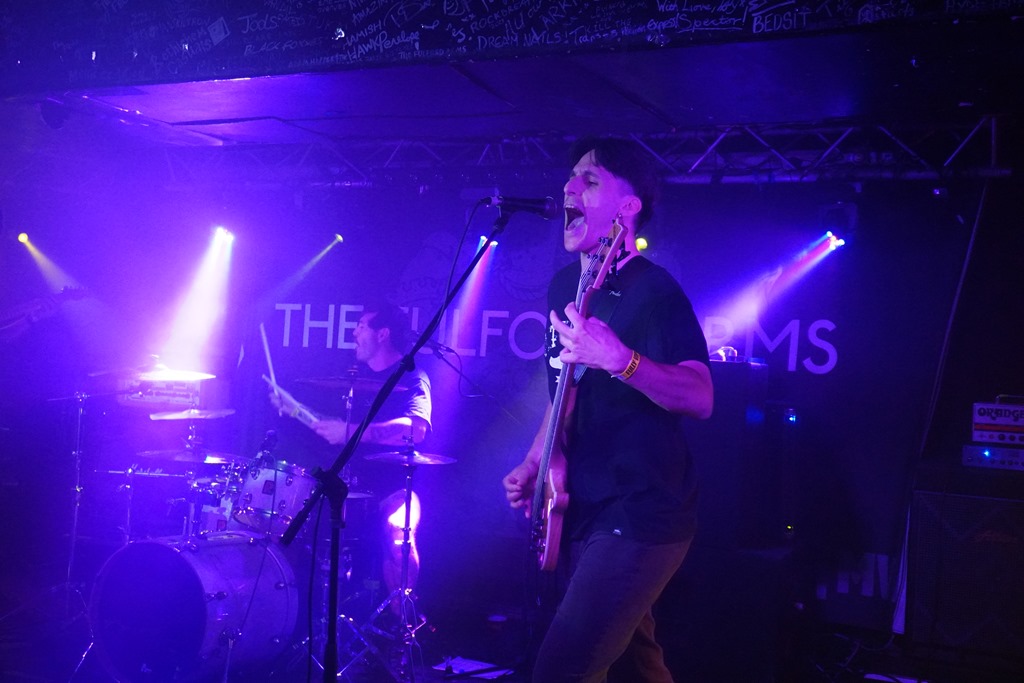
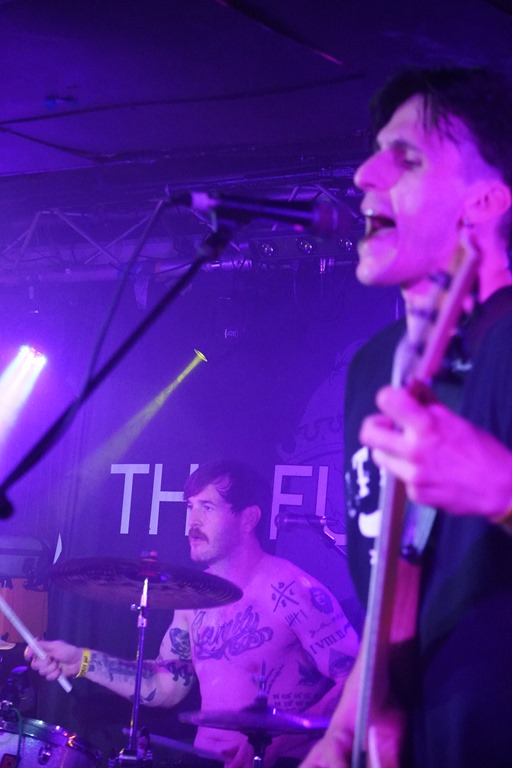
First up, Damage Control – not the international electroindustrial quartet signed to Metropolis Records, but a York-based three-piece, whose guitarist is a particularly lanky sod. Their set consists of back-to-back, nonstop, fast, raging thrash. The energy inspires some early two-stepping. mostly by one immensely tall bastard with no spatial awareness slam dancing himself. I know I’m on the shorter side, and also, at the age of fifty qualify as an old bugger, but fuck me, how are kids today so fucking massive? Anyway. It makes for a good start to the night.

DSC02782DSC02790DSC02812

Damage Control

Drior are from Nottingham and making their York debut. Their thing is old school death metal with titles like ‘Living Cadaver’. They’re appearance is unprepossessing, simply an assemblage of shorts and T-shirts, but what they do is slow, dark, heavy, and yes, I’ll say it – crushing. The drummer is the main vocalist and growls with a look of malevolence in his eyes. The drumming itself is perhaps a shade loose given its dominance, but the trio pack a commendable sonic density.

DSC02839DSC02848

Driot

As is often the case with lineups like this, there’s a step up with every band – although not in the same way as it was in the 90s, when the headliners weren’t only given a superior mix but about 30% additional volume. This very much did used to happen, incidentally, at the same time the supports would often have to pay to play, too. The music industry has found new ways to shaft emerging artists since, but anyone who thinks there was some golden age is misinformed or misremembering. By the same token, band have to be so much tighter and more professional now. I’ll park that here for another time, and instead focus on the fact that Exorcism are all out fury from the offset. And they’re relentless. And loud. Perfect.

 DSC02854DSC02889

Exorcism

Blasphemer are worthy headliners. They bring the thickest, densest, filthiest racket, churned out via a bristling host of spiky guitars – and their drummer can drum alright. The venue is far from packed, and it seems that Damage Control and their mates have had to go home, but given that it’s the night after England’s World Cup defeat and the hands of Argentina (again) and it’s a Thursday after the students have gone home, there’s still a fair crowd getting down to these guys.

DSC02911DSC02942DSC02967

Blasphemer

Blasphemer are a blast, with full on riffs from start to finish. There are moments that stall me and me gnaw on some questions. They announce a song called ‘Grooming Gang’, and as the lyrics are impenetrable, I’m left to ponder their position. Obviously, I hope they’re not racists, just as I hope they’re not brash metal edgelords, too, as they also play a sample of the voicemail message left by John Samuel Humble, also known as Wearside Jack, who submitted hoax calls and under the guise of The Yorkshire Ripper. ‘I have the greatest respect for you, George..’ It feels rather less exciting or edgy here in 2026 than it did in 1986. Call me sensitive if you like. Still, they kick arse and are nothing short of phenomenal to watch, and are exactly what you need from a midweek metal bill.

Christopher Nosnibor

It’s been a while since I went to ‘bands in the bar’ kind of thing. Although the Horsemusic nights are essentially bands in a bar, it’s a large space and they play on a raised area at the far end of a rectangular room, meaning there’s a sense of separation (in addition to the handrail which runs across it). For many years, there would be acoustic soloists and duos – nearly always playing variations on the blues – in the corner of every other bar, and it was kinda fun for a while, but got a bit samey rather fast. Still, the point is that there’s something less formal about the ‘bands in a bar’ setting. The Golden Ball, consistently in the Good Beer Guide, is a community owned and run pub with multiple rooms (some more like nooks or snugs), where they host quizzes, spoken word and open mic nights and the like, plus decent size beer garden.

It might be Soma Crew lite tonight, paired down to minimal gear, with no cymbals and fewer pedals, but it’s still a lot of pedals, and by the time you’ve got a PA, amps and pedals for two guitarists and a bass, plus drum kit and another amp and mountain of electronic equipment for How Buildings Fail, plus a massive – and truly essential – thermostatically-controlled fan, seating, and space in general is very much at a premium. More than twenty people and it’s pretty cosy, to put it mildly.

David Mudie playing a solo Speedreaders set is the closest to truly stripped-back as it gets, with just him and a clean-sounding guitar and a couple of pedals. Played this way, it accentuates the sad, emotional nuisance of the downtempo slowcore songs, and he seems unusually relaxed and even borderline chatty by his standards.

DSC02994

Speedreaders

It sets the tone for the night: the intimacy of the space is a great unifier, and the warmth of the atmosphere isn’t just heatwave and humidity.

Simon – aka How Buildings Fail – seems genuinely quite overwhelmed by the positive response to his performance, each song received with enthusiastic applause. He soaked the small room with low end feedback as he drawled monologues reminiscent of The Fall – the first track in particular seems to lean on ‘Smile’, and the more uptempo (house) pieces rattle along, propelled by a primitive drum machine. Electronica with live guitar, it’s gloriously ramshackle and old-school in every way, from the scratchy guitar to the, we, scratchy electronics. And people are amazed. This is telling: he runs the York EMOM (Electronic Music Open Mic) night – it’s part of a now (inter)national network of events which gives a safe space for all the nerds and oddballs to perform (I say this in the most positive sense as a regular myself), and the York one in particular seems to cultivate a culture of experimentalism, left-field, ambient, noisy, and downright weird shit, and it’s brilliant. But it is a bubble, and maybe not all of the EMOM participants have the same potential beyond the bubble. But How Buildings Fail balances quirky post-punk with just enough catchiness to appeal to a broader audience, and to see how he’s received out in the wild is a joy for me, and clearly, a revelation for those unfamiliar, which is a fair few of those in tonight.

DSC03002DSC03006

How Buildings Fail

Soma Crew might well be the band I’ve seen and covered the most since I started out with Aural Aggravation a decade ago, and I’d seen them a fair few times before that, too. They are, definitively, mainstays of the scene, and have landed some high-profile support slots for visiting bands (notably The Fall at Fibbers in 2016) can be depended on for three things: 1) a different lineup nearly every time 2) drummer Nick wearing his Sin City Rockers T-shirt 3) they’ll always play counterintuitively and start with the most hesitant-sounding, ploddiest song on the setlist. It’s like a test, but also a warm-up as they feel their way towards the groove. It’s only after the drawling crawl that they strike their motorik stride, and once they do, they’re mining gold all the way to the finish. Chugging rhythm guitar, strolling bass, soaring lead and thudding minimal drums all settle in nicely. And then from nowhere, the sound erupts a few songs in. It’s not devastatingly loud, but in this confined space, the sound feels huge. On ‘Westworld’ they hold a single note – not even a chord – for about five minutes. Then the drums kick in and they hold it another eternity. It’s glorious. The band are looking relaxed and right in there, and I find myself completely immersed for a spell.

DSC03033DSC03044DSC03066

Soma Crew

And the thing is, it’s simply nice. It’s also more than that. There is a palpable sense of community here tonight, people stick around and chat afterwards, taking their time over pints purchased at last orders instead of the usual emptying minutes after the music finishes. Soma Crew probably rehearse in a bigger room than this, but it’s not about the numbers, it’s about the music, the vibe, the connection. None of the performers is new or up-and-coming, and won’t be offended by this observation. But there’s a further point here: so many of the up-and-comers find that life – work, mortgages, families – put paid to creative activity post-thirty. That all of tonight’s acts have remained artistically active is testament to a certain commitment to creativity. It may simply be stubbornness, but for that  stubbornness kudos is due, not only for keeping on, but keeping on doing good stuff. Better than good, in fact. Grassroots music events don’t come much more essential than this.

Damage Control is an international electro-industrial group centred around a core quartet of Bill Barsby, Richard Thacker and Alex Wise (all based in Australia), plus Markus App from Germany. Barsby and Thacker are originally from the UK.

The group released an EP in mid-June entitled Master Of Silence on Metropolis Records that contained four songs recorded with Leæther Strip (the Danish musician Claus Larsen). They have followed it today with ‘Manifesto’, a new single resulting from another collaboration, this time with the Canadian duo OHMelectronic.

Consisting of Chris Peterson (Unit:187, Front Line Assembly, Delerium, Decree) and Craig Huxtable (Noise Unit, Landscape Body Machine), OHMelectronic issued two albums in the 2010s and recently resurrected the group to record new material.

The lyrics of ‘Manifesto’ have been written and sung by Huxtable. Exploring themes of sovereignty and personhood in the digital age, he states that “it is about sticking to your principles in an age of hyper disinformation. There is a lot of manipulation, false narratives and false idols out there. We are bombarded every day and we all need to stand strong in the face of it all. Declare your independency, set yourself free.”

AA

7c24c0a336bb254baad320302777f6357ed76aa8

SoulPunx Records – 16th July 2026

Christopher Nosnnibor

Italian industrial rock / alternative act Noir Addiction have wasted no time since the release of their debut album in September, swiftly knocking out three singles in quick succession. Now, they’re gathering these singles together, along with a further three unreleased songs to bring us Pretty Things Don’t Last, which they say is ‘an EP about impermanence, distortion, and the beauty found in what’s unstable, broken, and intense. It moves through chaos, desire, power, disillusionment, and rebellion, tracing a journey where control is questioned and identity is constantly reshaped’.

Opening with ‘Serve Me Some Crime’, the first of the singles, which was released back in March, we arrive in familiar territory (if we’ve been keeping up, that is), and it makes for an instant grab, with its uptempo beat, melded with an insistent bass throb and dirty, driving guitar sound, that crunches away, hard, and the whole thing has got ‘anthem’ and ‘high impact’ stamped all over it.

Starting this strong means they’ve set themselves a real challenge to maintain the standard and the solidity over the course of the remaining five songs. It’s like when you see an amazing band at the start of the evening: the first thought, after ‘woah’, ventures towards ‘I wouldn’t want to follow them’, to the acceptance that the night has likely peaked early.

Not so Noir Addiction. They bring the fire for the EP’s entire duration. The sound and formula is fundamentally set, but how they work within the template is with confidence and consistency, keeping on with back-to-back hard grooves.

Of the previously unreleased songs, ‘Toxic Twins’ is something of a standout, quite boldly leaning into a more overtly hard rock sound, complete with muscular lead guitar work which thrusts its way to the fore over a grinding bass before they go all out on the kind of chorus that would be at home in an arena setting, and has the big-balls swagger of a band like Shotgun Messiah or Zodiac Mindwarp – absorbing all the cliché and throwing it back with a knowingness but also a straight face.

Similarly, ‘Cold Habit’ stomps hard and brings the almost inevitable nods to Depeche Mode and Nine Inch Nails, while being more ‘rock’ in its delivery, and a chorus that’s brimming with hooks and accessibility. Recent single ‘Money for the Honey’ packs the sleaze in tight and hard, and while there are hints of spandex in the execution, there’s no debate to be had here: this is a solid rock banger.

‘Radio Funeral’ brings a dash of country and grunge to a mid-pace closer to an EP that’s bursting with confidence – and tunes.

AA

AA

Photo_by_Valerio_Fanelli_06

Photo: Valerio Fanelli

12th July 2026

Christopher Nosnibor

Anyone who says politics should be kept out of music is talking bollocks. An integral part of musical history is the music of protest, and of music which speaks of the times. While not necessarily protest-based, many dark moments of history are captured within traditional folk songs – long before the 60s gave us a whole new model for folk music as a vehicle for protest. Bob Dylan, Joan Baez, Pete Seeger, and Cat Stevens are just the first few names which come to mind as artists who picked up an acoustic guitar and used it to voice their anti-war sentiments, and it’s a mantel that’s been carried by many since, perhaps most prominently by Billy Bragg.

The arrival of punk brought a different kind of dissenting voice – one that was angry, nihilistic, and wasn’t so much anti-war as anti-everything, seeking to smash the system and stick it to the man. It shat the establishment up for a while, too, because it was brash, menacing, and felt violent, dangerous. This was Thatcher’s Britain: unemployment was up, there were strikes galore and discontent was more than rife. Of course, the major labels saw pound signs and signed punk bands left right and centre and before long, many acts were defanged by the wheels of capitalism in motion. And so the true punks stuck to, or remained resolutely, DIY, and while punk’s undergone a host of mutations since 1977, it still has both the sound and the vibe – particularly in the DIY scene – that positively yells ‘anti-establishment’. And this is, essentially, Craic Killers in a nutshell. The London-based Irish duo take certain cues from Kneecap, who, while having drawn heat from ‘the establishment’ are widely lauded for being not only outspoken, but sticking to their (metaphorical) guns in the face of litigation and more.

Before we get to the music, it’s worth taking a moment to consider the question of what constitutes ‘the establishment’ these days. Farage will tell you he and Reform and seeking to unsettle the status quo, to challenge the establishment and that they represent the man in the street who is fed up with not being represented by politicians in parliament. Bankrolled by tax-evading millionaires and billionaires whose funds reside off shore and who seek to siphon off even more wealth for their own personal gain, this is patent bullshit, and making those men on the street angry because they’ve been tricked to believe it’s the fault of immigrants that they’re poor and local services are shit is a massive con. The establishment does not exist to serve the regular worker. The establishment’s ethos is built on the foundations of the worst of capitalism, and this is why the establishment – both here in the UK, and particularly across the pond – is so hell-bent on dismissing any ideology that’s even remotely left (by which I mean, they hate welfare of any kind, particularly free healthcare, because ultimately, they don’t believe the poor deserve to live), and why they’re so desperate to crush dissent. It’s not because they believe protesters are terrorists, but because they hate to be exposed, and also can’t stand to see their absolute power and total authority challenged. There is much wrong with all of this, and more.

And Craic Killers are calling it out. All of it. As they tell it, ‘The new work goes in on the Epstein elite, MAGA bootlickers and major government failures such as the PSNI & TFL. Who Said I Was… matches the first EP’s intensity and themes of world collapse with a more refined sound.

It’s hard to argue any of that, really. Released last October, Who TF is Craic Killers? was a full-throttle blast of super-lo fi electropunk fury. Part of its appeal was the lack of production, rendering it the very quintessence of DIY. Cleaning up the sound is by no means selling out, especially when Who Said I Was… still sounds like it was recorded in a 4-track app on a smart phone. They rip into Andrew Tate and the ‘manosphere’, blast ICE, and tackle issues closer to home: certainly, the PSNI (Police Service of Northern Ireland) and their actions aren’t widely reported further afield, but as the sole note which accompanied the single release simply stated ‘All Peelers Are Bastards (and pedos)’. Trust in police is at a low eight now, for so many reasons, and the recent appearance of ‘ACAB’ graffitied under the bridge which carries the A64 over the River Ouse near where I live (alongside ‘Fuck Nazis’) is telling of the mood, I feel.

With the exception of ‘GIMMIE’ (released as a single in June), none of the six songs run over three minutes – but all of them are delivered with a ragged, riotous energy. By which I mean these guys are absolutely fucking fearless, and relentless in their intensity. ‘TFL’ may be slower and lower, but it’s dingy and abrasive, the vocals somewhere between hardcore punky shouting and really aggro rapping, while the closer, ‘Public Relations’ is unexpectedly catchy, but still as scuzzy as fuck.

It’s worth spending some time and a few listens to pick out the lyrics, but Who Said I Was… hits like a back-and-forth slap round the chops from the very first bar and keeps it going to the end. This is precisely what punk is about: impact, going in hard, no compromise. They don’t come much more punk than Craic Killers.

AA

Craic Killers Promo image 1