Archive for July, 2026

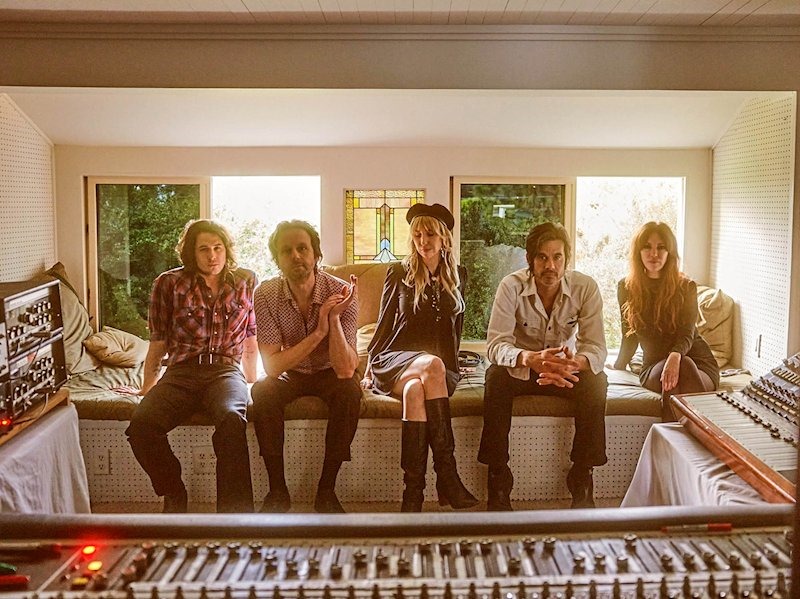
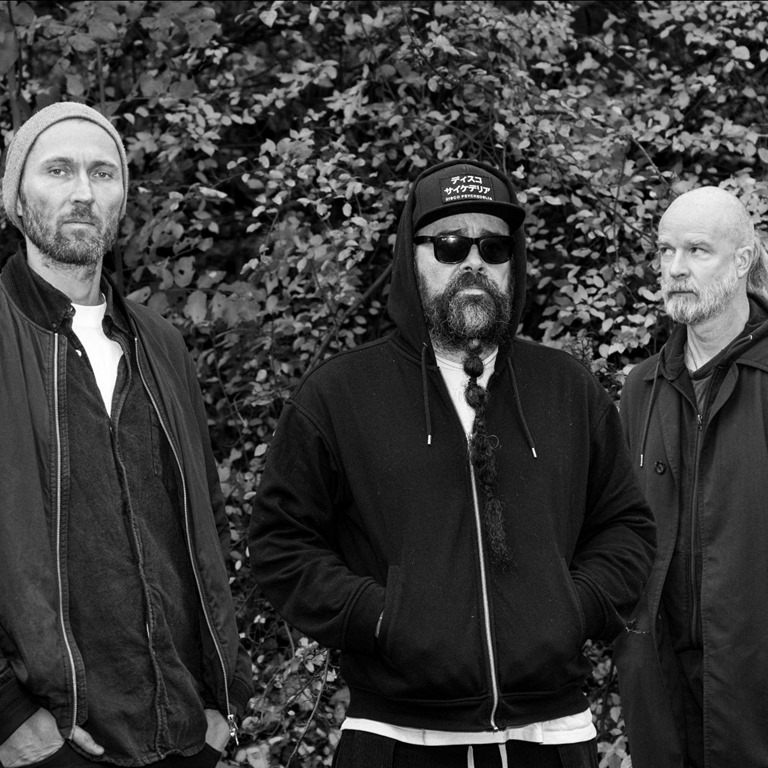
Los Angeles-based alternative rock quartet Cascades have released their debut single and video, ‘in moments’, offering the first glimpse into their upcoming EP liminality, due September 25 via Many Hats Endeavors. Blending post-hardcore intensity, shoegaze atmosphere, and alternative rock melody, Cascades arrive with a sound that is both expansive and deeply personal.

Check it here:

AA

Featuring Jeremy Hernandez (guitar, vocals), Bobby Kay (bass), Jenna Terranova (drums), and Shane Burns (lead guitar), Cascades craft songs that move seamlessly between vulnerability and aggression, atmosphere and impact.

Fans of Thrice, Deftones, and Circa Survive will find plenty to connect with in the band’s approach.

“It’s heavy until it isn’t. It’s quiet until it isn’t. And that’s kind of the whole point,” says bassist Bobby Kay.

While the members bring decades of collective experience to the project, Cascades is less a continuation of past endeavors than the start of something new. Hernandez is known for his work with Fearless Records bands Big Wig and Near Miss, while Kay previously recorded as a Universal Republic artist, shared stages with artists including The Roots and Bleachers, and currently tours with Interscope artist Lady Radiator. With punk-inspired Terranova anchoring the songs’ momentum and Burns weaving layers of expressive leads throughout, Cascades has forged a chemistry that feels collaborative and intentional.

“It’s been exciting to reconnect with Jeremy and then to meet Jenna and Shane to create this,” says Kay. “It just feels like it’s the right timing, but it doesn’t feel like a coincidence.”

Recorded with veteran producer Steve Kravac (MXPX, Less Than Jake) and mixed and mastered by John Naclerio at Nada Studios (My Chemical Romance, Brand New), liminality captures the band’s dynamic intensity and emotional depth in a sound that is raw, immediate, and cinematic.

AA

Bf4mznnlhINsoThLey24NOvvxCijdPz3QDgnYsqs

Photo: Errol Colandro

Superpang – 17th July 2026

Christopher Nosnibor

Jana Irmert’s catalogue is a body of work defined by ever-shifting focus, and her capacity to do so makes her an ideal choice for soundtrack work. Her bio features credits for receiving the German Documentary Film Music Award in 2019, and in 2021 she was nominated for an Edda Award for her sound design on Jóhann Jóhannsson’s film Last and First Men. She also created the soundtrack to Henrike Meyer’s auto-fictional hybrid documentary To Be an Extra, and this work in turn was respun to make When I Dissolve.

Portals, released last year, was an entirely different kind of soundtrack: produced entirely from field recordings made in the Amazon rainforest, it soundtracked a lived experience and captured the artist in nature, in the purest sense.

Her score for Jeffrey Zablotny’s film Messengers is different again, although does very much draw on elements of the natural world – albeit far removed from the rainforest, with the film being ‘a poetic exploration of three subterranean observatories hidden deep beneath Canada, Japan, and Antarctica’.

Sometimes, I wonder if reviewing a score independent of the film it soundtracks, and without having seen said film, is a good idea. But I would contend that the measure of any score is its ability to stand up without the visuals. And the Messengers soundtrack very much does – so much so that I find myself questioning whether to picture could possibly convey the quiet intensity of Irmirt’s score, which is designed around a vintage Yamaha Electone organ.

There’s depth and detail to the compositions here, with slow-moving analogue drones providing an earthy, organic feel throughout. ‘Dream Cabin’ shifts between atmospheres and brings together elements of light and dark, serenity and tension, playing them against and across one another. ‘Subatomic Collisions’ brings ominous echoes, unseen movements in the dark. Yes: there is something powerfully visual and sensory about this work. In places it’s dank, claustrophobic. I find myself holding my breath in suspense. With nothing to look at to guide or illustrate, the mind fills the spaces in interpreting the sound. And the imagination is always capable of inspiring a deeper fear, a deeper dread, than anything in life. I’m not talking about monsters or skeletons, although the mind will inevitably prey on your own worst fears. And largely, this is why we’re so often scared of the dark. The probability of there being a predator of some sort, or falling into a bottomless chasm are slim compared to, say, stubbing your toe or banging your head. But fumbling in the dark, perhaps along a narrow tunnel with damp walls, no-one fears a bruised toe or scraped skull. Darkness, and isolation, play into our biggest, deepest, most primal fears, because alone, in the dark, we’re at our most vulnerable.

The way Irmirt weaves the details into these pieces is incredibly subtle. There are no horror-like fear chords, no overt sense of impending doom or danger exists within the fabric of these compositions. And yet, with pieces like ‘Something is Listening’ with its reverberating clicks and shuffles and sonar-like droning pulsations, the sounds set you on edge. Note that it’s not someone, but something that’s listening. What is listening? We don’t know, because we can’t see: all we can do is sense it, and feel our paranoia swell.

There’s something almost David Attenborourgh about ‘Ultrapure’, a piece which would feel quite natural as an accompaniment to footage of jellyfish and angler fish and deep aquatic creatures moving in slow suspension – although equally it could be the slow-motion backdrop to scenes from a deep-space telescope with its tranquil images of nebulae drifting millions of light years from here and now – a sensation only accentuated by the slow tones of ‘Sleeping, Listening to the Stars in Darkness.’ Note, listening. Because as much as we think of space as silent, everything has sound. The stars are not static, but in constant flux, until they fizzle and fade or otherwise implode or swallow everything. There is both stillness and movement here: that is to say, listen closely to the stillness, and the movement will reveal itself.

Messengers is evocative, and inspires contemplation, a reflection of the contrasts between confined space and infinite space – and the similarities, in that both are dark and you will find yourself alone in that darkness with nothing but your thoughts and fears. Weaving through infinite passageways of ponderance, Irmert finally brings us to ‘Monuments to Our Questions’, and it feels as if this should offer some form of solidification to all of the abstraction which has preceded it. But like a shadow, like mist, it leaves us feeling that answers are illusory, things we tell ourselves to still the anguish rather than because we have attained conclusive knowledge. Ultimately, we know nothing, and are, and will be, forever fumbling blindly in darkness.

AA

PANG49 front

LEPER COLONY drop the first brutal advance track ‘These Blades’ taken from the deadly international trio’s new full-length Back to Primal Sludge. The third album of these death metal fanatics has been slated for release on October 9, 2026.

LEPER COLONY comment on ‘These Blades’: “This ferocious track whips uptempo filth your way and opens up a new breathing hole in your neck”, shred-master Rogga Johansson claims. “Meaty, fully fleshed-out riffs, mercilessly pounding drums, and a brutal vocal delivery deluxe are included. For us, ‘These Blades’ creates a perfect equilibrium between the American and Swedish approaches to death metal.”

AA

LEPER COLONY hold firm and relentlessly soldier on in their unholy quest to create the perfect equilibrium between the Floridian and Stockholm styles of old school death metal on their third full-length Back to Primal Sludge.

This defines Back to Primal Sludge in many ways as a direct continuation of their sophomore album Those of the Morbid (2025). Yet, there are twists and tweaks in the details. While the previous release offered a handful of references to deadly German influences, these have been further reduced just as the second album had dropped the classic thrash elements from the self-titled LEPER COLONY debut (2023).

AA

dec19258-e441-df61-75e9-cf0e7dee8a84

Raw Tonk Records – 15th May 2026

Christopher Nosnibor

I’m late to the party with this one. Can I pretend it’s fashionably late, rather than simply tardy? I’m going to say yes, since the event actually took place in 2019 and it’s taken till now to make its way into the world, but let’s focus on the fact that this is, indeed, one hell of a party.

Chewed Up And Spat Out was recorded in a one-off session in London. Hungarian master drummer Balázs Pándi (Merzbow, Thurston Moore, Mats Gustafsson etc.) was in town for a few days and contacted saxophonist Colin Webster (Sex Swing, Dead Neanderthals etc..) who suggested adding Matt Cargill (Sly & The Family Drone) to the session on electronics. And if that lineup isn’t enough, the whole thing was recorded and mixed by Tim Cedar of Part Chimp, who knows a thing or two about noise.

We’re deep in wild jazz experimentalism here, and this is apparent from the groans and honks of saxophone which warp and drone amidst a simmering cacophony of rolling drums – not so much a rhythm as a gathering storm. The electronic elements are subtle at first, a few bleeps and twitters of treble pass here and there while a low drone hums almost subliminally on the first track, ‘To Arise from Sleep’. But the drone mutates into a thick, throbbing pulsation which gargles like a digital didgeridoo on ‘Chewed Up’, while the percussion is more subtle, predominantly manifesting as clattering rim shots initially and the sax is similarly restrained, simmering under until it finally cuts loose. At over eight and a half minutes, counterpart ‘Spat Out’ is something of an endurance test, and works backwards, starting with a crescendo before lurching stop-start blasts of noise which almost approximate a riff give way to a prolonged freeform spasm.

Not only does it have the best title, but ‘Money Shitter’ is peak freak, one of those crazed cacophonous jazz monsters that starts like its ending and ends like its starting and never goes anywhere but at the same time flies in all directions simultaneously. It sounds like unplanned, unco-ordinated chaos – and perhaps it is – but the thing to remember is that it’s supposed to sound like that, and they manage to navigate a succession of explosive crescendos interspersed with subtler, more ponderous passages, and in combination, they interrogate the interplay between the instruments, the tones, the textures, the dynamics. The final piece, ‘Blot’, sees them inspect these sonic relationships in a more granular detail, ponderously pushing through a succession of peaks and troughs for almost twelve minutes. Here, the abrasive intensity is tempered in favour of atmosphere – although the mid-point finds Webster wringing some prolonged bleats over rolling, fluid beats, building to a frenzied extended crescendo and a slow collapse.

There’s a lot of movement on Chewed Up And Spat Out, an album which conveys not only great energy, but a physicality and kineticism – which does, ultimately, leave you feeling as the title tells it. This is the good shit, and by the conclusion, it’s fair to say that from a listening perspective, it does what it says on the proverbial tin.

AA

AA

a3118698241_10

zeromoon – 1st July 2026

Christopher Nosnibor

Gintas K’s relentless release schedule (Discogs lists a whopping 70 albums credited to him since 1999) continues with his second album of 2026, recorded, again, live, with no overdubs, ‘using computer, midi keyboard & controller.’ And while this album contains a not insubstantial seventeen pieces, there are a fair few which are barely over a minute in duration, meaning that it clocks in at under an hour, making it significantly shorter than Merzmania, released in March, with its seventy-five minute run time.

The title implies either sweet but harsh, or the brain froth of a surfeit of sucrose. This being Gintas K, it’s actually both, simultaneously. Sugar Noizy is by no means a radical departure from the vast majority of his work over the last decade, and that’s all to the good. Arguably, he’s emerging as Lithuania’s bubbly, glitchy answer to Merzbow, in that his sound is by no means as harsh, but he very much has a distinctive sound and style.

If anything, Sugar Noizy is rather more sparse and minimal than many previous releases. ‘geras noise ss’ is constructed around subdued trills of feedback, and it has that low-key, subdued, even vaguely muffled feel of ‘Never Forget Death’ by Whitehouse’ – minus the shrill, mangled vocals – but claustrophobic, quietly intense.

As ever, Gintas K’s work sounds like circuitry collapsing into a foamy, frothy meltdown, and amidst the bubbles and bleeps, a chaotic cacophony of dripping, glooping squelches and squiggles, Sugar Noizy is a hyperactive work that’s essentially intended to overwhelm. And it does. Even when it slows to an infrequent drip, you find yourself on edge, wondering what’s next. And when it comes to ‘letas noiz zem’, the answer is a mangled morass of fractured, stuttering distortion that sounds like your speakers are breaking.

Some of the shorter ‘interlude’ tracks are truly wild: ‘minutinis’ may be a minute long, but it’s fried, a complete frenzy, and there are a lot of moments – often extremely brief – which sound watery, and slow digital darkness drips amidst the freakout of dark, digital violence as the segments and elements intersect.

Like the majority of Gintas K’s works, Sugar Noizy is a discombobulating barrage of wibbles, dribbles, whirs and buzzes, fragmented shards and dying drones, often all at the same time – making for a nice addition to his ever-expanding catalogue.

AA

a2414828424_10

Christopher Nosnibor

Is it possible for there to be too much happening? This evening’s show was brought forward to a matinee start with 8pm finish in order to accommodate England’s World Cup quarter final match with its 10mp kick off. And while another tasty lineup headlined by Soma Crew on the other side of town got rescheduled, there’s also Super Furry Animals headlining one of the city’s biggest nights of the year at The Museum Gardens, and York Races. These are the challenges which can face promoters – and given other issues, like the first band on the original bill having to pull out because of being unable to make the earlier time slot, and Steatopygous having van issues that resulted in their having to cancel their Glasgow show the night before and having to be rescued from limbo in Leeds, it’s little short of a miracle that tonight even went ahead, let alone that people turned up.

It’s oft said that most music reviewers are failed musicians – usually by the kind of cynics who trot out lines like ‘if you can’t do, teach’, while themselves being incredibly self-satisfied by their having never attempted anything to fail at. And so it is that I find myself here as a last-minute replacement for The Pennydrops, who had to cancel, and while it’s true that the early doors meant the vast majority turned up after my set, I’d call getting to blast my racket without clearing the room a success.

Chaffinch may visually resemble York band Knitting Circle with an additional guitarist, but they’re very, very different indeed. And here, playing their fifth ever show, they cement the differences, not just sonically, but in terms of presentation, with all but the drummer playing the majority of the set in front of the stage, largely with their backs to the audience, with the jabbing twin guitars playing against and across one another to forge jolting No-Wave discord atop shuddering bass and powerful syncopated drumming. Their set is rapidly evolving, too, with a couple of new songs packed into their succinct and thrilling set.

DSC02510DSC02548DSC02575

Chaffinch

It’s here that I should once again highlight the eclecticism of Utterly Fuzzled lineups. As much as they do perhaps have a leaning towards indie, alternative rock, contemporary punk and post-punk, as Jo Dale explained to me in a recent interview, their fundamental criteria are ‘Absolutely no all-male line-ups! …We’re not genre specific, between us we have very wide musical tastes. Basically, if it excites us then we want to put it on, simple as that really’.

Even so, having seen Wiltshire four-piece Steatopygous (whose name, incidentally, means fat or prominent buttocks) advertised as ‘teenagers playing high-energy punk with a rather 90s riot grrrl feel’ and trading in ‘raging expressions of angered feminist teenage anguish did nothing to prepare me for the full-on aural assault that incorporates elements of hardcore and metalcore. With heavy, filthy bass dominating the dense sound, I’m at times reminded of the dirty noise rock of Fudge Tunnel, only rendered all the more terrifying by Poppy’s throat-rippingly demonic vocals. A high, crisp snare cuts through the sludge noise. But there’s subtlety and detail to their sonic palate, too. Mellow passages border on folk, with spoken word segments, showcasing some intelligent and articulate songwriting that’s so much more than mere rage. That said, their fiery and passionate final song, is a beast and whips up a mini-moshpit down the front, and that’s no small feat when it’s absolutely melting.

DSC02683DSC02642DSC02673

Steatopygous

So after extreme electronica, angular no-wave noise rock, and multi-faceted hardcore, Cowtown are perhaps the most overtly indie / alternative act of the night, but the thing about Cowtown is that, well, they’re uniquely Cowtown. Stalwarts of the Leeds scene in the same way as Bilge Pump (and, more recently, Objections, and Thank, for that matter), it’s the quirkiness that’s as integral to their appeal as their commitment to the DIY scene. Oh, and songs, of course. They have some songs. Good songs, too. But what are they about? Tonight, we get to find out about some of them. And so do they, seemingly for the first time, too. This is a significant part of the great and enduring appeal of Cowtown: they never fail to entertain, and as they race through the songs – grunge and punk at heart, but with pop keen leanings –with unbridled energy and effervescence, there’s a joy which radiates from the stage: they genuinely love doing what they do – and tonight, Hilary is loving the gong, a fixture of Utterly Fuzzled events used primarily to herald the commencement of each set, but here, used as punctuation between songs, and equally, just for the fun of it. And ultimately, fun is what they specialise in, bringing a near-miraculous evening to a most uplifting finish.

DSC02707DSC02730DSC02758

Cowtown

Cruel Nature Records – 31st July 2026

Christopher Nosnibor

It’s too hot. Granted, I make this complaint whenever it goes above 24C, but on day three – or maybe it’s day four or five or ten – of a 30-plus heatwave – the third heatwave of the year – I am absolutely dying. Typing is making me sweat like running a marathon. Hell, even thinking about typing is making me sweat like running a marathon. My brain is jelly.

The two bands have a side each on the vinyl, plus collaborative tracks closing each set.

I’ve devoted a fair quality of words effusing over the output of dour Derby dingemongers Pound Land, and as theirs is the second half of the album, I’ll focus first on the EMF who didn’t have any bouncy dance-driven indie hits in the 90s. Earh Mother Fucker formed in Ipswich – the hometown of the equally commercially-orientated Extreme Noise Terror – in 1988. Only unlike ENT, EMT (so close) didn’t record a bunch of Peel sessions, sign to Earache, or perform at The Brit Awards with The KLF before releasing a ridiculously rare collaborative single available only by mail order through Melody Maker or The NME. Again, so close.

Instead – and respect is due here – they’ve ploughed their own noise-rock furrow with a slow – very slow – flow of albums released on tape and CD-R. There was nearly a 20-year gap between Let Him Go Up (2001, CD-R) and It’s Shit (2020) and then another six years before the arrival of Do Not Resuscitate earlier this year. It seems they changed their mind, and are very much resuscitated, and two releases in a year is a real cause for celebration. Well, it is if you like Earth Mother Fucker.

There’s a sense that they don’t particularly want to be liked, and instead exist to test listeners with a uniquely English form of noise rock. Their solo cuts are scuzzy, grungy, abrasive and raw as it comes, but there are some sublime moments of melody, at least in the guitar department.

‘Happy Shopper’ powers in amidst a squall of angular guitars, landing primarily somewhere between The Fall and Sonic Youth. It’s a ramshackle racket, lo-fi grungy, gloriously unpolished. ‘Changeling’ does low-slung twisted country crossed with wonky noise and vocals – half-spoken, half-shouted, bridging Enablers and A Band of Susans. That’s a substantial gap to bridge, superficially, but Earth Mother Fucker span it with discordant, chaotic ease.

‘Puppy Fat’ is very much a spirit of 77 punk blast at heart, but twisted with a strong element of Krautrock as defined by its motorik beats, and almost veers into Fall-like Mancabilly. It also feels like the optimal summary of what EMF are about.

‘Second Aunt’, with Pound Land is a raucous maxed-out rendition of Eno’s ‘Third Uncle’, but based more on the Bauhaus cover than the original, and manifesting as a wild punky thrashabout.

Pound Land push things further still, ‘Liar’ being a rampant roar of disaffection. The bass is thick and booming, the production as gloriously primitive as the sax freak-out that runs all over it is wild. They lumber into even sludgier territory on ‘Janet’s Here’, a mangled mess of noise and snarling vocals atop that gut-churning bass giving it a hint of early PiL. ‘Feeling Sick’ lumbers and lurches in such a way it becomes a work of self-fulfilment, a musical manifestation of dire disgust and seething (self) loathing.

‘Shitoctacy’ sees Pound Land joined by Earth Mother Fucker, and is a true monster, with a collage of sped-up samples overlaid across some weirdy, warping drones before a ten-minute trudge begins, grimy bass and spewing vitriol atop the nastiest, most discordant racket, and from time to time there’s some pained sax from Jo Stone which wails in anguish over the whole heaving mess.

As split albums go, this one couldn’t have been better curated: it feels like the two bands – particularly with the collaborative works – are egging one another on to take the levels of grime and slime and nauseating churn up, notch by notch. The result is gritty, gruelling, and spectacularly visceral.

AA

cover

Emerging in the early 2020’s, Static Abyss is a monstrous hybrid of twisted, doom-laden brutal death, comprising of longstanding members of the US metal scene. The band consists primarily of the duo of Deathgrave’s Greg Wilkinson (Guitars/bass) & Chris Reifert (vocals), both also members of legendary American masters of sickness, Autopsy, with Chris also notably starting his career with genre pioneers, Death. The band’s debut, ‘Labyrinth of Veins’ was released in 2022, and their second album ‘Aborted From Reality’ followed in quick succession, surfacing in 2023.

Returning now for Static Abyss’ third studio album, and with the addition of Chad Gailey of fellow death merchants Necrot behind the drumkit for this release, The Dying Hunt plummets the listener again into the festering, psychedelic swamps of lunacy, with the spiralling melodies texturing the relentless savage riffs for an effective nightmare-inducing trip through the sonic abyss. Continuously and relentlessly flitting between brutal passages and hypnotic otherworldly craziness, The Dying Hunt reflects the ailing world & the unravelling of the psyche of its inhabitants in this darkly dystopian landscape, for a masterful descent into sick Death Metal combined with Crust and Doom elements.

Ahead of the album’s release at the end of August, they’ve shared a video for the album’s savage title track, which you can check here:

AA

Static Abyss

Photo by Fern Alberts

Of this new release, Electronic Producer and DJ Huw Cadwaladr, says, ‘I Believe’, never originally intended for public release, offers the first glimpse into the world of Cambria Nocturna. The track marks a departure from the electronic work Gruff and I previously created as Carcharorion, moving toward a more songwriting-driven and lyrically expressive approach. While evolving creatively, the project continues to explore our shared love of cinematic electronic sound through experimental tape loops, field recordings, analogue instrumentation, and richly textured production. Originally conceived as a post-punk composition before transforming into a driving techno piece, ‘I Believe’ evolved over many months into its final form — a confessional and emotionally charged work. Recorded by Gruff and myself, and mixed by Alexander Green at The Zoo, the track became the first true catalyst and creative foundation for what would eventually become Cambria Nocturna.

Cambria Nocturna itself emerged from a period of profound personal trauma. During this time, I reconnected with Gruff after more than a decade apart, and together we began experimenting once again. What started as artistic collaboration quickly became something deeper: a source of healing, catharsis, and genuine therapy.

Through channeling these emotions creatively, Cambria Nocturna was born — a sonic tapestry of deeply atmospheric electronic music shaped by raw emotion, human connection, and resilience. By merging analogue electronics with acoustic instrumentation, we drew from a broad spectrum of influences, spanning 90s trip-hop, techno, electro, 80s Italo, and alternative electronica, alongside the work of artists such as John Cale and Nick Cave.

‘I Believe’ marks the beginning of a new chapter: emotionally resonant electronic music rooted in vulnerability, transformation and defiant survival— with further releases set to follow.

Hear ‘I Believe here:

AA

Emerging from a period of profound personal upheaval, Huw has created a sonic tapestry of deeply atmospheric electronic music shaped by raw emotion, resilience, and human connection.

During a time of recovery and reflection, music became both an escape and a lifeline. Around this time, he reconnected with Gruff, his longtime creative partner in Carcharorion. After more than a decade away from creating together, the pair began experimenting once again, discovering that the process offered not only artistic fulfilment, but genuine therapy.

The result is Cambria Nocturna: a deeply personal project born from vulnerability, reflection, and survival. Never originally intended for public release, the project became an honest exploration of emotional darkness, connection, and self-expression.

The debut single, ‘I Believe’, marks the beginning of this new chapter – emotionally charged electronic music rooted in atmosphere, honesty, and catharsis, with more releases set to follow.

Outside of his own music, Huw is also a presenter on Radio Sudd, where he hosts a show focused primarily on club-based electronic music.

AA

hkWFERV6JSbT

Kyiv Dispatch – 17th July 2026

Christopher Nosnibor

For those of us who have never lived through war – domestically, that is – it’s hard to imagine what life is like. Living in the UK, I have the privilege of not having experienced it: both of my parent were born at the end of the second world war and lived under rationing as children, but they didn’t grow up living in fear of bombs falling. And while I look out into my back yard and see the brick and concrete bomb shelter which I use to brew beer, it’s beyond my conception to imagine what it must have been like to live in a time where I would actually have to take refuge in it, although the part of York where I live – or nearby – was bombed in 1942, with numerous some 94 people killed and 238 injured by some 84 tonnes of bombs, dropped in just 90 minutes.

But the fact is that life goes on – because it has to. And art is still made – because what else are artists to do? The title of this release is a little confusing, but the text which accompanies this release, which is particularly powerful, and speaks of the effects of war on the citizens of those countries stricken by war sheds some light on the questions of artistic ownership. It also highlights the fact that wars are waged by governments, not the people. and so we learn how ‘In 2022, with war in Ukraine raging, the composer Valentin Silvestrov was forced, at the age of 85, to flee Kyiv, abandoning his home studio. Silvestrov is one of the leading figures of the Ukrainian musical avant garde, active from the early 1960s onward and for Evgeny Gromov, Ukrainian pianist, researcher and curator, his forced departure was a tragedy, his absence keenly and personally felt’.

The notes go on to explain how this prompted him ‘to hasten the release of this double album, on which Gromov performs key piano works by Silvestrov, from his early, modernist period to his later, more beautifully accessible pieces. The sense of urgency is not just because Silvestrov is approaching ninety years old but also out of the daily sense of mortality felt by all those living in Kyiv. Hence also the founding of the Kyiv Dispatch label in 2022, dedicated to showcasing the full spectrum of Ukrainian new music. Both artistic and existential immediacy underpin the album, as Evgeny Gromov explains: “A great deal of Silvestrov’s music simply does not exist in sound. It exists as scores, as reputation, as a name but not as a lived, performed body of work. There is still no real tradition of its performance. For decades I have been working with this music across its full range, from the early avant-garde works to the later Bagatelles. In a sense, I am its performing extension. And at a certain point it became obvious: if this is not played now, systematically, insistently, it will remain absent.’

This is significant. How much art, how much thought, is lost in time due to an absence of documentation? This, then, is more than a matter of the impacts of war, but also a question of legacy, and of ephemerality.

Recorded in just four days, Moments Of Silvertones is Gromov’s urgent, even desperate, attempt to capture and document the work of Valentin Silvestrov, and we are all fortunate that he has. ‘Five Piano Pieces 1961’ is dramatic – essentially neoclassical in style, in places playful, in others feeling more moody, while ‘Triad 1962’ is very much more geared toward the delicate side, but again revealing a levity which counterbalances the shade.

The expansive ‘Piano Sonata No 2’- extending to almost sixteen minutes in duration, is a magnificently balanced work, and entertaining, playing with the tropes of jazz and minimalism as well as classical music with some bold hits resonating as hard as falling down a flight of stair, and evoking the spirit of silent movies – although it’s a fair way from Laurel and Hardy. Because it’s as a bygone age, and as much as we may wish to remember it fondly… we are increasingly drawn by nostalgia, as we cling with ever-increasing desperation to a past which felt to much better, so much easier, but, despite its focus on compositions from the 1960 (in its first half, at least), while also being devoted to preserving the more recent past (the ‘Bagatelles, Op.’ pieces dating from 2003-2006), Moments Of Silvertones is ultimately a collection of pieces which are delicate and soothing. And despite the conditions of its recording, nothing could be further removed from war or its soundtracking. This is what it means to be human. Moments Of Silvertones is an album hat needs to be heard as a reminder of this – and also because it’s an example of magnificently poised composition and beautiful musicianship.

AA

Valentin Silvestrov – Moments of Silvertones, Evgeny Gromov digital cover