Posts Tagged ‘Intensity’

The Fulford Arms, York, 16th July 2026

Christopher Nosnibor

The Fulford Arms is great for many reasons, but one is the diversity of the shows it hosts. It’s also something of a haven for metal, with a couple of promoters putting on solid lineups of four bands for a tenner or so. The popularity of metal in recent years – particularly of more extreme persuasions – may well be a sign of the times, and I’ve written previously on the uplifting, even euphoric, qualities of a decent metal gig, and it very much does seem like a fair few here tonight are simply wanting to cut loose and have a blast while being blasted by dark sonic forces.

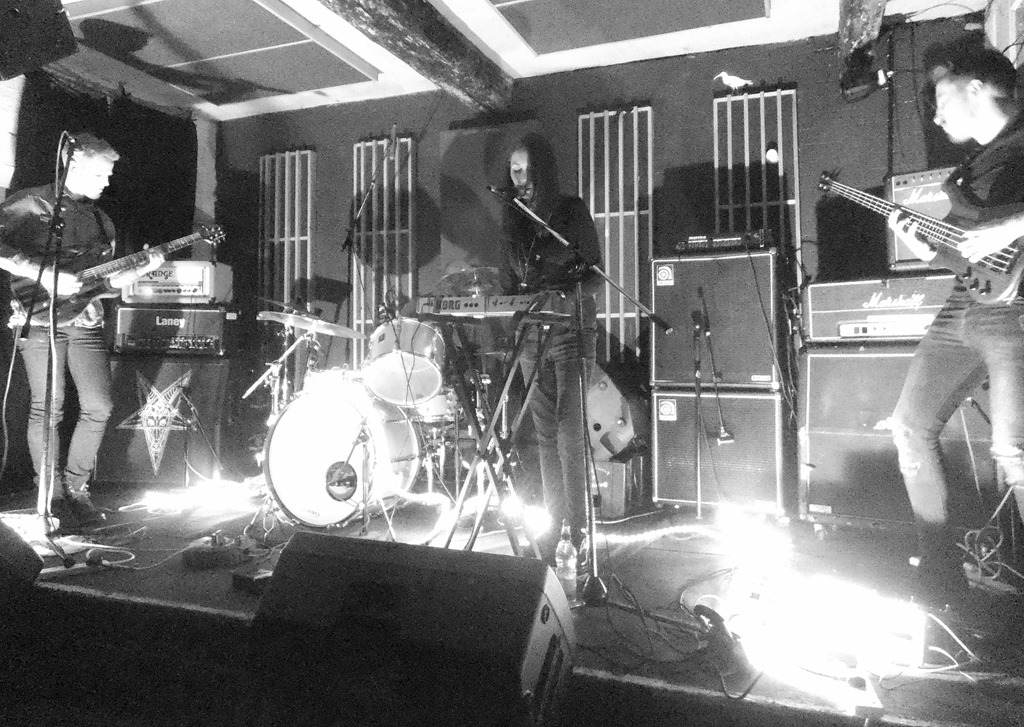
First up, Damage Control – not the international electroindustrial quartet signed to Metropolis Records, but a York-based three-piece, whose guitarist is a particularly lanky sod. Their set consists of back-to-back, nonstop, fast, raging thrash. The energy inspires some early two-stepping. mostly by one immensely tall bastard with no spatial awareness slam dancing himself. I know I’m on the shorter side, and also, at the age of fifty qualify as an old bugger, but fuck me, how are kids today so fucking massive? Anyway. It makes for a good start to the night.

DSC02782DSC02790DSC02812

Damage Control

Drior are from Nottingham and making their York debut. Their thing is old school death metal with titles like ‘Living Cadaver’. They’re appearance is unprepossessing, simply an assemblage of shorts and T-shirts, but what they do is slow, dark, heavy, and yes, I’ll say it – crushing. The drummer is the main vocalist and growls with a look of malevolence in his eyes. The drumming itself is perhaps a shade loose given its dominance, but the trio pack a commendable sonic density.

DSC02839DSC02848

Driot

As is often the case with lineups like this, there’s a step up with every band – although not in the same way as it was in the 90s, when the headliners weren’t only given a superior mix but about 30% additional volume. This very much did used to happen, incidentally, at the same time the supports would often have to pay to play, too. The music industry has found new ways to shaft emerging artists since, but anyone who thinks there was some golden age is misinformed or misremembering. By the same token, band have to be so much tighter and more professional now. I’ll park that here for another time, and instead focus on the fact that Exorcism are all out fury from the offset. And they’re relentless. And loud. Perfect.

 DSC02854DSC02889

Exorcism

Blasphemer are worthy headliners. They bring the thickest, densest, filthiest racket, churned out via a bristling host of spiky guitars – and their drummer can drum alright. The venue is far from packed, and it seems that Damage Control and their mates have had to go home, but given that it’s the night after England’s World Cup defeat and the hands of Argentina (again) and it’s a Thursday after the students have gone home, there’s still a fair crowd getting down to these guys.

DSC02911DSC02942DSC02967

Blasphemer

Blasphemer are a blast, with full on riffs from start to finish. There are moments that stall me and me gnaw on some questions. They announce a song called ‘Grooming Gang’, and as the lyrics are impenetrable, I’m left to ponder their position. Obviously, I hope they’re not racists, just as I hope they’re not brash metal edgelords, too, as they also play a sample of the voicemail message left by John Samuel Humble, also known as Wearside Jack, who submitted hoax calls and under the guise of The Yorkshire Ripper. ‘I have the greatest respect for you, George..’ It feels rather less exciting or edgy here in 2026 than it did in 1986. Call me sensitive if you like. Still, they kick arse and are nothing short of phenomenal to watch, and are exactly what you need from a midweek metal bill.
Christopher Nosnibor

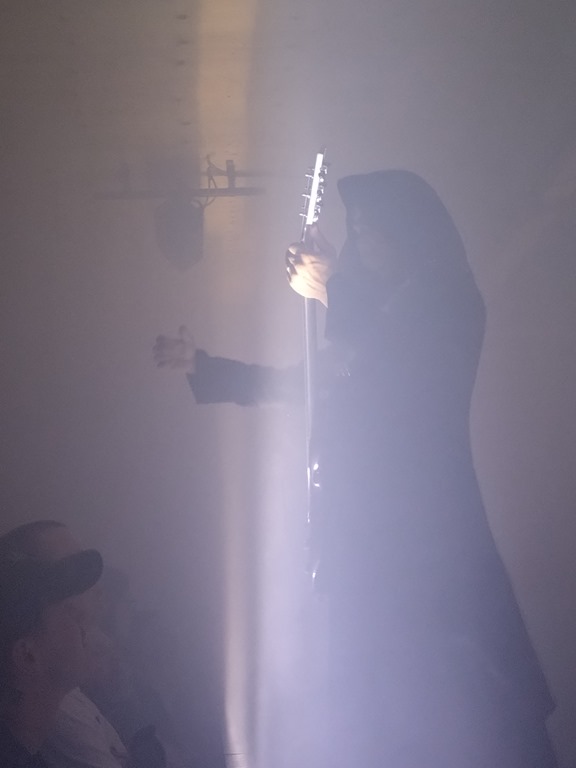
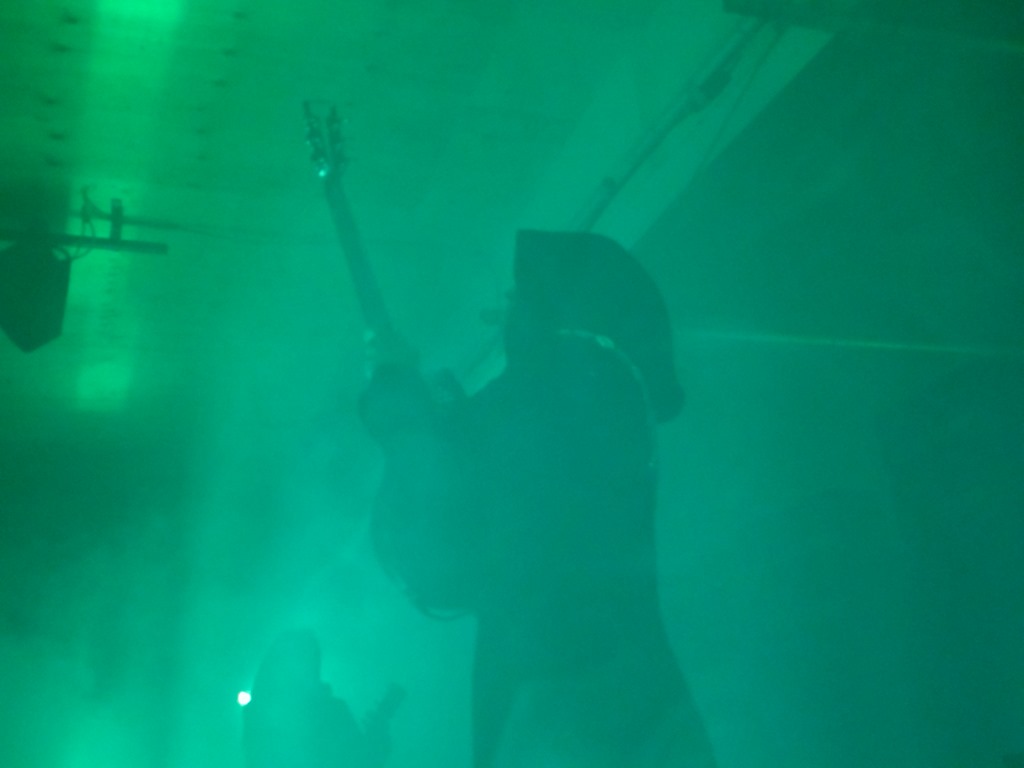
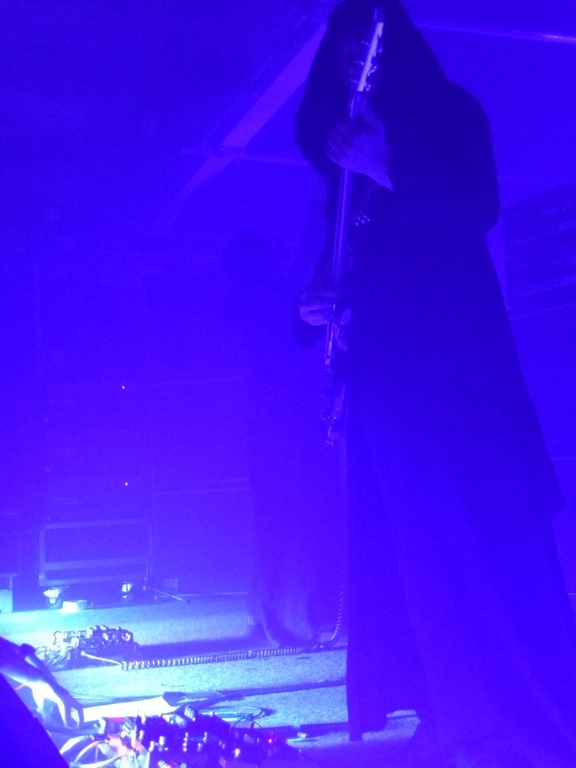
I can still smell the smoke on my clothes and skin. I can still taste the smoke. Not tobacco smoke, as used to be the case way back (although more recently than seems possible), but smoke machine smoke. Back in the 90s – and no doubt prior – gigs would often leave this lingering residue embedded within the senses. But some time, around the turn of the millennium, perhaps, there seemed to be a change in the formula of smoke used at most live events, in favour of something less dense and noxious, and which didn’t make you sweat so much, with most fog formulas now being advertised as being white, without ‘unpleasant odour’ and ‘leaving no oily residue’. Sunn O))) seem to have managed to hijack an entire tanker’s worth of the old vegetable oil-based stuff and pump it out at a rate of gallons per second during the entirely of their set, which, despite featuring (apparently) five tracks, has a colossal duration in the region of an hour and three quarters.

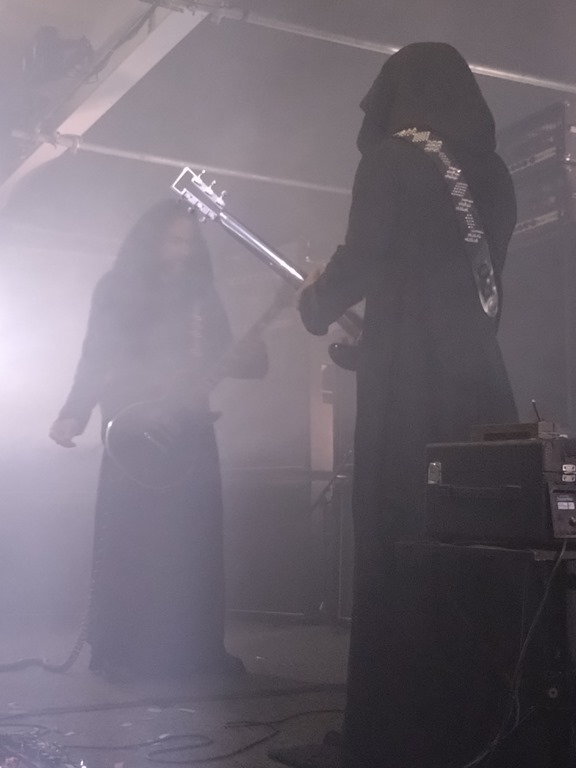
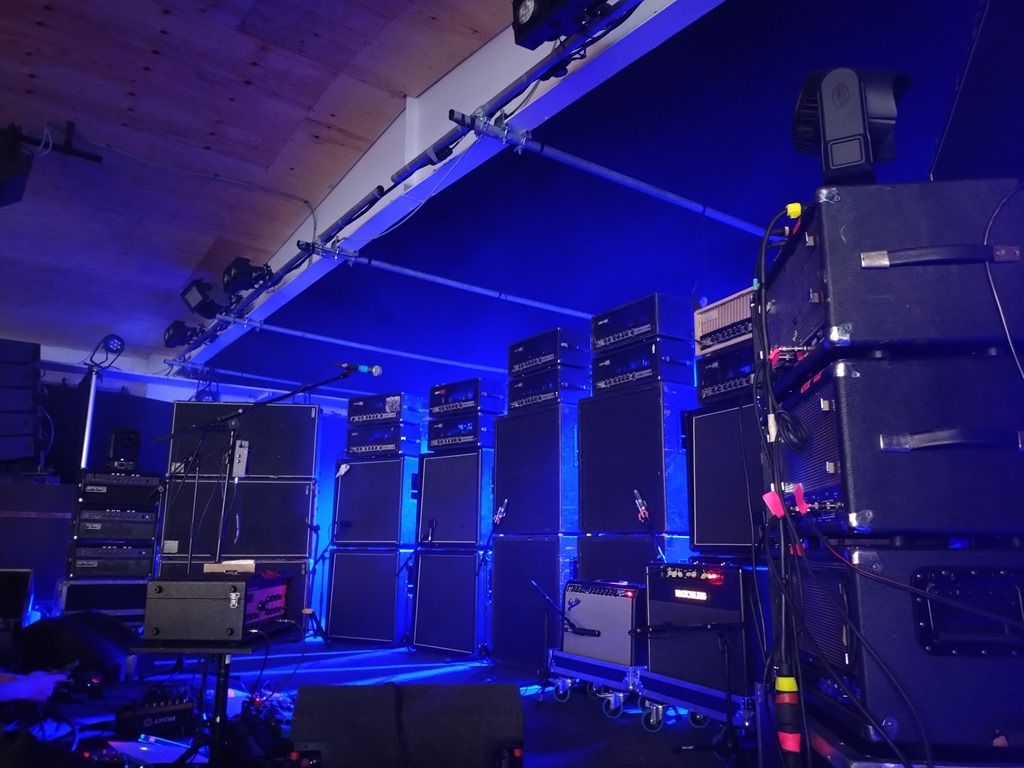
So much of the Sunn O))) experience is steeped in ritual and ceremony. From the hooded robes, the power of incense drifting in amongst the smoke from the machines, the wielding of the guitars as eternal drones ring in sustain from the amplifiers. Those amplifiers, vintage valve amps, stacked almost to the ceiling my towering monoliths, arranged in such a way as to resemble the interior of a prehistoric monument, bathed, before the show begins, in a celestial blue hue, inviting worship simply by their looming presence, even when silent.

20260701_193205

AA

Black Mountain make for an interesting choice of support, and an appropriate contrast. Initially, they present as a quiet acoustic folk duo. There’s some chat at the side towards the toilets and bar, but the swelling audience is largely quiet and respectful in front of the stage. Their second song introduces drum machine and distortion on the guitar, and while the harmonious form doesn’t change, the texture very much does, with squalling desert rock overtones and bluesy strains and a dash of 70s rock filtering their way into the songs throughout the set, which is pleasant – not in the vague, not much of anything sense, but mellow and melodic and low-key. It’s a most enjoyable half hour which contrasts nicely with the earth-shattering experience which follows.

20260701_200112

Black Mountain

By way of an intro, they play all of the talk from between the songs from an entire live set by Venom, the progenitors of black metal (something Melvins did with their ‘Cowboy’ single, which was equally frustrating). It made for a long and twitchy eight minutes of suspense that felt like an eternity. But this is Sunn O))) all over. Their entire ethos seems to be based on the question of ‘how far can we actually push this?’ – and when they find what must surely be the absolute limit, they nudge it a bit further, and then further still. And as it played on, and on, the stage began to flood with smoke… and more, and more smoke, until it became completely impenetrable. Vertical LED beams along the front of the stage illuminate the smoke in such a way as to create a curtain which renders the stage itself invisible when viewed from the other side.

20260701_21550320260701_21130120260701_213357

Sunn O)))

Anderson and O’Malley are guided onstage with torches, and moments later the first chord strikes. Immediately, everything shudders. The very air quakes as I feel my flesh quiver and my ribs, my lungs tremble. Time immediately stalls. And something strange happens. Perhaps I enter something approximating a trance-like state. Whatever it is, I find myself utterly spellbound, and borderline hypnotised by the combination of the spectacle and the sound. It’s not zoning out, but zoning in, fixated on the tones and textures, and the way the two interact and interweave, catching glimpses of the band in the brief moments when the smog thins.

Stripped down to a two-piece, the volume is typically obliterative, but it’s clear they’re fully immersed in exploring the spaces between the notes, more subtle dynamics of the way certain frequencies resonate. The sound is remarkably clear, and while there are howling walls of feedback, the sonic spectrum is predominantly low-end, meaning that there’s no tinnitus-inducing harsh treble (at least not with earplugs, and everyone I see is suitably equipped), and as a consequence, it’s easier to simply bask in the huge throb which envelops every inch of your being. The first two tracks are run together as one continuous piece, a full hour in duration, and at this point, the smoke reaches a new peak of density. It’s beyond suffocating, you can’t see your own hand let alone the stage, from which emanates the most brutal howl of feedback yet. But there’s no checking your watch to puff that only twenty minutes have elapsed, and they’ve barely played three notes. Some people move further back to escape the full force of the backline, but the majority simply stand, transfixed. This is peak Sunn O))). As much as there’s a sense that they’re testing us, they’re also testing themselves, and revelling in the theatre of it all. It’s high art.

20260701_214503IMG_20260701_223302

More smoke blasts across the stage like a tidal wave. Everything is vibrating, from my nostrils to my buttocks. I’m amused to see people nearby attempting to film clips of the show, only for their phones to be completely submerged in billows of smoke – which are an analogue of the billowing rumble radiating from the stacks of speakers, and with the backline alone capable of filling the 1,000 capacity with that organ-bothering low-frequency drone, the fact they’re all in turn mic’d up only adds layers to this oceanic swell of sound. Anderson and O’Malley don’t so much strike chords as mildly stroke a string to set off another devastating avalanche of sound.

IMG_20260701_224203

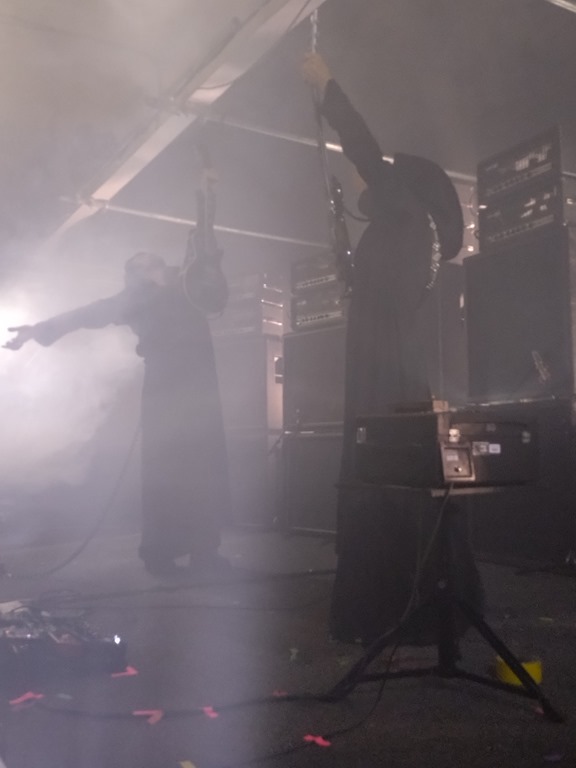
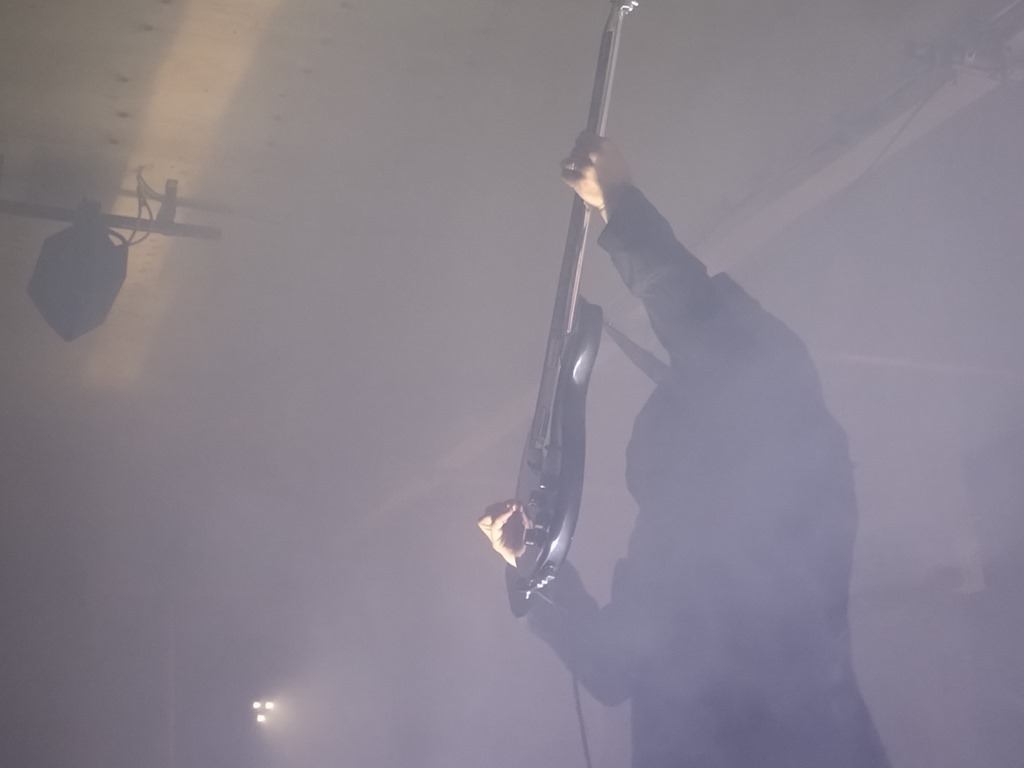
Towards the end of the set, O’Malley lodges his guitar on top of a stack, wedged against the ceiling, before subsequently hanging it by the neck from a power cable above, and letting it swing from the rafters.

And just like that, it stops. The smoke clears, and the two men step forward and receive – humbly, and with gratitude – the most rapturous applause. Because for all of the theatre involved in creating the separation between band and audience, the obstinate absence of engagement, for the pain-threshold volume, the appreciation flows both ways. It’s a joyously respectful experience: no chat (as if!), no heckling, but a symbiotic exchange based on pure immersion in pure art. And tonight, we’ve witnessed an ascendency to a new pinnacle. Pure transcendence.

Christopher Nosnibor

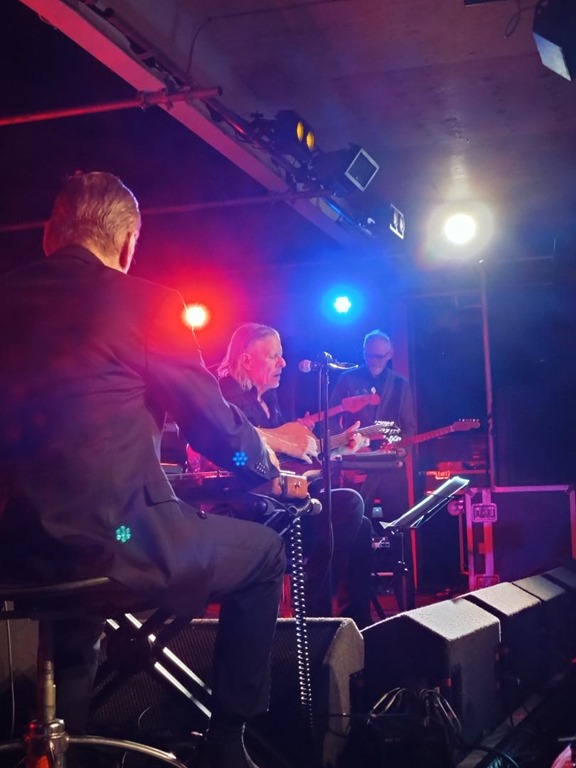
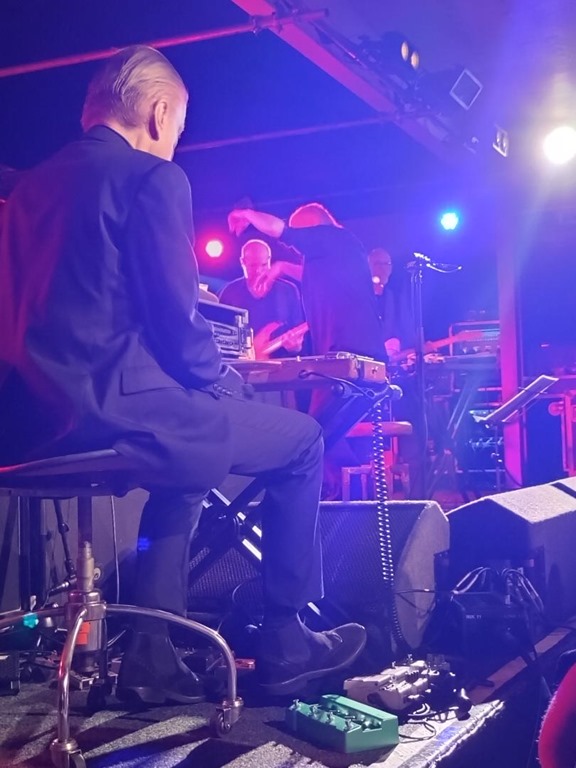
The last tour of Swans’ current iteration, drawing the curtain on a succession of albums – and tours – which have been truly immense in every way: the build-up felt like the end of an era. The event itself, perhaps less so. At one point, someone calls out a request. “We don’t do that,” Gira explains, in a kindly manner. He seems pretty relaxed tonight, and smiles a fair bit. No-one in the band gets bollocked or scowled at, and they all seem to be having a pretty good time.

But no, they certainly don’t do ‘that’. You don’t go to see Swans expecting to hear choice guts from their extensive back catalogue. You don’t even go expecting to hear songs, at least not in any recognisable form. The versions of recorded songs bear only limited resemblance to their studio counterparts, twisted, stretched, and otherwise evolved while on the road to a point whereby they’re almost new songs entirely. Recent shows have seen the band playing sets spanning a full two and a half hours, while only featuring six songs.

Before we come to Swans, Jessica Moss, who, amidst an extensive catalogue of work over the course of a lengthy career, is best known for her contribution to Thee Silver Mt. Zion Memorial Orchestra and being part of the whole Godspeed You! Black Emperor milieu. Tonight, she plays a rendition of her latest album, An Unfolding, in its entirety, and it’s breathtaking. Her nuanced violin and vocal work is augmented with booming, resonant bass tones. There’s a lot of yakking at the bar and further back in the 1,000 capacity, sold-out venue, where the house light stay up toward the rear of the room for the duration of the night, but for those of us in the front two-thirds, it’s a spellbinding experience, which perfectly sets the tone for the main event.

Moss’ half-hour set is over by around 8:40, and Swans, after a few brief checks, take to the stage around ten minutes later. Gira politely asks that there are no cell phones – “at least not where I can see them”, before he begins strumming a monotonous at two strings. He does so for what feels like an eternity. Or perhaps not. When Swans play, time takes on a different meaning, and it’s been a feature of this current iteration that the songs evolve and elongate over the course of the extensive tours, transforming and transmogrifying over the weeks and months on the road. They’ve been touring Birthing and this ‘farewell’ for a fair while now, although the set on the most recent leg has only featured ‘The Merge’ from said album. With ‘Paradise is Mine’, from The Beggar, and ‘A Little God in My Hands’, from To Be Kind, this is as close to a retrospective set as you’re likely to get, but none of these songs much like the studio versions, and half the set therefore features material which is either new or so far removed that it’s been retitled as well as restructured. But as I say, you don’t come to a Swans show for the songs. You come for the experience. And what an experience it is.

S1

It’s fair to say that there is simply no other band like Swans. Their reputation for extreme volume is only part of the story, a piece of the equation. Older fans who saw them in the 80s love to regale with tales of people throwing up, passing out, and so on, and that they’re pretty tame these days, and I have no reason to believe that these are purely apocryphal. Gira just can’t do quiet: even his solo acoustic sets playing smaller venues circa 2003 / 2004 were fucking punishing.

Some time in, Gira downs his guitar and stands up, turning to face the band, and flails his arms as if experiencing some kind of rapture or episode. But every gesture is a signal, from which the band members – there are six of them, plus Gira – and his near-psychotic choreography guides them through ebbs and flows, to ever greater, more intense crescendos. It’s maybe half an hour before the full drum kit kicks in, and I feel my nostrils vibrate with the sheer quantity of air displaced from the speakers. It’s transcendental, euphoric.

S2S3

A number of people who had started the set near me in the front row dissolved. I didn’t really notice when: like almost everyone else, I was simply transfixed. And yet, this was by no means loud by Swans standards: while I can’t claim to have witnessed the nauseating brutality of their early years, or the notorious punishment of the Burning World tour (ironic that their gentlest album, released on a major label, should have been served by a tour of such infamous volume… or perhaps not, perhaps it was a statement to prove that they hadn’t sold out), their shows at Leeds Stylus in 2016 and 2017 were something else – something so intensely physical, it hard to find the words. Then again, on their last visit to Leeds, playing at The Belgrave, I found myself thinking ‘this isn’t so loud’ but before long finding myself dizzy and wondering quitter where that immense noise had grown from. And this is perhaps an indication of how they’ve evolved. The bludgeoning force is still very much present, not least of all with two basses and the return of Norman Westberg to the lineup – surely one of the world’s most patient and understated guitarists, content to stand, not playing for ten to fifteen minutes, before battering away at one or two chords and thirty BPM for the next fifteen minutes, creating noise and texture rather than doing the conventional ‘guitarist’ thing – but now it’s more subtle, growing building, slowly, so slowly. A tweak here and there, another player adds a later, and while you’ve been watching the dynamics of the two bassist and Gira’s windmilling, the volume has increased threefold and your ribcage is rattling and your brain is slowly scrambling. Kristof Hahn does things with lap-steel that is beyond comprehension, cranking out squalling, screaming walls of noise – but there isn’t a weak element in the lineup. They each bring something unique, and the collective output is something else.

If this is the end of Swans doing big band, big noise stuff, then they have certainly delivered a finale of spectacular proportions. And whatever comes next, we look forward with bated breath.

Christopher Nosnibor

It may only be nine minutes on foot from the station according to Google Maps, but despite having probably been maybe twenty or even thirty times, I still find myself struggling to find it, even with GPS assistance. I have no idea why: it’s like I have some kind of mental block, or the venue has some kind of cloaking device that blocks my internal geographical radar. And so I’m disproportionately pleased when I find myself within yards of the venue without taking a single wrong turn. And then I remember the bar doesn’t take cars, and despite having intended to get cash at York station, then Leeds station, then en route, I’ve sailed past all of the cashpoints and only have about four quid on me. Even with beer at £2.80 a pint, I might be a bit thirsty at the end of the night.

I still make it back, with cash, before doors, and they’re not quite done soundchecking. The fact I’m considering plugging up just for the soundcheck brings a small buzz of anticipation: we’re here for some hefty riffage, and it’s best experienced at an appropriate volume. If it doesn’t hurt, it’s not loud enough.

Leeds drums and bass duo Calm are an interesting proposition on paper, consisting of John Sutcliffe from Canvas, Humanfly, Kings, Natterers, and Paul Handley from The Plight, Kings and Ladies Night. In the flesh they’re interesting, too: at the opening, oscillating sequenced synth lines bubble along beneath woozy bass before the distortion crashes I like a tidal wave of sludge. The drums are more energetic than the low-BPM grind of the chords. Structurally, the compositions are segmented and almost sound like three or four pieces glued together, but the transitions make for a set that holds the attention well, and as Sutcliffe, on drums, intones mystical droning incantations into a sea of reverb against a wall of low-end that sends vibrations through my steel-toed boots, the experience takes on an almost spiritual quality.

Calm

Calm

A Headless Horse bring a much more sedate atmosphere with mellow female vocals and delicately layered, meticulously structured songs. Their songs are keenly focused on texture and melody. In contrast to Calm and the rest of the lineup, there’s significantly less weight, and less emphasis on volume overall: that isn’t to say they’re quiet, but when they bring in the riffs, they’re not obliterative, but simply denser. Comparisons aren’t everything, but The Cure and Cranes provide fair touchstones here, and Headless Horse demonstrate that they’re capable of delivering mathy post-rock with emotional resonance. Given that this is only their second outing, they show a lot of promise.

A Headless Horse

A Headless Horse

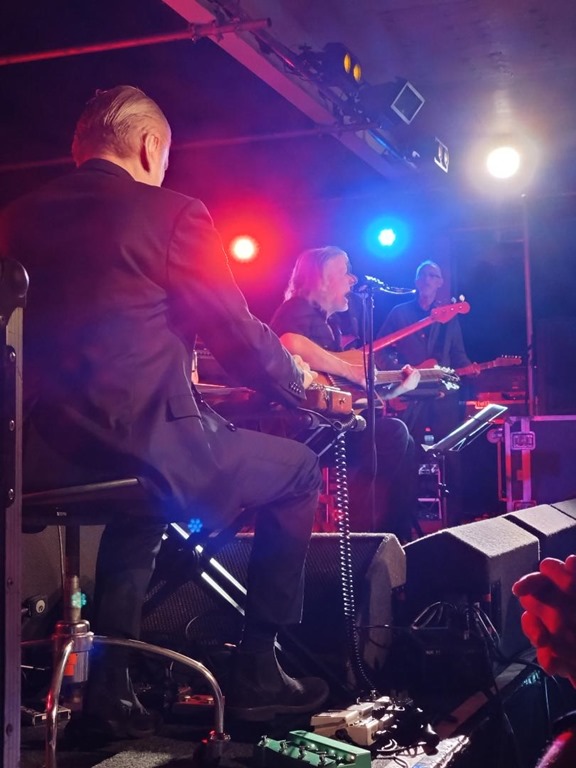
There’s a proliferation of beards tonight, and Dystopian Future Movies are very much a beard band (singer / guitarist Catherine Cawley clearly excepted). They’re also a very much an atmospheric band, and a band who exploit the dynamics of volume to optimal effect, as abundantly demonstrated by the choppy stop/start lumbering riff of ‘Dulled Guilt’ which opens the set powerfully. Their description of themselves as ‘taking a Sonic Youth approach but arriving at some dark place between Neurosis and Chelsea Wolfe’ is pretty accurate, and they pull the listener in with slow-burning ethereality that yields to punishing riffery, without at any time falling into the trap of formula.

Dystopian Futuere Movies

Dystopian Future Movies

This four-date joint tour sees DFM and Grave Lines unveil a collaborative / split EP, and they’re joined on stage by Jake Harding for a killer rendition of ‘Beholden, which begins a brooding whisper, almost folky in feel, before erupting into thunderous power chords The vocal duet is magnificent: the two singers intertwine with Hardin’s baritone croon underpinning Cawley’s graceful, evocatively gothic intonation to conclude a mesmerising set.

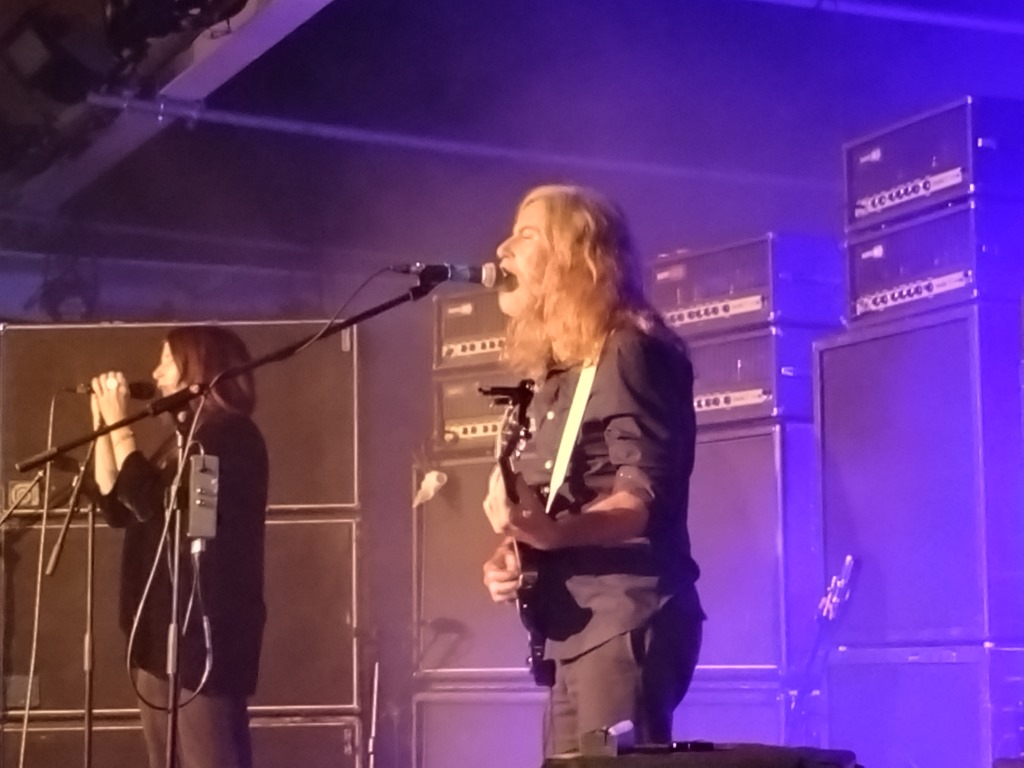
Grave Lines stand out as being very much different from their peers by virtue of the exploration of extended quiet passages that are as much dark folk as post-anything, while exploiting tropes commonly associated with post-rock. This imbues the songs with a palpable emotional depth, and when they crash in with the u-to-eleven distortion, it hits hard.

With ragged hair and beard, wrists and shoes wrapped in grubby shreds of bandage, and a dingy off-white vest, Jake Harding cuts a dramatic and tortured figure as he spews anguish and nihilistic fury, his body tense and wracked, over low, slow sludginess; then again, guitarist Oli, with Alan More hair and beard and sporting a torso so tatood as to appear to be wearing a heavily patterned shirt brings a stoic intensity that’s in stark contrast to the laid-back drumming of Julia Owen, who has an airy style of playing that belies the force with which she delivers stick on skin.

Grave Lines 2Grave Lines

Grave Lines

And yet it’s when Harding ceases words and spits a guttural ‘urrggh’ that most succinctly articulates all the pain and frustration the band channels.

Caroline from Dystopian Future Movies returns the favour of providing additional vocals on Grave Lines’ contribution to the new EP, the epic ‘False Flame’, and they take things right down for the penultimate track of a remarkably concise – but suitably hard-hitting – set with the minimal ‘Loathe / Disgrace’, pairing a droning organ sound which quavers against a vulnerable, melancholic vocal performance.

My notes blur to nothing as the band drive the set home with crushing force with ‘The Greave’. And in this high-volume release lies the uplifting joy of catharsis.