Posts Tagged ‘Gothic’

26th June 2026

Christopher Nosnibor

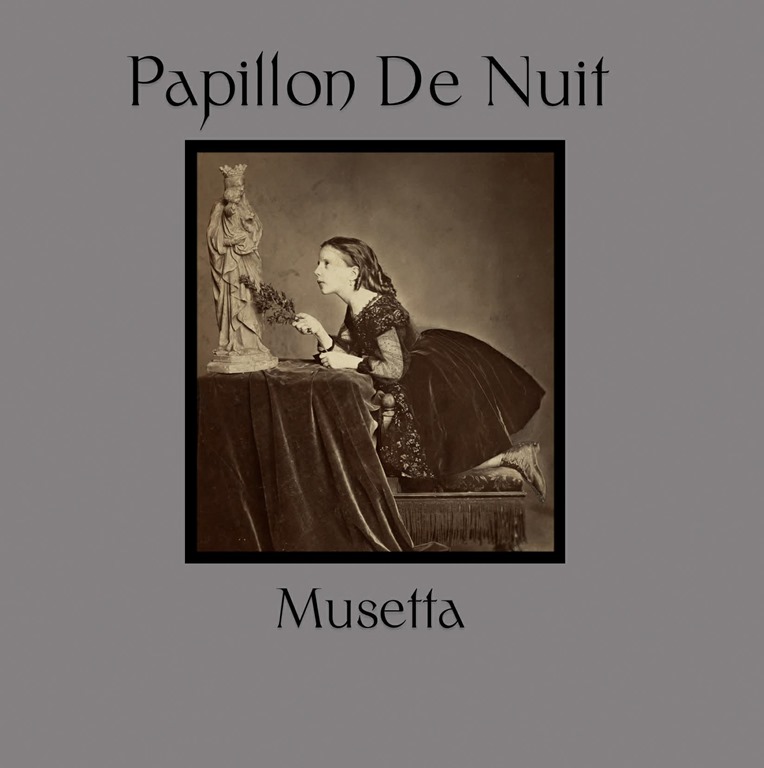
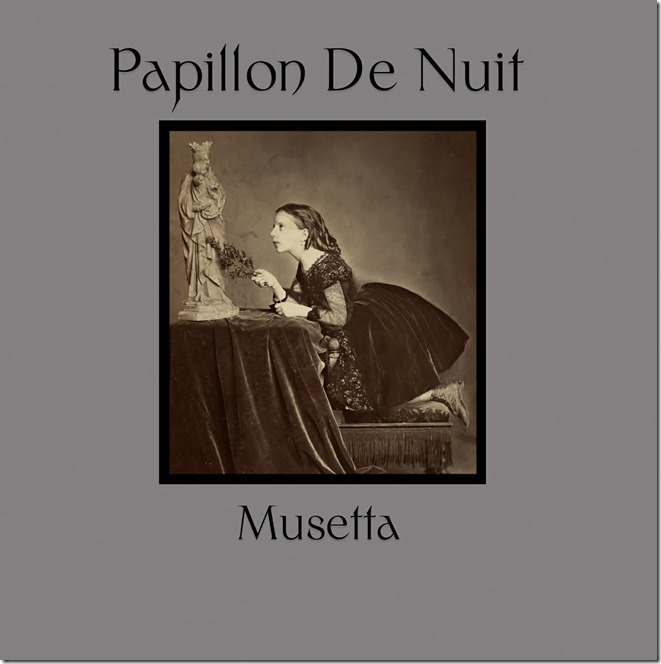
Although they may have seemingly risen out of nowhere a couple of years or so ago, Papillon du Nuit, the ever evolving, ever-expanding musical project revolving around Stephen Kennedy, alongside Mika, Steve, and Karen (who between them cover vocals, cello, grand piano, guitars, keyboards, and percussion) is a coming together of individuals who have been on and around the ‘goth’ and adjacent scene in the north for some considerable time, to form a loose collective. Having debuted in October 2024 with ‘Scarlet’, they’ve built a body of work through a succession of singles – eight in all. Most acts would have simply compiled said singles to assemble an album – but not Papillon du Nuit, and certainly not Stephen Kennedy – because he likes to do things the hard way. The proper way. And because his roots lie in that 80s goth era where bands like The Sisters of Mercy grew their fanbase through a series of ever-evolving single releases but saw the album as a different medium, a means of creating a specific, thematically unified document. As it happens, Musetta sits somewhere between the compilation and standalone document, plucking a selection of those previous singles and placing them amidst the new songs, meaning that of the album’s nine tracks, five have been previously released, although sitting in the context of an album they feel different somehow. And as much as Papillon du Nuit embrace some elements of goth – or perhaps, more accurately, the gothic (think brooding atmosphere, haunting imagery, a sense of drama) – this is a project which goes far beyond genre, with strong leanings towards neoclassical, chamber pop, the theatrical, even the operatic.

As they explain, ‘The album is named after Musetta, one of the major characters in the opera La Boheme, who is enshrined with all the qualities, and all the follies, that make us who we are. Many of the songs here explore a mythical, almost mystical journey, with life displayed more as an inevitably straight path, rather than something circular. The songs are not about death, but many of them lead there’. Some may mock with a ‘pretentious, moi?’, but Musetta is a work which is fully committed to art, and therefore sweeps pretence aside in being the real deal. That Steve Whitfield (The Cure / The Mission) produced, and co-wrote some of the tracks is nothing if not proof of pedigree, as well as their commitment to delivering an album which goes to great lengths to realise strong intent.

Heavy breathing, a panting even. Tension. Suspense. Then comes the panicked whisper: ‘is it dark, or am I blind?’ It has a decidedly Beckettean feel to it. A piano begins to reverberate. This is ‘Jude.’ As a single, it arrived as a stark and curious hybrid of poetry, theatre, and folk with a prog-rock leaning and a sense of the epic. In a revised context as an album opener, it feels very much like an introduction, a passage into a vast musical world. ‘Pilgrim’s Arc’, the most recent single, released in October, is driving, dynamic, tempest of a composition, and makes for a stark contrast arriving immediately after. Immediately, it’s apparent that there’s no small consideration been given to the album’s flow and shifts in mood and pace, and even this early, themes of time and mortality emerge.

AA

The first of the unreleased, album-specific songs, ‘Natalie’, follows, and it’s cinematic, widescreen-even, with its string-soaked chorus, again building to a spectacular finale. It’s no criticism to say it sounds like an album track: it’s magnificently executed, and offers some respite from the experimental intensity of the songs which precede it, and the cello-forward ‘A Sea Within An Ocean’ is the work of a band spreading out and settling, stretching their limbs and simply composing to make music, free from the (self-made) pressure to record a single in a day, or whatever their previous process was. It feels looser, more relaxed, and the result is a rolling, hypnotic wave of a song.

‘Cello Poem’ – at a mere two and three-quarter minutes – feels like more of a narrative bridge than a song in its own right, and the spoken word segue links single cuts ‘Amber’ and ‘Ariadne’ – and does so quite effectively, in truth. It does, however, keep death as its focus. And I suppose this is the core of the matter. As they say, ‘The songs are not about death, but many of them lead there’. How many of the great plays, novels, or poems aren’t about death, at least in some way? Death is, after all, the only certainty in life.

AA

Where Musetta differs from other albums where death is a preoccupation or a focus is that this is an album which carries a weight. It’s in no way frivolous or posturing, it doesn’t take death simply as a motif: it’s a soul-felt meditation on the end of life. No glorification, no stylisation, but a philosophical contemplation. It’s this which makes Musetta so impactful. Not only is youth wasted on the young, but life is wasted on the living, by and large. That is to say, it’s hard to appreciate what you have until it’s gone, or slipping away, and while so much goth – and metal, and so much music of many styles, for that matter – is preoccupied with death in a conceptual way, there comes a point where it comes all to near, all too real, and here it gets scary – rather than a game of lofting skulls and a flamboyant delivery. Shit does get real, and we all have to face the reality of mortality. And at this point, it’s not cool, it’s not dramatic, it simply becomes a heavy reality. We start by losing grandparents, and parents, and often, in between, friends and peers. And when it’s your peers, you start to worry. And if you don’t, you probably should.

Musetta is packed with heavy moments – not so much sonically, but emotionally, philosophically – and it’s woven with a fabric rich in literary allusions and diverse stylistic influences. ‘Visionary’ is a word I’m cautious in applying to anything, particularly anything contemporary – but ambitious and accomplished, wide-ranging, powerful, and moving… Musetta is all of these things, and more.

AA
Album Cover

15th May 2026 – noot moon records

Christopher Nosnibor

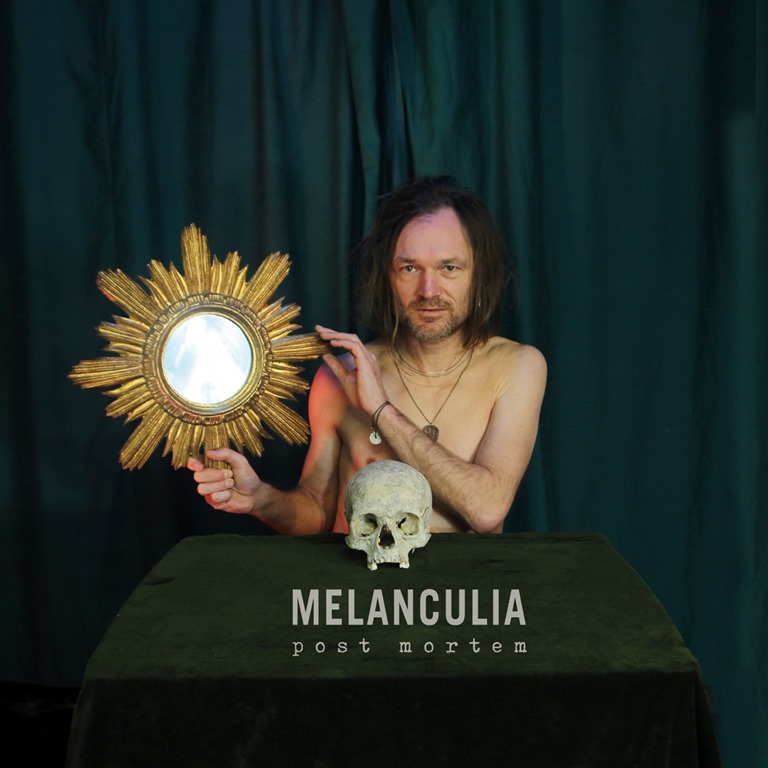
The term ‘post mortem’ has come to bare a number of meanings, not least of all the connotations of autopsy, but ultimately, it boils down to being something after the fact, specifically, after death, as the phrase implies. I suppose what it is that happens after death does vary between individuals, but it doesn’t necessarily mean being carved up.

By way of context, Melanculia is the solo project of Nino Sable, front man of goth act Aeon Sable, and the release of post mortem marks the first new album under the Melanculia name since 2018’s Seventh Circle. The accompanying notes inform that ‘The album expands further into a melancholic palette shaped by Nino’s strong sense of post-punk melodicism, while also drawing on dark psychedelia and indie-folk textures.’ And there’s more: Sable says that ‘Freed from the constraints of collaboration and compromise, the album focuses on a more direct and personal approach, centred on acoustic guitar, haunting synths, and sharply focused lyrics that cut to the bone: fragile and unfiltered.’

If I were collaborator or bandmate, I might take this statement with a pang of annoyance, or feel it to be a slight sleight, but as I’m not, I can take it at face value, intending that for all the fun of collaboration, it’s empowering to cut loose and fly free every now and again.

And, indeed, with the freedom to explore any and all directions, that’s exactly what Sable does here: the fourteen songs on post mortem are varied, not only stylistically, but in terms of mood and emotional range.

post mortem’s first song is something of a sad song: ‘Dark Days’ blends acoustic guitar and sweeping retro synths to strong effect, and that effect is downbeat and melancholy. The first song sounds like an album closer, and starting on a downer with a slow fade is a bit of a risky way to start an album, but when that’s pretty much par for the course, what else are you going to do? This set of songs is very much set on the downbeat, the wistful, the melancholy, brimming with reflection and gloomy nostalgia. ‘The Tower’ steps up into another level of theatricality, and over the course if fourteen songs – which does make for a long album – post mortem dredges the depths of the soul.

AA

It’s hard to put your finger on exactly what it does or how it registers: post mortem finds Melanculia strolling quite confidently around the territories of alt-rock and post-punk, while also incorporating folk elements – repetitive chord sequences thrummed out on acoustic guitar may be simple, but utterly gripping, and never more so than on the haunting ‘Runaways’. The folksiness goes a bit pirate folk in places, but ‘The Healer’ drips emotion and brings mid-tempo theatrics propelled by a metronomic and insistent mechanised beat with a vintage snare sound that cuts through and hits hard. ‘Emptiness’ drips heavy emotive swooning, as Sable croons in a quivering Pete Murphy inspired intonation, ‘I wish you were dead now’. No doubt there’s someone in all of our lives that this sentiment applies to.

Standing in the centre of the album like a towering monolith, the seven minute epic that is ‘We Are Only Human’. Hearing the words, laced with a grace and ache, ‘I’m only human, so mall, insignificant’ against a backdrop of rolling piano played in waltz-time is unexpectedly impactful, and also reminds me of another song I simply can’t place. It doesn’t matter: what matters is that the way the atmosphere builds.

There are echoes of Chris Isaak’s ‘Wicked Game’ about the reverb-soaked sadness of ‘Confessions’, and ‘Sabiaoa’ scrapes the dark terrains of the whispering undulations that creep underground.

It’s perhaps fair to say that in terms of instrumentation and musical style, post mortem explores a narrow space in microcosmic detail. This is their two inches of ivory, if you will. Consequently, it’s an album which benefits spending time with, uncovering the details and the delicate differences. In capturing moods and atmospheres, post mortem is highly accomplished, filling every moment with a sense of poignancy, a swooning sadness.

AA

a3468220053_10

Iconic Norwegians TRELLDOM, founded by legendary vocalist Gaahl, unveil the visualiser single ‘Folding the Mind’ as the next advance track selected from their forthcoming new full-length: …by the word…

AA

With …by the word…, TRELLDOM are pushing forward hard into their new musical era that was ushered in by the previous full-length …by the shadows… (2024), which ended a 17-year hiatus of the Norwegian band.

Mastermind Kristian Eivind Espedal aka Gaahl and his diligently selected collaborators have gone even beyond the complex yet sinister sound that they established with  …by the shadows… The exponentially grown confidence and hard-gained experience of joining together seemingly quite different musicians is reflected clearly in each track of …by the word…

TRELLDOM have concluded the process of escaping the narrowest definition of black metal without compromising their artistic mission. Their music does not only stay loyal to the spirit of their black metal roots, but the Norwegians are making a solid point that their new sound is even more dark and fierce than ever before – just in more twisted and unhinged ways.

…by the word… is the result of Espedal expanding the immense range of his vocals even further into unexplored territories. And it should be noted that this was partly achieved by his return to the famous Grieghallen Studios in Bergen to work again with legendary producer Eirik Hundvin aka Pytten, who was instrumental in the creation of the ‘Norwegian black metal’sound.

Although Espedal remains firmly at the helm of TRELLDOM, the current line-up plays a massive part in the fresh exploration of musical extremes. Guitarist Stian “Sir” Kårstad (formerly also in DJERV) guarantees a form of continuity as he already contributed to the second and third album of the band. Furthermore, the new constellation features renowned percussionist Kenneth Kapstad, formerly of MOTORPSYCHO and hammering the drums in SPIDERGAWD, MØSTER!, and THORNS. Kapstad brought the internationally acclaimed jazz musician and saxophone player Kjetil Møster (MØSTER!, RÖYKSOPP, THE END) along. Bass player Eirik Øien is the latest addition to the cast of characters.

AA

e1c8c041-93da-2940-be29-7d33ac7aca79

Finnish band, THE FAIR ATTEMPTS has just unveiled their latest single – the gothic rock-inspired, ‘Ghost Within’.

‘Ghost Within’ examines the internal monsters: negative self-talk, doubts, pride before collapse, and the subtle ways the human mind feeds on its own fear. The song portrays self-awareness as a mirror maze, where reflection offers no clear exit.

“This is a theme I’ve touched on in other songs because it’s something I struggle with. Ghosts may be coming to get you,” says frontman Timo Haakana, “but there’s one already inside you.”

Written during a year of deep introspection and creative pursuit, ‘Ghost Within’ depicts the emotional core off the forthcoming full-length album, Null Guide. It’s not about defeating your inner ghosts, but learning to live with them.

AA

80f14c93-1999-97d7-9393-9616af339b0a

Christopher Nosnibor

Live music should carry a warning over its addictive properties. Witnessing a band playing a set so good that you’re buzzing for hours, even days afterwards is a unique high, and one that sets a seed of a desperate need to replicate that experience.

I’ve seen a lot of live music since I started going to gigs over thirty years ago, but the number of acts who have ignited that sense of fervent excitement is limited. I’ve seen many, many amazing shows, but few have blown me away to the extent they’ve felt in some way transformative. Dead Space Chamber Music are one of those few, and I left the Cemetery Chapel in York a few months back feeling dazed and exhilarated, my ears whistling despite having worn earplugs. I simply had to see them again, in the hope to experience that same sense of rapture.

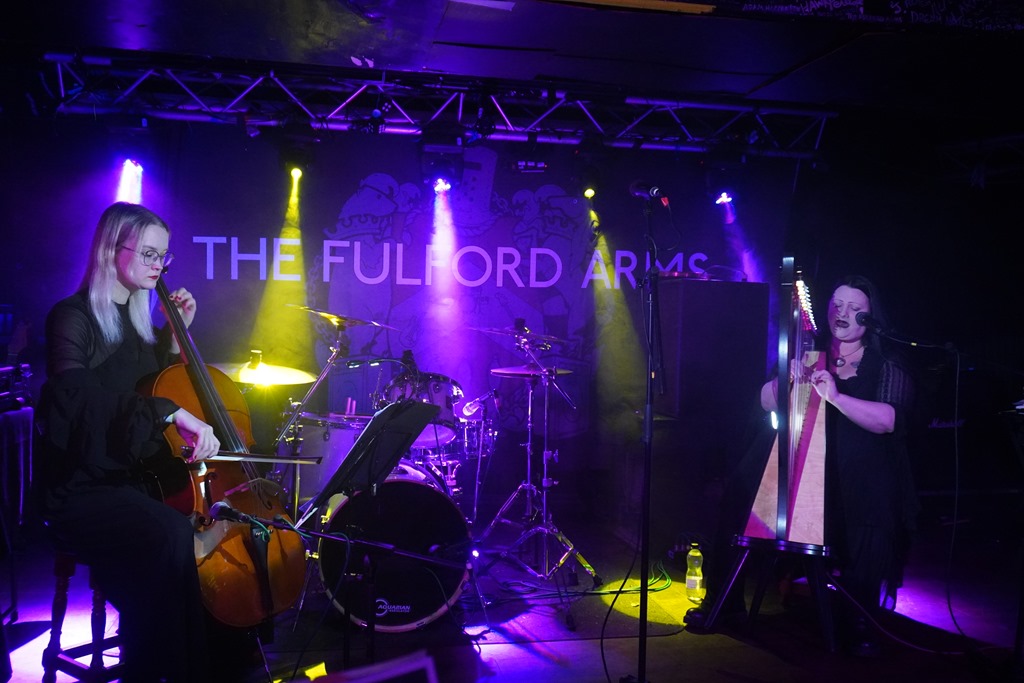
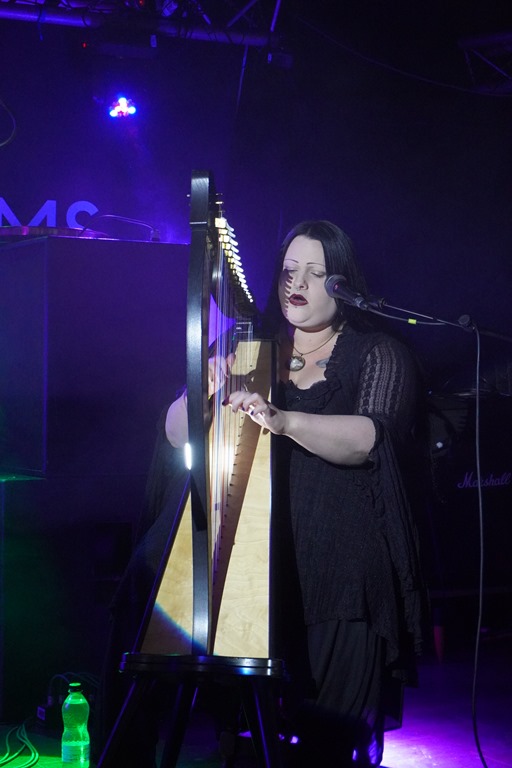
Eldermother – consisting of Clare de Lune on harp and vocals and Michalina Rudawska on cello – have no shortage of musical pedigree, and a superabundance of talent which they showcase with their minimal neoclassical works, a mix of covers and original material. They open with Radiohead’s ‘Street Spirit (Fade Out)’ led by harp and with Clare’s soaring vocals, and it’s one of those performances that make the hair stand up on back of your neck with its haunting atmosphere. There’s a rendition of WB Yeats’ poem ‘The Stolen Child’, a work rich with imagery inspired by wild nature and imbued with emotion and drama. The execution is magnificent, and the originals are similarly graceful and majestic. ‘Hurt’ may not be by any stretch representative of Trent Reznor’s career, but it certainly showcases his capacity for powerfully emotive songwriting, and if it’s the song which forms his legacy, it’s all to the good. Yes, Eldermother play a semi-operatic version of ‘Hurt’ with harp and dark, brooding cello, and… woah. It’s almost too much, especially this early in the evening. I find myself dabbing a tear and grateful for the low lighting.

DSC04790DSC04787DSC04785

Eldermother

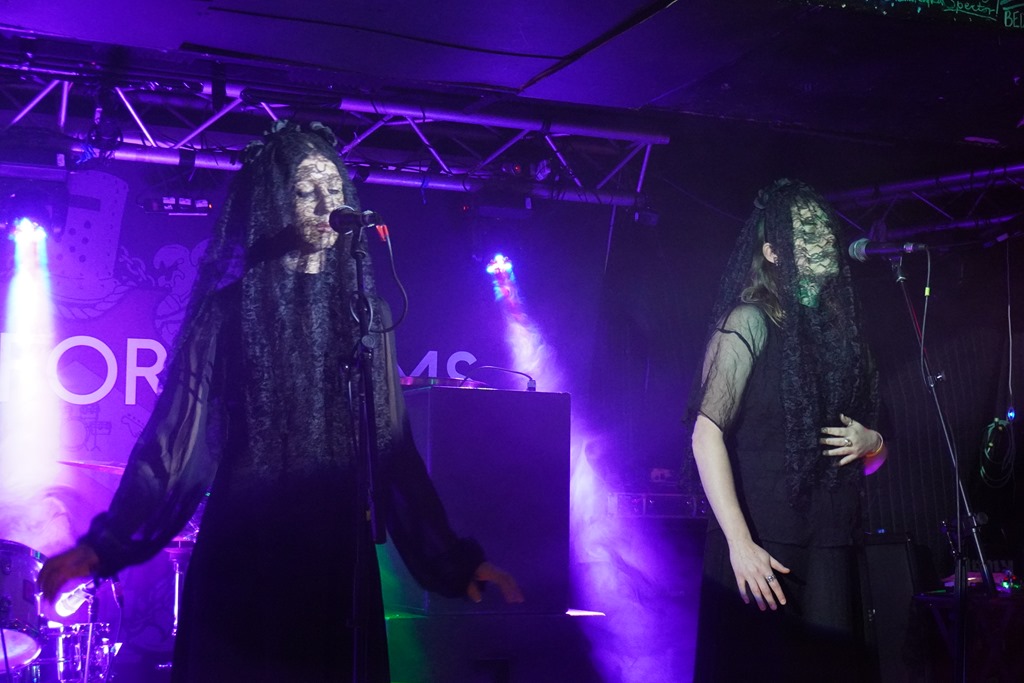
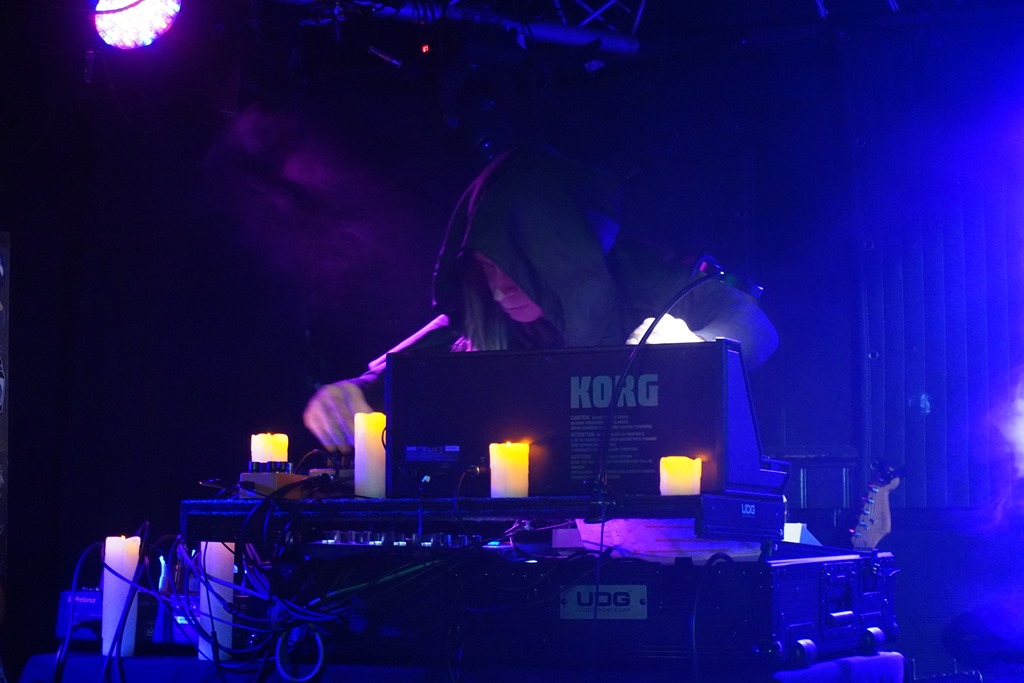
Lunar Cult Club – featuring Doug Gordon, aka Futures We Lost – as the provider of the instrumental machinations, take the theatricality up several notches to deliver a set of otherworldly cold, cold, darkest electro with glacial synths and funereal forms. The bank of synths swirl and grind, muddy beats thud and pop from amidst a dense sonic fog. Sonically, they’re impressive – in the main, the arrangements are sparse, and overtly analogue in form – but visually, they’re something else. Theirs is a highly theatrical stage show, and this significantly heightens the impact of the songs. The two singers, dressed all in black and with faces obscured by long, black lace veils – Corpse Bride chic, as my notes say – sway and move their arms in an unnerving fashion, as if reanimated, exhumed. I’m reminded of Zola Jesus and of Ladytron, and I’m mesmerised by their facsimile of a Pet Sematary Human League with its spellbinding marionette choreography. The final song, ‘No-Ones Here to Save Her’ is as dark as it gets: the vocals merge and take us to another realm entirely.

DSC04800DSC04804

Lunar Cult Club

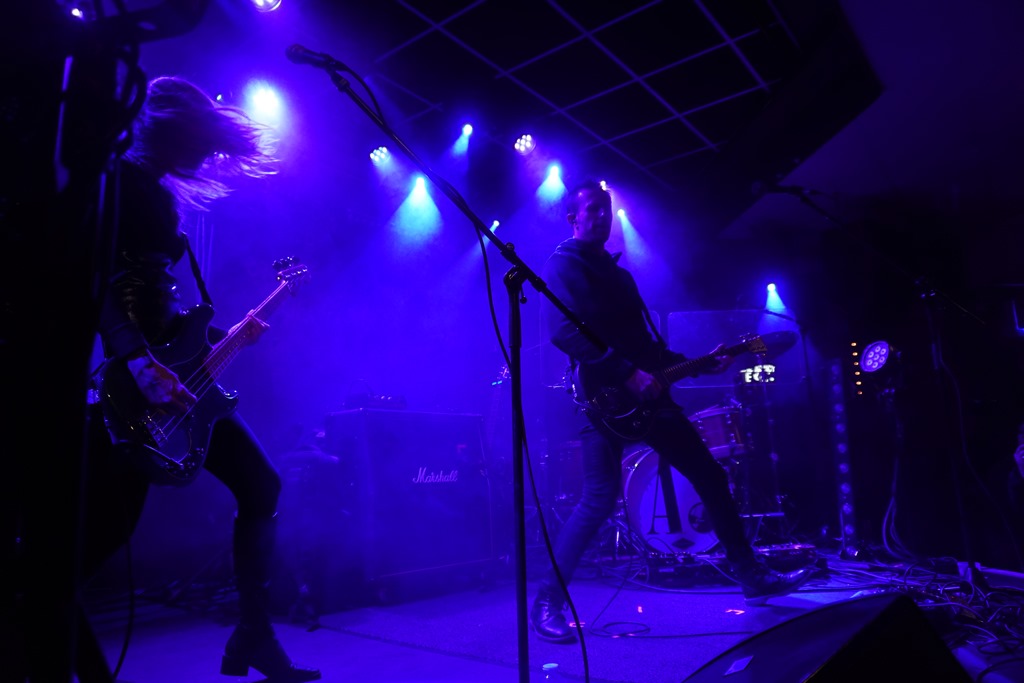
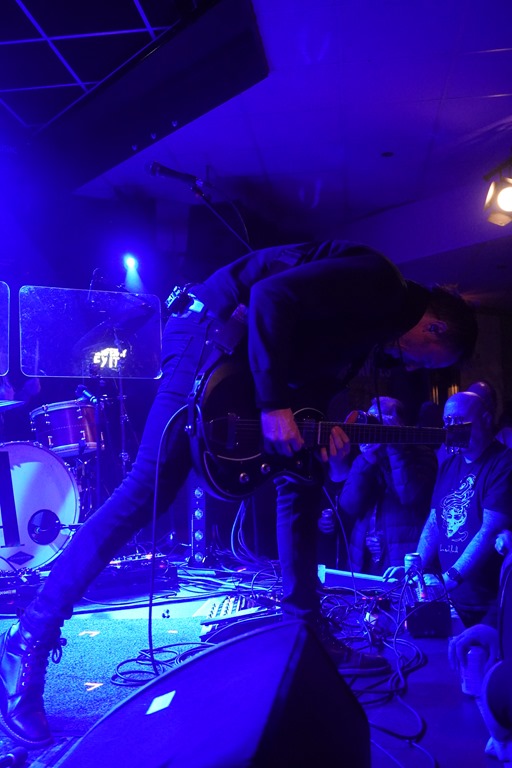
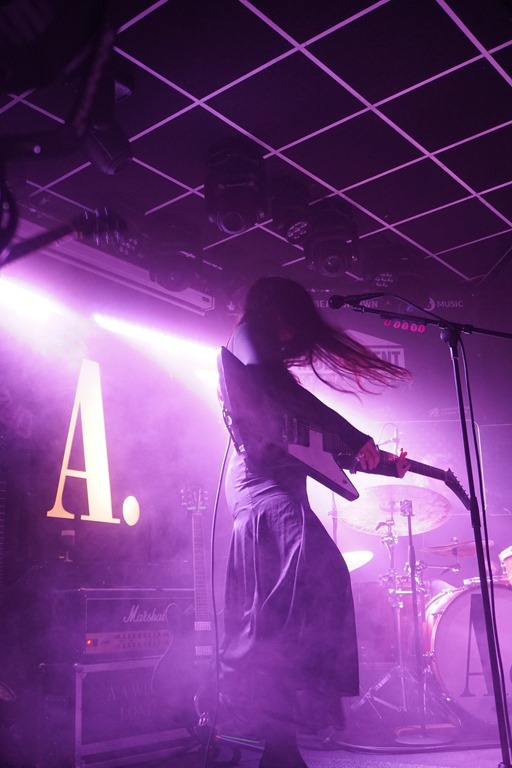
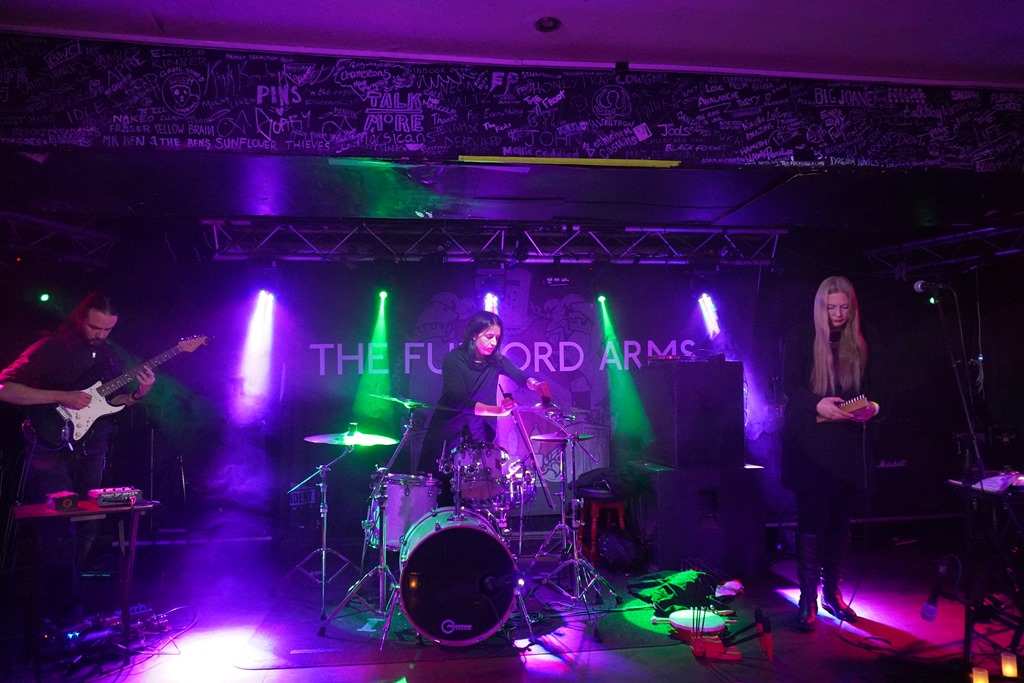
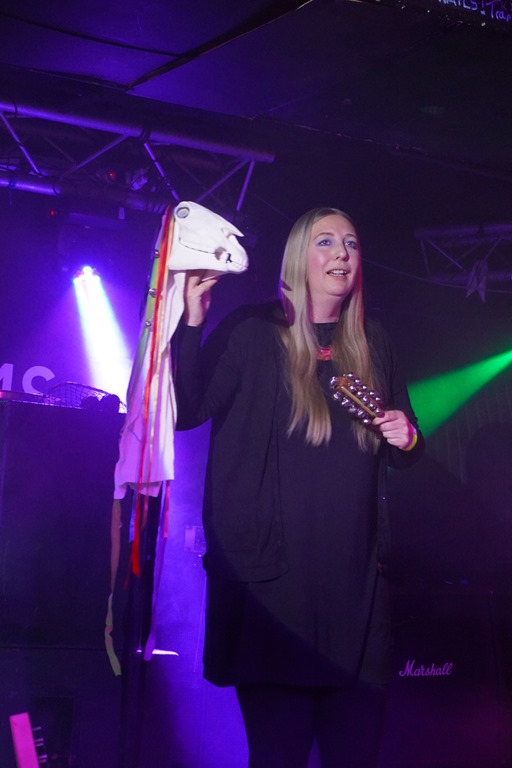
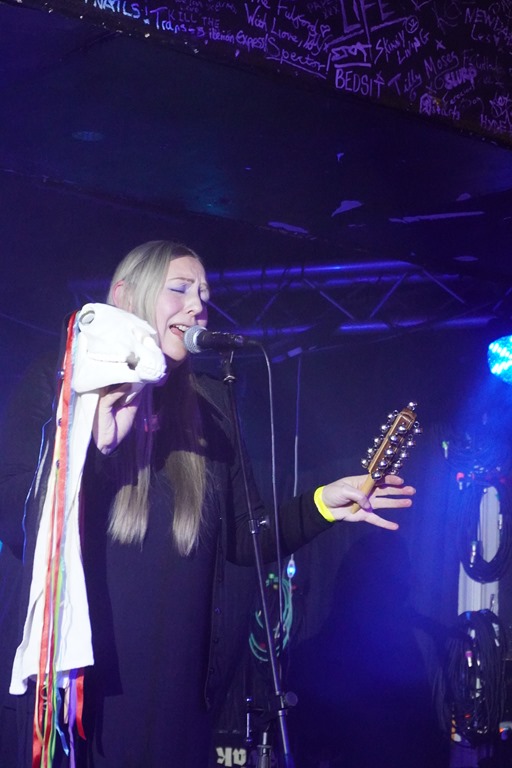
I’m still floating in a state of mild delirium when Dead Space Chamber Music take to the stage. The atmosphere is thick, tense, hushed… awed. Something about the trio’s presence alone makes you sit up, lean in, eyes wide, ears pricked. There’s a lot of detail here. Their focus is gripping by way of spectacle, and their set is designed as a linear work which evolves and transitions over its duration, in a way which calls to mind when Sunn O))) toured Monoliths and Dimensions, whereby, over the course of the set, Attila Csihar transformed into a tree. There are props and costume embellishments, mostly on the part of Ellen Southern, who performs vocals and various percussion elements and a strange stringed instrument: she brings much drama and theatricality, delivered with a sense of self-possession and deep spirituality which is utterly entrancing.

DSC04839DSC04852

Dead Space Music Orchestra

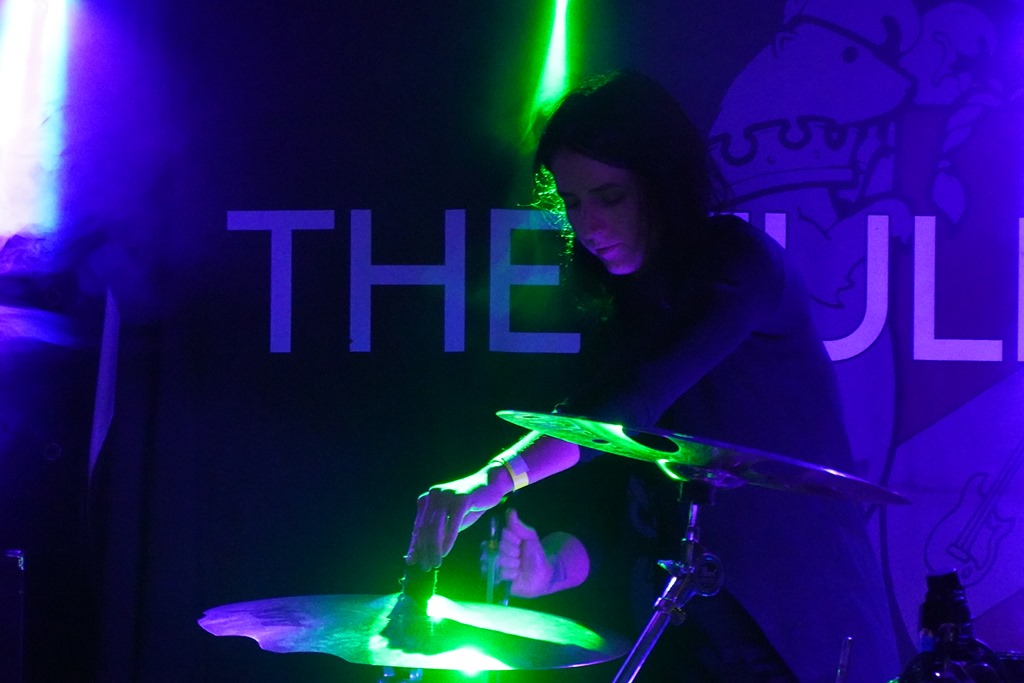
They’re so quiet you can hear matchsticks dropping into a tray. But the fact that these things are audible, amidst cavernous reverb and sepulchral echoes, is a measure of the clarity of the sound and the band’s attention to detail. Ekaterina Samarkina is impressive in the sheer versatility and nuanced approach she takes to the percussion which is truly pivotal to the performance. Her work is so detailed, subtle, the sound so bright and crisp, as she slowly scrapes the edges of her cymbals with a bow. Lurking in the background, Tom Bush – on guitar – plays with restraint, sculpting shapes and textures rather than playing conventional chords and melodies. In combination, they conjure a rarefied atmosphere.

DSC04867DSC04886DSC04906

Dead Space Chamber Music

But towards the end of the set, as if from nowhere, emerge huge cathedrals of sound. The last time around, I compared their climactic crescendos to Swans, and having seen Swans just over a week ago, I very much stand by the parallel called then. And this is not volume for volume’s sake: this is about catharsis, about escape. Dead Space Chamber Music make music which is immense, transcendental. And when they go all-out for the sustained crescendo of the finale, it’s not because of a bank of pedals or a host of gear: they simply play harder, throwing themselves behind their instruments, and full-throttle intensity. It may not be as loud as on that previous outing, or perhaps it’s simply because I’m expecting it, but they nevertheless raise the roof, and fill the space with expansive layers of sound on sound.

The three acts very much compliment one another, making for an event which is more than merely a gig, more than three bands playing some songs: this is an occasion, steeped in theatre and art, performed with a sense of ritual. The experience is all-encompassing, immersive, enveloping; it takes you out of life and suspends time for its duration. It will take some time to return to reality.

5th November 2025

Christopher Nosnibor

The early days of goth threw out a host of disparate elements, and there were some quite specific regional variations, too. While Leeds was a hotbed of the emerging scene, what was happening there was stark, bleak, with a certain industrial leaning, likely in part on account of its post-industrial wastelands and the kind of depravation which was rife in the late Seventies and Eighties, but was particularly prevalent in the North. It was quite different from what the more overtly punky Siouxsie and the Banshees were doing, and different again from the art-rock of Bauhaus. And it’s really their 1979 debut single –which was only partially representative of their oeuvre – which is largely responsible for the last forty-five years of the association of goth with bats and vampires and the like. Westenra do very neatly – and legitimately – tie these aspects together, hailing from Yorkshire (Whitby, to be precise) and with a name lifted from Bram Stoker’s Dracula, which famously sees the titular lead character land in Whitby, a place which will forever be synonymous with the macabre, the haunting, the gothic.

Announcing their arrival in 2019, Westenra are relatively new arrivals to a scene that’s creaking with acts who’ve been going for centuries (ok, decades), and in that time they’ve built quite a fanbase, particularly in and around their home county, with a steady flow of releases and an active touring schedule, including some high-profile shows playing alongside The Mission and Theatre of Hate. All of this is well-deserved, as they spin their own blend of – as they pitch it – ‘Goth, Alternative Rock & Metal.’

‘Burn Me Once’ does feel like a progression from their 2021 debut full-length, First Light. The production is fuller, bolder, and while the intro track (Monitus) is a densely atmospheric sample-soaked curtain-raiser, it’s only a primer. The band’s massive riff-slinging progress is nowhere more apparent than on the first song proper, ‘Ghosts in the Machine’. It’s got guts, and hints of the expansive vibes of Fields of the Nephilim’s ‘Psychonaut’, due in no small part to the sweeping synths and chunky, hypnotic bass groove, which explodes into a cyclone of bold metal-tinged riffery, against which Luciferia belts out dominant, full-lunged vocals which draw influence from Siousxie, but which are entirely her own style.

‘Sweet Poison Pill’ steps up the atmosphere and the tension, serving up a blend of vintage goth with a cutting metal edge and a dramatic theatricality, aided by layered vocal tracks. It’s bold, it’s epic. There’s a lot going on here: ‘Time’ opens with skittering electronic energy before crashing into a crunching metal Siouxsie-infused attack – and then there’s a whopping great guitar solo which erupts seemingly from nowhere. ‘For All To See’ is a big, bold, riff-led beast of a track that packs the density.

Westrenra sure know how to slide between modes and moods: Burn Me Once is epic in every sense. It’s an album which radiates immense power, and there isn’t a weak track here. Against a densely-woven musical backdrop, Luciferia delivers consistently strong vocals.

With this album, Westrenra deliver on all their promises, and then some, with a set of songs that’s brimming with energy and brooding introspection. And as much as they’re a goth band, Burn Me Once is an album that sees them pushing out in all directions far beyond genre limitations. Ultimately, Burn Me Once is a high-energy rock album with dark undercurrents which course relentlessly, and the quality of the songwriting is outstanding.

AA

a1821740368_10

The catalogue of material released by Papillon de Nuit, the ever-shifting, ever-evolving musical project of Stephen Kennedy, continues to expand with the release of single number eight.

Kennedy’s approach to the project is both interesting and unusual, with each song recorded at a separate session, often not even fully-formed in terms of writing and arrangement beforehand, and realised with various guest musicians and vocalists. Retuning once more to Young Thugs studio in York, ‘The Pilgrim’s Arc’ again sees Stephen handle a considerable range of duties, from drums to grand piano and providing spoken and sung vocals, as well as writing and arranging the song itself, while joined by Michalina Rudawska (cello) and Karen Amanda O’Brien (spoken word).

The Exceptional Mr Hyde make a guest appearance here, providing ‘menacing spoken word’, while Steve Whitfield  added bass and guitar, as well covering production work

The result is a striking, dramatic, percussion-driven piece with some chunky bass, and layered vocals creating an almost schizophrenic mutter behind a soaring melody.

AA

a2654860644_10

15th August 2025

Christopher Nosnibor

In recent years, the field of doom has expanded in terms of range, and has, at the same time, become rather more populous. One suspects in part that because these are pretty fucking dark times, increasingly, people are turning to dark music to articulate their own challenges, and to navigate the world around them. One welcome development is the number of female-fronted doom bands with vocalists who bring not only powerful voices, but a strong emotional force to the heft of the instrumentation.

Amnesiak pitch themselves as ‘Alternative Doom Rock’ – a subtle but necessary distinction from the proliferation of doom metal, which is something rendered clearly on this, their debut album. Containing just seven tracks, the longest of which is just under five minutes in duration, and with a couple that clock in at under three, it’s a concise document – and that’s welcome, because unlike so many other releases in the genre, which can at times be indulgent and err towards the overlong, and leaving you feeling drained, Arkfiend leaves you hankering for more.

The instrumental intro track, ‘Deamoniacus’ is something of a trope nowadays when it comes to heavy music – and screamy post-hardcore – but here it works differently, with samples reverberating in torturous extreme stereo, the sounding of the muttering clamour of a fractured internal dialogue which crowds the mind with discomfort, paving the way for the slow, majestic ethereal grandeur of ‘Archfiend’, which blends sepulchral doom with soaring vocals which float to the skies. ‘Flamed In Solitude’ plunges into darker territory, with dingy guitars squirming queasily over loping percussion. Layered vocal harmonies contrast with the thick guitars and booming bass, and those vocals sit between doom and folk, elevating the song to unexpected heights.

The dynamics of each song is something special, and the stylistic interplay sets them apart from their peers. ‘Pillory Of Victory’ is theatrical, gothic, dramatic in a theatrical sense, but also in an intense real and immediate sense – and at two and a half minutes there’s a moment where the riff skews and things take a sinewy turn for the more discordant, before the riff returns, hard and heavy. And yeas, I’m one of those people who obsessively pinpoints the moment when a song switches, when it moves from ‘yes!’ to ‘woah, fucking yes!’ – and it all comes down to a second or so. I’ve digressed, but so have Amnesiak, until they come around to the churning riffery of ‘Bootlicker’, which is truly monumental. Everything comes together here, and this is track of the album. For all its dirty guitar grind and dark lumbering riffery, it’s majestic, epic, a song that fills you up and lifts you up with its power. The final track, ‘The Last Rattle’ is a perfect balance of light and dark, weight and melody, reflective and sad and uplifting in equal measure. The quality of the songwriting, and the attention to detail on display here is quite something.

Arkfiend places Amnesiak comfortably alongside Cold in Berlin and Cwfen – and that’s a strong recommendation.

AA

a4008843204_10

17th October 2025

Christopher Nosnibor

From the very outset, this is not easy on the ear. Sometimes, something leaps out about an album in the opening minutes, and here it’s the production – or lack of. The title track heralds the arrival of Benefactor, the first album by Washington D.C. improvisational psychedelic outfit Zero Swann in two years. And it’s a swampy, reverby, dingy mess. It’s integral to the experience, but it’s also likely to be a deterrent for some – but screw them, it’s their loss, right?

Although straddling heavy psychedelic and the dramatic gothic style, it’s the sludgy, feedback-riven outtakes of The Jesus And Mary Chains’s Barbed Wire Kisses which first come to mind when listening to this.

Benefactor is the follow up to 2023’s Amon Zonaris, which, at the time, was a one-off collaborative release with Scott “Wino” Weinrich. This time around, bandleader and Saccharine Underground label curator Jeremy Moore is flying solo, handling guitars, fretless bass, drums and noise assault. And there’s no shortage of the noise assault on this punishing no-wave behemoth. As they tell it, ‘From the noise rock / no wave snarl of Ritual Tension and early Sonic Youth, to the shoegaze sounds of My Bloody Valentine, to doom and free jazz chaos over a backdrop of pure lo-fi abrasion, Moore’s latest outing is a true crosspollination of styles’. It is, and what’s more, many of those styles are melted together to form a dark, disturbing sonic sludge.

‘Grave Wax Horticulture’ is a skull-splitting mesh of noise, equal parts The Jesus and Mary Chain and Christian Death. It’s theatrically gothy, in the vein of The Horrors, but primitively noisy – which is a fair summary of the album as a whole. It’s experimental, overloading in its racketaciousness – and while is a psychedelic album, it’s a full-on assault album, too, which draws parallels with Head of David’s first album, LP, and simply summarises a noise ethos which eschews convention in every sense.

Moore’s commanding baritone brings a sense of drama, not to mention a certain theatricality to the chaotic, palpating grind, and there’s an edge to his delivery which is both world-weary and tense, a voice emerging from the desolation of a society collapsing, a world in flames. This is surely the sound of the apocalypse, the sound of everything ending. Everything is overloading, murky, blown-out, blasted with distortion and reverb, resulting in a discordant thunderous attack which fires in all directions at once. It’s a primal roar reverberating from buildings collapsed to rubble, a brain-bleeding blitzkrieg of ruinous proportions, as mechanised drum sounds fire like machine guns and missile explosions, cutting through the wildest, densest racket. The absence of overt structures only compounds the sense of things falling apart. It’s the sound of unravelling, of societal threads pulling apart in real-time, a descent into mayhem, anarchy, barbarity.

‘Anagrams for Agnosia’ is perhaps jazz, but jazz in the loosest sense: it’s exploratory, experimental, freeform, but more than anything, it’s the sound of fracture, or fragmentation, instruments churning and burning, and pulling in different directions like splinters of an object in the wake of a detonation. As the screams die down, there is the thud of a panicked heartbeat, before the final track, ‘Phaneron’ obliterates with a squalling wall of howling guitar, stuttering drums and raw, ruinous noise.

Benefactor is an album without let-up, which provides no breathing space, and is thoroughly relentless in its intensity from beginning to end. Recommended, but approach with caution, and a stiff drink. It sounds like the cover looks.

AA

a0986994420_10