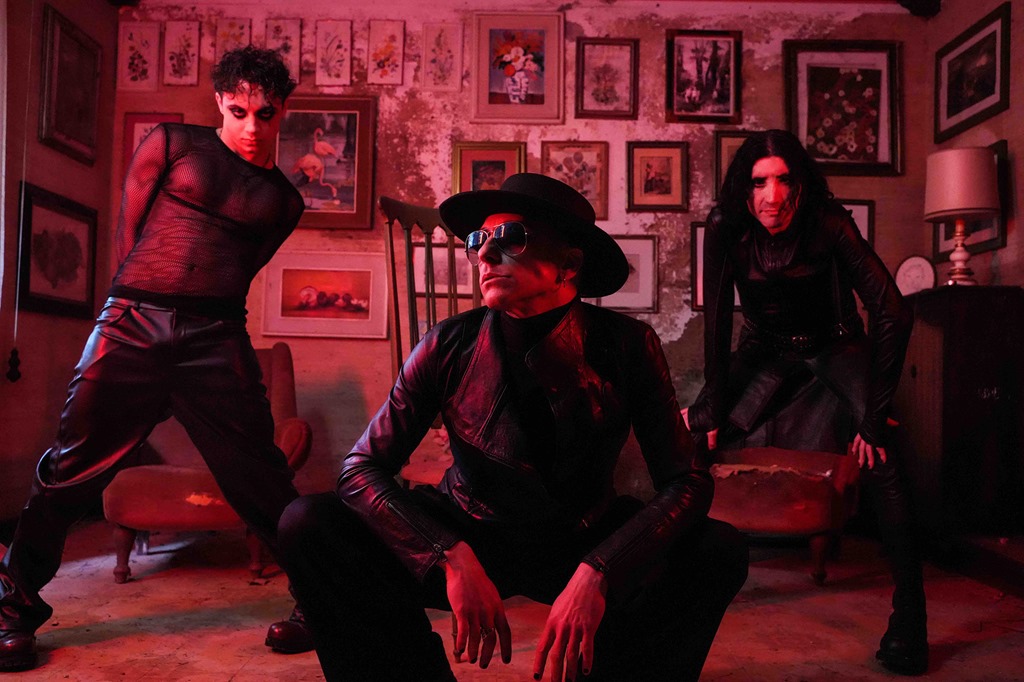
If you couldn’t guess by the name, one look at these guys and you know that there’s some industrial action in the mix. This Italian trio describe themselves as ‘dark alt. rock’ and as blending ‘alternative rock, darkwave and industrial influences with a strong focus on songcraft and melody’. And as the tiles of previous releases, which include ‘Decadent Desire’ and ‘Lust of the Flesh’, they have something of a penchant for the seamy and the lascivious.
A year on from their debut single, ‘Chemical Bride’, they serve up single number six.
Front man Sonny Lanegan explains that “‘Money for the Honey’ is about the things we chase when we know they probably won’t give us what we’re looking for. There’s desire in it, there’s attraction, but there’s also that feeling of searching for something more. The song plays with those contradictions and leaves room for people to find their own meaning in it… The phrase ‘Love me for the money, taste me for the honey’ became a kind of centerpiece for the song. It’s playful on the surface, but it also hints at the different reasons people connect with each other and the expectations we bring into relationships.”
There’s a strange interconnection in western culture with sex and money, and the notion that an abundance of the former has an allure and appeal that begets an abundance of the latter seemingly isn’t entirely without foundation. It’s a fucked-up world, but that’s capitalism for ya. Then there’s the sex and death equation… And Noir Addiction bask and revel in all of this, and never more so with the sleaze-grind industrial-tinged glam-groove of ‘Money For The Honey’. In some respects, it calls to mind latter day PIG, in its combining of pulsating synths, thumping beats and an unashamedly big chorus – all of which is a strong positive – and delivered with the swagger of Depeche Mode at their most overtly stadium.
The dark is very much the undercurrent rather than the main focus, instead pushing up the hookline ‘All I wanna do is make you think that I could kill it’. Well, they’re certainly killing it here.
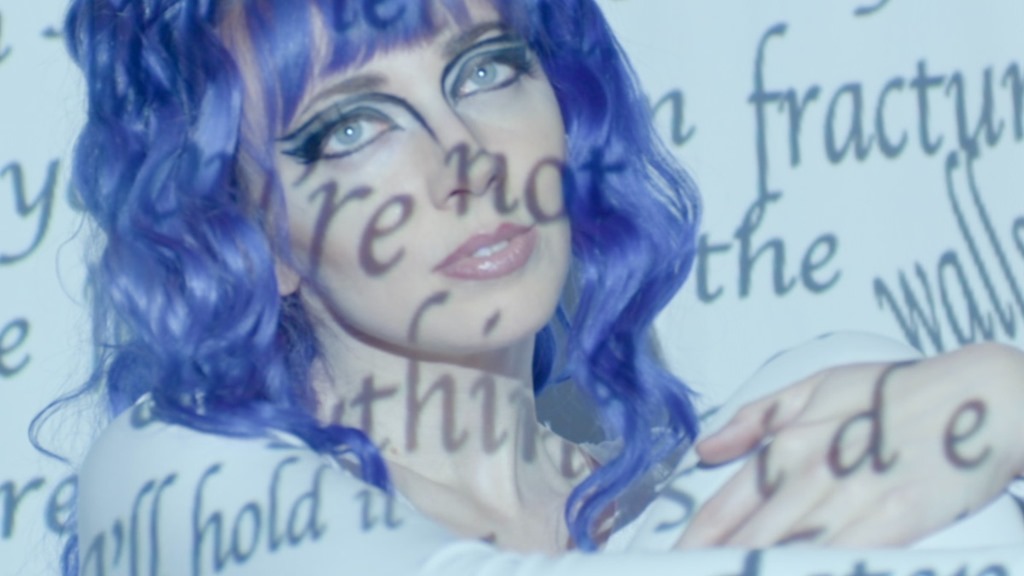
‘Inside’ is the latest music video by Ships In The Night, the ethereal darkwave project of Alethea Leventhal. Renowned for her distinctive electronic production technique and delicate yet mesmerising voice, Ships in the Night creates dark pop songs that feel both intimate and cinematic.
Included on the 2025 album Protection Spells, a bold and powerful collection informed by trauma, magic, darkness and hope, ‘Inside’ balances opposing forces of stillness and tension, vulnerability and resolve. The video for it is a glimpse into a world of transformation, with creatures hatching, plants unfurling and everything growing and finding its way.
“This song is about looking for feelings of safety and comfort in a world that is out of our control,” explains Leventhal. "It’s about finding places where you can just exist and be yourself. It’s about nurturing community, lifting up queer spaces and reaching for utopia.”
It may only be three minutes and twenty seconds long, but this latest offering from Lumirex – an Italian musician based in Munich – has a lot happening. It’s dark and stark, with low, stealthy industrial bass tones strolling and bubbling. So far, so much standard dark electronica, the kind of stuff that’s been circulating since the late 80s when Wax Trax! created the template for all things of an electronic industrial persuasion. But with ‘Hurts’, Lumirex take that template and expand on it in the most unexpected of ways.
It begins with stealth, before building… and then something happens. That something is a magnificent vocal which soars and glides – not quite operatic, but every inch classical and the perfect contrast. Compressed and breathy, it suddenly soars skywards in a departure from this domain, while the beats flurry faster, evermore glitchy, evermore tense.
There’s a break where things clamour down to a hushed moment of breathing – a tense gasping, where the word ‘kill’ is repeated, and it feels dangerous, before, out of nowhere, a banshee scream erupts and the beats flitter in again and you find yourself in a total spin.
Sure, it incorporates myriad things you’ve heard before, so much so that it’s not only familiar, but borders on the cliché – but these are just the elements. The way Lumirex draws them together is something else, and ‘Hurts’ is nothing short of mind-blowing. It has to be heard to be believed.
The darkwave/synthpop project MEERSEIN, brainchild of the Oldenburg-based artist and radio presenter Jan Schütz, has released a lyric video for ‘Faultless Deep,’ taken from the artist’s new EP Ocean available as digifile/digital from April 10th.
AA
‘Faultless Deep’ is one of the most emotionally intense and musically sophisticated songs by MEERSEIN. Blending haunting melodies with atmospheric depth, the track unfolds as a powerful ballad that balances accessibility with artistic complexity. Layered harmonies, subtle dynamic shifts, and an almost imperceptible tempo change in the bridge create a listening experience that grows more profound with every repetition.
AA
Inspired by the ecological vision of Frank Schätzing’s The Swarm, ‘Faultless Deep’ explores humanity’s fragile relationship with nature and the illusion of control over forces far greater than itself. Through poetic imagery, the song portrays the ocean as a conscious presence – both witness and response to human arrogance, environmental destruction, and collective denial. Images of fractured coral, collapsing structures, and awakening depths reveal a world confronting the consequences it has long ignored.
With MEERSEIN, a solo project rooted deeply in emotional honesty and atmospheric synth pop, the German artist has carved out a space where music becomes a personal refuge. Strongly inspired by the sea as both a physical place and a spiritual force, MEERSEIN’s work is shaped by moments of retreat, reflection, and reconnection with himself. Many of his songs are born near water, where the noise of everyday life fades and clarity returns.
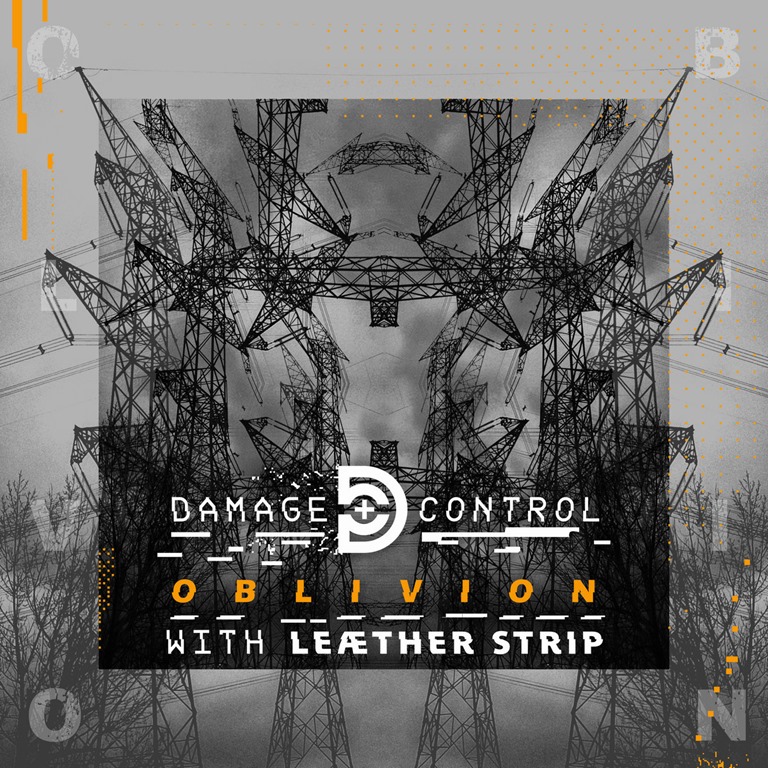
Damage Control is an electro-industrial music project centred around its current core members Bill Barsby, Richard Thacker and Alex Wise, who are all based in Australia, plus Markus App from Germany. Both Barsby and Thacker are originally from Birmingham, England. The group have experimented with custom Kemper guitar amps and layered synth textures for ‘Oblivion’, their second recent collaboration with the Danish musician Leæther Strip aka Claus Larsen. Aiming to capture introspection and depth, the atmospheric and immersive song reflects their commitment to sonic diversity and emotional resonance. It is produced by Chris Peterson (Front Line Assembly, Noise Unit, Unit:187) and engineered by Greg Reely (Skinny Puppy, Front Line Assembly, Fear Factory), both respected names in the Canadian industrial music scene.
‘Oblivion’ is the follow-up to ‘Rage’ which also featured vocals by Leæther Strip and was issued in January. Barsby commented at the time that “we like working with guest singers and have always loved Leaether Strip since the early ’90s industrial and darkwave club scenes. We were curious to hear what the combination of our song, Claus’ vocal and Chris’ production would sound like.”
Much as the whole ‘sounds like’ and ‘for fans of’ thing has become a standard shortcut which is, all too often, reductive and plays into the algorithmic feeding of artists by streaming platforms, it can be useful, at least when the references are accurate. Sometimes, a misrepresentative comparison can come to define an act’s entire career. I can’t be the only one who investigated Interpol because of the endless comparisons to Joy Division – and while I quickly grew to love Interpol, they’re as much like Joy Division as Suede are The Smiths. Sometimes these disparities are the result of poor journalism or sloppy PR, others they’re the consequence of a band’s own lack of self-awareness, confusing the input from their influences with what their music actually sounds like. Nevertheless, when a band is pitches as being ‘for fans of Faith or Disintegration-era Cure, and Closer-era Joy Division’, the connotations of glacial synth-orientated bleakness suggest they’re worth investigating.
And so I arrive at F.I.V.E. Fear Increases Violent Emotions (released in January), by Italian dark / new wave band Christine Plays Viola via the album’s fourth single, ‘Desolate Moments’ – in an example of an old-school promo cycle, where a single or two in advance would hype the album, and a trailing single or two would sustain momentum and (hopefully) grab some people who’d missed the initial build-up and release. This one’s had a long run-up, with ‘Jackie’s Curse’ surfacing way back in 2024.
AA
AA
‘Desolate Moments’ is a spacious slow-builder, and fulfils the promise of some cold synths, the brooding vocals paired with some rolling percussion and throbbing bass. In many respects, it’s a quintessential slice of modern goth, in the vein of Corpus Delicti, with some hints of Depeche Mode swirling around in the mix. That’s not all that’s swirling around: the video, which is designed to replicate their live performance, finds the band members partially obscured by billowing smoke, clearly taking cues from The Sisters of Mercy’s seminal stage shows.
AA
AA
It turns out that ‘Desolate Moments’ is representative of the album, too, certainly in terms of quality (one thing about old-school promo before the advent of the Internet is that you’d often rush to buy an album based on the lead single, only to find that it was the only decent track, and that the rest of the album was turd… this was particularly prevalent in the ‘80s, but I’d venture that Depeche Mode’s Ultra would have been better whittled down to an EP of the singles). And it’s an album that radiates darkness and classic goth vibes and sounds.
Opener ‘Sprout of Disharmony’ is nothing short of an instant classic in the vein of Rosetta Stone and Susperia, with spindly guitar work, sturdy on-the-beat bass grooves and metronomic percussion, and with a seven-minute run time, it certainly qualifies as epic. ‘My Redemption’, released as a single six months ago goes darker, more overtly electro, and brings in elements of industrial while still reflecting the goth sound of the late 90s and the turn of the millennium, and packing some strong hooks, too.
There’s a keen sense of theatre about Christine Plays Viola’s sound: they’re certainly not afraid to go big and play up the drama with finesse. ‘Confession’ lands with a sense of urgency, and is again driven by bold tribal beats reminiscent of vintage acts like Danse Society and Skeletal Family, while ‘There’s No Going Back’ swerves into early Nine Inch Nails territory, only more overtly gothy. While operating around elements taken from some well-established blueprints, Christine Plays Viola manage to offer no shortage of variety on F.I.V.E., the jittery ‘Black Noise’ changing tack halfway through, and the seven-and-three-quarter-minute ‘The Crypt of Mystery’ explores altogether more expansive territory which teeters on the progressive.
As an album, F.I.V.E. feels like a big work: it may only contain ten songs, but a fair few run well over the five minute mark, and the variety is indicative of the scale of the band’s ambition to articulate and explore the theme of ‘fear not as weakness, but as a force that shapes who we become’ in multi-faceted detail. And they succeed in their objective, with some great songs, too.
Finnish band, THE FAIR ATTEMPTS has just unveiled their latest single – the gothic rock-inspired, ‘Ghost Within’.
‘Ghost Within’ examines the internal monsters: negative self-talk, doubts, pride before collapse, and the subtle ways the human mind feeds on its own fear. The song portrays self-awareness as a mirror maze, where reflection offers no clear exit.
“This is a theme I’ve touched on in other songs because it’s something I struggle with. Ghosts may be coming to get you,” says frontman Timo Haakana, “but there’s one already inside you.”
Written during a year of deep introspection and creative pursuit, ‘Ghost Within’ depicts the emotional core off the forthcoming full-length album, Null Guide. It’s not about defeating your inner ghosts, but learning to live with them.
Based in the Texan city of San Antonio, darkwave/synth-punk artist Night Ritualz (aka Vincent Guerrero IV) weaves Latin influences into his songs, often blending English and Spanish lyrics with music that combines atmospheric soundscapes suffused with pulse-pounding beats to tell stories that are deeply personal and universally relatable.
New single ‘Un Tiro’ (One Shot) is the third and final track to be lifted from an upcoming album entitled Time Is A Thief, out on 20th February. With its early ‘80s indie-pop vibe, the song stands in stark contrast to its immediate predecessor, ‘Whoreish’, which mixed hard industrial and EBM sounds. The album’s first single, ‘Brown Skin’ was an unapologetic expression of identity, struggle and survival, that blended personal storytelling with social commentary.
Having recently written on the retro qualities of Lowsunday’s latest release, the latest hot landing in my inbox is from another act which is preoccupied with a previous time – and who can blame them? I am painfully aware that old bastards like me constantly bemoan the shitness of the now while reminiscing about the golden era of our youth, and it’s no different from boomers still banging on about The Beatles and the music of the 60s and 70s as if time stopped when they hit thirty or whatever. There is a lot – a LOT – of exciting new music coming out right now, and much of it is pushing boundaries in unexpected directions. I for one will never cease to excited by this. But there is a significant amount of music emerging that draws its primary influences from the eighties and nineties, created by artists who simply cannot be drawn by nostalgia. Falling You are a perfect example.
Metanoia is pitched as being for ‘fans of 1980s 4AD dreampop (This Mortal Coil, Dead Can Dance), ‘90s shoegaze (Slowdive, Lush), or the darkwave / ethereal / ambient-electronic releases of the Projekt label (Love Spirals Downwards, Android Lust). It’s quite a span, but the fact is that this is a release with its inspirational roots well in the past. It pains me to be reminded that 1995 is thirty years ago when it feels like maybe a decade. The cover art of previous releases very much state shoegaze / dreampop, and while this album accompanied by altogether moodier artwork, which may in part serve to reflect the album’s title, it’s nevertheless hazy and evocative at the same time. ‘Hazy and evocative’ would be a fair summary of the album itself, too, and the dreamy / shoegaze elements are countered by some really quite unsettling spells of rather murkier ambience.
It starts strong with the bold swell of steel-stung acoustic guitar and a strong vocal – I’m not talking about a Florene Welch lung-busting bellow, but a controlled and balanced performance that really carries some resonance, and it’s mastered clear and loud… and then things swerve into a more electronic, almost dancy territory. Immediately it’s clear that this is going to be less an album and more a journey, and ‘Demiurge (Momento Eorum)’ immediately affirms this with its spiritual incantations and sonorous, droning rumblings.
‘Alcyone’ is the first of the album’s ten-minute epics, and it uses the time well: that is to say, with shuffling drums, spacious synths and layers of lilting vocals, it’s very much distilled from the essence of The Cocteau Twins, and slowly unfurls with an ethereal grace. A delicately-spun pop song at heart, the extended end section tapers down to a softly droning organ.
While the atmosphere is very much downbeat, downtempo, understated, one thing which is notable is the album’s range: ‘Ari’s Song’ is built around a soft-edged cyclical bass motif, around which piano and synths swirl, mist-like, the drums way in the distance, and even as a disturbance grows toward the end, it’s so far-away sounding, and the song itself, beyond that ever-present bass, barely there, and the same is true of the dank, dark ambient echoes of ‘Inside the Whale’. If ‘Ariadne’ is another shimmering indie tune hazed with fractal electronic ripples, the second ten-minute epic, ‘They Give Me Flowers’ provides a suitable companion piece to ‘Alcyone’, swerving from a brooding country and folk-tinged song with hints of All About Eve, and the album’s final track, ‘Philomena’ effectively completes the triptych, pulsing along gently and dreamily before slowly tapering away to nothingness. It’s a fitting conclusion to an album which at times is so vaporous and vague, it’s barely there – which is precisely the design. But in between the hazy drifts and particle-like waftings, there are some beautifully atmospheric and utterly captivating songs with strong leanings towards the dreamy pop side of indie. In terms of achieving an artistic objective, Falling You have absolutely nailed it with Metanoia.
Woah, wait. 1999 is more than 25 years ago? Logically, I can grasp this. But the fact that lowsunday have existed for some thirty years and have been dormant since 1999 meaning this is their first material in over twenty-five years is still difficult to comprehend. It does very much seem to be a more common occurrence in recent years that bands who existed comparatively briefly in the 80s or 90s are reuniting and returning with not only new material, but strong new material. It may be a rather different league, but the last thing I expected last year was a new album by the Jesus Lizard, and that my first gig of 2025 would involve David Yow flopping off the stage and directly onto my face in the opening thirty seconds of the set. Lowsunday formed in 1994: the year Kurt Cobain died, the year I started university, the year of my first job as a reviewer. It feels like another lifetime. It probably does for them, too.
It may be pitched as a blurring post-punk, shoegaze, dreampop, and darkwave, and also as being for fan of The Chameleons, ACTORS, The Cure, Modern English, Clan of Xymox, Then Comes Silence, TRAITRS, but that thumping bass groove and pumping mechanoid drum beat on the EP’s opener, ‘Nevver’ is as trad goth as it comes. But the squalling noise that envelops the vocals – swathed in echo and low in the mix and taking direct cues from The Cure circa Faith and Pornography – is something else, a melding of My Bloody Valentine and The Jesus and Mary Chain with a dose of early New Order, Danse Society, and The Chameleons swirling around in there. And out of this swampy post-punk soup cocktail emerges a song of quality which really recreates that early eighties dark groove.
‘Call Silence’ goes straight for the sound of The Cure circa ’83, the singles on Japanese Whispers. And that’s cool: if you’re going to lift from early 80s gothy pop, you could certainly do far worse than ‘Let’s Go to Bed’ and early New Order as an inspiration – the bassline is pure Peter Hook. The production – and the strolling high-fretted bass work – really hits the spot, although it should be perhaps noted that they really do sound like a band born in 1982 rather than 1994. I guess they were retro before their time.
Paired with chiming guitars, it’s the monster snare smash that really leads – and grabs the attention on ‘Soft Capture’, a song that unashamedly draws on Ride and My Bloody Valentine, and pairs that wash of sound and monotone vocals with a drum sound straight from 1984. The fall from favour of the dominant snare feels like a loss, but there’s no time for lamentations as they pile in with another claustrophobic read goth groover in the shape of ‘You Lost Yourself’. Here., I can’t help but feel the vibes of late 90s goth acts like Suspiria and the scene around that time. It’s well-executed, with fractal guitars tripping over pumping drum machines and throbbing bass.
Closing with single cut ‘Love language’ sees the band strive for low-key anthemic with dreamiest and most overtly shoegaze song of the set. With the vocals drowning in a sea of reverb amidst a swirl of guitars, its detachment is its emotional power, perversely enough. And then, unexpectedly, it stops.
Everything about the White EP is simply magnificent – the way the songs are composed and played, the production, the overall feel. And while retro is all the rage – and has been for a while now, since postmodernism has eaten itself and the entire world has collapsed into endless recycling and nostalgia for ersatz reimaginings of golden bygone times. But sometimes a release will appear, seemingly from nowhere, that radiates a rare authenticity, and reaches the part others don’t. Lowsunday’s White EP is one of those.