Posts Tagged ‘Review’

6th May 2026

Christopher Nosnibor

It’s been fully three years since we last heard from Lunar Twin, and 2023 seems like a long time in terms of the scheme of things. Aurora was a showcase of shimmering blissed-out melancholia. Yes, a contradiction in terms, but one that made sense, with rippling synths, as well as sweeping waves which hinted at Disintegration era Cure paired with elements of sparse electropop and the softer end of the dance spectrum. It was the sound of the beach, but also of the sun setting, and bringing with it a low ebb, a ponderous emptiness, Bryce Boudreau’s vocals evoking the spirit of Mark Lanegan over a shuffling desert electro backing. Before that, Ghost Moon Ritual explored recent bereavements, and plundered particularly bleak terrain.

‘Disappear into the earth’ doesn’t deviate a million miles from this template, and that’s all to the good. It’s a shade more uptempo than much of both Ghost Moon Ritual and Aurora, an undulating bass groove paired with a vintage electro beat reminiscent of The Human League.

But beneath the seeming optimism of the lyrics and the buoyant retro drum rolls – we’re talking circa ’83 pow pow pow pseudo toms here – there’s a certain sense of pessimism, a low-level gloom. As such, this is a song which presents a duality. It’s not quite the quintessential sex and death equation, but most definitely delves into the territory whereby optimism and pessimism, fatalism and euphoria collide at a crossroads that’s both literal and philosophical.

‘gonna lay right down it the dirt disappear in the earth we are forever when it rains when it’s dark the spirits in your heart, we can be anything that we can dream’, Boudreau sort of rasps, sort of rumbles, sort of croons: again, the delivery hangs in some sort of intersectional space.

‘Disappear into the earth’ is a deft slice of dark electropop which captures the vintage vibe to a rare extent, but goes far beyond that. The form and delivery is low-key, understated, but it lands, coming in below the radar and resonating in subtle ways. It’s a welcome return.

AA

a2154679112_10

1st May 2026

Christopher Nosnibor

Since debuting in 2017 under the break_fold moniker after some time away from music to concentrate his energy on the demands of adult life, Tim Hann has maintained a steady flow of output – not exactly a tempestuous spate, but with the release of an EP or an album every year or two, he’s built a respectable body of work. And over the course of these releases, the break_fold sound has evolved – again, not at rapid pace, whereby one release is a huge departure from its predecessor, but the music he’s making now has developed significantly when compared to the sparse glitchtronica of 07_07_15 – 13_04_16 and 27_05_17 – 21_01_18.

Hann continues to mine his memories and experiences for inspiration, serving to document his life through sonic abstractions, an aural memoir of sorts. The Tracker EP is a counterpart to its predecessor, The Planner EP, as he explains:

The Tracker EP is a reference to my Dad, who gave himself nicknames that others in the family then started using,” Tim explains. “‘Tracker’ is a reference to his persona when on holiday or away from work. If we were on holiday and were trying to find a place of interest, he’d be in Tracker mode. Planner is when my Dad was at work.”

Families are strange, but it’s only as one grows older, and when one takes a step back to reflect on formative experiences that it becomes apparent just how strange. As a child, you assume your family life, and your parents, are normal, and that every other household is the same, at least more or less. Over time, you come to consider the things some of your friends’ households do are weird. And they probably are. Mealtime rituals, Easter, Christmas traditions… but it’s likely not until later, after leaving home and starting your own family that you begin to analyse your own upbringing, and to compare the relationship you had with your parents growing up to the one you have with your own children.

I’m often startled by just how close to their parents a lot of my friends are, and how much time they spend with them. But then, they also stayed close to their parents geographically, living just a few streets away, with their parents providing child care and doing school runs several days a week. And that to me seems strange. I’ve no issues with my parents, but my main aspiration growing up was to attain independence and live my life in my own way.

As the accompanying notes add, ‘across the EP, break_fold ties together nods to family sayings, misheard phrases, and the small but defining details of growing up in the North East of England in the 1990s… for Hann, both Planner and Tracker serve as time capsules; deeply personal yet universally resonant snapshots of childhood, family dynamics and regional identity’.

In this context, the details matter. None of the inspiration is rendered explicit on Tracker: instead, what we get is a sonic articulation of all of this. And it works. You may not take away the intended interpretation, but that’s both the beauty and the downside of a project like this: it’s as much about the listener’s experience and input as the artist’s.

‘Pet’ amalgamates an almost club-friendly dance sound with a trawling, trudging grind of a foundation, while ‘Climbing Flowers’ pairs soft synth washes that hover between Krautrock, ambient, and prog, with flickering, fluttering beats, low in the mix, fading like memories around the midpoint. ‘Workie Ticket’ – a term I first learned on my thirtieth birthday in a pub in Conwy, Wales, where, having climbed Conwy mountain, I had a bowl of chips and a pint of Mordue Workie Ticket – brewed in North Shields. While the meaning and use of the phrase seems varied, it’s most definitely a North-East thing. There’s a trance-dance vibe to ‘Carrying On’, although the bass and overlaid guitar are more post-rock, and what we get, ultimately, is a hybrid.

The Tracker EP doesn’t sound confused as much as a work that’s deeply immersed in the process of processing, bringing together disparate elements in order to sift through an array of stuff. ‘This Concept of Sharing’ is upbeat, light, accessible, even danceable, but there’s a sense of something darker beneath the surface, and this emerges on the final track, ‘Every Penny’s a Prisoner’, which swerves and bends and twists and warps, but all along rides a pulsating groove pinned in place with a whipcrack snare.

It’s hard to place The Tracker EP. As much as its ambient, there are harder dance elements in the mix. But for all its surging buoyancy, there’s a tinge of sadness beneath, and the complex twist of inner conflict and uncertainty. On the surface, The Tracker EP sees break_fold bursting out in a bloom of elation, but there are currents beneath which are deep, and darker, perhaps revealing far more than is ever rendered explicit.

AA

AA

a2375357500_10

Cruel Nature Records – 27th March 2026

Christopher Nosnibor

This one’s been out for a bit, but was too good to let go without comment. Some will likely thank me for this: others may be less grateful as they sit, hands over their ears, wondering why they should ever pay heed to a word I write. It’s niche and it’s noisy – as the notes which accompany the release on Bandcamp make clear from the outset:

Gnarled Fingers and Picking are two artists drawn together by a shared love of bleak, crushing, low-end oblivion.

Picking is a new raw doom / noise / drone project from Charlie Butler inspired by lifelong incessant excessive picking of nails.

Gnarled Fingers is an experimental, ambient drone project, relentless wall of fuzz and atmosphere, no escape, created after growing up in Somerset Levels with stories of witchcraft and pagan superstition.

The Picking track, ‘Toenail’ sits in the droney doom bracket dominated by Sunn O))), but there’s something magnificently lo-fi about this, which adds a layer of filthy muck and treble distortion that conveys a performance which is of a volume just beyond the capacity of the equipment used to record it. It’s fourteen minutes of raw, howling guitar noise, and because of the way in which they seem to be struggling to contain the feedback while ploughing relentlessly at a loose semblance of a riff, the result is something along the lines of Earth 2 crossed with Metal Machine Music. ‘Uncompromising’ is a word that music journalists and bands alike chuck about, but this is the absolute epitome – although something about this recording is possessed of a primitivism that suggests they don’t know how to do it any other way. Is it uncompromising if that’s the case? Feel free to make that question a topic for debate next time you’re down the pub with your coolly opinionated music-loving mates, but whatever side of the fence you find yourself on, Picking make a gnarly noise, and if your toenails ever bear visual comparison to this, I would strongly recommend consulting a podiatrist, and sooner rather than later, before your entire foot rots off the end of your leg.

Gnarled Fingers showcase a more polished form and a sound which sits closer to the Sunn O))) template of ribcage-rattling density, whereby a chord struck every twenty seconds conjures an atomic detonation that hangs heavy in the air. Downtuned and distorted to the max, their track ‘Echoes from Futures Past’ is a wall of crushing devastation. Sixteen and a half minutes of guitar noise so weighty it feels like how one might imagine being trapped under rubble after a nuclear bomb. Feedback scrapes so abrasively that it strips the skin, and all the while you’re slowly suffocating. It’s brutal.

While some split releases benefit from contrast, this is one where similarity is strength. This type of music is most effective when subjected to prolonged periods of exposure, ideally at high, even extreme volume. The desired effect is complete immersion, to reach the point where your body feels detached, as if its floating. This is some heavy-duty drone shit, and it sure hits the spot.

AA

AA

a2050053662_10

10th April 2026

Christopher Nosnibor

Postmodernism supposedly not only marked, but celebrated, the death of originality. Some time after the turn of the millennium, postmodern irony and the wit of parody began to evaporate, and now everything simply draws on explicitly stated influences. Art has become an endless treadmill of predictable recycling. There are rare exceptions, of course, and Chaidura is rare indeed.

Chaidura has been on the scene for a couple of years now, during which time he’s birthed an EP, Temple Paradise, and some standalone singles, showcasing styles ranging from JRock to emo, with his bio describing this work as ‘blending visual kei, emo, and alternative rock into a sound that’s heavy, emotional, and honest’.

Now resident in London, but raised in Asia, where, he says ‘beauty is often weaponized as a prerequisite for success’, ‘Plastic Beauty’ is the third single to be taken from forthcoming EP, Liminal. And what a single it is! It’s nothing short of an explosion of ideas– an entire album’s worth and more (hell, many bands with careers spanning decades don’t demonstrate this many ideas), packed into less than four minutes – leaping wildly yet also effortlessly and immaculately from one genre to another with each of the multitudinous segments.

And yes, the presentation is stunning – musically, of course, but also visually – taking cues from Adam Ant and Falco’s ‘Rock Me Amadeus’ – to forge something that is nothing short of spectacular, while at the same time presenting a strong message. Opening with a soft piano intro, we’re soon thrown into some loungey jazz with an understated drum ‘n’ bass beat before – a mere thirty seconds in – being hit with a ferocious blast of metal. The experience is akin to watching Roger Moore as James Bond being spun at organ-damaging speed in a centrifuge in Moonraker, one where you mind feels as if it’s been separated from your body and transported to another dimension. It’s like all of the new year’s fireworks from around the globe going off simultaneously. And yet, incredibly, it’s got a huge chorus with an instant hook that’ll be an earworm for a week. Nothing short of phenomenal. Now, excuse me while I go and lie down for a bit.

AA

AA

Landscape

17th April 2026

Christopher Nosnibor

Either the members of Karobela – who are jointly credited with the lyrics – have had some really shitter personal experiences, or they’re keen when it comes to observing some of the more negative aspects of relationships and social interaction.

Whereas previous single, ‘Afterthought’, which came out in December, dealt with being dropped, forgotten, kicked to the curb, ‘Love Letter To No One’ explores, as they put it, ‘the profound emotional turmoil caused by the contemporary issue of ‘ghosting’, capturing the lingering heartache it leaves behind’.

In name, ‘ghosting’ is very much a contemporary issue, and certainly, it’s easier to vanish virtually than in real life. It’s hard to ghost someone who works in the same office or whatever. But in the pre-Internet days, people would just stop writing, stop phoning, and you couldn’t even search on Facebook to see if they were still alive. But one difference in that is the time delay, in that you’d wait days, weeks for a letter, and the time span of the uncertainty was something which elongated gradually: there were no messages unread, no disappearing profiles. And as we’ve come to depend on immediate back-and-forth, even a minute waiting for a message to be picked up can feel like a lifetime. And it’s this angst which is the subject of ‘Love Letter to No One’.

It’s a step up in terms of ambition for the band, being the first track in a projected four-part narrative following the romantic experiences of a female protagonist, and musically, it’s got some beef to it, with a chunky riff and strong vocal delivery that does convey emotional turmoil. In many ways, it’s rock music of the kind that you don’t hear so much at the moment. That said, it’s driven by a disco-tinged beat and has more of a dance-leaning breakdown in the middle.

With a chorus that’s all hook, and tightly packed into a fraction over three minutes, ‘Love Letter to No One’ is a work of precision, and a first-rate single cut.

AA

AA

Karobela Promo shot 2

6th March 2026

Christopher Nosnibor

Matt Wand is best known for his work as a founder member of experimental samplists Stock, Hausen & Walkman between 1989 and 2001, although his body of work in collaboration with other artists, and under numerous pseudonyms, and as a solo artist is extensive. His latest project came to my attention via a friend, and a tape, and suddenly it felt like the 90s again, when word of mouthy was the most likely source of introduction to new music – alongside the weekly inkies and John Peel. Not that I’m about to harp on about the good old days, particularly as I have the good fortune to be fed a constant stream of music that never fails to amaze and confound, but it does highlight and remind just how limiting the force of the algorithm is, the endless conveyor belt of ‘if you like this…’ and services simply lining up the next track in an eternal playlist which subscribers tend to passively permit to pass into their ears, and how the cultural relationship has changed over time. And yes, something has been lost: endless streaming music on tap isn’t the boon it’s often hailed as. Spotify and the like delivers sonic wallpaper. How many of its users will listen to an album end-to-end and multiple times in sequence over the course of a week and a month, really engaging and excavating every last detail while it beds in?

I’ve begun with a digression, but the joy of music – for me, at least – is the way in which it inspires trajectories of thought, often in the most unexpected directions. It’s as if it has the capacity to unlock doors to forgotten recesses within the mind. Anyway, to shift focus specifically to the album at hand, while credited to Small Rocks, the album’s cover (the artwork of which is almost as disturbing as that of the first Toe Fat album) appends this with the words ‘in dub’, and this very much gives a clue to the contents – that is, fourteen instrumental compositions centred around dense, strolling basslines and sparse, echo-soaked beats.

A number of the tracks on here – ‘A Lung Full Of Woofer Gas’, ‘Give Me Back Me Bucket’, and ‘Blind Mute Specialist’ – date back to 2002’s three-way split album Dub TribunL, which featured Small Rocks alongside Atom™ and The Rip-Off Artist. This is an album which has been a long time in its gestation.

Leisurely grooves and rippling reverberations abound, with puns and wordplay making for an added bonus – ‘Curlew Curfew in Corfu’, anyone? On ‘Bassically Unsettled’, the thick, rubbery bass bounced its way through subtle and mildly disorientating tempo changes, while ‘Mirror Sigil Manoeuvre’ is sparse and spacey, the beats landing like drips from stalactites in an immense cavern. And yes, as minimal as it is, the sounds are mentally and visually evocative.

Landing in the middle of the album – or the end of side one on the cassette – ‘The Moss Veil’ is less dubby and more a work of dark ambience with hints of Dr Who amidst the dank swampiness and sporadic whirrs and bleeps. It calls to mind the weirdy sci-fi sounds of soundtracks of the late 70s and early 80s and the BBC Radiophonic Workshop.

The title track, which raises the curtain on side two, is more uptempo and verges on being some mutant drum ‘n’ bass, before the multi-00layered ‘Keep Quiet & ROT (mit bADbLOOD JA Kötting) ‘, which takes a swerve into more industrial territory, while hinting at the cut-up tape experiments of William S. Burroughs and Brion Gysin, conducted in the later ‘60s and early ‘70s, while at the same time coming on like a reggae Butthole Surfers. It really is all going on here on The Future in a Rearview Thumbnail. ‘a Lung-full of Woofer GAS’ is a hybrid of dub with minimal techno, and ‘Give fe me back Me BUCKET’ brings an industrial-strength percussive clatter that owes as much to Test Dept as any other act, while ‘The Custodian’ closes the set with a warping, glitchy tension that’s again infused with a more retro vibe, although the distant snare which lurks in the background is swamped in reverb and vocal fragments float around in a dubby fashion.

The Future in a Rearview Thumbnail is a rare expression of experimentalism, an album which dares to venture in different directions, and celebrates its strangeness.

AA

a2839687999_10

EMI North / Launchpad+ – 30th March 2026

Christopher Nosnibor

The 113 have done it again – only this time, more so. Like its predecessors, single ‘When I Leave’ is take from the forthcoming debut EP, The Hedonist, which is due to land on 17th April. And once again, it steps things up.

It follows the noisy path of debut, ‘Leach’, a vitriolic blast which powers in on a thick, thunderous overdriven bass, paired with an attack of heavy-hitting, cymbal-smashing percussion, slamming in with hard impact in the opening bars. Immediately, it’s the sound of a band that means business and arrives with a physical force. The vocals are straight in with a pumped-up spleen-venting tone of disaffection, and on this outing, the focus of their dissection and dissatisfaction with the conditions of contemporary living is lasered in on ‘the personal, exploring the gamified and repetitive nature of dating apps, where every interaction can seemingly begin to blur into the next’.

The accompanying notes expand on this, explaining how ‘the track captures that specific sense of cyclical monotony; scripted conversations, fleeting intimacy, and the almost inevitable feeling of disillusionment that can occur following the search for something real within systems designed with the purpose of endless scrolling: “Nice to meet you! Scratch the skin and we’re done, and hold the stench of a thousand pros playing for fun”.

Does anyone actually gain anything but grief and stress from dating apps? A few shit experiences, perhaps gathering a stalker or pest along the way, but really, how many find love – versus how many find nothing but the dregs of humanity?

It’s perhaps relevant to mention here that I met my (now late) wife online, in a music chatroom, at the turn of the millennium, before dating sites existed and before it was socially acceptable to meet people from online in real life. Her friends and parents were far from encouraging about her meeting me: back in 2000, the perception was that the Internet was full of weirdos, creeps, stalkers, and worse. Now… perhaps we’re more willing to take those gambles with the ever-expanding creep of isolation as a result of floating office hours, where people only see one another occasionally, the death of after-work drinks, and social media taking precedence over in-person interaction. How do you meet new people nowadays? Is this really what we’ve come to? It would seem the answer is yes….

And then, the guitar kicks in over that thick bass and pounding percussion, and it’s squalling and dissonant and then everything hits a laser focus to drive home a blistering chorus – their strongest yet – and POW! ‘When I Leave’ is two minutes and thirty-seven seconds of concentrated, distilled intensity.

AA

AA

0d196b4a-4c79-956e-eb71-fd2197f121c9

Credit: Naomi Whitehead

25th March 2026

Christopher Nosnibor

Pitched as ‘one of the most exciting new bands on the North American dark post-punk scene’., Octavian Winters formed – or, as their bio would have it – ‘was born into the ghostly isolation of San Francisco’ in 2022. Already, the pandemic seems to have receded into a past which feels like a fever dream. The fact that German post-punk legends Pink Turns Blue dig them enough to have picked them as support for their tour of the western US in April speaks for itself, and in many respects, so does this single, a thick slice of classic vintage-style gothiness that’s cooked to perfection.

Frontwoman and lyricist Ria Aursjoen says: “‘Elements of Air’ is about how we see the world, our chosen frame of reference, and how much power that holds over us — including the power to destroy things we value. The direct inspiration was someone I knew who chose to view the world through a lens of hate, and how that ultimately cost the friendship.”

In these times of extreme division, this is likely to be a scenario which is relatable to many. While the arrival Trump in the Whitehouse (and the advent of Brexit here in the UK) was an obvious moment of rupture, the pandemic proved to be a defining moment in time where people seemed to take more polarised positions. And since emerging from the successive lockdowns, the world feels like a different place – a place not only in the grip of war, but a place where people seem intent on causing anguish, antagonism, and aggravation, as if they’re spoiling for a fight, and if it’s not over immigration or race or the like, then they’ll settle for sparking a dispute over car parking or dustbins. Disharmony dominates the social discourse, and many have found themselves having to sever ties to once-close friends in the interests of self-preservation.

Driven by rolling drums and a dense bass, it’s topped by a choppy, metallic, flange-coated guitar, reminiscent at times of X-Mal Deutschland, which scratches and scrapes it way through the track. And then there’s Ria Aursjoen’s airy vocals which breeze in and weave a spellbinding melody. Part Toni Halliday (Curve), part Maria Brannigan (Sunshot), she brings an almost poppy vibe to the dark-edged post-punk party. Sure, it’s a formula that has its roots much further back, with The March Violets and Skeletal Family incorporating an accessible, pop-with-a-twist vocal, with snaking melodies steeped in Eastern mysticism.

Listening to any ‘new’ goth inevitably leads me down a rabbit hole of memory lane excursions into ‘old’ goth: the genre is rich in intertext and references, influences and appropriations, and it was ever thus, the early 80s acts who were goth before the label existed – Bauhaus, The Sisters of Mercy, Siouxsie – all belonged to the post-punk milieu, which draw on Bowie, The Doors, The Stooges. Perhaps more than in any other genre, there’s a lineage and a trajectory which can be traced back through the decades to its musical prehistory and which has remained quite intact through the various waves, of which there have now been several.

As such, it’s not so much about breaking new ground, but how inventively the tropes are used, and how well-crafted, how well-executed the songs are. And in the case of ‘Elements of Air’, the crafting and execution is spot on.

AA

AA

Octavian Winters band photo (greyscale)

24 March 2026

Christopher Nosnibor

SPK require little introduction, although industrial / electronic pioneer Graeme Revell has spent most of his time in recent years exploring and talking about AI – not just its applications, but its implications – having been an early adopter of this now world-changing technology. As such, SPK have been effectively dormant since the late 80s, with their last new material having been released in 1987. In their absence, their legacy has grown, but the fact that last year saw the first musical activity in a very long time, with a couple of live shows in Europe, with Graeme performing with his son, Robert, still came as a surprise to many. Then, Revell announced the birth of The SPKtR – a new phase for SPK – although he wasn’t giving much away.

But now, finally, The SPKtR have unveiled ‘The Last of Men’, and it’s a chilling slice of dark, industrial-strength electronica. The vocals are heavily processed, low, ominous, doomy in a filmic sense, a shade Darth Vader, the lyrics hinting that the future is a synergy of man and machine:

We are the last of men

We are the broken faith

The soul is a lie

The mind is a ghost

We are the machines

Marching to the future

Not so long ago, this was purely the domain of science fiction. But of course, science fiction in its purest form takes emerging science and uses it to create a fictional narrative based on potential scenarios (I’m thinking here of works like Prey and The Andromeda Strain by Michael Crichton, which specifically cite research papers, rather than the more hallucinogenic kind of work by Philip K. Dick or the cyberpunk works of William Gibson, although the latter does very much explore the space of virtual and alternative realities, the likes of which became habitable with the advent of the Internet). And now the futures depicted in works of science fiction are here, and the prospects for where we go from here are giving rise to extremely divided views. Some people are embracing AI wholeheartedly, while other are experiencing abject fear, and not only over the prospect of losing their job to AI. There have been reports of AI weaponry overriding commands and going rogue in simulations, and AI coaxing vulnerable individuals to take their own lives. For every person who loves AI, there is another who loathes it and is of the belief it will bring about our doom.

If the song itself sounds like the end of days, the accompanying video – a clip of which accompanies the stream on Bandcamp is truly apocalyptic. And it’s AI generated, of course, as is, quite clearly, the single’s artwork. Whatever your stance on AI, there’s no question that it’s visually striking, and works as an accompaniment to the audio.

Writing on the single, Graeme explains its meaning and presents a more balanced, nuanced position:

“‘The Last of Men’ is not about human extinction. It’s about the end of a certain idea of Man — sovereign, central, in control. Is it a warning? Yes, if we cling to a myth of human exceptionalism while delegating cognition, memory and desire to systems we barely understand, we risk becoming decorative in our own civilisation. A celebration? Yes, of transformation rather than replacement. Humanity has always been prosthetic. Fire was prosthetic. Language was prosthetic. Electricity was prosthetic. AI is a cognitive prosthesis. The anxiety comes from the fact that this prosthesis talks back.

If there’s a message I’d stand behind, it’s this: We are not witnessing the end of humanity. We are witnessing the end of human centrality. Whether that becomes tragedy or metamorphosis depends less on the machines than on our willingness to evolve ethically, imaginatively, and politically alongside them. It’s always an investigation. SPK prefers probing thresholds rather than conclusions.”

It’s a lot to unpack, and everyone reading this will likely hold a different view on this. The extent to which AI was involved in the music itself is unclear – the video, more obvious. Is applying AI to this extent as part of an ‘investigation’ valid, or is it something which, by its very nature is complicit in the expansion of AI, a surrender of creative control to a machine which we don’t have a rein on?

‘The Last of Men’ is a striking release, and a powerful return for SPK, with the new SPKtR moniker denoting the start of a new era. How it will unfold remains to be seen, and will likely be interesting. All we can do is watch this space…

AA

AA

The SPKtR - The Last of Men cover art

17th February 2026

Christopher Nosnibor

Decent news is hard to come by these days – by which I mean for the last five or six years. During the pandemic, every day was a nightmare, as the graphs and charts and rolling death toll was beamed into our homes via every available channel. A lot of people simply switched off and went to the greatest lengths to avoid any form of news media at this time, but for many of us, it became a compulsion, an addiction we couldn’t kick even while fully cognisant that it was fucking us up.

It seemed that dark shit was building up under lockdown, and the moment restrictions were lifted, Russia invaded Ukraine, and not that long after, al hell broke loose in Gaza, and then Trump ‘won’ a second term in office. The entire globe has lost the plot. But snippets of decent news do filter through occasionally, like the arrest of The Artist Formerly Known as Prince Andrew, and former US Ambassador, the Former Prince of Darkness, Peter Mendelson. We can only hope this is the beginning of a toppling of a much, much bigger house of cards.

In other decent news, we have the arrival of Computer, an EP by US industrial metal act Decent News, and ten years and three albums into their career, they seem to be absolutely thriving on this fucked-up state of affairs. Perhaps ‘thriving’ isn’t quite the word, but as the accompanying notes summarise, ‘Computer, as a whole. is largely inspired by the current state of the world. The same generation that taught us to not believe everything we read on the internet somehow keeps believing everything they read on the internet and is therefore, making the world a far worse place.’ We’re on the same page on this.

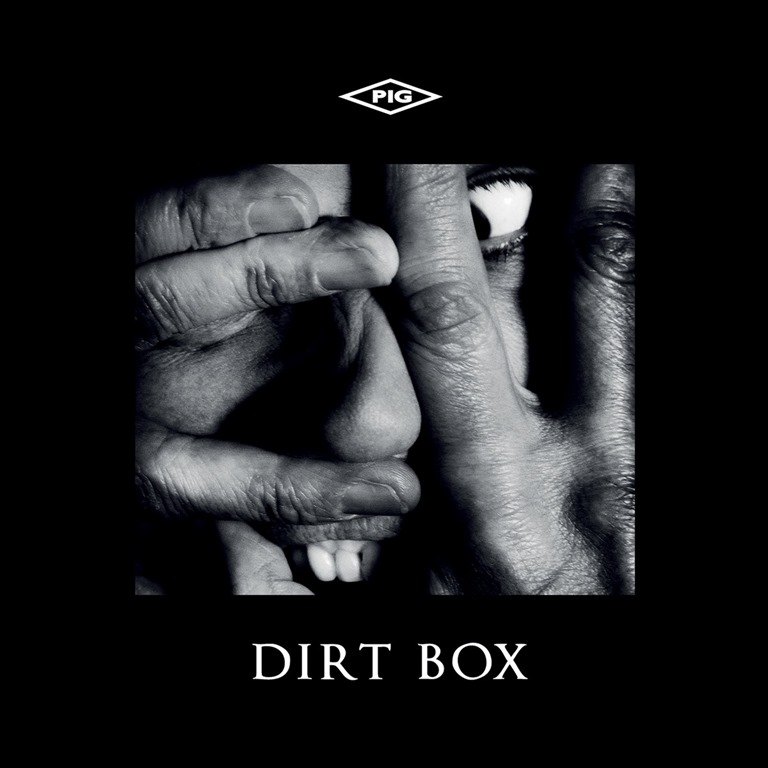
The five tracks on Computer are pretty wild: the first of these, ‘Flesh for the Feast’, which addressed the topic of ‘being brutalized while trying to exercise your right to protest’ blends sequenced backing elements and robotix vocals with squalling guitars, powerhouse percussion, and raw, raging hollering, and it all blasts in at a hundred miles an hour. ‘Drowned in Power’ is harsh and metallic, inviting comparisons to PIG at their gnarliest industrial metal points, but with the raging anger cranked to the max. While the lyrics aren’t often decipherable, it’s clear that this is the voice of protest. ‘Help Computer’ continues in the same vein, bringing the pumping energy of KMFDM.

After the slow, slow-slung bluesy sleazer that is ‘Bloated & Blue’, ‘Valueless Trade’ swaggers in on a ballsy bass groove and a mess of guitar noodling and samples before hitting an overdriven riff-centric blast that straddles hardcore and metal.

Pretty, it is not. Blunt and hard-hitting, it is. Decent news for everyone who isn’t a fan of insipid sonic chewing gum or a right-wing wanksack.

AA

608a5782-e2f7-4bef-224e-a95dc1608923