Posts Tagged ‘reflection’

1st May 2026

Christopher Nosnibor

Since debuting in 2017 under the break_fold moniker after some time away from music to concentrate his energy on the demands of adult life, Tim Hann has maintained a steady flow of output – not exactly a tempestuous spate, but with the release of an EP or an album every year or two, he’s built a respectable body of work. And over the course of these releases, the break_fold sound has evolved – again, not at rapid pace, whereby one release is a huge departure from its predecessor, but the music he’s making now has developed significantly when compared to the sparse glitchtronica of 07_07_15 – 13_04_16 and 27_05_17 – 21_01_18.

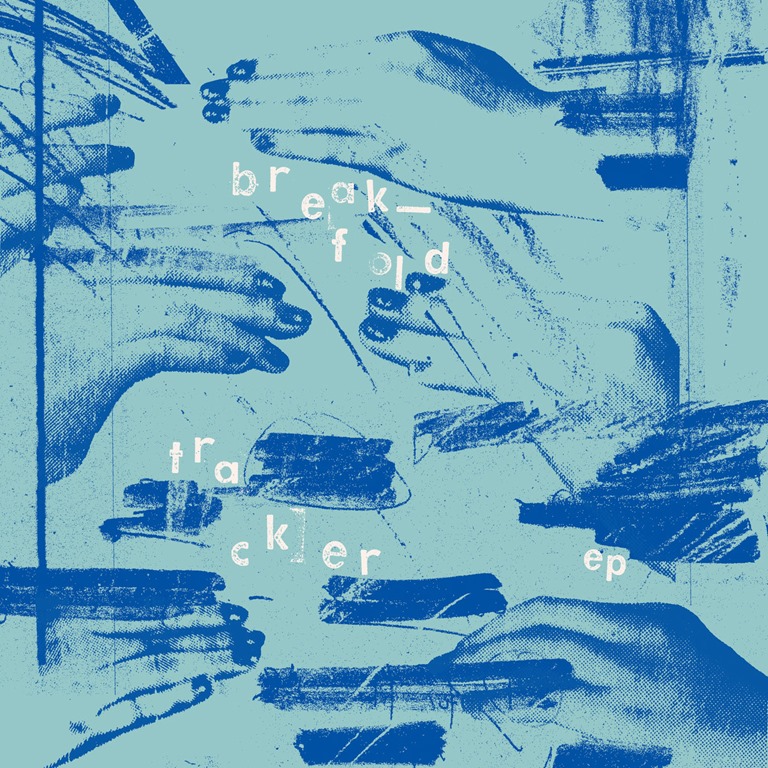
Hann continues to mine his memories and experiences for inspiration, serving to document his life through sonic abstractions, an aural memoir of sorts. The Tracker EP is a counterpart to its predecessor, The Planner EP, as he explains:

The Tracker EP is a reference to my Dad, who gave himself nicknames that others in the family then started using,” Tim explains. “‘Tracker’ is a reference to his persona when on holiday or away from work. If we were on holiday and were trying to find a place of interest, he’d be in Tracker mode. Planner is when my Dad was at work.”

Families are strange, but it’s only as one grows older, and when one takes a step back to reflect on formative experiences that it becomes apparent just how strange. As a child, you assume your family life, and your parents, are normal, and that every other household is the same, at least more or less. Over time, you come to consider the things some of your friends’ households do are weird. And they probably are. Mealtime rituals, Easter, Christmas traditions… but it’s likely not until later, after leaving home and starting your own family that you begin to analyse your own upbringing, and to compare the relationship you had with your parents growing up to the one you have with your own children.

I’m often startled by just how close to their parents a lot of my friends are, and how much time they spend with them. But then, they also stayed close to their parents geographically, living just a few streets away, with their parents providing child care and doing school runs several days a week. And that to me seems strange. I’ve no issues with my parents, but my main aspiration growing up was to attain independence and live my life in my own way.

As the accompanying notes add, ‘across the EP, break_fold ties together nods to family sayings, misheard phrases, and the small but defining details of growing up in the North East of England in the 1990s… for Hann, both Planner and Tracker serve as time capsules; deeply personal yet universally resonant snapshots of childhood, family dynamics and regional identity’.

In this context, the details matter. None of the inspiration is rendered explicit on Tracker: instead, what we get is a sonic articulation of all of this. And it works. You may not take away the intended interpretation, but that’s both the beauty and the downside of a project like this: it’s as much about the listener’s experience and input as the artist’s.

‘Pet’ amalgamates an almost club-friendly dance sound with a trawling, trudging grind of a foundation, while ‘Climbing Flowers’ pairs soft synth washes that hover between Krautrock, ambient, and prog, with flickering, fluttering beats, low in the mix, fading like memories around the midpoint. ‘Workie Ticket’ – a term I first learned on my thirtieth birthday in a pub in Conwy, Wales, where, having climbed Conwy mountain, I had a bowl of chips and a pint of Mordue Workie Ticket – brewed in North Shields. While the meaning and use of the phrase seems varied, it’s most definitely a North-East thing. There’s a trance-dance vibe to ‘Carrying On’, although the bass and overlaid guitar are more post-rock, and what we get, ultimately, is a hybrid.

The Tracker EP doesn’t sound confused as much as a work that’s deeply immersed in the process of processing, bringing together disparate elements in order to sift through an array of stuff. ‘This Concept of Sharing’ is upbeat, light, accessible, even danceable, but there’s a sense of something darker beneath the surface, and this emerges on the final track, ‘Every Penny’s a Prisoner’, which swerves and bends and twists and warps, but all along rides a pulsating groove pinned in place with a whipcrack snare.

It’s hard to place The Tracker EP. As much as its ambient, there are harder dance elements in the mix. But for all its surging buoyancy, there’s a tinge of sadness beneath, and the complex twist of inner conflict and uncertainty. On the surface, The Tracker EP sees break_fold bursting out in a bloom of elation, but there are currents beneath which are deep, and darker, perhaps revealing far more than is ever rendered explicit.

AA

AA
a2375357500_10

Room 40 – 7th January 2026

Christopher Nosnibor

Today, December 21st, is the Winter solstice: in terms of daylight hours, the shortest day of the year, and the longest night. As I write, we’ve had cloud, fog, mist, and rain most days here in York for weeks, so it’s essentially felt like one perpetual night for nigh on an eternity. I’m certainly no summer sun lover (I have fair skin and suffer with hayfever), but do struggle with this time of year – always did, but personal circumstances have accentuated the struggle. Watching Shutter Island with my fourteen-year-old daughter earlier (it seemed like a good idea to avoid conventional ‘family’ ‘Christmas’ fare), she commented on how the ‘man with dead wife is troubled and has wild dreams’ trope is perhaps disproportionately common in movies. She’s absolutely right, of course, but the observation hit hard and brought me back to the reason we were avoiding the schmaltzy family Christmas shit – and reminded me that there’s simply no escape from my personal narrative, that my wife was diagnosed with stage 4 breast cancer just before Christmas in 2021, and died just after Christmas in 2023. These facts not only make it hard for Christmas to be happy, but dealing with all of the stuff like Christmas shopping, present-wrapping, arranging seeing relatives, etc. – stuff that was primarily her domain – on my own is a significant source of stress.

And this is why, on seeing this release had arrived for my attention, it made sense to do myself a favour, for a change. Music is, after all, one of the best therapies. While I’ve little to no interest in new age cack or pseudomystical bullshit, and have generally failed at any attempts to mediate with the limited assistance I’ve had, the idea of a method of achieving mental calm still holds significant appeal.

As David Shea explains in the album’s accompanying notes, ‘Meditations is a set of 8 works based on the experience of meditation practice. Music made for both meditation and reflecting the realities of a life of daily practice. The breath, the quietness, the listening, the distracted dissonant and consonant thoughts that pass through. The texts throughout the pieces are fragments of the Buddhist Heart Sutra, the shortest and created from a mixture of traditions and sources, produced long after Buddha’s death and meant to be chanted or sung as a ritual and personal meditation. The experience of meditation, so often covered in mythology and one dimensionally peaceful symbols, is in fact a complex set of traditions in all cultures and has roots in indigenous cultures world wide and involves the limitations of thought as well as the quietness of the mind as a source of understanding and health.

‘The Buddhist teachings that are in focus in this album are in a sense a sequel to the record Rituals of 2015 in that they are adapted as Meditations that cross and combine traditions with any attempt consciously to synthesize them into a new whole. A conversation between traders, in the form here of musicians, languages, sound sources and the peace and struggle of maintaining a real meditational practice and living in the chaos and violence of society as well as accepting the world as it is, with all of the internal conflicts and release and rise of tension.’

Each of the eight pieces is around eight minutes in duration, and are centred around Shea’s piano, with a host of musicians bringing a range of electronic and acoustic additions, ranging from singing bowls and vibraphone, to samples and midi guitar. The resultant work is gentle, subtle, and sedately-paced. There are tweeting birds flitting around notes which hang, suspended, resonating for substantial durations. Hums and drones. Hints of melodies. Any structures are not based around motifs or repetition, but a flow. That flow is not a linear trajectory, a passage from A to B, but a flow which weaves into the places where the calm is residing.

As much as I’ve always struggled to work with visualisation in guided meditation, Meditations somehow conjures mental images through its abstraction – perhaps because of its abstraction. Being told to visualise a stream, a woodland, a beach, is too much direction, too much ‘relaxation to order’, the meditative equivalent of mandatory of fun in a corporate environment. But with open-ended, non-specific assistance, the channels seem to open more freely. Just as I find ideas and words come to me more readily while out walking, when my blood is oxygenated and my lymphatic flowing comfortably, music which invited free interpretation and successfully evokes images without directed prompts unlocks doors and presents access to unknown passageways.

Piano and acoustic guitar ripple and trickle and ebb and eddy. On ‘Sitting in a Painted Cave’, which ventures more overtly into experimental and Eastern-influenced territory, picked acoustic guitar weaves a textured tapestry. The spoken word interjection is something I find proves to be a distraction in terms of the flow, but I feel this is more because my ideal tranquil space contains no evidence of human existence whatsoever. As a human being myself, I do accept this contradiction, just as I accept the irony of my rage at the presence of others when out for a walk seeking solitude. The track’s second half is rather more dissonant and difficult, with muffled voices adding an unsettling edge. It’s rather less relaxing.

The harmonics, drone, and piano-led ambience of ‘Stillness’ is rather more tolerable, but still wailing drones and tapers quaver before the rippling piano rises from the dissonance of amid-range feedback.

I might have expected ‘The Morning I Awoke’ to be more uplifting, and more… hippy, but it’s largely piano and calming acoustic strums and brooding strings. ‘Tye Heart Sutra’ more than compensate, and offers a spiritual trip and then some. But how to differentiate between business as a need to maintain production? It’s felt like It’s felt like the longest night of the year for about 2 months now.

‘The Heart Sutra’ arrives unexpectedly, before ‘Svaha’ arrives boldly but swiftly tapers into a droning serenity. The sound is dense, a resonant ‘om’, and it leads the listener – at last – to slow, deep breaths, as an undulating vocal –a folky, almost shanty-like lilting quaver- comes to the fore.

Despite its intentions – as specified by the title – Meditations is not quite the sonic still water is first implies. There are dark currents, difficult swells amidst the soothing flows. But for that, it feels more honest, more real.

AA

AA

a2747207944_10

Mortality Tables – 10th January 2025

Christopher Nosnibor

Ambient music is, in many ways, music for reflection. Or perhaps, music which provides the backdrop to reflection. Time was that I had very little interest in ambient music, but I have come to appreciate it has having quite significant functions, whether by the design of the artists or not. Reviewing requires a level of focus and attention that regular music listening does not, and when it comes to ambient works, a greater level of attention is necessary: I feel there is a requirement to tilt the ears and pluck out the details, the textures, to venture into the depths to extrapolate the moods and meanings. Sometimes, I fail, and find my mind wanders down different paths as space opens up through sonic suggestion, and random associations are triggered completely unexpectedly. Regardless, ambient music is generally best received in darkness, or by candlelight. Please… close your eyes and absorb without distraction.

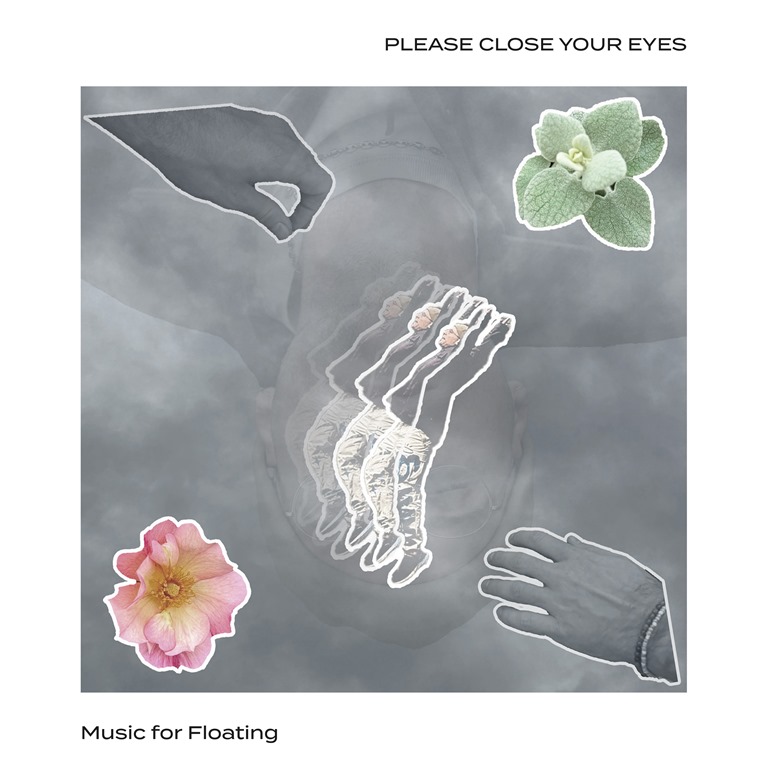
As Oliver Richards – aka Please Close Your Eyes – writes, “Music for Floating is a document of transition. It collects pieces that were made over a three year period, nearly three years ago. They were all made before my last Mortality Tables release, ‘Nibiru’ / ‘Heaven On The Fourth Floor’…It’s a consciously-composed modern classical album. I have no classical training at all, but when I was making it, I set out with the intention of composing for the first time, consciously and intentionally. The music I made before under the name Goodparley was all created improvisationally and instinctively. With this I would step back and ask myself, ‘What am I actually going for here?’”

I ask myself this question often, and not just about creative endeavours, but life generally. How many of us really have any idea, about anything? Music for Floating, then, provides a magnificent soundtrack for contemplation and reflection, on the world, on life, and all things. But it’s not simply an ambient work: it’s a collection of pieces which span a broad sonic range, and while gentle and mellow throughout, there’s much more to it than drifting clouds and soothing sonic washes.

There’s something of an underwater, soft-edged soporificness about ‘The Moment Before We Sleep’, and it’s one of those pieces which lends itself to immersion and letting oneself cut adrift. In contrast, ‘The Hollow’ brings a busier, more bustling feel, not to mention something of a progressive vibe, as synth piano ripples and rolls with waves of energy. Augmented by synth strings and other elongated, organ-like sounds, the seven-minute ‘Piano for Floating’ is a standout, compositionally, structurally, and sonically. It’s subtle, layered, and casts the listener adrift on a rippling expanse of tranquil sound. Music like this has a profound effect that’s both physical and mental: you can feel your spine elongating, your muscles gradually becoming less knotted. I find myself yawning, not out of boredom, but through a rare relaxation.

At under three minutes, ‘Deeper Blue’ provides an interlude at what stands as the notional start of side two, before the six-minute ‘Heaven, Faced: or, The Fairies’ Parliament’, and the epic finale, the nine-minute ‘The Time Before the Last’. The former traces shimmering contrails through an azure sky; it’s the sound of slowly rippling aroura, of silent snowfall in a windless winter sky, of your mind spinning in amazement at the wonder of natural phenomena… while the latter brings slow abstract drifts which evoke the vastness of space, eternal in its expanse. It’s bewildering, but so, so calm… Time evaporates, and nothing matters. There is nothing.

AA

cover

Earth Island Books – July 2023

Christopher Nosnibor

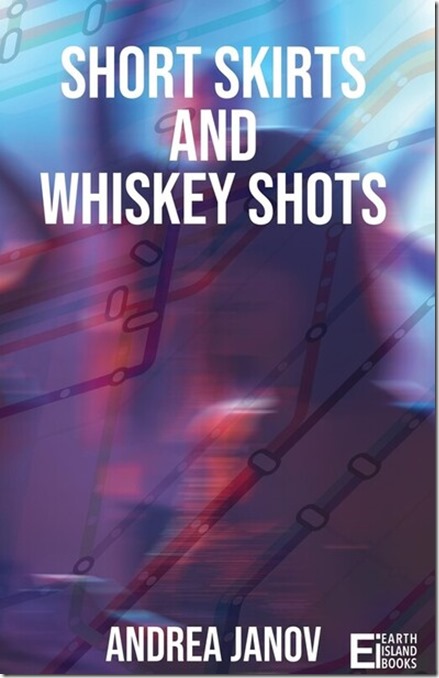
Ordinarily, any book reviews published here on Aural Aggravation are music-related – although admittedly, the inclusion of Stewart Home’s most recent outing, Art School Orgy made it here by virtue of being punk in ethos and published by a record label instead of a conventional publisher. It doesn’t pay to be too prescriptive. And so it is with Short Skirts and Whiskey Shots, the collection of poetry by Andrea Janov, which follows Mix Tapes and Photo Albums, described as ‘a coming-of-age poetry collection about a small town punk rock scene’.

Short Skirts and Whiskey Shots is pitched as a book which ‘captures that liminal part of our lives, that time past adolescence, yet before adulthood.’ It’s not really a book about music. In fact, it’s not remotely a book about music. It’s a book about New York, and a book about finding yourself while being lost in a lifestyle. Yet at the same time, music is there, in the background.

Although the visual formatting and typography (set in a very small font – presumably to maintain the shape of the lines and verses on the pages rather than for cost in this instance) is poetical, the pieces themselves are simple, straightforward prose narrative, and the 24 pieces which make up ‘A Fifth Floor Walk-In’ provide a neat linear scene-setting, sketching succinctly sights and sounds, people and places. The brush strokes are broad, with just the most cursory of details fleshing things out. The titles in this first section are all locations (if ‘7B’ feels rather tenuous compared to ‘10th Street and Avenue B’, we learn later that it’s a bar that plays punk rock), and this theme is continued, albeit less strictly, throughout the book. You couldn’t call it psychogeography, but it does serve to pin each reflection to a place, and sometimes a time, too, and in doing to explores the nature of memory and how places become evocative of moments in time, however fleeting, which reverberate in our recollections further down the line.

Amidst the array of sights, sounds, smells, and the general ambience of chatter and bustling subways, the weather is a prominent and recurring feature of these poems. While we British have a global reputation for our obsession with the weather, it equally seems to be an American thing, particularly when it comes to New York: Ed McBain’s novels always place great emphasis on the heat or the cold or the rain, a s from these readings it does seem as if NY has its own quite specific climate conditions which are an integral part of the experience of life in the city. In these early pieces, she captures the contradictory sense of community – or perhaps scene – and isolation, the distance that comes from living in such densely-packed proximity where people avoid eye contact and rarely even meet their neighbours, let alone reach speaking terms (‘NY, NY’).

As the book progresses, so the pace quickens and the details become less sharply defined, as long shifts in clubs and after-shift drinks melt onto an overall sensation of perpetual movement rather than specifics, and if the backdrop references to punk rock and the Beats on the surface feel somewhat cliché, given that Janov is recounting life in her early 20s finding herself in New York, it’s wholly credible, because it’s simply how it goes: these are the gateways to all things ‘alternative’, a rite of passage, almost. While few here in England use the term ‘punk rock’, its broad meaning in American parlance means it has a universal understanding of music that exists outside of the mainstream. Only a handful of bands are mentioned by name, and if anything, this vagueness imbues the writing with a greater relatability because it ‘despecifies’ and thus broadens the scope for understanding that general musical backdrop.

There are darker moments which remind us of the reason for the book’s subtitle, as in ‘Twenty First and Sixth Avenue, Please’ (the formatting I’m unable to replicate here)

Wake up / Suffocated by the sun / Disoriented and groggy / Chin throbbing / Hand caked in blood

[…]

Stand up. / One shoe on. / Sock in my pocket. / Grope around for other injuries. / No other spot of pain. / No cuts or bruises or contusions. / The chin probably needs stitches. / A skull and crossbones bandage will have to do.

There’s nothing dewy-eyed – and perhaps more significantly and more appealing, nothing dramatic about her narrations of living a life without fear simply because being young and immersed in living life, the risks of walking home through parks at 3am blurry with booze simply weren’t a factor for consideration.

There are a number of scenes and recollections which are replayed in only subtly different ways throughout the collection, but the repetition, rather than being frustrating, recreates the experience of lived memory, how things echo back at us variously, how our minds will return to certain times, certain places.

There’s a melancholy intermingled with fond nostalgia in ‘The East Village’, where on returning she reflects on the process of gentrification: the way the few places which remain have changed.

The sequencing of the poems does have a clear overarching linearity: first, the buzz of arriving and discovering New York, followed by the relentless whirlwind of life, before winding down to a more reflective place on revisiting and remembering. It makes for a short but satisfying work.

(Click on image for link to purchase)

9781739443801-perfect-1

Midira Records – MD080 – 13th December 2019

Christopher Nosnibor

It’s new year’s day, 2020. Like many, I’ve spent the last few weeks reflecting on the passing year: I usually do around this time, remembering where I was a year ago, two, three, five, ten years previous. Wondering precisely what I’ve got to show for it. that slow, sad, weight of nostalgia as the images captured in memories fade and curl around at the corners. Wondering: was I actually happier then, less prone to panic, or is this simply rose-tinting, psychological refuge in the comfort of the known, the life lived, rather than the fearful prospect of the unknown future? Such conflict, such dichotomy and dilemma.

And so, another year is indeed over, and here we are, staring into the void. Teetering on the brink of the abyss of a new decade in a post-fact, post-truth world where the capitalist world teeters on the brink of self-induced collapse and global climate catastrophe. And there is no success like failure.

We’ve failed as individuals, and as a species. The year is over… so what is there in prospect?

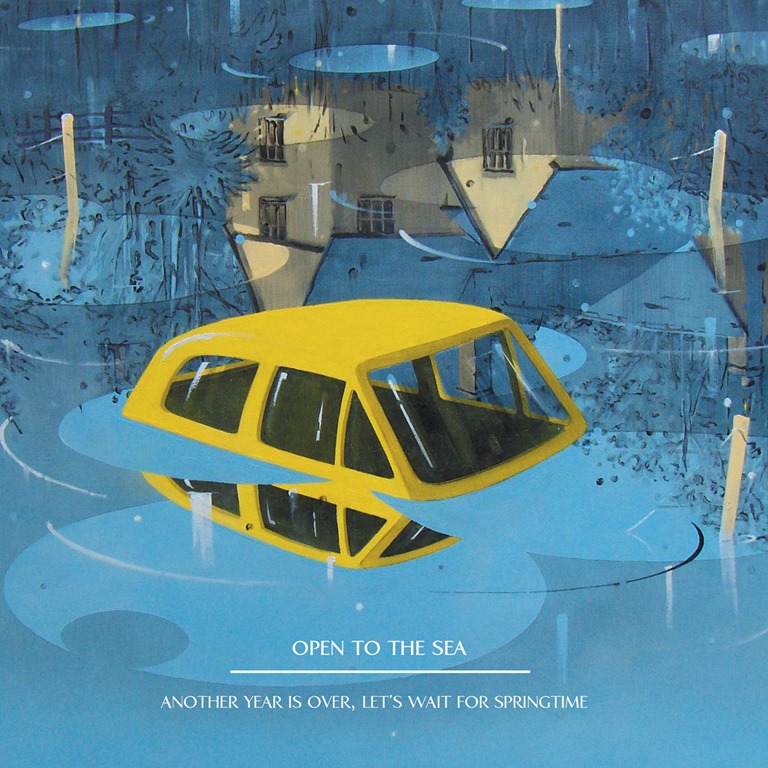
Open to the Sea’s new album, released late December provides the soothing backdrop to my existential strife, and it’s barely there for the most part. And yet, it’s there just enough: understated, yet still clearly stated.

The press release provides some useful insight into the album’s origins and its creators: ‘Open To The Sea is the collaboration project of Matteo Uggeri and Enrico Coniglio and Another Year Is Over is their second album. While Coniglio focusses on guitar, synths and other instruments, Uggeri adds samples and field recordings to create a soundcosmos full of tiny melodies and themes with appereance by some guest musicians on drums, trumpet and cello. That would make a perfect experimental ambient album with jazzy moments, but Uggeri & Coniglio push this release further by adding some vocals to most of the tracks by inviting guest singers like Dominic Appleton (This Mortal Coil) or Lau Nau from Finland.’

Minimal post-rock forged from sparse piano notes which drift into a rarefied air, spun with subtle, near-subliminal swirls of ambience, and stammering, glitching beats that hammer like a palpating heartbeat rattling in a tense ribcage, and picked guitar notes waft into the ether.

With different vocalists contributing to the various tracks, the tone and feel changes: ‘Heavy Like a Falling Leaf’ is soft, airy, yet poised, while ‘Uninvited Ghost’ and ‘Crystal Dog Barks’ feature a spoken word lyrical delivery, which in some respects changes both the dynamic and balance, and the function of the musical accompaniment, rendering the piece less a song and more of a narrative with instrumental backing.

‘Duduk Confession’ is hushed, brooding, with haunting strings and ominous hums lingering in the shadows, and on ‘Tapes and Cows Pt 1’, lonely brass wails softly over low notes to produce the most forlorn jazz imaginable. Scraping strings and frosty synth flickers accompany the deepest woe, which gradually evolves into warped space-age electro that melts into some warbling jazz trumpet.

The penultimate composition, ‘facing the waves’ is by far the most conventionally ‘songy’ of the ten, with a straight-ahead drum rhythm and solid piano providing the primary instrumentation on a whispy indie/shoegaze work. The fading refrain of ‘time now to start again’ is sung by a layered-up vocal set and, unexpectedly, Interpol come to mind.

The final song, ‘Another Year is Over, Let’s wait for Springtime’, with its whispering dialogue and soft dulcimer shimmers and soft, snowy strings that glide smoothly into the darkest corners, reminds me of my urge to hibernate, but also the fact that everything passes in time and everything is cyclical. Yesterday, today, tomorrow – they’re all points on a circle, and as linear as life lived is, as sure as birth and death, one year will follow the last, and so it will go on, whether we’re here or not.

AA

MD080_front