Posts Tagged ‘memory’

1st May 2026

Christopher Nosnibor

Since debuting in 2017 under the break_fold moniker after some time away from music to concentrate his energy on the demands of adult life, Tim Hann has maintained a steady flow of output – not exactly a tempestuous spate, but with the release of an EP or an album every year or two, he’s built a respectable body of work. And over the course of these releases, the break_fold sound has evolved – again, not at rapid pace, whereby one release is a huge departure from its predecessor, but the music he’s making now has developed significantly when compared to the sparse glitchtronica of 07_07_15 – 13_04_16 and 27_05_17 – 21_01_18.

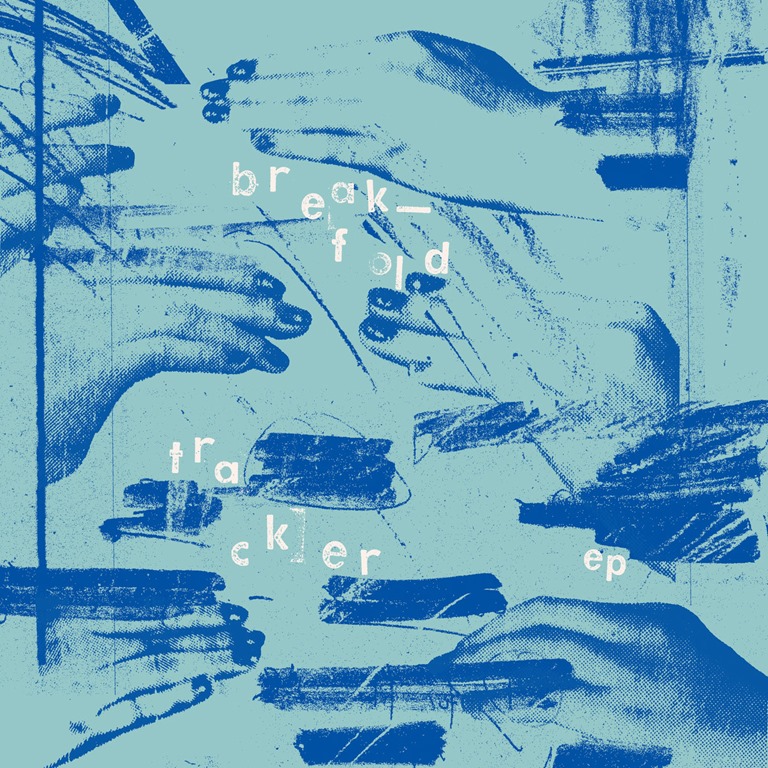
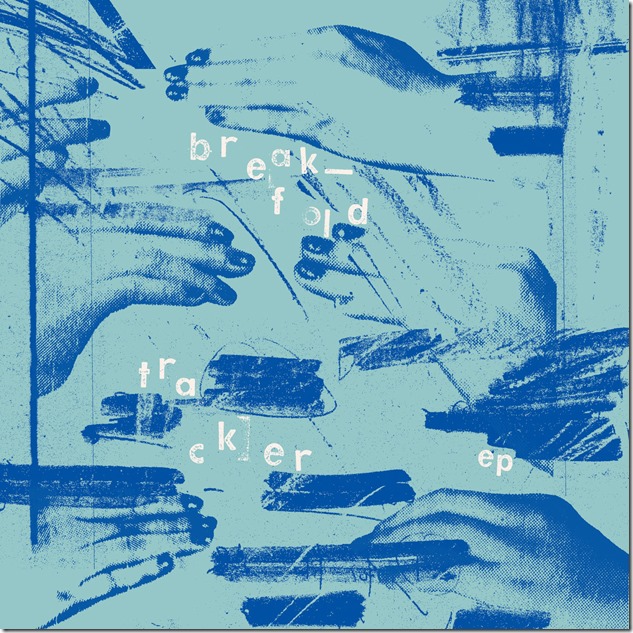
Hann continues to mine his memories and experiences for inspiration, serving to document his life through sonic abstractions, an aural memoir of sorts. The Tracker EP is a counterpart to its predecessor, The Planner EP, as he explains:

The Tracker EP is a reference to my Dad, who gave himself nicknames that others in the family then started using,” Tim explains. “‘Tracker’ is a reference to his persona when on holiday or away from work. If we were on holiday and were trying to find a place of interest, he’d be in Tracker mode. Planner is when my Dad was at work.”

Families are strange, but it’s only as one grows older, and when one takes a step back to reflect on formative experiences that it becomes apparent just how strange. As a child, you assume your family life, and your parents, are normal, and that every other household is the same, at least more or less. Over time, you come to consider the things some of your friends’ households do are weird. And they probably are. Mealtime rituals, Easter, Christmas traditions… but it’s likely not until later, after leaving home and starting your own family that you begin to analyse your own upbringing, and to compare the relationship you had with your parents growing up to the one you have with your own children.

I’m often startled by just how close to their parents a lot of my friends are, and how much time they spend with them. But then, they also stayed close to their parents geographically, living just a few streets away, with their parents providing child care and doing school runs several days a week. And that to me seems strange. I’ve no issues with my parents, but my main aspiration growing up was to attain independence and live my life in my own way.

As the accompanying notes add, ‘across the EP, break_fold ties together nods to family sayings, misheard phrases, and the small but defining details of growing up in the North East of England in the 1990s… for Hann, both Planner and Tracker serve as time capsules; deeply personal yet universally resonant snapshots of childhood, family dynamics and regional identity’.

In this context, the details matter. None of the inspiration is rendered explicit on Tracker: instead, what we get is a sonic articulation of all of this. And it works. You may not take away the intended interpretation, but that’s both the beauty and the downside of a project like this: it’s as much about the listener’s experience and input as the artist’s.

‘Pet’ amalgamates an almost club-friendly dance sound with a trawling, trudging grind of a foundation, while ‘Climbing Flowers’ pairs soft synth washes that hover between Krautrock, ambient, and prog, with flickering, fluttering beats, low in the mix, fading like memories around the midpoint. ‘Workie Ticket’ – a term I first learned on my thirtieth birthday in a pub in Conwy, Wales, where, having climbed Conwy mountain, I had a bowl of chips and a pint of Mordue Workie Ticket – brewed in North Shields. While the meaning and use of the phrase seems varied, it’s most definitely a North-East thing. There’s a trance-dance vibe to ‘Carrying On’, although the bass and overlaid guitar are more post-rock, and what we get, ultimately, is a hybrid.

The Tracker EP doesn’t sound confused as much as a work that’s deeply immersed in the process of processing, bringing together disparate elements in order to sift through an array of stuff. ‘This Concept of Sharing’ is upbeat, light, accessible, even danceable, but there’s a sense of something darker beneath the surface, and this emerges on the final track, ‘Every Penny’s a Prisoner’, which swerves and bends and twists and warps, but all along rides a pulsating groove pinned in place with a whipcrack snare.

It’s hard to place The Tracker EP. As much as its ambient, there are harder dance elements in the mix. But for all its surging buoyancy, there’s a tinge of sadness beneath, and the complex twist of inner conflict and uncertainty. On the surface, The Tracker EP sees break_fold bursting out in a bloom of elation, but there are currents beneath which are deep, and darker, perhaps revealing far more than is ever rendered explicit.

AA

AA
a2375357500_10

29th August 2025

Christopher Nosnibor

When I was a child, I used to suffer anxiety – often when I was unable to sleep (my complex relationship with insomnia began at the age of five) – that my memories were stored in the vast eighteen-volume encyclopaedia my family owned, and I would be unable to access them because I couldn’t remember which volume they were stored in. Not that it was recognised as anxiety at the time: my parents would tell me to stop padding downstairs and bothering them, and to go to sleep. There’s a (sort of) valid reason for this (the anxiety, not the parental dismissal, but that’s an essay for another time): said encyclopaedia was made up from weekly magazines string-bound in identical hardback covers – a precursor to those infinite volume magazines devoted to knitting or whatever, or where you would build a Death Star in 300 instalments, that would likely cease publication before the collection was complete – and there were issues missing, including segments of the index, and topics were not arranged alphabetically like a conventional encyclopaedia. I couldn’t even find my favourite illustrations of dinosaurs fighting a lot of the time.

Things have only become more difficult since the advent of the Internet, and while spent my youth and even my early twenties in a pre-Internet world, there are many now who have never known anything else. Kids have existed online even pre-cognisance thanks to parents posting endless pics of them growing up on social media, and YouTube and Netflix have replaced conventional TV for anyone born in the last twenty years now.

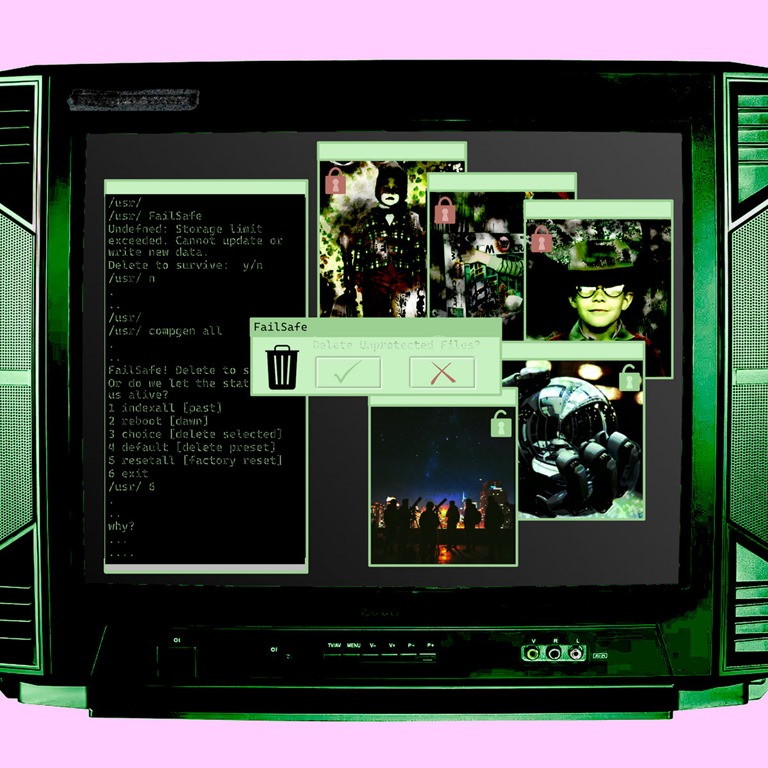
Memory, identity, and their changing nature of both under the conditions of lives lived permanently online, are primary subjects of exploration for solo artist Will N, songwriter, performer, engineer, admin, and the man behind industrial / darkwave act Solid State Sunlight. These topics provided the focus of the ExoAnthro EP last year, and ‘Failsafe’ continues that trajectory, ‘address[ing] the realization that the more we develop our own identity, the less memory remains for experiencing life moving forward. Does it delete previous memory to make space for ongoing growth? What memories are disposable? What are the consequences if it fails?’

I hadn’t considered this, or the idea of what he refers to as ‘data-poisoning’ before, having come to view the mind as a recording device, which captured and archived every single experience, every thought, e very book read, movie seen, but stored them in such a way that it accessing those archives was often a random process – Random Access Memory in the most literal sense.

But we scroll, and we scroll, and we troll, and we troll, and personalities become fragmented, real-life and online personas and experiences partitioned off from one another. Who are you? As AI takes over, the lines are becoming increasingly blurred.

‘FailSafe’ is a gnarly, glitchy technoindustrial stomp through melting circuitry that collides Depeche Mode and Nine Inch Nails with Twitch-era Ministry, with crunching beats dominating jolting electronics and raspy vocals. The intro is a grating bass throb, emerging from an abstract crackle – and then the beat kicks in. And it kicks hard.

If the autotune / robotix breakdown in the middle sounds a shade retro or corny, it works in context, reminding us of how the visions of the future portrayed not so long ago have been replaced by a truly dystopian present. The future was exciting. Computers would make life easier, give us more leisure time and infinite knowledge: that was the promise. Now look where we are. The corporate takeover of the Internet was where it all started to sour, and it was inevitable, but still somehow came as a surprise.

With ‘FailSafe’, Solid State Sunlight draw together a host of references and points of discussion, directly or otherwise, through the savvy hybrid formulation of the composition. It’s hard, and it hits with some attack. This is the vibe of the late eighties and early nineties updated to poke the paranoia of the now. We live in troublesome – by which I mean hellish, fucked-up – times, and with ‘FailSafe’, Solid State Sunlight poke that nerve.

AA

a1907026816_10

Mortality Tables – 16th May 2025

Christopher Nosnibor

Just three weeks after the previous instalment in the extensive LIFEFILES project from Mortality Tables, now in its third season, comes what promises to be the final instalment for now. And all proceeds from this release will be paid to CALM – the Campaign Against Living Miserably. It seems fitting, given that life can often feel relentless, amped-up stress and bewilderment, and the LIFEFILES series has presented, over its duration, works which take the listener into audio representations of calmer environs. I write this as someone who has, in recent years, factored a daily walk into their routine, as much for the mental health benefits as for the physical exercise. A change of scenery, particularly in open spaces and away from crowds, can be a transformative experience.

The premise of the series, for anyone who hasn’t seen any of my previous coverage, is that the artist is given a field recording, captured by Mat Smith, who runs the label, to respond to in any way they feel appropriate. For this release, the accompanying notes record that the two tracks have been constructed using ‘Source recordings made by Mat Smith at Charing Cross Underground Station on 27 November 2021, as part of a Hidden London tour of disused areas of the station and areas not normally accessible by the public.’

In addition, there’s an excerpt from Smith’s journal, from the same date, which reads as follows: “…walked around the old station section of the Jubilee Line that isn’t used any longer, went into a construction tunnel underneath Trafalgar Square which had a bend in it to avoid the foundations of Nelson’s Column, and then finished up in a ventilation shaft above the Northern Line platform…”

Xqui’s treatment of the recording is interesting, taking the form of the ‘classic’ experimental work, the likes of which you’ll find on labels like Editions Mego, with a single longform track occupying each side. The first, ‘Charing Cross Underground’, captures the voice of what may be a tour guide, spun out in reverb and glitching echo, while trans rumble in the distance, before slowly melting into ambient abstraction. It’s like hearing the ghosts of the underground, rising up through the disused tunnels, calling out to the present to remind us of the past beneath our feet. There are flickers of chatter, as if, here in the present, we continue to talk without ever stopping to listen. Voices warp, slow, slur, distort, and it makes for an unsettling fifteen minutes.

‘Reverb Underground’ goes slower, more spacious, more echoey. I had half-expected something resembling a dub version, but instead, Xqui slows and stretches everything beyond recognition, creating a slow-motion blur, a crawling ambient drone. The sound simply hangs, dense, suffocating. Time stalls, and you find yourself floating, in suspense, in a fugue state, as the sound lifts free of context and embraces pure abstraction.

What Xqui manages to convey on this release is a sense of history, of space, of time, and the way we’re so busy rushing about in our daily lives that we never pause to contemplate the echoes of the past which exist, and linger all about us.

AA

cover

Room40 – 31st January 2024

Christopher Nosnibor

It begins with a rumbling roar, like a persistent strong wind rushing over moorland, before ripples of piano delicately drift over it to altogether calmer effect – although the roar continues beneath. The juxtaposition brings a balance of sorts.

Just a few days ago, I wrote on Circuits From Soft Frequencies by Jamie Lee, which was recorded among the sound mirrors at RAF Denge, in Kent, and touched on the fascinating nature of these structures, and opined that ‘often, the most alien and seemingly otherworldly creations are, in fact, man-made’.

Lawrence English’s latest work seems to contribute to this dialogue, albeit approaching from a different perspective.

‘I like to think that sound haunts architecture,’ he writes, and goes on to remark, ‘It’s one of the truly magical interactions afforded by sound’s immateriality. It’s also something that has captivated us from the earliest times. It’s not difficult to imagine the exhilaration of our early ancestors calling to one another in the dark cathedral like caves which held wonder, and security, for them.’

English also writes of the relationship between space and place, and how ‘Spaces hold the opportunity for place, which we create moment to moment, shaped by our ways of sense-making… Whilst the architectural and material features of space might remain somewhat constant, the people, objects, atmospheres, and encounters that fill them are forever collapsing into memory.’

The album comprises eight numbered segments, ETHKIB I – VIII, all formed using fundamentally the same sound palette, and which flow into one another seamlessly to create a single, continuous piece, which is best experienced without interruption.

The piano and the undercurrents, which evolve from that initial roar to altogether softer drones which drift, mist-like, develop an interplay whereby the dominant sound switches, sometimes with one or the other fading out completely – but this happens almost imperceptibly… It isn’t that you don’t listen to the music, but the preoccupation of the listening experience is absorbing the atmosphere, and it possesses almost a physicality. By ‘ETHKIB V’ the sounds has built such a density that the sensation is like being buffeted. Amidst the deep drones, there are, in the distant, whirring hums and elongated scrapes which evoke images of disused mills and abandoned factories. Perhaps there’s an element of the power of suggestion, but it’s difficult to contemplate purely abstract visualisations, or nature without some human aspect somewhere in the frame.

The soundscapes English creates are evocative, and in parts, at least, haunting – although ultimately, what haunts us is our own experience, our thoughts, our memories. And in this way, from space, we create our own sense of place, and tie things to them in an attempt to make sense of the world as we experience it.

By ‘ETHKIB VIII’, it’s the piano alone which rings out, in a reversal of the opening, and some of the mid-sections, ending on a single, low note, repeated, held, reverberating, leaving, ultimately silence, and a pause for reflection.

AA

RM4245 front

Mille Plateaux – 1st December 2023

Christopher Nosnibor

It’s always exciting to hear what electronic experimentalism Neuro… No Neuro have cooked up, and Positive* is the second album this year, following on from the collection of glitchy snippets which comprised Compartments back in January. Just as Compartments was a very different project from its predecessor, Faces & Fragments, so Positive* explores very different territory from the ‘Kawaii-Glitch’ of Compartments.

As the accompanying notes explain, ‘Positive* by Neuro… No Neuro is based upon thin slices of memory, and the disintegration of their existence. The day-to-day, with its ‘ups and downs’, all while operating/existing above and to the right of the body. When the day ends, and the separated is reunited; how does one collect what is no longer there? …Separating consciousness from the corporeal… Memory and thought are being swept out to sea in granules that are imperceptible to those around you. Short term is riddled with inconsistencies…Say “so long” to the granules.’

It’s all about focus, and the focus of Positive* is very different from any previous projects. And when it comes to projects like this, details are important. In context, it’s ok to focus on those details, and to do so isn’t obsessive or excessively picky, but to engage with a creative work on the basis of its design, its intent. I preface my assessment this way because the first thing I’m drawn to, before hearing a single note, is the asterisk in the title. Such a mark denotes a footnote, an aside, a necessary commentary on the subject.

But there is not one appended to the accompanying notes. What can it mean? Is this an accidental omission? It seems unlikely, and as such, one can only conclude that it’s for the reader to decipher the nature of the discourse. In my own experience of academic writing, it’s often the case that the real commentary and the grain of the research lies in the notes, and so it is the case here.

‘This Time for Sure’ brings some stuttering ambient drum ‘n’ bass which arrives in a drift of Japanese-inspired scales, bit there are some subtle details and textures to be found low down in the mix. It certainly sets the tone for this comparatively delicate collection of pieces, most of which are fairly fleeting, sitting around the two-and-a-half-minute mark on average.

Each of the titles pins a positive slant on neutral or even potentially negative scenarios – ‘Even I can See this Now’, ‘When You Actually Want to Wake Up’, ‘Drier days Ahead’ – all feel like phrases uttered the kind of pep talks you might give yourself in times of struggle. C’mon, you can do this! Sometimes, try as you might, it still feels empty and futile, and as oft as you repeat it, you struggle to believe it.

‘When You Actually Want to Wake Up’ perhaps represents this struggle most keenly, a loping glitch like the back and forth internal monologue you struggle to overcome: yes… no… yes… no… just get up… but…’

‘Of Course You Know it All’ has an implied snarky, snideness to its title, but it’s still positive, right? Its glitchy, picky, chiming mellowness float beneath some pinging arcs, while the sweeping ambience of ‘Almost Through’ arrives with a sense of sagging fatigue, the kind of positivity many feel in the last half hour of the working week – fagged out and clinging to that point of release.

The world is dark and life is a grind, and it’s often difficult to see the light, the positive aspects among it all – and they are few and far between. Platitudes like ‘at least I have a job’ or ‘at least I have my health’ don’t really carry much conviction. Sure, there’s always someone worse off, but it’s hardly saying much. It’s ok to be negative, to be discontent.

And perhaps it’s here we finally come to understand and appreciate the asterisk. Positive* is, overall, melodic, and feels quite uplifting, being gentle, the urgent beats tempered by ambience and melodicism. It’s actually – dare I say it – quite nice. But finding those uptempo, upbeat aspects, maintaining balance, is hard as you juggle and struggle to keep things together, a day at a time. And perhaps this is how we can best appreciate Positive*. Just as memory drifts and floats, so does our capacity to continue onwards and to stay afloat. All you can do is hang in there.

AA

a3005718583_10

Anticipate Recordings – 17th March 2017

Christopher Nosnibor

The cover art gives little to nothing away, but at the same time, it’s perhaps a remarkably accurate representation of the blurring, blending overlays of contrasting tones and textures which define the ephemeral pieces which form the abstract picture which is A Passage of Concrete.

The album pitch details how A Passage of Concrete ‘ebbs and flows across an electroacoustic narrative of fragmented memory tethered to the present moment, unravelling movement, location, distance in a story that cares about place as both texture and emotional notation. Honig’s sense of place and the way he utilises it is disparate and varied, from field recordings made in busy streets, to parks and empty apartments, via high-ceilinged spaces. One might say that  Honig is preoccupied with both sonic and psychological reverberations and resonance, and that A Passage of Concrete represents the coalescence of these things.

Scratchy and distant shuffling scrapes, flickering, arrhythmic beats provide the backdrop to a sparse delicate acoustic strum on ‘Apartment Workshop’. Steady, pulsing beats pin down the extraneous sonic ripples and segments of ambient audio captured in bustling crowds, while ‘Forest of Refractions’ wraps droning organ undulations around a glitchy beat. The mellow keys which radiate dappled light on the two ‘Fugue State’ pieces are pleasant but innocuous, and while ‘dark’ notes resonate across bouncing beats over the album’s duration, it’s not easy to get a handle on. Yet for all that, it’s not an album which possesses the deep draw of emotional engagement.

While the album’s fourteen tracks, many of which are fragmentary, and a number of which are but sketches of around a minute in duration, are exercises in the vague and the transitional, the percussion, fluid as it is, provides a certain solidity to the compositions in structural terms. The effect is to give A Passage of Concrete a greater sense of tangibility than an album which is purely abstract and ambient. As such, its capacity to connect with and conjure from the listener’s memory is reduced. It lacks that essential, if evasive and indefinable quality of being haunting and evocative. Ezekiel Honig may be a master at conveying his own mental geography, but A Passage of Concrete lacks the abstraction required to render it universal. So where do you go?

On ‘A Slow Expansion,’ the classic evocation of nostalgia, the crackle of a worn vinyl groove fleetingly emerges. I can’t be drawn. The crackle track, the ultimate cliché of nostalgia, has become Vienna: it means nothing to me, and stands as nothing more than a signifier of ersatz nostalgia. It no longer holds any emotional resonance.

A Passage of Concrete is not a bad album by any means. In fact, it’s an extremely interesting album, but one that’s difficult to appreciate on anything but an artistic or musical level. Sonically, there’s no questioning the accomplishment of the material on display. But to measure the extent to which Honig succeeds in his goal is entirely subjective: what will resonate with one individual won’t touch another. But at its best, music transcends everything: sound transcends language and sound attains absolute universality. A Passage of Concrete fails to achieve this ultimate goal of connecting the listener’s psyche through abstraction, because it feels somehow prescriptive. Honig’s structures steer the listener in the direction of his headspace rather than providing a conduit for the listener to interact fully by exploring their own. The end result, then, is a pleasurable listening experience, but one which lacks the capacity for full immersion and to truly move the listener.

Ezekiel Honig - A Passage of Concrete

Sub Rosa

Christopher Nosnibor

It’s not entirely clear, but it appears that Book of Air is a series of album releases with different collectives interpreting it differently, with VVOLK being the second collective after Fieldtone who released a Book of Air album in 2015. But perhaps given the nature of the project, identity is something which is of little to no consequence, names mere markers for marketing purposes. This is, after all, very much music where its origins and its makers are not only interchangeable and very much in the background but largely invisible – as is the music itself. This is a project about the listener, about perception, and about intangibles.

While I must confess that I’m unfamiliar with the concept of ‘bundled compositions’, I can readily grasp the concept of an album comprising four pieces performed by some eighteen improvisational players with musical roots in jazz and classical. Their collective objective is to investigate and interrogate improvisation in close relation to present time, asking the questions ‘what are the possibilities in playing music, when changes in the music pass unnoticed?’ and ‘how does our hearing and memory react to these slow changes?’ The album’s concept, then, is based around making music which is perceived less in the present time, ‘but rather occurs in our memory of the past’. As such, the album’s form pieces (spanning four sides of vinyl, and mastered as just two tracks of approximately twenty-five minutes apiece in duration on the CD) are built around slow notes and the compositions evolve at an evolutionary pace and are based around the gradual transition of the seasons, with the first track ‘Lente > Zomer’ giving way to ‘Herfst > Winter’.

Some time around the fifteen-minute mark during ‘Lente > Zomer’ I realise there are slow cymbal splashes washing over the gradual turning drone that forms the track’s foundation. Gradually, so gradually, the sound swells and grows in volume and resonance. Guitar notes flicker in the slow-turning sonic mass and imperceptibly, darkness turns to hint towards light. The two tracks segue together, with ‘Herfst > Winter’ beginning as a light, delicate undulation which draws out time itself as the notes interweave like starlight from distant galaxies making their way through space to be seen by human eyes millions of years later. The images of ice-capped mountains inside the album’s gatefold are appropriate: time move at a pace akin to that at which mountain ranges change. Such things are also relative: while the Himalayas continue to rise as the Indian tectonic plate continues to drift and buckle against the Eurasian, the Appalachians are slowly eroding. The analogy extends to the arrangements, which explore in painstaking detail the way sounds interact and reverberate against one another. And it all happens a truly glacial pace

‘Herfst > Winter’ tapers to a sparse dissonance around the sixteen-minute mark, simmering down to a hushed yet insistent throbbing tone, a frequency that nags at the nerves despite being soft-edged and gentle. The instrumentation is delicate and understated to the point that this is not an album one really listens to, but simply allows to wash over oneself and to form an almost subliminal listening experience.

Such sparse sound arrangements demand considerable restraint for so many musicians, and the collective result in many respects is one of subtraction. And yet, this is by no means a negative assessment. The music’s presence increases after the slow fade to silence.

VVOLK