Posts Tagged ‘contrasts’

17th April 2026

Christopher Nosnibor

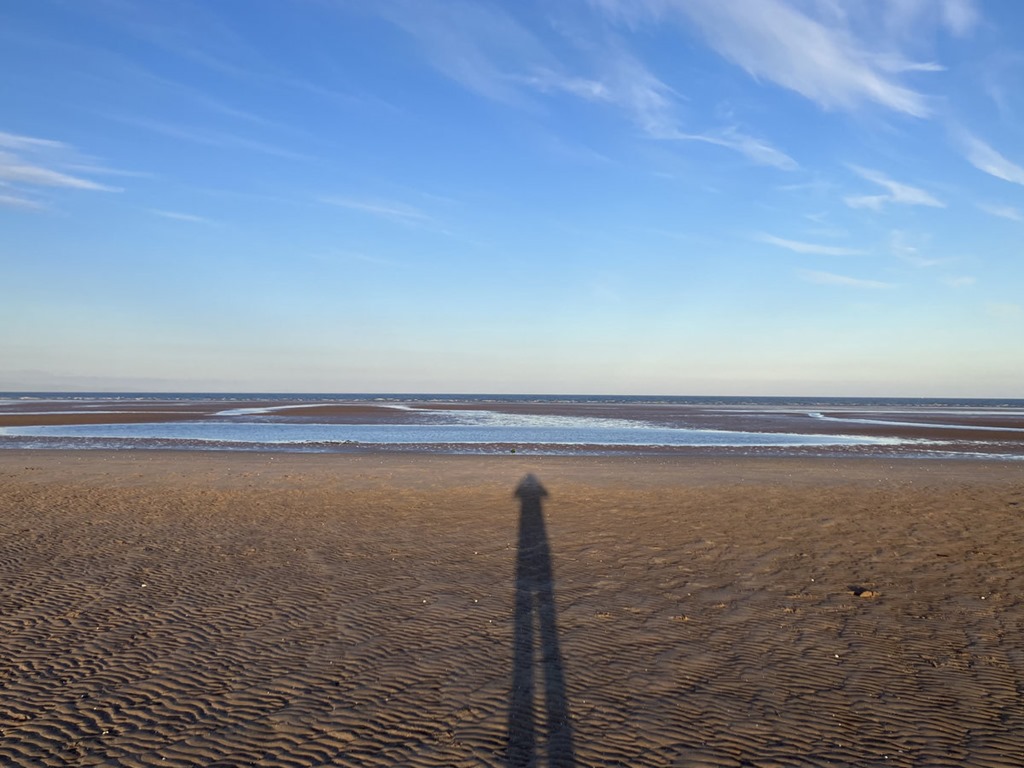
Since emerging as The Sunken Land not so long ago, David Martin has focused on his consistent push forward, and his systematic output. One gets the impression that this is much more driven by a desire to render new sonic art, than the capitalist compulsion, now being pushed by streaming sites, to continuously create ‘content’. And for that, I say ‘good’: content creation as a goal in itself is as anathematic to art as AI itself: creation for the pleasure of the act, however, is an entirely different matter.

This, the third release by The Sunken Land – and the third in four months – is perhaps the most ambitious yet, making deeper explorations into texture, tone, and contrast.

Admirably, there is no information about this release: it’s left for the listener to unravel. And why shouldn’t it be? While it can be interesting to learn where there’s a specific back-story, motivation, meaning, or method which is vital to a work, more often than not, the endless explication given by some artists gets to be a drain after a while. It can also make the writing of a review feel somewhat futile, as if half the job’s already been done.

As the title perhaps suggests, there’s a sense of ephemerality to the three compositions on up close everything melts into air. The first, ‘scoria bricks’ is an eight-minute piece which overlays a heavy, pulsating drone, dense with distortion, with soft, comparatively clean notes, which at times sounds like Earth attempting to cover Fleetwood Mac’s ‘Albatross’. The contrasting parts, while distinctly separate, form a full-spectrum sonic flow, which is both immersive and strangely soothing.

Some cursory research, meanwhile, reveals that a scoria brick is a type of blue-grey brick made from slag, originally manufactured from the waste of the steelworks of Teesside, common across the North-East of England, and that ‘the word Scoria originally comes from Greek, meaning “Excrement”, but came to be used by the Romans for a kind of volcanic rock’. It’s more than I can manage to avoid making some reference to ‘shit bricks’ here. However, I also discovered that these are precisely the bricks, manufactured in the late nineteenth century, used in the back alleys in the part of York where I live, which, on a personal level, brought an additional dimension to listening back to the track, a sense of connection with a part of the local history I had hitherto been unaware of.

Arriving with a tearing detonation of a chord, ‘into air’ is again simultaneously heavy yet delicate, even light. The experience is perhaps evocative of waves crashing against rocks, and observing rainbows amidst the spray – something rare and special, and so fleeting and impermanent – barely even tangible, and completely without substance – that it hardly seems to exist at all. In a blink, the phenomena has passed, as if evaporated, quite literally ‘into air’.

The third and final piece, ‘white sike’, is both the briefest and the gentlest of the suite, and given the voyage of discovery inspired by ‘scoria bricks’, it’s perhaps most likely in some way connected to White Sike Wood, a forest some way west and a shade north of Harrogate, rather than the White Sike in Dumfries And Galloway. Its picked notes and slow movement is the sonic equivalent of dappled sun – rather than Sunn O))) – through leaves, and over its duration, a tranquillity descends.

AA

a3679715982_10

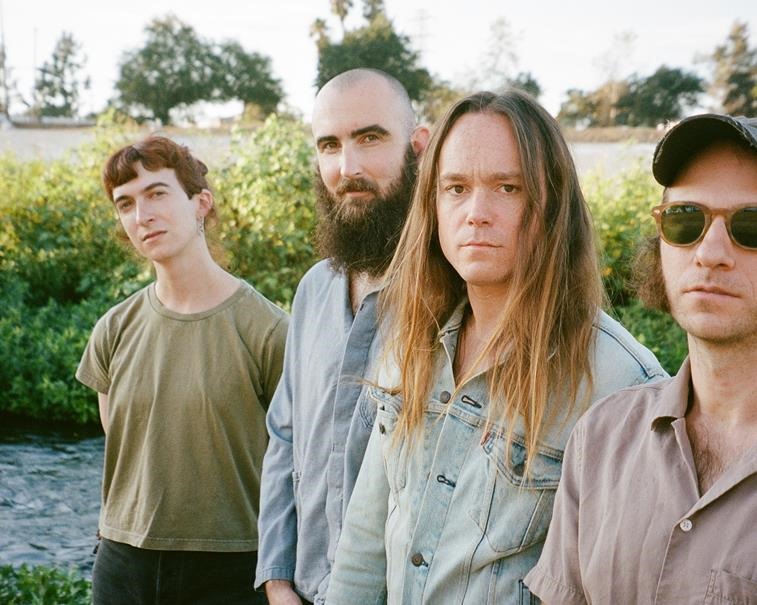
The forthcoming full-length from Los Angeles–based band Agriculture, The Spiritual Sound, traces a narrative arc through extremes.  The album is largely a fusing of the visions of its two principal songwriters: Dan Meyer and Leah Levinson.  Though distinct, their voices converge in a singular spiritual grammar—one that defines the totality of The Spiritual Sound, not as separate parts, but as one unified expression.

Dan writes like someone clawing toward the divine through noise, channeling Zen Buddhism, historical collapse, ecstatic grief. Leah’s songs move differently: grounded in queer history and AIDS-era literature, amid the suffocating fog of the present, they carry the weight of survival as daily ritual. Dan takes the lead on their next release, a quieter moment amongst the chaos. About the track, he says;

“This is a love song to a future child. It is so moving to me that even though this child does not exist in the form of a child yet, all of the matter that will one day make up their being is already in the world. And of course this is true of all things that have ever existed. So even though I’m talking about a kid that I want to have one day, I’m really talking about the principle that everything is totally connected.”

AA

Agriculture’s formation mirrors their duality. What began as a loose collaboration between Kern Haug and Dan Meyer in the Los Angeles noise scene evolved into a shared pursuit of the sublime through heavy music. With the additions of Richard Chowenhill and Leah Levinson, the project solidified into the band’s current form. The ecstatic black metal foundation that was laid on 2022’s The Circle Chant expanded into something more precise and far-reaching on their 2023 self-titled full-length, and deepened further with 2024’s Living Is Easy: a record that embraced devotional intensity and radiant heaviness in equal measure.

Agriculture’s writing process is built on dismantling and revision of self. Dan and Leah bring songs to the band and then allow them to be pulled apart and rebuilt communally: reshaped through conflict, repetition, and deep trust. Richard adds guitar melodies and solos, and Kern constructs rhythms which are sometimes familiar but often unconventional. Finally, with Richard producing, the final form of each song is realised through intense collaborative work in the studio. Although a time consuming and ego-frustrating process, this allows the band to find the spirit of the songs not through inspiration, but through persistence.

Yet, even in its most ambitious moments, The Spiritual Sound remains rooted in the ordinary and in the day-to-day relationships between the people who made it. Gas station snacks. Inside jokes. Sleeping on floors. Playing shows in rooms that smell like mildew. The spirit here isn’t abstract, it’s live. This is spiritual music that starts with imperfect gear and a long-in-the-tooth tour van.

Agriculture doesn’t offer salvation. The Spiritual Sound isn’t a map out of the fire. What it offers instead is presence: a confrontation with the moment, however unbearable, however divine. It insists that meaning is still possible, even in a world hell-bent on reducing everything to content, and where suffering itself can be conducive to recovery. As the Buddhist saying goes: “the only way out is in.”

AA

agriculture_river8copy-990451000004513c

Photo credit: Milan Aguire

AGRICULTURE LIVE DATES 2025:

Sep 17  Kortrijk, BE — Wilde Westen
Sep 18  Haarlem, NL — Patronaat

Oct 8  Brooklyn, NY — Union Pool (Record Release Show)

Oct 27  San Antonio, TX — Paper Tiger $
Oct 28  Austin, TX — Mohawk $
Oct 30  Atlanta, GA — Masquerade $
Oct 31  Saxapahaw, NC — Haw River Ballroom $
Nov 01  Silver Spring, MD — The Fillmore $
Nov 02  Philadelphia, PA — Union Transfer $

Nov 04  Louisville, KY — Zanzabar
Nov 06  Oklahoma City, OK — 89th Street
Nov 08  Albuquerque, NM — Launchpad
Nov 09  Phoenix, AZ — Valley Bar
Nov 11  Denver, CO — Hi-Dive
Nov 13  Salt Lake City, UT — The State Room
Nov 14  Boise, ID — Neurolux
Nov 16  Seattle, WA — Madame Lou’s
Nov 18  Vancouver, BC — Fox Cabaret
Nov 19  Portland, OR — Mississippi Studios
Nov 21  Sacramento, CA — Cafe Colonial
Nov 22  San Francisco, CA — The Chapel
Dec 04  San Diego, CA — Soda Bar
Dec 05  Los Angeles, CA — Lodge Room

$ with Boris

Roman Numeral (US) / Wolves And Vibrancy (EU) –13th August 2021

Christopher Nosnibor

Linear narrative can be so dull, so predictable, or otherwise lacking in intrigue and imagination. There is so much more challenge – both as a writer and a reader – to a work that doesn’t follow that standard beginning / middle / end convention. There’s nothing predictable or obvious or linear about Fawn Limbs’ their third long player.

‘Day three. I woke up in a bed made of hay and roots. For a brief but fleeting moment, I couldn’t recall the incidents of the past days…’ This is how we arrive in Darwin Falls. It’s a sparse country vibe, a bit True Detective. It’s hazy, hot. The dry, cracked voice of Lee Fisher narrates the scene, and we’re as lost and bewildered as he is. Where are we? Why are we here? What the fuck happened? The picture gets darker as it unfurls, and it’s a slow, languorous build… and then, unexpectedly, everything erupts and shit spews forth as if from a volcano bursting from the very molten pits of hell. It tears with a burning fury at your guts and at your organs, and this is punishment. And then, this is calm, this is tranquillity. This is schizophrenic, unpredictable. It’s too much to process.

How you do describe Fawn Limbs? Odd and experimental is perhaps a fair starting point, and the first track in this is both. ‘Nesting Lumens’ is abstract and ethereal, a shade abstract, but it’s also raging chthonic demon-noise metal and all the brutality delivered with a razor-sharp technicality. It’s perhaps most interesting when the rage dissipates and we’re left with expensive post-rock tropes, and these extend into the majestic

The Transatlantic trio describe themselves as ‘avant-garde mathgrind’ and that seems a fair summary of the blistering hellfest that is Darwin Falls.

We’re still struggling to find orientation amidst the slow-twisting post-rock smog of the opening segment of ‘Wound Hiss’ when things suddenly turn brutal, a battering sonic assault that’s brief but so violent as to cause concussion.

It’s the extremity of the contrasts that render these songs so staggering in their impact. As a post-rock band, they’re outstanding at forging delicate, graceful pastoral pieces, musical passages of delicacy and grace – but instead of breaking into breathtaking crescendos of cinematic beauty, they rampage into howling blasts of anguish that explode on the most frenzied slabs of extreme metal. There are moments of eerie spaciousness, as on ‘Caesura’, a short piece which appropriately provides a moment of respite, and mellow interludes such as the still waters of laid-back jazz at the start of ‘Twitching, Lapsing’ which jolts into life with a haemorrhage-inducing blast of rampant noise and only becomes more impossible as the brass collides with a nuclear storm and a tsunami of noise.

If Justin Broadrick and co successfully combined free jazz with slow, industrial grind as GOD, then Fawn Limbs push the concept to another level, and the spoken word sections provide a fascinating counterpoint to the roaring, blazing sonic blasts that come in between. But ultimately, comparisons simply don’t hold up here. True innovation is rare, and we’re unaccustomed to it: it’s difficult to respond to it appropriately, somehow. It phases us. Shuddering, bemusement, bewilderment. A lack of comprehension. How do you measure it, and how do you process? Darwin Falls is a remarkable album, a sonic supernova, and it’s no mere hybrid: it is truly unique. Prepare to have your mind – and eardrums – blown.

AA

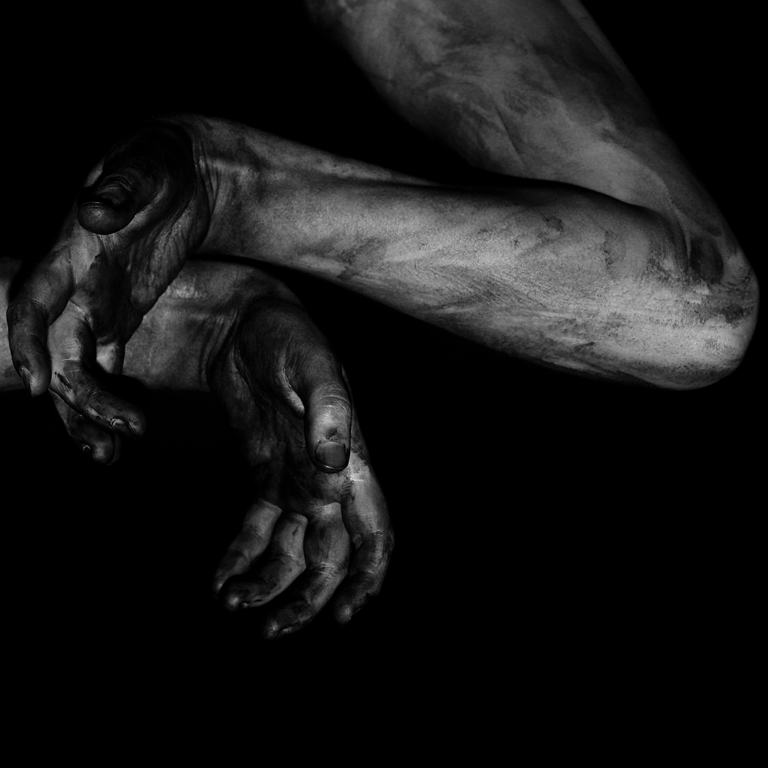
Darwin Falls ARTWORK