Posts Tagged ‘Hybrid’

Ipecac Recordings – 18th September 2026

Christopher Nosnibor

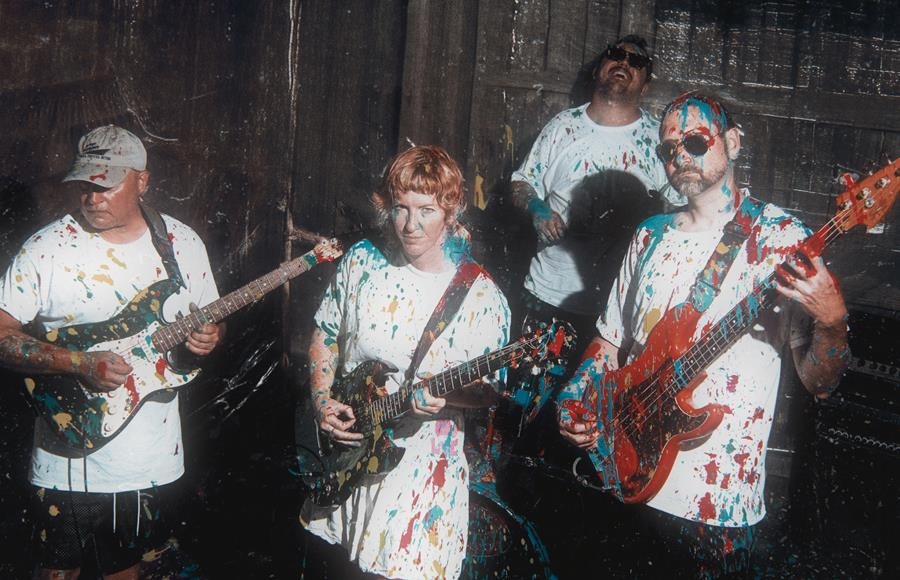
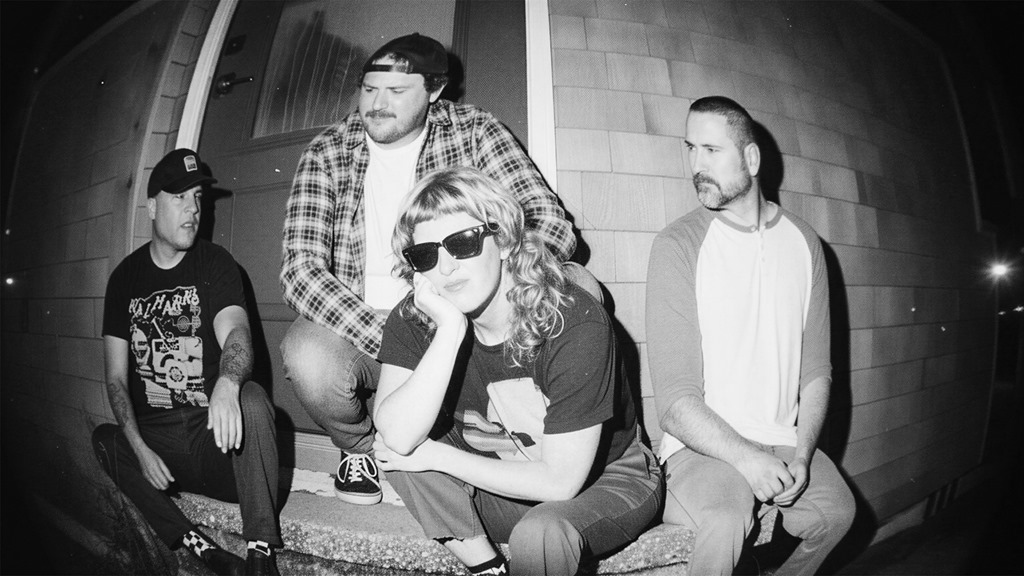
Their bio tells us that ‘Cor de Lux didn’t come out of a content pipeline, a shared folder, or an algorithmic moment. They came out of a rehearsal room,’ and their Bandcamp page describes them as ‘4 friends in a Post Punk-Noise Rock band. Melodic hints and synth tones that trickle into a garage angst progressive fury.’ These two snippets give an insight into what kind of band they are, and how they operate, but don’t really give the measure of Year of the Horse, an album which goes beyond both post-punk and noise-rock or any permutational crossover of the two to render something that’s varied, embraces experimentalism, and at times is quite off the wall.

Single cut ‘The Cringe’ is exemplary, crashing in on a lolloping rhythm and blistering squall of guitar by way of a backing to a dispassionate but nevertheless urgent-sounding dual vocals from Tim Lusk and Dawn Moraga, before suddenly pulling up and following a short but meandering moment of ponderous desert rock, swerves off in a vaguely trippy prog direction, with a swirling synth and strolling synth. In contrast, ‘Ping Pong’ – not a cover of the Stereolab classic – is a slice – and at six minutes long, a very generous one – of quintessential dream-pop. A laid-back, balmy indie song with a hint of C86 whimsy, gently melodic and evocative of dappled sunlight in woodlands in early summer, it’s neither post-punk nor noise-rock, but it’s easy on the ear – until the switch that lands around the four-minute mark when it unexpectedly takes off like a rocket. And it’s here that it becomes apparent why Ipecac would be interested in them. They’re a band unconstrained by genre boundaries: not necessarily weird, but different.

AA

‘Cannibal’ takes the chiming guitar and driving bass of the UK goth sound circa 1984 and spin them with slightly spiky vocals and a mid-80s indie twist – nothing that’s immediately specific to a band, but then not entirely generic either.

‘The Western’ whips up a choppy frenzy and is perhaps one of the most overtly post-punk-meets-noise-rock songs on the album, and it drives pretty hard, before ‘Bread Bag’ serves up a slice of mathy post-rock… but that’s not quite it. But I can’t think long enough to capture my thread because there’s a sudden explosion over overdrive, and then it’s off somewhere else again. As the album progresses, the harder it becomes to situate it in a way that feels in any way meaningful – but that doesn’t mean that Year of the Horse is in any way incoherent. The more wide-ranging and eclectic the songs are, the more the sound of Cor de Lux is defined.

‘The Deli’ is simultaneously motorik and noodly: Pavement might be an obvious touchstone, but it’s more obscure acts like Moderate Rebels that come to mind, and Rosa Mota, too, and as fast as can process and much faster than I can type, we’re into another post-rock noise burst and then some more breezy, jaunty indie rock. One thing that does stand out is just how un-American they sound, at least to my ear. Year of the Horse is quirky. It’s not a common American trait. It’s nuanced, and wile it’s by no means a flippant, inconsequential work – it’s anything but – it’s threaded with a kind of knowingness, a twinkle in the eye which hints at a certain humour. But more than anything, Year of the Horse is a work of genius, in that it brings together myriad incongruous elements and doesn’t just make them gel, but amalgamates them in a way which feels entirely natural. How do they do it? Magic, alchemy, or something, I guess.

So many acts strive to make hybridity work, and so many fail, because it feels forced, self-conscious, the segments don’t flow or connect up, and it sounds awkward, jarring. Not so with Cor de Lux, and Year of the Horse keeps it succinct with just nine songs and a run time of thirty-eight minutes, the majority of the songs sitting in the three-and-a-bit-minute bracket. It’s a rare beast, this: an album that will blow your mind, but subtly. It’s crazy, but it’s packed with tunes. Truly inspired.

AA

Photo_credit-_Jordan_Olivia_Howell_387686

Photo: Olivia Howe

Metropolis Records – 4th September 2026

Christopher Nosnibor

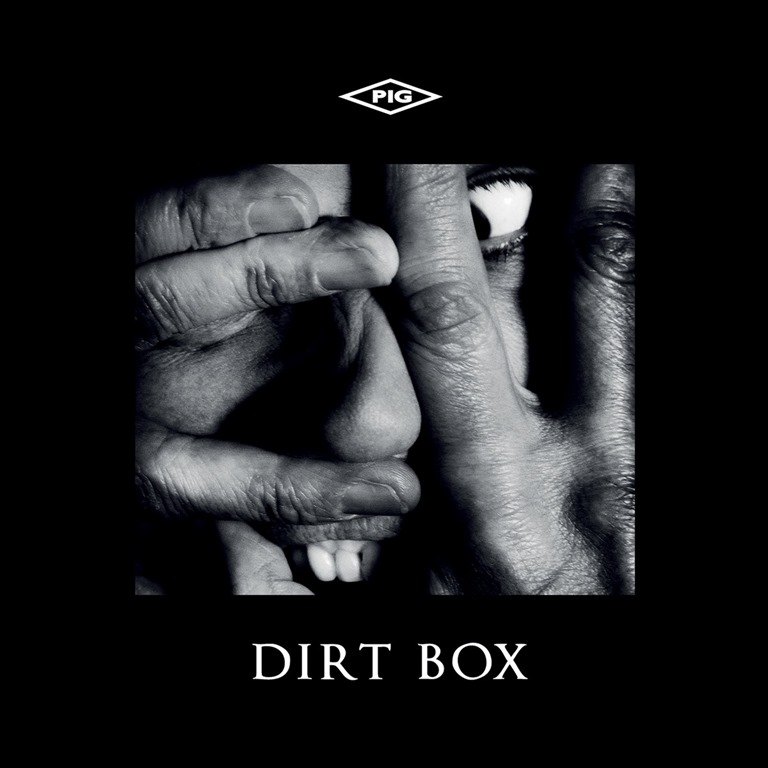
Lately, PIG’s rate of output has been nothing short of phenomenal. Having released the album Hurt People Hurt in May, they’ve just embarked on a substantial, two-month long tour of North America and Canada, and to coincide with that, they’ve not only got a remix EP, but also Dirt Box, which features four new songs paired with a remix of each, making for another album-length release.

There is, to an extent, a sense that if you’ve been following recent PIG releases, you’ll have a reasonable idea of what to expect. Since resurrecting his porcine project in 2016, Raymond Watts has discovered that the swine yields pearls when plundering a seam which places a uniquely gritty spin on glam ground up with industrial and greased with S&M sleaze and a dash of religion for that extra spice. This isn’t to say that PIG albums have fallen to the formulaic, so much as the fact that they’ve found their groove, and the new material over the last ten years hasn’t so much flowed, as been in full spate. It’s working out petty nicely, too. Despite touring as the support for Nine Inch Nails on the seminal Downward Spiral tour and having albums released on Reznor’s label in the mid-90s, PIG remained eternal outsiders, perhaps being just that bit too weird and eclectic for the prevailing tastes at the time. So while NIN were hailed by the press as being groundbreaking, Watts’ work, which tossed in classical samples, strings and all sorts into the grinding industrial mix, taking cues from mentor and collaborator JG Thirlwell, AKA Foetus, the outsider’s outsider – was simply three steps too far. But now… it seems that having tempered the hybridity and experimentalism a shade, the world has finally come around to PIG, with the likes of Classic Rock and Vive Le Rock raving about Hurt People Hurt. I think it was Genesis P-Orridge who made a comment along the lines that if you stick around long enough, you’ll come to be accepted, and whoever it was, this certainly seems true of PIG, who’ve been going nearly forty years now, with the release of debut single ‘Never for Fun’ and album A Poke in the Eye… With a Sharp Stick being released in 1988.

Lead single and EP opener, ‘An American Ideal of Beauty’ starts out sounding like Watts may have jumped the shark – or the wall of Marshall stacks – and gone straight-up spandex hair metal on us, or perhaps even all-out Kiss, but then the quintessential guitar chug of Jim Davies cuts in and grinds hard and we get to breathe a sigh of relief. And here we go: religious-sounding ululations ring out against a bubbling synth bass. ‘Put up, shut up! Do your duty!’ Watts snarls against a backdrop of chugging rhythm guitars and layer upon layer of detail – and the truth is, this is as boldly extravagant in its sonic span as the most revered work among fans, namely the material which featured on Red, Raw and Sore, Sinsation, and Wrecked, which saw Watts colliding insane ambition with some inspired songwriting. Yep, he’s still got it, and any recognition, however belated, is well-deserved. But does this mean that PIG are mainstream now, and beyond the remit of Aural Aggravation? I don’t think so. They’re not about to be played on the Radio 1 breakfast show, I’ve been a fan since the early 90s, and Raymond Watts will forever be one of my favourite interview subjects when we met in York a few years ago.

AA

After the rabid industrial glam grind of ‘Your Reptilian Overlord Presents’, ‘Infidel’ slows the pace and finds Watts go Bowie circa Outside with a heavy dose of darkwave in the mix. With a strong hook and a poppy undercurrent, it showcases the range and quality of the songwriting that sets PIG apart from many of their peers – not that they really have any at this point. They’ve diverged a long way from the acts that emerged around the same time on Wax Trax! evolving along a very different trajectory from, say, KMFDM (of whom Watts was a member) or Ministry. ‘Butterfly’ is a churning, mutant beast of a tune, and has the makings of a future classic given time to embed.

The remixes… well, they’re remixes. In their favour, they’re very different from the original versions. The Cyanotic remix of ‘Your Reptilian Overlord Presents’ is up first, and it’s a noisy, fucked-up industrial blast reminiscent of JG Thirlwell’s remixes of NIN. Admittedly, it’s nowhere near a extreme as his contributions on Fixed, but they set new precedents when it came to remixes, and the world has never been the same since. The beat calls to mind early 00s Pitch Shifter, and it makes for an intense four and a half minutes. The surprisingly mellow Combichrist remix of ‘Butterfly’ is the other standout: in stripping the song back and going for a more darkwave backing to Watt’s gnarly vocal, it makes for a radical transformation.

What’s remarkable is that in producing an album a year – give or take – plus EPs of offcuts and remixes in between – the standard of PIG releases hasn’t only been consistent, but continues to reach new heights. Instead of running out of ideas, PIG are surging with creativity and riding the crest of a wave.

AA

a2631396987_10

Audiobulb – 22nd August 2026

Christopher Nosnibor

Every town, every city has its own unique vibe. Some we acclimatise to, others, we find uncomfortable. Others still, scary. Myself, I am not a fan of big cities, but have always felt comfortable in Leeds, but always feel on edge in Manchester. I can’t explain this. apart from the fact it’s rained almost every time I’ve been in Manchester, I’ve never had a bad experience there. In fact, I’ve had many positive experiences there, but still just feel something… it doesn’t sit with me, and I can’t settle. My experience of ‘international’ cities is limited: the only time I visited New York was when I was three, and beyond that, I’ve only been to London and Paris. I’m not sure Nicosia counts, being international in a different sense, and I expect that that’s perhaps another discussion altogether – although, for what it’s worth, while my fellow conference delegates proffered their passports to venture through the military checkpoints to cross the border into the Turkish territory to enjoy a meal, I remained in the pub in the Greek side of the Old Town with a book while I awaited their return. I have no regrets about this seven years on. But I digress. Every city has a feel, and not just a vibe, but a vibration. And big cities are in essence the same as smaller cities when you’re there, since they’re divided into various communities, segments, quarters, districts, whatever.

Nonturn’s Repeating Town is a work which is an assemblage of sound which captures, one way or another, the essence of Koenji, Tokyo. This is quite specific, and only highlights my observation that large cities are generally comprised of zones and areas within, and this is true of Koenji, which – and I make no apologies for turning to Wikipedia for into here –‘was largely unaffected by the 1980s building boom and therefore many of the houses and shops in the area are small and reflect the character of ‘pre-boom’ Japan. Due to its aging retail district and location on a major commuter route, the station area has become a center for small restaurants and ‘Live Houses’ which offer live music.’ It sounds pretty cool on paper.

Precisely how representative Nonturn’s Repeating Town is, I can’t really say. However, as Nozom Yoneda, aka Nonturn explains, ‘Every sound on the album was captured in and around Koenji, Tokyo: traffic signals, footsteps, air conditioners, construction, passing cars and fragments of conversation. These recordings are traces of real places, but they are not presented as documentary evidence or atmosphere. They are cut, repeated, layered and placed on a 96 BPM grid as sampling material.’

He goes on to add, ‘The title points to the method. The everyday city is already full of repetitions: signals return, footsteps pass, machines hum, routes repeat, voices appear and disappear. Nonturn listens to those repetitions not as background, but as a musical condition. Once removed from their original setting, the sounds stop describing where they came from and begin to act as rhythm, texture, accent, resonance and silence.’

Repeating Town contains seven pieces, each around five or six minutes long and each of which pulls together a host of drones and clanking percussion, interwoven with weird electronica. At times is ripples and weaves, at others, it jogs, picking up pace and evolving technoindustrial beats as it does so. Field recordings aren’t particularly apparent at in this hybrid of mixes, and as tone and texture from other sources build, there’s a creeping discomfort which builds. It’s an album which is built on glitches and trilling synth loops, whirring buzzes and the occasional explosive blast which disrupts an otherwise smooth surface. But there are whirring dentist drills and all sorts, all seemingly looped together and otherwise spun into a strange, soporific blend.

AA

a3487997111_10

4th September 2026

Christopher Nosnibor

When selling themselves – or however else you may describe what bands or their PR do with their biographies and the blurbs which accompany releases – acts tend to go either one way or another. The first is to focus on context and heritage, and locate the music within a lineage amidst a list of touchstones. The second is to cast all of that aside, and accentuate the innovation, the difference, and the departure from all of that. Both approaches come with risks, albeit quite different ones. The former suggests that the band is derivative, and builds a certain expectation before the listener has heard a note. Not that it was Interpol’s fault that every critic under the sun sold them as Joy Division clones, which meant that I was sorely disappointed the first time I heard Antics. It sounded like so much indie, and I felt hugely let down. I came around pretty swiftly, but only once I’d come to terms with the fact they were, in reality, fuck all like Joy Division. Meanwhile, the latter sets the expectation that you’re about to hear something that’s nothing like anything you’ve heard before, and as a jaded critic of many years, I find myself sitting at my desk, adopting a mindset which is visually represented by arms folded, torso tilted back away, face wearing a light sneer that says ‘come on then, let’s have it,’ or perhaps even ‘here we are now, entertain us’. More often than not, these artists, too, fall short, as I find myself wondering if they live in a cultural vacuum, and how they could have possibly not heard X, Y. or Z, whom they sound so very like.

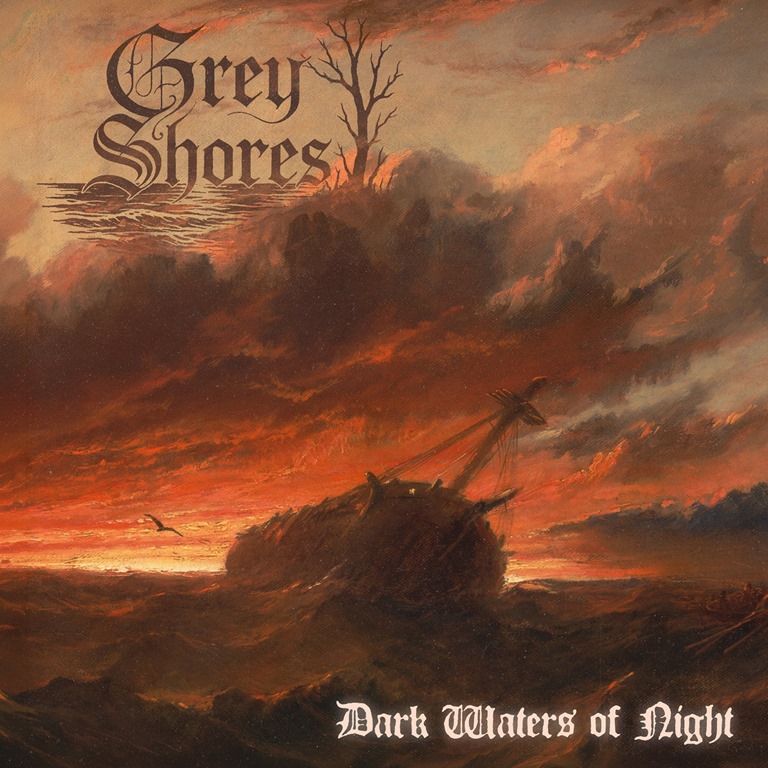
It’s in this latter category that Stockholm’s Gey Shores fall, when they forewarn that ‘a new voice is about to emerge from the depths of the Swedish underground. Grey Shores, the atmospheric black metal duo formed by Martin Andersson and Vilhelm Andersson, are preparing to release their debut album, Dark Waters of Night, a work that merges the emotional depth of post-rock with the cold intensity of black metal… Musically, Grey Shores inhabit a space where black metal, post-rock, and melancholic metal converge. Vilhelm Andersson’s background in atmospheric and post-rock music brings layers of texture, melody, and emotional nuance, while Martin Andersson contributes the harsher elements that form the album’s backbone.’

Don’t get me wrong: I’m genuinely thrilled by the prospect, but am equally prepared to be disappointed within the first three songs. Because not only am I jaded, I’m being sucked into the world of the ever-diminishing attention span. But hey, I can usually manage three songs rather than three seconds before making my mind up and hitting skip (boycotting Spotify likely helps with that, as does being old enough to remember buying an album and playing it several times even if you hated it at first and finding that over time, you quite liked it after all).

Dark Waters of Night contains just seven songs, and while the majority are around the five minute mark, there are a couple which are substantially under three.

Funnily enough, the opening bars of ‘Nothingness by My Side’ evoke the rippling chimes of ‘Untitled’, the first track on Interpol’s Antics, before drifting into a spacious, atmospheric soundscape – before, a mere fifty seconds in – rasping black metal vocals ride in on a wave of overdriven power chords. The song certainly exploits the dynamics of post-rock, with melodic, dreamy vocals washing across delicately picked clean guitar, propelled by jittery, almost jazzy drumming in the verses, and there are hints of Oceansize and Explosions in the Sky here, but instead of surging crescendos, we get screaming black metal fury. I’m sure if I spent long enough searching, I could find something akin to this, but right here, right now, to my ears, this does offer something different and sees the band deliver on their promise, and it’s exciting.

Amidst the raging metal tempest of ‘The Withering Tree’ arrives a moment of calm which is almost folk in flavour alongside the chiming post-rock atmospherics, while ‘In The Pale Light’ offers a sound that’s quintessentially post-metal, and brings some magnificent lead hooks. The demonic howls provide quite the contrast, and then the mid-section makes an unexpected switch toward the expansive, and brings with it clean, melodic vocals. It borders on the schizophrenic, but it works, as they stitch the transitions practically seamlessly, sometimes overlapping.

‘Herald the Dark’ hints towards the territory of lighter-waving anthem, at least to begin with. But what starts out as pretty tame, swiftly gets gnarly, while preserving the anthemic qualities. Nevertheless, while it’s perhaps the album’s most ambitious track – at least commercially – it’s also the weakest musically.

On ‘Sights of Woe’ they step up the cinematic aspects with the introduction of choral backing – and some classically overblown fretwork. At this point, it’s clear that Grey Shores really are committed to pushing black metal to new places, and the gentle instrumental fade of ‘January Wolves’ is simply a perfect post-rock wind-down. Dark Waters of Night is not only a great album – detailed, textured, varied, dynamic, incendiary – but one which delivers on its promise.

The quality cover art warrants a bonus thumbs-up, too.

AA

a0768668631_10

Dipterid Records – 21st August 2026

Christopher Nosnibor

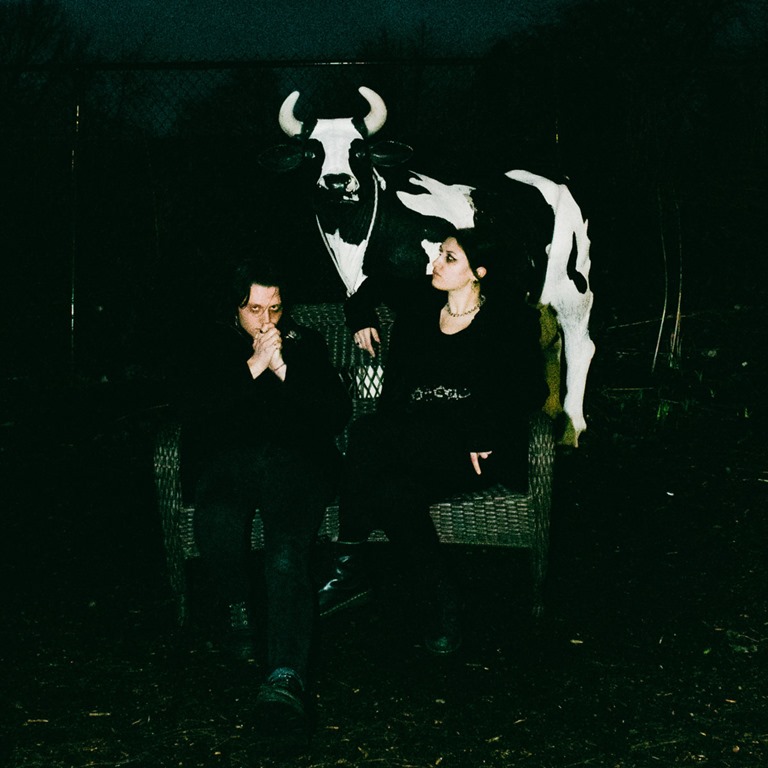
Chicago noise rock duo King Sans, consisting of Jake Steven James (guitars, synths, vocals) and Izabella Rose (drums, vocals) describe themselves as ‘cryptids of noisepunk’. Make of that what you will, but they’ve gone all out on the ‘cow’ theme of the title on the cover of their debut album and accompanying promotional shots.

This very much feels like the culmination of their work to date: since 2024, they’ve released half a dozen singles, four of which have made it onto the album. As such, Sell the Cow stands as a document of their evolution, from the raw and raucous blues-rock-via-Melvins blast of debut single ‘Liar!’ – all one minute and twenty-seven of it (remixed / remastered for the album)– to new and previously unreleased songs like ‘Sold.’, which opens with a piano part lifted from Mozart before crawling into sludgy morass of dark ambient experimentalism. It so happens that ‘Sold.’ bookends the album neatly, as the opener, ‘Two Figures’ is a brooding, atmospheric piece with droning fear-chord synths, jumpy incidentals, and a suspenseful spoken-word vocal that gives way to thumping tribal drums and dingy bass. These three songs alone are demonstrative of their huge ambition and stylistic range and illustrative of their operating far beyond the parameters of both noise and punk.

They pack in some high-octane bangers along the way, too: previous single ‘Jumpstart’ isn’t just appropriately titled, but appropriately placed in the track sequencing, kicking things into overdrive immediately after the more experimental intro. It’s a taut and explosive two-and-a-quarter guitar-driven minutes of stomping glam punk with a dash of the kind of mania that defined the first Pulled Apart by Horses album.

‘Let me Lie’ is the most excitable-sounding example of stoner sludge I think I’ve ever heard. It’s like Melvins on speed, and seems to manage a nod to Lene Lovich’s ‘Lucky Number’ somewhere in the melee. Herein lies much of the thrill of Sell the Cow. There’s a lot going on, so many different references and ideas drawn from across a vast musical swathe, that each listen reveals something different, something new.

‘Dienen’ is another which melts together thick, scuzzed out low-end overdrive with a kind of glam-influenced stomp and doomy power chords. That they manage to render this preposterous combination without sounding like the Spinal Tap of sludge is an achievement, but the fact it’s followed by ‘Lasting Hold’, which takes things a step further is almost beyond comprehension. The verses are soft, with a delicate, gentle vocal and almost folky, with an atmospheric, spiritual-sounding feel, while the choruses erupt into screaming filthy metal – and they take this idea further on the operatic art-rock infused thrash of ‘S.Y.D.’ Yes, it’s almost impossible to keep up with everything that they’ve got going on, and I keep finding myself thinking ‘this shouldn’t work’. But it does. And it works well.

There’s birdsong and a pastoral feel to the lulling ‘the floodplain’, while puntastic single ‘No Diddley’ is a squalling blast of guitars that’s equal parts blues and rock ‘n’ roll and noise rock, with a dash of Suicide.

Sell the Cow is the album you didn’t know you needed, but believe me, you sure do.

AA

a3543827553_10

Christopher Nosnibor

Just over six years ago, one of my favourite labels, Cruel Nature Records, released Pachinko, the third EP / mini-album from Newcastle noisemongers Ballpeen – a band appropriately named, given their capacity to hammer home heavyweight riffs with bludgeoning brutality. With noise rock, grunge, and hardcore punk all in the mix Pachinko was rabid, raw, primitive, recorded, not produced.

2020 was a productive year for them, with the release of two live recordings and a split EP, and 2021 saw the stop-gap EP Bunch of Sevens, which featured material recorded in 2017 at the same time as their debut release. And then, silence. It transpires that they sadly called it a day some time after this. They’re not the first band to abort before the release of their debut album by any means, but the shock news is that they actually recorded an album which then got ditched.

But now here it is. Ballpeen are no more, but finally, there is closure in the delivery of the lost album, What You Need, What You Deserve. And it’s a beast. Thirteen songs packed into thirty-seven minutes. That’s an average of approximately 2.8 minutes apiece. And into these compressed timescales, they pack in so much energy, so much explosive riffery, and so much… just so much.

The first single, released in May, is also the first track on the album, and from ‘Modern Life is Hell’, it’s immediately apparent just how much they’d evolved from previous releases. It’s by no means polished or pop, but the sound is crisper, denser, the songwriting more sophisticated, a solid hook snaring the listener early, with a sound and style which warrants comparisons with Hawk Eyes, who are also now sadly missed. And the sentiment probably resonates more powerfully now than when it was recorded. How times have changed – and not for the better. We thought the pandemic was hell – because it was. But little could we have anticipated what was to come.

What follows is nothing short of a gut-busting guitar-driven blast. ‘Unit Three’ amalgamates the steely nihilism and sinewy strain of Kowloon Walled City with a thick bass-driven grunge heft. There are some neat descending bass runs in the second half of the song which remind me of something else, but we’re into the squalling wall of feedback that drives ‘Poverty of Ambition; before my brain has remotely got itself into gear. But ballpeen are very much in gear: there’s no mid-album slump, no breath-catching ballad here. Instead of slowing the pace, they crank up the distortion and stoke up the rage.

The bass on the intro to ‘Engram Theory’ is nothing short of rib-rattling, a chunky, clunky, bruising assault of pure density, reminiscent of Shellac, for sure, but closer to that of Blacklisters with their original bassist – which is a fair comparison for the song as a whole, really, and it provides a welcome reminder of just how the North of England has been so strong in its generation of noisy bands over the last fifteen ears or so. Seattle and Chicago have the longstanding reputation for their scenes, but we’re looking back to the late eighties and early nineties for their heydays: more recently, Leeds and Newcastle have proven to be the crucial hotspots, and Ballpeen’s contribution is strong. The belated arrival of What You Need, What You Deserve only cements this view.

Second advance single, ‘Ukiah’ is yet another fiery onslaught, and compels one to consider what might have been. It’s true that such speculation is futile, and instead of mourning, we should be grateful, and the juddering riff of ‘Crossing Waters’ provides every reason to be grateful. It hits so hard, it makes you sweat. There isn’t a weak moment on What You Need, What You Deserve. In fact, there’s barely a moment to catch breath. It’s intense, alright.

There can be little doubt that it’s best to quit while you’re on top, kill things while you’re at the peak of your game (Nirvana perhaps took that a bit too literally, but Big Black are a fine example of a band who left a concise but unsullied legacy). And to the list, we can now add Ballpeen, a band who demonstrably saved their best for last.

What You Need, What You Deserve needs to be heard. It’s all killer and no filler, and more – and it doesn’t just go all the way to eleven: it starts at eleven and works its way up over its skull-cracking thirty-seven minutes. It’s the good shit alright, hitting with enough force as to dislodge your fillings.

This must surely be their legacy.

AA

cover

Peaceville – 8th May 2026

Christopher Nosnibor

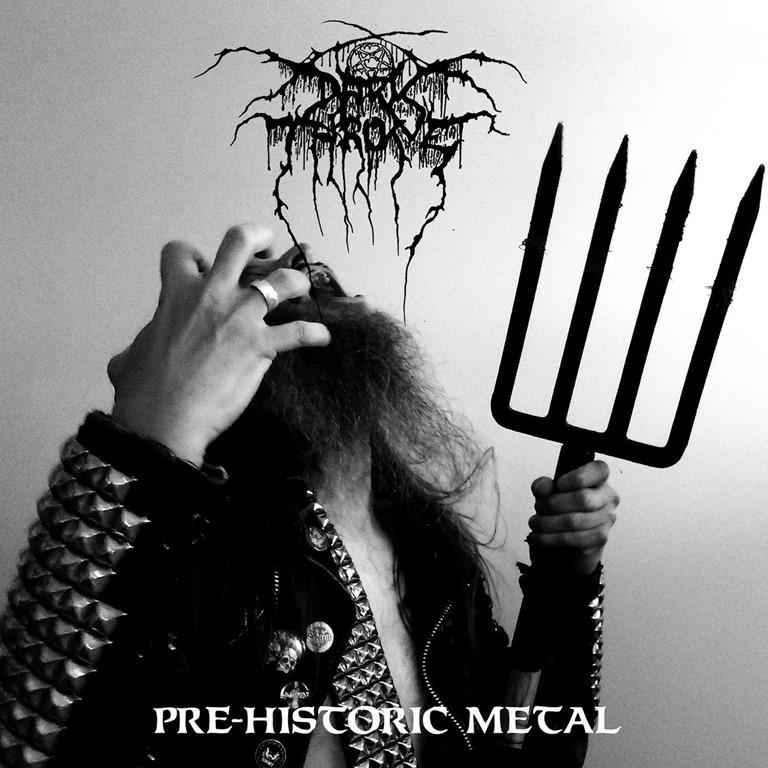
The arrival of Pre-Historic Metal marks forty years of Fenriz and Nocturno Culto’s musical collaboration, initially as Black Death, the album’s back cover proudly boasting ‘No metronome since 1987’. The images which accompany the lyrics in the CD’s booklet depict damp logs, thick, verdant moss, and the centrepiece is a misty shot of what appears to be the remains of a stone circle – or just a rocky clearing – in a forest, where the band are lurking, shadowy figures in the background. It’s all a fair indication – or forewarning – of what Pre-Historic Metal, an album pitched as ‘the new studio album of primitive metal from the Norse cavemen’ is all about.

As Fenriz himself proclaims of the title’s symbolic origin, “Prehistoric is a loose term. I just figure it’s our VIBE, our take on things and it’s more a statement that we use old style to create something new”. It sets their stall out nicely, and prepares the listener for precisely what Darkthrone deliver, which is, quite simply, forty-one minutes of relentless, riff-driven metal.

There are twists and turns galore during each and every song, opener ‘They Found one of My Graves’ packing in some well-placed breakdowns and flourishes into its five and a quarter minutes, wedging these moments tight between the thunderous overdrive and gnarly guttural vocals, drawing together elements of Black Metal and Thrash in a completely natural fashion. The title is a hell-for-leather blast of blistering overload, which suddenly becomes a doomy pagan ritual, the commanding vocals booming through cavernous reverb amidst a chthonic growl of barbarically brutal guitar.

The seven-minute ‘Siberian Thaw’ takes the basic principles of a grunge riff and slows it to a glacial crawl, adding some Sabbath-influenced doom drone to its sludgy trudgery. And yes, they do the thing of picking up the pace to that of a solid headbang before bringing the riff back slow and low and denser than before. It’s a tried and tested template, and they play it to perfection, spinning a meandering prog mid-section before blasting in with the pulverizing grind segment that makes you go ‘hell yes!’ before, of course, finally, going back to the starting point.

The album’s second six-minute epic, ‘The Dry Wells of Hell’ plays out a delicate, atmospheric intro, and strikes a more theatrical stance all round, pitching some bold, soaring vocal melodic moments amidst the demonic snarling and the vibe is unmistakably and unashamedly vintage. But the joy of Pre-Historic Metal is that it’s not specifically one thing or another, but a curated catalogue of metal. And they don’t put a foot wrong.

Sure, if you’ve listened to enough metal, you’ve heard it all before, in various permutations, but that’s the point. Pre-Historic Metal is about execution rather than innovation, and every single riff lands in a way that absolutely hits the spot.

AA

a2493671154_10

18th June 2026

Christopher Nosnibor

The other day, my daughter came home from school complaining – not for the first time – about her English class, in which she’d been given ten minutes to come up with an idea for a story, and to plan the opening two paragraphs, and then perhaps another twenty to write the aforementioned paragraphs. She makes the same complaint about art and music lessons. “They expect us to write a song, with chords and a melody in fifteen minutes,” she moans. “Doing creative stuff just doesn’t work like that, Dad. How do they not know this?” She’s absolutely right. This is essentially where the distinction lies between making content and creating art, and artists all have different methods and work at different rates, often even between different projects. Sometimes, the thing just flows and – boom! It’s there. Other times, however, something just doesn’t quite click, and all the fiddling in the world doesn’t do it.

Ally The Truth, the new single from Devon-based alternative rock band Gravity Machine is, as they put it, ‘a track with a long gestation’. In fact, it began life in 2020, the same year they released their debut album, Red. There have been a few single releases since then, but it’s only now that they finally unveil this ‘epic tale of a relationship moving from curiosity to joining to fighting to resolution before finally hitting the universal truth of love and connection.’ That’s clearly the description of a work of art rather than mere content, and so it is that ‘Ally the Truth’ is epic in every sense, and not only in terms of its seven-minute duration.

It builds from an elongated drone with clattering drums reverberating in the distance, with a value lick of New Age vibes creeping around the edges before, suddenly, the song itself bursts in from nowhere, and we find ourselves in the midst of a sweeping amalgamation of alt-rock, psychedelia, and folk – a bit All About Eve, but also (yes, this is a bit of an obscure one, even for fans of 90s alt rock) a bit Eight Story Window (which is one way of saying, you should probably explore their album, too). It’s airy, atmospheric… and there are layers, and layers, and stages and stages – and with each segment, they step things up, until just a couple of minutes in, we’re being spun through a sandstorm of kaleidoscopic rock, before, later – much later – we find ourselves being escorted, gently, back down from the summit of the crescendo on a rippling piano and a chorus of voices. Such is the drama and dynamic of the song that it’s easy to lose the thread of the narrative – which means that you just have to go back and explore it all again. What a chore!

It’s not hard to grasp why this song took so long to reach its final version: ambitious would be an understatement. It’s compelling, immersive, atmospheric, exciting, and there is just so much happening. And all of it’s good.

AA

LandscapePhoto_Credit_Adriana Banari

Photo: Adriana Banari

Lay Bare Recordings – 9th May 2026

Christopher Nosnibor

One may be inclined to jest that a release like this should carry a warning – but the joke falls flat when technically, it does: the notes which accompany the release on Bandcamp sets the scene for the debut EP from Dutch experimentalists of A Plague of Lighthouse Keepers thus:

Whilst most drone-metal outfits focus on creating atmosphere by composing ambient compositions with tremendous power and volume, the Lighthouse Keepers use more traditional doom/sludge metal as a starting point and explore its differences and similarities with genres such as free jazz, raga, noise and classical minimalism.

Elsewhere, they’re described as sounding like ‘a disturbed lovechild of OM, Sumac, Swans, Miles Davis, and Pandit Pran Nath, combining lengthy improvisations with ear-shattering explosions of intensity’. How could a lovechild of that lot be anything but disturbed?

And so it is that we enter by way of ‘The Massacre of Flour’, a title of which conjures images of a bloodbath in a bakery. What is sounds like is…. nothing short of wild. Its seven minutes leads the listener through a series of conjoined segments, arriving in a crazed blast of shrieking noise, a frenzied cacophony of feedback and squealing sax before lunging into a thick, sludge riff, which in turn yields to a slow, almost ambient drone passage with mystical swirls which rise like desert mirages. Each is gripping itself, and the transition to the next takes place almost imperceptibly: one moment you’re here, then, somehow, you’re there, in a completely different scene with no recollection of how you came to be here – rather like the way scenes change in dreams. And suddenly, the hazy serenity is torn asunder, lurching into a tectonic rift from which burst larval torture resembling Swans circa the Young God EP. It’s absolutely fucking brutal, the sound of pain, distilled and amplified

‘I Fuck People’, the shortest song on the EP, goes in hard on the avant-jazz noise chaos, forming a heavy undulation of bleats and shrieks by way of a backdrop to savage, ravaged, demonic vocals. It’s the sound of purgatorial torment. But all of this is simply a prelude to the main event, the nine-minute ‘Towers of Silence’, on which they really flex all of their muscles. Easing in gently with some abstract desert folk with hints of Eastern esotericism, it’s a slow, gradual build. There’s something meditative, spiritual in the vocals, until things begin to get twisted, mangled, and tangled. There’s anguish, there’s tension, and unease grows… breathe. But ululations which begin soothingly grow tense, and things spiral to a hypnotic cathedral of sound.

Towers of Silence may only contain three tracks with a combined duration of just over twenty minutes, but its range and intensity are something to behold. It’s drone metal, but not as we know it.

AA

AA

892210

Welfare Sounds & Records – 8th May 2026

Christopher Nosnibor

The Family Men sound like a bunch of nice, respectable, friendly fellows who espouse upstanding, moral values… in name, that is. Musically, they describe what they do as ‘Total Harmful Sound’, and following the release of their debut No Sound Forever in 2024, their bio records that ‘the band have toured extensively across Sweden and beyond, steadily building a reputation as one of the most intense and uncompromising live acts on the circuit. That relentless momentum feeds directly into Co/de/termination, a natural yet sharper continuation of their sonic evolution.’

They go on to add, ‘Pushing both intensity and precision to new extremes, the album refines the band’s sound into something tighter, heavier, and more deliberate than before. Urgent yet controlled, abrasive yet purposeful, Co/de/termination stands as a focused and uncompromising statement’. It’s certainly a bit more accessible, a bit cleaner, than its predecessor, but then, most records are.

‘Calamity’ arrives in a swirl of noise, the repetitive motifs of grunge – but also in some respects reminiscent of Pitchshifter after the change from being Pitch Shifter – with metallic guitars set to stun, and percussion pumping hard – while the raw, ragged vocals are more rooted in hardcore. And it all blasts in amidst a noise-rock tumult that bucks and blisters, acid house bleeps suddenly submerged in a tidal wave of guitar and driving bass. ‘Scanner’ and ‘Luxury’, too, belong in part to the Nu-metal revival, while clearly retaining roots in industrial and noise rock, and it makes for a pretty potent (and angry-sounding) cocktail.

AA

In places – ‘AOR’, and ‘Solving the Light Issue’ for example – they invite comparisons to early Revolting Cocks, colliding electro and industrial strength guitar atop some infectious – and really quite danceable – bass grooves and shouty vocals. The latter of these, in particular, boasts a particularly phat, distorted bass sound and pounding beat, and for all of the gnarliness and aggression of the sound – and Co/de/termination is an album that’s fully in-yer-face – it’s apparent that The Family Men know how to render a certain swing and introduce a level of catchiness.

AA

That said, elsewhere, they just go all out on the attack: ‘Heaven’ hits as a brawling scuzzfest, laden with feedback reminiscent of the most ferocious cuts on Daughters’ You Won’t Get What You Want (an album sadly sullied by subsequent revelations regarding their front man). Elsewhere still, the hypnotic, spacious ‘New Clear’ ventures towards shoegaze territory. Rather than seeming incongruous, it’s welcome, proving that it’s possible to create an album that’s focused while still having range.

It’s high-energy, high-octane stuff, and it’s certainly not tame or timid.

AA

a2670809488_10