Posts Tagged ‘edgy’

Christopher Nosnibor

17th April 2026

The population of Waiheke Island, just off the coast of the north island of New Zealand can’t have a huge population (just shy of 10,000, apparently), and renowned for its scenic beaches and subtropical climate, it’s not an obvious spawning ground for bands making sharp-edged post-punk. Surely this ‘slice of Heaven’ is a perfect oasis of contentment? What could anyone have to gripe about?

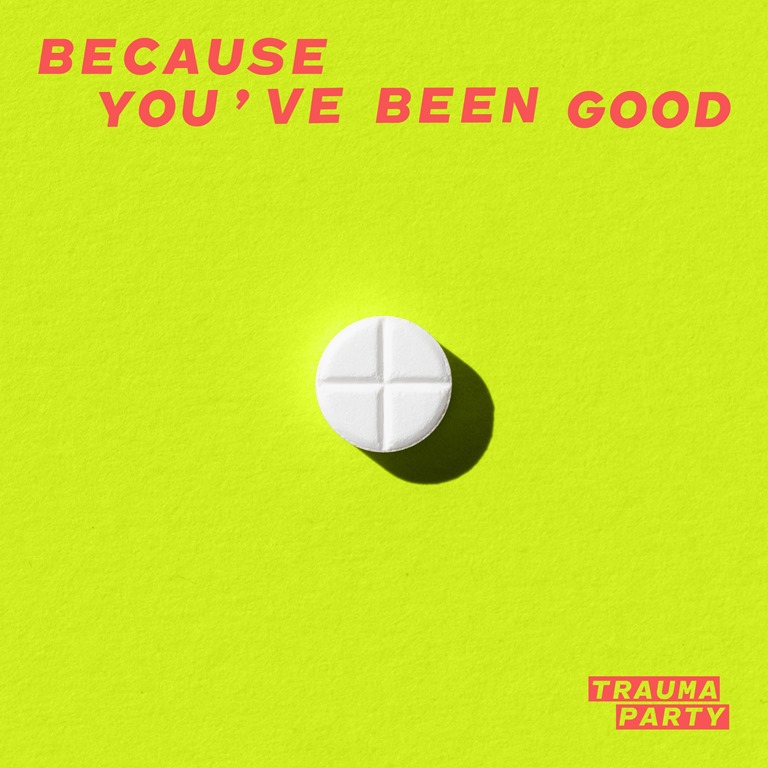
Of course, that’s not how it works. The human brain doesn’t work like that. Everything is fucked, people are people, and paradise is a myth. So here we are with the debut EP from Trauma Party, who describe themselves as purveyors of ‘post-punk desert lullabies and sonic anthems for the downtrodden.’

The last few years has seen post-punk become a real catch-all for anything that’s a bit guitary with a bit of edge but isn’t punk or indie (I’m not even going to start on the way the use of ‘indie’ has changed since the 80s or even 90s), but for me, there’s a quite specific period which sits tightly around ’79-’81 or thereabouts which saw bands exploring and experimenting in ways we hadn’t heard before. So much punk was simply pub rock played fast with the amps cranked up to nine and a half, and while it was a vital stage in the evolution of modern music, what emerged in its immediate wake was far more interesting – darker, weirder, and considerably more sophisticated, by and large. Not just musically, either, but conceptually, lyrically, things got more nuanced. Consider the leap from the sneering nihilism of pub-rock posers The Sex Pistols to the technical prowess and astute sociopolitical observations of Gang of Four, and the distinction becomes clear.

The title of this EP sounds as much like a veiled threat as a promise of a treat, although a treat it certainly is if you like your sounds discordant and difficult. As they pitch it, these are songs ‘Soaked in vats of noise and shaped on dive bar stages over the last 15 months. Culled, remodelled, and forged in the grit and sweat of the Dirt Track rehearsal space, this E.P. is a juicy little nugget for your collection.’ Three of the four songs have been released previously but they’ve been tweaked and remixed for this release, which has a commendable consistency.

‘Are We in Heaven’ arrives on a wave of choppy guitars with multi-layered vocals. it’s stuttering, jarring, awkward, claustrophobic, with heavy hints of early 80s The Fall with a bit of Wire and a dash of noise rock thrown into the mix. It makes you feel kinda tense, a bit paranoid, even. In terms of that post-punk experimentalism, that kind of boundary-pushing, that more nuanced level of articulation, it hits the spot.

Offering a different shade of heaven, the guitar melody of ‘Speak to Me’ carries echoes of The Cure’s ‘Just Like Heaven’ and pairs it with some choppiness that alludes to Gang of Four, and, again Wire, and at a mere two minutes and seventeen seconds, it’s concise and catchy and speaks of political unrest.

AA

‘Roll Up (It’s the New Truth)’ slams things home hard in driving waltz-time and kicks up a visceral energy to conclude the EP. It packs four songs into twelve minutes, and a lot happens in this brief time. Boom. Job done.

AA

AA
cover

Cruel Nature Records – 12th September 2025

Christopher Nosnibor

Postmodernism, emerging primarily as a product of post-war America was defined by hybridity, the demolition of parameters and distinctions between different cultures, genres, and was, in many respects, tied to the accelerating pace of technological development, in particular the globalisation of communications and beyond. But postmodernism also not only recognised, but celebrated, the fact that originality has finite scope, and that anything ‘new’ will by necessity involve the reconfiguration of that which has gone before. Shakespeare had all the ground to break in terms of the advent of modern literature, and one might say the same of Elvis and The Beatles with the advent of rock ‘n’ roll and pop respectively. The reason the 80s were such a watershed was because technology revolutionised the potentials for music-making, and while this saw a huge refraction in terms of creative directions, from industrial to electropop, one could reasonably argue that the next leap in music after 1985 came with house and techno.

Post-millennium, it feels like there is no dominant culture, no defining movement, underground or overground: the mainstream is dominated by a handful of proficient but in many ways unremarkable pop acts, and notably, it’s largely solo artists rather than bands, and while there are bands who pack out stadiums, they tend to be of the heritage variety. At the other end of the spectrum, the underground is fragmented to the point of particles. There are some pros about this, in that there is most certainly something for everyone, but the major con is that unlike, say, in the mid- to late-noughties, when post-rock was all the rage, there’s no sense of zeitgeist or unity, and right now, that’s something we could really do with.

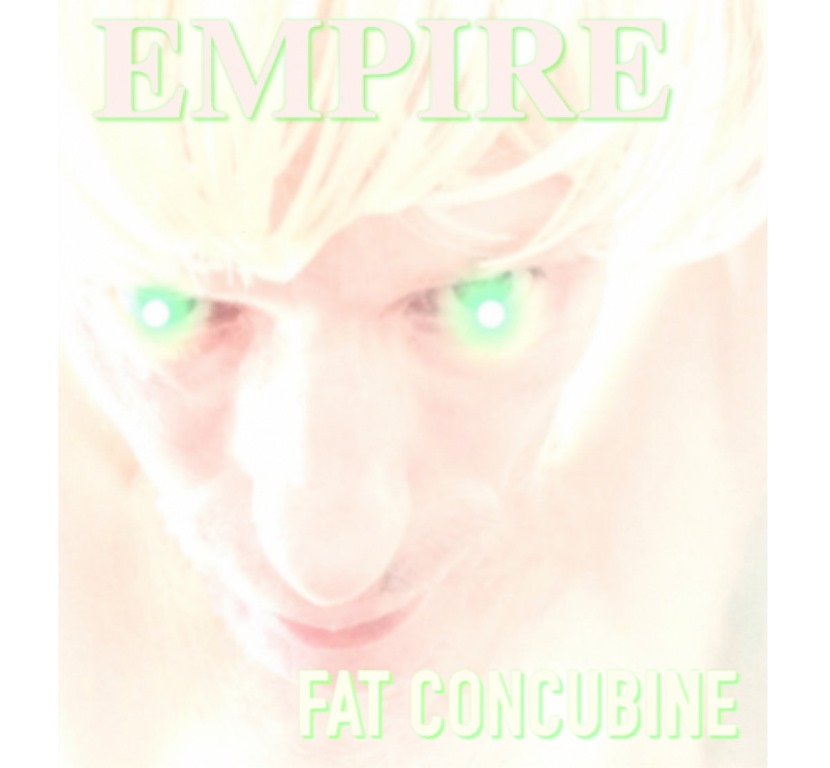
Fat Concubine are most certainly not representative of any kind of zeitgeist movement. With a name that’s not entirely PC, the London acts describe themselves as purveyors of ‘unhinged dance music’, and Empire is their debut EP, following a brace of singles. The second of those singles, ‘for Whom the Fools toll’ (with its irregular capitalisation, which is a bit jarring), is featured here, along with four previously unreleased tracks. This is a positive in my view: so many bands release four, five, or six tracks as singles, and then put them together as an EP release, which feels somewhat redundant, apart from when there’s a physical release.

And so it is, in the spirit of wild hybridisation, that they’re not kidding when they say their thing is ‘unhinged dance music’, or as quoted elsewhere, ‘unhinged no wave ravers’. ‘Feeding off the dogs’ pounds in melding angular post-punk in the vein of Alien Sex Fiend with thumping hardcore techno beats, and it’s not pretty – although it is pretty intense. The snare drum in their first thirty seconds of ‘for Whom the Fools toll’ takes the top of your head off, and the rest of the ‘tune’… well, tune is a stretch. It’s brash, sneering punk, but with hyperactive drum machines tripping over one another and a stack of synthesized horns blaring Eastern-influenced motifs.

There are hints of late 80s Ministry about ‘When we kick Their front door’, another synth horn-led tune that begins as a flap and a flutter before a kick drum that’s hard enough to smash your ribs thuds in and pumps away with relentless force. If the notes didn’t mention that it was a perversion of ‘These Boots We’re Made for Walking’, I’d have probably never guessed. As the song evolves, layers and details emerge, and the vibe is very much reverby post-punk, but with an industrial slant, and a hint of Chris and Cosey and a dash of The Prodigy. If this sounds like a somewhat confused, clutching-at-straws attempt to summarise a wild hotch-potch of stuff, to an extent, it is. But equally, it’s not so much a matter of straw-clutching as summing up a head-spinning sonic assault.

‘tiny pills’ is a brief and brutal blast of beat-driven abrasion, with a bowel-shaking bass and deranged euphoric vocals which pave the way for a finale that calls to mind, tangentially, at least, Cabaret Voltaire’s ‘Nag Nag Nag’.

The version of ‘O so peaceful’ was recorded live, and builds to an abstract chanting drone work. It offers a change of angle, but is no less attacking, its percussion-heavy distorted, shouting racket reminiscent of Test Department and even Throbbing Gristle, particularly in the last minute or so, and you can feel the volume of the performance, too. This is some brutal shit.

Empire is pretty nasty, regardless of which angle you approach it from. It’s clearly meant to be, too. Harsh, heavy, abrasive, messed-up… these are the selling points for this release. And maybe having your head mashed isn’t such a bad thing if you’re wanting to break out of your comfort zone and really feel alive.

AA

a1581875889_10

Pretty Ugly Records – 13th March 2020

Christopher Nosnibor

So I stumbled over Sex Cells by practically sticking a pin in last year’s Live at Leeds programme, and it paid off. Ok, that’s not quite true: while surveying the schedule, they looked interesting and probably worth a punt, so I took a gamble it paid off, with the their tense industrial-edged electronica that reminded me of Pretty Hate Machine era Nine Inch Nails, only weirder and sleezier. Coupled with the duo’s slightly oddball, even vaguely awkward, presentation, it was compelling. The same has been true of their releases to date, which lead us to this, their debut album.

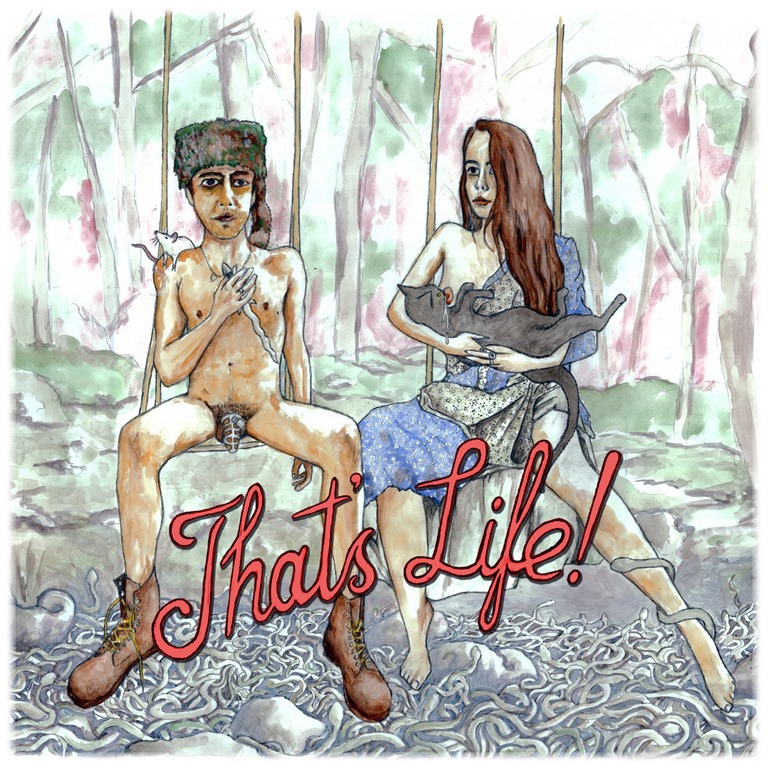
The album’s cover is a bizarre watercolour-style tableau of the pair, and on the one hand, it’s naff (and I’m being polite: the more you look at it, the more awful details reveal themselves. Like, is the cat really supposed to be licking her nipple? What’s that on his dick?), but on the other, it’s a perfect encapsulation of their perverse, quirky style. They don’t play by the rules. And if their name is a play on the adage and Soft Cell, then it’s entirely fitting. If it isn’t, it maybe ought to be.

The headline here should perhaps be that David M Allen is the lead producer here. Renowned for his work with The Human League, The Sisters of Mercy, The Mission, Depeche Mode, The Psychedelic Furs, Wire, The Associates, and The Chameleons, little more probably needs to be said here, beyond the fact that in terms of production, ‘That’s Life’ sounds like you’d probably expect.

‘That’s Life’ bridges the gap between The Human League and Nine Inch Nails, and doesn’t include any of their previous single releases apart from leader ‘Deranged’, which crashed in with a suitably salaciously shocking promo video in March, demonstrating their tenser, harder-edged side while at the same time nailing everything about the band into a box of two-and-a-half minutes.

Opening song, ‘Shimmer,’ is dominated by a low-slung oscillating bass and trudging drum machine that provides the backdrop to Matt Kilda’s monotone spoken word vocal and Willow Vincent’s lost, demented banshee shrillness that calls to mind Skeletal Family, early Siouxsie, and early Cranes.

‘We Are Still Breathing’ is a neatly-crafted reflective electropop tune. It’s got hooks, melody, and a dreamy quality. Things take a dark turn on the next song, ‘Human Costume’ a spiky post-punk electrogoth stomper that screams Hallowe’en and horror, with some pretty barbed lyrics that turn the mirror on society and the human psyche. And it still packs a killer chorus, too.

They go full death disco with ‘Cruel Design’, and Willow coms on all breathy and ice witch in the vocal department, bringing a contrast between the vibrant energy of the instrumentation and the cold detachment of the voice, in a role reversal between human and machine. It’s a complete contrast to the final song, ‘Hang the Flowers’, which is a sparse, folksy number that ripples dappled shade to fade.

The combination of shock tactics and neat dark-edged electropop is a well-established tradition that can probably be traced back as far as Suicide, but really became a thing in the 80s, and as such, Sex Cells should by rights be a yawn, their edginess predictable, their material laden with well-worn tropes, and the metaphorical shrug of a title does nothing to raise expectations. And yet they make it work, and make it exciting.

AA

a3207339964_10

AA