Posts Tagged ‘rave’

Christopher Nosnibor

Michael Jackson’s ‘Thriller’ is playing just before Kid Kid Squid start, and I find myself on a rare reflective trip on how times have changed. I was in primary school – aged eight – when it was released, my school reopened on the evening that the full-length video was aired on the BBC so we could all watch it on a TV on a trolley in reception. Even at that young age, it felt like a moment in musical history. No musical release is such a global event now. Not even half-time at the Superbowl has a sense of occasion which comes close. Culturally – in no small part on account of the advent of streaming, but also the absence of music on television now, which means that the promotional video has far less reach and impact – music has come to be treated like sonic wallpaper. Do people really listen to Ed Sheeran and Taylor Swift, or is their bland fare simply amiable background? Come 2015, a headteacher is forced to apologise after showing the ‘Thriller’ video to some primary-age pupils (age seven and eight) because, according to their complaining parents, they suffered ‘night terrors’ afterwards.

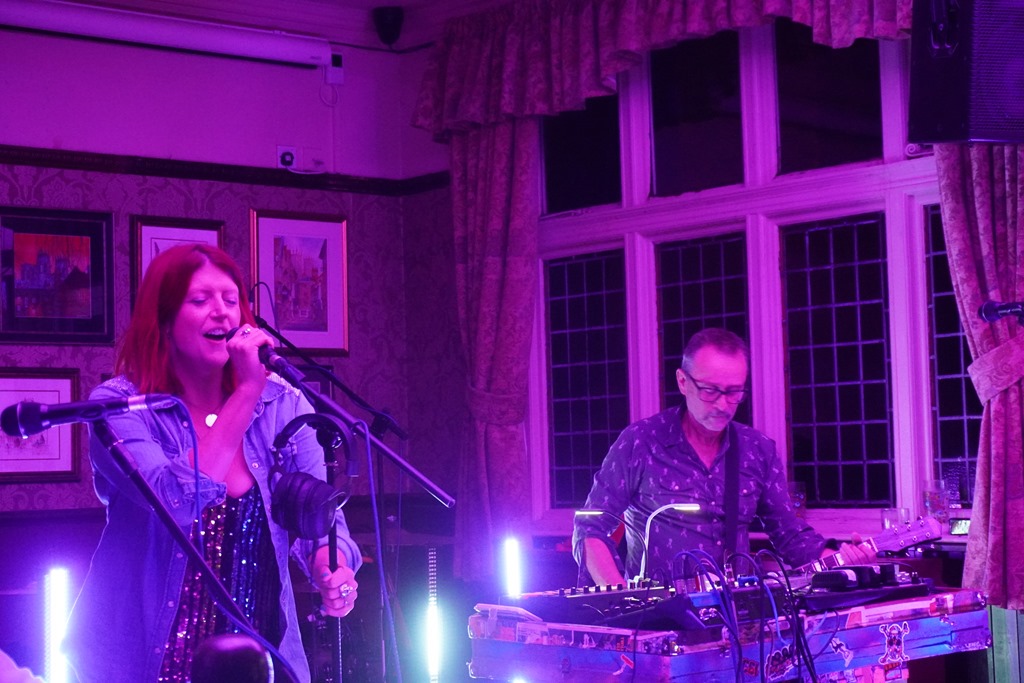
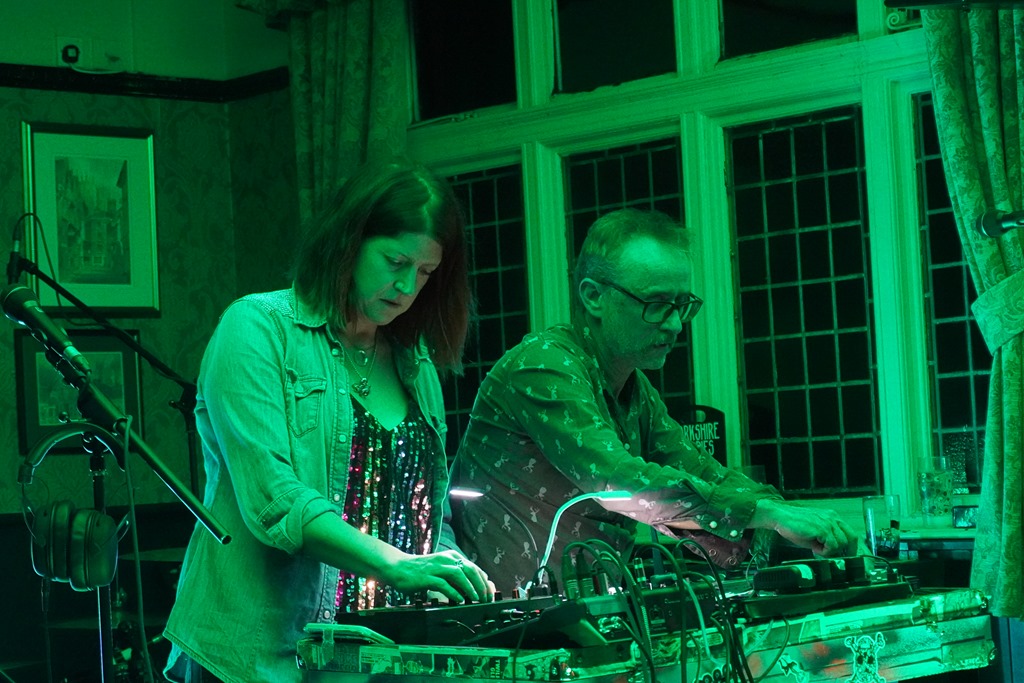
I expect the members of Kid Kid Squid, David and Katy – who emerged from the rocked-up dance covers act The DDK – will remember the release of ‘Thriller’ well. How well they remember the 90s is probably another matter. It’s evident from their penchant for banging beats that they spent some time having it large during the rave years. Having tried out their brand of driving techno with live guitar at an Electronic Music Open Mic (EMOM) night a few months ago, this is the duo’s first gig proper, and they’ve got things pretty tight. The first track is a bit Utah Saints, but with more of drum ‘n’ bass leaning – and the drums and bass are both thunderous. Are they rock with rave beats, or rave with rock guitars? However you slant it, the sound is outstanding. Crisp and clear, the beats are pounding and the heavily processed guitar is like a tweaking Roland TR303. Midway through, they drop their eponymous track and it simply explodes both in energy and volume – and while the chorus of ‘We ain’t no kid and we ain’t no squid!’ might not be the pinnacle of poeticism, it’s good fun – and factually accurate. These things matter. The set culminates in a frenzy of flange. That’s good fun, too, and that’s a fair summary of what KKS are about: not so serious, hi-NRG, fun times.
DSC05398DSC05426

Kid Kid Squid

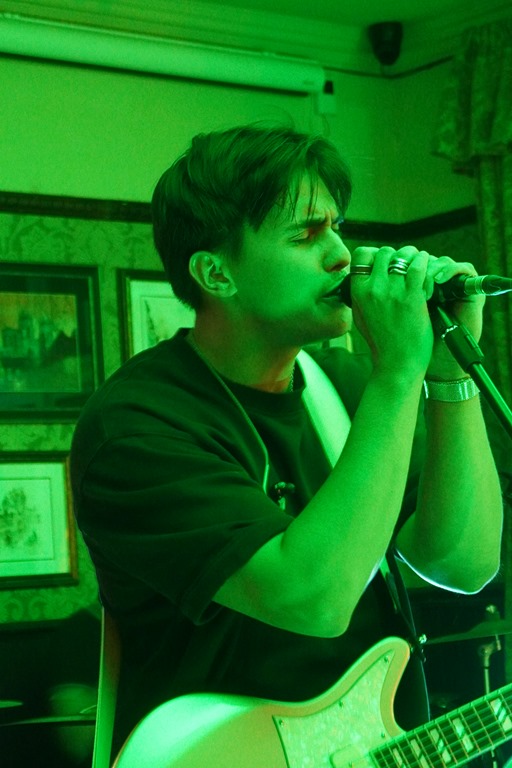
I’m not sure what happened to the Old Concordia – apart from the Polish-built sailing training vessel which capsized and sank off the coast of Brazil in 2010. Sturdy drumming and soaring guitar definite their alt-rock sound. They’re solid and then some, and it’s a remarkably confident debut (they’ve both played before, and together, but this is their first outing as a two-piece). Atmospheric passages fill the space between songs, thus avoiding awkward silence or – worse – awkward chat and banter. They must have poured some hours into rehearsing to come out this fully formed. I’ve no idea where the bass was coming from. The drummer isn’t wearing headphones, so there’s nothing to indicate a click track or sequencing, but there must be something happening behind the scenes. Maybe it’s simply the power of the mind and some kind of magic. But what’s behind the scenes is immaterial, really. Out front, we get blistering guitars, chunky riffs and some of the most incredible drumming. Verdict in short: amazing. Horsemusic have done it again in introducing us to another act worthy of national attention.
DSC05456

New Concordia

Megafragma are a relatively new act, but comprising some old faces, including, on guitars, Alexander King, of Glass / The Sound of Glass – quite possibly one of the most preposterously pretentious bands I’ve ever witnessed. But hey, he’s only the guitarist and backing vocalist, right? Right.

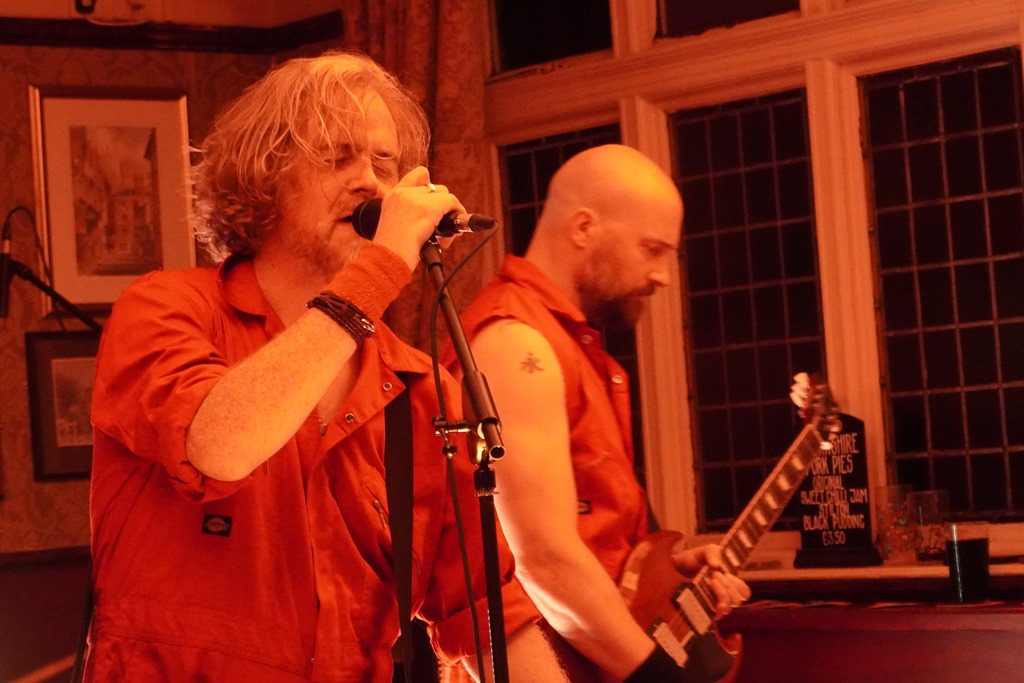
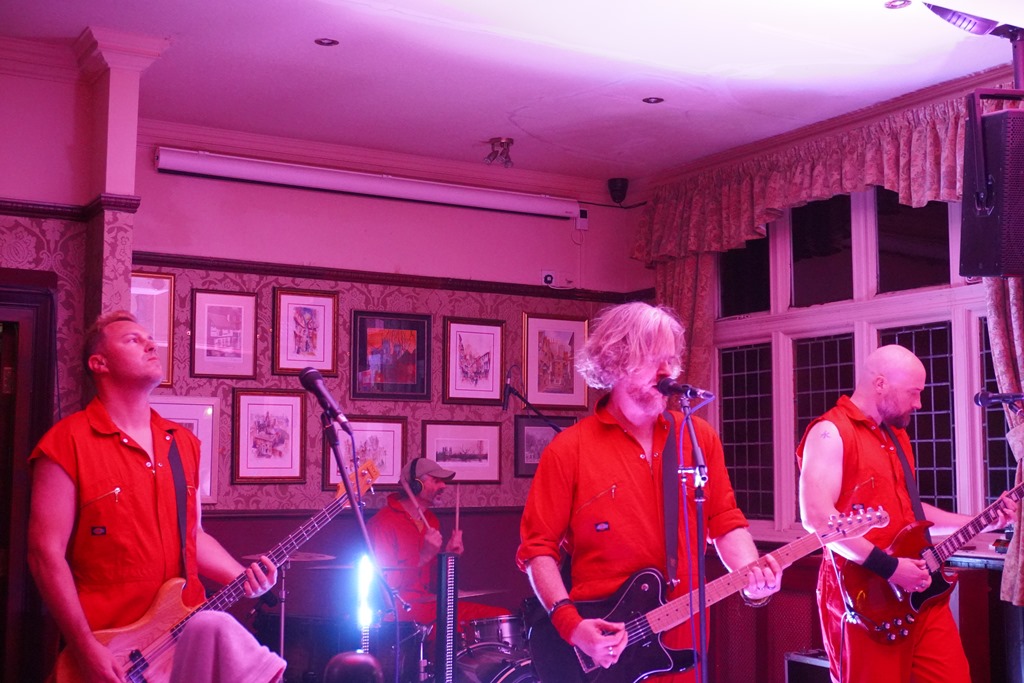
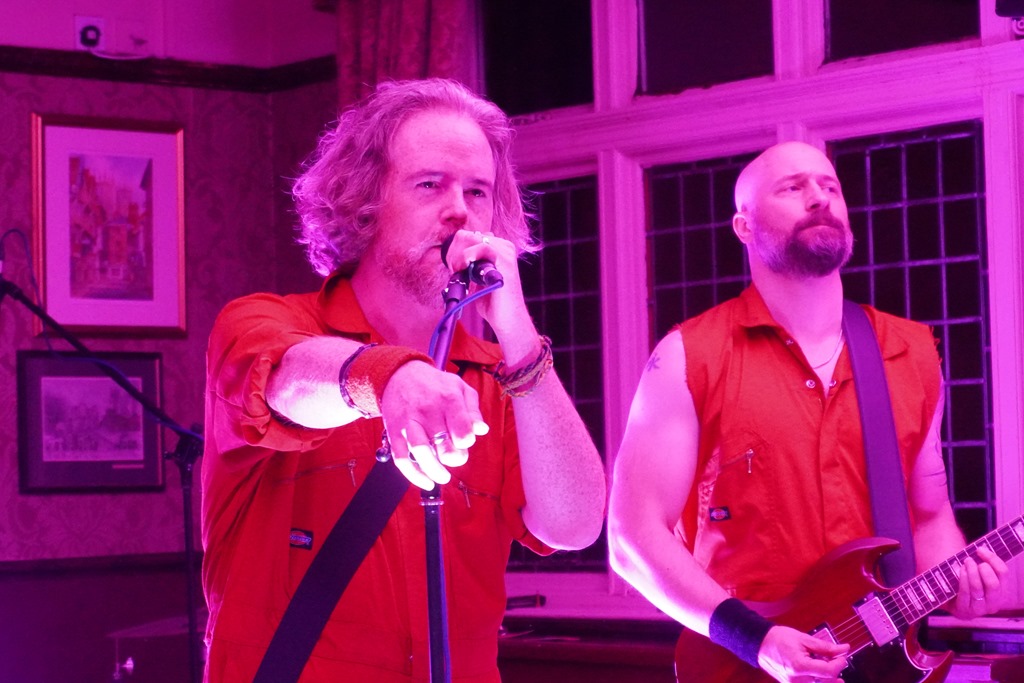
They rock up in red jumpsuits: that’s ok. The Wharf Street Galaxy Band, one of the finest acts to evert emerge from York / Leeds wore red boiler suits. And these guys are tight. Polished. Slick… They’re an amalgamation of post-rock, post metal, post post… which is actually pretty cool. But they do go a bit punk-pop and demonstrate some emo leanings, which is less so. Still, I could let that go… There’s a niggle here, and I need to chew on it while I dissect.
DSC05483DSC05505DSC05514

Megafragma

More than just a click track, they have electronic drums augmenting the live kit. The bass is a bit buried in the mix, but still, they sound super-slick, anthemic, arena-standard and the drums – which are technically faultless – are well up in the mix and propel the songs along with a dynamic force. This is not your average pub-gig band, and the set is loaded with the wow factor. But the songs… pause and exhale… are quite forgettable. As the set progresses, it becomes increasingly apparent that this is very much a case of kit over content. More like Middlingfragma. They sound immense, but hollow. Technically superlative, but missing some essential ingredients, namely soul, and passion.

I can’t grumble too hard: three high-quality bands for £0, and pints in proper glasses for £5.20. This is where it’s at.
3rd February 2026

Christopher Nosnibor

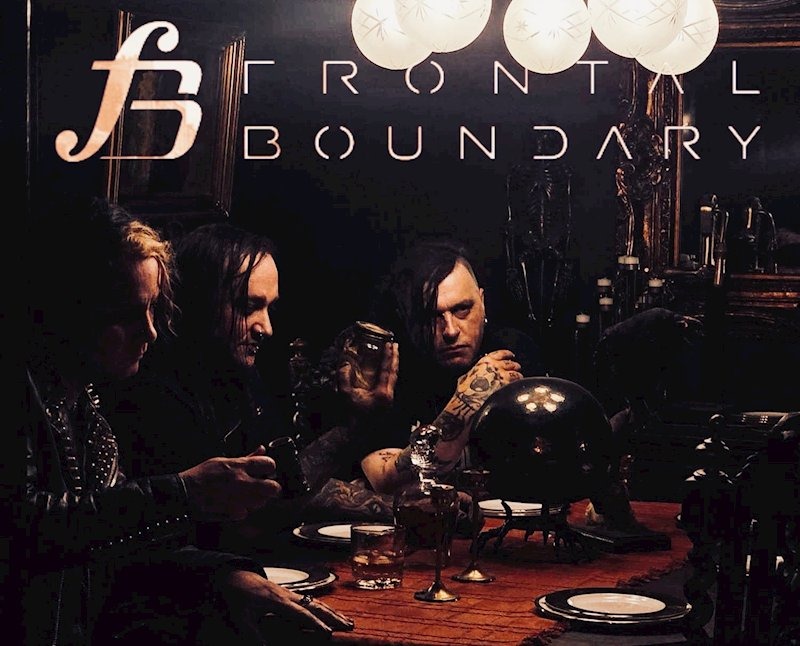
Founded in 2002 by Brendan Ross, Frontal Boundary have been mining a seam of aggrotech, synth-pop, and raw emotional expression for almost a quarter of a century (mid 00’s hiatus notwithstanding, which meant that it wasn’t until 2012 that debut album Electronic Warfare emerged).

As the title of their latest offering indicates, this is an album brimming with nihilism, frustration, darkness. The expansive-sounding ‘Remember’ is one of those intro tracks which in a way create a false expectation of something a bit mellow, a robotix voice announcing ‘We are Frontal Boundary’ over a cinematic, semi-ambient drift and an easy, mid-tempo beat. And of course, this all changes with ‘Burn’, which slams in hard with a heavy stomp and snarling, distorted vocals, with words like ‘destruction’ and ‘corruption’ emerging and essentially telling you what you need to know.

While decidedly dancey in its synths which soar and stab across thumping basslines and relentless thudding beats, there’s something unflinchingly dark and nasty about Failure, not least of all the heavily-processed, dehumanised vocals, but equally, the sample selections are unsettling – even seemingly innocuous snippets take on sinister overtones in context, in the way that children’s voices sound menacing in horror movies.

Failure is very much cut from the same cloth as Controlled Bleeding and Mussolini Headkick and a bunch of late 80s / early 90s Wax Trax! stuff, and in places – as on ‘Hollow’ and ‘Hate’ Frontal Boundary really go all out on the aggressive rave stylings. The latter feels perhaps a shade light for the subject – musically that is: the vocals are strangled, scorched, demonic. Is black metal rave a thing? If not, Frontal Boundary may be pioneers of a new genre.

It’s high octane, Hi-NRG, and while the lead synths are poppy and dancey as anything, the overall vibe, with the contrasting vocals in particular, is gnarly, and harsh. It’s a juxtaposition which works well: although the musical style and vocal delivery are both genre tropes, the way in which Frontal Boundary draw them together feels fresh, innovative, powerful, and proof positive that there is no success like failure.

AA

AA

410825

Cruel Nature Records – 12th September 2025

Christopher Nosnibor

Postmodernism, emerging primarily as a product of post-war America was defined by hybridity, the demolition of parameters and distinctions between different cultures, genres, and was, in many respects, tied to the accelerating pace of technological development, in particular the globalisation of communications and beyond. But postmodernism also not only recognised, but celebrated, the fact that originality has finite scope, and that anything ‘new’ will by necessity involve the reconfiguration of that which has gone before. Shakespeare had all the ground to break in terms of the advent of modern literature, and one might say the same of Elvis and The Beatles with the advent of rock ‘n’ roll and pop respectively. The reason the 80s were such a watershed was because technology revolutionised the potentials for music-making, and while this saw a huge refraction in terms of creative directions, from industrial to electropop, one could reasonably argue that the next leap in music after 1985 came with house and techno.

Post-millennium, it feels like there is no dominant culture, no defining movement, underground or overground: the mainstream is dominated by a handful of proficient but in many ways unremarkable pop acts, and notably, it’s largely solo artists rather than bands, and while there are bands who pack out stadiums, they tend to be of the heritage variety. At the other end of the spectrum, the underground is fragmented to the point of particles. There are some pros about this, in that there is most certainly something for everyone, but the major con is that unlike, say, in the mid- to late-noughties, when post-rock was all the rage, there’s no sense of zeitgeist or unity, and right now, that’s something we could really do with.

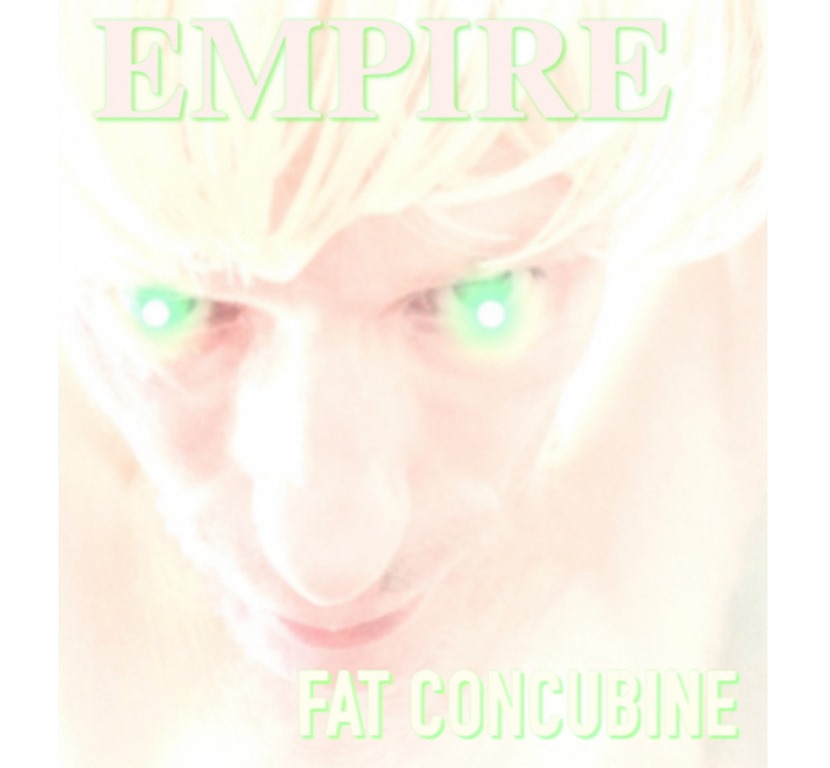
Fat Concubine are most certainly not representative of any kind of zeitgeist movement. With a name that’s not entirely PC, the London acts describe themselves as purveyors of ‘unhinged dance music’, and Empire is their debut EP, following a brace of singles. The second of those singles, ‘for Whom the Fools toll’ (with its irregular capitalisation, which is a bit jarring), is featured here, along with four previously unreleased tracks. This is a positive in my view: so many bands release four, five, or six tracks as singles, and then put them together as an EP release, which feels somewhat redundant, apart from when there’s a physical release.

And so it is, in the spirit of wild hybridisation, that they’re not kidding when they say their thing is ‘unhinged dance music’, or as quoted elsewhere, ‘unhinged no wave ravers’. ‘Feeding off the dogs’ pounds in melding angular post-punk in the vein of Alien Sex Fiend with thumping hardcore techno beats, and it’s not pretty – although it is pretty intense. The snare drum in their first thirty seconds of ‘for Whom the Fools toll’ takes the top of your head off, and the rest of the ‘tune’… well, tune is a stretch. It’s brash, sneering punk, but with hyperactive drum machines tripping over one another and a stack of synthesized horns blaring Eastern-influenced motifs.

There are hints of late 80s Ministry about ‘When we kick Their front door’, another synth horn-led tune that begins as a flap and a flutter before a kick drum that’s hard enough to smash your ribs thuds in and pumps away with relentless force. If the notes didn’t mention that it was a perversion of ‘These Boots We’re Made for Walking’, I’d have probably never guessed. As the song evolves, layers and details emerge, and the vibe is very much reverby post-punk, but with an industrial slant, and a hint of Chris and Cosey and a dash of The Prodigy. If this sounds like a somewhat confused, clutching-at-straws attempt to summarise a wild hotch-potch of stuff, to an extent, it is. But equally, it’s not so much a matter of straw-clutching as summing up a head-spinning sonic assault.

‘tiny pills’ is a brief and brutal blast of beat-driven abrasion, with a bowel-shaking bass and deranged euphoric vocals which pave the way for a finale that calls to mind, tangentially, at least, Cabaret Voltaire’s ‘Nag Nag Nag’.

The version of ‘O so peaceful’ was recorded live, and builds to an abstract chanting drone work. It offers a change of angle, but is no less attacking, its percussion-heavy distorted, shouting racket reminiscent of Test Department and even Throbbing Gristle, particularly in the last minute or so, and you can feel the volume of the performance, too. This is some brutal shit.

Empire is pretty nasty, regardless of which angle you approach it from. It’s clearly meant to be, too. Harsh, heavy, abrasive, messed-up… these are the selling points for this release. And maybe having your head mashed isn’t such a bad thing if you’re wanting to break out of your comfort zone and really feel alive.

AA

a1581875889_10

Leeds collective HONESTY have shared a brand new track titled ‘PUSHING UP DAISIES’. George Mitchell takes lead vocal duties, delivering a gentle, intimate performance that contrasts the song’s morbid subject matter. The result is a subtly exhilarating take on club music that’s become HONESTY’s signature and the reason they’re one of the most essential dance acts coming out of the UK. The track was released today in tandem with ‘MEASURE ME (ALT MIX),’ which injects even more rave-fueled vitality into the lead single from their debut album which came out this Feb, this time led by an ethereal performance from vocalist Imi Marston. Listen here:

AA

HONESTY20241119_004-2

HONESTY (Credit Dan Commons)