Archive for April, 2026

Two Acorns – 15th May 2026

Christopher Nosnibor

Remastered reissues can be more than simply an event for collectors, and aren’t always an act of exploitation on the part of the label or the band. In some instances, such as this, they afford the opportunity for a work to be released as was initially conceived, or otherwise tweaked to iron out imperfections which have rankled for years. And they also provide an opportunity to reflect and reassess – for both the artist and the listener. This is also true in this instance, particularly for me in my capacity as listener. As such, it’s worth sharing from the accompanying note:

‘Originally released in 2009, Capri is a concept album composed of fragmented vignettes, lost minutes and scenes from an idyllic imagining. A collection of brief moments, suspended shimmers, and frail settings, Capri was never meant to be more than its own thin veneer; a naked and subtle wash of saturated and semi-transparent colors, rolling as gently as ocean waves against rocky beaches, of fading afternoon sunlight, of momentary experience. Peaceful yet isolated, quiet yet collapsing, they are fading moments without definite borders, directions, or conclusion.

‘Remastered by Stephan Mathieu from the original tapes, and expanded to include the complete recordings excluded from the 2009 CD edition, this collection is finally present in its complete form in the deluxe edition as a black vinyl 3xLP, and 2CD. All music by Danielle Baquet and Will Long, 2007-2008.’

Presumably for reasons of length, the original release featured truncated versions of the tracks. Given the fleeting, fragmentary nature of the compositions, a piece cut here and there was likely deemed reasonable and barely noticeable, a fair trade for keeping the album down to a single CD (released in a limited edition of 400) back in 2009. It was one of the first Celer albums to be released on a label, after all, after Will Long and Danielle Baquet-Long (who would leave a short while later) had spent the first years of their career doing everything the DIY way and producing physical releases by hand. So this is the restoration the album as intended some seventeen years ago.

My first encounter with Celer was in 2014, and at the time, the minimal nature of their ambient forms only had limited appeal, and my reviews, while positive, were brief, partly because I was knocking out up to half a dozen short reviews a day, and partly because I didn’t find there was much to say about albums which contained, to my ear as it was, not a lot of sound. And this, then, is the re-evaluation, the reflection, the reassessment – and the admission that not only has my palette expanded over the years, and I’ve become more accommodating, more amenable to different forms, but that I was perhaps not capable of listening so closely, not as attenuated to nuance and detail twenty-two years ago as I am now. That doesn’t mean my hearing’s improved (because that’s highly unlikely) or my attention is greater (it really isn’t: lockdown and worsening anxiety in the subsequent years have had a substantially detrimental impact there), but perhaps because of these things, in addition to an evolving appreciation through exposure, I’ve found that concentrating on musical works of a sparser nature can be quite therapeutic.

‘Falling in Trickles’, one of the longer pieces on the new edition, at three and three quarter minutes, was omitted from the original release, as were ‘Red Elements’ (5:40) and ‘I Slow for Love’ (2:50). And it’s here that it becomes apparent just how cropped down the 2009 release of Capri really was, with twenty-nine track, compared to the thirty-six of the new edition.

Given the nature of the material, the question of precisely how much impact the cuts made to the overall listening experience is debatable: as with so many Celer releases, Capri is abstract and nebulous, more about the overall experience than specifics. There’s no ‘hey, here comes a good bit’ nudge moment. The fact is, there are no ‘moments’ to be found here, just a succession of vaporous drifts, textures and tones which resonate against one another to create subtle shifts in atmosphere. ‘Bracelets Passed To Spanish Hands’ brings piano to the fore, but the sound is still in soft-focus, and at a minute and a half long, it feels more like a dream, fleeting, ephemeral, than anything – and this is in many ways a fair summary of the album as a whole. On the original edit, only ‘Lint White’ (at an expansive, ponderous seven and a half minutes) surpassed the four-and-a-half minute mark, with most pieces rising up and fading away after just a couple of minutes, and the fact that each piece is distinct and separate instead of one drifting or melting into the next creates more of a sense of a sketchbook – in this case, a huge portfolio of sketches, incomplete, in progress… but then, so often the finished work polishes away the essence of that sketch. Nothing about Celer suggests an immediacy which might be diminished through the expansion of the ideas presented, and yet… and yet. Listening to the drifting fragments, many of which are barely two minutes in length, there’s a sense of… something incomplete, like a dream or a thought that slips from your mind in an instant.

AA

AA

2A37 cover 3500px

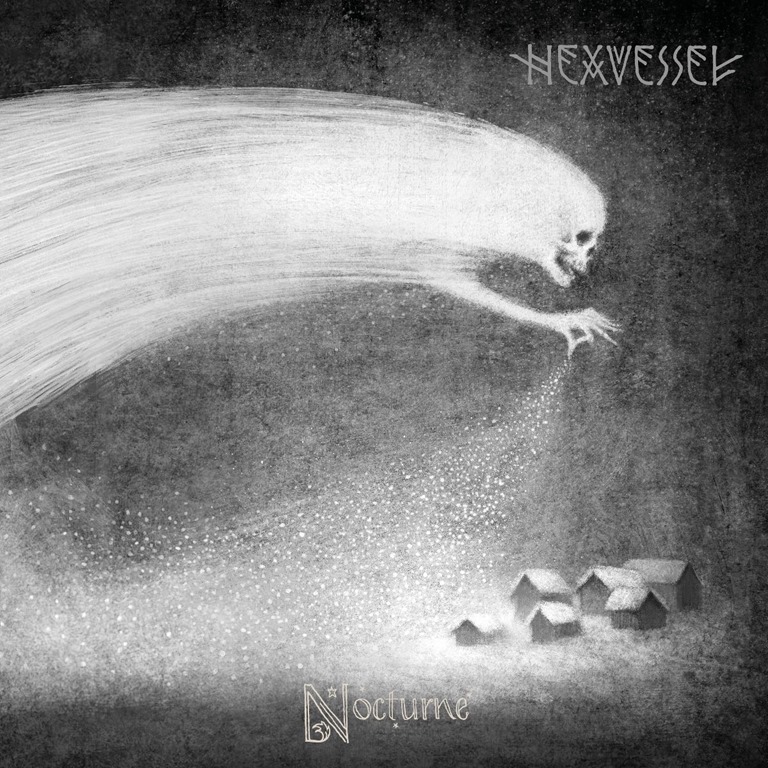
HEXVESSEL drop the digital single ‘Horse Tears’, which was previously only available as a bonus song with the premium edition of Finnish psych-folk and occult doom band’s latest album Nocturne. ‘Horse Tears’ is a cover track taken from British electronic duo GOLDFRAPP’s debut album Felt Mountain (2000) and features the original former IN THE WOODS… vocalist Jan Kenneth Transeth.

HEXVESSEL comment: “Me and Jan Kenneth Transeth go way back”, singer and songwriter Mat “Kvohst” McNerney writes. "I have toured Europe with In The Woods… in 1996, a stowaway in their van, after tracking them down to Kristiansand as a young blackpacker (as Black Metal tourists to Norway are now commonly known, myself being one of the first in the mid-90s). I have always adored Jan’s voice and the early In The Woods… demo and records are so important to me. It is such a high honour to have him sing this song, one of my most favourite singers of all time doing a cover with us of one of my favourite songs, ‘Horse Tears’ on one of my favourite albums, Goldfrapp’s Felt Mountain! To have his daughter Lea join him, singing this song with him, makes it even more touching. Those that have missed Jan’s voice with that old sound, can take a trip with us to a time when Avantgarde Black Metal was truly influential and alive. For me those albums and sounds, Jan Kenneth’s voice and the atmosphere that goes with it has never stopped being so vital. Let the shivers take possession!”

AA

4db6bf44-89f5-5bdf-532f-d09056a8b59f

Welfare Sounds & Records – 8th May 2026

Christopher Nosnibor

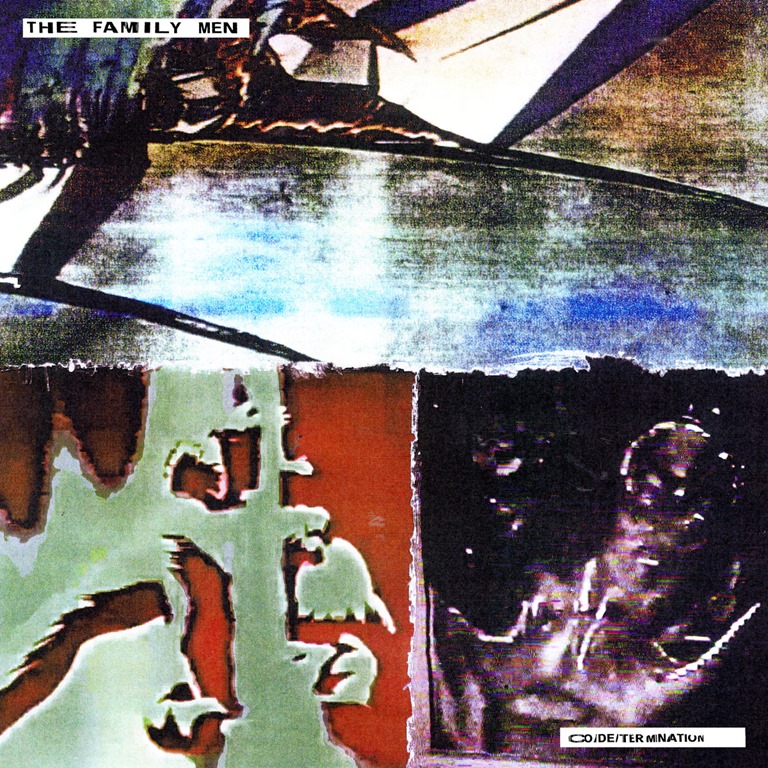
The Family Men sound like a bunch of nice, respectable, friendly fellows who espouse upstanding, moral values… in name, that is. Musically, they describe what they do as ‘Total Harmful Sound’, and following the release of their debut No Sound Forever in 2024, their bio records that ‘the band have toured extensively across Sweden and beyond, steadily building a reputation as one of the most intense and uncompromising live acts on the circuit. That relentless momentum feeds directly into Co/de/termination, a natural yet sharper continuation of their sonic evolution.’

They go on to add, ‘Pushing both intensity and precision to new extremes, the album refines the band’s sound into something tighter, heavier, and more deliberate than before. Urgent yet controlled, abrasive yet purposeful, Co/de/termination stands as a focused and uncompromising statement’. It’s certainly a bit more accessible, a bit cleaner, than its predecessor, but then, most records are.

‘Calamity’ arrives in a swirl of noise, the repetitive motifs of grunge – but also in some respects reminiscent of Pitchshifter after the change from being Pitch Shifter – with metallic guitars set to stun, and percussion pumping hard – while the raw, ragged vocals are more rooted in hardcore. And it all blasts in amidst a noise-rock tumult that bucks and blisters, acid house bleeps suddenly submerged in a tidal wave of guitar and driving bass. ‘Scanner’ and ‘Luxury’, too, belong in part to the Nu-metal revival, while clearly retaining roots in industrial and noise rock, and it makes for a pretty potent (and angry-sounding) cocktail.

AA

In places – ‘AOR’, and ‘Solving the Light Issue’ for example – they invite comparisons to early Revolting Cocks, colliding electro and industrial strength guitar atop some infectious – and really quite danceable – bass grooves and shouty vocals. The latter of these, in particular, boasts a particularly phat, distorted bass sound and pounding beat, and for all of the gnarliness and aggression of the sound – and Co/de/termination is an album that’s fully in-yer-face – it’s apparent that The Family Men know how to render a certain swing and introduce a level of catchiness.

AA

That said, elsewhere, they just go all out on the attack: ‘Heaven’ hits as a brawling scuzzfest, laden with feedback reminiscent of the most ferocious cuts on Daughters’ You Won’t Get What You Want (an album sadly sullied by subsequent revelations regarding their front man). Elsewhere still, the hypnotic, spacious ‘New Clear’ ventures towards shoegaze territory. Rather than seeming incongruous, it’s welcome, proving that it’s possible to create an album that’s focused while still having range.

It’s high-energy, high-octane stuff, and it’s certainly not tame or timid.

AA

a2670809488_10

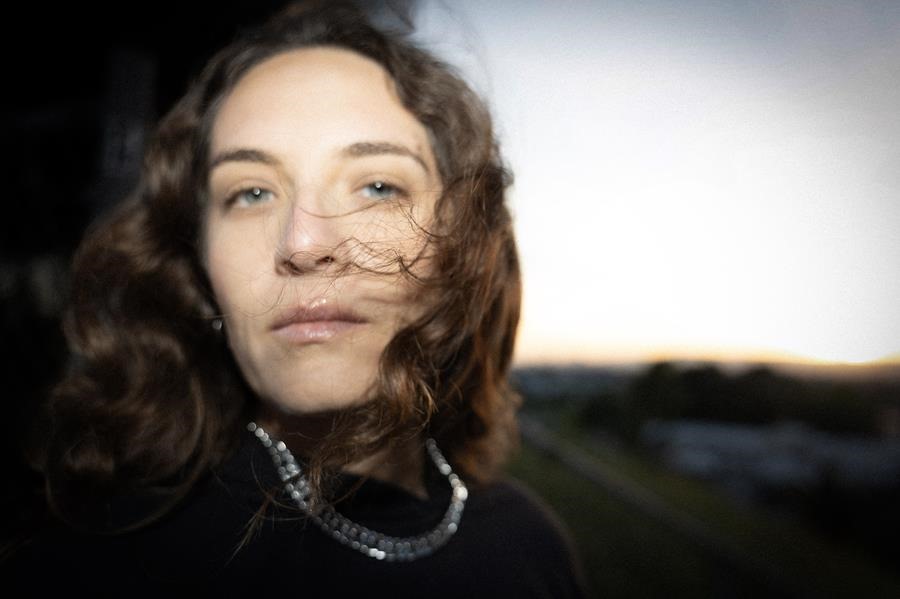
Cinder Well – the hauntingly stark musical project of multi-instrumentalist Amelia Baker – announces a new album A Blooming Body which arrives July 17th via Hen House Studios (where the album was recorded with Harlan Steinberger). The album is preceded by the lead single and video ‘While the Womb Screams Silently.’

About the track, Amelia says… “This song is inspired by the movie Portrait of A Lady On Fire from director Céline Sciamma. In the film, a woman is arranged to be wed, and because of her intense resistance to the situation, a painter is commissioned to secretly paint her wedding portrait without her knowing. The song is about listening to your inner knowing, which often screams loudly but is ignored for the sake of conforming – constantly trying to break out of the restraints and projections of patriarchy while stumbling over new ones and internalized ones along the way – “pulling at an endless thread of thistle – whose hooks and briars they catch things you thought you couldn’t miss em / while the womb screams silently for you to listen”.”

Watch the video here:

AA

This album also marks a shift in recording process, with Amelia being just as involved in the production and mixing as the writing this time around. “I strived to record the initial takes of guitar and vocals live, to give the music as much life as possible… As far as arrangements, I also brought in different types of instruments and players – in the past, I would use violin to centre most of the melodies, but on this record there are horns by Amy Sanchez (Kendrick Lamar, Bruce Springsteen, Dave Matthews Band, Kamasi Washington, Florence and the Machine and more), synths by Dylan Desmond (Bell Witch), e-bow and other fun textures leading the melodic instrumental parts.” Other contributors include; Greg Cohen (Tom Waits, John Zorn, David Byrne, Laurie Anderson) and Pete Olynciw (Leyla McCalla) on bass, Phillip Rogers (Hayley Hendrickx) on drums, and C.P.N. Hollywell (Twisted Teens) on vocals.

On A Blooming Body, Cinder Well creates a sound that is both expansive and cinematic, and the kind of experimentation which lead to her composing the original theme song and score for the hit BBC TV series Small Prophets (written, directed by, and starring Mackenzie Crook alongside Sir Michael Palin).

Through endless shifts in perspective, and a sound which knows when to bolster the lyrics, and when to let them speak for themselves, Cinder Well’s music becomes universal on A Blooming Body, laying bare a weight that exists not in guitar tracks or distortion, but the kind we carry with us day to day.

AA

PhotoCreditChelseaMoosekian6-990000079e04513c

Photo credit: Chelsea Moosekian

Editions Mego – 1st May 2026

Christopher Nosnibor

With absolutely no referencing of that animated Disney movie, the textual contextualisation for Russell Haswell’s latest sonic assault echoes what I’ve been saying – and writing – for some time now. I feel a small sense of elation… but equally a certain tiredness. I’m 50. And while no doubt global history is essentially a tale of innovation and destruction in equal measure, the last quarter of a century has felt truly hellish, as if the exponential pace of progress has run in parallel with an ever-accelerating desire to wipe ourselves as a species from the face of the planet.

It has been twenty-five years since the seismic events of 2001—when twin towers collapsed under terrorist attack and Coventry’s sonic insurgent Russell Haswell launched his inaugural salvo on the original Mego label with Live Salvage 1997–2000. The intervening era has delivered unrelenting turbulence: protracted wars, institutional corruption, a global pandemic, the resurgence of fascist currents, rampant media distortion, and omnipresent surveillance. For Haswell, a lifelong admirer of 1970s and 1980s dystopian cinema, the verdict is unequivocal: “Science Fiction is now!”

It’s hard to argue that the moment in which we find ourselves has all the hallmarks of every dystopian fiction ever imagined rolled into one unimaginable fusion, and that we are inching closer by the second to the end of days.

Haswell has long used sound to articulate the horrors of the 21st century, both as a solo artist and in collaboration, notably bringing additional layers of abrasion to Consumer Electronics, and while the accompanying notes detail quite extensively the equipment used, the influences, and the creative aims of Let it Go, my focus here is more on what it actually sounds like and the listening experience.

The first few seconds of the first track, ‘Exit Downwards’ are innocuous enough: a drone, nondescript, smooth – but within seconds its rent with shuddering glitches, squelches, and discordant clanks, not to mention the stammering thud of a particularly sharp kick drum. And over the course of seven minutes, it pumps and pounds blasts and bleeps like a circuit in meltdown. It’s pretty tense stuff, and descents, tension, and anxiety are recurrent themes not only in the titles, but in the formations of the compositions themselves.

‘Fall 3’ and ‘Fall 2’ follow the theme of descent, and manifest as wibbly collage works, while ‘The anxieties of our time’ is fairly straightforward in its implications and manifests as a head-swimming, dizzying panic attack, a meltdown in musical form, the crackling industrial glitch monster that is ‘Stress Testing’ functions on numerous levels. As much as the phrase relates specifically to financial, economic, and societal systems, there is also the stress test as it relates to the effects of physical activity on the heart, and, by association, it feels like an implicit hint of the stress we as individuals find ourselves subject to on a daily basis: how far can we – individually, and collectively – be pushed under the late capitalist model? At this moment in time, it seems like we’re close to finding out. And through swooshing sweeps and rippling fractures in sonic fabrics which twist and flare, Russell Haswell renders an aural replication of the overwhelming experience of life right now.

In comparison to some of Haswell’s releases, Let it Go is not particularly noisy or abrasive, but that doesn’t mean it’s any less intense. Even the ambient hums of ‘Curated narrative’ bring a hovering tension which is difficult to step away from.

Christmas is a difficult time for many, and while there’s no indication of what inspired ‘Thu 25 Dec 2025’, it buzzes and throbs for a relentless six and three quarter minutes like an angry hornet, trapped in a greenhouse which is slowly collapsing in on itself. The final track, the thirteen-minute ‘There’s always a bit of light somewhere’ seems to offer a thin ray of hope in its title, but the fine metallic scrapes and glistening edges which intertwine ominously and with no discernible form are far from comforting, and you find yourself on edge, sensing darkness visible and encroaching from all sides. Yes, There’s always a bit of light somewhere, but that somewhere isn’t here.

Let it Go is varied, exploratorily, and an artistic success, but it’s by no means the easiest listen. And for that, I say ‘good’. Embrace the challenge.

AA

eMego326CD front

Christopher Nosnibor

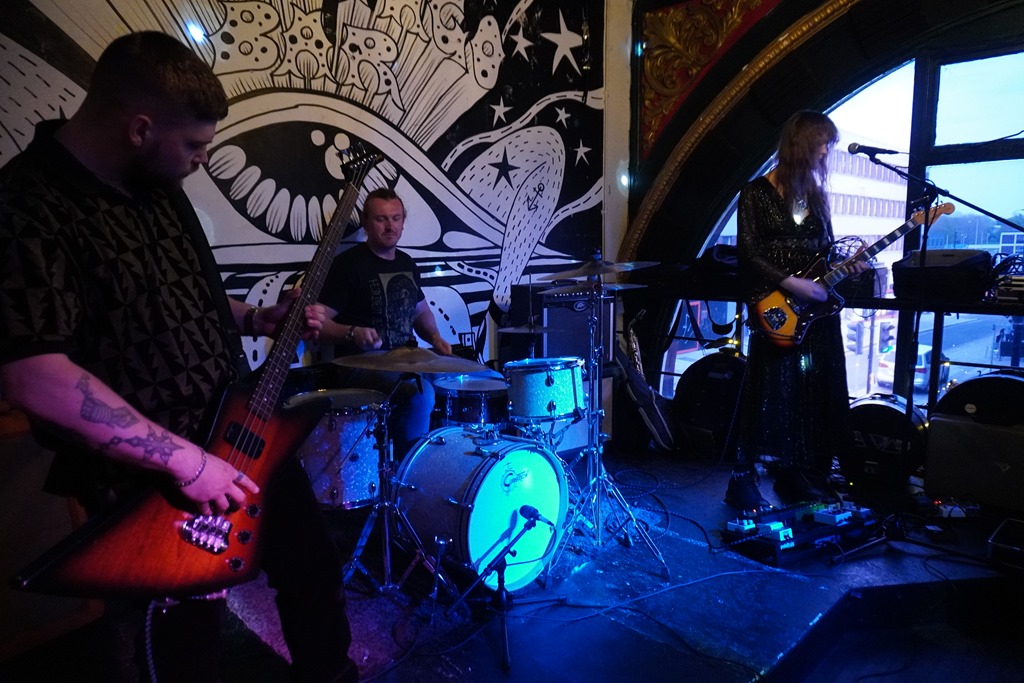
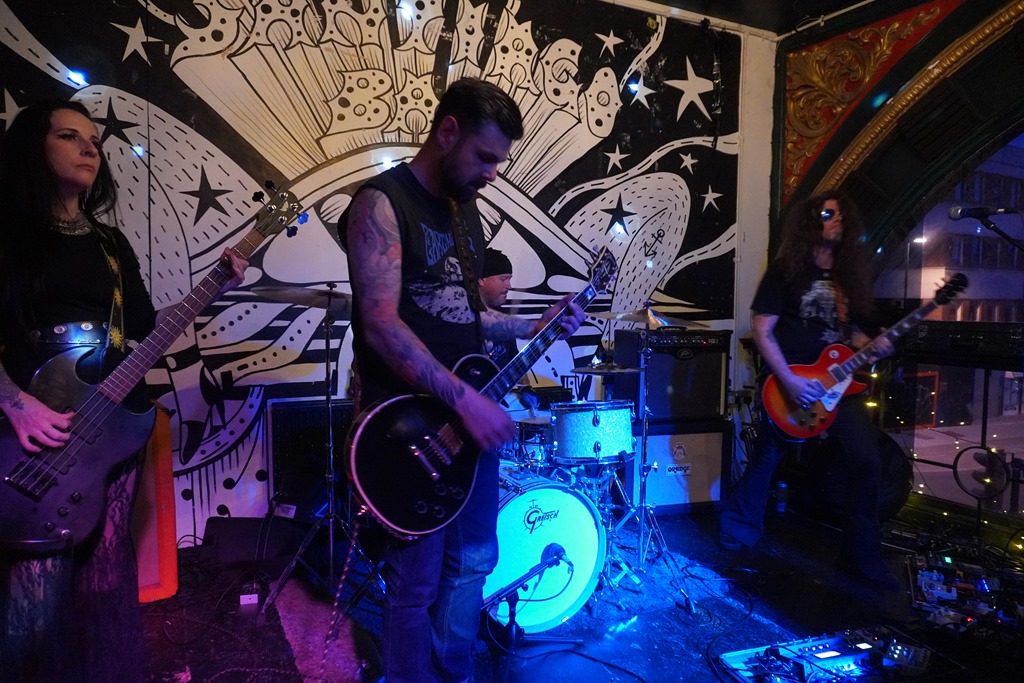
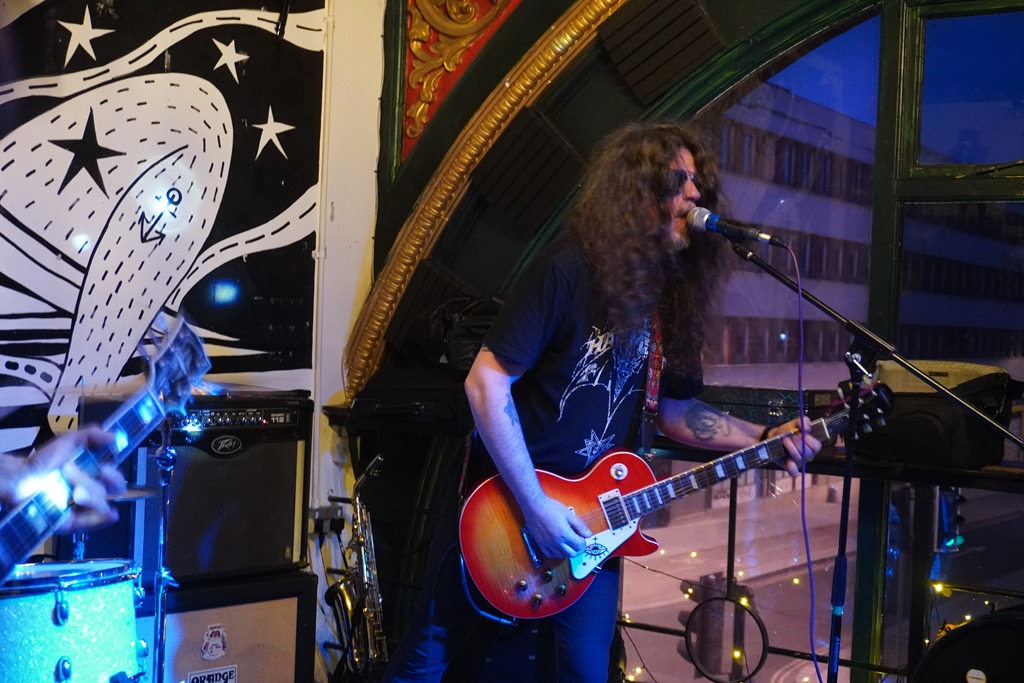
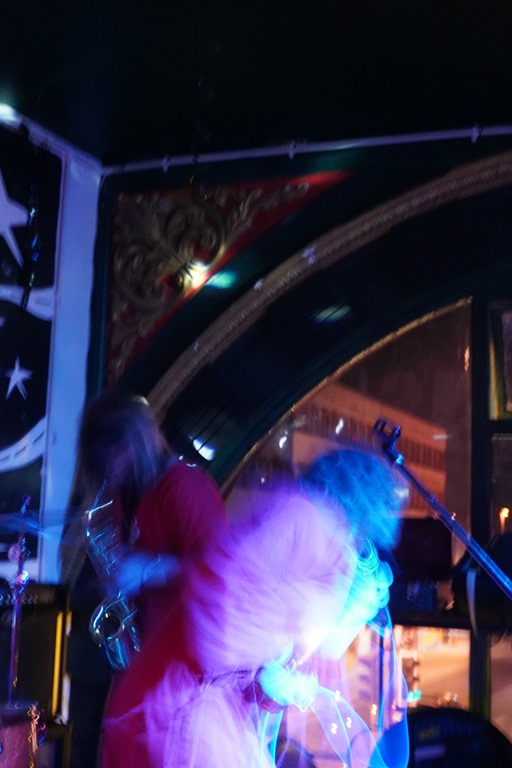
Situated in a retail arcade in Leeds city centre, Santiago’s is a hip but alternative bar (in that it’s £6+ a pint of keg, and they play Nirvana and have band posters on the walls – although they also include rather less obvious bands like OFF! and Cerebral Ballzy) downstairs, and somewhat contrastingly, a poky dive with a capacity of maybe 80, accessed via a rickety staircase and with a stage that’s barely six inches high, upstairs. Said upstairs room affords an unusual view of the streets outside through a large arched window which occupies the entire wall beside the stage. Seeing people and traffic moving around on the street below while the bands perform seems a strange juxtaposition, and with the limited lighting inside the venue, the interior starts unusually bright and grows progressively darker as the night progresses.

Sunbreather’s name may suggest something a bit hippyish, and in some respects, it’s not unrepresentative. They play doom heavily influenced by what in the 70s was heavy metal: that is to say, big Sabbath- style riffs. They play them with a certain swing, too, which is refreshing, and it’s nicely done. They close their four-song set with a cover of Fleetwood Mac’s ‘The Chain’, stripped back and heavy. The coda is played with the classic bassline at half-pace, with all the weight, and the wild guitar solo replaced by thunderous chords until the very end. It’s an inspired interpretation that works well, and isn’t out of place with the rest of the set.

DSC09610

Sunbreather

Amon Acid are all about the flares and hair and lace and shades, and if the name sounds like something of a giveaway, then you’d be close enough: their thing is epic stoner doom with the deep infusion of psychedelia. The vocals are low in the mix, bathed in galactic-scale reverb and delay for good measure. The two guitars melt into one another, and while they may not be masters of innovation, they clearly know what they’re doing – and thankfully, the sound engineer has a handle on it, too. Winding up with a mammoth space rock groove, which skims out for an eternity, brings the set to a searing finale. And the longer they play, the hotter it gets. By the end of their set, we’ve all liquefied, and I find myself deliberating whether I need another £6.70 pint of am ok with the prospect of dehydrating.

DSC09639DSC09657

Amon Acid

While I’m deliberating, they put the fans on around the room. Meanwhile, some pissed-up cokehead cunt in an orange t-shirt who seemingly thinks he’s at a rave is going off his nut and trying to get onstage while Codex Serafini are setting up, and five minutes before they’re due on I get a sinking feeling and am hoping he’ll be leaving very soon. Mercifully, I realise around a third of the way through the set that he’d fucked off, hopefully his exuberance overtaken by a melted brain.

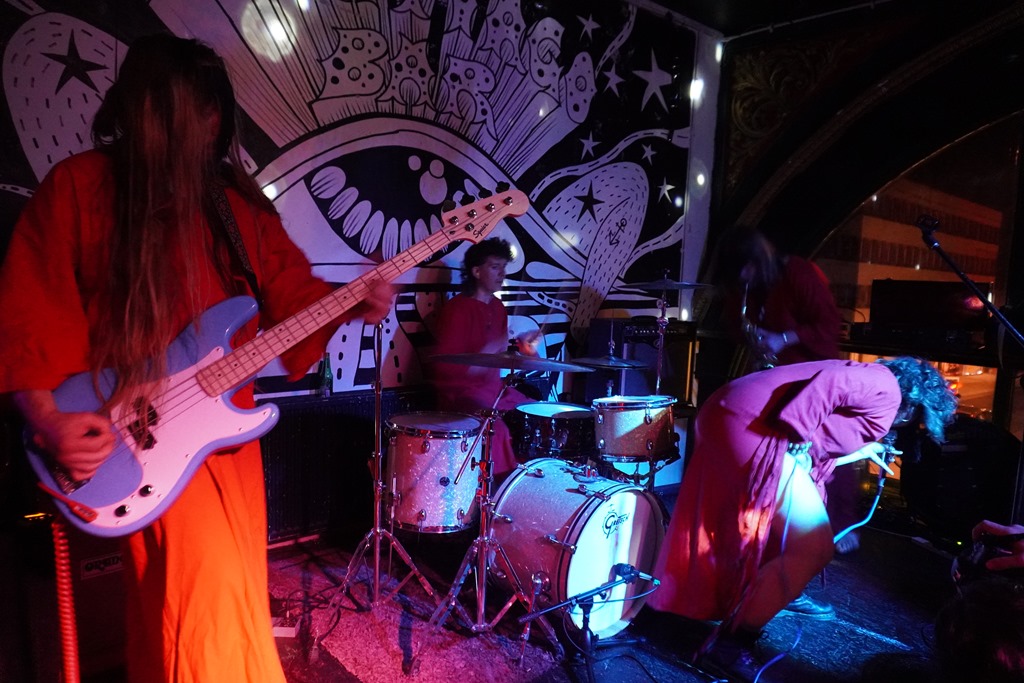
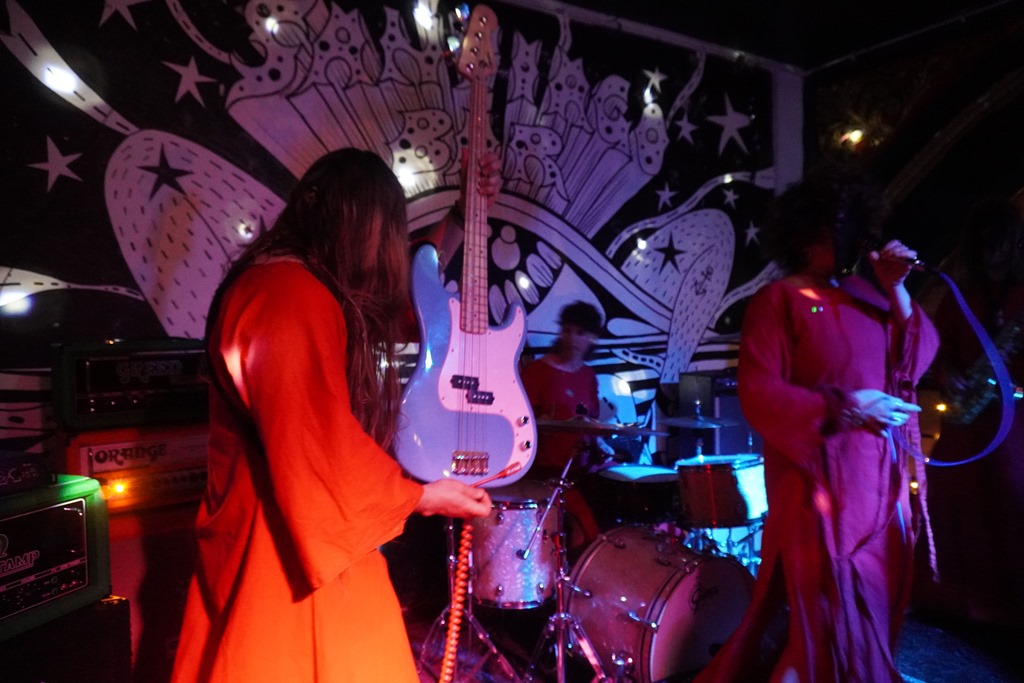
Codex Serafini are indeed brain-melting, after all. They’re a band I’ve been waiting to see for some time, and given the enormity of their music, the intimate nature of the venue is something of a surprise on some respects. But jazz-infused doom with a punk edge is pretty niche, and an act with albums released on Riot Season are never going to be playing anywhere huge. But this is precisely why we need small venues, and labels like Riot Season. And for all that, they definitely deserve a wider audience: when novelty acts like Angine de Poitrine are racking up millions of views, it’s apparent that the public aren’t averse to stuff that’s different or weird – in fact, they’re drawn to it. Especially when there are outfits and masks involved, as the popularity of Slipknot, Ghost, and Sleep Token (who aren’t nearly as weird as their presentation would suggest) – which means that it mostly comes down to PR. The fact of the matter is that ‘viral’ is almost never ‘organic’. And so here we have Codex Serafini, in red robes and tasselled face-masks, wrapped in Saturnian lore, merging metal, jazz, and post-punk, and this is what the music world needs right now, if only people would realise.

The first half of their ten-song set consists of material from their most recent album, Mother, Give Your Children Sanity, released last November. ‘Cause and Effect’ is an early standout for its deft, vaguely disco-hued drumming and almost funk-tinged groove. Matt McCartney’s bass doubles as rhythm guitar, the incidental melodies and atmosphere brought by the sax. And all the while, the percussion is cataclysmic and the vocals nothing short of other-worldly.

DSC09705DSC09700DSC09777

Codex Serafini

‘Cronus’, ‘Janus’, and ‘Fountains of Enceladus’ are performed back-to-back in the sequence they appeared on Serpents of Enceladus, and Landing as the penultimate song of the set, ‘I Am Sorrow, I Am Lust’ is the sole representation of previous album The Imprecation Of Anima (2023).

At around fifty minutes in duration, their set is intense and sonically immense, filling the space with cathedrals of sound. It’s the last night of the tour in support of Mother, Give Your Children Sanity, and the Leeds reception sees it end on a high. And on a personal level, they were more than worth the wait. Would see again. Many times.

Swiss noise-rock collective Coilguns have returned with their powerful new single ‘Peace Trader’, out now via Humus Records, accompanied by an official video.

The accompanying video, directed by Louis Jucker and shot and edited by Valentin Lurthy, reinforces the track’s raw and unfiltered energy, with DIY lyric subtitles further amplifying its message.

Check it here:

AA

Recorded by Scott Evans (Thrice, La Dispute, Neurosis), with additional production from Ben Chisholm (Chelsea Wolfe, The Armed), and mixed by Tom Dalgety (Ghost, Pixies, Royal Blood), the track hits with a new level of urgency and emotional intensity.

Built to be both punchy and deeply reflective, ‘Peace Trader’ confronts the growing dissonance between ideals and reality. As the band put it: “What is the meaning of laws, when our nations negotiate all?”

Rooted in their own reflections on Switzerland’s shifting identity, from a perceived safe haven for human rights and diplomacy to a more conflicted and ambiguous role on the global stage, the track channels frustration, disillusionment, and a stubborn sense of hope.

The band elaborates: "We grew up being told that our country was a safe nest for human rights conventions, a historical hub for humanitarian organizations, a neutral haven for diplomacy, a sheltering home for those in need, and a centuries-long advocate for peace. Yet, the older we get, the more frequently we see this image turn into a Dorian Gray portrait. We recently witnessed our federal representatives minimize dual-use goods exportations or support partial views on major international law violations. We discovered that our asylum system had silently turned into a racist and humiliating discouragement plan, and we still haven’t been able to make our international enterprises accountable for their colonialist crimes. 
Looking back at our school history manuals, we wonder where this whole fairy tale has gone, or if it ever existed, but we’d like to allow ourselves, and invite you, to keep believing in the idea that a peace-making Switzerland might one day become an actual thing.”

Musically, ‘Peace Trader’ expands Coilguns’ already wide sonic palette. For the first time, a bass player was involved from the earliest stages of writing, reshaping the interplay between instruments and adding a broader, more fluid dynamic to the composition. From warehouse-recorded drum textures to tightly coiled bursts of noise, the track balances abrasion with atmosphere.

“We wanted ‘Peace Trader’ to be punchy and sad, something that could carry urgent empathy and hope,” the band explain, highlighting the deliberate tension that defines the song.

AA

444116

AA

Upcoming Tour Dates:

30.04 – Winterthur (CH) – Kraftfeld
01.05 – Thun (CH) – Mokka
02.05 – Martigny (CH) – Les Caves du Manoir

07.05 – Guadalajara (MX) – FORO 907
08.05 – Querétaro (MX) – Back Room
09.05 – Mexico City (MX) – Foro Hilvana

15.05 – Baden (CH) – Royal
16.05 – Brussels (BE) – Obsidian Dust
22.05 – The Hague (NL) – Sniester Festival

28.05 – Lucerne (CH) – Konzerthaus Schüür
29.05 – Bienne (CH) – La Coupole
30.05 – Basel (CH) – Kaserne

02.07 – TBA
04.07 – Belfort (FR) – Eurockéennes

Prior to the release of FLESH FIELD’s stunning new album’s physical edition, the US-industrial act drops the bonus track ‘Hegemony’ featuring ASSEMBLAGE 23 frontman Tom Shear.
’Hegemony’ is available as part of the album premium download and on the bonus CD of the lavish ltd. 2CD artbook deluxe edition, which will hit stores on May 22, 2026.

FLESH FIELD comment: “I wanted to have some cool remixes but also exclusive tracks for the deluxe edition of On Enmity”, mastermind Ian Ross explains. “As I had already received the fun remixes by Mildreda, Omen Code, Lost Signal, Schneider, and 16 Volt, I contacted my old friend Tom Shear from Assemblage 23 about adding his voice to a track that had not made it onto the album as I was kind of lost for fitting words. Tom did not ‘only’ come up with excellent lyrics but he also contributed his awesome voice to our track – which makes it a really special bonus for the collectors’ edition.”

The album On Enmity was digitally released on February 20, 2026. Hear ‘Hegemony’ here:

AA

d8145a23-21c1-a322-553f-4796939ea8e7

Cruel Nature Records – 27th March 2026

Christopher Nosnibor

This one’s been out for a bit, but was too good to let go without comment. Some will likely thank me for this: others may be less grateful as they sit, hands over their ears, wondering why they should ever pay heed to a word I write. It’s niche and it’s noisy – as the notes which accompany the release on Bandcamp make clear from the outset:

Gnarled Fingers and Picking are two artists drawn together by a shared love of bleak, crushing, low-end oblivion.

Picking is a new raw doom / noise / drone project from Charlie Butler inspired by lifelong incessant excessive picking of nails.

Gnarled Fingers is an experimental, ambient drone project, relentless wall of fuzz and atmosphere, no escape, created after growing up in Somerset Levels with stories of witchcraft and pagan superstition.

The Picking track, ‘Toenail’ sits in the droney doom bracket dominated by Sunn O))), but there’s something magnificently lo-fi about this, which adds a layer of filthy muck and treble distortion that conveys a performance which is of a volume just beyond the capacity of the equipment used to record it. It’s fourteen minutes of raw, howling guitar noise, and because of the way in which they seem to be struggling to contain the feedback while ploughing relentlessly at a loose semblance of a riff, the result is something along the lines of Earth 2 crossed with Metal Machine Music. ‘Uncompromising’ is a word that music journalists and bands alike chuck about, but this is the absolute epitome – although something about this recording is possessed of a primitivism that suggests they don’t know how to do it any other way. Is it uncompromising if that’s the case? Feel free to make that question a topic for debate next time you’re down the pub with your coolly opinionated music-loving mates, but whatever side of the fence you find yourself on, Picking make a gnarly noise, and if your toenails ever bear visual comparison to this, I would strongly recommend consulting a podiatrist, and sooner rather than later, before your entire foot rots off the end of your leg.

Gnarled Fingers showcase a more polished form and a sound which sits closer to the Sunn O))) template of ribcage-rattling density, whereby a chord struck every twenty seconds conjures an atomic detonation that hangs heavy in the air. Downtuned and distorted to the max, their track ‘Echoes from Futures Past’ is a wall of crushing devastation. Sixteen and a half minutes of guitar noise so weighty it feels like how one might imagine being trapped under rubble after a nuclear bomb. Feedback scrapes so abrasively that it strips the skin, and all the while you’re slowly suffocating. It’s brutal.

While some split releases benefit from contrast, this is one where similarity is strength. This type of music is most effective when subjected to prolonged periods of exposure, ideally at high, even extreme volume. The desired effect is complete immersion, to reach the point where your body feels detached, as if its floating. This is some heavy-duty drone shit, and it sure hits the spot.

AA

AA

a2050053662_10