Editions Mego – 1st May 2026
Christopher Nosnibor
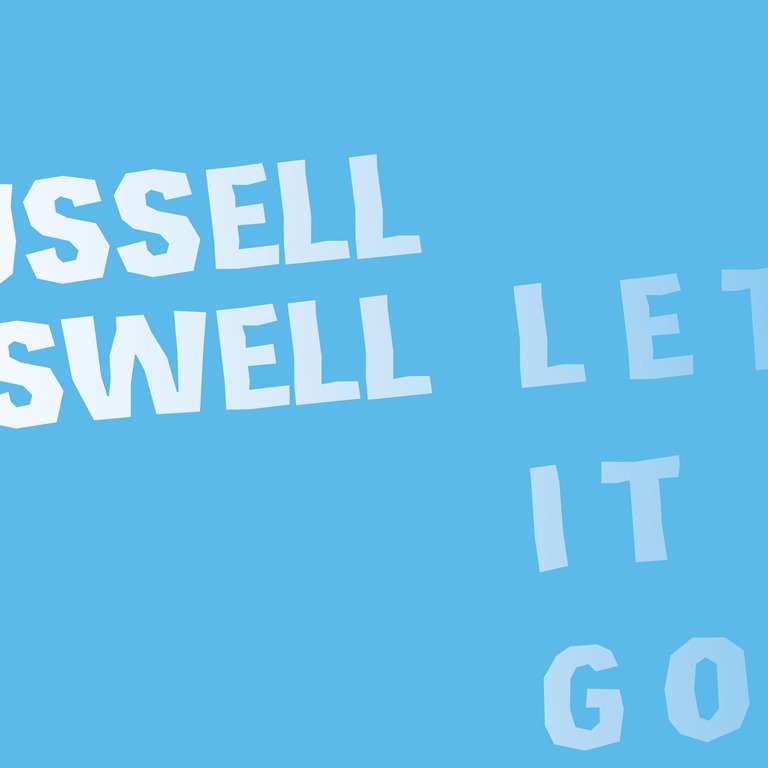
With absolutely no referencing of that animated Disney movie, the textual contextualisation for Russell Haswell’s latest sonic assault echoes what I’ve been saying – and writing – for some time now. I feel a small sense of elation… but equally a certain tiredness. I’m 50. And while no doubt global history is essentially a tale of innovation and destruction in equal measure, the last quarter of a century has felt truly hellish, as if the exponential pace of progress has run in parallel with an ever-accelerating desire to wipe ourselves as a species from the face of the planet.
It has been twenty-five years since the seismic events of 2001—when twin towers collapsed under terrorist attack and Coventry’s sonic insurgent Russell Haswell launched his inaugural salvo on the original Mego label with Live Salvage 1997–2000. The intervening era has delivered unrelenting turbulence: protracted wars, institutional corruption, a global pandemic, the resurgence of fascist currents, rampant media distortion, and omnipresent surveillance. For Haswell, a lifelong admirer of 1970s and 1980s dystopian cinema, the verdict is unequivocal: “Science Fiction is now!”
It’s hard to argue that the moment in which we find ourselves has all the hallmarks of every dystopian fiction ever imagined rolled into one unimaginable fusion, and that we are inching closer by the second to the end of days.
Haswell has long used sound to articulate the horrors of the 21st century, both as a solo artist and in collaboration, notably bringing additional layers of abrasion to Consumer Electronics, and while the accompanying notes detail quite extensively the equipment used, the influences, and the creative aims of Let it Go, my focus here is more on what it actually sounds like and the listening experience.
The first few seconds of the first track, ‘Exit Downwards’ are innocuous enough: a drone, nondescript, smooth – but within seconds its rent with shuddering glitches, squelches, and discordant clanks, not to mention the stammering thud of a particularly sharp kick drum. And over the course of seven minutes, it pumps and pounds blasts and bleeps like a circuit in meltdown. It’s pretty tense stuff, and descents, tension, and anxiety are recurrent themes not only in the titles, but in the formations of the compositions themselves.
‘Fall 3’ and ‘Fall 2’ follow the theme of descent, and manifest as wibbly collage works, while ‘The anxieties of our time’ is fairly straightforward in its implications and manifests as a head-swimming, dizzying panic attack, a meltdown in musical form, the crackling industrial glitch monster that is ‘Stress Testing’ functions on numerous levels. As much as the phrase relates specifically to financial, economic, and societal systems, there is also the stress test as it relates to the effects of physical activity on the heart, and, by association, it feels like an implicit hint of the stress we as individuals find ourselves subject to on a daily basis: how far can we – individually, and collectively – be pushed under the late capitalist model? At this moment in time, it seems like we’re close to finding out. And through swooshing sweeps and rippling fractures in sonic fabrics which twist and flare, Russell Haswell renders an aural replication of the overwhelming experience of life right now.
In comparison to some of Haswell’s releases, Let it Go is not particularly noisy or abrasive, but that doesn’t mean it’s any less intense. Even the ambient hums of ‘Curated narrative’ bring a hovering tension which is difficult to step away from.
Christmas is a difficult time for many, and while there’s no indication of what inspired ‘Thu 25 Dec 2025’, it buzzes and throbs for a relentless six and three quarter minutes like an angry hornet, trapped in a greenhouse which is slowly collapsing in on itself. The final track, the thirteen-minute ‘There’s always a bit of light somewhere’ seems to offer a thin ray of hope in its title, but the fine metallic scrapes and glistening edges which intertwine ominously and with no discernible form are far from comforting, and you find yourself on edge, sensing darkness visible and encroaching from all sides. Yes, There’s always a bit of light somewhere, but that somewhere isn’t here.
Let it Go is varied, exploratorily, and an artistic success, but it’s by no means the easiest listen. And for that, I say ‘good’. Embrace the challenge.
AA




The Pixel Rain – Last
Posted: 23 June 2026 in Reviews, Singles and EPsTags: A Sense of Danger, anthemic, contemplative, electronica, industrial rock, Last, Post-Punk, Review, Single, social commentary, Synth Pop, The Pixel Rain
18th June 2026
Christopher Nosnibor
‘Death is following us’, Áron Siegler warns at the start of, and throughout ‘Last’, the new single from Southeast London act The Pixel Rain. Hungarian-born songwriter and project founder Siegler has spent the last three years evolving a sound which draws on industrial rock, post punk, synth-pop and electronic music, and now, in the run-up to the release of the debut album, A Sense of Danger, set for a September release, they serve up a tune that pitches the guitar up in the mix.
Of the song, Siegler says, “‘Last’ was born from my scorn for modern-day authority figures as I was picturing a world that these kinds of people are gonna leave behind. The song has a specific meaning for me as a Hungarian person but I always try to write lyrics universally, encouraging the audience to find their own stories in my songs”.
The timing of the release couldn’t be better, landing just a few short days before the resignation of UK Prime Minister Sir Kier Starmer, after less than two years in the position. The media – online, in print, and on TV – is frothing with speculation, of course, while much is also being made of his legacy. It’s remarkable how a leader so insipid could be so divisive – but certainly, under his leadership, the government has done no favours to the trans community, migrants, or those with disabilities, or civil liberties in general, particularly when it comes to protesting the genocide in Gaza, which he still maintains is simply Israel defending itself. What kind of world is he leaving behind? What of his predecessors, and what – just what? – of Trump?
Death is indeed following us – and it’s stalking us digitally, through social media, through AI. One might be forgiven for feeling paranoid.
The production of ‘Last’ forges a sonic density which encapsulates that inescapable tension. The band cite The Jesus and Mary Chain and The Horrors as sonic inspirations in addition to their usual electronic touchstones, and it may allude vaguely to Automatic in form, but I’d say it lands more in the domain of Interpol intersecting with Depeche Mode – although that’s by no means a bad thing. The guitars are mixed quite smooth and soaring, and the song is imbued with an anthemic feel, while propelled by an insistent beat, and the chorus is prominent and dominant. If the rest of the album matches this standard of songwriting, it’s destined for success.
AA
Áron Siegler by Evelina Kloimova