Editions Mego – 21st February 2025
Christopher Nosnibor
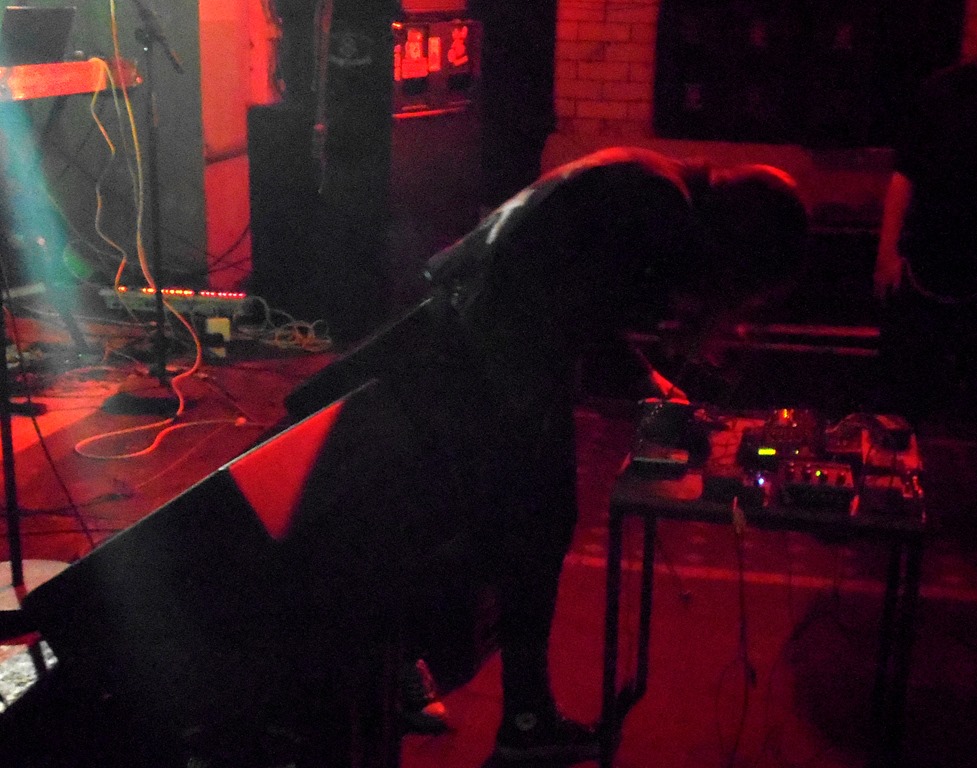
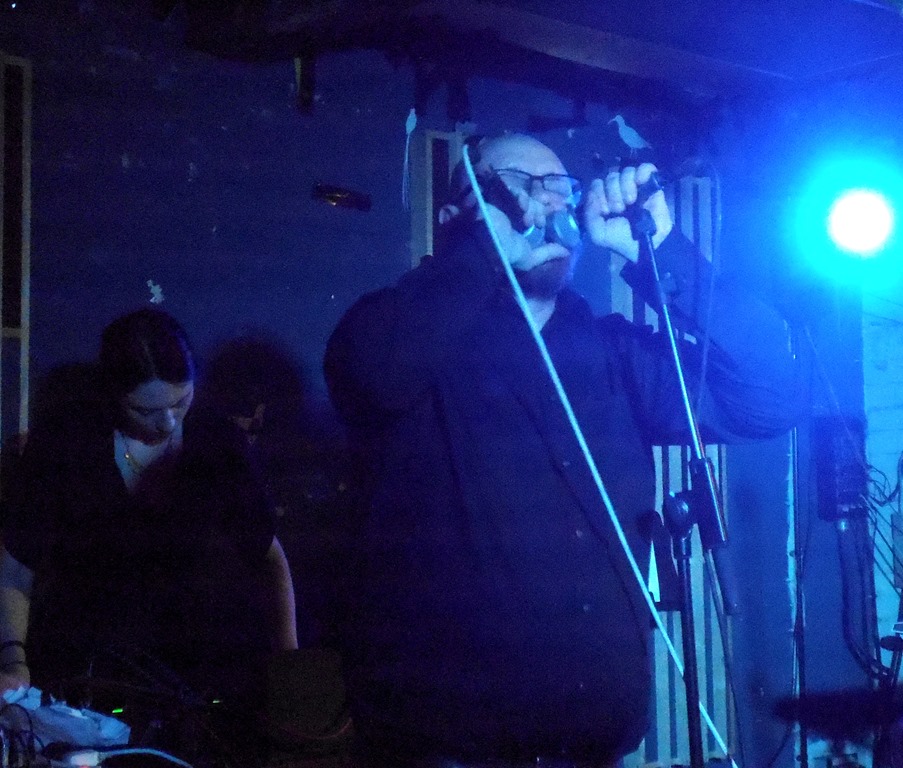
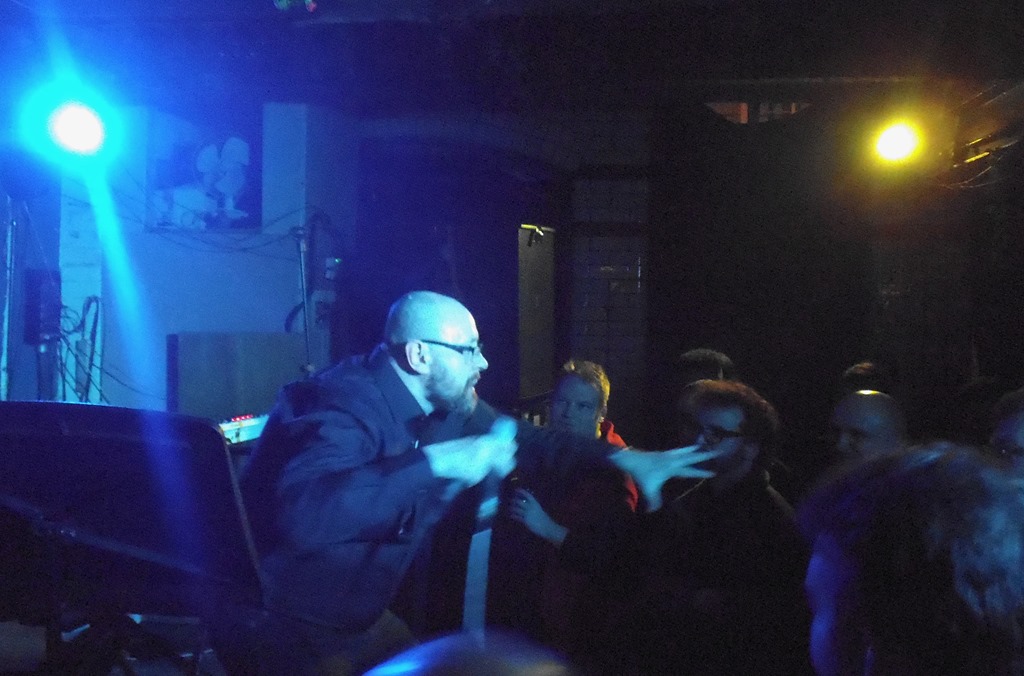
Russell Haswell and Florian Hecker are both prolific as solo artists, each with numerous collaborations with other artists to their respective credits, Haswell also having been a contributor to and touring member of Consumer Electronics. The UPIC Diffusion Sessions are a long-running collaborative project which began in the early 2000s, exploring Iannis Xenakis’ UPIC system as the sole instrument.
As the accompanying notes outline, ‘The UPIC is a computer music system that generates sound from visual input. The original intention of the system developed by Xenakis was to make a utopian tool for producing new sounds accessible to all, independent of formal training. One can locate footage of Xenakis and a group of children making drawings for the system in the 70’s.’ They continue, ‘The duo set off experimenting with a diverse array of hand-drawn images to feed the UPIC system including news photographs of disasters and atrocities, “food porn” through to depictions of the natural world and microscopic images of molecular structures (including ‘the blackest ever black’). The resulting eccentric audio from these images is claimed by the artists to heighten synaesthesia and is as mysterious as it is baffling.
I suppose the potential outputs for the UPIC are as infinite as the inputs, and this alone makes for a fascinating project, and the results here are, indeed, mysterious and baffling. The recording from this session is represented by a single track, just over half an hour in length.
Immediately, trilling oscillator tones rise in pitch – and keep rising, until you feel the pressure build inside your skull. There are glitching spasms of sound which flash across like subliminal messages. The pressure drops and the siren wails fade out, before scuttering blasts of seemingly random noise collage and intersect across one another, buzzing and fizzing, humming and thrumming… the forms move quickly, and shift from dark to light, hard to soft instantaneously. Shimmering sprays of abstract sound burst like fireworks, short interludes of harsh noise wall, microtonal bubbles and ZX Spectrum like babbles and bleeps all intersect or pass within mere seconds of one another. It is, very much, a sonic collage, the audio equivalent of William Burroughs’ cut-ups, an aural articulation of the simultaneity of experience of life in the world. Burroughs’ contention was that linear narrative is wholly inadequate when it comes to representing the real-world, real-time lived experience, whereby overheard conversations, snippets of TV and radio, and all the rest, not to mention our thoughts and internal monologues, overlap, and to present them sequentially is not true to life.
Leaping disjointedly from one fragment to the next at a bewilderingly rapid pace, listening to this is rather like the way the mind, and often conversations, skip from topic to topic without ever seeing any single train of thought to a defined conclusion, bouncing hither and thither in response to triggers and associations which often seem to bear no logic whatsoever.
There are thick, farting sounds, buzzes like giant hornets, choruses of angry bees, weird sonic mists and transcendental illuminations… of course, these are all conjured in the mind in response to these strange, sometimes otherworldly, sci-fi sounds, part BBC Radiophonic Workshop, part tinnitus and nightmare of imagination. Unpredictable isn’t even half of it as alien engines and spurs of 80s laser guns crossfire against earthworks, roaring jets, explosive robotics, skin-crawling doom drone, whispers and whistles, proto-industrial throbs…it’s a relentless blizzard of sound.
‘Experimental’ has become something of a catch-all for music that draws on eclectic elements or perhaps incorporates a certain randomness: this, however, is truly experimental, given that there is no way of knowing how the programme will interpret the input provided. And as much as the output involves oscillatory drones and the kind of synthy sounds associated with analogue, and with woozy, warping tape experiments, it evokes the drones of collapsing organs, wild sampling and everything else your brain could possibly conjure.
At once exhilarating and exhausting, UPIC Diffusion Session #23 is… an experience.
AA




Russell Haswell – Let it Go
Posted: 28 April 2026 in Albums, ReviewsTags: Album Review, Ambient, Consumer Electronics, critique, Dystopia, Editions Mego, electronica, Experimental, Let it Go, ominoius, Russell Haswell, social commentary, soundtrsck, Techno
Editions Mego – 1st May 2026
Christopher Nosnibor
With absolutely no referencing of that animated Disney movie, the textual contextualisation for Russell Haswell’s latest sonic assault echoes what I’ve been saying – and writing – for some time now. I feel a small sense of elation… but equally a certain tiredness. I’m 50. And while no doubt global history is essentially a tale of innovation and destruction in equal measure, the last quarter of a century has felt truly hellish, as if the exponential pace of progress has run in parallel with an ever-accelerating desire to wipe ourselves as a species from the face of the planet.
It has been twenty-five years since the seismic events of 2001—when twin towers collapsed under terrorist attack and Coventry’s sonic insurgent Russell Haswell launched his inaugural salvo on the original Mego label with Live Salvage 1997–2000. The intervening era has delivered unrelenting turbulence: protracted wars, institutional corruption, a global pandemic, the resurgence of fascist currents, rampant media distortion, and omnipresent surveillance. For Haswell, a lifelong admirer of 1970s and 1980s dystopian cinema, the verdict is unequivocal: “Science Fiction is now!”
It’s hard to argue that the moment in which we find ourselves has all the hallmarks of every dystopian fiction ever imagined rolled into one unimaginable fusion, and that we are inching closer by the second to the end of days.
Haswell has long used sound to articulate the horrors of the 21st century, both as a solo artist and in collaboration, notably bringing additional layers of abrasion to Consumer Electronics, and while the accompanying notes detail quite extensively the equipment used, the influences, and the creative aims of Let it Go, my focus here is more on what it actually sounds like and the listening experience.
The first few seconds of the first track, ‘Exit Downwards’ are innocuous enough: a drone, nondescript, smooth – but within seconds its rent with shuddering glitches, squelches, and discordant clanks, not to mention the stammering thud of a particularly sharp kick drum. And over the course of seven minutes, it pumps and pounds blasts and bleeps like a circuit in meltdown. It’s pretty tense stuff, and descents, tension, and anxiety are recurrent themes not only in the titles, but in the formations of the compositions themselves.
‘Fall 3’ and ‘Fall 2’ follow the theme of descent, and manifest as wibbly collage works, while ‘The anxieties of our time’ is fairly straightforward in its implications and manifests as a head-swimming, dizzying panic attack, a meltdown in musical form, the crackling industrial glitch monster that is ‘Stress Testing’ functions on numerous levels. As much as the phrase relates specifically to financial, economic, and societal systems, there is also the stress test as it relates to the effects of physical activity on the heart, and, by association, it feels like an implicit hint of the stress we as individuals find ourselves subject to on a daily basis: how far can we – individually, and collectively – be pushed under the late capitalist model? At this moment in time, it seems like we’re close to finding out. And through swooshing sweeps and rippling fractures in sonic fabrics which twist and flare, Russell Haswell renders an aural replication of the overwhelming experience of life right now.
In comparison to some of Haswell’s releases, Let it Go is not particularly noisy or abrasive, but that doesn’t mean it’s any less intense. Even the ambient hums of ‘Curated narrative’ bring a hovering tension which is difficult to step away from.
Christmas is a difficult time for many, and while there’s no indication of what inspired ‘Thu 25 Dec 2025’, it buzzes and throbs for a relentless six and three quarter minutes like an angry hornet, trapped in a greenhouse which is slowly collapsing in on itself. The final track, the thirteen-minute ‘There’s always a bit of light somewhere’ seems to offer a thin ray of hope in its title, but the fine metallic scrapes and glistening edges which intertwine ominously and with no discernible form are far from comforting, and you find yourself on edge, sensing darkness visible and encroaching from all sides. Yes, There’s always a bit of light somewhere, but that somewhere isn’t here.
Let it Go is varied, exploratorily, and an artistic success, but it’s by no means the easiest listen. And for that, I say ‘good’. Embrace the challenge.
AA