Posts Tagged ‘Miles Davis’

Lay Bare Recordings – 9th May 2026

Christopher Nosnibor

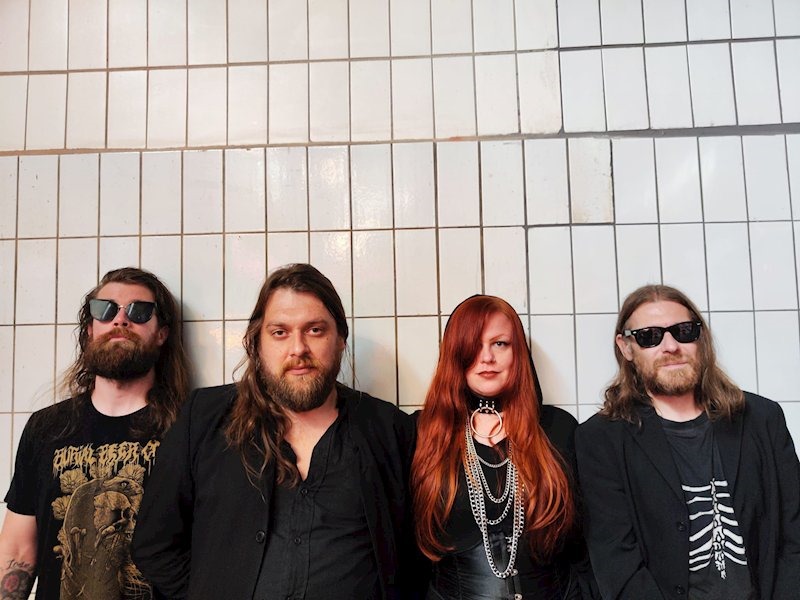
One may be inclined to jest that a release like this should carry a warning – but the joke falls flat when technically, it does: the notes which accompany the release on Bandcamp sets the scene for the debut EP from Dutch experimentalists of A Plague of Lighthouse Keepers thus:

Whilst most drone-metal outfits focus on creating atmosphere by composing ambient compositions with tremendous power and volume, the Lighthouse Keepers use more traditional doom/sludge metal as a starting point and explore its differences and similarities with genres such as free jazz, raga, noise and classical minimalism.

Elsewhere, they’re described as sounding like ‘a disturbed lovechild of OM, Sumac, Swans, Miles Davis, and Pandit Pran Nath, combining lengthy improvisations with ear-shattering explosions of intensity’. How could a lovechild of that lot be anything but disturbed?

And so it is that we enter by way of ‘The Massacre of Flour’, a title of which conjures images of a bloodbath in a bakery. What is sounds like is…. nothing short of wild. Its seven minutes leads the listener through a series of conjoined segments, arriving in a crazed blast of shrieking noise, a frenzied cacophony of feedback and squealing sax before lunging into a thick, sludge riff, which in turn yields to a slow, almost ambient drone passage with mystical swirls which rise like desert mirages. Each is gripping itself, and the transition to the next takes place almost imperceptibly: one moment you’re here, then, somehow, you’re there, in a completely different scene with no recollection of how you came to be here – rather like the way scenes change in dreams. And suddenly, the hazy serenity is torn asunder, lurching into a tectonic rift from which burst larval torture resembling Swans circa the Young God EP. It’s absolutely fucking brutal, the sound of pain, distilled and amplified

‘I Fuck People’, the shortest song on the EP, goes in hard on the avant-jazz noise chaos, forming a heavy undulation of bleats and shrieks by way of a backdrop to savage, ravaged, demonic vocals. It’s the sound of purgatorial torment. But all of this is simply a prelude to the main event, the nine-minute ‘Towers of Silence’, on which they really flex all of their muscles. Easing in gently with some abstract desert folk with hints of Eastern esotericism, it’s a slow, gradual build. There’s something meditative, spiritual in the vocals, until things begin to get twisted, mangled, and tangled. There’s anguish, there’s tension, and unease grows… breathe. But ululations which begin soothingly grow tense, and things spiral to a hypnotic cathedral of sound.

Towers of Silence may only contain three tracks with a combined duration of just over twenty minutes, but its range and intensity are something to behold. It’s drone metal, but not as we know it.

AA

AA
892210

In the first of what we anticipate will be a new regular – or at least recurrent – feature on Aural Aggravation, we explore five albums that inspire a band or musician, plus one ‘wildcard’ entry. Here, for this first instalment, we hear from Jonathan Dickin of The Big Them.

Given the nature of The Big Them, focussing on improvisation, noise and repetition, I wanted to put the spotlight on some records that I personally think define repetition in music as something very special.

1: Tony Conrad & Faust – Outside the Dream Syndicate

If we’re talking about transcendence through repetition, there is no recorded audio on earth that achieves that greater than this one. It’s like listening to a bonafide miracle personified as audio. Two of the greatest engines of music, collaborating on a record that exists outside the confines of time and place. Faust on a locked groove rhythm for the entirety of both sides, whilst the masterful Conrad drones his way into your brainstem. This is an essential record as a far as I’m concerned.

AA

2: Water Damage – In E

And so if that last record was the groundwork for repetition, Water Damage are the evolution. They take that magical formula and dial in layers and volume to create thee thickest slabs of droning noise rock. I was lucky enough to see them in Salford last year and they played a single piece of music for 50 minutes and I’ve never felt more inspired – inspired to stick to one riff for an extended period of time, that is. This particular record is my favourite of theirs, a nod to Terry Riley’s "In C", which closes out with a spectacular cover of Shit & Shine’s ‘Ladybird’. Speaking of which…

AA

3: Shit & Shine – Jealous of Shit & Shine

Shit & Shine is a very interesting project, and an uncompromising one at that. Intensely prolific and artistically unbounded, Craig Clouse (and collaborators) has pulverised rhythms into the ground, with pneumatic bass tones and guitars that are almost unrecognisably thick with fuzz and distortion. The music sounds like it’s tearing itself apart and yet it’s so groove driven, I find myself completely enraptured – maybe I’m just a glutton for punishment. If you listen to nothing else from this list, please listen to the mammoth ‘Practicing to be a Doctor’ as I can safely say it is one of my all-time favourite pieces of music.

AA

4: Laddio Bolocko – ’97 – ’99

Rediscovered and released by John Dwyer through his magnificent Castle Face label in 2022, this compilation puts the spotlight on an underappreciated and potentially forgotten gem of noise rock, Laddio Bolocko. Lo-fi, gravely recordings of kraut-laced noise, again driving into the maximum repetition grooves. The track ‘Nurser’ is surely one of the finest examples of noise rock I’ve ever come across and for that track alone, this compilation deserves your time and full attention.

AA

5: Miles Davis – In a Silent Way

I am a huge jazz fan, though I do find it to be a very difficult genre to navigate, especially when you enter the realms of more Avant Garde and experimental jazz. However, I never once found it difficult to explore Davis’s discography and always return to him, particularly his electric period from ‘68 – ‘75. Whilst I could say that the jam- driven, cacophonous drive of Bitches Brew is more of a direct influence on TBT, In a Silent Way is the record I come back to most. Like all my other picks, it’s repetitious, but more in a way that is likely to lull you into the most dream-laden sleep of your life, floating there on Miles’s gentle melodies, and Joe Zawinul’s soulful electric piano/organ. It’s a truly wonderful record and is remembered for all the right reasons.

AA

Wild card – Guns N’ Roses – Use Your Illusion II

Just listen to Locomotive. It’s undeniable.

AA

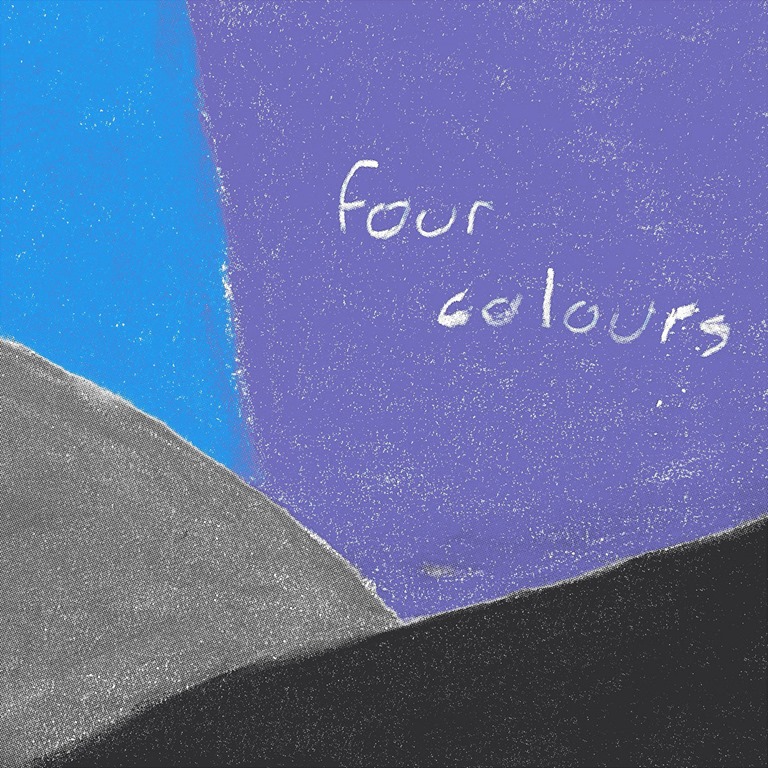
Big thanks to Jonny for letting us take a glimpse inside his head! The Big Them have a new album, Four Colours, available for preorder on limited vinyl via Buzzhowl Records here:

AA

AA

a3646893878_10

Clonmell Jazz Social – 13th February 2026

Christopher Nosnibor

1984 has never felt more relevant. In the early chapters, Winston is shown rewriting history, in the form of news articles – something which has become a defining feature of the Trump Administration of late. The quotation ‘The Party told you to ignore the evidence of your eyes and ears. It was their final, most essential command’ has been all over social media in recent weeks. Because we live in a time when a woman in her car calmly saying ‘I’m not mad’, or a medic shielding a woman from assault, can be murdered by the state, the event filmed and broadcast from many angles, and reported as being ‘domestic terrorists’. When news reportage becomes outlandish fiction, there’s a problem of unspeakable proportion. And so it’s become the objective of the media wings of governments – those of America, if Israel, of ours here in England – to preserve fictions and mask facts for their own propagandist, gaslighting ends.

Harry Christelis – whose latest offering features Christos Stylianides (trumpet/effects), Andrea Di Biase (bass/synth) and Dave Storey (drums) – is not seeking to propagate propaganda here, but simply to explore sonic territories, with a album of ‘post-jazz, ambient and folk-inflected improv’, which ‘captures a deep collective instinct – reflective, spontaneous, and richly atmospheric…’ Christelis explains that “in the creative process — as in life — there is never true certainty, never a ‘right way.’ These are simply fictions we hold onto. This realisation inspired the title Preserving Fictions: a reminder to stay present with whatever comes, grateful for each lesson, knowing that something new may be just around the corner, waiting to turn that on its head.”

The album launches with the longest track, the nine-minute ‘Blues of the Birds’, which is, at heart, an ebb-and-flow ambient composition… but then there’s clattering percussion and waves and wisps flittering skywards, before, around the mid-point, it settles into a smooth, strolling, settled feel. Nice. And all that.

The spontaneous nature of the way this album was created is perhaps one of the reasons behind the broad spectrum of the pieces which it comprises, and it’s worth noting that Miles Davis and Talk Talk are cited as central influences, in that they become more apparent once you’re aware of this fact, which roots what is, on first hearing, a nebulous, meandering work. Not that it isn’t nebulous or meandering, or that these are bad things, but there is a solid contextual framework in which these pieces sit.

The title of ‘A Sense of Parrot’ is laced with absurdity, but the sonic actuality is a composition which drifts serenely, underpinned by a strolling bass and some nicely loose-wristed percussion, while ‘Wood Dalling’ (named after the Norfolk village in which it was

composed) has something of a post-rock feel, a sepia-tinted nostalgia augmented with gentle woodwind. The percussion-led ‘Djembe’ is fundamentally self-explanatory, and one of the album’s most explicitly jazz pieces.

‘How old are you?’ is a phrase I’ve often used to disparage people – usually in the workplace – over petty or otherwise juvenile or irritating behaviour. Christelis’ piece by the same title doesn’t convey anywhere near the same sense of frustration at human behaviour, but with bowed low notes scraping beneath ambient undulations, while chirps and chatters of wildlife are just audible in the background behind ringing guitar notes and vast reverberations.

The compositions on Preserving Fictions are sedate, and take their time in unfurling, and it’s a welcome alternative to much of the wilder, more frenetic jazz-leaning releases which have come my way of late. It’s not that I dislike them – far from it – but in stressful times, something gentler and somewhat transportive is most welcome. Preserving Fictions fits the bill nicely.

AA

Press pic 2