Posts Tagged ‘Melancholy’

Ripcord Records – 20th November 2026

Christopher Nosnibor

Glasgow’s in:tides have been making gradual in:roads into the post-rock scene for some time now. I say gradual, as their first EP, Yours is the Earth was released way back in 2014, and it wasn’t until 2020 that they delivered their second, Silent Dusk. And now, at last, they’re unveiling their debut album. It would be reasonable to describe it as being ‘long awaited’. But music like this can’t be rushed. It needs time to gestate, to evolve, to unfurl and expand. But also to optimise. While they seem to have largely reined in their most expansive tendencies here, with only two of the eight compositions extending beyond the six-minute mark, what they have delivered is an incredibly focused work, condensing all of the elements of seven-minute monsters into these comparatively concise time-frames. That said, this is still a substantial album, its eight tracks having a combined run time of almost fifty minutes. And that’s fifty minutes to lose yourself in a series of gradual builds and soaring sustained crescendos.

The pitch is to ‘imagine Mogwai, Caspian, This Will Destroy You and Explosions in the Sky joining forces to soundtrack a bleak, post-apocalyptic world straight out of Cormac McCarthy’s The Road’. They also promise ‘a gorgeous instrumental journey packed with soaring guitars, hypnotic atmospheres and monumental crescendos on their debut full-length’. They deliver all of these things.

Opener ‘Procession’ arrives on a rolling drum beat, and builds from there, by stealth, into a huge cinematic tidal wave of sound. It may only be just over four and a half minutes in duration, but it is nothing short of epic. In fact, it’s the drumming which is a standout feature of their sound. While the guitars are quintessential post rock – chiming, soaring, interweaving, subtly layering and shifting to forge atmosphere and evocations of emotion, the drumming is quite dominant, and remarkably intuitive, often more intricate while the guitars are sparser and stepping up to a more straight-up rock style when the crescendos swell, adding a direct propulsive force to these ‘big sound’ segments.

AA

‘Patterns in the Noise’ begins delicately, a subtle latticework of ambient synths, before the chiming guitars and distant cymbal crashes enter. The build is slow but certain, the sensation uplifting. There’s a sudden lull a couple of minutes in, and then we’re suddenly transported into a quite uplifting place which is anything but bleak or post-apocalyptic. Instead, it recreates, in sound, the experience of rounding the shoulder to emerge, in glorious sunlight, on a broad, grassy summit with a 360-degree vista on the surrounding hills and the valleys bellow. It’s a moment of elation, even euphoria – both the outdoor experience, and this musical moment, with its rolling drums, strolling bass, and soaring guitars.

The eight-and-a-half-minute ‘A Reverie’ is definitively the album’s centrepiece – positionally, and musically. It’s a towering epic in every sense, which stands at the middle of the set like a huge megalith, before ‘Solace’ brings shoegaze-tinged sadness, the sound of a soft reflective wallowing. And, it seems, that the mood grows darker as the album progresses and the tracks get longer. ‘Solace’ doesn’t provide solace, but soundtracks a deep sadness, and ‘Cianalas’ – a Scottish Gaelic word, which means homesickness, longing, nostalgia – captures that mood of listless anguish magnificently. Spacious and sad, slow and ever-evolving, it transitions from a delicate opening to a surging, emotive climax. It doesn’t get much more post-rock than this.

It has all been done before, and post-rock is a genre which is given to being particularly generic – but despite the genre glut circa 2008 where it practically drowned in an oversaturation of sameness, post-rock experienced something of a watershed, where only the bands of a certain quality survived. The big names, and the innovators, and those with a unique edge – Mogwai, and And So I Watch You From Afar stand out here – thrived. Many others fell by the wayside, and that’s fair.

In this context, in:tides aren’t innovators, but they are a band of quality, and their debut album is proof of that.

AA
247879

11th November 2026

Christopher Nosnibor

Having provided a taster for this, their second full-length album last month, in the form of single cut ‘Kissing Lions’, Ghost Painted Sky forewarn that Failure Blooms ‘runs a gamut of internal struggle through building intensity’, with ‘Themes of loneliness, isolation, longing, ennui, and battles with depression, sleeplessness, addiction, self-image, and the relentless passage of time pepper the eight comparatively short but impassioned songs’. As pitches go, it’s pretty direct, and clear: this is no party record.

They deliver on their promise from the outset, too: the first track, ‘There Against the Wall’ is straight in with a dense, bulbous bass, over which drifts dreamy, picked guitar and subtle synth detail, and the dark atmosphere is highly reminiscent of The Cure circa Faith. However, Lisa Wood’s vocal is a world away from Robert Smith’s, being more overtly melodic, as well as more rock in style. That’s rock in the sense of mid-80s UK alternative rock than in the sense of mullets, denim jackets and bandanas or whatever. Up next, ‘Corridors’ increases both the density and intensity, some meandering guitar work adding a level of disorientation to the experience. Something about it also evokes The Mission in their early years – again, the references are as much in the ether, the spirit, than anything specific or direct, and this is a strong positive, in that Ghost Painted Sky position themselves within that classic lineage of goth as it emerged from post-punk in the UK in the early 80s without there being any corny rip-off guitar lines or whatever, the likes of which blighted the so-called ‘second wave’ of goth in the 90s, where so many specific references and nicked bits here and there bordered on tribute. It was something of a low ebb for the genre, but the fact it persisted was something, and now, we’re experiencing a true renaissance. Special mentions should go to LA’s Mirror of Venus and London’s Mouth Ulcers at the forefront of a thriving revival, whereby the songwriting and atmosphere are very much the focus.

The yearning lament of ‘Kissing Lions’ brings strong anthemic vibes, and even hints of early U2 and Simple Minds, before ‘Sound and Fury’ – which I assume is a reference to William Faulkner’s bleak gothic novel – locks into a solid and urgent groove. And they just pack the tracks back to back. ‘Ordinary Song’ – one of only two which extend beyond four minutes – is breezy mid-80s goth in a nutshell, a bit Ghost Dance, a bit March Violets circa 86. The execution is key, and the sound is spot on in terms of replicating that vintage vibe, but without feeling forced. It’s also one of the brighter, mor uplifting songs on the album. It would be a stretch to describe it as ‘poppy’, but it’s all relative, right? ‘Accessible’ is perhaps the word. This is less the case on ‘Insomnia’, which is altogether spikier, and as much as it comes with the jangle of All About Eve, the overall vibe is more X-Mal Deutschland. It hits hard, and then they go all-out on the album finale, ‘The Fire, The Flame’.

As necessary and integral as the lyrics are, they aren’t always immediately apparent, and it’s the overall mix and atmosphere which stands to the fore on Failure Blooms. Many albums are front-loaded in terms of the nest songs, particularly now the listening attention span has diminished to next to nothing. But with Failure Blooms, Ghost Painted Sky have dared to structure an album as an album. As the final assault of tribal percussion hammers through the final minute, the album’s full conception becomes apparent. This is truly a beginning-to-end work, the likes of which are so rare these days. Culminating in a swirl of chiming harmonics pitched against a tempestuous sell of guitar and a sonic haze, we arrive, after a sometimes claustrophobic crawl through the darkness, at a surge towards the light. Weighted with melancholy but bursting with positive energy, it’s anything but a failure.

AA

0047504857_10

What remains when everything we have built begins to fall apart? With ‘Ruins,’ the first single from the upcoming album Perfection, the artist explores a dark vision of a world pushed beyond its limits. The song confronts the consequences of relentless ambition, environmental destruction, and the loss of humanity in the pursuit of progress.

The lyrics paint a picture of a civilization in decline: poisoned air, collapsing skyscrapers, burning forests, and a sun that has become a cold, distant observer. The absence of laughter and children playing makes the devastation feel even more profound. This is not just the destruction of buildings and landscapes, but the loss of hope and the promise of a future.

At the heart of the song lies the recurring line, “We pushed too hard, we went too far.” It serves as both an accusation and a warning. The catastrophe is not portrayed as an unavoidable fate, but as the result of human choices and the belief that everything can be controlled, improved, or conquered.

The image of holding the sun in our hands before burning it down captures the central contradiction of human ambition: we have the power to create extraordinary things, yet we can also destroy the very foundations on which they depend.

As the first single from the new album, ‘Ruins’ introduces one of the album’s central questions: is the pursuit of perfection worth its price? With its apocalyptic imagery and uncompromising lyrics, MEERSEIN delivers a powerful reflection on a world on the edge – and the choices that brought it there.

AA

MEERSEIN is a solo music project blending the nostalgic spirit of 1980s synth music with dark atmospheres, melancholic depth, and contemporary electronic production. With the upcoming album Perfection, the project explores the boundaries between human ambition, imperfection, and the world we create.

Stream/download the digital single: https://distrokid.com/hyperfollow/meersein/ruins

The upcoming album Perfection is available for pre-order here: https://www.meersein-official.com/shop.html

AA

Meersein photo by Patrick Nelke

Christopher Nosnibor

Stephen Kennedy has an outstanding sense of occasion. Having put on grand candlelight shows under the Gothic Moth banner in the Cemetery Chapel in York, there was no way the album launch for his latest project, Papillon De Nuit, was going to be some pub gig with a couple of local rock bands supporting. And so here we are in The National Centre for Early Music, a converted church with a high, twin-vaulted ceiling. It’s an appropriate setting in which to mark the release of Musetta, an ambitious album a year in the making involving a considerable number of collaborators. This also marks their first live performance, and features a necessarily expansive lineup, featuring ‘cello, piano, guitars, drums and percussion, soprano, orators and vocalist’.

It also happens to coincide with the hottest June day in history – the third consecutive record-breaker, no less, so it’s a relief to be seated and in an old church rather than standing in a sweaty bar – much as I love sweaty bars, the humidity of later has been such that we’d have had people passing out left, right, and centre in such a setting. It’s still plenty warm enough, thank you.

The doors open later than advertised, and seeing the amount of gear on stage – and the sheer size of those drums – it’s hardly surprising. Most bands travel by transit van, or even car. The Tengu Taiko Drummers have a removal van parked outside. Once we’re all in, the lights go down, and there is a hush of expectation. And we wait. It’s a good three suspenseful minutes before the ominous drone and trilling pipes begin to creep from the PA and finally, the drummers begin to appear. No wonder they’re starting behind time: the setup for The Tengu Taiko Drummers is mind-blowing. They filter onto the stage in masks and present a piece which offers a narrative alongside the striking visuals and the sonic impact of the barrage of percussion. The logistics of some eight musicians packed onto the stage, bounding and leaping and switching positions, plus changing the configuration of the numerous and large drums between pieces would be challenging any night, but with the heat and humidity it’s little short of an heroic feat. It’s an extremely physical performance, and the players aren’t so much glowing as aflame only halfway through. It’s clearly a battle for breath, but they power through to deliver a spectacular show.

DSC01846DSC01869DSC01857

The Tengu Taiko Drummers

Thank dog there’s a bar with some refrigerated beers: the interval affords a vital opportunity to replenish some fluids before Papillon Du Nuit make their highly anticipated stage debut. And they don’t disappoint. The plan, on paper, is simple: to play the album. But to bring a studio-based project to a live setting is a huge leap, and often, what works on tape doesn’t work so well live. But here, it all works spectacularly, and they sound as if they’ve been rehearsing for months – although the fact of the matter is quite different. Indeed, the fact is they’ve only rehearsed a couple of times, so it’s testament to the musical intuition and the high level of skill of the players that they come together so well. The sound, too, is fantastic. Clearly, the venue is set up for musical performances, but the sound engineer achieves magnificent clarity and separation between the instruments.

They open the set as the album begins, with the brooding ‘Jude’, Kennedy whispering ‘Is it dark or am I blind?’ ‘The Pilgrim’s Arc’ sees the drums leading the mix for the first time, paired chunky five-string bass break from Dominique, and showcasing them at their most expansive and ambitious, with its dual vocals, whereby Karen Amanda O’Brien’s voice provides a counterpoint to Shephen’s on this this sweeping epic of a song.

DSC01876DSC01890DSC01877

Pappilon du Nuit

Images of tombstones and lyrical themes of mortality and loss abound, and these are songs rich in poeticism and steeped in the most beautiful melancholy. ‘I’m in your head / so I’m not dead,’ Kennedy sings on ‘Sister, dear’, and it’s as if he’s speaking from the other side in the future tense. The effect is intensely moving, balancing the darkness of the inevitable with a rare positivity, without ever being cliché. In contrast with the reflective atmosphere, Kennedy is sporting – in addition to his trademark hat – some pretty bold trews, the black and white striped spandex giving more glam metal vibes than soul-bearing introspective gothic drama.

‘Amber’ is sparse and atmospheric, and with its marching boots introduction, its dark, gothy bass and snaking guitar, ‘Frozen Charlotte’ is a real highlight of the set, as it is on the album. It’s sweeping, majestic, grand, the sound crisp and clear and nailed tightly to some tense, metronomic drumming. Mika Rudawska’s brooding cello stands out in shaping its haunting atmosphere.

DSC01885DSC01913DSC01918

Bringing the The Tengu Taiko Drummers back for a collaborative rendition of ‘Ariadne’ makes for an incredible finale: Kennedy vacates the stage to stand in front as soprano vocalist Megan Richardson takes centre position, and he enthusiastically conducts this monumental performance.

Combining an album launch with a debut live outing was an ambitious project, to say the least – but it befits such an ambitious musical project – and not only did it not disappoint, but exceeded even the highest expectations. Nothing short of stunning.

Argonaut return after a long year with the video for Leaves, a melancholy five minute ode to autumn and entropy. Cure-esque guitars intertwine with melodic bass and sweeping synths to create an atmospheric backdrop to Lorna’s ethereal vocals. The lyrics and accompanying ‘found footage’ video touch on themes of dementia and retreating into past memories, a topic close to our hearts at the moment.

Lorna set the scene for the video; “I was thinking about the moon cycle and the new moon and wanted to incorporate that feeling into the music. The lyrics are about somebody who is getting older and their mind is starting to deteriorate. They can remember the past more than the present. I had the image of being lost in the woods and trapped inside their memories. It’s quite a personal song.”

No stranger to the wider landscape and supported by BBC 6 Music, NME, Radio X, Argonaut are back, with a new album Interrupted. Ten songs from the past year’s abyss, documenting breakdown, burnout, dementia, depression, memory, hope and healing.

For fans of Sonic Youth, Pavement, Velvet Underground, Dodgy, The Stranglers, Siouxsie and the Banshees, Huggy Bear, Japan, La Tigre, Grunge Pop, Experimental, Garbage, Hole, Nirvana, White Magic, Witches, Wands and The Pixies.

Musically, Eighties synth influences creep in alongside syncopated bass, fuzzed up guitars and heartfelt harmonies, fronted by Lorna and Nathan Lyons. Get up again when you can. Life moves pretty fast, but there will be interruptions.

‘Leaves’ is the first song from the forthcoming album Argonaut, interrupted, which will be released by Criminal Records and available to pre-order now.

AA

IMG-20260101-WA0009

Dragon’s Eye Recordings – 20th March 2026

Christopher Nosnibor

The sad fact is that many of us have become somewhat numbed by the endless live rolling news of war in recent years. It’s easy to do when smoke and rubble and statistics are standard. In some ways, COVID – or more specifically, the media coverage of the pandemic – prepared us for it, by keeping us in isolation with only the TV and Internet to connect us to the outside world. As the numbers kept ticking up, as the number of deaths grew, so did our panic, but equally, so did our sense of distance. Unless we had directly lost a friend or relative, it wasn’t quite real.

And now, Russia’s invasion of Ukraine, and the genocide in Gaza – it’s not a war – and its escalation to surrounding areas, plus in recent weeks Iran and the whole middle east exploding, our shock and alarm gradually becomes mutes by overexposure and – worse – for many, a lack of concern over something that’s so distant. There’s annoyance at rising prices, particularly of fuel, but little more: people go about their lives as normal and don’t give too much thought to what life must be like for the people living in these places – or how it must be to have friends and family in constant fear for their lives, what it must be like for those who have fled to witness the scenes and the news reports, and likely see a huge disparity between the versions.

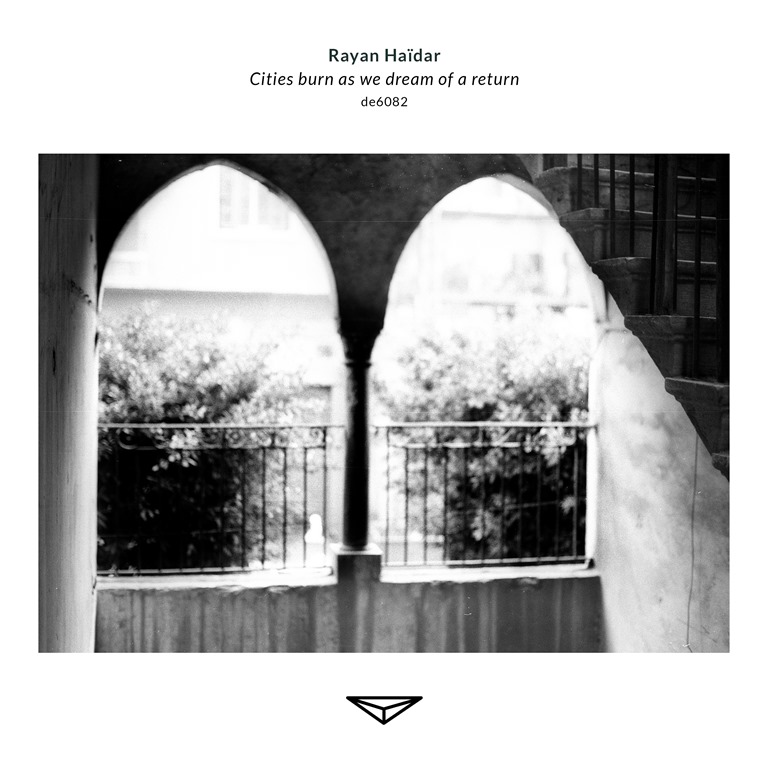
Cities burn as we dream of a return gives pause for thought and to reflect on these things. He’s a Beirut-born, Paris-based multi-instrumentalist, and the album is described as ‘a profound meditation on displacement, longing, and the impossible distance between memory and its aftermath’.

As the accompanying notes detail, ‘The album began as home recordings in 2024 — fragments inspired by Beirut and the quiet melancholy that had always permeated Haïdar’s childhood place. Shortly after beginning work, the aggression against Lebanon escalated, and Haïdar found themselves in the surreal position of documenting their relationship to home while watching that same place be destroyed from afar. The recordings became inseparable from the violence unfolding in real time, each track absorbing the grief and anger of witnessing loved ones continually hurt with no ability to intervene.

‘As Haïdar entered 2025, they continued recording, carrying more grief and anger than when they had begun. What emerged is not simply an album about a place, but about the way we carry our homes and the people we love within us—how they become part of our interior landscape regardless of physical distance or destruction.’

In context, what’s perhaps surprising about Cities burn as we dream of a return is just how gentle it is. Each piece takes the form of a masterfully spun cloud of abstract ambience, the layers and textures twisting and merging and separating, a constant flux, as distant samples echo through the mists.

The tone does, however, shift somewhat as the album progresses. Although indistinct, the samples appear to convey a narrative of increasing anxiety, as do the titles. The title track’s serenity is broken by the sound of panicked voices, while ‘On people we once met and places we once saw’ is imbued with a heavy air of melancholy beneath its soft flow. With it comes the realisation that many of those people and many of those places either no longer exist, or are otherwise altered beyond recognition. Everything changes, everyone changes, but the difference between growth and progress over time, and absolute destruction is beyond compare.

‘At dusk, looking down’ draws the album to a close with an achingly haunting atmosphere and a sense of loss that’s difficult to define but nevertheless inescapable. The album’s six pieces are subtle, gentle, and comparatively sparse, and much of the emotion they convey is indirect and implied. Cities burn as we dream of a return is nuanced and contemplative, and quietly moving.

AA

de6082 art

The heat is on: Rome’s skygazers KLIMT 1918 reveal the sun-drenched music video ‘Dream Core’ as the first advance single taken from the forthcoming new full-length Àmor. The beloved Italians’ fifth album has been chalked up for release on June 12, 2026.

AA

KLIMT 1918 comment: “The song ‘Dream Core’ revolves around resilience, strength, and the ability to overcome life’s adversities”, frontman Marco Soellner explains. “We dedicate this track to those who choose to love despite everything. To those who believe that a song can trigger the will to change. To those who feel like a storm about to break over a sun-scorched desert.”

The burning pulse of the sun’s nuclear fire scorching the desert. The smooth sliding of glistening skin over other skin in a throbbing rhythm. The swelling hum of motion in a mass of bodies. KLIMT 1918 capture many such fleeting moments in time and preserve them through cascading walls of sound and the elegant drone of guitars.

The Italian’s fifth album, Àmor, represents a climax of their acclaimed previous work into a most melancholic, sensual, and majestic collection of captivating music. Àmor was born out of silence, solitude and social distancing. Yet as a deliberate artistic counterpoint, KLIMT 1918 decided to have all their new songs revolve around carnality, ardour, physical contact between bodies, and the urgent, compelling feelings that keep people awake at night.

With Àmor, KLIMT 1918 also take another step in the steady evolution of their sound. The influences of avant-garde metal have been dwindling from the start while darkwave and alternative rock rapidly grew stronger in the music of the Italians. Post-rock plays a strong role in their latest development but instead of shyly narrowing their perspective down by gazing at their shoes, KLIMT 1918 dream with open eyes, looking up above the horizon and into the sky.

KLIMT 1918 emerged from the ashes of a metal band in 1999 when the brothers Marco and Paolo Soellner rather chose to take fresh inspiration from such acts as BAUHAUS, THE CURE, and JOY DIVISION. This was also indicated by their new band’s name, which alludes to the Austrian symbolist painter and Art Nouveau pioneer Gustav Klimt, who died in 1918 while the Great War was still raging. The debut album of the Romans, Undressed Momento, arrived in 2003 and its dark emotionality immediately garnered high praise from critics and fans alike all over Europe.

AA

6e3ec3b3-854d-3a3b-b3c1-a45075d5587b

13th May 2025

Christopher Nosnibor

Papillon de Nuit, the ever-evolving, ever-shifting musical collective centred around the multi-talented composer, arranger, lyricist – not to mention promoter and musical / creative all-rounder – Stephen Kennedy, presents a sixth single in just a few short months, a run which began in December last year. And, true to form, ‘Ma’at’ is very different from each of the previous offerings.

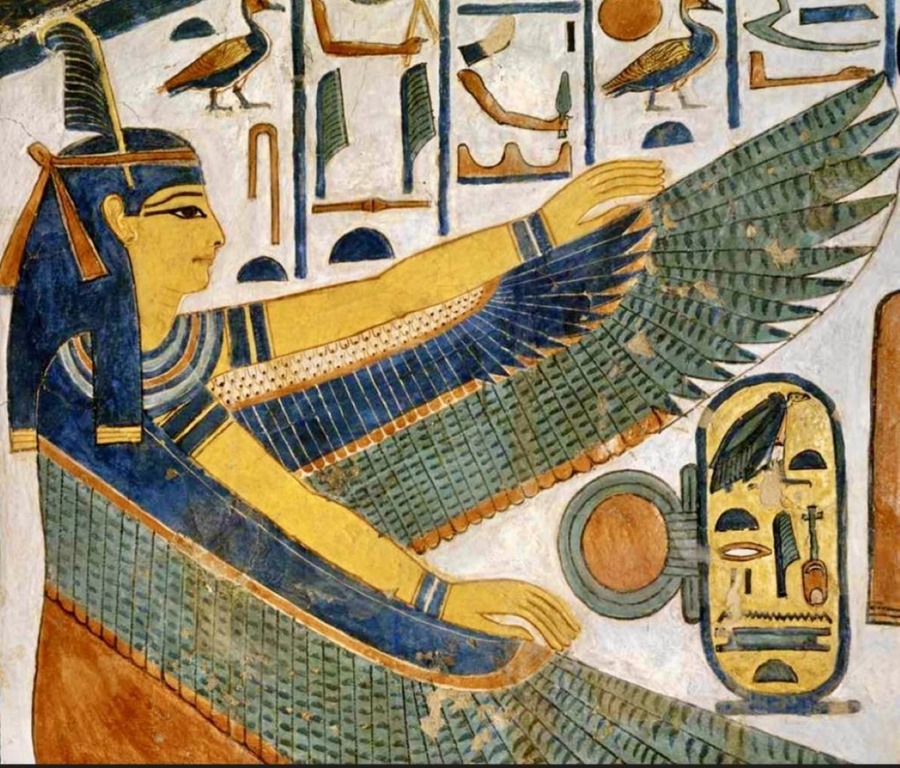
Once again featuring the grand piano work of Karen Amanda O’Brien and Michalina Rudawska on cello, along with the return of Megan Richardson providing vocals alongside Kennedy’s, ‘Ma’at’ follows its predecessor, ‘Adriane’, as a song built around strong, dominant percussion and brooding strings. Where it departs is that what emerges from the bold, dramatic intro is a pretty straight-up dark pop song that’s not a million miles removed from later March Violets. It’s graceful, melodic – and I’ll even add catchy, comfortably withstanding repeat plays – and naturally, it’s laced with a delicate hue of wistfulness and melancholy.

AA

a1804204922_10

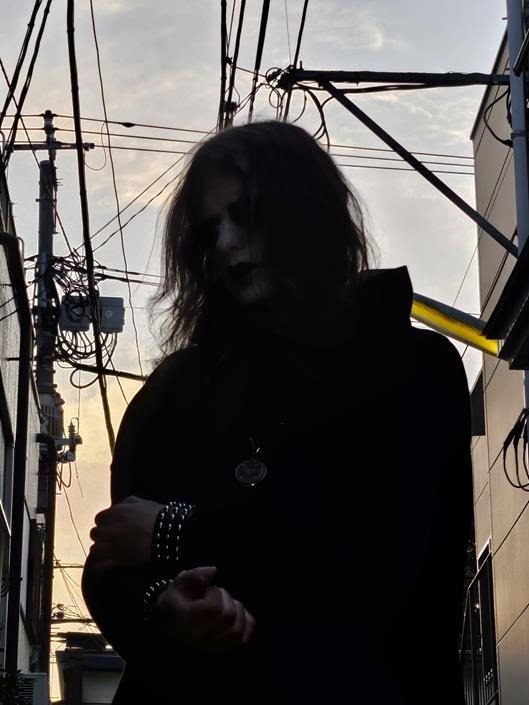
‘Dröm Sång’ emerges as a poignant ballad from Këkht Aräkh, blending melancholic melodies with an introspective narrative. Rooted in a draft originally conceived during the Pale Swordsman sessions in 2021, the song carries a familiar resonance, particularly reminiscent of the track "Swordsman" from the same album. However, its creation followed an unconventional path, with recording taking place under spontaneous, often cramped conditions across Berlin, Germany, and Tokyo, Japan.

The accompanying music video was shot entirely in Tokyo and features scenes filmed by Nick from the electronic duo IC3PEAK and additional footage self-recorded by Dmitry, all using a handheld camcorder to create a raw, personal aesthetic.

Dmitry explains:

“There’s a deeper reason behind choosing Tokyo as the location for the music video, beyond my admiration for Japan. This particular place is often idealized by people around the world who have never lived there, making it a perfect fit for the song’s escapist theme. The song reflects on life, with all its hardships and evils, as nothing more than a dream from which you’ll eventually wake into a peaceful world.”

AA

ka_drom-sang21-9903cf045103cf3c

Photo credit: Nick Kostylev (IC3PEAK)

Summer has come to an end, all swallows have left the north, and autumn is already knocking on doors and windows with gusts of wind and rain. When the first leaves are falling, it is also time for melancholic tunes. WHISPERING VOID has the perfect offer for this darkening season: the eponymous song that gave the collective of renowned musicians from Norway’s west coast their name. ‘Whispering Void’ is taken from their forthcoming debut album At the Sound of the Heart, which has been scheduled for release on October 18, 2024.

WHISPERING VOID comment: “Lyrically, ‘Whispering Void’ combines all the elements of this album”, vocalist Kristian Espedal reveals. “The slow, gracious movements of the music evoke the innocence of natural beings moving through a forest, as acted out by the vocals in the verses. This song also features our third ‘outside’ collaborator, Matias Monsen from the band DROTT is playing the cello.”

Listen to this gloriously epic tune here:

AA

4e490e66-5245-adb3-6f07-95b056af9369