Posts Tagged ‘Depression’

Criminal Records – 12th June 2026

Christopher Nosnibor

It’s a pretty bold move to open an album with a slow-paced and pretty bleak-sounding song which is more about dolorous atmosphere than chorus or hook. But then, Argonaut’s latest offering is pretty bold – albeit in an understated sort of a way. That likely sounds oxymoronic, so let me unpack it a bit.

After something of a purple patch, with the prolific spate of post-lockdown output which, over the course of a year and a bit and a new song each month saw the development of open-ended album Songs from the Black Hat (which ended up with a total of twenty tracks, with the inclusion of a couple of remixes), Argonaut were forced to make a change of pace. Life has a way of doing that – and events also resulted in a change of focus. The result is Interrupted – an album two years in the making, and by far the darkest and most introspective set of songs they’ve released. It’s not that the London DIY trio have always skirted darkness or introspection, but historically, it’s been balanced by lighter, poppier indie tunes. Now, though, they’ve embraced what one may call the therapeutic benefits of creativity, channelling – and coming to terms with – real-life issues and even trauma through those outlets.

As the accompanying notes lay things out quite plainly, Interrupted offers ‘Ten songs from the past year’s abyss, documenting breakdown, burnout, dementia, depression, memory, hope and healing’. This in itself is bold. Again and again, the conversation is ‘we need to talk about these things’, but the moment we do, there’s a sort of collective wince in society, on social media, among our friends even. We’re still not societally conditioned to deal with the difficult stuff. I can speak from experience here: following the loss of my wife at the age of 44, and finding myself as a single parent, I’ve had enough ‘well, I could be worse’ type responses to articulations of struggle to fill a book. And now, while witnessing the mental and physical decline of one of my parents, I’m finding a similar reluctance among friends to engage on a meaningful level on the subject.

Thankfully, there are always artists who are – not necessarily willing, but perhaps more compelled – to pour all of this into their work, perhaps because those in immediate proximity are found wonting when it comes to conversation, meaning that creative channels are the only channels available. The Twilight Sad’s latest album, The Long Goodbye is perhaps the most harrowing thing I’ve heard in years, but James Graham’s dealing with the loss of his mother to dementia through the songs is powerful beyond belief.

Interrupted, too, confronts real-life anguish. And so, after some digression, we return to that opening track. ‘We’re Not Hungry Anymore’ is a remarkable hybrid of jangly indie and post-grunge – the heavily chorused guitar carrying hints of Soundgarden’s ‘Black Hole Sun’, but mournful strings bring a different shade of melancholy, and Lorna’s vocal somehow manages to be cutesie and scared, giving vibes of Alison Shaw of Cranes. It culminates in a monumental crescendo.

Lead single ‘Leaves’ – which lands towards the end of the album – is similarly bleak, particularly Cure-esque and direct in its addressing emotional distress, here specifically on the topic of dementia. As Lorna writes on the single’s video, “I was thinking about the moon cycle and the new moon and wanted to incorporate that feeling into the music. The lyrics are about somebody who is getting older and their mind is starting to deteriorate. They can remember the past more than the present. I had the image of being lost in the woods and trapped inside their memories. It’s quite a personal song.”

AA

And in the personal lies the universal, the relatable. The last few times I’ve seen my mother, she’s talked mostly about her school days and her job. She’s 79, and has nothing much to talk about, and actually seems to recall very little, from any time since. She gets lost going to the village shop, despite having lived in the same village for a good twenty-five years. So yes, this resonates, and increasingly, friends – or friends of friends – tell of relatives – no longer just grandparents, but parents suffering a painful mental unravelling.

‘Hats Off’ lands in the region of Daisy Chainsaw remixed by The Cure, with a bassline that’s got the vibe of ‘Let’s Go to Bed’ while casting a nod to the niggly guitar bit in Prince’s ‘Kiss’ which fits with the post-punk pop funk vibe which goes some way to break the tension, and ‘I’m Not Getting Up After This’ is the perfect summary of a depressive episode, the encapsulation of both physical and mental exhaustion. ‘Sugarfree’ is one of the songs closest to what we’re familiar with from Argonaut, with Nathan’s gravelly, weary-sounding monotone providing a magnificent contrast to Lorna’s sweet, flighty tones, but something about it feels leaden, weighted – not in a lethargic way, but as if pulled by an emotional drag. ‘This Means Something, This is Important’, released a year ago while the album was still evolving, is another of the more upbeat, fizzy indie moments we’re used to, and ‘Unpredictable’ showcases their irrepressible pop penchant. The final track, ‘Rewind’ is heavy, Siouxsue and The Banshees gone sluge – it makes for a hard-hitting, climactic  finale.

AA

Interrupted is often dark, bleak, intense, and incredibly sad, but still packs its fair share of poppy punk tunes to provide some balance. It’s a difficult album, and rightly so. It’s not meant to be easy listening. It’s taut, its pop moments propelled by a thunking bass and motorik grooves. It’s also an album with many depths. It’s perhaps not an album we’d have expected from Argonaut, and it’s likely not an album they themselves expected, or would have wanted to make. But it’s emotionally honest, and that is bold. It’s also probably their strongest release yet.

AA

Argonaut, Interrupted Album_ Front

BLACK LUNG drop the opening track ‘Traveler’ as the first single taken from the American heavy psych rockers’ forthcoming new full-length Forever Beyond. The fifth album from the Baltimore, Maryland outfit is scheduled for release on March 6, 2026.

BLACK LUNG comment on ‘Traveler’: “This song is about relying on one’s anxiety and depression – almost like a super power”, vocalist and guitarist David Cavalier writes. “You think, it’s the things that are going to keep you safe and sharp. In reality, it’s the complete opposite. The song also touches on the idea of living in a blameless world. Radical acceptance of people and who they are. Musically, this is one of my favorite tracks. We made it as dynamic as possible and each section feels like its own moment.”

AA

AA

ecb388b6-fc1f-c736-5320-24e163284dee

To celebrate the release of debut album Presence, Attawalpa has today unveiled the video to new song ‘Get Down’. Directed by photographer Dan Martensen and creative directed by Emma Chitty, the video was shot at Drop Studios in north London and Hampstead Heath. Attawalpa, who recently supported The Rolling Stones at Hyde Park and performed at All Points East, is featured on Edith Bowman’s ‘Play Next’ podcast.

“’Get Down’ was me trying to write an upbeat song about depression!” explains Attawalpa linchpin Luis Felber. “I was in a pretty detached and in a neither here nor there place when we cemented the chorus ‘I’m like someone else, when there’s no one here, if I am myself will I disappear? I keep calling out until someone hears, they got to be somewhere, gotta be somewhere!’. I think it describes my ability and tendency to disassociate pretty well! I came to get down but now I get down lolz. It’s funny because it is true! I partied my youth well into my early thirties. And lived at least a decade with a hangover, many not great decisions and a certain uncertainty of who I was. I got down and it got me down! Dan Martensen made the video with my long-time collaborator Emma Chitty as creative director. We also shot the album cover over these couple days. The video is a very simple interpretation of ‘anglofying’ my Peruvian roots".

Watch the video here:

AA

5tqs_220516AttalwalpaShot040115smaller650

Crocodile Laboratories – 4th October 2019

Christopher Nosnibor

It seems almost beyond banal to remark that we live in troubled, troubling, challenging, and anxietised times. Since the turn of the millennium, and certainly for the last decade or so now, it feels as if we’ve been hurtling inexorably toward the end of days. Not one aspect of our existence is sustainable. We’ve known it for some fifty years, but here we are, staring into the swirling void the black hole that is our absence of future, and it’s nothing short of utterly fucking terrifying. It’s small wonder everyone’s cracking, that mental health issues are beyond rife to the point that it feels like half the population is struggling with some form of stress, anxiety, depression or related disorder. Are we getting better at speaking up, diagnosing, and treating these things – or could it simply be that we haven’t evolved at the pace of technology and society, and we’re just not built to cope with contemporary existence?

There was no way that when Amy Studt, after many, many years in the wilderness, and having followed a long, hard, road through recovery and stuttering false starts, could have envisaged the world she would finally deliver her comeback album to. So on the one hand, the recent events which saw the president of the United States of America first attempt to dismantle a 16-year-old-girl whose mission drive positive action against climate change, only for her to utterly demolish him by turning his words back on him, have no bearing on Amy’s album, the optimistically-titled Happiest Girl in the Universe. But on the other, the ‘happy young girl looking forward to a bright future’ Twitter duel is perhaps as relevant as it gets. Because in the personal lies the universal.

And Amy’s album is an intensely personal document of breakdown and recovery, and the title reflects the glowing hope of light at the end of the tunnel, of being able to find and cling to those moments of happiness, however fleeting, and accept that for all the darkness, there is light, and that light is what matters.

The singles, released at regular intervals over the last few months to give a slow-build engagement with the album have done more than pique the interest, but have built a steady-evolving picture of her creative rebuilding, and an insight into the long and difficult process that has seen her use creativity as a form of therapy.

From the haunting ‘I was Jesus in Your Veins’, which opens the album to the delicate piano-led introspection of the title track which draws the curtain with an air of soft calm , of homely comfort and a certain relaxedness that conjures images of Sunday morning coffee curled up in a chair taking it easy with a book or whatever.

But Amy sings of Diazepam, of depression, but also of empowerment: ‘Violently With Love’ is, on the face of it, a simple piano tune with vocals, but it’s a forceful songs that goes beyond ‘power ballad’ to an emotive tsunami. ‘I paid my dues. I played it your way. Now this s my way’, she sings on ‘Let the Music Play’. The video features footage of her from her childhood and beyond and evokes a deep nostalgia that’s resonant and affecting, and reminds us of the ageing process that affects us all. These are moments, locked in time, but they’re the moments of a one-time child star who’s different now. Older, wiser, perhaps, but also a traumatised adult who’s lived. Yes: she’s been there. She’s been done over by the industry. She’s still here. Survival is revenge.

‘The Water’ marks a stylistic departure, with a shift toward grand, sweeping cinemascopic sounds over a brooding piano. Studt’s voice is bathed in echo as she soars skywards once more, and in place of the quiet, intimate tone of the previous tracks, she spins skywards into the territory more common to Chelsea Wolfe and Zola Jesus. Stretching out to the five-and-a-half minute mark, it’s vast and immersive.

She’s no longer just a little girl: Amy’s a full-fledged artist ad while her years in the dark represent troubling times and reflect more on society than the artist, they’re past. Happiest Girl in the Universe is not an easy album, lyrically. Its lyrics are painfully introspective, raw, open, honest. But musically, it’s simply magnificent, and for all the pam and anguish there isn’t a song on here that isn’t lilting, melodic, and plain lovely. Happiest Girl in the Universe contain ten songs, and every last one is perfectly crafted, poignant, and touching. Amy is definitely winning: here’s looking to a brighter future.

Crocodile Records – 26th April 2019

Let’s not deny it: we’re all vain to varying extents. Of course I got a buzz from Amy Studt’s sharing of my review of her last release, ‘I Was Jesus in your Veins’ on Facebook (although more than the buzz, I was genuinely touched by her level of appreciation), and to see Aural Aggravation quoted in the press release for the follow-up – well, that did give me a buzz. That isn’t to say that I crave attention and adulation, and when I say I do this for the love not the money, I mean the love of music, not love I receive for writing all this shit, because, well, it’s not how it is, and I’d kiss a lot more arse if I wanted that kind of adulation and approval.

I’ve digressed before I’ve even begun. ‘Let The Music Play’ is the follow up to ‘I Was Jesus in Your Veins’, and is the second track and chapter in a series of songs that will be released every six weeks and will ultimately make up the overall story / track listing on what Amy’s PR describe as her ‘eagerly awaited new album’, which is ‘a narrative diary of depression, hope and redemption’, and ‘a bold and intimate set of heartfelt songs’ which is set to arrive later this year.

‘Let the Music Play’ begins as an intimate acoustic song, but over its duration, layers up with warping synths and infinite incidentals that coalesce to a rich, dense sonic soup. Amy’s vocal is quavering, quiet, intimate, as she reaches upwards and soars with a joyous freedom tempered by a deep-seated melancholy. A magnificent slow-burner, it’s quite simply a great song.

With some live dates upcoming, the indications are that after some wilderness years and a false start a bit back, Amy’s finally getting her career back on track, and the signs so far for the new album are all shades of positive.

Forking Paths – FP0015 – 5th October 2018

Christopher Nosnibor

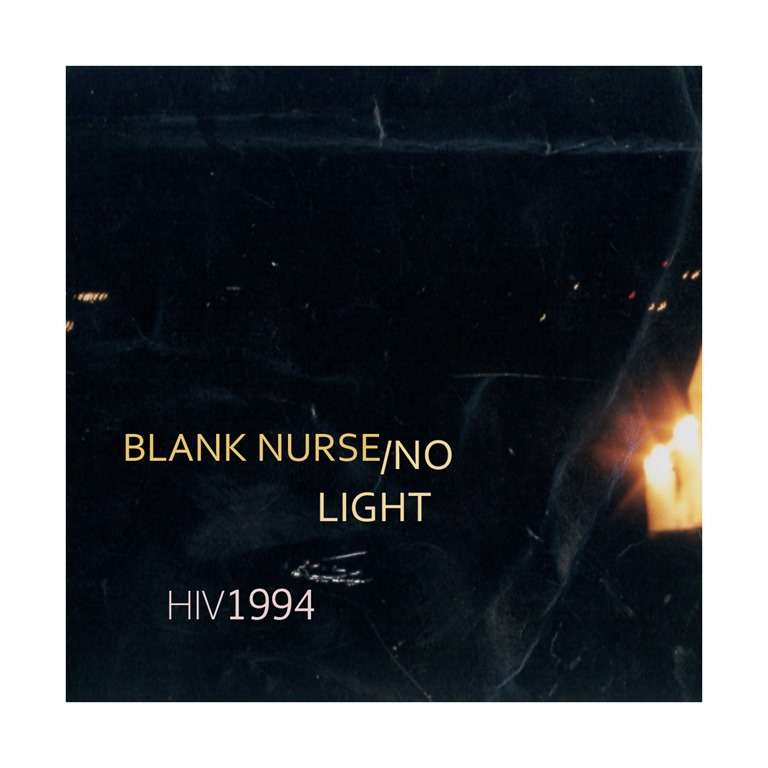
The title has very personal origins for Evan Davies, the man who records under the Blank Nurse / No Light moniker. A sufferer of Pure OCD – a form of OCD which manifests with no external behaviours or rituals, with the compulsions being mental rather than physical – and depression, Davies spent his teenage years tormented by the fear of HIV infection.

HIV 1994 sees Davies confront and channel the experience creatively, using what the press release describes as ‘often-overwhelming mental health issues’ to create song which are ‘like exorcisms for emotions and memories’. The context suggests that this was never going to be an ‘easy’ album, and however deftly Davies combines his wide-ranging and, in the face of it, incongruous and incompatible influences, which span ambient and neoclassical, hardcore, black metal, noise, and house, the clashing contrasts would be awkward enough without the anguish behind the compositions themselves. And so it is that on HIV 1994, Blank Nurse / No Light hauls the listener through an intense personal hell.

‘Blood Fiction’ begins with a collage of voices and extraneous noise before lilting string glissandos and a soft bass steer toward a calmer, more structured path. It provides a recurring motif, but one frequently interrupted by passing traffic and low rumbling noises. And so gentle tranquillity and ruptures of disquiet are crunched into one another before ‘Mocking of the Ghost of Crybaby Cobain’ really ratchets up the intensity with unsettling collision of styles, with pounding industrial percussion and expansive electronica that’s almost dancey providing the backdrop to the most brutal screaming vocals. It actually sounds like an exorcism. Or Prurient with more beats.

And it only gets darker, more disturbed and more disturbing from here: the lyrics are unintelligible, guttural screams of pure pain, and the tunes mangled to fuck, glitchy, twitchy anti-rhythms hammer around behind quite mellow synth washes. ‘Flu Breather’ sounds more like a demon dying of plague in a nightclub conjured in a nightmare, or, perhaps more credibly, the outpouring of indescribable, soul-shredding anguish that cannot be articulated in any coherent fashion.

There are some straight-ahead, accessible moments amidst the cacophonous chaos: ‘Outside the Clinic is a Hungry Black Void of Nothingness’ is a brooding electro-pop piece with a real groove and a narrative of sorts, and calls to minds Xiu Xiu, while ‘No Ecstasy’ goes all Wax Trax!, coming on like late 80s Revolting Cocks . But these tracks are very much the exception, as the majority of the others twist, turn, break and collapse in on themselves. Redemption and light are crushed and swept way in a succession of disconnections and claustrophobic dead-ends. It’s deeply uncomfortable from beginning to end, and much of it sounds like opposing sonic forces at war – which probably makes this a successful work, providing a deep insight into the tortured mind of the artist.

AA

Blank Nurse