Posts Tagged ‘theatrical’

Prophecy Productions – 8th May 2026

Christopher Nosnibor

I seem to be on something of an inadvertent black metal trip this bank holiday weekend, and, peculiarly, one devoted to black metal forged on this small island, for following my review of Hellripper’s Coronach – black metal that’s staunch in its Scottishness – we have Prophecy Productions pitching the new album from West Yorkshire (Leeds, of course, where else) act A Forest of Stars as being uniquely British in their branding.

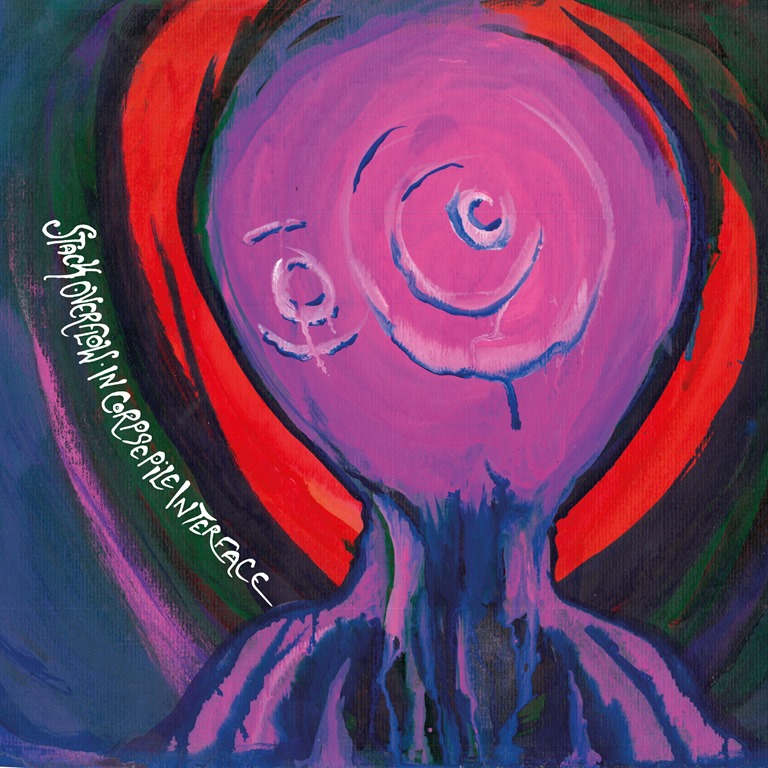
It’s tempting to unpack the importance of national identities here, particularly at a time when ‘British’ identity – at home, far more than away – carries some toxic connotations, and the majority of Scots are keen to claim independence from the government of the United Kingdom – in short, to become dis-united, but this is such complex and boggy terrain that there simply isn’t the time or space, even if it were appropriate here. And so I will return to the seemingly flippant word selection concerning ‘British branding’, for while – as is a central trope of black metal – A Forest of Stars’ album titles are strewn with corpses, death, and decay (their debut was entitled, perhaps somewhat oxymoronically, The Corpse of Rebirth, while their last was called Grave Mounds and Grave Mistakes, which sounds probably more humorous in its punning wordplay than intended), Stack Overflow in Corpse Pile Interface sounds like corporate speak. If a there was multinational corporation that dominated the industry of funeral directors, Stack Overflow in Corpse Pile Interface could well be the title of a report for the executive committee. Or perhaps Pure Cremation have already written it and had that meeting concerning their strategy in the event of another pandemic, replete with an array of graphs and graphics, pie charts and flow charts, costings and projections. Because capitalism exploits everything there is to exploit.

As such, the language of capitalism sits very much at odds not only with a metal band, but a band so immersed in art and poetry, whose biography goes to significant effort to point out that ‘in his recitative mode, vocalist Curse is even reminiscent of electro poet Anne Clark – after a steady diet of prescription drugs and rusty nails. On the other hand, his singing voice evokes memories of a young Martin Walkyier. The impressive command of the English language by that great metal bard, his plentiful plays on words and subtle multi-layered meanings also have a place in the poetic lyrics of A FOREST OF STARS – yet in different, often far more neo-dadaist ways, in which tiny twists of spelling can have surprisingly dark effects’ (suggesting, at the same time, that the wordplay of Grave Mounds and Grave Mistakes was entirely intentional after all).

The regular release of the album contains six songs, the shortest of which is the opener, ‘Ascension of the Clowns’ at a hefty nine minutes, and with the last two stretching beyond the fifteen-minute mark. The deluxe edition adds three more tracks – by most standards, an additional EP, or even an album of bonus material.

‘Ascension of the Clowns’ is grand and theatrical: Curse brings the metal fury, but emotes and enunciates, his words not only audible but clear above the spacious guitar work – which, over the course of the album’s expansive compositions – are accompanied by an array of instruments from piano to violin, as well as acoustic guitar. There’s a strong orchestral leaning – not to mention folk elements – to incredibly ambitious work, and it’s hard to fault the musicianship or arrangements, although the instrumentation is often dialled down to accompany the vocals, rather than the elements merging to create a sonic whole.

There are obvious reasons for this: Stack Overflow in Corpse Pile Interface is as much like a musical as it is a metal album. Without wishing to sound in any way mocking, one can almost picture Curse lofting a skull and affecting his most dramatic Hamlet-inspired gushings as he proclaims in the most thespy rendition of anguish, “Shit of that shit! The enshitenment!” on ‘Street Level Vertigo’. Yes, he knows his words and wordplay, and clearly revels in the way words reverberate and resonate and rub against one another to conjure layers of meaning and heightened drama.

‘Mechanically Separated Logic’ references the processes of the meat industry, applied to the psychology of late capitalism, and while the instrumentation is subtlety detailed and softly picked for the most part, only bursting into cathedrals of sound in places, again, the vocals are pure theatre, bold, exaggerated, and it’s hard to know quite how to take it, to deduce how serious this preposterously excessive style is. But even assuming there is a knowingness, a joyful revelling in the absurdity of all of this, it feels more like a work to respected and admired rather than enjoyed. No, that’s not entirely accurate: it’s enjoyable, even entertaining, particularly with its folk flourishes and revelling in the excremental, but it’s enjoyable as a performance, rather than as a set of songs which resonate on an emotional level.

AA

AA

742374

10th April 2026

Christopher Nosnibor

Postmodernism supposedly not only marked, but celebrated, the death of originality. Some time after the turn of the millennium, postmodern irony and the wit of parody began to evaporate, and now everything simply draws on explicitly stated influences. Art has become an endless treadmill of predictable recycling. There are rare exceptions, of course, and Chaidura is rare indeed.

Chaidura has been on the scene for a couple of years now, during which time he’s birthed an EP, Temple Paradise, and some standalone singles, showcasing styles ranging from JRock to emo, with his bio describing this work as ‘blending visual kei, emo, and alternative rock into a sound that’s heavy, emotional, and honest’.

Now resident in London, but raised in Asia, where, he says ‘beauty is often weaponized as a prerequisite for success’, ‘Plastic Beauty’ is the third single to be taken from forthcoming EP, Liminal. And what a single it is! It’s nothing short of an explosion of ideas– an entire album’s worth and more (hell, many bands with careers spanning decades don’t demonstrate this many ideas), packed into less than four minutes – leaping wildly yet also effortlessly and immaculately from one genre to another with each of the multitudinous segments.

And yes, the presentation is stunning – musically, of course, but also visually – taking cues from Adam Ant and Falco’s ‘Rock Me Amadeus’ – to forge something that is nothing short of spectacular, while at the same time presenting a strong message. Opening with a soft piano intro, we’re soon thrown into some loungey jazz with an understated drum ‘n’ bass beat before – a mere thirty seconds in – being hit with a ferocious blast of metal. The experience is akin to watching Roger Moore as James Bond being spun at organ-damaging speed in a centrifuge in Moonraker, one where you mind feels as if it’s been separated from your body and transported to another dimension. It’s like all of the new year’s fireworks from around the globe going off simultaneously. And yet, incredibly, it’s got a huge chorus with an instant hook that’ll be an earworm for a week. Nothing short of phenomenal. Now, excuse me while I go and lie down for a bit.

AA

AA

Landscape

Twilight Music – 28th November 2025

Christopher Nosnibor

I’d apologise for being a little late to this one, but given that Corpus Delicti took some thirty years to reconvene for this, their fourth studio album, I think I can be forgiven. Formed in 1992, they kicked out three albums in quick succession establishing themselves as leading exponents the goth renaissance, or the next wave of goth (which wave is which… is a subject of debate, but that’s perhaps a topic for another time), before departing a short while after the release of Obsessions in 1995. During their time away, they’ve had more compilations released than they had albums, and it seems their popularity has grown significantly during their absence.

Their planned reunion in 2020 was scuppered by the pandemic, but they finally reemerged as a live entity in the spring of 2022 and now, finally – finally – they deliver Liminal. And if you’re into that later goth stuff – from Rosetta Stone to all things Nightbreed – it does everything you’d want it to.

From the outset, Liminal is dark and brooding, with fractal guitars and infinite reverb: ‘Crash’ brings the stark post-punk dynamics of X-Mal Deutschland paired with the soaring theatricality of The Associates, and it’s a work of high drama which evokes Bauhaus at their best. That’s by no means to suggest that it’s derivative, but it’s clear they know their heritage.

They also know how to bring kineticism and range, and how to sequence an album to best effect. ‘Room 36’ comes on like an industrial reimagining of Soft Cell, landing like She Wants Revenge cranked up to eleven, with lasers and guitars set to stun. ‘It All Belongs to You’ channels Bowie, but again via SWR and The Associates – at least vocally: instrumentally, there’s layered synth work and swirling shoegaze guitar all over. But for all the dark, Liminal is a work of magnificently-crafted pop.

‘Under his eye’ is an obvious reference to The Handmaid’s Tale, a book the which has become more resonant in recent times than could have ever been foreseen at the time of its writing and publication in 1985. Led by a rolling piano and augmented with sweeping strings, there’s drama galore. Between the driving guitar buzz and snaking bassline of the super-urgent ‘Chaos’ propelled by lolloping drums, and ‘Fate’, which brings an atmospheric shoegaze aspect to some trad goth stylings, there’s a lot going on here – and they pack in some really sharp hooks and strong choruses.

As an example of modern goth, Liminal brings so much of what’s missing from many recent releases in the same field – broad in range, big on energy, this is how it’s done.

Corpus Delicti are on tour in the UK in February, performing Edinburgh (19th), Newcastle (20th), Leeds (21st), Birmingham (22nd), Portsmouth (24th), Bristol (27th), and London (28th), with dates in Mainland Europe in April. Full details and tickets are available HERE.

AA

Band image - pic Loreleï J ade

Photo: Lorelei Jade

5th November 2025

Christopher Nosnibor

The early days of goth threw out a host of disparate elements, and there were some quite specific regional variations, too. While Leeds was a hotbed of the emerging scene, what was happening there was stark, bleak, with a certain industrial leaning, likely in part on account of its post-industrial wastelands and the kind of depravation which was rife in the late Seventies and Eighties, but was particularly prevalent in the North. It was quite different from what the more overtly punky Siouxsie and the Banshees were doing, and different again from the art-rock of Bauhaus. And it’s really their 1979 debut single –which was only partially representative of their oeuvre – which is largely responsible for the last forty-five years of the association of goth with bats and vampires and the like. Westenra do very neatly – and legitimately – tie these aspects together, hailing from Yorkshire (Whitby, to be precise) and with a name lifted from Bram Stoker’s Dracula, which famously sees the titular lead character land in Whitby, a place which will forever be synonymous with the macabre, the haunting, the gothic.

Announcing their arrival in 2019, Westenra are relatively new arrivals to a scene that’s creaking with acts who’ve been going for centuries (ok, decades), and in that time they’ve built quite a fanbase, particularly in and around their home county, with a steady flow of releases and an active touring schedule, including some high-profile shows playing alongside The Mission and Theatre of Hate. All of this is well-deserved, as they spin their own blend of – as they pitch it – ‘Goth, Alternative Rock & Metal.’

‘Burn Me Once’ does feel like a progression from their 2021 debut full-length, First Light. The production is fuller, bolder, and while the intro track (Monitus) is a densely atmospheric sample-soaked curtain-raiser, it’s only a primer. The band’s massive riff-slinging progress is nowhere more apparent than on the first song proper, ‘Ghosts in the Machine’. It’s got guts, and hints of the expansive vibes of Fields of the Nephilim’s ‘Psychonaut’, due in no small part to the sweeping synths and chunky, hypnotic bass groove, which explodes into a cyclone of bold metal-tinged riffery, against which Luciferia belts out dominant, full-lunged vocals which draw influence from Siousxie, but which are entirely her own style.

‘Sweet Poison Pill’ steps up the atmosphere and the tension, serving up a blend of vintage goth with a cutting metal edge and a dramatic theatricality, aided by layered vocal tracks. It’s bold, it’s epic. There’s a lot going on here: ‘Time’ opens with skittering electronic energy before crashing into a crunching metal Siouxsie-infused attack – and then there’s a whopping great guitar solo which erupts seemingly from nowhere. ‘For All To See’ is a big, bold, riff-led beast of a track that packs the density.

Westrenra sure know how to slide between modes and moods: Burn Me Once is epic in every sense. It’s an album which radiates immense power, and there isn’t a weak track here. Against a densely-woven musical backdrop, Luciferia delivers consistently strong vocals.

With this album, Westrenra deliver on all their promises, and then some, with a set of songs that’s brimming with energy and brooding introspection. And as much as they’re a goth band, Burn Me Once is an album that sees them pushing out in all directions far beyond genre limitations. Ultimately, Burn Me Once is a high-energy rock album with dark undercurrents which course relentlessly, and the quality of the songwriting is outstanding.

AA

a1821740368_10

The catalogue of material released by Papillon de Nuit, the ever-shifting, ever-evolving musical project of Stephen Kennedy, continues to expand with the release of single number eight.

Kennedy’s approach to the project is both interesting and unusual, with each song recorded at a separate session, often not even fully-formed in terms of writing and arrangement beforehand, and realised with various guest musicians and vocalists. Retuning once more to Young Thugs studio in York, ‘The Pilgrim’s Arc’ again sees Stephen handle a considerable range of duties, from drums to grand piano and providing spoken and sung vocals, as well as writing and arranging the song itself, while joined by Michalina Rudawska (cello) and Karen Amanda O’Brien (spoken word).

The Exceptional Mr Hyde make a guest appearance here, providing ‘menacing spoken word’, while Steve Whitfield  added bass and guitar, as well covering production work

The result is a striking, dramatic, percussion-driven piece with some chunky bass, and layered vocals creating an almost schizophrenic mutter behind a soaring melody.

AA

a2654860644_10

15th August 2025

Christopher Nosnibor

In recent years, the field of doom has expanded in terms of range, and has, at the same time, become rather more populous. One suspects in part that because these are pretty fucking dark times, increasingly, people are turning to dark music to articulate their own challenges, and to navigate the world around them. One welcome development is the number of female-fronted doom bands with vocalists who bring not only powerful voices, but a strong emotional force to the heft of the instrumentation.

Amnesiak pitch themselves as ‘Alternative Doom Rock’ – a subtle but necessary distinction from the proliferation of doom metal, which is something rendered clearly on this, their debut album. Containing just seven tracks, the longest of which is just under five minutes in duration, and with a couple that clock in at under three, it’s a concise document – and that’s welcome, because unlike so many other releases in the genre, which can at times be indulgent and err towards the overlong, and leaving you feeling drained, Arkfiend leaves you hankering for more.

The instrumental intro track, ‘Deamoniacus’ is something of a trope nowadays when it comes to heavy music – and screamy post-hardcore – but here it works differently, with samples reverberating in torturous extreme stereo, the sounding of the muttering clamour of a fractured internal dialogue which crowds the mind with discomfort, paving the way for the slow, majestic ethereal grandeur of ‘Archfiend’, which blends sepulchral doom with soaring vocals which float to the skies. ‘Flamed In Solitude’ plunges into darker territory, with dingy guitars squirming queasily over loping percussion. Layered vocal harmonies contrast with the thick guitars and booming bass, and those vocals sit between doom and folk, elevating the song to unexpected heights.

The dynamics of each song is something special, and the stylistic interplay sets them apart from their peers. ‘Pillory Of Victory’ is theatrical, gothic, dramatic in a theatrical sense, but also in an intense real and immediate sense – and at two and a half minutes there’s a moment where the riff skews and things take a sinewy turn for the more discordant, before the riff returns, hard and heavy. And yeas, I’m one of those people who obsessively pinpoints the moment when a song switches, when it moves from ‘yes!’ to ‘woah, fucking yes!’ – and it all comes down to a second or so. I’ve digressed, but so have Amnesiak, until they come around to the churning riffery of ‘Bootlicker’, which is truly monumental. Everything comes together here, and this is track of the album. For all its dirty guitar grind and dark lumbering riffery, it’s majestic, epic, a song that fills you up and lifts you up with its power. The final track, ‘The Last Rattle’ is a perfect balance of light and dark, weight and melody, reflective and sad and uplifting in equal measure. The quality of the songwriting, and the attention to detail on display here is quite something.

Arkfiend places Amnesiak comfortably alongside Cold in Berlin and Cwfen – and that’s a strong recommendation.

AA

a4008843204_10

17th October 2025

Christopher Nosnibor

Raoul Sinier first caught my attention with the release of Guilty Cloaks, although he had already built a substantial catalogue of strange and surreal works in the preceding years, notably Brain Kitchen (2008) and Tremens Industry (2009). After Welcome to My Orphanage (2013) and Late Statues (2015), I rather lost track – something which is clearly to my detriment – and then he fell silent following Death, Love and Despair in 2018. Perhaps that title was a revelation beyond any of the contents or accompanying notes. It’s not anyone’s business, regardless.

What matters is that the arrival of Army of Ghosts is a welcome one, and one which is heralded in the accompanying press release with the fanfare that ‘Raoul Sinier is back — more hybrid and unpredictable than ever’. We go on to learn that ‘His new album is a bold fusion of everything that made electronic music iconic, layered with sample work straight out of hip-hop’s golden age. Add in overdriven guitars, throbbing bass, flashes of rock, prog, and funk, and you’ve got a sonic landscape that’s as explosive as it is unique. Floating above it all is Sinier’s signature ethereal voice, a haunting counterpoint to the beautiful chaos below.

Melancholic yet sharp, lyrical yet raw, his music walks the line between introspection and confrontation.’

The appeal of Sinier’s work is its inventiveness – although with Guilty Cloaks, I will admit that I was drawn by a certain post-punk vibe, too – and Army of Ghosts is certainly inventive.

The album’s first song, ‘Phony Tales’ switches between Phantom of the Opera theatrical verses and brutal industrial choruses worthy of Trent Reznor. It’s not just the surge of sound, but the crashing, metallic bin-lid snare that dominates the mix and completely spins your head. It may only last two minutes and ten seconds, but it’s intense.

Much of Army of Ghosts is intense, but in different ways. The drums are uncommonly dominant, and Sinier’s vocals often invite parallels with A-Ha’s Morten Harket, but crucially, said vocals are wrapped in a broad range of forms. ‘Brace Yourself’ offers a lethal cocktail of this, and that, and the other, led by some trip-hop drumming and proggy guitar work, before tapering out with a dark, sonorous bass. It’s that same insistent, baggy beat and Bauhaus-meets-metal explosion which shapes ‘Disperse’, a word which has enhanced implications and resonance of late.

In its eclecticism, Army of Ghosts comes up trumps. ‘Walking Through Walls’ offers springy post-punk energy in the vein of Bauhaus at their best, while the title track straddles post-punk and Nu-Metal, and then post-rock, with sludgy bursts of low-end distortion and…piano. Unexpectedly, it calls to mind the stylistic swathe of Bowie’s 1: Outside, an album which knows no borders.

Sinier knows how to spring surprises, and the wild intro to ‘Spectral Ocean’ is indeed wild, a furious flurry of violin, layered and awash in echo abruptly giving way to a low-slung thunderous bass groove that’s got goth stamped all over it and would have been perfectly at home on the new Rosetta Stone album – and that’s before we get to the brittle, picked guitar and sturdy mechanical drumming that pumps away relentlessly. After the widescreen expanse of the moody ‘Distant Wildlife’, which builds to a dark, slow-burning climax, driven by a dense, throbbing bass, the final track, ‘Neon Sign’ pairs things back and goes all out on the haunting atmosphere, with serrated guitars cutting through drifting synths and a contemplative vocal performance – before suddenly closing with a blast of drone metal straight off Earth 2.

The thing about Army of Ghosts is that it is both detailed and direct, sometimes simultaneously, but it is never predictable. The song titles do not offer a clear overarching theme, but the ghostly and paranormal hover in every shadowy corner of this theatrical and imaginative set of songs – a set that’s wildly varied, but consistent in its quality. Raoul Sinier is most definitely back, and this is very much a good thing.

AA

WXFDSWXCXII front

Pennsylvania-based artist Celeste Corsano presents her new single ‘Nightbird’, the dark side of the ying-yang, following her recently-released debut single ‘Sunlight Gazing’. An innovative singer-songwriter, Corsano is the latest artist to be added to the growing roster of the blossoming Montclair, NJ-based indie label Magic Door Record Label.

Corsano’s music blends poetic lyricism with adventurous arrangements, unexpected rhythms and a distinct emotional range — from ethereal and moody to playful and bold. With a natural use of mixed meters and layered vocal timbres, her fearless approach to storytelling conveys a deeper truth.

“I live in a rural area. There’s nights when I can’t sleep, thinking about my living dreams, desires and worries… the noise and chaos of my circumstances and feelings crowd my mind. When that happens, I lie in bed and look out my window and see the shadows of trees, lightning bugs flash, and sometimes hear the cry of a fisher cat… so eerie and wild. I hear the call of an owl, or see a bird that’s been disturbed from its perch and fly to another spot. The sights and sounds become part of a message to me…. a nightbird… calling to me,” says Celeste Corsano.

AA

For the past year, Corsano has been working with renowned producer Ray Ketchem (Guided by Voices, Elk City, Gramercy Arms, Luna, Crash Harmony) at Magic Door Recording Studio, who produced, recorded, mixed and mastered this release, as well as several recordings to follow.

With Ketchem also on drums, this single also features fantastically notable guitarist James Mastro (The Bongos, Mott the Hoople, Ian Hunter, Patti Smith, John Cale) and keyboardist-bass player David Nagler of Nova Social (who has also played with Joan Baez, Aaron Neville, Rosanne Cash, Andrew Bird, Steve Earle and Yo La Tengo).

“I came to Ray Ketchem with iPhone recordings of my keyboard, voice, lyrics and a dream…. and for the next few months I traveled 1 1/2 hours one way to have one of the best times and learning experiences of my life. Ray was the producer, drummer and engineer for my songs, He created the fundamental groundwork and direction for Nightbird with his distinctive drum riff,” says Celeste Corsano.

“Besides my demo, the drums were a catalyst and inspiration for guitarist James Mastro and synth player-bassist David Nagler to create the full tapestry, against which I could express myself vocally when it came time to record my tracks. I remember feeling so elated and on a musical high watching and listening to Mastro record the tracks for ‘Nightbird’. Those hours are unforgettable. He was a part of the music, his entire body and expression connected to his guitar, rippling like water to its sounds. The guitar work expresses the lyrics so perfectly. It was very moving to watch.”

She adds, “David Nagler selected the coolest sounds and added so much to the attitude of this song. When the bass first comes into the song it sends chills. Working with Ray, James and David was such an inspiration. All three of them are so down to earth, personable and into the music. They are all legendary in the music realm and I’m so fortunate to have worked with them.”

Corsanoa1664326607_10

Having completed a trilogy of experimental songs, Papillon de Nuit begin a new cycle, reaching for the epic, and with a more structured (but no less adventurous) approach. With Steve Whitfield on board (The Cure, The Mission) as Producer, and an array of incredibly talented, diverse musicians and singers, Ariadne is the first release in this phase. We are delighted to share it with you.

Continue with us on our journey….

AA

a2988112998_10

14th January 2025

Christopher Nosnibor

They only released their debut single on 1st December last year, and here we are, not quite halfway through January and we’re being presented with single number three.

While Argonaut’s track-a-month schedule for their ‘open-ended’ album Songs from the Black Hat, matching only that of The Wedding Present in 1992, seemed like the pinnacle of prolific – not to mention the ultimate advertisement for the DIY approach – three singles in six weeks must surely have the makings of a record (pun partly intended). As of this moment, though, we don’t know what their longer-term aim is, or even if there is one, beyond releasing new songs as soon as they’re ready, and if that is their MO, it’s admirable. Without the need to work to the schedules – or budgets – or a label, their only limitation is their own time and energy.

I had initially noted, following ‘Scarlet’, and ‘Amber’, a theme of colours linking their songs, but perhaps it’s female names. Or perhaps it’s pure coincidence, and they have simply plucked one-word titles to denote their songs.

‘Jude’ – which comes with appropriately dramatic artwork, somewhere between swooning gothic drama and pre-Raphaelitism, the source of which I haven’t been able to identify – once again features the voice of poet Monica Wolfe, here whispering, and, as credited, ‘breathing’. These contributions are significant in rendering an atmospheric composition, particularly in the introduction, before the arrival of the piano – of which there are, in fact, two, adding layers to the brooding theatricality of the song, and Stephen Kennedy’s voice.

The feel – particularly in his delivery, with some quavering intonation, and enveloped in a spacious reverb – is very much gothic folk, as he casts introspection, while chasing ghosts.

‘Will the world miss me?’ I whisper

And sigh, as my life drifts away.’

It’s moving, poetic, and powerful, presenting a straight-ahead contemplation on mortality – not in some cheesy ‘romantic’ gothic style, and not in a crass emo way, but a rare sincerity.

Somewhat ironically, in our teens and twenties, we tend to agitate about death, while also treating it with a flippancy, because it’s what happens to old people, but as we grow older, we go out of our way to avoid thinking or talking about it, because as we begin to lose parents, uncles, aunts, and even – increasingly – peers, shit gets more real than we can handle. Invariably, we bury our heads in the sand, shrug off life insurance and toss making wills into the distant future along with pensions, laughing darkly how we never expect to retire anyway.

In the final minute, the song swerves into more electropop territory as the rippling piano combines with a crisp, insistent drum beat. It’s a magical, ethereal moment, which is but fleeting, like dappling sunlight through the branches of trees in a woodland on a breezy day. In many ways, this captures the essence of the song and its sentiment, in its fleeting ephemerality, a metaphor for life itself.

It ends suddenly, with only inaudible whispers fading to the close, and again the metaphor stands. This is perhaps their strongest and deepest release to date, and best absorbed by candlelight, with a large measure of something intoxicating.

AA

a0763472052_10