Posts Tagged ‘poetic’

26th June 2026

Christopher Nosnibor

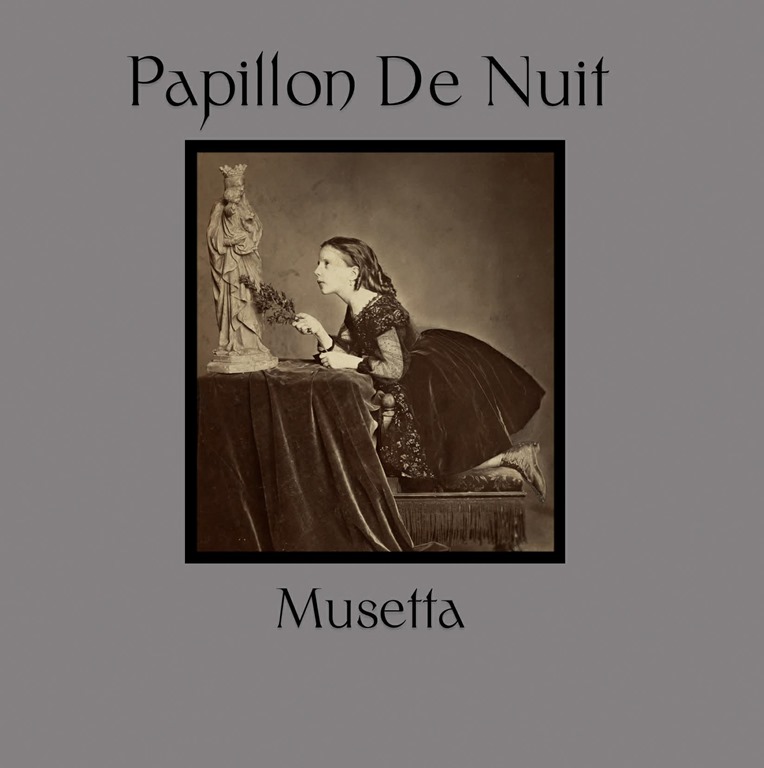
Although they may have seemingly risen out of nowhere a couple of years or so ago, Papillon du Nuit, the ever evolving, ever-expanding musical project revolving around Stephen Kennedy, alongside Mika, Steve, and Karen (who between them cover vocals, cello, grand piano, guitars, keyboards, and percussion) is a coming together of individuals who have been on and around the ‘goth’ and adjacent scene in the north for some considerable time, to form a loose collective. Having debuted in October 2024 with ‘Scarlet’, they’ve built a body of work through a succession of singles – eight in all. Most acts would have simply compiled said singles to assemble an album – but not Papillon du Nuit, and certainly not Stephen Kennedy – because he likes to do things the hard way. The proper way. And because his roots lie in that 80s goth era where bands like The Sisters of Mercy grew their fanbase through a series of ever-evolving single releases but saw the album as a different medium, a means of creating a specific, thematically unified document. As it happens, Musetta sits somewhere between the compilation and standalone document, plucking a selection of those previous singles and placing them amidst the new songs, meaning that of the album’s nine tracks, five have been previously released, although sitting in the context of an album they feel different somehow. And as much as Papillon du Nuit embrace some elements of goth – or perhaps, more accurately, the gothic (think brooding atmosphere, haunting imagery, a sense of drama) – this is a project which goes far beyond genre, with strong leanings towards neoclassical, chamber pop, the theatrical, even the operatic.

As they explain, ‘The album is named after Musetta, one of the major characters in the opera La Boheme, who is enshrined with all the qualities, and all the follies, that make us who we are. Many of the songs here explore a mythical, almost mystical journey, with life displayed more as an inevitably straight path, rather than something circular. The songs are not about death, but many of them lead there’. Some may mock with a ‘pretentious, moi?’, but Musetta is a work which is fully committed to art, and therefore sweeps pretence aside in being the real deal. That Steve Whitfield (The Cure / The Mission) produced, and co-wrote some of the tracks is nothing if not proof of pedigree, as well as their commitment to delivering an album which goes to great lengths to realise strong intent.

Heavy breathing, a panting even. Tension. Suspense. Then comes the panicked whisper: ‘is it dark, or am I blind?’ It has a decidedly Beckettean feel to it. A piano begins to reverberate. This is ‘Jude.’ As a single, it arrived as a stark and curious hybrid of poetry, theatre, and folk with a prog-rock leaning and a sense of the epic. In a revised context as an album opener, it feels very much like an introduction, a passage into a vast musical world. ‘Pilgrim’s Arc’, the most recent single, released in October, is driving, dynamic, tempest of a composition, and makes for a stark contrast arriving immediately after. Immediately, it’s apparent that there’s no small consideration been given to the album’s flow and shifts in mood and pace, and even this early, themes of time and mortality emerge.

AA

The first of the unreleased, album-specific songs, ‘Natalie’, follows, and it’s cinematic, widescreen-even, with its string-soaked chorus, again building to a spectacular finale. It’s no criticism to say it sounds like an album track: it’s magnificently executed, and offers some respite from the experimental intensity of the songs which precede it, and the cello-forward ‘A Sea Within An Ocean’ is the work of a band spreading out and settling, stretching their limbs and simply composing to make music, free from the (self-made) pressure to record a single in a day, or whatever their previous process was. It feels looser, more relaxed, and the result is a rolling, hypnotic wave of a song.

‘Cello Poem’ – at a mere two and three-quarter minutes – feels like more of a narrative bridge than a song in its own right, and the spoken word segue links single cuts ‘Amber’ and ‘Ariadne’ – and does so quite effectively, in truth. It does, however, keep death as its focus. And I suppose this is the core of the matter. As they say, ‘The songs are not about death, but many of them lead there’. How many of the great plays, novels, or poems aren’t about death, at least in some way? Death is, after all, the only certainty in life.

AA

Where Musetta differs from other albums where death is a preoccupation or a focus is that this is an album which carries a weight. It’s in no way frivolous or posturing, it doesn’t take death simply as a motif: it’s a soul-felt meditation on the end of life. No glorification, no stylisation, but a philosophical contemplation. It’s this which makes Musetta so impactful. Not only is youth wasted on the young, but life is wasted on the living, by and large. That is to say, it’s hard to appreciate what you have until it’s gone, or slipping away, and while so much goth – and metal, and so much music of many styles, for that matter – is preoccupied with death in a conceptual way, there comes a point where it comes all to near, all too real, and here it gets scary – rather than a game of lofting skulls and a flamboyant delivery. Shit does get real, and we all have to face the reality of mortality. And at this point, it’s not cool, it’s not dramatic, it simply becomes a heavy reality. We start by losing grandparents, and parents, and often, in between, friends and peers. And when it’s your peers, you start to worry. And if you don’t, you probably should.

Musetta is packed with heavy moments – not so much sonically, but emotionally, philosophically – and it’s woven with a fabric rich in literary allusions and diverse stylistic influences. ‘Visionary’ is a word I’m cautious in applying to anything, particularly anything contemporary – but ambitious and accomplished, wide-ranging, powerful, and moving… Musetta is all of these things, and more.

AA
Album Cover

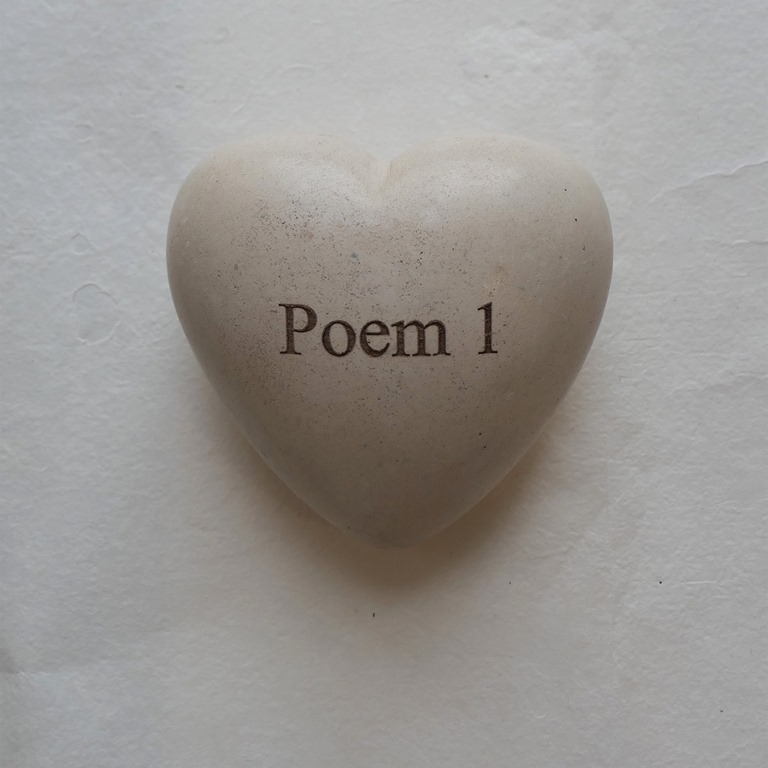
Ana Roxanne shares ‘Untitled II’, taken from her forthcoming album, Poem 1.

The track is the album’s pronounced, uninhibited centerpiece, delivers on the Lynchian promise that’s been present since her first EP, 2019’s ~~~.

Poem 1 follows via kranky on May 1st, an album that displays Ana’s new-found boldness. Listen to ‘Untitled II’ here:

AA

Ana also announces the following live dates:

May 8 Brooklyn, NY,  National Sawdust
May 11 Los Angeles, CA,  Sid the Cat Auditorium
May 12 San Francisco, CA, Swedish American Music Hall
May 15 Seattle, WA, Triple Door
May 18 Toronto, ON, Hugh’s Room
June 4  London, England, Institute of Contemporary Arts
June 5 Vienna, Austria, Porgy & Bess

AA

a1765181823_10

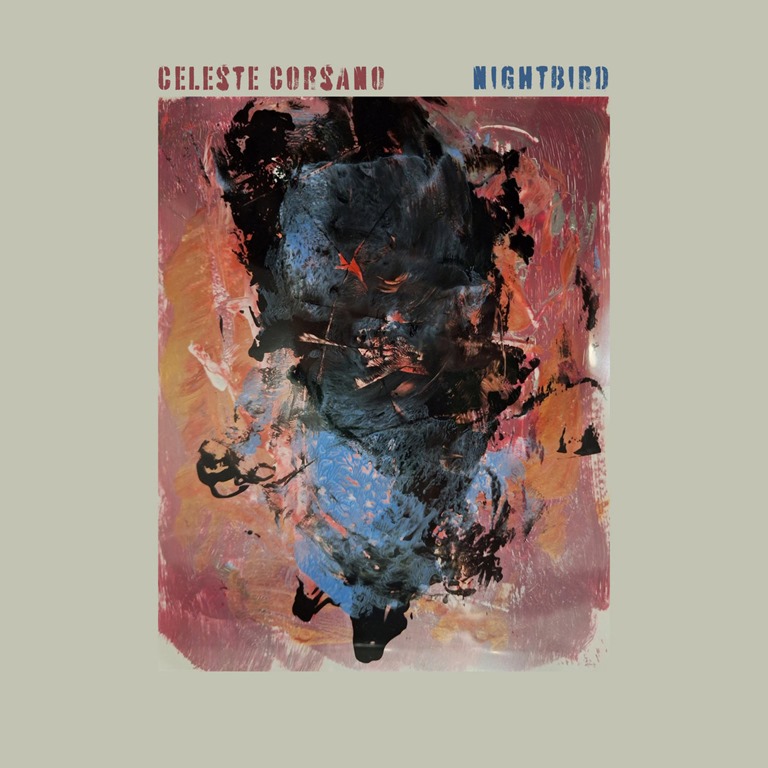
Pennsylvania-based artist Celeste Corsano presents her new single ‘Nightbird’, the dark side of the ying-yang, following her recently-released debut single ‘Sunlight Gazing’. An innovative singer-songwriter, Corsano is the latest artist to be added to the growing roster of the blossoming Montclair, NJ-based indie label Magic Door Record Label.

Corsano’s music blends poetic lyricism with adventurous arrangements, unexpected rhythms and a distinct emotional range — from ethereal and moody to playful and bold. With a natural use of mixed meters and layered vocal timbres, her fearless approach to storytelling conveys a deeper truth.

“I live in a rural area. There’s nights when I can’t sleep, thinking about my living dreams, desires and worries… the noise and chaos of my circumstances and feelings crowd my mind. When that happens, I lie in bed and look out my window and see the shadows of trees, lightning bugs flash, and sometimes hear the cry of a fisher cat… so eerie and wild. I hear the call of an owl, or see a bird that’s been disturbed from its perch and fly to another spot. The sights and sounds become part of a message to me…. a nightbird… calling to me,” says Celeste Corsano.

AA

For the past year, Corsano has been working with renowned producer Ray Ketchem (Guided by Voices, Elk City, Gramercy Arms, Luna, Crash Harmony) at Magic Door Recording Studio, who produced, recorded, mixed and mastered this release, as well as several recordings to follow.

With Ketchem also on drums, this single also features fantastically notable guitarist James Mastro (The Bongos, Mott the Hoople, Ian Hunter, Patti Smith, John Cale) and keyboardist-bass player David Nagler of Nova Social (who has also played with Joan Baez, Aaron Neville, Rosanne Cash, Andrew Bird, Steve Earle and Yo La Tengo).

“I came to Ray Ketchem with iPhone recordings of my keyboard, voice, lyrics and a dream…. and for the next few months I traveled 1 1/2 hours one way to have one of the best times and learning experiences of my life. Ray was the producer, drummer and engineer for my songs, He created the fundamental groundwork and direction for Nightbird with his distinctive drum riff,” says Celeste Corsano.

“Besides my demo, the drums were a catalyst and inspiration for guitarist James Mastro and synth player-bassist David Nagler to create the full tapestry, against which I could express myself vocally when it came time to record my tracks. I remember feeling so elated and on a musical high watching and listening to Mastro record the tracks for ‘Nightbird’. Those hours are unforgettable. He was a part of the music, his entire body and expression connected to his guitar, rippling like water to its sounds. The guitar work expresses the lyrics so perfectly. It was very moving to watch.”

She adds, “David Nagler selected the coolest sounds and added so much to the attitude of this song. When the bass first comes into the song it sends chills. Working with Ray, James and David was such an inspiration. All three of them are so down to earth, personable and into the music. They are all legendary in the music realm and I’m so fortunate to have worked with them.”

Corsanoa1664326607_10

18th November 2022

Christopher Nosnibor

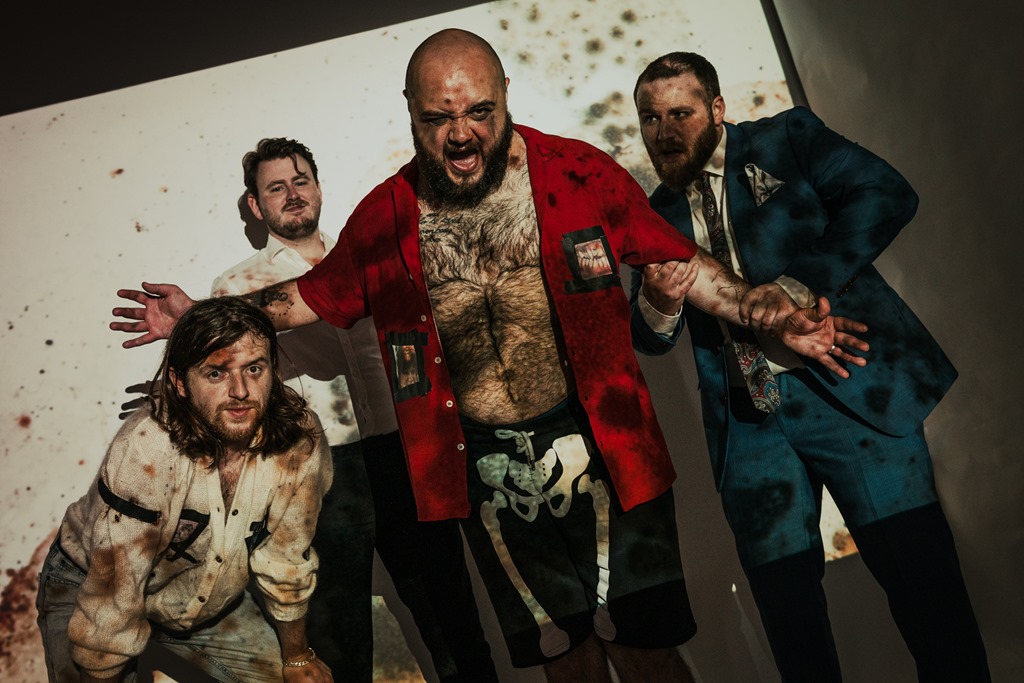
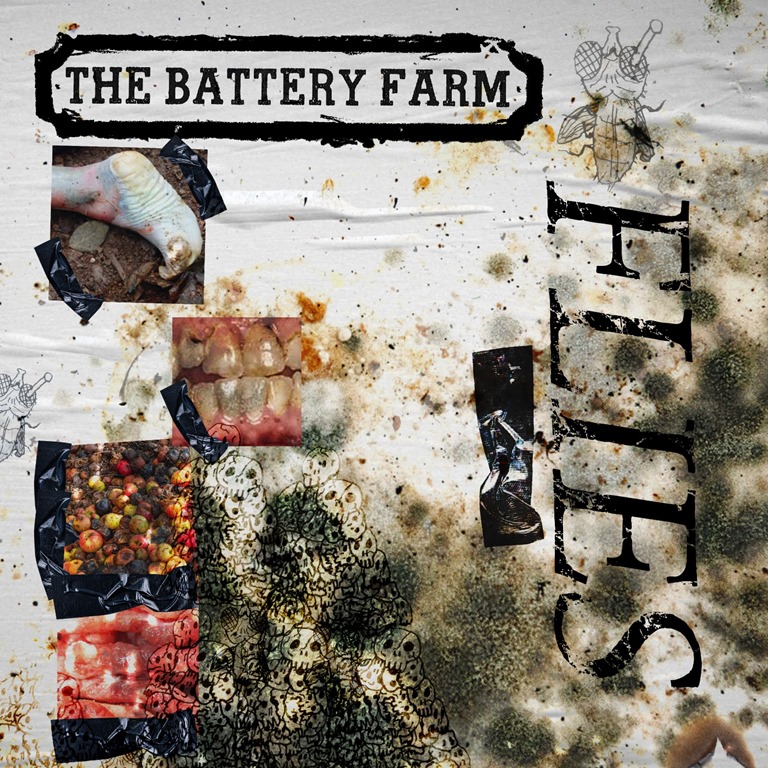
Following on from big-hitting introductions in the form of single releases ‘A Working Class Lad’, Manchester’s The Battery Farm hit us with their debut album, Flies.

They describe it a ‘an album about end times fear and societal breakdown. It is an album that tries to come to terms with the violent world we find ourselves in, and tries to reconcile with an uncertain future in world that we have decimated. It’s about the endless, screaming noise of 21st Century living and the squalid claustrophobia that entails. Driven by fury, black humour, compassion and a desire for hope.’

These are all things I’m on board with: it’s essentially a list of the top things that gnaw away at my psyche and my soul on a daily basis. Because to live in the world right now is to live and breathe all shades of anxiety.

Some people – mostly right-wing wankers and idiots on social medial, especially Twitter – like to jeer and poke fun at those who intimate any kind of panic over the state of things, laughing their arses off at those who perpetuated ‘project fear’ and the so-called ‘remoaners’ and scoffing at the idea that this year’s heatwave is anything to do with climate change citing the summer of ’76. But these are the same tossers who whine about health and safety and speed limits as being symptomatic of a ‘nanny state’, and also the same tossers whose kids will die after swallowing batteries or burn the house down lighting fireworks indoors.

What I’m saying is that anyone who isn’t scared is either beyond oblivious or in denial. The world is literally on fire and drowning at the same time. Fittingly, Flies is an album of contrasts, both in terms of mood and style. There are fiery, guitar-driven flamers and more introspective compositions which are altogether more subdued and post-punk in their execution.

BatteryFarm_Edits-7

The title track is but a brief introduction, a rushed, desperate spoken work piece set against – at first – a tense bass and a growing tide of swelling drums and guitars that in just over a minute ruptures into a full-on flood of rage. Distilling years of anguish into a minute and a half, it’s got hints of Benefits about it, and then we’re into the snaking groove of ‘A Working Class Lad’, that sees The 80s Matchbox B-Line Disaster collide with The Anti-Nowhere League in a gritty, gutsy punk blast with a surfy undercurrent.

It’s the combination of gritty synth bass and live bass guitar that drives the sound of the album. The former snarls, while that latter thuds, and in combination they pack some serious low-end punch in the way that Girls Against Boys and Cop Shoot Cop did. The synth gyrations also lend the sound a tense, robotic edge that gives it both a certain danceable bounce while at the same time heightening the anxiety of the contemporary, that sense of the dystopian futures so popular in science fiction are in fact our current lived reality.

‘In the Belly of the Beast’ is a stuttering blast of warped funk. In contrast, ‘Everything Will Be Ok’ is altogether more minimal, with hushed spoken word verses reminiscent of early Pulp, and tentative, haunting choruses which exude a subtle gothic vibe. And it all builds slowly, threatening a climax which never arrives. But then ‘Poet Boy’ drives at a hundred miles an hour and burns hard and fast to its finale in three and a half minutes.

‘DisdainGain’ comes on like Motorhead at their grittiest and most rampant, and again shows just how broad The Battery Farm’s palette is. By their own admission, they draw on elements of ‘Punk, Hardcore, Post Punk, Krautrock, Glam and Funk’, and one of the key strengths of Flies is its diversity – although its range does not make for a lack of coherence or suggest a band who haven’t found their identity, by any means. What’s more, the diversity is matched by its energy, its passion, and its sheer quality. Full of twists and turns and inspired moments of insight, Flies is a bona fide, ball-busting killer album. Fact.

AA

IMG-20221001-WA0006