Posts Tagged ‘poetry’

Prophecy Productions – 8th May 2026

Christopher Nosnibor

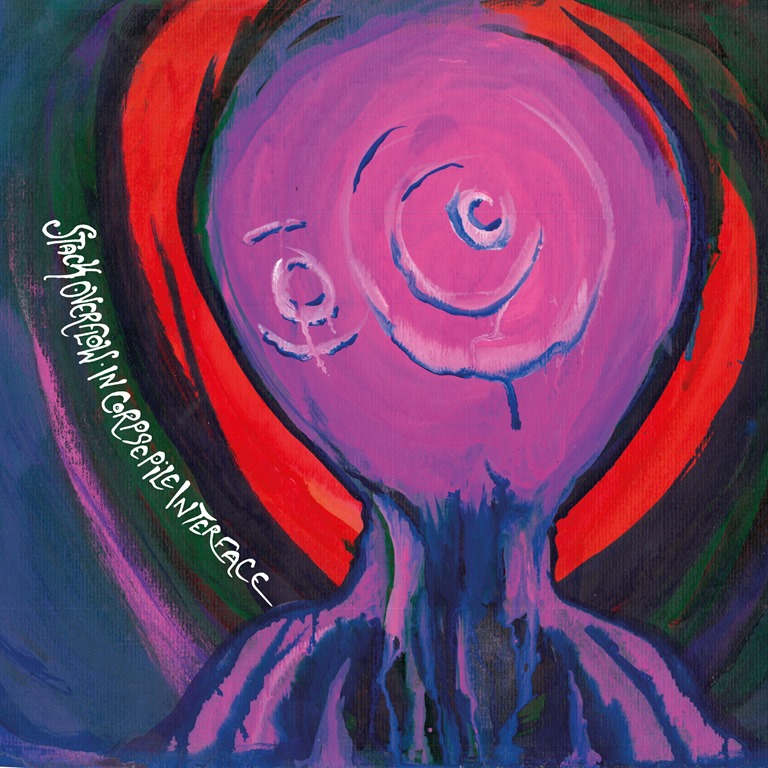
I seem to be on something of an inadvertent black metal trip this bank holiday weekend, and, peculiarly, one devoted to black metal forged on this small island, for following my review of Hellripper’s Coronach – black metal that’s staunch in its Scottishness – we have Prophecy Productions pitching the new album from West Yorkshire (Leeds, of course, where else) act A Forest of Stars as being uniquely British in their branding.

It’s tempting to unpack the importance of national identities here, particularly at a time when ‘British’ identity – at home, far more than away – carries some toxic connotations, and the majority of Scots are keen to claim independence from the government of the United Kingdom – in short, to become dis-united, but this is such complex and boggy terrain that there simply isn’t the time or space, even if it were appropriate here. And so I will return to the seemingly flippant word selection concerning ‘British branding’, for while – as is a central trope of black metal – A Forest of Stars’ album titles are strewn with corpses, death, and decay (their debut was entitled, perhaps somewhat oxymoronically, The Corpse of Rebirth, while their last was called Grave Mounds and Grave Mistakes, which sounds probably more humorous in its punning wordplay than intended), Stack Overflow in Corpse Pile Interface sounds like corporate speak. If a there was multinational corporation that dominated the industry of funeral directors, Stack Overflow in Corpse Pile Interface could well be the title of a report for the executive committee. Or perhaps Pure Cremation have already written it and had that meeting concerning their strategy in the event of another pandemic, replete with an array of graphs and graphics, pie charts and flow charts, costings and projections. Because capitalism exploits everything there is to exploit.

As such, the language of capitalism sits very much at odds not only with a metal band, but a band so immersed in art and poetry, whose biography goes to significant effort to point out that ‘in his recitative mode, vocalist Curse is even reminiscent of electro poet Anne Clark – after a steady diet of prescription drugs and rusty nails. On the other hand, his singing voice evokes memories of a young Martin Walkyier. The impressive command of the English language by that great metal bard, his plentiful plays on words and subtle multi-layered meanings also have a place in the poetic lyrics of A FOREST OF STARS – yet in different, often far more neo-dadaist ways, in which tiny twists of spelling can have surprisingly dark effects’ (suggesting, at the same time, that the wordplay of Grave Mounds and Grave Mistakes was entirely intentional after all).

The regular release of the album contains six songs, the shortest of which is the opener, ‘Ascension of the Clowns’ at a hefty nine minutes, and with the last two stretching beyond the fifteen-minute mark. The deluxe edition adds three more tracks – by most standards, an additional EP, or even an album of bonus material.

‘Ascension of the Clowns’ is grand and theatrical: Curse brings the metal fury, but emotes and enunciates, his words not only audible but clear above the spacious guitar work – which, over the course of the album’s expansive compositions – are accompanied by an array of instruments from piano to violin, as well as acoustic guitar. There’s a strong orchestral leaning – not to mention folk elements – to incredibly ambitious work, and it’s hard to fault the musicianship or arrangements, although the instrumentation is often dialled down to accompany the vocals, rather than the elements merging to create a sonic whole.

There are obvious reasons for this: Stack Overflow in Corpse Pile Interface is as much like a musical as it is a metal album. Without wishing to sound in any way mocking, one can almost picture Curse lofting a skull and affecting his most dramatic Hamlet-inspired gushings as he proclaims in the most thespy rendition of anguish, “Shit of that shit! The enshitenment!” on ‘Street Level Vertigo’. Yes, he knows his words and wordplay, and clearly revels in the way words reverberate and resonate and rub against one another to conjure layers of meaning and heightened drama.

‘Mechanically Separated Logic’ references the processes of the meat industry, applied to the psychology of late capitalism, and while the instrumentation is subtlety detailed and softly picked for the most part, only bursting into cathedrals of sound in places, again, the vocals are pure theatre, bold, exaggerated, and it’s hard to know quite how to take it, to deduce how serious this preposterously excessive style is. But even assuming there is a knowingness, a joyful revelling in the absurdity of all of this, it feels more like a work to respected and admired rather than enjoyed. No, that’s not entirely accurate: it’s enjoyable, even entertaining, particularly with its folk flourishes and revelling in the excremental, but it’s enjoyable as a performance, rather than as a set of songs which resonate on an emotional level.

AA

AA
742374

Christopher Nosnibor

There was a time when there wasn’t really much doing in York, which was particularly disappointing for a city with two universities. But, despite grass roots venue disappearing at an alarming rate, right now, the city is offering up some exciting stuff on the grassroots scene. Tonight, there are three quality live music events on, and had I mastered cloning, I would have gone to all three. The Fulford Arms was serving up a night of top-notch goth and post-punk, while there was experimental and ambient work on offer at The Basement under the City Screen cinema. But I feel I made the right choice plumping for Needlework at The Crescent, not least of all because it transpired that this was to be their last show.

Needlework have only been around a couple of years, and only played a handful of shows, but they’ve made a serious impression, as tonight’s crowd shows. Sure, they’ve got plenty of their sixth-form / college mates down, but this is a band who had built a keen following in their own right. In a previous time, John Peel would have been all over them and they’d have achieved national cult status. Instead, because it’s 2025, they’re bowing out with only an EP (released today, but without mention) and a few shows to mark their existence. But I guess this is how it goes.

First up, it’s Speedreaders. They’re nothing if not consistent., and tonight’s set brings all of the things I’ve highlighted in my previous coverage. They’re tight, but slow and mellow. And this evening they’re slower than ever. After imparting his opinion on Fleetwood Mac being shite in a rare bit of between-song banter, singer David Mudie spent longer tuning his guitar for the next song than it actually took to play it. That’ll teach him to engage in conversation with the audience. My mate went to the bar and returned with two pints before he was done tuning. Still, when they’re back on track, they’re sounding good. It’s the harmonies which stand out in tonight’s clean, crisp set, with clear balanced sound.

DSC02705DSC02709

Speedreaders

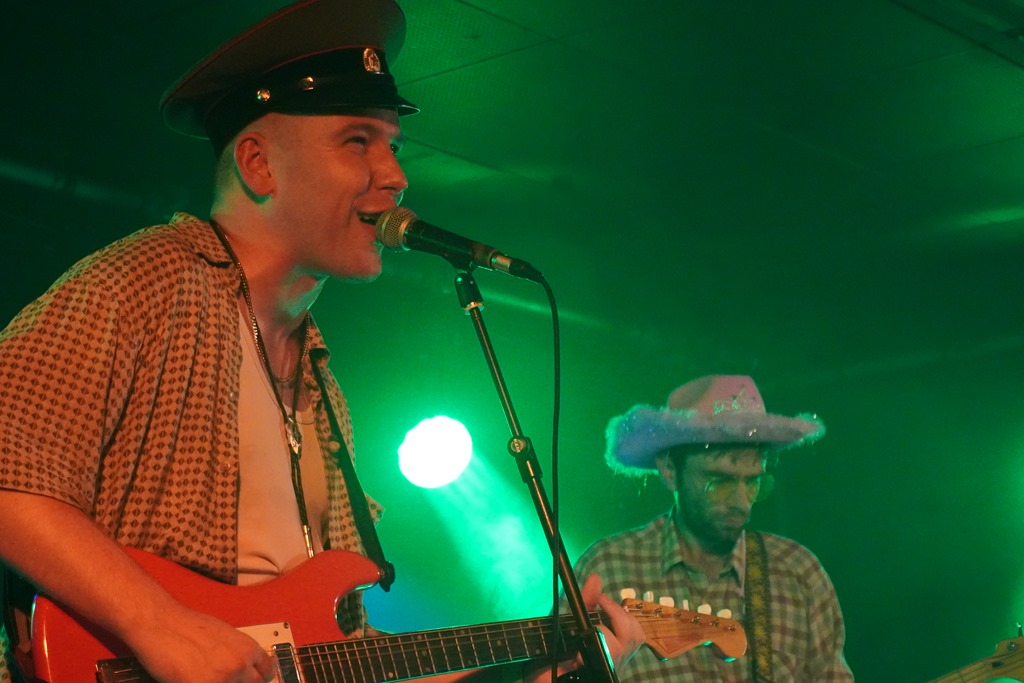
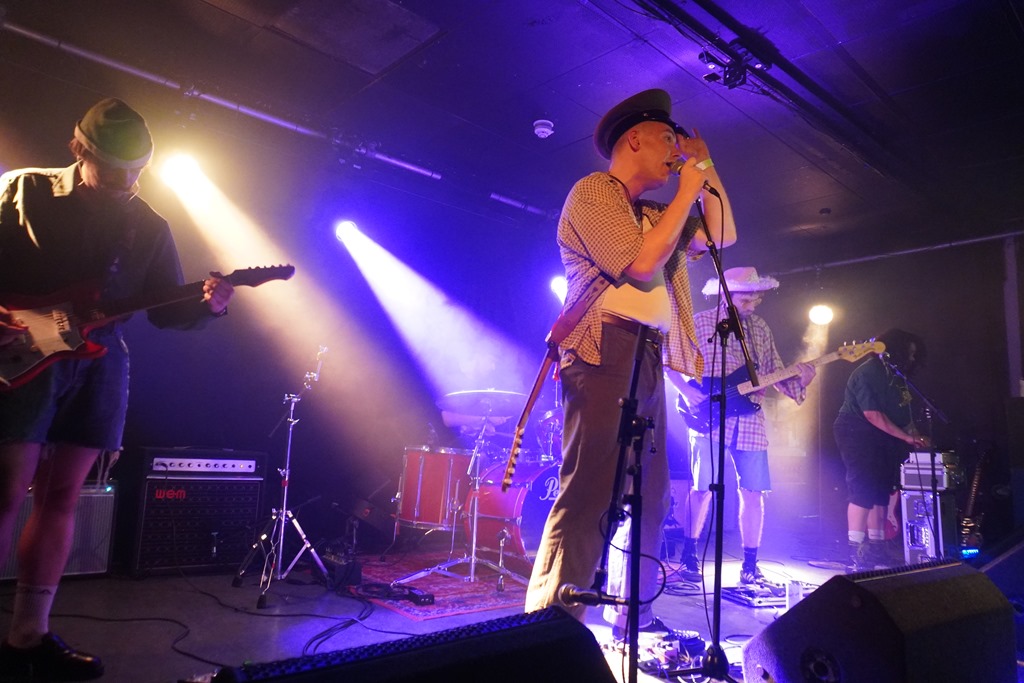
Divorce Finance sound pretty much the same as they look…. meaning I can’t remember the last time I so wanted to punch a whole band. Actually, I lie: Sleuth Gang, who I witnessed in the same venue a few months ago emanated wankerdom from every pore. It must be something about bands who take their style cues from The Village People.

DSC02733DSC02735DSC02720

Divorce Finance

It’s sort of tongue-in-cheek but not really rockabilly country hoedown hillbilly bollocks. There are people down the front getting down with some boisterous line-dancing moves, and there are plenty who are digging it, but I just can’t get on board with this is corny, gimmicky shit, and the fact they play it well doesn’t get them a pass. All the whooping and whelping is high-energy and perfectly executed, but… It’s just so much cheesy turd-polishing, and the singer’s smug, grinning, cheeky chappie, eye rolling delivery only makes everything so much worse. I found myself feeling not irritated, or annoyed, but – most unexpectedly – angry.

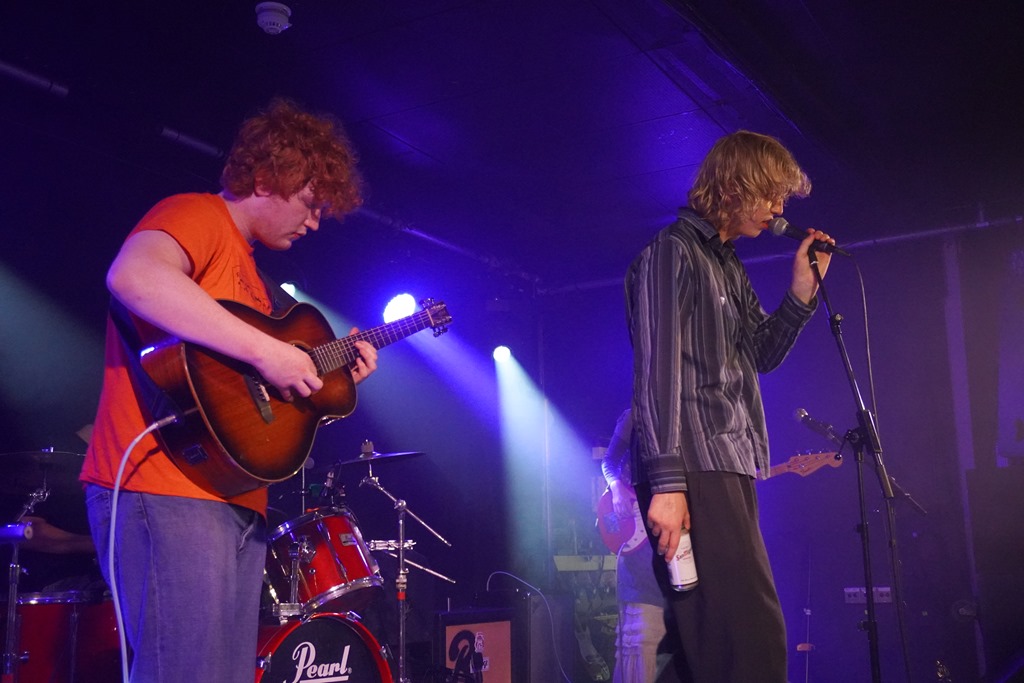
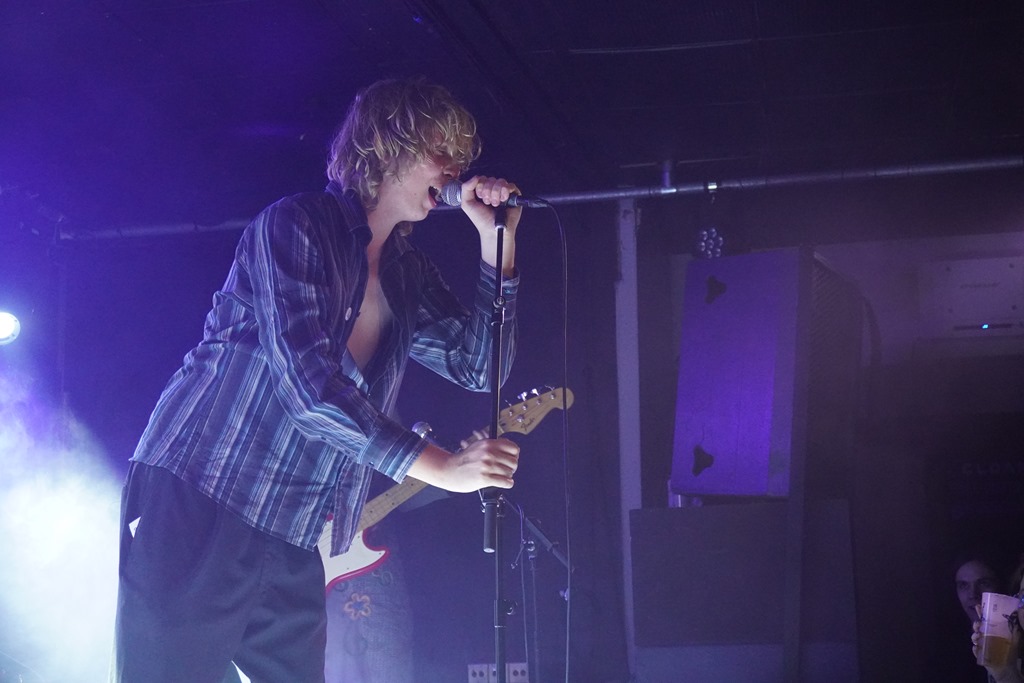
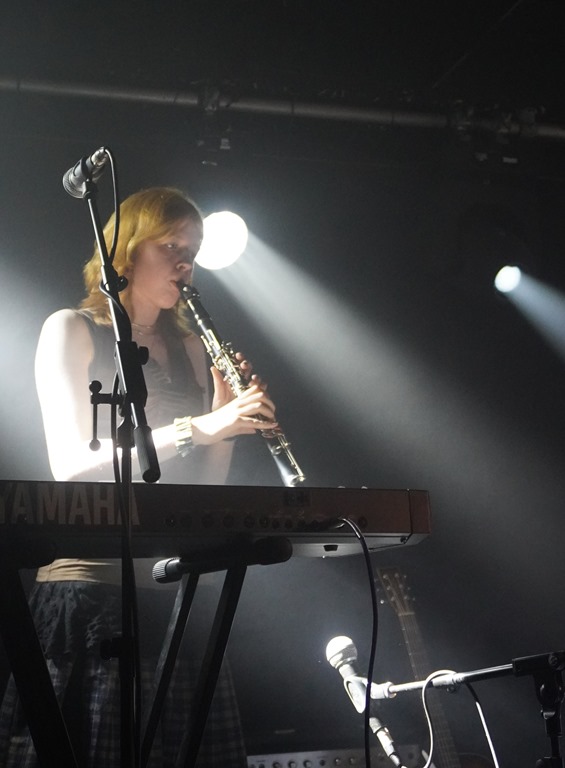
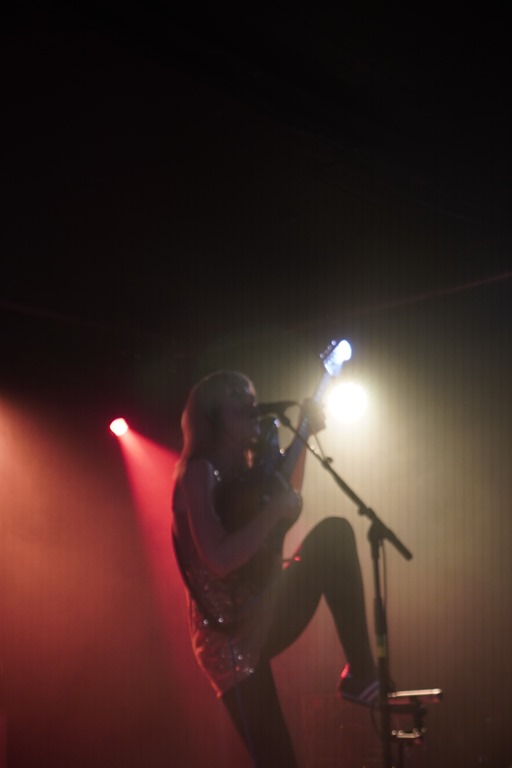
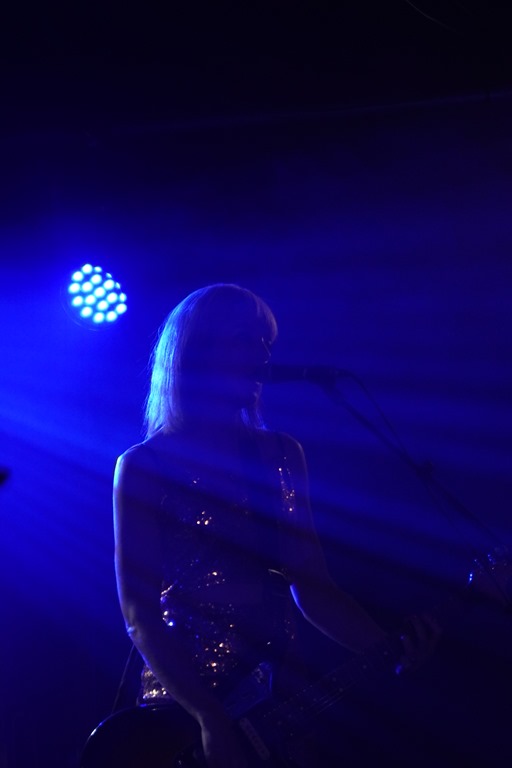
Needlework are simply something else, and what that something is is not easy to pin down. Their entire existence is constructed around a mass of contradictions and paradoxical premises, none of which are reconcilable or make any obvious sense – but this is precisely why they work, and why they exist in a league of their own. They’re really tight and together, but create the illusion of being lose, even a shade shambolic; front man Reuben Pugh is simultaneously intense and aloof. Each member of the band brings something different, stylistically, and in terms of personality – that goes for both their musical contributions and stage presence. Jagged, scratchy guitar work slices across rolling basslines, jittery drumming finds a counterpoint with soft, trilling woodwind and synths interwoven through the scenes as they unravel.

DSC02765DSC02768

Needlwork

They’re not really a ‘songs’ band in terms of conventional verse / chorus structures, either, instead exploring routes which take obtuse twists and turns, and they’re unafraid to do slow, wonky, spoken wordy, abstract narrative. They understand dynamics, and the power of jarring angularity. It’s post-punk, it’s jazz, it’s experimental, and it’s utterly spellbinding. Needlework are one of those rare bands that seem to suck you into a parallel universe while they play. Time hangs in suspension and you find yourself on another plane, utterly gripped while wondering what they’ll do next. During the time they’re on stage, something transformative takes place: it’s more than simply five people on stage making music. Needlework conjure aural pure alchemy.

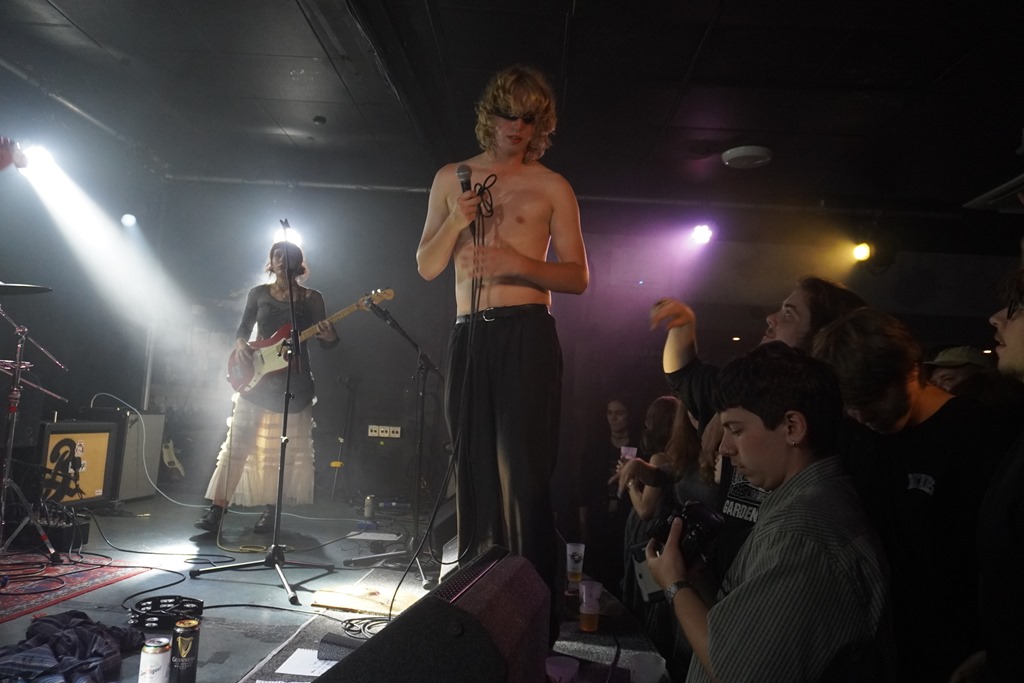
Pugh takes his shirt off to substantial applause, and a big fella in the front row responds by whipping his T-shirt off and lobbing it on stage after helicoptering it above his head a few times. He asks for it back a song or two later, and the band duly oblige.

DSC02762DSC02741.CROPDSC02801

Needlework

The set builds to a perfect climax, a monumental whirl of sonic chaos which is electric. And then, that’s it. Finished. Done. They leave us stunned, dazed by the magic we’ve witnessed. They certainly concluded on a high, and one suspects that this is a band which will be remembered, and talked about, for years to come.

The final song in a trilogy of time-related experimental tracks, ‘Mnemosyne’ incorporates an original song – recorded in Mayfair Studios, London, in 1975 – into poetic musings, and haunting atmospherics, dwelling on nostalgia and false memory.

a0864877400_10

10th December 2024

Christopher Nosnibor

Less than a fortnight after Yorkshire-based collective Papillon de Nuit unveiled their first track, ‘Scarlet’, they present to the world the second fruits of their recent recording sessions, mastered by none other than Tom Woodhead, formerly of ¡Forward Russia! at Hippocratic Mastering. While ‘Amber’ continues the colour-themed song titles, they promised something different, and, indeed, that’s precisely what they’ve given us.

‘Scarlet’ was a somewhat folk-infused tune with a rolling rhythm: in contrast, ‘Amber’ sits more in neoclassical territory, in terms of composition and arrangement, with a lone piano providing the primary instrumentation; around the sung segments are spoken-word poetical passages. Again, Stephen Kennedy leads, but there is a counterpoint in words composed and spoken by Edinburgh-based polyartist Monica Wolfe, and the interaction between the voices and modes of delivery is engaging. This is not rock, or pop, or folk, but unashamedly music as art, and as compelling as it is beautiful.

AA

a1612744261_10

Mortality Tables – 1st November 2024

Christopher Nosnibor

Spoken word is hard. I know. I’ve done it. I’ve been terrible at it. I’ve witnessed countless others be terrible at it, too. Spoken word is even harder as a prose writer. It’s just so difficult to hold an audience’s attention. This is why spoken word events seem to favour poetry: whether they rhyme or not, poems tend to focus on rhythm and to be brief, rarely longer than aa couple of minutes. And a lot of poets manage to memorise their pieces for performance, and poets who ‘read’ tend to be looked down upon in certain circles. It’s rather harder to memorise and recite a three-page slab of prose, and face buries in pages makes performing and engaging altogether harder. But worst of all, people simply don’t seem to possess the attention span.

Reading prose is hard. A segment of a story may not really work outside if its intended context, and a short story that only takes three minutes to read isn’t going to have much substance.

There’s a huge disconnect here: people listen to audiobooks but struggle with spoken word or anything that isn’t a renowned author or a celebrity voicing an accessible, pot-driven narrative.

William Burroughs told Philippe Mikriammos in an interview in 1984 that ‘many poets are simply lazy prose writers.’ He qualified this by explaining, ‘I can take a page of descriptive prose and break it into lines, as I’ve done in Exterminator!, and then you’ve got a poem.’

It’s true.

Chop your sentences down to phrases.

Cut your phrases down,

Down to their component parts,

Capitalise each line

– unless you’re e e cummings –

And lo,

You have a poem.

Burroughs had the advantage of recording his spoken word pieces and performing segments from his books in the 60s, 70s, 80s, when the medium was still comparatively fresh, and people had attention spans greater than goldfish, and had the additional benefits of a remarkable flair for reading and a truly unique voice. Here in the 2020s, it can be hard to attract – and maintain – any kind of attention with an audience. As I say, I know: I’ve done it, and I’ve been terrible at it. I’ve also been alright at it. I’ve driven people from the room, and considered it an achievement, because it’s infinitely better to have an impact of that nature than for audience members to fall asleep, or worse, forget the performance. The challenge for any spoken-word performer, be it in a live setting or in a studio, is how to grab, and maintain, the attention of any audience.

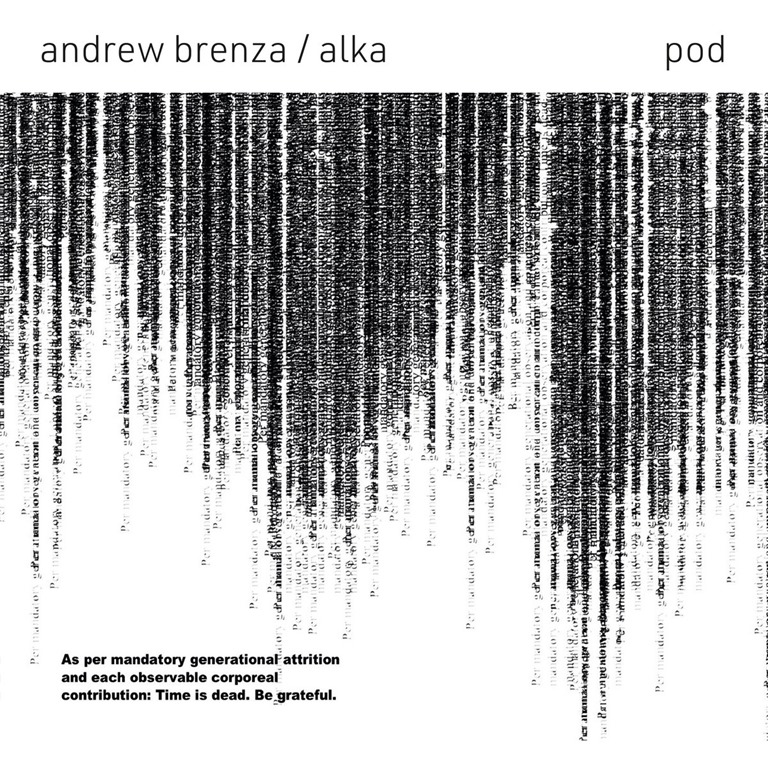
Here, Andrew Brenza reads from his book pod (ghosTTruth, 2023) with accompaniment from sound artist and electronic instrument restorer alka (Vince Clarke’s VeryRecords). Instrumental augmentation is the most obvious and immediate way of grabbing the attention. It transforms a spoken word work into a multimedia project, for a start, and moreover, the moment ‘music’ is involved, a whole new audience – which likely has no interest in spoken word – opens up.

His voice processed with a metallic flanged edge and epic reverb, and against an ominous organ droning ambient hum, Brenza becomes commanding, not to mention eerie in his delivery. This is the fine line all spoken word performers must tread, of course, but here it is felt acutely: The delivery can often overrun the work; style overtakes concept and content.

I find myself drawn into the delivery of pod – the sounds, the delivery. But engrossed in these, the content slips to become secondary, in a way. But perhaps that’s ok. ‘Intermission Meander’ provides a bleapsome interlude, and the narrative segments are vignettes, segmented scenes which are centred around image and concept rather than linear narrative, events, or characters. In this context, this release works. It is not an audiobook, but an audio accompaniment to a book. It’s difficult to absorb, but a successful project.

AA

a0689313884_10

Christopher Nosnibor

The Lovely Eggs really are the best advert for the DIY ethos going. Here we are, in the 300-capacity Crescent in York, just over two years since their last visit, and whereas then – again, on a Sunday night – there were twenty-eight tickets left on the door, they’ve sold out well in advance this time. This is likely due in no small part to the release of the absolutely cracking Eggsistentialism earlier in the year, but equally their ever-growing reputation as a truly outstanding live act.

Track back to 2015, the first time I saw them: it was a part of the sadly gone and fondly-remembered Long Division festival in Wakefield. They weren’t a new band even then, and while they drew a respectable crowd, were just one of many punky indie bands on the circuit. Seven albums in, and having stood up to gouging from arena venues on merch from support acts and done quite literally everything themselves these intervening years, they’ve risen to prominence not only as a super band, but the definitive outsider band. And, as with last time around, we have a curated lineup with a fellow Lancashire band opening, a poetry / spoken word performer by way of an interlude, before their own set. Previously, we got Arch Femmesis and Thick Richard: this time, it’s British Birds opening, and Violet Malice providing the off-kilter spoken word.

Both are excellent. I was hugely enthused by the return of British Birds to York, having first seen them in this very venue supporting Pale Blue Eyes, and they did not disappoint. Their set is packed solid with hooks, harmonies, jangle… and tunes. A solid rhythm section and some twiddly vintage synth tones provide the base for two- and three-way vocal interplay. In the five months since their last visit, their sound seems to have grown meatier, more solid, and they’re tighter, more focused, and Emma Townson, centre stage on vocals, keyboard, tambourine, and cowbell is more nonchalant and less six bags of Skittles exuberant in her performance, but there’s a really great vibe about them on stage, and they feel like a cohesive unit, and one with great prospects if they maintain this trajectory.

DSC00173DSC00167

British Birds

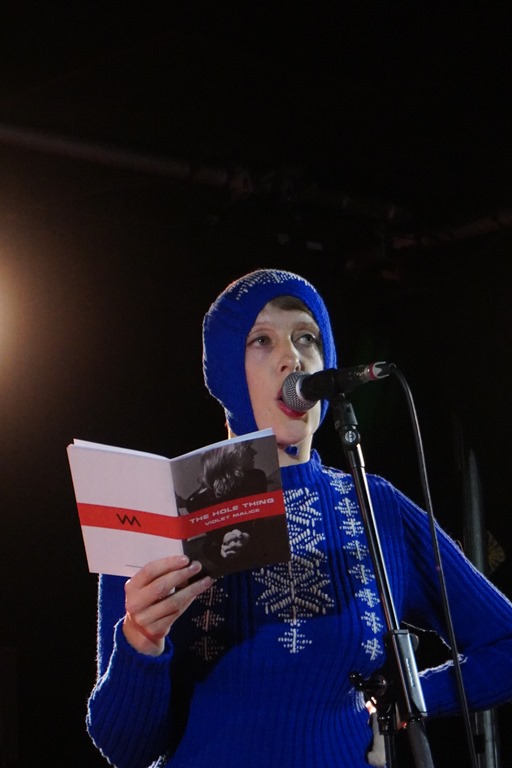
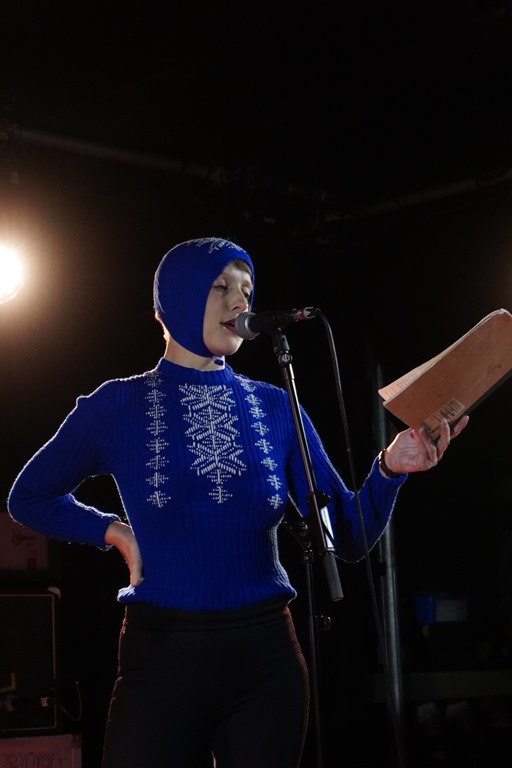
Violet Malice is not from Lancashire, but Kent. It’s appropriate. It could almost be a typo or a mispronunciation. She belongs to the glorious lineage of snappy poets who are likely to go down better at a rock gig than your average spoken-word night which clearly has an arc from John Coopeer Clark forwards. She tells it like it is: and how it is is hilarious, but uncomfortable. I’m reminded of Manchester writer and spoken word performer Sue Fox, and the way an audience will lap up her visceral monologues about cocks and cunts, howling with mirth but breathless as they ask themselves ‘did she really just say that?’

‘Stop eating your own food and jizzing on about how good it is’, Violet intones in a blank monotone. Her best line comes in ‘Posh Cunt’ where she drop ‘enough cum to make 24 meringue nests’. It’s fair to say that if a guy had delivered the line, it would not have had the same impact, and this is but one measure of the ground which still needs to be made up. But Violet Malice is leading the charge – as, indeed, are The Lovely Eggs. What they’ve achieved with this lineup is strong female representation without being male-exclusionary: they’ve not gone on a Dream Nails kind of anti-male campaign (which is simply inverse sexism) and there’s no adopted policy of hauling single men off for interrogation by security, a la The Last Dinner Party in Lincoln. It’s as strongly feminist as it gets: no-one is alienated, and the demographic across both genders and ages is well-balanced.

DSC00186DSC00184

Violet Malice

My notes pretty much run out during The Lovely Eggs’ set, and I make no apology for this. When this happens, it means I’ve either overimbibed or am just so in the moment I forget, and tonight, it’s very much a case of the latter.

They’re straight in with ‘Death Grip Kids’, with the killer opening line ‘Shove your funding up your arse!’, of which I wrote elsewhere, ‘the song is a proper middle finger to the industry and the establishment, a manifesto which encapsulates the way they’ve rejected the mechanisms and payola of labels’. More than a song, it’s a manifesto, which sets the tone for their bursting-with-energy hour-long set.

DSC00224DSC00216DSC00239

The Lovely Eggs

‘Magic Onion’ is a standout; ‘I am Gaia’ brings the obligatory mid-set slower tempo tune, ahead of leading a big old singalong with ‘Fuck It’, and the second half of the set is just incendiary. The packed room is united and uplifted and collectively uplifted. There’s no encore, no artifice, just pure, life-affirming entertainment: everything you could want from a gig. The Lovely Eggs really are the best.

Neurot Recordings – 15th September 2023

Christopher Nosnibor

Once upon a time, way back, I’m confident I read an interview with the artist Francis Bacon which contained the phrase ‘life is pain’. It certainly sounds like one of his brutally bleak and precisely pithy lines, encapsulating his eternally dark world view, but I can’t for the life of me find it anywhere, at least not attributed to Bacon. It’s a phrase which seems to have acquired an online ubiquity to the point that it’s simply something people say now. People say all kinds of nonsense, though. I had a work colleague who would often wheel out the line that ‘pain is weakness leaving the body.’ He was an imbecile, and that’s not how it works or I’d be Hercules by now.

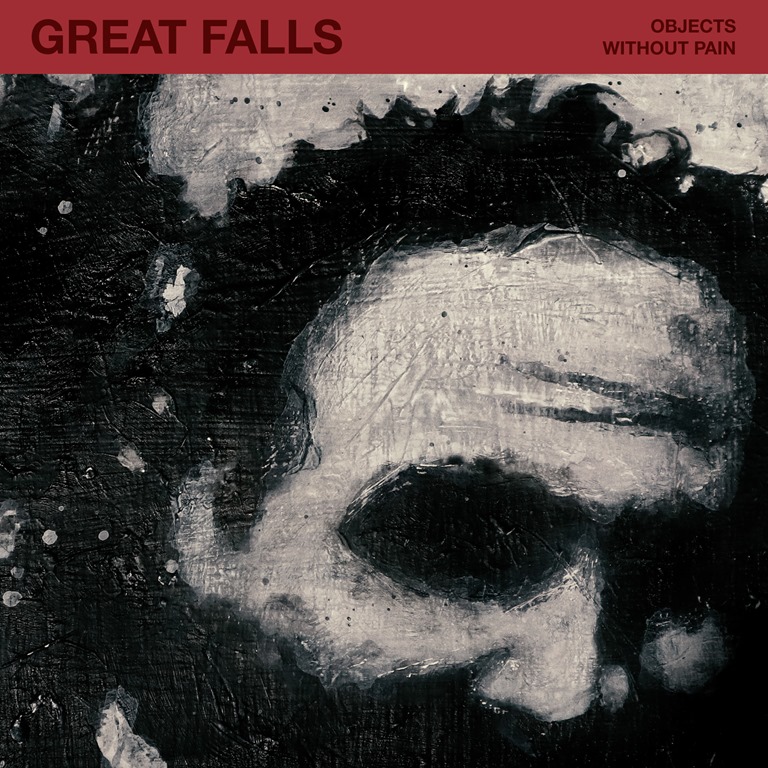
In this context, the concept of objects without pain is almost inconceivable. No pain? Oh, to be inanimate… But as the accompanying notes soon render apparent, Great Falls’ fourth album is a work which plunders a whole world of pain: ‘Objects Without Pain takes us on a bleak, purgative journey through a separation – a snapshot of the turmoil and indecision that occurs after the initial realization of someone’s misery, and before the ultimate decision to end a decades-long partnership. From the foreboding intro riffs of ‘Dragged Home Alive’ to the end of the 13-minute closer ‘Thrown Against The Waves,’ its eight tracks explore the thoughts that come up when a person is staring down the barrel of blowing up their life: How did this happen? Is it too late for a new life? Will the kid be OK? What will make me happier: familiar torment or unknown freedom?’

This is dark, alright. And it’s weighty, but not always in the most obvious sense. Indeed, the nine-minute opener, ‘Dragged Home Alive’ begins with nothing but a clean guitar, strummed scratchily. But then the vocals, a pure howl of anguish, tell us this is not some mellow folksy effort, and from there it builds, and when the bass and drums kick in, it’s nothing short of explosive. The drums are fast, nuanced, dynamic, almost jazzy, while the bass is thick and squirmy, it’s the sound of a snake wrestling to escape the hold of a human, and everything comes together with such fiery force you feel dizzy, whiplashed, battered from every angle – then the second half is almost another song; still slow, still heavy, but with a very different sound and level of energy, and it fucking pummels. This is powerful stuff.

They keep the riffs coming thereafter, too, as they deliver obliterative volume and endless anguish and emotional torment of a failed relationship and its fallout. It’s not pretty or poetic, but the internal monologue and the conflict laid out straight in real-time, churning through questions of blame and sifting through belongings, bald vignettes and depictions of packing, moving.

I spend my day

Searching homes

And I can be

Alone for real

I spend my day

Searching towns

And I can be

Searching alone

And I can be

Searching alone

I can’t do this

It hits hard because it’s so, so raw, so real, so much a real voice, unfiltered and rendered overtly lyrical. And because of this, rather than in spite of, the lyrics are true poetry. The pain is real, and you feel it.

‘Born as an Argument’ is considered, slow, dolorous, but also raw and ragey, and with its double-pedal drumming, it’s heavy-hitting. Even winding down to soft, almost folky vocals to fade, the heavy mood lingers, and then ‘Old Words Worn Thin’ crashes in with lumbering bass and vocals screaming anguish. The bass that crunches is at bowel-level on ‘Ceilings Inch Closer’ is the definition of energy, channelling all of the negativity and conflicting emotions into something so sonically solid the impact is physical.

As a label, Neurot has a knack for finding bands which are ‘like’ Neurosis but different, with Kowloon Walled City recent standouts for their brand of stark, bleak, nihilistic heft, and, on the same pile, Great Falls. Only, while sharing that heavy nihilism and the roaring rage of Unsane, they stand apart from so much of the label roister by virtue of their sheer force and absence of breathing spaces. Breathing is for wimps. Suck it up and plough on. Bathe in the brutality of Great Falls. Absorb the pain, and grow stronger for it.

AA

779849

Subsound Records – 10th March 2023

Christopher Nosnibor

It’s easy in the age of the Internet to conduct enough research behind the scenes to present oneself as having an extant k knowledge of a subject. It’s also a huge temptation to do this as a reviewer or critic, because there’s a certain expectation from audiences that if you’re going to proffer opinions on things, you ought to know what you’re talking about. It’s that knowledge and authority that ought to differentiate someone who presents insightful critiques from the boorish tosser down the pub – or, as is more common now, on social media who has an opinion on everything but talks out of their arse because they know nothing.

But life is an open-ended learning experience, and the day you stop learning, you’re effectively dead. And so it is that while I’m familiar with Malcolm McDowell, primarily for his role in A Clockwork Orange, and Massimo Pupillo of ZU, but not the Italian poet and essayist Gabriele Tinti – which is surprising given his prolific output and the immense reach of his work, especially considering that his career hasn’t been without controversy. Still, the fact he is prolific and has immense reach, as well as being a keen collaborator, explains the coming together of these three for a collaborative album, which finds McDowell reading Tinti’s works over music by Pupillo.

McDowell reads five pieces from the 2021 collection Ruins, dedicated to what he calls the “living sculpture of the actor”, ruminating on the distant past as it echoes through to the present. In keeping with the subject matter – where art and mythology of the ages provide evocative contemplation – there are weighty words, formulated with such syntax as to accentuate their gravity and import, and McDowell’s delivery does them admirable justice. As much as Tinti is given to elevated tone, there’s both a resonating sense of spirituality and an earthiness to his words, and McDowell reads with nuance, bringing the more visual aspects to the fore as he speaks of flesh and blood and bones wounds and exploding veins. There’s a physicality to the writing which possesses a rare potency, and as such, the words are well-suited to the context.

Pupillo’s atmospheric score, conjured using ‘a plethora of different sources, various synthesis, samples of eastern European choirs, processing McDowells’ voice,’ lends further layers of depth: at times choral and monastic voices rise and ring out against elongated drones, rich and organ-like, at others billows of sound creep like tendrils of fog.

Songs Of Stone may only be some twenty minutes in duration, with each side working nicely as a single, continuous soundwork punctuated by the spoken segments, but its grave intensity means that any longer would be difficult to digest. As it stands, Songs Of Stone feels perfectly formed.

AA

a3543316873_10

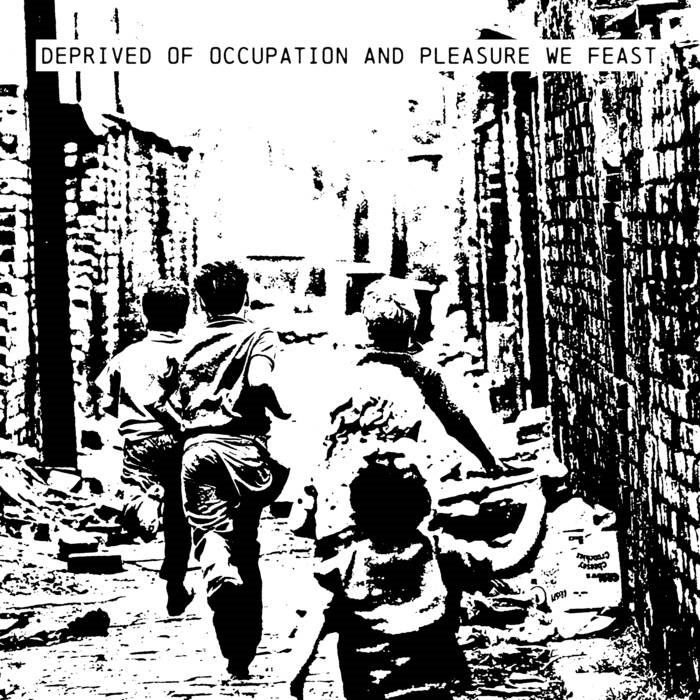
Ahead of the release of the first compilation on the NIM label – the snappily-titled Deprived of Occupation and Pleasure We Feast Aural Aggravation are immensely honoured to premiere ‘1010’ by Obviate Parade, the exploratory guitar vehicle for Paul McArthur of Damn Teeth.

With lyrics centred around Emily Dickinson’s 1010th poem, it’s a largely spontaneous cut, with all instruments and vocals recorded in a single take (albeit subsequently edited), it’s a magnificent balance of immediacy and controlled manipulation.

Don’t just take our word for it: get your lugs round it here:

AA

a2705195024_16

Tambourine Machine – 20th November 2020

Christopher Nosnibor

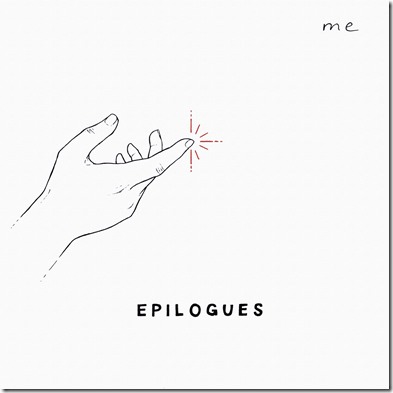
Nine years on from their inception, and seven years since their last release, Epilogues return from hiatus with a brace of new EPs, simply entitled ‘me’ and ‘you’. Mikey Donnelly has been keeping occupied, recently working solo as miles. and alongside his brother, Joey, who goes by elk.

If the title sounds like this is an exercise in narcissistic, egotistical self-indulgence, you’d be way, way off the mark: yes, Donnelly’s primary focus is himself, but this is a work of deep introspection and is one of those magical moments of fine artistry where the artist finds universality in the personal.

The recording is intimate, close-up, and you can hear every last breath, every scratch and scrape of finger on string and fretboard. The instrumentation is simple, essentially acoustic guitar and voice, with occasional incidentals so subtle as to be barely there. There is nowhere to hide, and that’s largely the point: this is a set of songs that explores identity and picks it apart unsparingly.

In the opening lines of ‘Me’ he sings, quietly, ‘Hello again; it’s me / At least I think that’s who I’m wearing; my character this week’, as he begins to lay himself bare, pulling back the layers of the onion to reveal a fragile core.

A softly quavering ambient drone marks the understated arrival of ‘Two Weeks’, a song so quietly mournful and reflective, and if one applauds the bravery of a statement which says, unashamedly ‘this is me, with all my flaws’, then it’s perhaps even bolder and more powerful to find an artist turning it around and asking ‘who is ‘me’?’. And here, Donnelly succeeds in bringing the two together, taking the listener on a journey that both questions and answers.

Donnelly is, it has to be said, a remarkably eloquent lyricist, each line adeptly spun with a rare poeticism: it’s rare to find a record where simply reading the words on the page is a moving experience.

The final song, ‘The Gap’ begins in typically hushed, reflective style, buy blossoms into a full-band finale, with drums, bass, and chiming guitar as Mikey sings out the refrain, and suddenly, he emerges from the shadows and into the light. For all the rust and dust, death and decay, there is hope and optimism.

   AA

Epilogues - Me

Click on the image to listen.