Posts Tagged ‘filmic’

Miasmah – 7th May 2026

Christopher Nosnibor

“What does a trip towards another world sound like? We’re about to find out. The master of tension, melancholy, and the deranged is back after a long period working in the worlds of theatre and cinema. Last seen on Miasmah with the grief stricken The Summoner, Kreng now returns with Wormhole, following closer in the footsteps of the cult classics L’Autopsie Phénoménale de Dieu and Grimoire.”

This is how we’re introduced to the first new album from Kreng in a decade, and Wormhole is appropriately titled. Immediately, the listener is drawn into a hinterland of suspense and ominous tension, a path beset by ever thickening trees and a creeping mist. You feel an urge to retreat, but as early as the second composition, the dark, jittery ‘Nachtzweet’, with dank creaking sounds and dissonant piano notes which are the pure quintessence of ‘eerie’, you find you’re incapable of turning back. The only way is forward, further into the forest – it doesn’t seem to be enchanted, but something isn’t right either: something is lurking, and it feels menacing, sinister, dangerous. Your heart’s in your mouth, and you’re no longer in control of your decisions and all you can do is creep onwards, down the wormhole, riven with trepidation.

It’s like the soundtrack to a film, but it’s hard to imagine that the visuals could be anywhere near as unsettling as this accompaniment. In the same way that films are rarely as scary as books, because films render and thus create boundaries when it comes to expressing The Terrible Thing, the monster, the ghost, the object of fear, the mind’s capacity to experience fear goes far beyond the visual. As such, a strong soundtrack has the capacity to heighten the fear factor of a movie. But the soundtrack alone, when the only visuals are those conjured in the mind’s eye… the scope is without boundaries. And these compositions distil the very essence of fear, of dread.

Many of the titles offer little by way of clues as to their meaning, or the scenes they would accompany if this were a film. ‘Cepheid’ is an American molecular diagnostics company, and what’s so scary about that? You may well ask. It also happens to be a pulsating star, which changes not only in brightness, but also diameter and temperature, too, which is in keeping with the space journey theme of the album’s title and other tracks, such as ‘Vacuum’.

The piano-led ‘Entropy’ is a soaring choral work, albeit one that elicits thoughts of death and afterlife. And if ‘To Yield’ is soothing, and allows the listener time and space to recover their breath and the heart to return to a more normal rate, the aforementioned ‘Vacuum’ is five and a half minutes of suffocating fear, and ‘Donker’ is an extended exercise in orientation-twisting, brain-bending torture.

In places conventionally ‘filmic’, with strings and piano taking the lead, there are extended passages of creeping dark ambience, the sonic origins of which are unclear, adding to the unease of the pieces – because so much fear stems from the unknown, the unseen, the inexplicable. Sounds of unknown and inexplicable origin are inherently disturbing: if you know that wail is from an owl, you can compartmentalise it, accept that it’s an owl, and move on. When you don’t know what that haunting sound it… it gives you the willies.

Wormhole is creepy, unsettling. It chills more than it thrills, and instils a deep discomfort. Close your eyes and breathe slowly. Feel the fear. Embrace it.

AA

AA
MIA063 front

Crónica – 20th January 2026

Christopher Nosnibor

As time passes, our tastes change. For some, they narrow and become more cemented, more deeply entrenched. There’s a broad acceptance that people become more conservative as they grow older – which may explain why, with our ageing population, we – that’s the western world – has become more in favour of conservative values, such as low tax and a belief that the past was a golden age in which hard work was rewarded, and of course, music was better. There is certainly more than a grain of truth in the boomer stereotype. And as a Gen X-er, I’ve observed people I grew up with, and /or have known for many years become set in their ways and their listening habits, locked in the 90s in their musical tastes, and becoming increasingly churlish about the youth of today and the like.

I consider myself fortunate to be surrounded by friends and acquaintances, both in real life and in the virtual world, who are deeply invested in new music. The fact I get sent new music of all kinds from around the globe is only half of the story, as it would be so easy to sweep vast swathes of it aside to listen to, and review, nothing but goth, contemporary iterations of post-punk and new wave, grunge, and reissues. In fact, I could devote my entire listening time and run a website dedicated to nothing but reissues and still be incredibly busy. It would probably garner a huge readership, too. But no: I am constantly encouraged to listen to new music, and the fact of the matter is that I thrive on it, and never fail to get a buzz from new discoveries. As such, since I began this journey as a music writer, my horizons have broadened beyond a range I would have ever imagined.

A measure of this is that my first encounter with the music of Rutger Zuydervelt, back in 2014, was marked by a most unimpressed four-star review, in which I said that Stay Tuned was ‘a bit of a drag’. While I don’t feel particularly inspired to revisit it now alongside my writing of this review, I feel I would likely have been more receptive to its longform minimalism now.

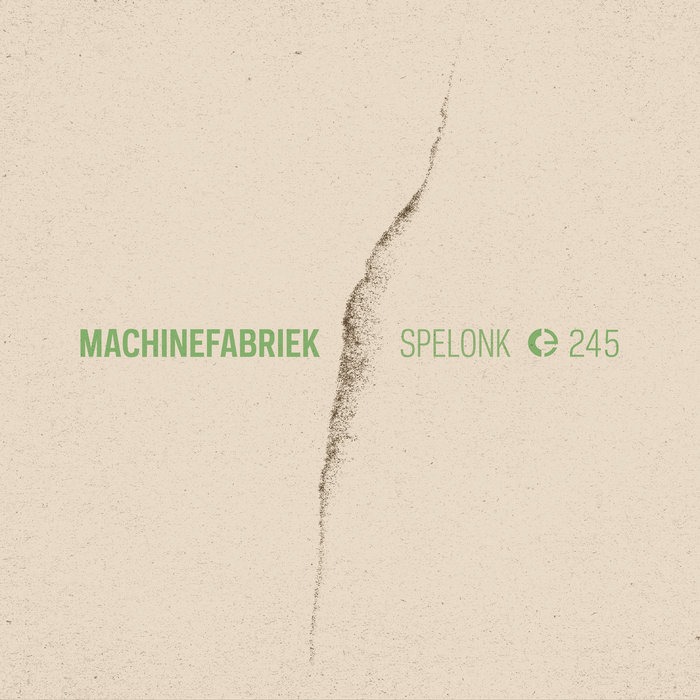
Spelonk is not quite as long in form – three compositions spanning a total of forty-two minutes, and sees Zuydervelt taking some time out from his dayjob to indulge in the act of creating for pleasure – or, perhaps, more accurately, creating out of the need to experience freedom, to feel that metaphorical – and perhaps literal – sigh of release.

As he explains, ‘Most of the music I make nowadays is commissioned for film, dance, or other projects. And I love it — it’s the best job in the world! — but sometimes I have to pull myself away from it, and make something purely for myself. My 2004 release Omval was one of these works, as is now Spelonk. These projects are always made in short bursts; once I start creating, things fall into place quickly, as if the ideas were (unknowingly) already there and just needed to get out of my system.

The three tracks that comprise Spelonk (simply titled I, II, III) are built with “hardware jams” that I recorded with my live setup. It’s all quite hands-on, with effects pedals, an oscillator, and electronic gadgets. The magic happens when combining different recordings, layering them, and hearing what happens. Listening is always a favorite moment in the process, with a welcome element of surprise. I guess it’s all about creating alien landscapes — alien also to me too — that are exciting to explore.’

‘Alien landscapes’ is a fair description of these sparse works, constructed with layers of ominous drone. On ‘Spelonk II’, there are chittering sounds which scratch like guitar string scraping against a fret, or perhaps a ragged bow dragging against a worn string, but by the same token, untranslatable voices come to mind. The drones are eerie, ethereal, and hang low like mist or dry ice: it’s not nor merely an example of dark ambient work – there is very much a 70s sci-fi feel to it, hints of BBC Radiophonic Workshop emerge between every surge and crackle as slow pulsations reverberate among the unsettling abstraction. Over the course of the track’s eighteen minutes, there is movement, evolution, and just past the midpoint, there is a shift, where trilling organ-like notes and digital bleeps emerge, evoking recordings from space travel, and, as rippling laser sounds begin to burst forth, vintage sci-fi movies and 70s TV.

There are moments of near silence as ‘Spelonk II’ drifts into ‘Spelonk III’, also eighteen minutes in duration. Here, clanks and bleeps bubble and bounce and echo erratically, unpredictably, over a backdrop of low hums and reverberations. The low-end vibrates subtly but perceptibly, and while the experience is not one which instils tension, the cave-like digital drips and sense of space, as well as darkness, is not relaxing. You find yourself looking around, wondering what’s around the corner, what’s in the shadows. And while there’s no grand reveal, no jump fright here, the second half of ‘Spelonk III’ grows increasingly murky and increasingly squelchy and unsettling.

Over the album’s duration, Spelonk grows in depth and darkness, becoming increasingly dark, strange, and unsettling. Rutger Zuydervelt makes a lot out of very little, to subtle but strong effect.

AA

Crónica 245 front

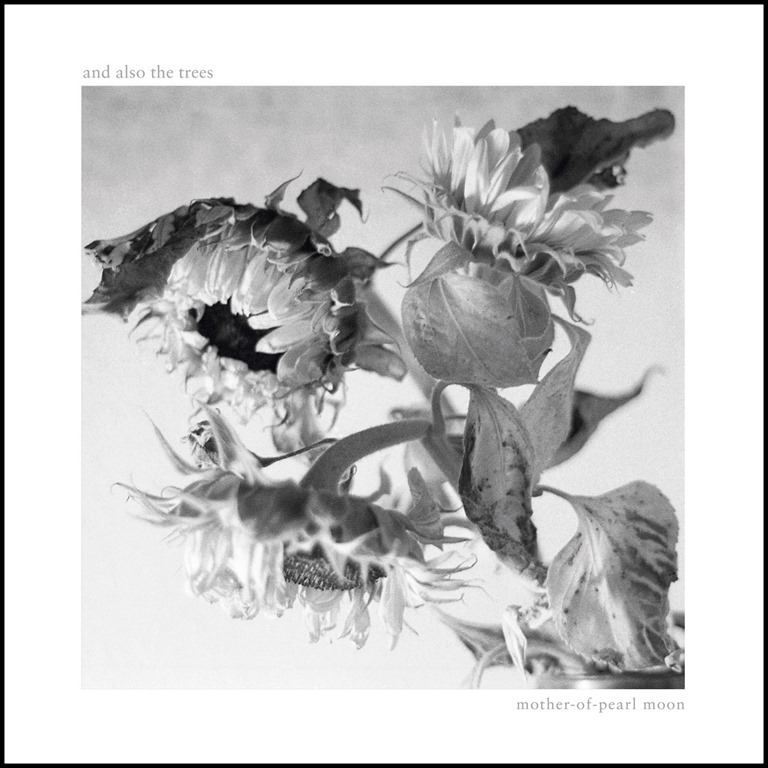
and also the trees will be releasing their new album, Mother-of-Pearl Moon, on 23rd February. Ahead of its release, they’ve unveiled a video for the track ‘Valdrada’, which you can watch here:

and also the trees (AATT) formed during the original post-punk era in rural Worcestershire, an environment that has provided a constant inspiration to a group whose music has often explored the dark underbelly as well as the beauty of the British countryside. They are renowned for their captivating live performances, a unique style of mandolin-like electric guitar, evocative lyrics and dark jazz rhythms – not to mention a creative independence fiercely preserved for over four decades.

AATT immediately caught the attention of Robert Smith of The Cure, who invited them to tour with his group on several occasions. Smith was also involved with their early recordings alongside his bandmate Lol Tolhurst, who produced their first records, a long-term friendship and mutual respect further solidified when AATT were invited to perform at the 2018 edition of the Meltdown festival in London, an event that Smith curated.

Founded by singer Simon Jones and his guitarist brother Justin, AATT have maintained a continuous presence on the post-punk, alternative rock and Gothic scenes worldwide. They have released fifteen studio albums and toured frequently throughout mainland Europe, as well as North America and Japan where they have also built a sizeable following.

The panoramic soundscapes on AATT’s compelling new album, Mother-of-pearl Moon, were born from a series of extraordinary electric guitar improvisations created in the pre- and post-dawn hours during a month of solitude in 2020. With the artful integration and imagery added by the voice, clarinet, piano, percussion, autoharp and Moog, the listener is taken on a voyage from the depths of the English countryside far out in all directions of the compass.

The music on Mother-of-pearl Moon is often filmic and reminiscent of various genres from the ‘50s to the ‘70s, perhaps most apparent in ‘This path through the meadow’, which explores the intertwining of nature in its human, animal and botanic form. Elsewhere, AATT visit ‘Valdrada’, an imaginary city described by Marco Polo to Kublai Kahn in the novel Invisible Cities by Italo Calvino, telling us what they saw, while the album title track transports the listener oceans away to the Far East…to its exotic gardens, still waters and the Mother-of-pearl Moon.

Mother-of-pearl Moon will be released on 23rd February and promoted with tours throughout the year, beginning with a rare UK show in Birmingham on 24th March followed by six dates in Belgium and France in early April.

bd137761af3ff0f3876a7bee8a567ae0e0ee5843