Posts Tagged ‘Fysisk Format’

Fysisk Format – 17th April 2026

Christopher Nosnibor

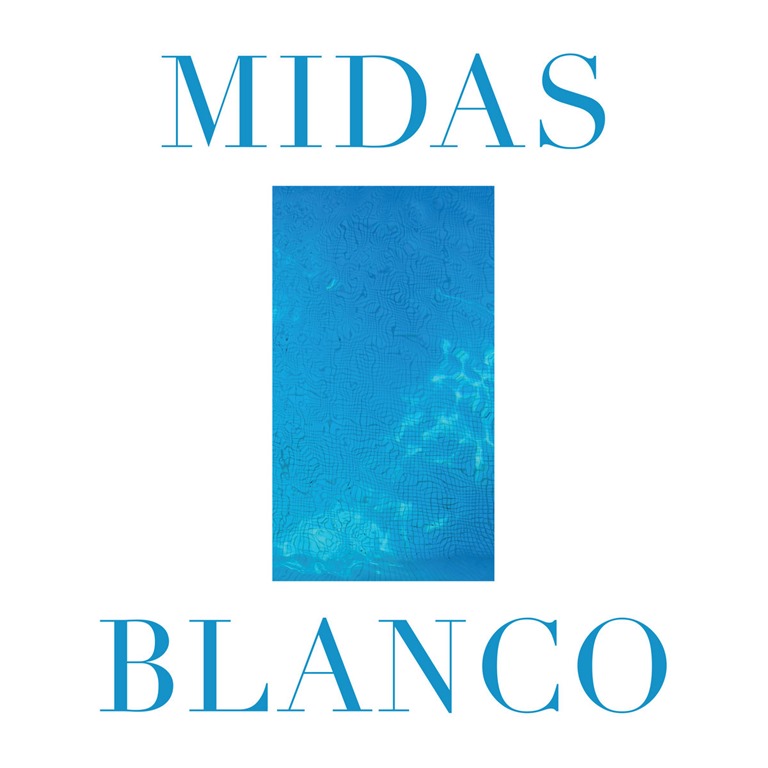
King Midas’ seventh studio album is the follow-up to their 2013 Norwegian Grammy-winning album Rosso. Thirteen years is quite the gap, although such spans between albums seem rather less unusual now than in times past. In the 90s, the five-year gap between The Stone Roses eponymous debut and The Second Coming was painted by the press as being longer than an eternity, but the last few years have seen acts return after absences of a quarter century or more. The fact is that many artists find themselves mired in life and in dayjobs, because it’s hard to make a living from music alone, and regular work and raising families aren’t compatible with creative work, and especially not with touring. And so it is that Blanco arrives more than thirty years after their first EP, From the Pipeline, in 1994, and notably, they report that the band ‘still consists of founding members Ando Woltmann and Per Vigmostad who share production credit for Blanco’.

According to the duo, ‘Blanco is an album about emptiness, partly inspired by Belgian cold wave music from the early 1980s, by the noise cancellation in BMW models from 2023/24, by New Age as a concept, by the novel Lanzarote by French author Michel Houellebecq, by Rod Stewart on his way home from a party in the wee hours and by yuppie Scandinavian businessmen in all forms’.

This seems like a curious array of inspirations, and I can only comment with any real knowledge on Michel Houellebecq’s typically bleak and anticlimactic novel and Rod Stewart, whose 80s work haunts me on account of childhood memories if my mother dancing to awful, awful songs ‘Baby Jane’ and Atlantic Crossing still got played far more often than was healthy. But then, I was also exposed to dangerous levels of Phil Collins and Tina Turner, which probably indirectly explains my immersing myself in writers like Houellebecq, who I arrived at on the publication of Whatever, which was described by Tibor Fischer as ‘L’Etranger for the info generation’.

According to their bio, ‘Blanco marks a brand new start for King Midas – a tabula rasa, a blank slate – where all methodology, instrumentation, composition and production are untried ground, and all paths have been trodden anew’.

‘Sunrise’ is a drifting sprawl of muiltitracked autotuned vocals which quiver and warble over some expansive, semi-ambient synths. It’s novel and vaguely entertaining, but you hope to dog that the album gets better, and mercifully, it does, conjuring expanses of quite claustrophobic, beat-driven electronica.

As an exploration of emptiness, it works well: the vocals are largely sampled and / or looped, creating an atmosphere of detachment, human sounds without the human presence, while the instrumentation is minimal in its arrangement. There’s no comfort to be found here, no human warmth, just stark monotony, beats that thud on, and on, and on… I never really took to dance music because it felt… impersonal, is perhaps the word which summarises the experience. And that’s despite being a fan of late 80s and early 90s electronic industrial music. Anyway. Blanco seems to take those elements and turn a mirror on them. It is repetitive, impersonal, monotonous… and that’s the comment. And there are flickers where there’s a near-silent acknowledgement. ‘Look’ brings a strongly eighties feel, and things fall into place around the BMW comments with ‘Blaupunkt’. A friend of mine bought an 80s BMW in the early 90s and thought he was flash as hell with his aircon and bangin’ stereo, although we’d be freezing our tits off while he burned fuel at an alarming rate with the aircon on and the stereo sounded shit. I’ve digressed again, but this is what happens with albums which are largely instrumental, and ‘Blaupunkt’ sounds like Kraftwerk nabbing bits of Ennio Morricone and chucking in a bit of New Order circa Movement. It’s pretty cool, and also hypnotic, but also intense.

The eight-and-a-half-minute closer, ‘Infinite Sadeness’ is slow, deliberate, expansive, the pulsating beats which define the album as a whole replaced by altogether sparser, more minimal, and subtler percussion, and with the introduction of flute it adds a new dimension to the sound.

Blanco is varied, and takes some time to come around to. The indefinable absence is affecting, and reverberates around these taut compositions, which emanate a sense of emptiness, assimilating all aspects of its dominant theme. But patience is the key. It’s as a whole that Blanco works.

AA

AA
a3099271958_10

Fysisk Format – 12th December 2025

Christopher Nosnibor

I’m not being flippant or facetious when I say that we don’t contemplate or discuss death nearly enough. It’s only natural that we – all of us – are scared by the prospect, be it of losing a loved one, or one’s own demise. The concept of no longer existing is beyond comprehension. No-one has ever reported back on what happens afterwards, although the notion of an afterlife is at the core of many faiths and belief systems, and people believe because it gives hope. the alternative, being a definitive end followed by absolutely nothing, is almost too much to bear. And so the tendency is to bury heads in the sand – metaphorically – and to assume – especially in youth – that we’re immortal.

But we are not. I myself began to feel an awareness of death in my youth, quite inexplicably. On reaching twenty-five, I became obsessed with the fact I had attained a quarter of a century and the sheer pace of the passage of time. Since then, I have lost all of my grandparents, an uncle, several friends I was at school with, and my wife. I write this simply as a matter of fact: death is one of the few facts of life, but one we seem programmed to deny the very existence of, let alone its proximity. I see so often, comments on the deaths of people in their sixties, seventies, even eighties, that they were ‘no age’ or ‘taken too soon’. This is outright denial. We consider people in their sixties to be ‘middle aged’. They’re only middle-aged if they’re going to live to a hundred end twenty: for most of us – and again, it’s uncomfortable to accept it – but 37-40 is middle aged.

So, they may be young – still in their early twenties – but Norwegian quartet Fanatisme, who ‘channel the lunatic, forest-worshipping spirit of early Ulver and Darkthrone, merging it with the gothic pulse of Christian Death and The Cure’ are presenting on their debut album ‘a fiercely individual rush of post-punk-infused black metal, a spine-chilling celebration of humanity, the beauty of life, and the inevitability of death.’

And this is interesting: a lot of goth and metal hangs its mood on the death thing, to the extent that death is often romanticised, but without really taking a grip on the reality. On Tro, håp og kjærlighet, Fanatisme explore a vast sonic and emotional range, which seems befitting of the topic. Not that I can comprehend the lyrics: even if they were sung in English, this would be an absolutely impenetrable snarl. But you get the sentiment and the sheer force of Tro, håp og kjærlighet, which is at times rabid.

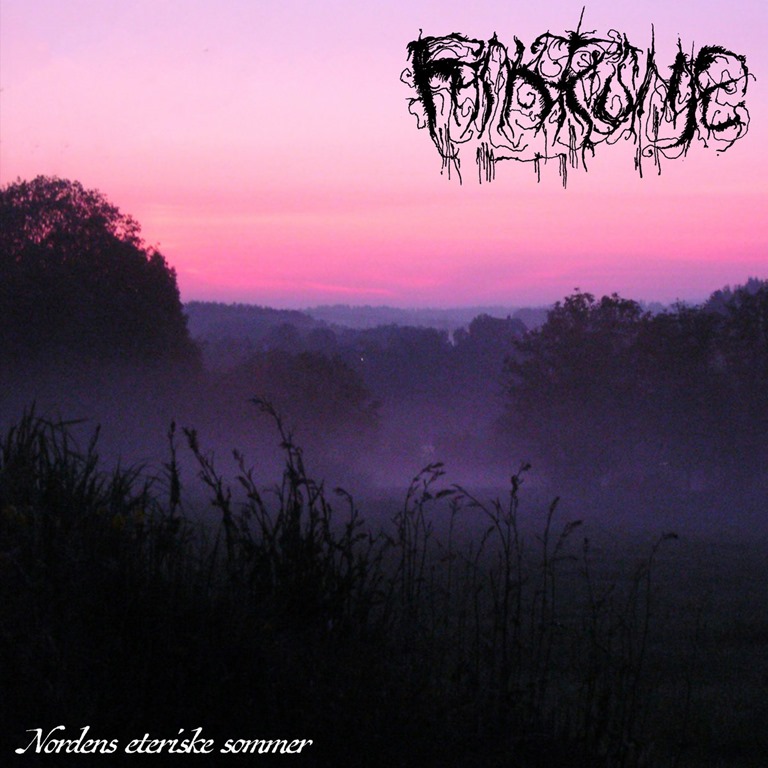
The first piece, ‘Stannhetens Slor’ is clearly designed as an intro, standing at under three minutes, and it’s a soft, drifting ambient work for the most part – but near the end, it builds and swells and culminates in an anguished scream of treble, a drone that grows to a howl. And then the guitars happen: ‘Nordens Eteriske Sommer’ slams in, a quintessential black metal blast of raw-throated vocals howling in a tempest of squalling sludgy guitars and a ragged, shamelessly underproduced rhythm section. ‘Kjrlightetsbrev til Vren’ actually sees the band find a rare groove, albeit punctuated by rabid, rasping vocals, while ‘Manetroket’ is a full-fat, heavyweight trudger of a riff monster.

Despite the complete impenetrability of the lyrics, this is an album that has impact and has a certain resonance. And it works. I wouldn’t recommend listening to this on your deathbed, but I do recommend listening. The last song finds them really hitting the spot, and hard. ‘Livet r en dans p Posens Tornet’ is one of those colossal epis that impossible to deny. The guitars race hard and fast a streaming metal churn of energy which rushes forward, its urgency dominating the whole blistering maelstrom, bringing an expansive, and heavyweight album to a racing climax. And whatever is lost in translation here, Tro, håp og kjærlighet is a high-impact release.

AA

347698

Fysisk Format proudly announce the signing of Fanatisme and the release of their debut album Tro, håp og kjærlighet, set to be released on December 12, 2025.

Emerging from the Norwegian underground, Fanatisme channel the lunatic, forest-worshipping spirit of Ulver and Darkthrone, merging it with the gothic pulse of Christian Death and The Cure. The result is a singular collision of black metal and post-punk, a dark and ecstatic celebration of life, death, and everything in between. Tro, håp og kjærlighet is both unrelenting and reflective, a debut that collapses the boundaries between black metal’s primal fury and post-punk’s spectral beauty.

‘Nordens eteriske sommer’ is the first cut to be aired from the album. It’s a belter, and you can hear it here:

AA

a2526695503_10

From the cold depths of Norway, Uaar emerge with their punishing debut full-length: Galger og brann (“Gallows and Fire”), a brutal, blackened slab of d-beat hardcore that pulls no punches.

Written and produced by Jon Schaug Carlsen and the band, the album is set to be released on October 17th via Fysisk Format, on vinyl and digital formats.

The band has dropped the new video for the track ‘Galgeås.

Fans of Tragedy, Skitsystem, From Ashes Rise, and Sibiir will find themselves right at home in the storm: crushing riffs, pulverizing d-beats, and an atmosphere so suffocatingly dark it feels like the world collapsing in real time. This is the soundtrack to disorder, decay, and the slow grind toward oblivion.

AA

87927798-a806-edad-e9ea-49b422216ea2

Norwegian post-punk collective Heave Blood & Die are gearing up to drop their fourth album "Burnout Codes" on January 26th via Fysisk Format.

Dedicated to bassist Eivind Imingen, who decided to end his life just following the recordings of the album, "Burnout Codes" is shrouded in sadness and tragedy, and shows the Norwegian collective offering their most textured and innovative album to date.

Just recently, Heave Blood & Die revealed a new track titled "Mjelle", which is the second single taken from the new album following leading single "Things that Burn".  Listen to "Mjelle" here:

AA

The band had this to say about the new track: “This is the soundtrack to the industrial mourning march to goth town, screaming Power Corruption and Lies! Mjelle  is about getting up and trying to achieve, falling short and burning  out, it’s a never ending loop of finding false and temporary refuge in  avoidance. This one is for our dear friend Eivind and a nod to one of Northern Norway’s undying classics by Terje Nilsen about the windswept and red beaches of  Mjelle just outside of Bodø.”

Recorded and produced by Karl Løftingsmo Pedersen and Ariel Joshua Sivertsen (Ondt Blod, Die a Legend),  mixed by Magnus Lindberg and featuring the artwork and design by Annika Linn Verdal Homme of Daufødt, "Burnout Codes" will be released on vinyl and digital on Fysisk Format.

AA

228c246d-045d-c84d-59d8-0cf6eaa39b9b

Photo by Brage Pedersen

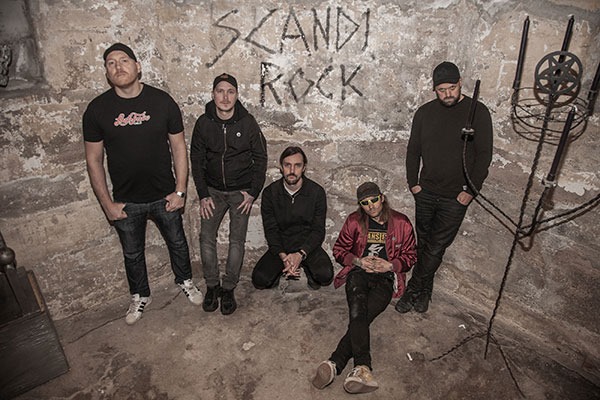
Norwegian acclaimed punk rockers The Good, The Bad And The Zugly, have just dropped a music video for a new song off the band’s sixth full-length album Research and Destroy, which was released on April 8 through Fysisk Format. 
Directed by Anders Bergh, the video for this new track titled Diet 1-2-3’ is now playing here:

Enjoy!

d89fa584-ba57-50b7-c6fb-8f0732c929c3