Posts Tagged ‘Trip-Hop’

Bearsuit Records – 6th November 2026

Christopher Nosnibor

The Gurney Shakes is Harold Nono’s first new music since the Faro EP in April 2025. It’s not only a welcome return which was more than worth the wait, but with seven tracks, represents a solid piece of work. The three-stripe / segmented collage cover art which accompanies it is in keeping with the house style for Bearsuit Records, with the same style of layout having been used for several of Eamon the Destroyer’s releases, which in turn shares stylistic similarities to covers for Andrei Rikichi’s releases on the label. And when it comes to Bearsuit, you certainly can judge a record by its cover, at least to an extent, in that there’s a strange Surrealist thread common to everything they’ve put out since their inception almost twenty years ago. It’s a strong track record, and an admirable commitment to ultra-niche experimental pop music.

This new set of compositions favours comparatively brief pieces – most are some way under three minutes in duration – and explores some considerably darker territory than previous works. This isn’t some sudden shift: Faro stands as a bridge between the softer piano-led pieces on We’re Almost Home and the heavier, more sombre sound of The Gurney Shakes.

We start with the title track, and it’s an ominous work of dark ambience: thick, abstract drones hang like fog. Faint traces of sounds like mournful strings and ethereal voices – sometimes delicate, haunting, at others more evocative of ancient and esoteric firelit blood rituals drift through and add layers to conjure an eerie atmosphere. In context of the title – and perhaps I’ve been reading and watching too much horror again lately – I find a burred, hazy image swimming through my mind’s eye, a scene where we see patients – maimed, wounded, and traumatised – being wheeled through dimly-lit corridors with flickering lights – a hospital now abandoned after some horrific historical event.

As a title, ‘Recut, Reframed, Resumed, Undone’ draws the attention to the cinematic nature of the album: as a composition, it’s a reminder of the more experimental, collaging aspects of Nono’s approach, with fractured fragments of piano , and finally, ‘These Fins Don’t Fit’, where skipping pipe notes and a loudly quacking duck – a sound which always makes me think of laughter, as if the bird is laughing at you as you pass it – takes us back to ‘classic’ Nono with a brief snippet of absurdist collage and jarring cut-ups which are vaguely reminiscent of Foetus in the mid-80s. As such, the first three tracks here lead us – in reverse chronology – through the three main stages of Nono’s stylistic evolution.

The second half of the EP errs more toward the spacious and atmospheric, with ‘Banjo Dimmer Switch’ standing out not because of its Surreal title, but because of its downtempo pace and vibe and understated trip-hop vibes. It makes you feel wistful and vaguely sad without being able to really understand. The crackle of static and soft-focus tones create an air of nostalgia, and the strings are sad, but… the effect is greater than simply the specifics. Or perhaps I’m just feeling sensitive and sad.

The final track, ‘Sing So Long to Singing’ manifests as a slow drift with a pulsating undercurrent, and is almost eight minutes in duration. Over the lugubrious strings and slow, plodding piano, extraneous sound trickles forth… and suddenly, in the final minute, the noise stops, and we are left with something incredibly graceful, almost neoclassical, and again absolutely worthy of inclusion on a film score.

Harold Nono’s evolution continues to fascinate. There are still flashes of the wildness and the weirdness of his earlier recordings, but this more serious, ponderous, and reflective phase showcases a much more sophisticated approach to composition, and brings with it a greater emotional depth and complexity.

AA

AA

a2507610290_10

Everest Records – 25th September 2026

Christopher Nosnibor

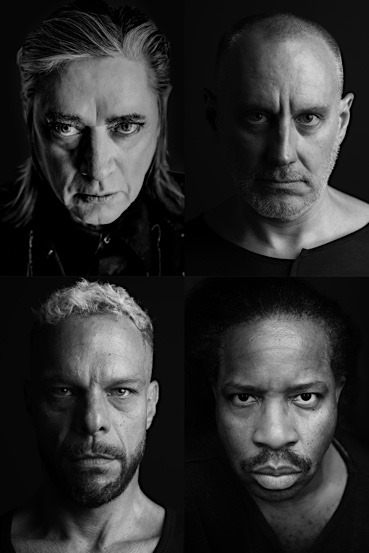
What we effectively have here is a pair of EPs from Swiss avant-garde act KiKu, led by trumpeter and composer Yannick Barman and drummer and percussionist Cyril Regamey, each one a collaboration – but rather than rendering them separate works, what we get is an album of two distinct halves, conceived, we’re told, as a diptych: ‘two distinct bodies of work held together by a shared musical architecture’, where, ‘on one side, Blixa Bargeld moves through language with precision, restraint and abrasion. On the other, Black Cracker turns language into rhythm, pressure and momentum. Between them, KiKu constructs a dense, unstable framework of trumpet, drums, sampler and electronics’. The result is something akin to a split album, on which the two sides of KiKu are as much a defining feature as their collaborators.

The first of the four works with Bargeld, ‘Orlando’s Victory,’ slides in with some retro-vibing electropop which isn’t a million miles away from late-career Leonard Cohen. Simmering synths strike some dramatic shapes and brooding tones atop a slightly shuffling, trip-hop infused beat. ‘The Number of the Millibeast’ is a slice of dark storytelling, a minimal, almost folky instrumental provides the backing for a half-sung, half spoken narrative, delivered with a theatrical flourish, before ‘Suzhou XX XY YX YY’ continues in the same sonic vein, while the lyrics become more abstract. The instrumentation becomes ever sparser and the lyrical cohesion crumbles with each successive piece, culminating in the flickering pulse and gasping weirdness of ‘Nonsense Rock ‘n’ Roll’, which seems to be a moan about some people playing music in the street in the night which rapidly escalates in divergent directions. The atmosphere is that of late-night, downtown, smoke and rough liquor, Bargeld adopting a persona that’s a bit Tom Waits, a bit Charles Bukowski, but which comes across with a hint of grizzled old man, chewed up and ground down by life, veering erratically between raconteur and curmudgeonly malcontent. ‘Do I like the music? No! Nonsense!”

While it’s Regamey’s percussion which sits to the fore on the Bargeld cuts, it’s Barman’s brass which takes the lead on ‘Bull Whip’, the first of four ‘bull’- themed tracks with Black Cracker. ‘So much road rage / so much road kill’, Black Cracker reflects. His delivery here is soulful yet sad, and the trip-hop vibe of ‘Suzhou’ makes a subtle but distinct switch to hip-hop on ‘It’s All The Rage’. ‘Leaping Bull (Chicago)’ is different again, and something deep within the song – the way the mournful trumpet which echoes out over stuttering beats, and Black Cracker’s grizzled, world-weary vocal, vaguely reminiscent in its patina to Mark Lanegan – tugs at half-forgotten emotions and a sense of memories of the past, hazed by time. And then, halfway through, it switches to a dense, droning slab of dark hip-hop, tense and twitching with angst. Coming out of nowhere, it hits hard, but paves the way for ‘The Running of the Bulls’, where bleak instrumentation and soulful but anguished vocals combine to convey a sense of conflict between the interior and the exterior. ‘Sleeping Bull’ notably is subtitled ‘Woke’ in parenthesis, and its lyrical and sonic latticework makes for a compelling combination while reminding us where the term ‘woke’ actually came from. It’s absurd to think that it’s been adopted as a pejorative term, predominantly by white, right-wing wanksacks. It’s high time to reclaim it, and to not only be woke, but woke and proud.

Decidedly more downtempo and downbeat than ‘Suzhou’, ‘It’s All The Rage’ feels less driven by anger or rage than it conveys an aching sadness, the kind that permeates the body to the core, and makes the limbs and the very heart weigh heavy. As a whole, Suzhou / It’s All The Rage is very much an album of two halves, precisely as intended. And as contrasting as the two sides are, they do, most definitely compliment one another, and, perhaps more importantly, they tap different triggers for response. It’s a multifaceted work, and most certainly an album to chew on.

AA

kiku-portraits-square

Glitchmode Recordings – 10th April 2026

Christopher Nosnibor

.SYS Machine’s third album is the first to be released through the Glitchmode Recordings imprint, home to Dave McAnally’s main project, Derision Cult, among notable names. And on Parts Unknown, .SYS Machine continue to expand their sonic palette, while still maintaining close connections with influences like Depeche Mode and Nine Inch Nails, but also Peter Gabriel and Porcupine Tree.

One thing which is key to .SYS Machine’s work is its proximity to the present: McAnally draws on his environment and events in real-time, and while previous album Graceful Isolation was the ‘lockdown’ album, Parts Unknown is, as they put it, a work which ‘reflects on navigating an age of uncertainty—both spiritually and technologically—touching on themes of recovery, loss, and the uneasy process of entering new phases of life.’ And once again, ‘the album also features guest vocal contributions from Kimberly Kornmeier of Bow Ever Down on two tracks, adding a dynamic that recalls the atmospheric interplay heard in artists like Garbage and Portishead’.

These are unquestionably daunting times: the world is at war – not all fighting the same war, but the point stands – and while many are joyfully embracing AI as an assistant, a creator of amusing artwork, a companion, or a therapist, just as many are fearful for their livelihoods. The future has never looked so uncertain, our places in the world as individuals so precarious.

‘Everyday just feels like the gravity’s gone’, is the refrain on the album’s first song, ‘Gravity’ – and it’s not about being serious. There is a sense of being cut loose from the planet, spinning free from all that is known.

Single release ‘Fading’, one of the Kimberly Kornmeier vocal leads, is altogether slower and more overtly reflective in tone – almost a trip-hop ballad, whereby the standard electronic backing, with its twitchy beats, is augmented with guitar. ‘Are you lost in yourself / I think you’re fading away’, she sings, sounding lost in herself, too. And perhaps the message really is that we’re all lost, but many don’t even realise – or have the time or headspace to reflect long enough to realise. It’s perhaps fitting that at a time when the world seems to be spinning at a faster pace, and waking each morning brings with it a combination relief at still being alive and the anxiety over what may have happened overnight and what the coming day may hold, that Parts Unknown manifests as a slower, sparser-sounding work, which steps back and creates space and time for contemplation. ‘Home’, the second Kornmeier cut is, in contrast, quite possibly the album’s poppiest, and more than justifies the Garbage references.

‘Resonance’ touches on the contradictions of life in the present: ‘I can see the future it’s not certain everything’s just fine / Maybe if we wait just longer everything will be alright’. We tell ourselves, perhaps even convince ourselves everything’s fine, but ultimately, it’s just a hope, wishful thinking that it will be. Because without hope, what have we actually got?

The expansive ‘Collapse’ is, contrary to its title, the expansive sound of hope as sweeping, cinematic synths soar over a delicate acoustic guitar, while the final track, ‘Closure’, leaves us in a more ponderous place, mining a strong seam of Depeche Mode / NIN electro-led instrumentation which blossoms into a powerful, uplifting finale. But is it the sound of true hope, or simply a desire to convince that hope still exists? And where does the line lie between hope and delusion? These are questions to mull while absorbing the details of Parts Unknown. Unknown and unknowable, none of us knows what’s around the corner. With Parts Unknown, .SYS Machine prompt contemplation with some well crafted soundscapes and neatly-tempered beats.

AA

AA

a3679975656_10

Distortion Productions – 20 February 2026

Christopher Nosnibor

Life is full of surprises: Peter Guellard’s band, Dichro, looked to be on the brink of a breakthrough, when, out of the blue, singer Charmaine unexpectedly announced her departure.

As Peter recounts, ‘Around the same time, I was remixing a track called ‘Hide’ for the Polish electronica band NUN Electro. That remix pulled me into the deepest, darkest corners of my imagination, and it sparked something unexpected. Inga Habiba, the band’s incredible vocalist, reached out to collaborate further on her solo project, CallMe. One thing led to another, and soon we were dreaming up the idea of starting a new band together. It felt only natural for us to vibe within the goth, industrial, darkwave, and trip-hop realm’.

Fast forward not all that far and here we are, arriving at the release of Death By Love’s debut album – a truly international collaboration, facilitated by the power of the Internet between Poland and Pittsburgh, Pennsylvania. Two of their three previous singles – debut ‘Sellenno’, and follow-up ‘Strong Inside’ (both released in January 2025) feature here, and it’s that debut which opens the album with drive and energy, immediately grabbing the attention with its driving beat and technoindustrial / goth crossover vibes. It sets the tone and the level for the album, which is bold on beats and big on darkness.

‘I Don’t’ stands out as bringing a tension and sense of drama, as well as some esoteric Eastern flavours, and ‘Strong Inside’ is also tinged with Eastern influences, hints of The Cure circa The Top and The Head on the Door, melded with the driving electronic throb of, but KMFDM, but with a strong focus on vocal melody. Elsewhere, ‘Lost and Found’ goes large with an epic, cinematic sound that would comfortably fill a large venue, and the slow, brooding, string-laced ‘symphonic mix’ of ‘Temros’ – the original mix of which is yet to surface – stirs the same primal power as Wardruna. It’s potent, powerful stuff.

For its throbbing bass and more laid-back beats, ‘God’ – which sees Guellard step up to taker the mic – is more mellow and casts nods to David Bowie, and ‘Cosmic Power’ showcases a very different aspect of their form, spinning elements of trip-hop and country into a New Age electro cocoon – and without sounding naff – and the eight-minute ‘reprise’ of ‘Sellenno’ which concludes the album is a radical reworking, built around a weighty organ drone and breathy, breathless spoken word offers another unexpected stylistic switch.

AA

And so it is that with 444, Death by Love deliver an album which slots neatly within the bracket of electro with an industrial / goth edge, but at the same time proves they’re no slaves to genre tropes, with some stylistic outliers which alter the listening experience and perception of the band in subtle but significant ways. Already, they’re evolving their own style: 444 is a strong and solid debut, and the directions in which they will develop this will be interesting.

AA

f009f436-999d-4534-ae2d-3e90e4adca41

Louisiana-based ‘industrial bass’ pioneer, SINTHETIK MESSIAH has unveiled their latest EP, Beneath The Surface.

Beneath The Surface is a descent into the undercurrent — a raw, unfiltered excavation of the chaos, cruelty, and confusion that define the world we live in. Each track is a spade hitting the dirt, digging deeper into the systems, histories, traumas, and human instincts that keep everything so relentlessly messed up. It’s not about offering answers. It’s about refusing to look away.

Sonically, the EP blends the smoky unease of 90s trip-hop with the rusted edge of 90s industrial — a fusion of broken textures, distorted synths, and dragging, dirt-covered beats. It’s jagged, emotional, and sometimes angry — the way truth sounds when it’s unearthed.

‘Caught In The Grip Of The City’ is representative of the EP’s dark atmosphere. Hear it here:

AA

1af3853d-f518-24bc-fb7e-db48d226923f

Slaughterback – 22nd August 2024

Christopher Nosnibor

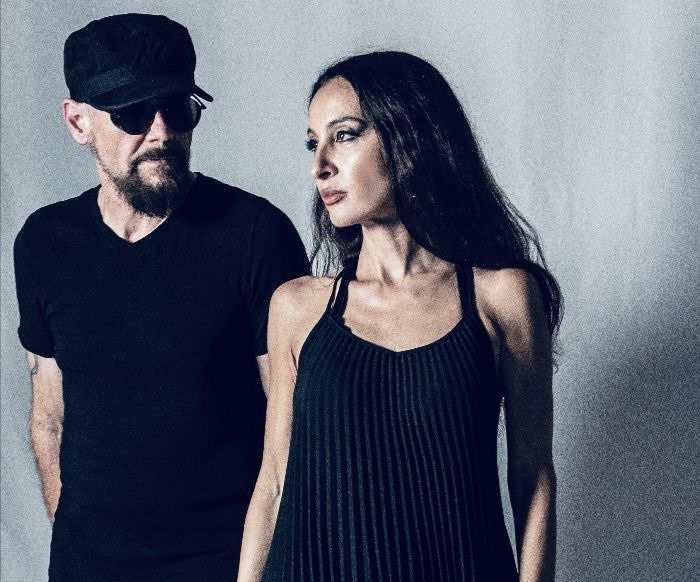
Dallas Kent might sound like a fictional cowboy, or possibly a made-up American town in a made-up state, but it’s actually the name bestowed upon the collaboration between London-based composer/producer Ian Williams (originally from Canterbury, Kent) and singer Crystal Brown (from Dallas, Texas). In that context, the moniker makes sense, of course.

As their bio explains, ‘It started in the late 2010s when Williams was looking for a singer to work with on some of his dark electronic pop songs, with Brown happening to live one street away from his studio in Hackney, East London… They swiftly recorded a considerable amount of material, but had to shelve the project when Brown relocated to the USA. The duo continued to discuss their options until finally, with Crystal settled in San Francisco and the pandemic giving everyone time to pause their normal lives, they decided to complete what they had begun so many years before.’

There’s no question that the pandemic changed a lot, if not, in some ways, everything. While many suffered with extreme alienation and the traumas of isolation and separation, it also forced a realisation of what was achievable, creatively, despite separation, and proved that the idea that ‘distance is no object’, which had long been embedded within the channels opened by The Internet was not merely a concept, but something which was more than simply a conceptual matter.

I suppose I realised this around the turn of the millennium, when I experienced something akin to a lockdown situation of sorts, albeit for very different reasons. I had relocated to Glasgow around Easter 2000 under difficult personal circumstances. I didn’t really know anyone. I was yet to make friends in my new job there. And I was so fucking broke I could barely afford to eat – a situation not particularly conducive to socialising and building new friendships. A friend I had known in York, who had subsequently moved to Sheffield, introduced me to Hole’s chatroom, and, stuck at home and unable to sleep, I found myself spending my nights online chatting to people from around the world at all hours, at least until, with dial-up Internet costing a penning a minute, I racked up a phone bill I couldn’t pay, and had my phone cut off. Then along came MySpace, and again, the possibilities for communication and collaboration across continents were immediately apparent. People who missed the age of the chatroom and MySpace were perhaps less predisposed to these potentialities, and consequently, the pandemic lockdowns hit them harder: they had to learn these things anew.

Anyway. This single entitled ‘Ghost Highway’, which, their bio tells us, ‘is redolent of Massive Attack and Ennio Morricone’ is the first fruits of their collaboration, ahead of ‘a full album that promises to be a mash-up of cinematic downtempo sounds, Americana, French disco and anything else they can throw into the mix.’

‘Ghost Higheway’ is very much a spacious trip-hop-influenced piece, with haunting vocals and a thick, dubby bass rolling low under a slow, deliberate, nod-along beat. Its magnificence lies in its sparse simplicity, and the fact it’s over almost as soon as it begins, and you find yourself yearning to delve deeper, to keep moving into this atmospheric world they’re presenting… it’s like the opening pages of mysterious, mystical novel, drawing you in and then…

The accompanying video is similarly compelling but without resolution: they describe it as ‘David Lynch-ian’ and explain how it was ‘filmed by Brown on her phone before being edited as psychedelically as possible by Williams.’

That they’ve kept this all in -house and simple and delivered something so compelling, so strong, is testament to their imagination and capacity for innovation, proving just how much can be achieved with minimal tech and over distance, given the drive and determination.

AA

37a5cb68f0cdad3a9a9e149ada8a125c052e391b2f9e5cde7010f1832fba7bd5751f2e8bee6f60fe

DALLAS KENT | Crystal Brown (photo by Ian Williams) & Ian Williams (photo by Damien de Blinkk)

Panurus Productions – 1st December 2023

Christopher Nosnibor

What better way to mark the start of advent than with a new release on Newcastle’s Panurus Productions, home of noisy and weird shit on tape, eh?

This latest offering covers both bases, being noisy and weird, but predominantly weird.

Panurus releases always come with cracking explanatory notes, and they’re worth quoting for this one, too:

‘Glitching and laced with interference from its temporal transit, Splat R. intercepts nine broadcasts of lo-fi noise drenched beats from a possible future. Hooks lead you through what could be samples, generated electronica or interference noise, that at times meshes and augments the beat and others swells over and underneath it with a sense of menace. There’s a sense of retro-future to the album in its tones and the recognisability of some of the sound used, but presented as if those ideas were carried further forward before being thrown back towards us, warped and distorted; as if it was constructed from pieces of culture scavenged in the aftermath of some distant cataclysm.’

My work here is done.

Of course, I’m not being entirely serious, but whereas many press releases bring a heap of hype, much of which is a world apart from the product being presented, or otherwise fails to really explain what the release is about, Panurus always absolutely nail it in their summaries.

But of course there is more. ‘Kill Spill Thrill’ is a murky, messy mash-up which evokes The Last Poets, Dalek, and RZA’s Bobby Digital, as well as glitched-up, chewed-up, mangled elevator music. It’s chilled-out hip-hop, trip-hop, and ambient tossed together, melted down, and left to fester and ferment for a while. ‘peace to you, if you’re willing to fight for it’ adds a whole load of wrecking bass and distortion to the bubbling dingy mess, lurching into the territory of dirty experimental industrial noise in the vein of Throbbing Gristle, only with samples thrown in hither and thither. ‘reality denied comes back to haunt’ is plain fucking horrible: lurching booms of thunderous noise and trills of feedback and wailing synths pushed to their limits in a power electronics meltdown suddenly segues into a crackling mess of club-friendly dance, but distorted in a nightmarish way.

‘authentic creation is a gift to the future’ lurches so hard as to reach the pit of the stomach, before ‘there is nothing new under the sun, but there are new suns’ pumps a beefy beat that’s pure nightclub – but obviously, the vibe is anything but buoyant or euphoric. It’s bad trip, apocalyptic, the dance dynamics distorted to the shade of a nightmare, fizzing sparks and subsonic detonations occurring simultaneously, like a nuclear blast landing a direct hit on a night club.

I can’t decide if I need to puke or shit as the messy mass of stuttering overload stammers and rolls and lurches onwards. This is glitch of the highest order: the briefest, almost imperceptible of stammers are amplified to the most uncomfortable, blurring, bilious horrors which emulate the worst post-binge room-spin.

Kill Spill Thrill is a splurging, intestinal-churning, head-shredding sonic attach that lands thick and heavy. For all of its touchstones, it doesn’t sound quite like anything else, and it rips the ground before it to devastating effect.

AA

Cover

Captivating, glamorous and bold, Belle Scar is a distinctive singer-songwriter, producer and artistic director originally from Montreal but now based in London. Described by the New York Times as “a creature from another dimension, she’s phenomenal,” her dramatic, cinematic music is at times redolent of a Tim Burton film score and at others of a mash-up between Nick Cave, Björk and Portishead.

Scar’s new single, ‘I’ve Been Here Before’, is about the acknowledgement and acceptance of the ‘black dog’ of melancholy. A moody slow-burner, it develops into a superbly arranged epic replete with sumptuous strings and an angelic choir that recalls John Barry and Jean-Claude Vannier. The video for it captures the magic of London at night, with Scar playing the lead role of a wanderer and actor JD Haymer representing her shadow, the clip culminating in a symbolic face-to-face meeting.

Watch the video here:

AA

62a7329535422c57288a9fe5e62507b33dc8fbc8

BELLE SCAR | photo by Ben Wilkin

21st April 2023

Christopher Nosnibor

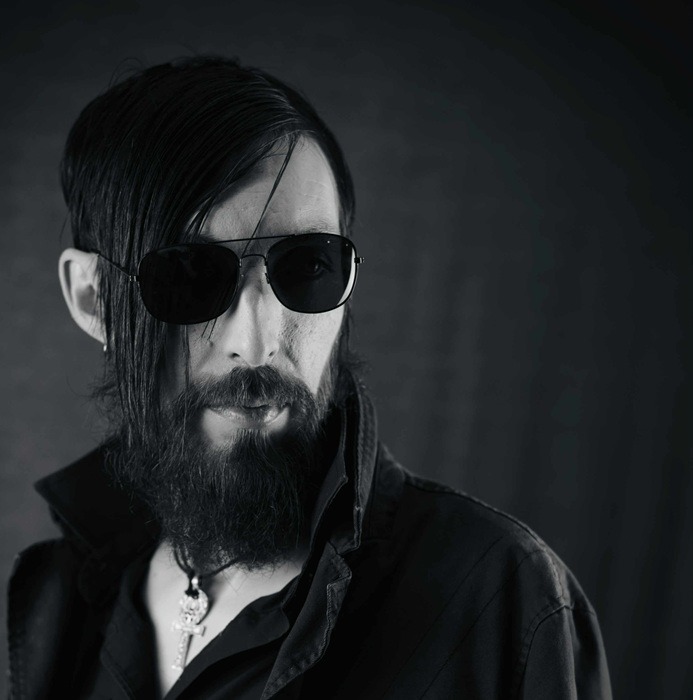
I’ve been trying to wrap both my tongue and my brain around the title of this album for what feels like an age: it’s something of a linguistic conundrum. Depending on your interpretation, ‘preter’ is either ‘more than’ or ‘past’ (which becomes a tautology when paired with the ‘retro’ of ‘retrospective’. Not that this is a retrospective in any conventional sense, being a collection of new material from The Noise Who Runs, a duo based in France, consisting of Ian Pickering, perhaps best known as one of the Sneaker Pimps.

It’s perhaps not entirely surprising that there’s a vaguely trip-hop feel to some of the songs on this varied and sprawling album which equally carries a dark 80s vibe – meaning that there are some really deftly layered arrangements and a lot of space in which to wander and explore the sounds and your own internal monologue while listening to Preteretrospective.

We’re steered into the album via the singles released in advance of the release, most recently ‘2poor2die’, which places the socio-political leanings of the pair to the fore and lands slap in the middle of the album as a towering centrepiece.

But it starts with another single, and the first song, ‘Beautiful Perhaps’ owes much to Disintegration-era Cure, but through a filter of She Wants Revenge: that is to say, it’s a contemporary take on a retro style, and it’s well done. This is true of the album as a whole. Perhaps my appreciation of trip-hop has always been because it has a certain hazy darkness about it, which to my ear renders it a cousin to goth and shoegaze.

‘Off the Rails’ incorporates elements of Dub and reggae, with an insistent marching beat and nagging bass groove dominating an otherwise sparse arrangement reminiscent of a more electronic reimagining of The Specials – with social commentary to match.

‘Somewhere Between Dogs and Wolves’ is a slow, atmospheric groover that really draws you in slowly: it’s pop, but it’s dark, minimal, with some pretty harrowingly visual lyrics. It’s compelling listening, and resonates in a way that nothing that qualifies as pop now can touch. ‘So Good it’s Free’ owes aspects of its melody to ‘Boorn Slippy’, but is a mellow shoegaze / acoustic song that sits apart from most protest songs – and make no mistake, this is a protest song. For all the mellow tones – look no further than the shuffling, jangling indie of ‘Zoe’s Edible Garden’ for evidence of the rather twee 90s indie that would be a prominent feature of John Peel’s show circa ‘93 – Preteretrospective has much depth alongside its range. This brings us to ‘2poor2die’, which is pretty bleak and brimming with frustrated energy.

As the press for the single points out, ‘the spiritual centrepiece of this 14-track offering, ‘2poor2die’ addresses the growing inequality in society and the struggle of the unheard / unseen decent people without voices and increasingly without hope. It is, at once, a celebration of ordinary bravery in the face of the daily grind of routine and a condemnation of the eternal ideology that sees working people as cannon fodder, only to be told “Shut up and get on with it, nothing’s gonna change”. Call it a tribute to the folks who are barely considered worth considering by the powers that be.’

With the chasm between the haves and have-nots yawning ever wider, this is punchy and on-point, sadly. But hearing such politics without the hectoring delivery of Sleaford Mods is welcome, not least of all because it really does represent the groundswell of opposition to oppression. There’s a reason why pretty much every profession is striking right now. Yes, we’re all being shafted, and we all need to take a stand.

Preteretrospective is a complex beast: a strongly contemporary album with retro stylings which confronts contemporary issues. At times it’s quite dancey, but whereas so often in the past dance equated to the escapism of clubtastic euphoria, with or without chemical enhancement, Preteretrospective is clear-eyed, clear-headed and irritated.

AA

The Noise Who Runs 3 - photo by Théo Valenduc

Photo by Théo Valenduc

Santa Rosa-based alternative pop artist Darwin presents his new single ‘Unkind Lover’, which features David J (Love and Rockets, Bauhaus) on harmonica, Dustin Heald on guitar noise and ambience, and producer/collaborator Julian Shah-Tayler (a.k.a. The Singularity). 

Darwin (full name Darwin Meiners) makes alternative pop with a dark, electronic feel. While rooted in the 80s, his music straddles several genres simultaneously, assimilating new ideas, processes and instrumentation into his work.

A beautifully eerie tune, this was inspired by the writing of Dani Burlison (particularly ‘Shark Week’, which is included in her book of short stories ‘Some Places Worth Leaving’).  
‘I was asked to make the music for a spoken word video written by my friend, Dani Burlison.  She had recently released a book of short stories called ‘Some Places Worth Leaving’.  I love adding music to film and was especially moved given Dani’s talent.  The short story is called ‘Shark Week’ and features a character known only as the Unkind Lover.  When I saw the final video, it struck me that it would be exciting to develop the music into a song," says Darwin. 

After getting Dani’s permission, the first person I contacted was Julian Shah-Tayler and told him the plan.  It was an inspiring song to work on sonically, but also writing in character – which I’ve grown to love.  My friend Dustin Heald is a master at getting his guitar to make wonderful noise.  He was enlisted to do just that.  The final piece was the addition of David J (Bauhaus, Love & Rockets) on harmonica.  Having been in a band with him for many years (David J & The Gentleman Thieves), I had gotten used to the sound of that instrument and I knew he would be perfect to put that final touch on it."
This new offering follows Darwin’s latest single ‘Dance Alone’, a synthtastic explosion of energy attesting to the strength of human spirit with a fun self-isolation-inspired video directed by Linda Strawberry, featuring dance clips sent in by people sheltering in place. 

Watch the video here:

AA

Darwin - Unkind Lover (cover artwork)