Archive for the ‘Reviews’ Category

Saccharine Underground – 9th June 2026

Christopher Nosnibor

I like my shit weird and experimental, and so it is that AD Ozium’s In the Style of Dead Sparrows is both weird and experimental, and needless to say I like it – but with the caveat that listening to it is an experience akin to being dragged through an near-endless nightmare, and every time you think you’ve woken up, you discover that you’re simply in another level of this multi-faceted anxiety dream.

The pitch is that ‘In the Style of Dead Sparrows is the latest transmission from the outer edge of instrumental music – a fractured, hallucinatory convergence of freak folk textures and no wave dissonance that dissolves the boundary between sound and psyche. Created by Washington D.C.-based solo musician Jeremy Moore (Zabus, Zero Swann, Bell Barrow) under the name AD Ozium, the album operates at the intersection of freak folk, no wave, avant-garde drone and experimental instrumental music.’

But this barely scratches the lumpy, irregular, alien, fog-covered surface of this album. The first composition, ‘Lifespring’ is exemplary in its exploratory nature. It begins subtly, some desert rock twang in a drift of breeze and warping ambience. With tweets and yawns, it feels as if the tape is stretched in places, and there’s a crackle and hiss reminiscent of that old four-track tape noise and plunging synth rumbles. Discord builds as the sound swells, unsettlingly. It continues in this way for the first six minutes or so, until the nerve-jangling tension and suspense breaks into a brief but thunderous rupture.

The ten-minute ‘Tender Loving Seed’ is swampy, straggly, churny, a mangled mess of broken-sounding country guitar and fractured electronics, not so much a whistle of feedback as the sound of circuitry melting amidst a swell of distortion. It sounds like fucked-up flamenco, it sounds like dialling through radio stations and managing to tune into none of them, it sounds like a cerebral spasm. It’s a slow unwinding of discordant chaos.

I’ll take a stab that ‘Whore of Sound’ is perhaps a reference to ‘Whorle of Sound’ by Throbbing Gristle, which appeared on their First Annual Report, and was subsequently reprised in a radically altered but altogether more brutal form as Walls of Sound on DOA: The Third and Final Report of Throbbing Gristle. Certainly, the sonic parallels are apparent: this is seven minutes of gnarly noise which swells to head-shredding intensity with hints of Lou Reed’s Metal Machine Music.

‘Faith is a Hole’ brings new layers of discomfort, the overloading low frequencies creating mic distortion and the most hellish vibrations, making for a long seven and a quarter minutes, before ‘Portents of the Terminal Mind’ ripples and reverberates a whirlpool of the wrongest confusion.

Confusion, contusion… ‘The Nazarene Distortion’ is gentle at first, but again, discord and chaos and blasting lasers reign… and all the while, there is a background rumble, a tape his that never stops. The background noise at times reminds me of Rudimentary Peni’s Pope Adrian 37th Psychristiatric – not because its similar in musical terms, but that endless, nagging background sound gnaws away at your ears and your brain. It’s not the most abrasive or attacking nine minutes of noise, but it’s a heavy slog of the most difficult atonality. It’s stomach-lurchingly messy. At times, you just want it all to stop.

This is challenging. It’s woozy, head-spinning. It simply sounds wrong. It’s not some Beefheart-style cacophony. It’s darker, the lo-fi leanings and atonality only amplifying the tension. Drones and buzzes, hums and fleeting phases are interspersed with annihilative blasts of noise, and the guitar notes simply echo out into the void.

In the Style of Dead Sparrows isn’t simply weird or experimental – it’s harsh and abrasive, and it will assail your intestines and hollow you out.

AA

a0516470554_10

Christopher Nosnibor

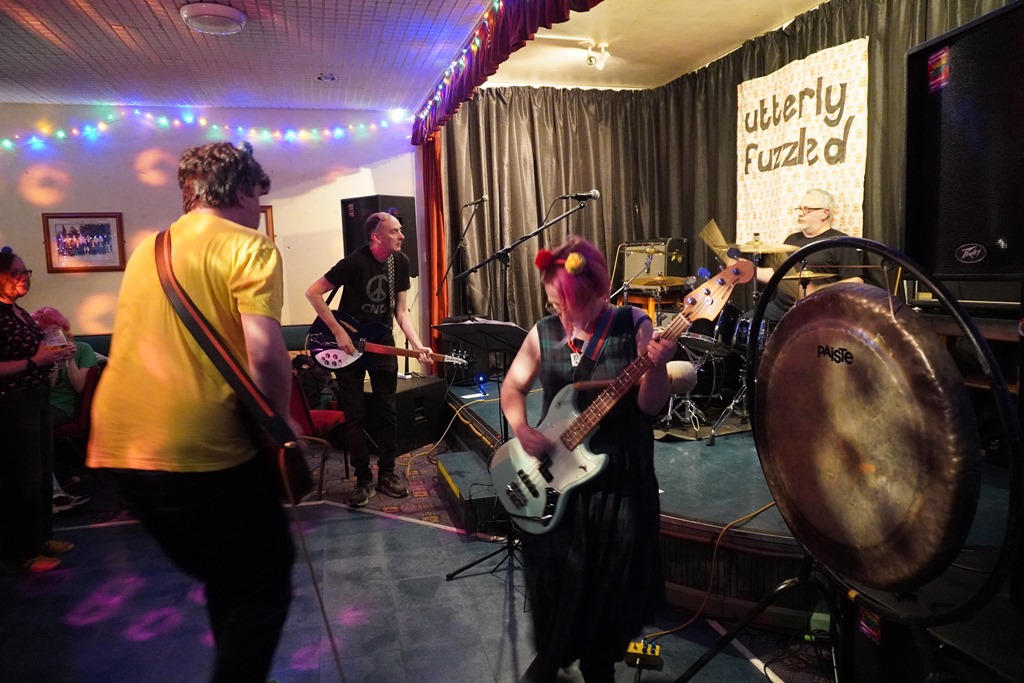
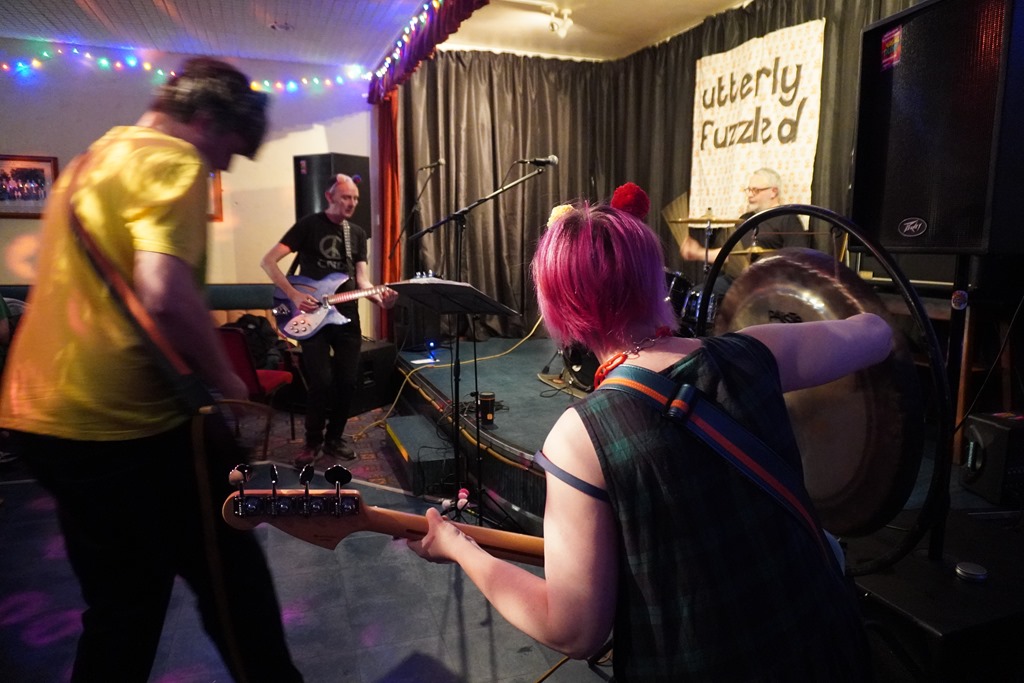
I’ve been frothing about the Utterly Fuzzled events for a while now, as being an absolute cornerstone of the remarkably vibrant York scene of the moment, and similarly, I’ve commented variously on the sense of community and the way the promoters support one another rather than compete. It’s perhaps a byproduct of these challenging times – noted from the stage by Objections during their set – whereby putting on gigs at this level is bloody hard work and largely a thankless task – and not without financial risk, either, which means that those who do it do so because first and foremost they’re passionate about music.

Times have certainly changed: back in the 80s and 90s, often regarded as a golden age for independent venues and new music, smaller places such as York were under the monopoly of greedy promoters who would operate pay to play and other unscrupulous policies which largely ensured that the bands – who had no money to begin with – took the risk while they got paid regardless. At least now there’s a certain sense of equality in that no-one gets paid.

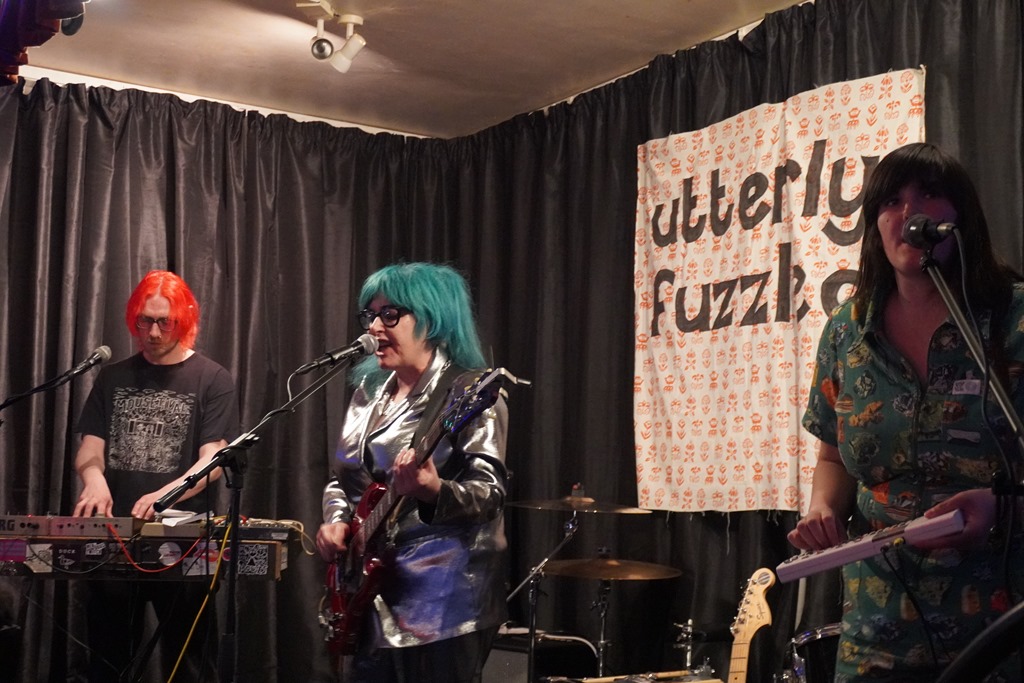
This is their tenth event, which expanded into a two-nighter (A Fuzzlefest, if you will), of which this is the second, and the lineup is stacked – a veritable ‘Best of Utterly Fuzzled’, with four of tonight’s acts making a return (if we include Objections who played a pre-Fuzzled event before the name was formalised).

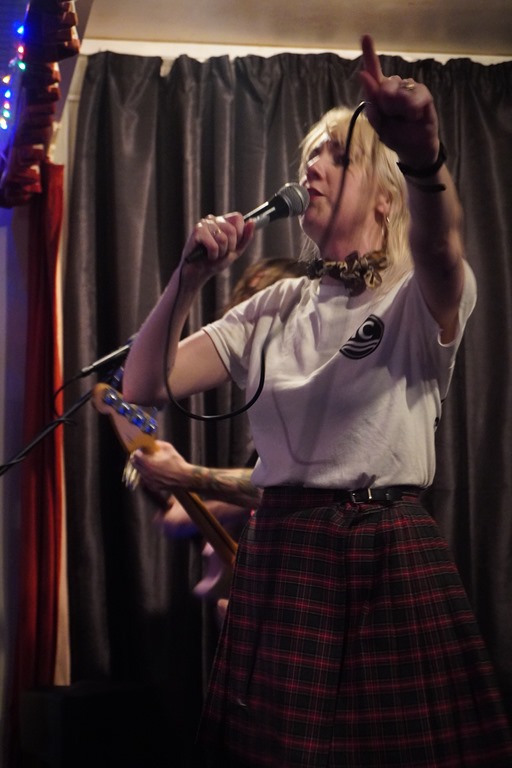
The fact that former headliners Dragged Up are late additions and opening proceedings, hitting the stage at 5:30 before hauling up to Newcastle (after playing Middlesborough the night before), is quite the coup, and testament to the strength of the connections organisers Jo and Pete have with the bands they put on.

Future single ‘Rapunzel’ lands mid set with guests vocals from Mel Whittle of fellow Glasgow act Count Florida – who are on later – and slides onto the chord sequence of Bauhaus’ ‘Dark Entries’ in the mid section. They close with a sprawling eight-minute monster about leopard print, which lands with far more impact in the room than it ever could on paper.

DSC01157DSC01174

Dragged Up

Pope Joan’s performance exemplifies everything that’s brilliant about the Fuzzled events – the spread of genres and the willing ness to showcase the oddball and experimental electronica amidst the guitar-based indie and post-punk and beyond. Pope Joan – formerly of Leeds act Casino Volante – brings a host of elements together with some quirky humour and a dash of strange. Initially, we get Stereolab meets Kraftwerk, evolving into some experimental synthy hip-hop with some mutant disco going on. Then at times it gets a but noisy, a bit DAF, a bit Cabaret Voltaire. The bants are awkward, and this seems to be part of the act, too. There’s a Yeah Yeah Yeahs cover that sounds more like Suicide – the band, that is.

DSC01192

Pope Joan

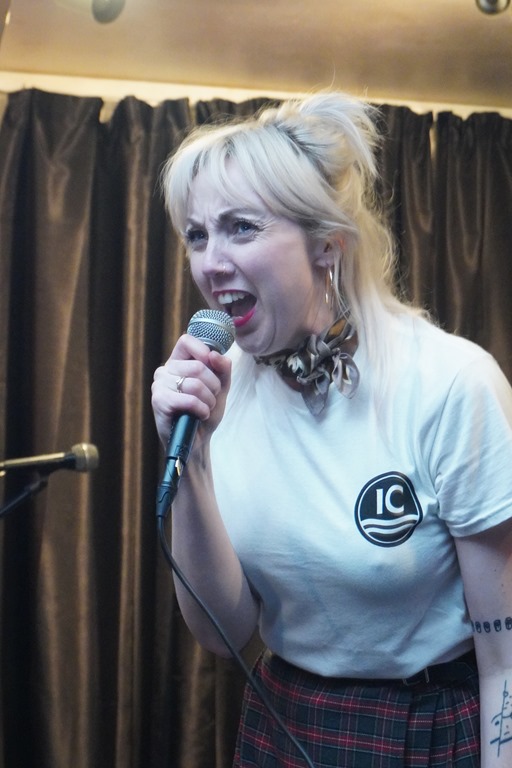
Two weeks on from the last time I saw them, The Bricks are relaxed and on fine form. It’s a very different setting, and the fact they’re every bit as good playing through their backline as through a PA – and seem as comfortable – is an indication of just how well meshed they are as a unit. Gemma installs herself in front of the stage, and, with all the room, she makes the most of the space, charging about, radiating electric energy. And once again, she hollers her fucking lungs out, to the extent that she’s visibly and audibly spent every grain of her guts by the end of the set. It wouldn’t work if the band behind her weren’t the pinnacle of precision, though, and while they have lengthy debates about what song’s next and how it goes, once the first bar happens, they’re in the zone.

DSC01208DSC01218

The Bricks

Second Glasgow band of the night, Count Florida espouse vintage jangly indie, hinting at the sound of C86, but perhaps more pertinently that of the Postcard Label – something which is uniquely Scottish (despite their releasing a single by The Go-Betweens, who were Australian). They’re perhaps a little under rehearsed for a few of the songs, and while not necessarily performed to peak level, I couldn’t help but feel the effect of some of their deeply personal songs about death and about loss and needed to breathe for a couple of minutes after their set.

DSC01252

Count Florida

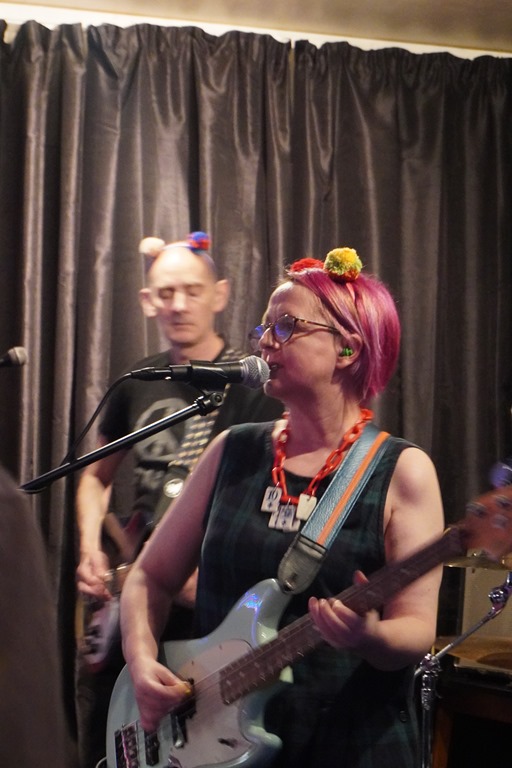
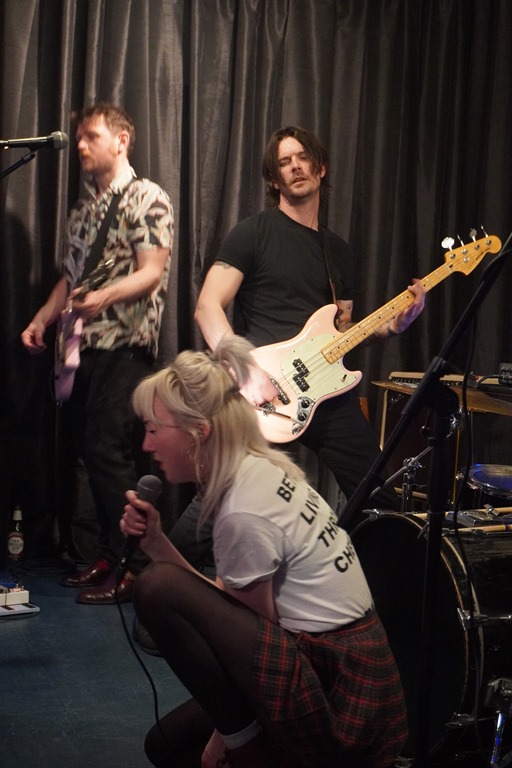
Knitting Circle just get better, tighter, more confident, more comfortable with every performance. They might not think so, but they do. Even when looking tense and debating the set list, the way they react to audience call-outs and situations more generally shows an assurance that’s a measure of a band becoming truly established. They throw in the risky new material in early, and the second half of the set is, as ever, a showcase in choppy, issues-based post punk. On the subject of issues, Jo (vocals, bass) recently posted on Facebook how a recent review had made a deal of her choice of dress in contrast to the rest of the band, highlighting how deep sexism runs in all aspects of our culture – it’s particularly glaring in context of Pete’s remarkable shirt collection. When asking of the audience how the mix was, there was a call for him to turn his guitar up – fair enough, but equally, he might have turned his shirt down. Anyway, needless to say, they sound great.

DSC01270DSC01271DSC01297

Knitting Circle

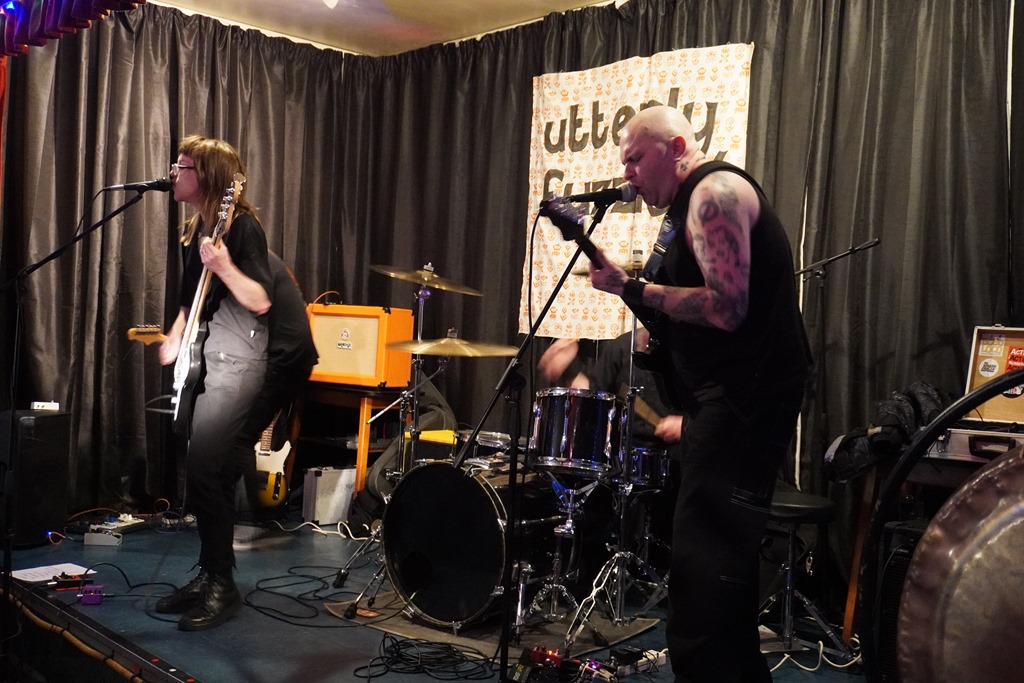
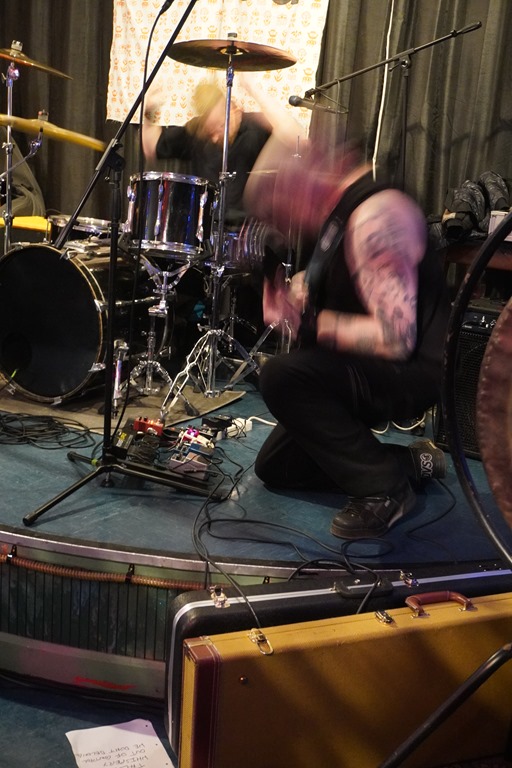
Objections are also well-liked around these parts, and further afield. I made precisely no notes during their set: I was simply hypnotised by the fretwork. They’re by no means a wanky band, but they are incredibly technical, and totally kinetic in their performance. They’re not exactly in the domains of Captain Beefheart’s Trout Mask Replica, but there is very much a sense of the three bandmembers each playing different tunes – but it all comes together, miraculously. Claire Adams’ bass switches between stop/start and booming groove, and it melds perfectly with the precision, jazz-style drumming of Neil Turpin, while Joseph O’Sullivan goes nuts in his own world making noise never before wrung from an electric twelve string. They’re completely unprepared when hassled for an encore, but after some debate, we get one. This is real, spontaneous. And it’s ace.

DSC01305DSC01312

Objections

This is live music at its best. Six bands for the price of a takeaway. Four have travelled: all six are worth the entrance fee. But it’s more than just about seeing some decent bands. It’s about the vibe, and the people, too. This is the very core of the live music scene.

Mortality Tables – 8th May 2026

Christopher Nosnibor

So much music, and only one pair of ears with which to listen to it… and similarly, one pair of hands to write about it. For years, I yearned – albeit half-jokingly – to clone myself, but now realise that doing so would likely only compound my problem, creating a situation where more availability would create more demand, and this would be very much a concession to the commodification of art – in all forms – whereby everything is considered merely ‘content’ and that a conveyor-belt churn of new content is the route to ‘engagement’. And this is absolutely fucking horrible. It’s dehumanising.

Shortly before I quit my dayjob as a complaints auditor for a multinational financial corporation earlier this year, we had been directed to use CoPilot to write our segments of the monthly report we produced to circulate amongst management. The directive was to get AI to write it, and then ‘sense check’ it against out audit results for the month. My colleagues were raring to go, and raced to embrace this: they didn’t enjoy writing up the monthly report on PowerPoint. I can’t say I loved it either, but I have degrees in English and had eight years’ experience in complaint auditing. The report was the one thing in the role where I had scope to not only flex my linguistic skills to pitch the tone of the report, but also to use my brain to analyse and comment on the otherwise fairly tick-box exercise of auditing. This is a circuitous route to my denouncing AI, and the reason why, when doubtless many ‘content creators’ would deploy AI to help crank out reviews at a far faster rate, I steadfastly refuse, and will always write my own reviews – albeit sometimes a bit rushed, a bit rambling, and with more typos than I’m anywhere near comfortable.

Reading the loner notes while listening to Aurora In Georgian Bay by Light Vortex reminds me precisely why this is.

The album’s title ‘was sourced from a 1931 painting by English-Canadian artist J.E.H. MacDonald (1873-1932)’, and we learn that ‘With thick and evocative brushstrokes, MacDonald’s painting depicted a view across Georgian Bay from Pointe au Baril in Ontario. Framed by wavering trees, the focal point of MacDonald’s painting was the phenomenon of fleeting, undulating shapes in the sky above the bay, illuminating the scene with an alien green-blue-grey hue.’

The notes go on to explain, ‘We hear a parallel to this in the eleven pieces of electronic music collated by Chris Moore on this album. Each track feels like it is vividly capturing the same refracted light that caught MacDonald’s attention, where sounds, sequences and subtle rhythms are encouraged to collide inquisitively with each other… Moore’s nuanced and detailed approach to electronic composition mirrors MacDonald’s abstraction of the natural world.’

These are connections of the type which can only be made by the human mind – instinctively, intuitively, by subconscious associations, by joining dots which exist through experience and knowledge. In short, life, in all of its organic richness, strangeness, and diversity.

To my eye, MacDonald’s painting evokes a soundscape that’s loose in structure and borders on ambience. Not so for Chris Moore on the strength of these compositions, which straddle the realms of early synth works in the vein of Kraftwerk and Tangerine Dream, and later – but still comparatively old-school in the timeline of music – electronic work from the 1970s, like Mike Oldfield’s Tubular Bells and Oxygene by Jean Michelle Jarre. In short, it’s emblematic of the juncture where wibbling analogue ambience evolves beyond experimentation centred around what the instruments could do. But of course, my response to this is based entirely on my personal experience and musical exposure. My knowledge is incomplete, and spontaneous. But it is my own.

This is also very much true of Moore’s compositions here. The man and the machine. The man manipulating the machine – and not vice versa, or the man replaced by the machine.

I very much get why there was – and remains – a fear of technological evolution, and why, in the 80s and 90s, Thee Musician’s Union were so opposed to drum machines: they felt the machines would render drummers obsolete. They didn’t, just as home taping didn’t kill music. Streaming, on the other hand, just may. And similarly, previous technological advances have been about the artist using the technology to create something new – whereas AI sidelines the artist to plagiarise from the entire history of creative work. To create is human: it’s the very essence of the human condition – to convey something through the process of creation, for fellow humans to respond to on an emotional level, a human level.

Aurora In Georgian Bay is far from emotionally direct: instead, what it conveys, obliquely, is a partially abstract sonic response to a partially abstract painterly work: both are deeply immersed in tone and texture, albeit in widely disparate media. It’s through such creative interaction and intermedia dialogues that we come to make sense of the world around us, and to make sense of ourselves, our thought processes. You simply cannot substitute or recreate that.

For the most part, Aurora In Georgian Bay is gentle, supple, rippling, and ultimately soothing. But it’s rich in nuance and detail and range. And it tells you nothing specific: it’s all there for you to decipher, to interpret, to project, to experience on a unique creative level. The door is open…

AA

AA

a0884084188_10

Christopher Nosnibor

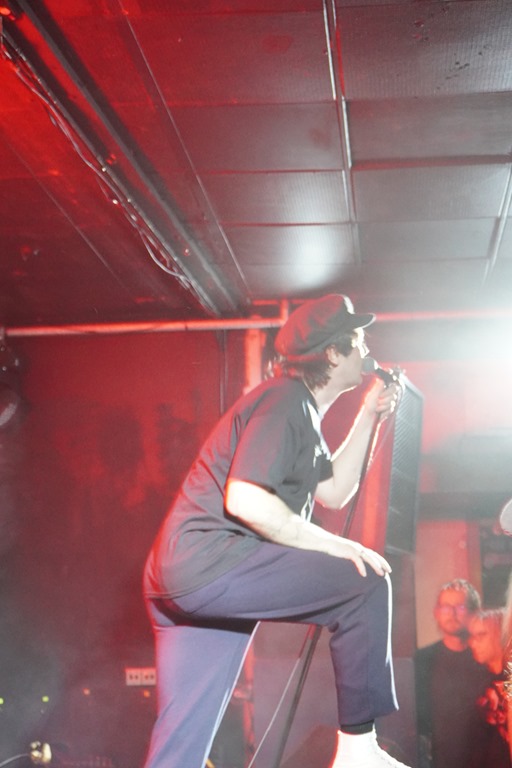
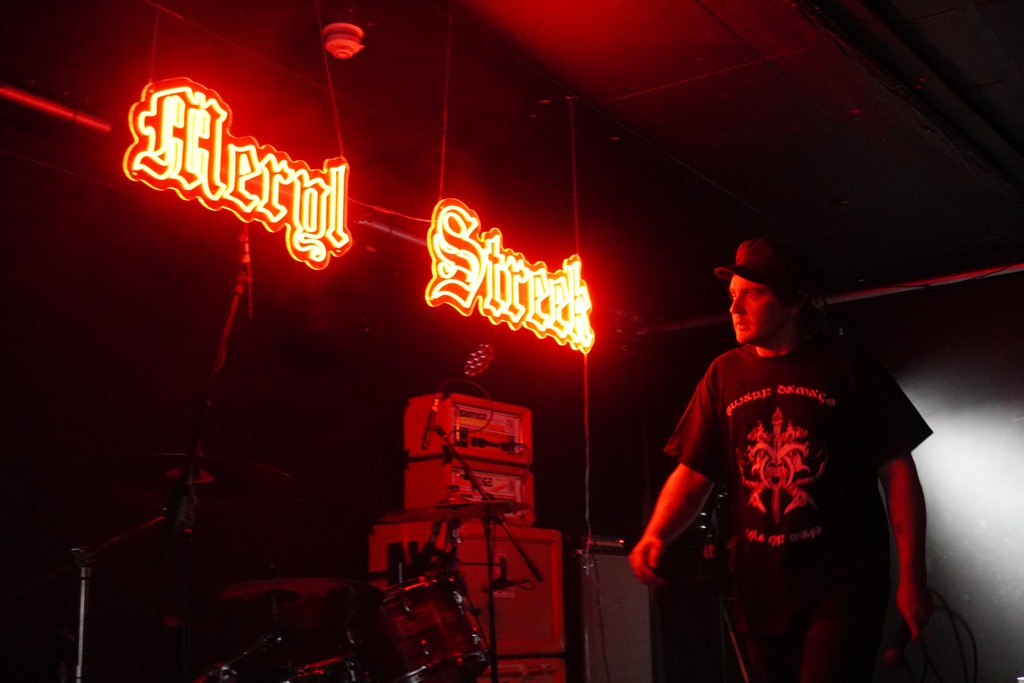
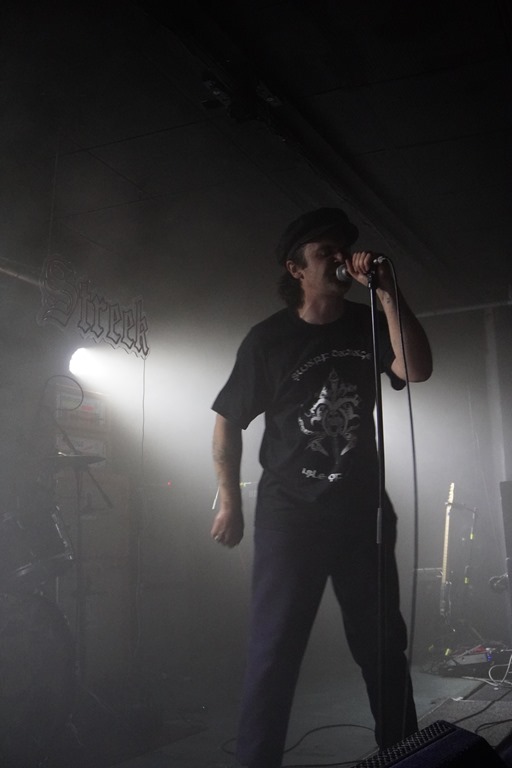
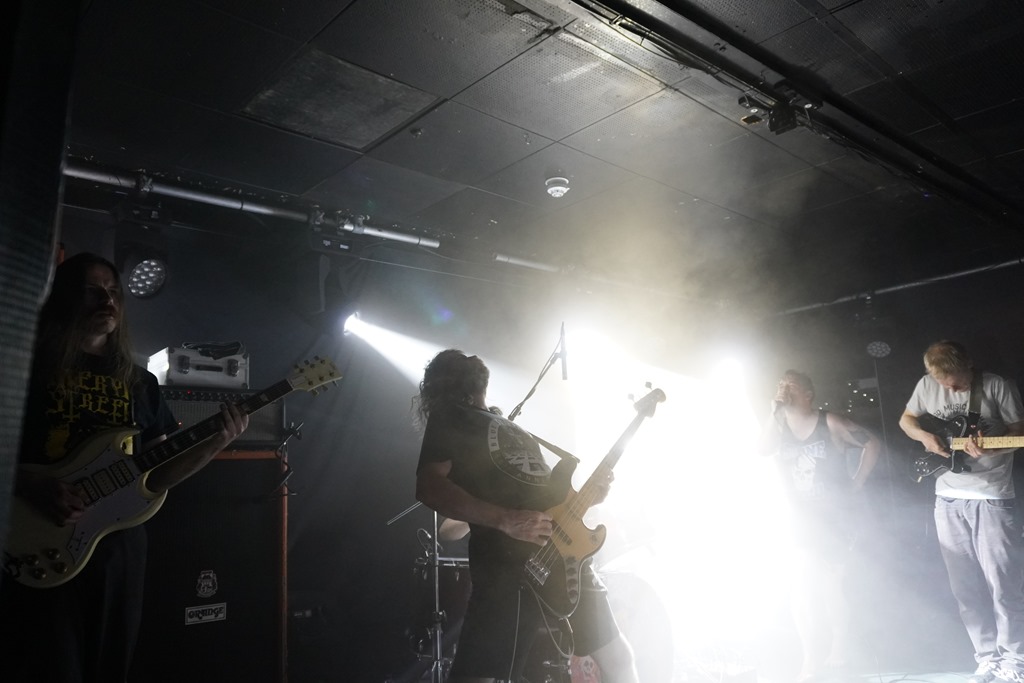
Alongside the Utterly Fuzzled events, the monthly Horsemusic nights at The Black Horse – a traditional boozer just outside the walls at the north of the city centre – have rapidly become established as not only a showcase for local and regional talent, also a barometer to the health of the music scene in the City of York. While proper dedicated independent / grassroots venues have been whittled to just two, these nights tend to be well attended and the acts received enthusiastically.

Tonight’s lineup is an absolute cracker. Bitchcraft had been scheduled to headline, but switched to go on early doors in order to hotfoot it across town to play a cancer charity gig – that they’re in such demand speaks for itself, as does the fact that they’re keen to honour both bookings. Equally telling is that the organisers have elected to pass any donations from tonight’s Horsemusic event (which is free, donations welcome) on to the charity too. This is what makes a healthy scene, when bands and promoters support one another and work together. And so it is that Jo and Pete Dale are here, clapping the bands as hard as anyone, and flyering for their upcoming weekender in between.

The last time I saw Bitchcraft, they announced their change of name during the set, because some film makers weren’t happy about The Blair Bitch Project. The new name suits, though: the all-female four-piece serve up fierce grungy alt-rock of a very 90s persuasion, and despite some guitar issues later in the set, there’s no sense that they’re holding back and saving themselves for the second set. Oh no. They give a hundred per cent.

DSC01033

Bitchcraft

The risk of the intended headliners going on first is that things could potentially fall a bit flat after, but the quality across the board is such that all three of tonight’s acts felt like headliners.

Too Late For Gods – who for some reason I’d assumed had travelled from further afield, but are also a York band, and who have brought some very keen mates along, wearing hoodies of their album, Misery Blooms – have a lot going on. A power trio with five-string bass and big amps, their Facebook page describes them as a ‘post-hardcore/emu three piece’, and I worry that Rod Hull’s estate might be wanting a word, but they go far beyond these genre parameters, with some thick, gnarly metal, grunge, nu-metal, at times a bit Fudge Tunnel, a bit metalcore, a bit post hardcore, a bit emo… It’s a matter of taste as to whether all of these different elements have equal appeal, but it’s a matter of fact that they kick up a lot of noise and some hefty, sludgy riffs, beefy bass and roaring vocals. It’s also a matter of fact that they play incredibly well, have their sound absolutely down, and mic stand issues not withstanding, deliver an outstanding set.

DSC01083DSC01068

Too Late for Gods

Sewage Farm have no issues. Well, not of a technical nature, although their rampant, riff-blasting rager of a new album, Fuck It, which I reviewed for Whisperin’ and Hollerin’ is positively foaming with piss and vinegar. They play pretty much the entirety of the fifteen track album during their set, which can’t be much over half an hour long. And it’s glorious. No chat. No tuning. No pausing to regain breath, take drinks, towel down. Instead, they power through the songs – short, fast, loud – packed back to back from beginning to end.

DSC01101DSC01120DSC01121

They’re a blur of moppy hair giving the riotous energy of Mudhoney and the US alt scene before it transitioned into grunge proper, and because they’ve all been in countless bands since forever, they play with a proficiency which matches the power, and they’re simply a lot of fun. And fun is important, especially right now.

Christopher Nosnibor

17th April 2026

The population of Waiheke Island, just off the coast of the north island of New Zealand can’t have a huge population (just shy of 10,000, apparently), and renowned for its scenic beaches and subtropical climate, it’s not an obvious spawning ground for bands making sharp-edged post-punk. Surely this ‘slice of Heaven’ is a perfect oasis of contentment? What could anyone have to gripe about?

Of course, that’s not how it works. The human brain doesn’t work like that. Everything is fucked, people are people, and paradise is a myth. So here we are with the debut EP from Trauma Party, who describe themselves as purveyors of ‘post-punk desert lullabies and sonic anthems for the downtrodden.’

The last few years has seen post-punk become a real catch-all for anything that’s a bit guitary with a bit of edge but isn’t punk or indie (I’m not even going to start on the way the use of ‘indie’ has changed since the 80s or even 90s), but for me, there’s a quite specific period which sits tightly around ’79-’81 or thereabouts which saw bands exploring and experimenting in ways we hadn’t heard before. So much punk was simply pub rock played fast with the amps cranked up to nine and a half, and while it was a vital stage in the evolution of modern music, what emerged in its immediate wake was far more interesting – darker, weirder, and considerably more sophisticated, by and large. Not just musically, either, but conceptually, lyrically, things got more nuanced. Consider the leap from the sneering nihilism of pub-rock posers The Sex Pistols to the technical prowess and astute sociopolitical observations of Gang of Four, and the distinction becomes clear.

The title of this EP sounds as much like a veiled threat as a promise of a treat, although a treat it certainly is if you like your sounds discordant and difficult. As they pitch it, these are songs ‘Soaked in vats of noise and shaped on dive bar stages over the last 15 months. Culled, remodelled, and forged in the grit and sweat of the Dirt Track rehearsal space, this E.P. is a juicy little nugget for your collection.’ Three of the four songs have been released previously but they’ve been tweaked and remixed for this release, which has a commendable consistency.

‘Are We in Heaven’ arrives on a wave of choppy guitars with multi-layered vocals. it’s stuttering, jarring, awkward, claustrophobic, with heavy hints of early 80s The Fall with a bit of Wire and a dash of noise rock thrown into the mix. It makes you feel kinda tense, a bit paranoid, even. In terms of that post-punk experimentalism, that kind of boundary-pushing, that more nuanced level of articulation, it hits the spot.

Offering a different shade of heaven, the guitar melody of ‘Speak to Me’ carries echoes of The Cure’s ‘Just Like Heaven’ and pairs it with some choppiness that alludes to Gang of Four, and, again Wire, and at a mere two minutes and seventeen seconds, it’s concise and catchy and speaks of political unrest.

AA

‘Roll Up (It’s the New Truth)’ slams things home hard in driving waltz-time and kicks up a visceral energy to conclude the EP. It packs four songs into twelve minutes, and a lot happens in this brief time. Boom. Job done.

AA

AA

cover

Negative Gain Productions – 10th July 2026

Christopher Nosnibor

Nothing says angst-filled industrial rage with a dash of harsh Sadism than calling your band Choke Chain. But while the pitch is that their latest release is ‘the aural equivalent of existential dread’, there’s nothing about this which says ‘edgelord’. It feels like we’re in a new era here, where extreme acts are ditching the extreme shit, the shock shit, the right-wing shit, and are instead engaging with environmental issues, emotional issues.

As they pitch it, ‘The human race continuously proves itself to be largely incapable of any kindness or empathy, instead being completely obsessed with killing and destroying. That’s the central focus of Decomposition.’ It really does feel this way: the US and Israeli governments in particular seem hell-bent on annihilation right now. A part of me misses the Cold War: while we huddled under the perpetual fear of nuclear annihilation, there was equally a certain comfort in the protracted stalemate. The last few months, I’ve woken each morning, soaked in sweat and a state of anxiety and the first thing I’ve done is check my phone to make sure I’m still alive, and then check the news to see that the world is still there. This may sound extreme, but this is the nature of things, and I know I’m not alone in this feeling of perpetual panic.

Says Choke Chain founder, Mark Trueman: “The EP was mostly written during a time where I was very close to giving up. Everything felt completely hopeless, and still does to some degree. I really tried to put all of that feeling into these songs. I also tried to confront some of my personal trauma on this record, which is something I’ve pretty explicitly tried not to do through my music in the past”.

The EP is a positive proof of why we should be glad he didn’t give up, but it’s not hard to understand why things reached that point. Everything’s fucked. And we’re doomed. Whether it’s AI takeover or global climate change or WW3 (if we’re not there yet, we’re on the brink or in denial).

‘Misunderstood’ is a quintessential snarly industrial / metal plus samples intro, but Trueman’s rabid vocal gives hints of Dominic Fernow. The title track is relentlessly brutal: electronic industrial at its darkest, harshest, most metal. It’s very much in the vein of late 80s Wax Trax! with surging grooved and pounding electronic percussion, and the vocals mangled to fuck.

‘Morgue’ is classic sample-soaked dark electronica. It feels brittle, it broods, and there’s something unsettling about the layers of vocals which build layers of discomfort. ‘Life Ends’ is nothing short of rabid, an anguished roar of pain against a relentless electronic pulsation.

There’s no escaping it: with Decomposition, Choke Chain have delivered an EP that’s harsh, and heavy. It’s nasty, it’s uncomfortable. It’s like a punch to the gut, and leaves you feeling short on breath.

AA

279374

Futura Resistenza – 9th June 2026

Christopher Nosnibor

23 minutes is, of course, about the most music that it’s possible to fit on one side of vinyl without risking loss of fidelity, but the number 23 is also the locus of the so-called ’23 enigma’ popularised by William S. Burroughs, which suggests that the number 23 appears with unusual frequency in various contexts and may have a larger, hidden significance. Of course it’s likely a coincidence, but the fact that Cold Shoulder contains two pieces, each just over 23 minutes in duration, and thus occupying a side of the LP is undeniably an instance of the recurrence of the number 23. Did they compose the works specifically to the end of fitting as much music onto each side, or were they edited to fit for the vinyl pressing? Perhaps you need to have been at the show to know – for Cold Shoulder is a document of a live performance, recorded live in Berlin in late 2024.

Ambarchi and Guthrie have been collaborating for more than twenty years now (maybe even 23, who knows?), and Cold Shoulder showcases an evolved level of intuition: as their bio summarises, ‘Their musical dialogue, which previously moved through abstraction and volatile electro-acoustic experimentation, now unfolds with relaxed confidence, melding drifting Leslie tones, shimmering percussion, and fluid pulses that emerge and dissolve’, adding ‘It’s a document of experience; music that feels freer, more direct, perhaps quietly fearless’.

Constructed using layers of drones which hover and hum, trilling tones which stretch out over expansive minutes with barely minimal shift, subtly melodic elements gradually reveal themselves. Ambarchi’s guitar doesn’t sound like a guitar for the most part, as he coaxes and teases the subtlest of ambient strains of feedback and quivering sustain from his instrument, and Guthrie’s percussion is restrained beyond restraint, consisting primarily or the most delicate cymbal work, and the most occasional muted punctuatory thuds. Around ten minutes into the first part – ‘This Cold Shoulder’, some misty forms emerge, a vague rhythm, and organ-like drones, an evolving atmosphere that swirls skywards, a melting together of space-rock and ambient jazz. Notes warp and time twists, as the percussion becomes more complex and more prominent, yet still subtle, restrained. Further on, there is a slow, stuttering wind-down, during which the sounds become increasingly fractured and hazy.

The second part, ‘That Cold Shoulder’ finds Ambarchi’s feedback drones splitting into shuddering whines which call to mind Metal Machine Music, but gradually folds into a more gentle interlacing of quavering notes, while the drumming, still muted, gathers pace if not volume. Time simply hangs in suspension at this point… and gradually flakes into pieces, along with any semblance of structure.

It’s a wonderful experience to simply lose oneself in this ever-transitioning, eternally-shifting work, which ultimately comes to drape the listener’s ears with mellow tones, concluding with a segment which evokes something between space and the sounds of a tropical forest at dusk. But none of it explains the bizarre George Michael portrait on the cover…

AA

AA

RESLP043 front

26th June 2026

Christopher Nosnibor

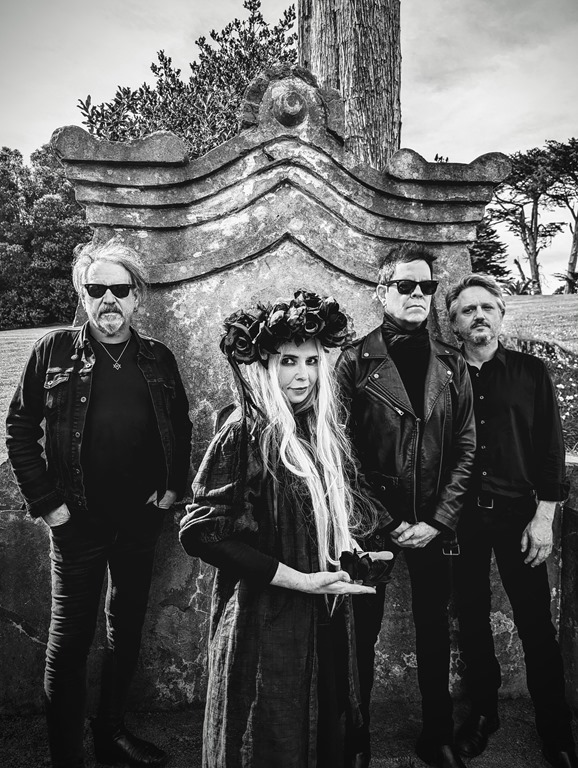
Although they may have seemingly risen out of nowhere a couple of years or so ago, Papillon du Nuit, the ever evolving, ever-expanding musical project revolving around Stephen Kennedy, alongside Mika, Steve, and Karen (who between them cover vocals, cello, grand piano, guitars, keyboards, and percussion) is a coming together of individuals who have been on and around the ‘goth’ and adjacent scene in the north for some considerable time, to form a loose collective. Having debuted in October 2024 with ‘Scarlet’, they’ve built a body of work through a succession of singles – eight in all. Most acts would have simply compiled said singles to assemble an album – but not Papillon du Nuit, and certainly not Stephen Kennedy – because he likes to do things the hard way. The proper way. And because his roots lie in that 80s goth era where bands like The Sisters of Mercy grew their fanbase through a series of ever-evolving single releases but saw the album as a different medium, a means of creating a specific, thematically unified document. As it happens, Musetta sits somewhere between the compilation and standalone document, plucking a selection of those previous singles and placing them amidst the new songs, meaning that of the album’s nine tracks, five have been previously released, although sitting in the context of an album they feel different somehow. And as much as Papillon du Nuit embrace some elements of goth – or perhaps, more accurately, the gothic (think brooding atmosphere, haunting imagery, a sense of drama) – this is a project which goes far beyond genre, with strong leanings towards neoclassical, chamber pop, the theatrical, even the operatic.

As they explain, ‘The album is named after Musetta, one of the major characters in the opera La Boheme, who is enshrined with all the qualities, and all the follies, that make us who we are. Many of the songs here explore a mythical, almost mystical journey, with life displayed more as an inevitably straight path, rather than something circular. The songs are not about death, but many of them lead there’. Some may mock with a ‘pretentious, moi?’, but Musetta is a work which is fully committed to art, and therefore sweeps pretence aside in being the real deal. That Steve Whitfield (The Cure / The Mission) produced, and co-wrote some of the tracks is nothing if not proof of pedigree, as well as their commitment to delivering an album which goes to great lengths to realise strong intent.

Heavy breathing, a panting even. Tension. Suspense. Then comes the panicked whisper: ‘is it dark, or am I blind?’ It has a decidedly Beckettean feel to it. A piano begins to reverberate. This is ‘Jude.’ As a single, it arrived as a stark and curious hybrid of poetry, theatre, and folk with a prog-rock leaning and a sense of the epic. In a revised context as an album opener, it feels very much like an introduction, a passage into a vast musical world. ‘Pilgrim’s Arc’, the most recent single, released in October, is driving, dynamic, tempest of a composition, and makes for a stark contrast arriving immediately after. Immediately, it’s apparent that there’s no small consideration been given to the album’s flow and shifts in mood and pace, and even this early, themes of time and mortality emerge.

AA

The first of the unreleased, album-specific songs, ‘Natalie’, follows, and it’s cinematic, widescreen-even, with its string-soaked chorus, again building to a spectacular finale. It’s no criticism to say it sounds like an album track: it’s magnificently executed, and offers some respite from the experimental intensity of the songs which precede it, and the cello-forward ‘A Sea Within An Ocean’ is the work of a band spreading out and settling, stretching their limbs and simply composing to make music, free from the (self-made) pressure to record a single in a day, or whatever their previous process was. It feels looser, more relaxed, and the result is a rolling, hypnotic wave of a song.

‘Cello Poem’ – at a mere two and three-quarter minutes – feels like more of a narrative bridge than a song in its own right, and the spoken word segue links single cuts ‘Amber’ and ‘Ariadne’ – and does so quite effectively, in truth. It does, however, keep death as its focus. And I suppose this is the core of the matter. As they say, ‘The songs are not about death, but many of them lead there’. How many of the great plays, novels, or poems aren’t about death, at least in some way? Death is, after all, the only certainty in life.

AA

Where Musetta differs from other albums where death is a preoccupation or a focus is that this is an album which carries a weight. It’s in no way frivolous or posturing, it doesn’t take death simply as a motif: it’s a soul-felt meditation on the end of life. No glorification, no stylisation, but a philosophical contemplation. It’s this which makes Musetta so impactful. Not only is youth wasted on the young, but life is wasted on the living, by and large. That is to say, it’s hard to appreciate what you have until it’s gone, or slipping away, and while so much goth – and metal, and so much music of many styles, for that matter – is preoccupied with death in a conceptual way, there comes a point where it comes all to near, all too real, and here it gets scary – rather than a game of lofting skulls and a flamboyant delivery. Shit does get real, and we all have to face the reality of mortality. And at this point, it’s not cool, it’s not dramatic, it simply becomes a heavy reality. We start by losing grandparents, and parents, and often, in between, friends and peers. And when it’s your peers, you start to worry. And if you don’t, you probably should.

Musetta is packed with heavy moments – not so much sonically, but emotionally, philosophically – and it’s woven with a fabric rich in literary allusions and diverse stylistic influences. ‘Visionary’ is a word I’m cautious in applying to anything, particularly anything contemporary – but ambitious and accomplished, wide-ranging, powerful, and moving… Musetta is all of these things, and more.

AA

Album Cover