Archive for the ‘Reviews’ Category

16th February 2026

Christopher Nosnibor

Holy fuck. Sometimes, you want a racket, because it blows away all the shit, the, the anxiety, the bewilderment, all the other messy crap that is life right now. And I do mean right now: not ‘the twenty-first century’, not the 2020s – although the last five years has been a relentless pummelling of awful, awful stuff – but this is the immediate present we’re looking at here. ‘Unprecedented’ is a word we hear a lot. But we really do live in times which are unprecedented. Waking up every morning wondering what fresh new hell has happened in the hours since you went to bed, wondering if the world still exists and if you have really woken up or if this is all a hellish nightmare is gruelling.

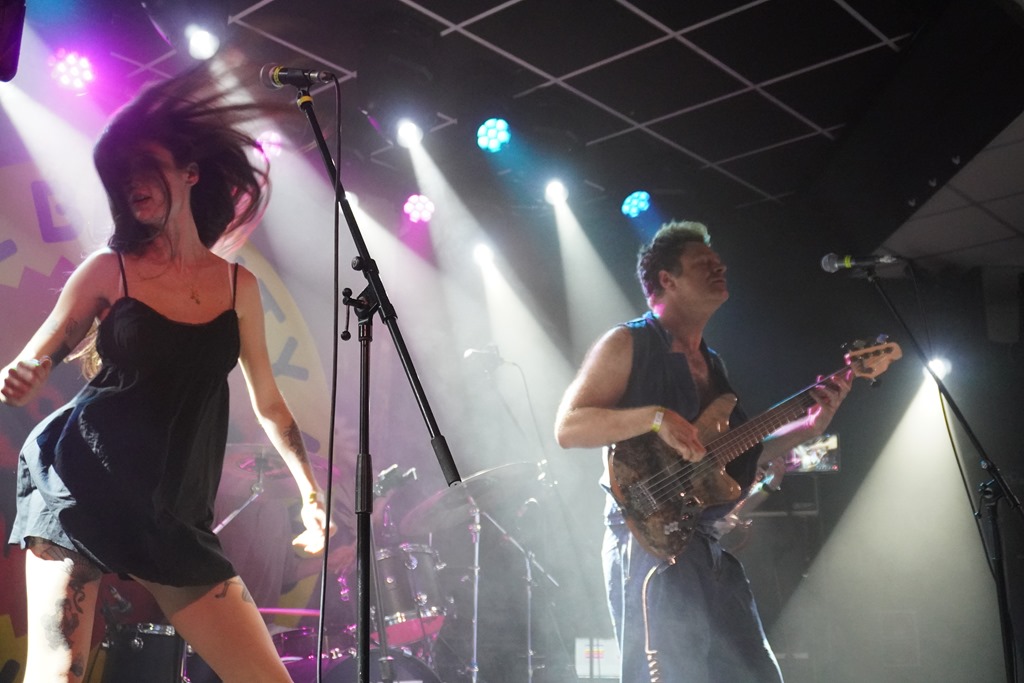
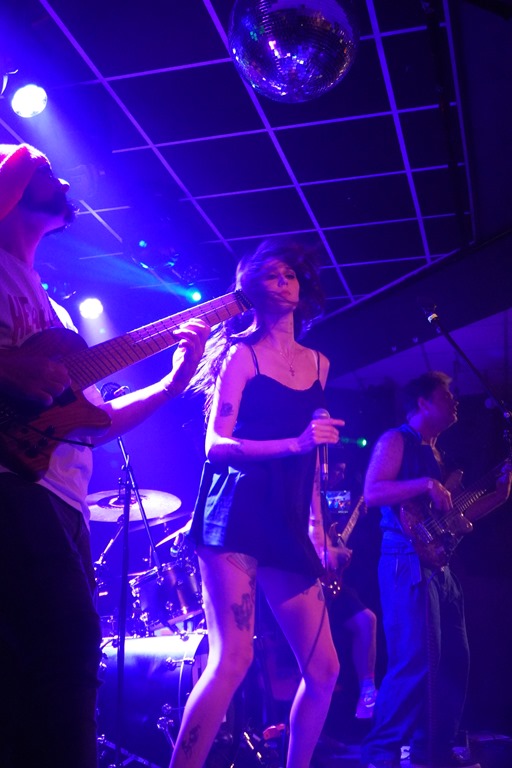
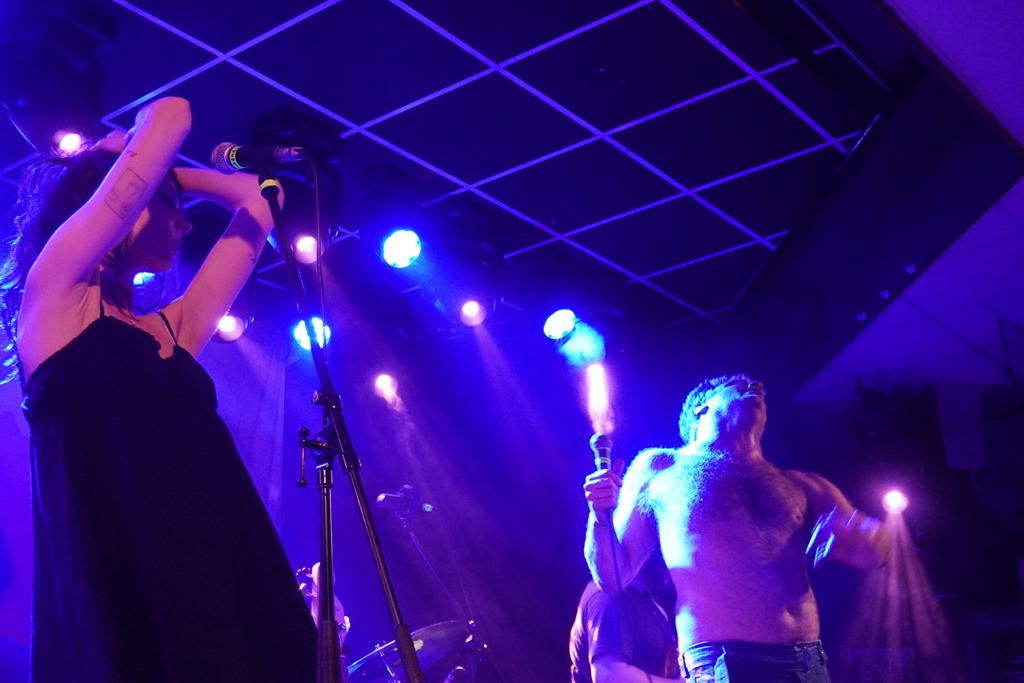
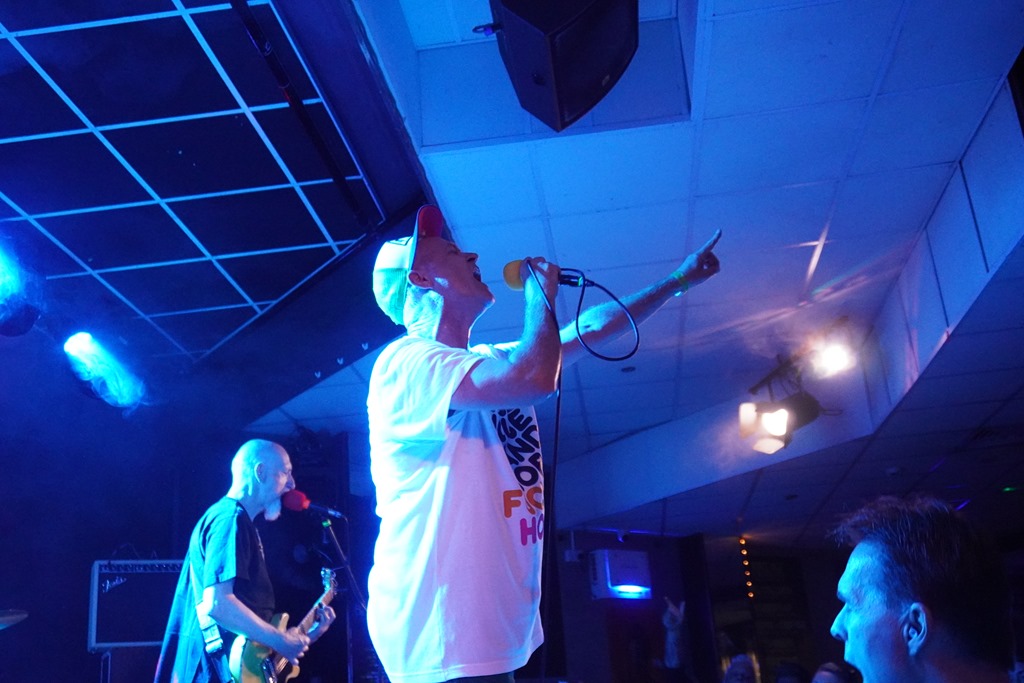
With UPSIDEYERHEAD, PLQ MRX deliver that racket. Their bio tells it that ‘From the depths of North Philadelphia’s underground comes PLQ MRX, a project operating at the intersection of abrasive noise rock, acid-soaked psychedelia, and warped funk’. Say what? We go on to learn that ‘Beyond the music itself, PLQ MRX cultivate an aesthetic steeped in excess, altered states, and grotesque carnival imagery. Their world is populated by surreal characters and exaggerated rituals, exploring pleasure, debauchery, and sensory overload. The band leans into both the highs and the ugly turns of the trip, embracing chaos as a core element of its identity’.

When we discover that PLQ MRX have emerged from ‘the remnants of the Philadelphia collective Plaque Marks, who first surfaced in 2017 with the EP Anxiety Driven Nervous Worship’ and that the current lineup features current and former members of Author & Punisher, UNSANE and SWANS (having been joined by Vinnie Signorelli for this release), it all makes sense.

And yes, it’s every bit as wild as the amalgamation of ‘abrasive noise rock, acid-soaked psychedelia, and warped funk’ would have you expect.

‘Us V. Them’ crashes in with some wild, frenetic jazz action before a thunderous riff crashes in, drums and bass to the fore, guitar a wah-wah laden blitzkrieg that calls to mind The Stooges. The vocals – half-spoken, half-spat, thick with distortion and swamped in reverb, sit almost on another plane, growling and snarling away amidst the maelstrom. Making out the lyrics isn’t easy, but feeling the vibe zaps straight to the very core instantaneously.

There’s a dirty, low-slung swaggering groove to ‘Gansta White Walls’, which locks into a heavy bass-led workout and grinds away, building layers of depth a couple of minutes or so in before hitting the ‘frenzied, motorik’ pedal, while the eight-and-a-half minute ‘Gentrify My Skull’ is a brawling, squalling sludgy stoner doom monster, littered with scrappy samples and as ugly as hell, with mangled-to-fuck vocals and a relentlessly gut-churning bass, and bursting into a full-throttle blast of black metal at the end.

The final track, ‘Hundred Dollar Hot Dog’ is the album’s shortest, but packs the most into a mere three and a half minutes. It really does seem to be a song about an expensive hot dog, and brings the rage in spades, with a lengthy refrain of ‘Fuck you, fuck you, fuck you, fuck you’ amidst a squall of guitar and an all-pervading dense murk.

It’s rare to hear a release that doesn’t sound like anything else, but with UPSIDEYERHEAD, PLQ MRX have done it. It’s crazed, outside the box racketmongering of the highest order. It might be genius, it might be madness, but it’s absolutely head-spinningly awesome.

AA

6th February 2026

Christopher Nosnibor

GLDN – the musical vehicle of New York industrial / metal artist Nicholas Golden. It’s been a good couple of years since we’ve heard from him, but he’s back with what he’s calling a ‘hard reboot’. And there’s some emphasis on ‘hard’ here.

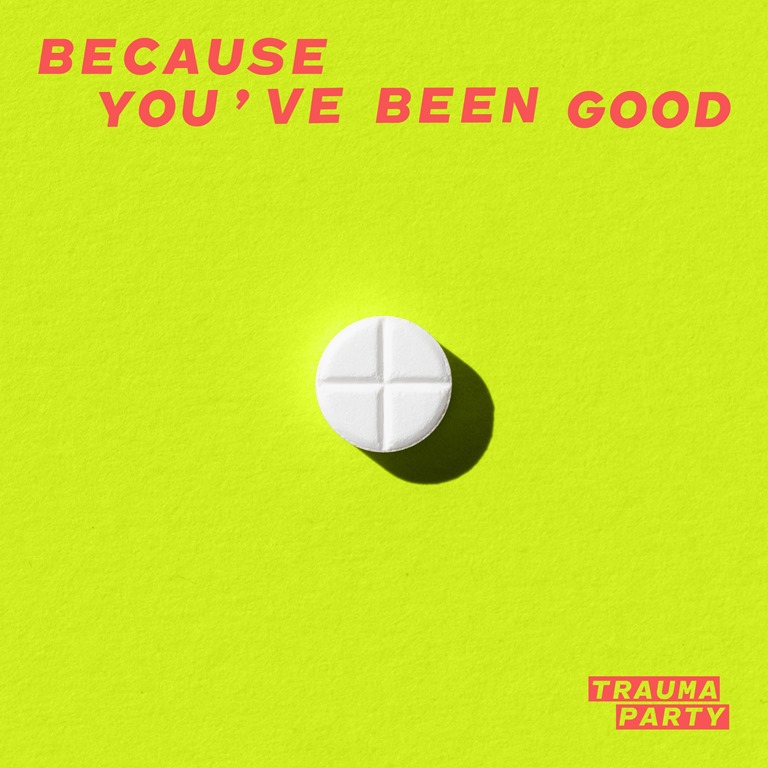
Of ‘Vessel’, GLDN is up-front, writing of ‘abandoning the organic grit of the First Blood era, this track establishes a cold, clinical architecture. It is an industrial-metal indictment of the “Trauma Economy”— where pain is sold as content…. merging the mechanical dissonance of 90s industrial with the high-fidelity aggression of modern metal.’

The first fifteen seconds alone are a brutal slab of overloading distorted guitar, bringing that nu-metal brick walling, lump hammer-like bludgeoning. The sound is thick and heavy, and when it arrives, Golden’s vocal is menacing and tortured, at first a whisper, then a scream. Amidst a snarling trudge of heaviosity, Golden evokes Trent Reznor circa The Downward Spiral in his vocal delivery, but occasionally veers into raging metal, following the instrumental work into squalling grindcore territory.

Although tightly structured, ‘Vessel’ is not a verse / chorus song: it’s a relentlessly brutal assault of the most devastating order. It’s the sound of extreme emotional violence, it’s having your oesophagus ripped out by a clawed hand, it’s nihilistic rage distilled into less than four minutes. It’s nothing short of devastating.

vessel_singlecoversm

The release of this single is in itself a victory. Last autumn, Tombstones In Their Eyes lost guitarist Paul Boutin to cancer. Such a loss always poses the question of whether the right thing is to call it a day or carry on, and there’s really no right answer, no correct course of action. Things will never be the same again, and drawing the curtain out of respect acknowledges that, while to continue is to acknowledge that the future won’t be the same, but to go forward and carry the essence of that person on in future endeavours. I write this not as someone who has lost a band member, but my wife to cancer in recent years, and as such I find myself faced daily with decisions around transition and continuation, challenges over what feels like sacrilege and respectful accommodation of what once was.

Tombstones In Their Eyes are keeping on, and still count Paul as a member in spirit, which is why they elected to proceed with the release of Under Dark Skies in December last year, and now the release of the album’s third single.

‘You Never Have to Love Me’ is described as ‘occupying the uneasy space between collapse and clarity, tracing a moment where survival demands self-reckoning and the realization that repair begins from within’, and is dedicated to Paul.

‘You Never Have to Love Me’ is a magnificently hazy mid-tempo song that builds layers and blooms gradually, and is more of a work of collectivism than simply a band recording, as John Treanor (vocals and guitar) set out: “There are a lot of musicians on this track, with 3 guitar players, 6 people contributing vocals, 2 bass players and 1 drummer and 1 keyboard player. We split the bass parts as Joel was not longer going to be in the band and Nic was coming back in. I had them both do parts and we used some of each. Phil did an amazing outro guitar part that to me is a highlight of the song.”

The result is a magnificently layered piece that starts of gently and grows and swells to towering enormity, a texture-filled sonic monolith. This is a song that fills you up, then lifts you upwards, in a glorious surge, which arrives almost subliminally: one moment you’re drifting along, and then, before you know it, you’re floating… a beautiful blur.

AA

916340

Dragon’s Eye Recordings – 23rd January 2026

Christopher Nosnibor

The facetious part of me reads the title of this as being a greeting to a pane of glass. I should probably get my coat after such a shameful revelation, but never mind. I’m here with my ears for this complex and detailed release, and will share the standard biographical info to provide much-needed context here:

Evening, window is the debut full-length album by Helsinki-based sound artist and ambient composer miska lamberg. Working with intricate field recordings that gather the overlooked moments of daily life – rainfall, distant traffic, animal calls – lamberg threads these textures into compositions that ache with personal memory. On Evening, window, the familiar becomes spectral: fragments of sound blur into melody and mood, capturing the stark melancholy of Nordic winters and the soft violence of remembering.’

The album features some long pieces: four of the six compositions are over eight minutes in duration, and this allows the pieces the appropriate and necessary time to build.

It begins with a metallic clattering. Heavy rain on a tin roof? Perhaps. Then there is a rumble – possibly thunder – but chattering abstract voices and soft, gentle synths drift in a cinematic spatiality and an organ swell gradually comes to dominate as it drifts… Evening, window is a sonic diary of sorts, a compilation of recordings captured in everyday settings as she goes about her life. The nine-minute opener, ‘Half-memories absorb us’ is both immersive and transportative, provoking contemplation. In some respects, the title does more than speak for itself, and also speaks of the way our minds work. And how do our minds work, exactly? Erratically, unpredictably, leaping from one place to another. And we’re thinking one thing while looking at another.

From a certain perspective, Evening, window can be seen to operate within the same field as William Burroughs’ cut-ups, and in particular the tape experiments he made with Iain Sommerville, although the collaging of field recordings and various layers of sound aren’t nearly as extreme here, blending the field recordings and decontextualised samples with carefully-crafted layers of ambience, which maked for a rather more listenable experience. Different objectives through similar intentions, one might say.

There are some haunting, unsettling motifs which cycle through Evening, window: ‘Seeing only faces turned away’ is dark, and listening to the ghostly swathes of ambience which hang dark and heavy is uncomfortable, a repetitive chord sequence conjuring, if not outright fear, then a sense of tremulous trepidation and unease. While Evening, window is a work of lightness and air, it’s also a work of slow, dense weight.

There are children’s’ voices. There are supple strings. At times, the atmosphere is soothing, sedative, but more often than not, there are undercurrents of tension, befitting of a dystopian thriller. Some may consider this to be something of a disconnect from the concept of presenting, or representing, fragments from the everyday life of the artist. But life is strange; the world is strange, and scary.

‘I remember the day the world lost color’ is bleak, barren, conveying the murky gloom of a blanket of fog, while ‘Its monotony is unrelenting’ is the drudgery of life – at least some periods of it – summarised in four words. Anyone who has endured a crap job will likely be able to relate to the sense that life is slipping by while days evaporate trudging through eternal sameness and feeling a sense of helplessness and a loss of identity, a distancing from the self. The sound is muffled, and very little happens over the course of eight minutes of crafted stultification during which the chord sequence of ‘Seeing only faces turned away’ is reprised, only slower, more vague, somehow tireder-sounding. It’s the soundtrack to hauling your living corpse through another dead, empty day – and another, and another, and another.

Evening, window isn’t depressing as such, but it is not light or breezy, and the mood is low and melancholy. It’s a slow, gradually unfurling work which drags heavy on the heart, an album which radiates reflection and low mood. It’s a dose of stark and sad realism, and an album which speaks so far beyond words.

AA

a0509711029_10

Kscope – 30th January 2026

Christopher Nosnibor

My parents weren’t really big on music. They had maybe fifty-odd, maybe seventy-five or so albums, and didn’t really seem to listen to many of them when I was growing up in the 80s. Most of those records were old… at least, that was how I perceived them at the time. There was a bunch of Beatles LPs, some Steeleye Span, and the same shit that occupied pretty much every collection at that time, at least for people of a certain age: Tubular Bells, Queen’s Greatest Hits, and Tangerine Dream’s Phaedra. They probably had Oxygene by Jean-Michelle Jarre, too. The 70s and 80s may well have been a boom time for the alternative breaking into the charts, with punk bands and the likes of Killing Joke making it onto Top of the Pops, and it may equally have been the period of peak postmodernism, but living through it then and reflecting on it now, the mainstream cultural dominance was anything but fragmented, and the comparatively limited choices of the time – can you imagine only four television channels, and no Internet? You had to be there, really – meant that there was a huge cultural homogeneity. Everyone watched the same TV shows – with something of an unspoken class division between BBC and ITV – and there was only really Radio 1 and Radio 2, and everyone listened to the radio.

And like most people their age, my parents thought they were hip buying the first Now That’s What I Call Music albums, and my mum would groove while listening to Phil Collins, The Bee Gees and Tina Turner while ironing, records purchased through Britannia Music. I’m not remotely nostalgic for any of this. If anything, my gentle, middle-class upbringing was marred by these experiences because it wasn’t just bland, it was… Look, imagine car journeys to UK holiday destinations in Devon and The Lake District spent listening to Barbara Dixon and Elkie Brooks and 80s Cliff Richard. I love Devon and The Lake District, but the soundtrack to my life as a child was fucking awful, and I feel a certain trauma tripped my life as a consequence. I don’t know if I ever heard Phaedra at home, I just spotted it while flicking through their collection.

Phaedra seems like something of an outlier in the context of such a collection, but it was a huge breakthrough release, the Hot Fuss of 1974. Or something. It spent fifteen weeks in the UK album charts, and achieved six-figure sales.

In context, it was truly a landmark album, famously the first to showcase their seminal sequencer-driven sound, and launched The Berlin School, the foundation of ‘space music’. The fact that it’s been fifty years since the album’s release is unfathomable, but it’s unquestionably appropriate to mark its anniversary. And while the thirty-fifth anniversary brought us Phaedra Revisited – a live performance of the album in its entirety, but reconfigured, retaining the thirty-eight minute duration of the original studio release, but with an abridged rendition of the title track making space for a new composition in the form of ‘Delfi’ at the end.

There’s no such sense of limitation when it comes to 50 Years Of Phaedra: At The Barbican – a colossal triple-disc of a commemorative live performance by the current incarnation of the band, consisting of Thorsten Quaeschning, Hoshiko Yamane, and Paul Frick – none of whom played on the studio version.

As the accompanying biographical notes acknowledge, ‘Part of Phaedra’s magic lay in its imperfections: the original sequences were never truly quantised, their timing drifting unpredictably through the Moog’s analogue circuitry. That subtle instability became part of its charm – a human pulse within the machine’ – before going on to explain that ‘it long left current bandleader Thorsten Quaeschning intrigued by what a fully realised version might reveal. Now, fifty years later, Tangerine Dream have revisited the work with the precision that technology once denied them. 50 Years of Phaedra: At the Barbican is the first time Phaedra has been performed fully quantised, each motif beautifully aligned with a crystalline precision previously unheard’.

It’s hard to find fault in either the performance or the fidelity here. It does sound great: there is so much detail, the experience is absolute, a sensory immersion, and that ‘crystalline precision’ means it feels more like an alternative soundtrack to something like Avatar.

The track listing also sees the current iteration move some considerable distance away from the sequencing of the original album: after a brief intro, they play ‘Sequent C’, followed by ‘Movements of a Visionary’, and then ‘Mysterious Semblance at the Strand of Nightmares’. Of these, the first two are substantially longer, the third a couple of minutes shorter. Then they transition away from the original compositions to explore ‘The Hippolytus Session’, a work in eight parts, spanning some forty-odd minutes, but returning to fragments of ‘Phaedra’ in the form of ‘Phaedra 2024’ (and much later, there’s a reprise of sorts with ‘Phaedra 2022’. Hippolytus being the stepson of Phaedra in Greek mythology, there’s a clear trajectory in what they’re doing here – pushing the original concept out and exploring the stated intention of discovering what the album may have been had current technology been available in 1974. The concept is interesting, but in some ways feels like it should exist as a satellite or supplementary work, and as is the case with last year’s monster From Virgin To Quantum Years: Coventry Cathedral, it’s very much one for the more devoted fans, and ones who are accommodating of the fact that this is a different lineup and a different time. It’s nice and all, but it’s by no means an improvement on the original.

AA

AA

frontcover

Christopher Nosnibor

Ashley Reaks is an artist who has very clear creative cycles, releasing, as standard, an album a year, and sometimes two, which make the fallow periods more conspicuous. This is not one of those fallow spells: Nature Reversed arrives just four (dark, cold, wet, gusty, wintery and generally depressing) months after At Night the World Belongs to Me, released at the end of September last year. And it marks something of a shift, and even ventures into the realms of what one might consider a ‘concept album’.

Reaks describes the album as ‘a stark, hallucinatory journey through the Yorkshire Dales and the inherited wounds of a father–son lineage. Mixing messed-up jazz fragments with rural, almost medieval folk textures, the album follows a narrator who must invert his own nature to survive the authoritarian “Old King” and then claw his way back to himself through wildness, shame, desire, and the raw, cyclical violence of the natural world.’ That’s a lot to unpack. If it was the plot for a novel, it would be a twisty-turny work, rich in allusion and haunting imagery – but likely jazz-free. But to compress all of this into nine songs and forty-five minutes… Ambitious would be one word for it.

The album’s first piece, ‘I Don’t Like The Old King’ does very much explore the expansive fields of folk, but through a proggy filter, performed with synths, and underpinned by a strolling bass – somewhat reminiscent of the Bauhaus song ‘Part of the Third Part’, at least at the start – and a beat that both shuffles and swings. It’s the bass that defines ‘We Forage in the Gutters’, going full Jah Wobble in its dubbiness. But at the same time, there’s a sparseness, an introspection which is different here. The elements we’ve come to expect from Reaks are all present and correct, but Nature Reversed takes those elements to another place, and it feels like the freneticism has been turned down in favour of a more focused approach.

As with everything Reaks releases, Nature Reversed is interesting… by which I mean it’s a collage of weirdness that draws together a host of disparate elements. Just as Reaks’ artworks are crazy collages, so his music is relentlessly unpredictable. ‘The Desire to Seduce Euphoria’ is perfectly representative: it brings together some moody, melancholic postpunk, with chiming, reverby guitar… there are some processed vocals and there’s some jazz in the mix… I say ‘some’, but the mid-section is a massive blast of horns, before it careens into a heavy prog synth workout What the fuck IS this? This is no criticism: Reaks relentlessly challenges the borders, and does his own thing.

AA

Nature Reversed gives us all of the conventional Reaks elementsbut the wild jazz is dialled back significantly. He describes it as ‘cut-up jazz, awkward Eastern folk, medieval motifs, old ghosts, and new life pushing through ancient stone walls — music about inheritance, rebellion, and what survives when you break things wide open’, and so it’s no surprise that William Burroughs features in the list of inspirations, ‘ranging from ‘nature poet’ John Clare and William Burroughs to Rip Rig + Panic, Talk Talk, PJ Harvey, Robert Wyatt and Captain Beefheart, Nature Reversed fuses literature, music, and visual art into a chaotic, lyrical, and intimate landscape. Ultimately, it’s a meditation on survival, rebellion, and renewal — the feral life that surges when you break open your origins.’

As is always the case with Reaks’ work, Nature Reversed is a huge intertext, and it would be reasonable to describe him as a classic postmodernist, celebrating and revelling in multitudinous sources, plundering his influences and inspirations openly and emphatically. This feels more restrained, more contemplative, and lyrically there’s a proliferation of images drawn from nature – but then again, there’s no shortage of sharp-edged, darker stuff, as on ‘Picking on the Meat Membranes’, and ‘Swan in a Womb’ brings together post-punk grooving bass, sprawling jazz, glittering prog synths and vocal processing – and this is point of definition for Nature Reversed, really. It’s everything, all at once, but at a sedate pace. Don’t be fooled by the gentler, more introspective sound: Reaks stull pushes experimentalism to the absolute limits, and Nature Reversed is the singular sound of creative freedom.

AA

AA

a0782818268_10

Twilight Music – 28th November 2025

Christopher Nosnibor

I’d apologise for being a little late to this one, but given that Corpus Delicti took some thirty years to reconvene for this, their fourth studio album, I think I can be forgiven. Formed in 1992, they kicked out three albums in quick succession establishing themselves as leading exponents the goth renaissance, or the next wave of goth (which wave is which… is a subject of debate, but that’s perhaps a topic for another time), before departing a short while after the release of Obsessions in 1995. During their time away, they’ve had more compilations released than they had albums, and it seems their popularity has grown significantly during their absence.

Their planned reunion in 2020 was scuppered by the pandemic, but they finally reemerged as a live entity in the spring of 2022 and now, finally – finally – they deliver Liminal. And if you’re into that later goth stuff – from Rosetta Stone to all things Nightbreed – it does everything you’d want it to.

From the outset, Liminal is dark and brooding, with fractal guitars and infinite reverb: ‘Crash’ brings the stark post-punk dynamics of X-Mal Deutschland paired with the soaring theatricality of The Associates, and it’s a work of high drama which evokes Bauhaus at their best. That’s by no means to suggest that it’s derivative, but it’s clear they know their heritage.

They also know how to bring kineticism and range, and how to sequence an album to best effect. ‘Room 36’ comes on like an industrial reimagining of Soft Cell, landing like She Wants Revenge cranked up to eleven, with lasers and guitars set to stun. ‘It All Belongs to You’ channels Bowie, but again via SWR and The Associates – at least vocally: instrumentally, there’s layered synth work and swirling shoegaze guitar all over. But for all the dark, Liminal is a work of magnificently-crafted pop.

‘Under his eye’ is an obvious reference to The Handmaid’s Tale, a book the which has become more resonant in recent times than could have ever been foreseen at the time of its writing and publication in 1985. Led by a rolling piano and augmented with sweeping strings, there’s drama galore. Between the driving guitar buzz and snaking bassline of the super-urgent ‘Chaos’ propelled by lolloping drums, and ‘Fate’, which brings an atmospheric shoegaze aspect to some trad goth stylings, there’s a lot going on here – and they pack in some really sharp hooks and strong choruses.

As an example of modern goth, Liminal brings so much of what’s missing from many recent releases in the same field – broad in range, big on energy, this is how it’s done.

Corpus Delicti are on tour in the UK in February, performing Edinburgh (19th), Newcastle (20th), Leeds (21st), Birmingham (22nd), Portsmouth (24th), Bristol (27th), and London (28th), with dates in Mainland Europe in April. Full details and tickets are available HERE.

AA

Band image - pic Loreleï J ade

Photo: Lorelei Jade

Christopher Nosnibor

Irk (not to be mistaken for Lancastrian newcomers Irked) certainly took their time over their second album, so the fact their playing its launch gig four months after its release is fitting.

The last time I saw them would have been 2018, in the now-defunct CHUNK, alongside Britney and Beige Palace (also now sadly departed), at the launch of debut album. Back then, CHUNK – a fairly basic rehearsal space which also hosted gigs – was the hub of an emerging DIY scene which spawned a bunch of noisy bands who emerged in the wake of the likes of Blacklisters, Hawk Eyes, That Fucking Tank. Fortunately, the Leeds scene is resilient and continues to thrive with new spaces and new bands popping up – and Irk are still here, despite geographical dispersal and general life stuff like jobs and families doing little to boost the time and energy available for creative work.

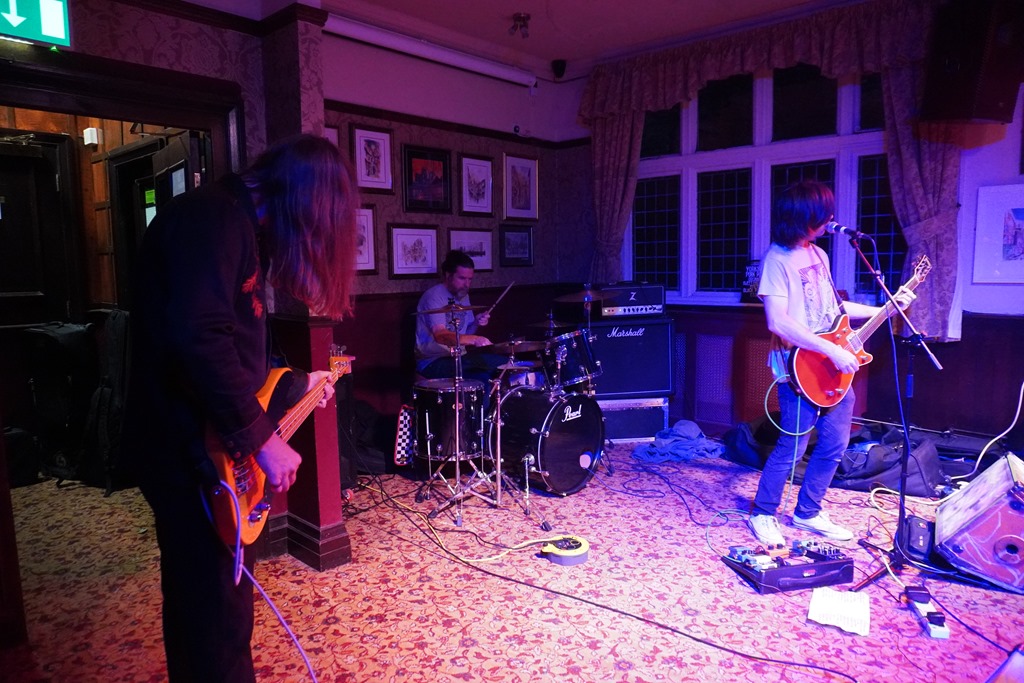
One of the new bands to have emerged more recently is Care Home. Care Home no doubt won themselves some new fans when they landed the coveted slot of supporting the Jesus Lizard last January. Tonight they’re a late substitute for Blacklisters, who were admittedly, an additional draw for tonight, but it’s hard to be too disappointed with the choice of replacement, kicking the night off in suitably noisy fashion. The interplay between the guitar and synths works well and affords them a greater range when it comes to the arrangements. The bass work alternates between a stop/start jolting and insistent solid four-four groove, and when paired with some busy, beat on every beat drumming, they’ve got a sturdy spine around which everything else hangs nicely. The vocals are straight-up, unpretty (post) hardcore shouting, an effluence of nihilism in t vein of Kowloon Walled City.

DSC06589DSC06641

Care Home

Algernon Cornelius proved to be an inspired choice, breaking up a rock-orientated bill with some highly inventive and energetic hip-hop. Pulling together a truly visionary array of sources, spanning jazz, punk, and metal and even sampling a Beige Palace song, it’s all going on during his lively set.

DSC06648DSC06701

Algernon Cornelius

Irk’s set is a squalling blast of noise from beginning to end. The bass is simply immense. Recorded, it’s not immediately apparent that the sole instrumentation is drums and bass – and not only because various guests add additional detail in various form, but this means that on stage, the fact they blast out such a dense racket with so little only accentuates the impact. But that bass… the sound is pretty varied and big on texture, from the rib-rattling mid-range, compressed sound which resembled tearing cardboard to the bowel-quivering low-end, there’s substantial range. Meanwhile, Jack Gordon hollers and howls through a host of effects and distortion, and this show – like the album itself – was worth the wait.

DSC06709DSC06716

Irk

With ‘The Seeing House’, they’ve really honed things and learned the benefits of shifting tempo and tone: ‘Eating All of the Apple’ is the perfect example of how they’ve absorbed the sparser, joltier aspects of Shellac’s output on board. Gordon’s vocal has more range, too, veering toward more gothic territory. And still they slam forth colossal riffs, paired with meaty beats and rabid yowling.

But for a serious band, they just can’t do serious when it comes to their shows: there’s a comedic elements to Gordon’s delivery and postures, not to mention the chat between songs, where he would take time to share wisdom he had discovered on that Internet from the mini-ons, printouts of which he would hand out to members of the audience.

DSC06728DSC06737DSC06759

Irk

There’s something so, so quintessentially Leeds about Irk – quirky, self-effacing, a disparity between the abrasive noise and the affable nature of the people themselves – and they are genuinely nice guys. But this is so often the case: the music is the outlet. And the atmosphere tonight is one of warmth, of camaraderie. A lot of people know one another. This isn’t a scene in the sense of posing, self-importance or smugness, but one defined by camaraderie and mutual appreciation.

Irk’s set was punchy and abrasive, delivering fifty minutes of intensity interspersed with comedy, making for an event which felt like the perfect launch for the album. And I shall treasure my numbered, annotated minion forever.

10000758821000075883

Christopher Nosnibor

Bearsuit Records – 23rd January 2026

Christopher Nosnibor

It’s been a little while since our favourite label for oddball quirky stuff, Edinburgh’s Bearsuit Records, tickled our eardrums with new noise, but they’re kicking off 2026 with the eponymous debut from Elkeyes, a new addition to the roster. And suffice it to say, it’s a good fit in their catalogue of curious compositional contortions. And since we have Wolf Eyes and Hawk Eyes, KATSEYE, and, er, Eagle Eye Cherry, why not Elkeyes? It’s an interesting choice of creature, but one which seems appropriate for this intriguingly leftfield musical project – although my eternal internal game of Mallett’s Mallet leads me to conclude that Elkeye Brooks should also be a band name. Christ only knows what they would sound like, but surely it would be no stranger than this twisted concoction, which should be filed in the ‘experimental electronics’ section.

‘Trial’ conjures the disorientating bewilderment of Kafka’s labyrinthine novel via the medium of sonic collage which brings together warping synths, clinks and clatters, disembodied, ghostly voices, sweeping string and echo-laden horns which add the most incongruous – yet somehow fitting – jazz element imaginable, plus fizzing blasts of extraneous noise.

‘Yamanote Line’ twitters and flaps its way into the realms of ambient abstraction, building atmosphere and an air of the uncanny. It’s not dark in the horror sense, but sets the nerves jangling, particularly in the quieter passages which evoke bleak moorlands and deserted cemeteries. This is the beauty of abstract, ambient, instrumental works, works which are free from the constraints of conventional form: rather than direct the listener in a specific direction, they encourage the opening of neural pathways and invite the formation of visualisations and ideas by free association. The scraping, trilling string sounds, stark piano chords, and random chimes which reverberate through the haunting ‘Thalassophobia’ (the fear of deep bodies of water, such as the ocean, seas, or lakes’).

Ironically, ‘The Dark Forest’ is the most light-hearted piece on the album, skipping oscillations and chiming chanks like dappled sunlight skips around this way and that on the album’s shortest track, although it does fade to darkness with a gong-like rumble and some dissonant chimes at the end.

There are vast expanses of minimalism. Soft tones drift. Time sits in suspension. Voices ring out – operatic, ghostly – amidst spacey swirls of phase. ‘Breathing the Blues’ is barely there at times, and the final cut, ‘Fallen’ is similarly sparse.

Over the course of these eight tracks, Elkeyes wander into some dark places, riven with static and low-level rumbles which disseminate tension, scrape at the cranium, gnaw at the intestines and fuck you up by stealth. In places, this feels like a slow unpicking of the seams of musical conventions. It’s sparse and transportive, hypnotic and simultaneously tense and soothing. Elkeyes are all the contradictions. And that is reason to love them.

AA

a0348064966_10