Archive for the ‘Reviews’ Category

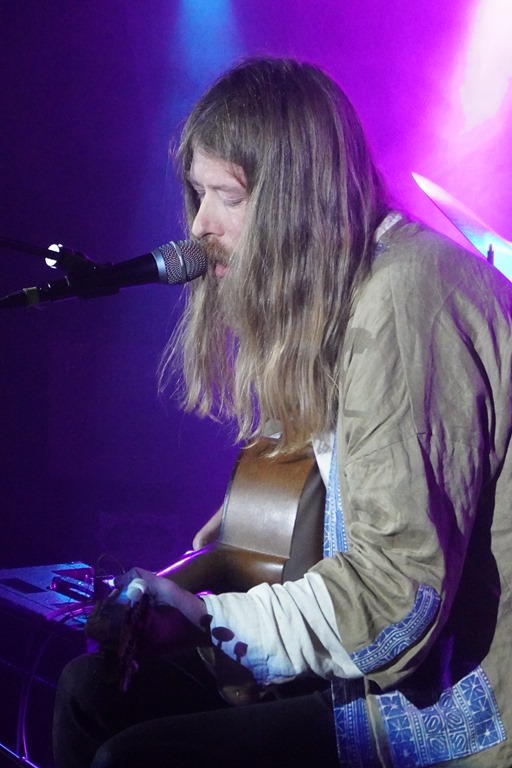
With its name inspired by a dream, October By Name marks out a new chapter in the career of Kavus Torabi. – a psychedelic polymath increasing stretching out his creativity via co-ordinates entirely of his own. This has been a decade so far in which his prolific artistry has only been matched by an equally turbulent period in his personal life. Yet the alchemical charge that has resulted matches the mystical origins of the album’s title with six songs that inhabit a similarly surreal and transcendental landscape. As Kavus reckons “If you can’t trust your subconscious, who can you trust?”

Not merely a more optimistic and beatific sounding record than its cathartic and intense predecessor The Banishing, October By Name sees Kavus evolving as an artist in ways he maybe didn’t even predict himself. Both inspired by his recent work with Gong and Cardiacs, and inhabiting a serious change of modus operandi via his work to date with the improvisational project The Utopia Strong, he created a new method of writing where all styles converge and overlap "As with the first time I heard Cardiacs at the age of sixteen and thinking ‘Oh! You can make stuff like this’, so I had a similar epiphany three decades on"

Somewhat in the great lineage of British psychedelic pathfinders through the ages (the triumvirate of Syd Barrett, Robyn Hitchcock and Julian Cope being an example) It’s at heart a bittersweet yet optimistic reverie that is pure Torabi. "Perhaps there is no free will and we’re all just playing out the consequences of our genes, insecurities and childhood damage" he reflects on the fundamentals of this song “But I have to believe change is possible because, honestly, what’s the point in anything if it isn’t?”

The openers ‘Signals Shine’ and ‘In Her Radiance’’, meanwhile, in all their luminous glory, see him writing love songs. “No big deal in the wider pantheon of music, but a very big deal to me in that I’ve never written this way before,” he notes. “There’s a different energy in writing romantic verse from the position of a man of my age and experience as opposed to when I was in my twenties. I was far too self-conscious and critical to even attempt anything like this back then and genuinely didn’t feel the pull of the love song like I do now. Writing about being on acid made much more sense”. Crucial to October By Name – which Kavus sees as the third part of a trilogy of solo albums is its very specific way of working. “This wasn’t necessarily a contrived plan when I started making solo records but the model I used on my debut Hip To The Jag; performing and recording everything using only instruments available to me, writing songs of an autobiographical and personal nature and drawing and lettering everything by hand seemed to be the right way to go” he notes “This was a way to put all of myself into something, allowing my shortcomings to define the outcome. I’m not a great drummer or letterer, for example, but the way I play drums or hand-letter, sing, or mix becomes the thing”.

“Increasingly, I’m becoming more solipsistic, going further into my own world creatively. As long as the bubble I’m in keeps giving me songs, I’m OK with that. Honestly, every one I get over the line, that still excites, thrills and engages me is a blessing”.

‘My Shameful Namesake’ is the second album to be released in advance of the album. Check it here:

AA

original-4e07d548-52d1-41df-888d-f25836a3a83f

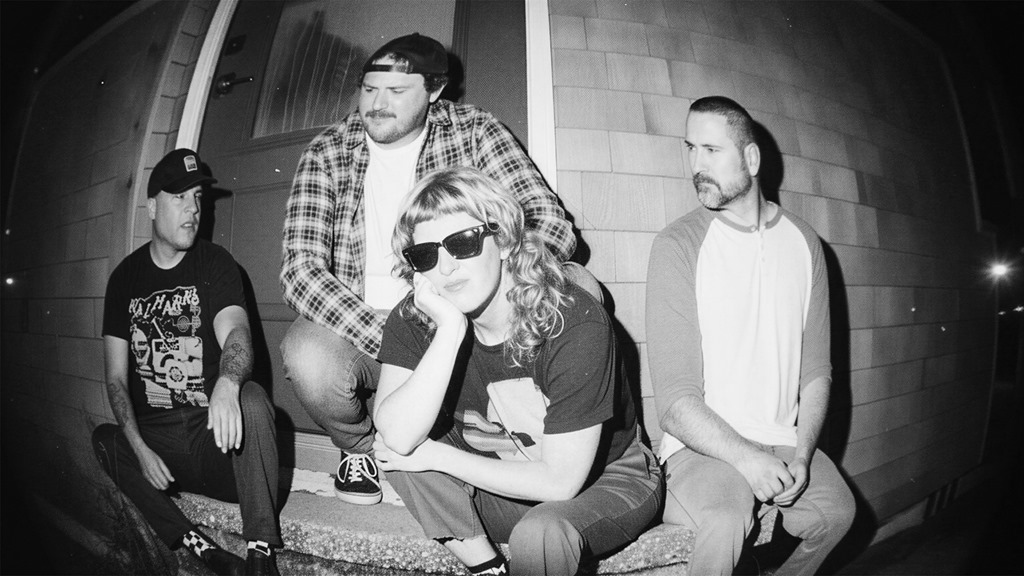
Photo: Layla Sunshine

Live:

10/08 – BOURNEMOUTH – @The Underground – TICKETS

10/09 – BRIGHTON – @Daltons – TICKETS

10/10 – GLASTONBURY – @King Arthur – TICKETS

10/11 – HEREFORD – @De Koffie Pot – TICKETS
10/13 – STRATFORD UPON AVON – @Stratford Sound Pathways – TICKETS

10/14 – NOTTINGHAM – @Billy Bootleggers – TICKETS

10/15 – MANCHESTER – @The Yard – TICKETS

10/16 – MOLD VOD Music – Free Entry

10/17 – NORTHUMBERLAND – @Sinderhope High Forest Community Centre – TICKETS

10/18 – EDINBURGH – @Speakeasy Voodoo Rooms – TICKETS

10/19 – GLASGOW – @Nice N Sleazy – TICKETS

10/21 – BRISTOL – @Cube Cinema – TICKETS

10/22 – SWANSEA – @Down By Here – TICKETS

10/23 – LONDON – @West Hampstead Arts – TICKETS

10/24 – DEAL – @The Lighthouse – TICKETS

Blaggers Records – 13th August 2026

Christopher Nosnibnor

When I was in my teens and early twenties, I got quite hung up on an existential anguish that no two people perceived things in exactly the same way. It wasn’t completely unfounded: there’s empirical evidence that shows that there is no such thing as a reliable witness. Particularly in moments of heightened stress or panic, the brain will scramble to process what it sees, while at the same time juggling the options of fight or flight. As such, it will assemble a narrative from fragmentary snippets, and attempt to fill in the gaps. But even more fundamentally, no two people will perceive something as fundamental colour in the same way. I have a mug which I consider to be grey; the rest of my family tell me it’s blue. And while I concede it’s perhaps a gunmetal shade, I still consider it to be grey. And so it is that two parties engaged in conversation will simultaneously experience completely different conversations.

This is the premise of the third single from London-based, New Zealand-formed five-piece Not My Wife, which explores ‘the duality of relationships, and how two people can be living within the same reality, while experiencing it quite differently. The verses detail one person sitting in the bliss of new love, while the choruses expose the narrator’s realisation that their partner may not have been feeling the same way. The song explores the theme of memory, interpretation and how we can put another person at the centre of our world without wanting to see them clearly’.

Driven by a crunchy bassline, ‘Best Friend’ nags away nicely, managing to be both breezy and somehow claustrophobic, and to meld postpunk with a wistful indie sensibility. The guitar is stop / start, choppy, and there’s a subtly melancholic hue in Olivia Mercer’s vocals. There’s something about this single that’s quite touching, in ways that aren’t readily articulable, much in the same way a vague memory will linger on the edge of your recollection, and while you experience it as a sensation, somewhere in the gut, you simply can’t place it, chronologically, locationally, or any other way. It offers a sense of dappled shade and wistfulness, and also of a certain self-disconnect, wrapped in a hazy melody which reflects the fact that in ten years, this will all seem as a dream, or another life.

AA

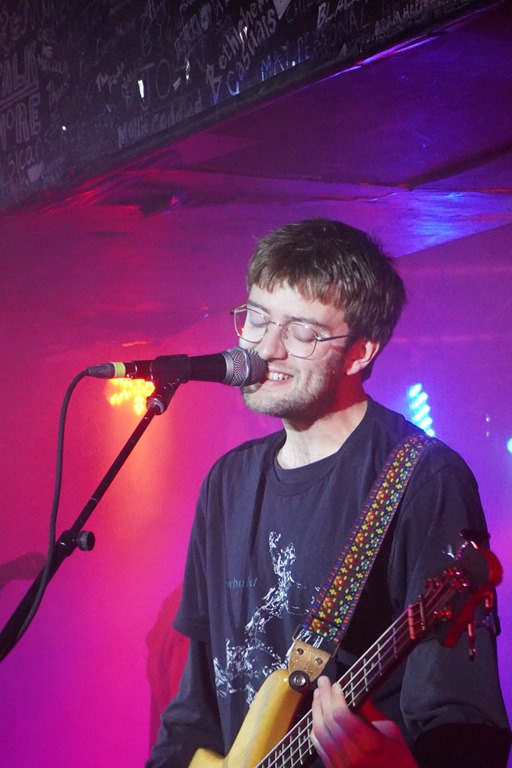
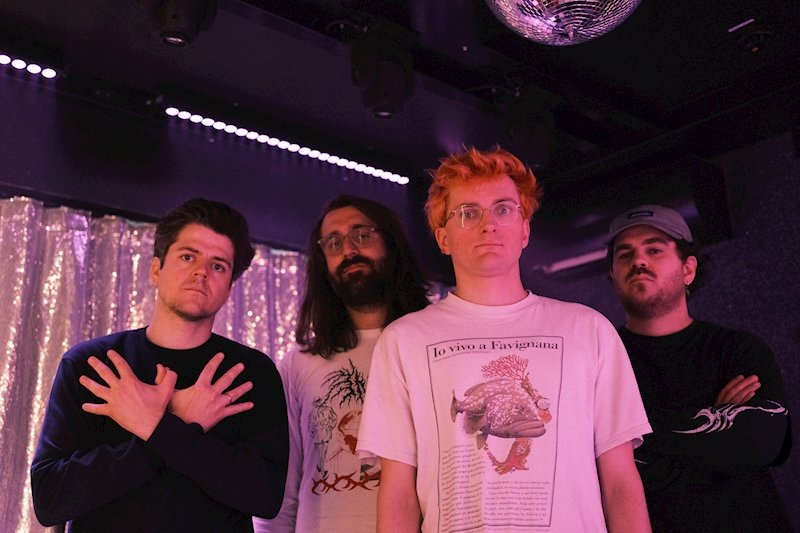
Not My Wife_Press shot 2

4th September 2026

Christopher Nosnibor

When selling themselves – or however else you may describe what bands or their PR do with their biographies and the blurbs which accompany releases – acts tend to go either one way or another. The first is to focus on context and heritage, and locate the music within a lineage amidst a list of touchstones. The second is to cast all of that aside, and accentuate the innovation, the difference, and the departure from all of that. Both approaches come with risks, albeit quite different ones. The former suggests that the band is derivative, and builds a certain expectation before the listener has heard a note. Not that it was Interpol’s fault that every critic under the sun sold them as Joy Division clones, which meant that I was sorely disappointed the first time I heard Antics. It sounded like so much indie, and I felt hugely let down. I came around pretty swiftly, but only once I’d come to terms with the fact they were, in reality, fuck all like Joy Division. Meanwhile, the latter sets the expectation that you’re about to hear something that’s nothing like anything you’ve heard before, and as a jaded critic of many years, I find myself sitting at my desk, adopting a mindset which is visually represented by arms folded, torso tilted back away, face wearing a light sneer that says ‘come on then, let’s have it,’ or perhaps even ‘here we are now, entertain us’. More often than not, these artists, too, fall short, as I find myself wondering if they live in a cultural vacuum, and how they could have possibly not heard X, Y. or Z, whom they sound so very like.

It’s in this latter category that Stockholm’s Gey Shores fall, when they forewarn that ‘a new voice is about to emerge from the depths of the Swedish underground. Grey Shores, the atmospheric black metal duo formed by Martin Andersson and Vilhelm Andersson, are preparing to release their debut album, Dark Waters of Night, a work that merges the emotional depth of post-rock with the cold intensity of black metal… Musically, Grey Shores inhabit a space where black metal, post-rock, and melancholic metal converge. Vilhelm Andersson’s background in atmospheric and post-rock music brings layers of texture, melody, and emotional nuance, while Martin Andersson contributes the harsher elements that form the album’s backbone.’

Don’t get me wrong: I’m genuinely thrilled by the prospect, but am equally prepared to be disappointed within the first three songs. Because not only am I jaded, I’m being sucked into the world of the ever-diminishing attention span. But hey, I can usually manage three songs rather than three seconds before making my mind up and hitting skip (boycotting Spotify likely helps with that, as does being old enough to remember buying an album and playing it several times even if you hated it at first and finding that over time, you quite liked it after all).

Dark Waters of Night contains just seven songs, and while the majority are around the five minute mark, there are a couple which are substantially under three.

Funnily enough, the opening bars of ‘Nothingness by My Side’ evoke the rippling chimes of ‘Untitled’, the first track on Interpol’s Antics, before drifting into a spacious, atmospheric soundscape – before, a mere fifty seconds in – rasping black metal vocals ride in on a wave of overdriven power chords. The song certainly exploits the dynamics of post-rock, with melodic, dreamy vocals washing across delicately picked clean guitar, propelled by jittery, almost jazzy drumming in the verses, and there are hints of Oceansize and Explosions in the Sky here, but instead of surging crescendos, we get screaming black metal fury. I’m sure if I spent long enough searching, I could find something akin to this, but right here, right now, to my ears, this does offer something different and sees the band deliver on their promise, and it’s exciting.

Amidst the raging metal tempest of ‘The Withering Tree’ arrives a moment of calm which is almost folk in flavour alongside the chiming post-rock atmospherics, while ‘In The Pale Light’ offers a sound that’s quintessentially post-metal, and brings some magnificent lead hooks. The demonic howls provide quite the contrast, and then the mid-section makes an unexpected switch toward the expansive, and brings with it clean, melodic vocals. It borders on the schizophrenic, but it works, as they stitch the transitions practically seamlessly, sometimes overlapping.

‘Herald the Dark’ hints towards the territory of lighter-waving anthem, at least to begin with. But what starts out as pretty tame, swiftly gets gnarly, while preserving the anthemic qualities. Nevertheless, while it’s perhaps the album’s most ambitious track – at least commercially – it’s also the weakest musically.

On ‘Sights of Woe’ they step up the cinematic aspects with the introduction of choral backing – and some classically overblown fretwork. At this point, it’s clear that Grey Shores really are committed to pushing black metal to new places, and the gentle instrumental fade of ‘January Wolves’ is simply a perfect post-rock wind-down. Dark Waters of Night is not only a great album – detailed, textured, varied, dynamic, incendiary – but one which delivers on its promise.

The quality cover art warrants a bonus thumbs-up, too.

AA

a0768668631_10

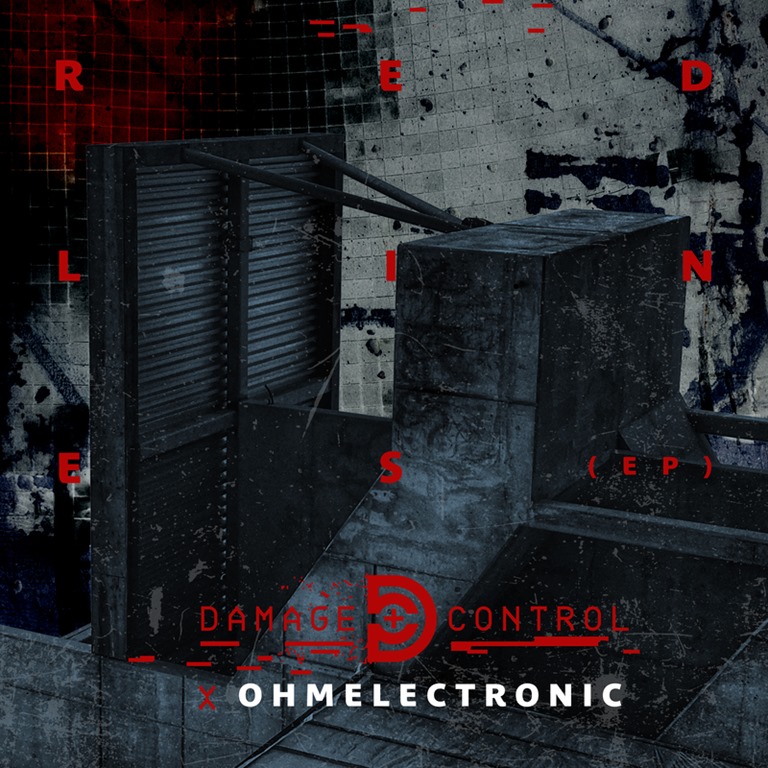
21st August 2026

Christopher Nosnibor

For their latest EP release, prolific Irish electronic / synthwave outfit Tiny Magnetic Pets give us a remix of ‘Lost My Guiding Light’, which first appeared on their second album, way back in 2017. It’s a reasonable amount of time to leave before revisiting a song, and as Sean Quinn (synths, guitar & vocals) explains, “When we play live we like to do different versions from the records. Last year, we were asked to play a dance music festival in Dublin, so we re-arranged the opening track from our second album Deluxe/Debris for an EDM audience, and it has now become the opening tune to our live shows,” going on to add “We re-recorded this new version in 2026 and we feel it is significantly different from the original to warrant its own release and slight re-title: ‘Lost My Guiding Light (Again)’ – a wee nod to Bowie’s John I’m Only Dancing (Again).”

It’s hard to argue that it’s substantially different from the original, not to mention the fact it’s two and a half minutes longer. The rippling, drifting ambient intro is extended out on this new version, and the beats – beefier, more driving – paired with a more prominent cyclical synth motif that owes much to late 90s dance – change the overall feel more than anything, and while the extended mid-section twinkles and shimmers, it doesn’t haver the same ethereal shimmer as the original. This is the trade, and a matter of preference, really: understated textural detail, or a more expansive, sturdier-sounding rendition.

It’s backed with not one, but two remixes of ‘Low Places’ courtesy of Dakeyne. The original was released just last year, as the lead track on the Harmonious Grey EP. A collision of dark disco and electropop, it boasts a thick, rumbling bass sand bops along nicely. Not so much the first of the Dakenye remixes, which sees a hard, industrial-strength beat dominate an extremely busy arrangement crammed with niggling repetitions. It’s clearly more club-orientated, but do such clubs even exist nowadays? Still, I’d take this over the Dakenye Acid Dub mix, which – being a dub – strips out most of the vocals and everything else in favour of the monotonous kick drum, wibbling bass, and occasional incidentals. Maybe Acid Dubs require actual acid rather than a couple of cans of West Coast IPA. Ultimately, this feels like something of a stop-gap release.

AA

a3107497712_10

Majestic Mountain Records – 28th August 2026

Christopher Nosnibor

They’ve been going for almost a decade now, although they’ve not been the most prolific of acts during that time. as their bio reminds, ‘Following the release of their first single in 2018, Nephila quickly established themselves as one of Sweden’s most intriguing new rock acts. Their acclaimed debut album embraced the warmth and swagger of classic 70s rock while hinting at something darker beneath the surface, earning a nomination for Rock/Metal Album of the Year at Sweden’s prestigious P3 Guld Awards in 2022’.

The promise of a band re-emerging, transformed is intriguing. And that may be so, but for all its bold energy, powerful hooks, chunky riffs and eye-popping solos, HULDRA still feels like an album so deeply rooted in the past as to be, while not a tribute, an homage to the past.

‘The Hidden Folk’ is a prime example of overblown 70s rock production. I suppose it’s in some ways representative of the way things split in the late 60s and into the 70s: you had the rock titans, dominated by Led Zeppelin, who added a harder edge to blues-based rock and took it in more extravagant directions, and, formed in the same year (1968), Black Sabbath essentially invented heavy metal, and at the same time created the template for stoner, sludge, and doom rock. Both bands have proven to be equally influential, and the hard rock / hair rock explosion of the 80s simply couldn’t have happened without Led Zeppelin. But in recent years, the rock-god blues swagger of Zep has sounded pretty hackneyed and cliché, while the spirit of Sabbath has felt more culturally relevant. With its fast-paced folk-inspired multi-layered guitar solo, multi-layered vocal, and organ work, all augmented by a huge production, ‘The Hidden Folk’ just feels like too much. And it’s largely representative of the album as a whole. ‘Ash Their Bones’ brings some jazzy grooves to the Doors-meets-Zep prog-hued party, and I daresay there are plenty who would really dig the energy, especially live, and especially at a festival after a few bevvies. But there’s no quantity of beer or cider that could convince me when it comes to this, which at times comes on like a rock reimagining of ABBA.

AA

I’m not knocking the musicianship. In fact, it’s often the case that the most technically competent musicians who make the worst music when it comes to prioritising musicianship over composition, and this very much feels like the reason HULDRA fails. The flamboyant, expansive musicianship and overflowing, lavish layering of the production takes maximalism to the max – and without the songs, it’s just too much with too little.

AA

710933

Dipterid Records – 21st August 2026

Christopher Nosnibor

Chicago noise rock duo King Sans, consisting of Jake Steven James (guitars, synths, vocals) and Izabella Rose (drums, vocals) describe themselves as ‘cryptids of noisepunk’. Make of that what you will, but they’ve gone all out on the ‘cow’ theme of the title on the cover of their debut album and accompanying promotional shots.

This very much feels like the culmination of their work to date: since 2024, they’ve released half a dozen singles, four of which have made it onto the album. As such, Sell the Cow stands as a document of their evolution, from the raw and raucous blues-rock-via-Melvins blast of debut single ‘Liar!’ – all one minute and twenty-seven of it (remixed / remastered for the album)– to new and previously unreleased songs like ‘Sold.’, which opens with a piano part lifted from Mozart before crawling into sludgy morass of dark ambient experimentalism. It so happens that ‘Sold.’ bookends the album neatly, as the opener, ‘Two Figures’ is a brooding, atmospheric piece with droning fear-chord synths, jumpy incidentals, and a suspenseful spoken-word vocal that gives way to thumping tribal drums and dingy bass. These three songs alone are demonstrative of their huge ambition and stylistic range and illustrative of their operating far beyond the parameters of both noise and punk.

They pack in some high-octane bangers along the way, too: previous single ‘Jumpstart’ isn’t just appropriately titled, but appropriately placed in the track sequencing, kicking things into overdrive immediately after the more experimental intro. It’s a taut and explosive two-and-a-quarter guitar-driven minutes of stomping glam punk with a dash of the kind of mania that defined the first Pulled Apart by Horses album.

‘Let me Lie’ is the most excitable-sounding example of stoner sludge I think I’ve ever heard. It’s like Melvins on speed, and seems to manage a nod to Lene Lovich’s ‘Lucky Number’ somewhere in the melee. Herein lies much of the thrill of Sell the Cow. There’s a lot going on, so many different references and ideas drawn from across a vast musical swathe, that each listen reveals something different, something new.

‘Dienen’ is another which melts together thick, scuzzed out low-end overdrive with a kind of glam-influenced stomp and doomy power chords. That they manage to render this preposterous combination without sounding like the Spinal Tap of sludge is an achievement, but the fact it’s followed by ‘Lasting Hold’, which takes things a step further is almost beyond comprehension. The verses are soft, with a delicate, gentle vocal and almost folky, with an atmospheric, spiritual-sounding feel, while the choruses erupt into screaming filthy metal – and they take this idea further on the operatic art-rock infused thrash of ‘S.Y.D.’ Yes, it’s almost impossible to keep up with everything that they’ve got going on, and I keep finding myself thinking ‘this shouldn’t work’. But it does. And it works well.

There’s birdsong and a pastoral feel to the lulling ‘the floodplain’, while puntastic single ‘No Diddley’ is a squalling blast of guitars that’s equal parts blues and rock ‘n’ roll and noise rock, with a dash of Suicide.

Sell the Cow is the album you didn’t know you needed, but believe me, you sure do.

AA

a3543827553_10

Human Worth – 18th September 2026

Christopher Nosnibor

Remote Viewing’s second album, Modern Addictions (2023) was a hypercharged, uncompromising beast of an album. This came as no real surprise, given that, as their bio reminds us, ‘Remote Viewing are formed from the ashes of Palehorse, consisting of current members of Million Dead, Sly & The Family Drone, and Hands Up Who Wants To Die’. Sure, when most people hear the word ‘supergroup’ they think of Hollywood Vampires, or Audioslave, or, I dunno, The Travelling Wilburys. They’re ‘super’ by virtue of big names coming together, but their output has a tendency to be underwhelming, because there tend to be super egos cancelling one another out and stifling any spark. But a supergroup at this level – a coming together of musicians of quite different stripes, but all with something different to contribute – in my experience, brings a different kind of energy. Perhaps it comes from the sense that they need to prove themselves, but equally, from the thrill of collaboration. This is the thing with collaboration: sometimes it gels, others it doesn’t. Modern Addictions proved that Remote Viewing gelled, coalescing into a colossal guitar-driven powerhouse.

Imagine my frustration at only being able to be in one place at a time when I pitched up at The Brudenell to see Mogwai to discover Remote Viewing were supporting Humanfly in the other room.

State Violence is pitched as ‘Their most direct statement yet… an unapologetic reflection on the increasing levels of injustice, social division, extreme wealth and human atrocities we are seeing the world over’.

Direct statements – certainly credible ones – have been in short supply in recent years from the political classes, and worse still, criticism of their actions – and inactions – have been subject to increasingly harsh penalties. While one genocide has been televised in real-time around the globe, it’s been all too easy for people to fail to even appreciate the state of things in Sudan, and to shrug off the war in and around Iran as being a distant thing. Here in the UK in particular, there’s a sense of collective smugness that we’re ok because we’re not there, and we don’t have to contend with ICE either, and it’s from that state of bubble that we conveniently overlook that to criticise the state of Israel using the wrong terminology could see you lose your job or even imprisoned. A portion of the populace has been distracted with finger-pointing at immigrants as the reason their lives are shit. Meanwhile, peaceful protest in support of a direct action group has been outlawed.

This is the point at which State Violence arrives, and hits the spot, and does so by driving straight to the heart of a very British way of living.

‘#makemoneymakelovemakemoney’ kicks off – literally – in a rabid squall of dingy guitar accompanied by churning bass and a raving vocal performance, a raw-throated scream. A hybrid of sludge, black-hued metal, and noise rock, there are some blankly nihilist passages which call to mind Kowloon Walled City – but when they slam the pedals on, the overdrive is a speaker-ripping blast. Opening an album with a six-minute mid-pace trudge that makes the skin crawl is inspired: it’s a move that will grab those who are on the market for a challenge, and send the rest running after a minute or so – if that.

‘Retrain as a Swan’, the album’s lead single is one of the least single-like singles you’ll hear all year. It’s great, but it’s bereft of hooks or an obvious road in, and is, instead, a gut-churning sonic assault. The title, incidentally, was the lead line on a poster / flyer / meme which proffered a parodic take on training and recruitment advertisements, and highlights just how typically British State Violence is in its outlook and humour. Yes, humour. Remote Viewing remind that rage doesn’t have to be without humour, and that if anything – and again, this is a uniquely British trait – the more abstract or self-deprecating, or sarcastic, the humour, the better.

The sludgy squall of ‘Disrespect the Arts’ appears to be a raging attack on the way that not only funding for the arts has been stripped (something also in a state of advancement in the US) and the teaching of art and music cut from school syllabi and courses in the arts – including those in literature – dropped from university programmes, while creative jobs are being canned in favour of fucking AI, which is killing the planet but benefits billionaires. Go figure. ‘HUMAN RIGHTS’ is just straight-up, slowed-down and sludgy, trudging, pounding, relentless, Godflesh heavy. It’s like the heels of heavy boots pounding on your chest, knocking the air out repeatedly until you have no breath, and feel blacked out and lifeless.

The nine-minute ‘Accidental Holiday’ marks quite a contrast, exploring spacious, post-rock territory for the first three minutes, before the riff powers in, and then… POW! All the rage explodes here. If it’s not one of the sludgiest, most brutal, slugging doom riff blasts you’ve heard this year, you haven’t actually heard it. But at the same time, it alludes to post-metal and neoprog, and the guitar textures and the spaces are remarkably well calculated: it’s so clearly apparent that there’s a rare musical intuition between these performers that however dark and gnarly State Violence gets, it’s still exhilarating.

But it’s the two-and-a-half-minute closer ‘Birds of the Feather is on in 7 minutes’ which really encapsulates what State Violence is all about, in that is encapsulates the absurd disconnect between the backdrop to life, and actual life as lived in Britain. It manifests as a delicate, slightly warping, droning sliver of post-rock ambience, and its difference from the rest of the album is significant. That seven minutes is time to make a cuppa and fetch the digestives before settling down to some crap TV. “I don’t watch the news, me, it’s too depressing,” people say. I say, “know your enemy”. But who needs news channels to pump state-sponsored propaganda when they get fed rage bait shit while scrolling social media and watching Love Island? State Violence is more about them than for them, but for those who need a visceral soundtrack that screams back from the void, Remote Viewing have delivered it.

AA

a3388025193_10

Mortality Tables – 14th August 2026

Christopher Nosnibor

Ordinarily, I tend to pave the way to grappling with a release with some form of discursive preamble, but here, I feel it would detract from the work itself. Instead, I present the context for Metanoia: Music From Therapy directly from the accompanying notes, and without comment:

The first spark for Metanoia came from a simple plan to meet for a drink after a gig. Peter Fitzpatrick (Circuit3) and Mat Smith from the Mortality Tables imprint ended up talking about trauma, therapy, and the parts of ourselves we usually keep out of sight. That conversation led to a small, recorded experiment. From there the music began to take form, guided by fragments pulled from their notebooks.

Metanoia grew out of therapy and the slow process of letting difficult truths surface. Instead of singing those words, Fitzpatrick shaped them through analogue machines. The title refers to the deep shift that can follow self-reflection: a break, a reset, a way of living with more honesty.

A defining moment in the project was the opportunity to work with Vince Clarke, a long‑standing influence on Fitzpatrick’s music. They created an eleven-minute piece titled ‘The Hope’, named after the bar near Farringdon, London where that first conversation between Fitzpatrick and Smith happened. The collaboration feels like a dialogue across time: the artist Fitzpatrick once was, the one he is now, and the one emerging through this process.

Metanoia is not a linear or predictable account of trauma, breakdown, and recovery. Instead, it moves through a series of moments and memories that surfaced during therapy.

Vince Clarke crops up with remarkable frequency around Mortality Tables artists and releases, and his presence proves to be a positive one. There’s nothing here, or on other releases, which directly hints at Clarke’s celebrated electropop career

‘Cracked Eyes’ offers minimal, dulcimer-like tones, the notes fuzzy around the edges, as the backdrop to a skipping, fractured vocal loop which resembles to some extent one of William Burroughs’ tape experiments, the phrase, or phrases – muttered, mumbled – reverberates in fragments, overlapping, cutting in and out while played at different speeds, to quite unsettling effect.

A number of the pieces – in particular ‘Mood’, and ‘Where Are We Going?’ are comparatively brief interludes, and some of the instrumentals, such as ‘Imperfect’ are very much in the vein of Tangerine Dream or Mike Oldfield, built around sift, rippling notes and textured drones – flowing sounds of tranquillity, which don’t immediately evoke trauma or anguish. But of course, trauma and anguish aren’t necessarily endless stricken screaming, and therapy – the key to unlocking this album – can, for many, bring moments of peace and clarity amidst the painful psychological excavations.

‘Burnout’, on the other hand, it tense, the sound of a palpating heartbeat and panting breaths, albeit against an overtly uplifting electronic backdrop. This is something I personally find more relatable in some sense, and I suppose this is the leading point to observe when it comes to Metanoia: clearly, it comes from a deeply personal space, and some listeners will relate to some aspects more than others based on their own experiences. I know many people who have been through therapy, for a wide array of reasons, and with mixed experiences and outcomes. The trilling 70s synth sounds which course through the six-and-a-half minute ‘Shielding from the past’ seem to make sense, with their soft ambient cushioning, and despite their more sci-fi leanings that seem to tip a hat to Dr Who. Titles like ‘What If Everything Goes Right?’ take the listener through the difficult journey of self-doubt and catastrophising, before finally arriving at the eleven-minute finale, ‘The Hope’. And while there are undercurrents of doubt as articulated through darker shades, particularly at the start of the track, it does, ultimately, bloom into light.

Metanoia may be non-linear – and I understand this is often true of the journey through therapy, which can be riven with setbacks and periods of stasis – but it very much concludes with a piece which feels like the sun breaking on a new dawn, the curtains opening on a new chapter.

AA

a3727223469_10

Misanthropic Agenda – 4th September 2026

Christopher Nosnibor

As titles go, this is one of those which is closer to an explanatory essay than a mere title. My last encounter with Perverts In White Shirts was four years ago, on the release of Meaning What Exactly? The tracks were lengthy, but the album was short¸ at least competitively. In contrast, CULTurally appropriated songs and revisited memories is an absolute monster: making a departure from the four longform pieces on Meaning What Exactly? presents twenty-eight individual pieces which find Nathalie Dreier and Dave Phillips plunge into some particularly heavy territory, and not without personal weight, either. I shall quote from the accompanying notes:

Rooted in Nathalie’s isolated upbringing in the controversial Children of God cult, the album draws on fragments of this group’s music, alongside songs and texts from other fanatic movements and gurus. Working with this source material, the anarchic, tongue-in-cheek

Perverts in White Shirts transmogrify, decontextualize, and reimagine melodies and words previously steeped in ideology, isolation, and indoctrination.

Before I start, I would like you to consider the time investment that reviewing an album that’s some two hours long demands, particularly when the final track runs for nearly half an hour. And from the outset, it’s a challenging work. ‘Truth’ warps and twists, and while ‘Come to Mommmy’ is, on the surface, a work of slow, psychedelic folk, it soon becomes apparent that this is the sound of dysfunction, and as we’re carried on through the album, the warped weirdness of the CULTurally appropriated songs and revisited memories reveals itself.

They describe the album as ‘a two-hour cringe-pop journey of disarming, catchy tunes’.

It’s not. It is two hours long, but it’s more a hybrid of dark ambience, samplism, and William Burroughs-style audio cut-ups. And it’s a headfuck. No, it’s more than that. In places, it’s not just disorientating, but nausea-inducing. It sounds, and feels, deeply wrong, and no more so than when it’s at its poppiest, its mellowest, its most accessible. Something at the heart of this album is deeply disturbing, in the horror movie sense.

Shouting and chanting and heavy reverb collide with ominous, tingling electronica, and dolorous low-end bass drones which border on dungeon synth. ‘Love is the Only Weapon’ is exemplary, and deeply uncomfortable. ‘dedication to the tackling of the beast’ pitches a processed, almost robotic vocal, the words abrim with religious connotations, against a low rumbling electronic bass.

‘Never Forever’ is stark and sparse, almost dubby, a work of minimal dance even, but there are horror movie hints to the vocals which reverberate dissonantly, hauntingly, around the rattling beats and slow, exploratory bass, which resonates… and then out of nowhere, the half-minute long ‘The Answer’ explodes in an industrial blast which is nothing short of explosive. In contrast, ‘A Change’ is a low-tempo crawler that’s rich in atmosphere, and positively eerie, its whispered vocal bordering on the subliminal. Against this is the euphoric ‘Love’. But that euphoria feels like the result of manipulation, and not because of the power of the suggestion from the notes. Listening to the warping, wefting, twisting otherness of CULTurally appropriated songs and revisited memories is an uncomfortable experience, which has nothing to do with spirituality and everything to do with the fact that humans are fucking weird. Apart from in Pet Sematary, how many scary hauntings can you list from other species? Where are all the demonic cats, the spirit dogs and rabbits? Brion Gysin said that ‘man is a bad animal’, and it’s hard to argue.

Similarly, CULTurally appropriated songs and revisited memories is a horrible album. It trawls through terrain that’s unplotted, and doesn’t stop at the waymarkers where there are, well, anything. The duration is a slog. You crawl your way to the end and just want to lie down. Sure, it’s psychedelic, but mostly it’s torture.

AA

a0855731448_10