Archive for the ‘Reviews’ Category

Fucking North Pole Records / Captured Records – 20th March 2026

Christopher Nosnibor

This single is pitched as ‘a split release that pairs Norwegian noise-rock abrasion with Japanese stoner-psych experimentation, bringing together two bands that thrive on doing things their own way’.

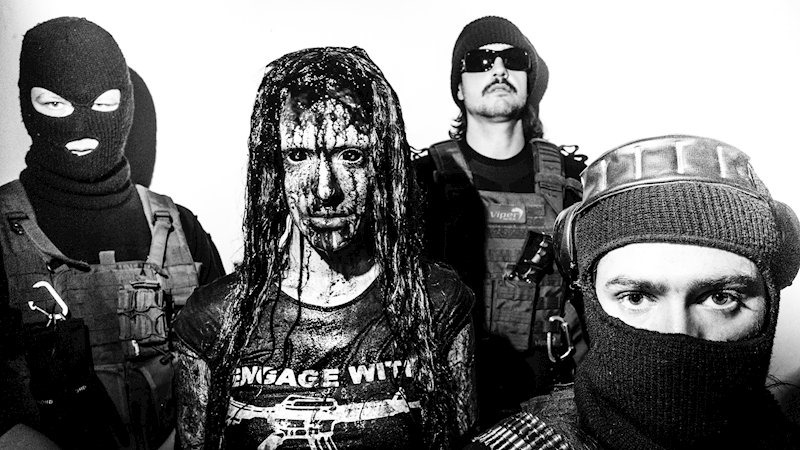
Its arrival is times just before Barren Womb launch a live assault on the UK, which threatens some big noise. Their half of this single, ‘The Perils of Self-Improvement’, which they describe as ‘a mid-tempo stomper delivering grim news for the supposed wisdom of self-help culture’ is an offcut from the Chemical Tardigrade sessions which they withheld specifically for this release, and it sure is a beast, which works particularly well as a standalone release. It’s got grit and grind as well as melody. The verses are hefty, trudging slabs of noise where the bass rumbles and the guitar jabs and the pair – consisting of Timo Silvola (drums/vocals) and Tony Gonzalez (guitar/vocals) manage to blend elements of Melvins and the Jesus Lizard with a dash of psychedelia.

AA

AA

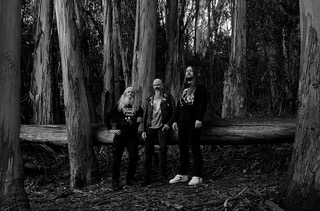
On the flipside, Hylko really go all out on the psych, presenting a deep, dark, spinning riff which lumbers and lurches amidst a swathe of flange and reverb. And then it suddenly goes all dark and dubby, with the added bonus of sounds of water and running rivers.

AA

AA

It’s a perfect split release: complimentary but most definitely contrasting, completely wild and all quality.

AA

733508

13th March 2026

Christopher Nosnibor

Polevaulter are very much a band of the times. The cost of living and the fact bands make no money has driven a marked shift towards duos and power trios, and notably electronic music and drum machines have become popular again. The less kit you’ve got, the easier it is to rehearse at home or in a small space, there’s less to the logistics of getting a smaller number of people with minimal gear around (hell, the logistics of getting people in the same place at the same time around work and family and all that shit), and any fees and proceeds from merch are split fewer ways. Necessity and invention, and all that. And notably, there’s a lot of angry electro-led noise coming out of the north. Benefits are clearly up there in representing this thing, which isn’t anything like a movement, any more than the emerging goth scene in the 80s was a movement, but an artistic current, a zeitgeist. But we also have the likes of The Sick Man of Europe, Machine Mafia, and Polevaulter. These guys are something of the exception, in that they’re a shade dancier, but given the buzzing bass fury and relentless rage in the vocals, they’re never going to trouble any regular townie nightclubs, let alone any charts or Radio 1 Dance.

On the new EP, Polevaulter frontman Jon Franz said, “’Descending’ is our most cohesive and controlled EP, and also the most raw and direct. We wanted to reach people immediately, give them something to quickly digest and then say exactly what we wanted to say. The vocals start quick in each song. It progresses down through the EP into an anxious rave, the themes about being lied to all your lives and believing what you are told coming from power down to the working people. It’s our darkest and danciest EP I think.”

And so it is that with Descending, Polevaulter deliver four ultra-taut and super-succinct slabs of electro-led abrasion. ‘The Cursor is a Fly’ makes for a comparatively gentle introduction, before the grinding ‘Dogtrack’.the woozy, bulbous subsonic bass is pure dance, but the snarling, disaffected vocal is punk to the core, Franz wheezing ‘Just trying to buy a house, now let me have it… dogtrack… gamble… run down… dogtrack… going round and round and round…’ It’s bleak and hypnotic and bleak and hypnotic and… you get the picture.

‘Manifest’ mines a dark dance groove with a vocal that’s bordering on spoken word, and calls to mind the short-lived and criminally underrated York band Viewer, the technoindie collaboration between the late cult techo legend Tim Wright and vocalist AB Johnson. In other words, it’s a well-balanced hybrid, where thumping beats and techno synths collide with a vocal that draws influence from Jarvis Cocker and Mark E. Smith. ‘I’m going down with the ship’, Franz announced against a clattering backdrop of snashing metallic snare drum detonations and rapidly-shifting synth gyrations.

The final track, ‘Soothsayer’, is the EP’s longest, and a sparse, haunting intro paved the way for a dark, reverb-heavy electrogoth groove with hushed, hypnotic vocals over an almost subliminal bass groove cut through with a heartbeat kick drum and smashing snare and builds to a tense, suffocating climax.

These are dark times, and it is definitively grim up north. Polevaulter provide a soundtrack to this, while countering bleak nihilism with some almost euphoric dance synths. Descending offers escapism in the same space as the darkest pessimism. The conflicts and contradictions are navigated successfully, though. Polevaulter have taken a massive leap here, and really gone beyond their previous works.

AA

AA

Polevaulter

skoghall rekordings – 18th March 2026

Christopher Nosnibor

Patience is supposedly a virtue… but then apparently, there’s no time like the present. And you’re supposed to strike while the iron’s hot. Clearly, Trump and his negotiators and so-called ‘Minister of War’ figured there was no time like the present even while negotiations with Iran were progressing nicely, with Iran offering substantial concessions around their nuclear programme.

Loaf of Beard’s follow-up to 2023’s Dog had been scheduled for a couple of months’ time, but from nowhere, it’s been brought forward and landed yesterday. It’s not even a Friday, let alone a Bandcamp Friday! Still, after LoB material got an airing on a jaunt of the UK late last year, this might be considered an example of striking while the iron’s still a bit warm, and moreover, given the way things are going, there really is no time like the present inasmuch as we can’t guarantee there will even be a future. There is an urgency to making art right now, and putting it out there FAST isn’t so much about keeping it relevant – although that is a factor, since events are happening at such pace it’s nigh on impossible to keep up – but about processing all of this shit and conveying the intense and myriad mixed emotions these insane times engender.

As they write in the accompanying notes, ‘In these constantly changing and worrying times it is somewhat of a relief that certain artists go out of their way to document humanity’s descent into fucking stupidity and greed’.

Loaf of Beard – a duo consisting of Chisel and Rabies Beefburger tackle these serious matters with an element of humour, Chisel ranting and chanting in a distinctly north of England sprechgesang over uptempo lo-fi drum machines and scratchy electronica. There’s something uplifting about both the musical and lyrical simplicity. On ‘All Of This Lot Can Get Fucked’, Chisel reels off a list of politicians and other public figures, with a chanting refrain of ‘get fucked’. It’s simple but effective, and in a just world, they’d be playing to hundreds of people all singing the words back at them in a display of unity. But that’s not the world we live in, as they point out on ‘Shit Mic, No Fans’:

Some might say I’m the laziest rapper

I have to admit, that there’s none crapper

All the fucker MCs come along and diss me

I spit out rhymes, they just dismiss me

The irony is that this isn’t a million miles away from Sleaford Mods in many respects., and I suspect they’re aware of this fact. When you boil it down, it’s sweary sociopolitical rants with repetitive hooks delivered over minimal electronic backing. But while there is humour here, at times, Privilege and Other Poisons is unafraid to venture into dark territory, and this is nowhere more apparent than on ‘B.A.E’, where they call out the manufacturer of arms and ‘informational security’, whose share price has absolutely skyrocketed in recent years, since Russia invaded Ukraine and war has essentially spread around the globe, with the lugubrious refrain of ‘B.A.E and their profits of death’. And this is how the world works under capitalism. A small – very small – minority coin it in while everyone else’s lives crumble and tens of thousands of people – innocent civilians – are slaughtered because some cunts in suits who wield power beyond imagination are petulant pieces of shit who want global domination like in a stupid movie and think it’s a game.

Elsewhere, ‘Claptrap Fåntratt’ sounds like The Fall circa Light User Syndrome (which is severely underrated in the scheme of their oeuvre). ‘Freeze Peach’ goes full-throttle raging electro/punk thrashabout, with Chisel foaming at the mouth with the chorus of ‘take your fucking flags down dickhead’ before going all-out Beavis and Butthead. ‘I Feel Like a Twat’ serves up a slice of cheesy jazz-infused disco funk, and knowing its awfulness is conscious and intentional only raises the level of awkwardness. This is Loaf of Beard all over. They exist to make you feel uncomfortable – and they succeed. And I for one respect that.

Semi-ambient pastoral contemplations about wildlife and sightings of elk make for some welcome respite: it’s not healthy to be raging all the time, and however fucked the planet may be, nature is resilient. It’s us who need to become extinct.

AA

AA

a3330254764_10

Rocket Recordings – 3rd April 2026

Christopher Nosnibor

Opening an album with an ear-splitting shriek of feedback is a statement of intent, and a challenge to the (potential) listener. Opening an album with an ear-splitting shriek of feedback by way of launching into a seven-minute discordant racket is special, particularly when you’re not Sunn O))). It takes some confidence, and is an immediate ‘fuck you’ to anyone who might be looking for some melody. But then, it’s fair enough. You’re not going to be looking to attract pop kids when you’re a noise rock band called The Shits. But over the course of its seven minutes, raw and ragged opener ‘In A Hell’ brings a nagging lead guitar line which stretches back and forth over a repetitive riff where the rhythm guitar follows the bass on an ascending riff through an ever-amassing wall of noise. Woah. In a way, I’m reminded of The Fall, specifically Hex Enduction Hour, crashing in with ‘The Classical’, which is absolutely all over the shop, discordant, swerving here, there, and everywhere, likely deterring many from venturing further, while encapsulating everything about the band and the album in that opening salvo. So if ‘In A Hell’ doesn’t do it for you, leave now, and promptly, because you’re only going to get more of the same, only more so. ‘In A Hell’ is a beast, and will likely send many running ion the opposite direction. Fine. It’s their loss.

You know an album’s going to be good when the opening track sounds like the finale. And yes, with Diet of Worms, The Shits deliver something extraordinary. It’s a filthy mess of overdriven guitar and vocals thick with phlegm and fury, and it’s nothing short of magnificent.

‘Tarrare’ brings the searing proto-punk three chord thrash and wah-wah frenzy of The Stooges with the rabid nastiness of The Anti-Nowhere League and a hint of the derangement of the Jesus Lizard, and ‘Then You’re Dead’ piles straight in with more gritty riff-driven nihilism delivered with fervour and everything cranked up to eleven.

There’s nothing pretty about this. There’s nothing especially new about it, either, but The Shits play with a rare, raw energy, and it’s this which makes Diet of Worms stands out. ‘Change My Ways’ is a sneering roar, with hints of Uniform but very much indebted to Public Image. It’s a punky, noise-rock juggernaut. Single cut ‘Thank You For Being a Friend’ doesn’t exactly seem to radiate effusive gratitude in its delivery and lands more like being punched in the gut. Repeatedly. For nearly six minutes.

AA

AA

The whole album is a sprawling, dingy, full-on, the songs built around simple, repetitive riffs bludgeoned away at for however long – nothing fancy, just fire and fury. Diet of Worms is unapologetic in its bluntness, attacking from the first scream of feedback to the final afterburn.

AA

AA

a0484581445_10

Saccharine Underground – 27th March 2026

Christopher Nosnibor

Bell Barrow are on fire right now. And so is half the world. I wouldn’t necessarily suggest that they thrive on war and global turmoil, so much as feel the compulsion to create in the face of global crisis. I may be projecting a little here, but seriously – come the fuck on: how can anyone not feel all-consuming, abject terror right now? We’re hearing a lot of Israel claiming an ‘existential threat’ from the supposed nuclear activities of Iran right now – although this seems a little lacking in credibility, since it can’t also be true that the USA ‘annihilated’ Iran’s nuclear capabilities last summer. I mention this in my preface to the review of True Human Trough because although the current events aren’t mentioned specifically, it’s clear that this is an act who are tuned in to current tensions as well as ecological concerns, and who channel the energy of anxiety into their music.

As they themselves write, “These compositions function as experiments in torture empathy: forcing the listener to inhabit the suffering inflicted on our ecosystem by human dominance while simultaneously confronting a far older truth—that humanity’s power is temporary, localized, and ultimately irrelevant. Plant life, scavengers, and insect civilizations speak here through perceived chaos, not to ask for mercy, but to assert inevitability. True Human Trough reflects agony, yes—but more importantly, it documents supremacy. We may poison this world for now, but be clear…in the universal order, they rule in the end.”

I admire their optimism, and for what it’s worth, I share this hope. Because right now, it feels as if our species is suffocating the planet harder by the second. And suffocating is how the first track on this frenzied sonic blitzkrieg of an album feels. ‘Solunar Theory’ is a melting morass of experimental jazz immersed in a wall of phased reverb. Time signatures collapse into chaotic discord on ‘The Unbirthing of Jackals’. Everything lurches, drunkenly, it’s a dizzy stagger that’s powerful enough to unsettle the guts and leave you seeing stars. This is a woozy cacophony rendered all the more brain-frying by the wild application of reverb. Everything is off-kilter, the EQ is all over and there’s flange and phase and good old-fashioned manic musicianship, melting Beefheart and Zappa and Trumans Water in a cauldron with The Necks and Throbbing Gristle. Reading that back, it actually reads like some fucked-up Victorian era recipe that’s only missing some tripe and trotters to top a truly foul soup. Bell Barrow simmer up a pretty foul sonic soup even without these ingredients: ‘Neckless of Tongues’ delivers it

‘Infauna’ refers to the animals living in the sediments of the ocean floor or river or lake beds, while ‘bloat stage’ is occurs during the decomposition of a corpse. Yes, I looked this up while experiencing the obliterative force of ‘Bloat Stage Infauna’, and in context, it all makes sense. ‘Rites of Silent Spring’ is almost black metal in its frenetic frenzy, but of course, it’s also a jazz-infused instrumental which is a long way removed from black metal – which pretty much sums up True Human Trough, an album that’s everything all at once.

The production and mix is deranged, demented, furious. There’s no intention of softening the blows here: Bell Barrow are set on bringing pure mayhem and disruption – of the best possible kind.

We are living through historical moments in real time. As we hurtle towards self-extinction – it’s more a question of by which means than if now, what with the pace of climate change, AI’s rapid and unfettered advancement and now – let’s call it what it is – the onset of World War 3 – with True Human Trough, Bell Barrow have created a work which soundtrack the next stage of the end of times.

AA

Jeremy Moore by Fleurette Estes- February 2026 - Landscape 001

AA

Jeremy Moore by Fleurette Estes

Cruel Nature Records – 27th March 2026

The work ethos of Pound Land always makes me think of The Fall – and the same is true of the relentless repetition of their compositions. And it comes as no surprise that Red, the second studio by Pound Land side-project Machine Mafia, consisting of Jase Kester and Adam Stone, was recorded in a single day. Keeping things in-house, it was mastered by Agent Kester, too.

Whether or not the album’s title is in any way connected to its being recorded at Big Red Studios in Macclesfield, we don’t know, and it doesn’t really matter anyway. What matters – and what we are told – is that ‘Lyrically, Red explores themes such as the sanctity of personal freedom, the dreary mediocrity of business academia, the medicalisation of human behaviour, the strange comfort found in boredom, and supernatural motorcycle-riding anti-heroes with flaming skulls.’ Some of these topics I find personally relatable (my brief time as a university tutor was not enjoyable, essentially working a zero-hours contract teaching modules miles beyond my own field of research, to receive poor feedback from students who’d shelled out thousands for a degree and felt let-down by having a tutor who wasn’t a specialist, and only worked limited hours, so wasn’t sitting in their office for drop-in visits or able to respond to emails immediately. My favourite was a student emailing me five minutes before an essay submission deadline asking where the submission sheets were on the website while I was on a train with no access to my emails), others less so (I simply don’t get boredom: there’s always too much to do). But what I absolutely get is channelling all the frustration into something creative.

Given that Pound Land are kings of gnarly, repetitive, grinding noise and that Kester’s work outside Pound Land (Plan Pony, Omnibael / Ombibadger) has explored numerous shades of abrasive racket, that Machine Mafia create an unholy din is to be expected, and that’s what they provided with their debut album, Zoned, released almost a year ago to the day of this, their second full-length. But whereas Zoned tended to deliver short, sharp sonic assaults, with the majority of the thirteen tracks clocking in at less than five minutes, Red really pushes the boundaries, the five track release dominated by a brace of megalithic monsters in the shape of the thirteen-and-a-half-minute ‘Business Studies’ and their epic rendition of Suicide’s ‘Ghost Rider’ – which is even more manic and more brutal than the one performed by Foetus with Marc Almond. As for its colossal elongation, although the original is a mere two and a half minutes long, its hypnotic, repetitive groove could readily withstand looping into eternity. The Sisters of Mercy used to run it for six minutes or so as an encore in 1984 and ’85, Eldritch cutting loose with the Alan Vega screams. Machine Mafia tweak the tempo up a notch, and it’s a messy, dirty blast of electropunk, Stone spitting and whooping the words through the mangled metallic whir of overloading electronics.

It’s the perfect finale, and sits perfectly with the originals, which are a mess of pounding beats, squalling feedback, and angry vocals. The first of these, ‘NO’, is a relentless howl, five minutes of nonstop thunder and ear-splitting treble, Stone rabid and raving.

‘DSM’ is more straightforward noise rock, a bass-driven blast with layers of feedback. The format is repetition, repetition, repetition, like a noise reimagining of The Fall, drawing in elements of Metal Urbain. ‘Business Studies’ is simply brutal, a bludgeoning bastard of a noise with the refrain ‘fuck business studies’. ‘It’s all shit and piss’, Stone summarises with the kind of anguish that feels like he’s bursting out of his very skin. The vocals are thick with distortion, the glitching bass blasts from the speakers with dangerous density and it’s all wrapped in a mesh of feedback that makes The Jesus and Mary Chain sound like easy listening. ‘Boredom’ takes its cues from Throbbing Gristle’s ‘Discipline’ and adds wild feedback to the mix. It’s punishing.

There’s an additional, unnamed, ‘secret’ track a little way after ‘Ghostrider’, and it’s a messy, lo-fi mess of crashing drum machines and grinding synths over which Stone rants so hard you can almost hear the spittle. It sounds like early Uniform – stark, harsh, rabid.

Uncompromising doesn’t come close. Red is absolutely fucking punishing. If you’re into dense, dark, nasty noise, you need this.

AA

AA

a0309064163_10

Bearsuit Records – 20th March 2026

Christopher Nosnibor

Anyone who’s been following this site for any time will have likely encountered the work of Eamon the Destroyer, and Edinburgh-based label Bearsuit Records, and in doing so, will have learned that the label specialises in weird shit, and that Eamon is an artist who conjures a uniquely strange musical hybrid, which is entirely free of the mores of genre-specificity. Idiosyncratic is the word.

And what better way to shed new light on all of this than through a remix album? I’ve written extensively in the past with a critical view on remixes – about how they eke out material on and on, or pad out singles into EPs and albums, and also about how they can be really fucking boring, with back to back versions of the same song over and over but with different drums, more disco drums, more aggressive drums, more industrial drums, while the vocals are dubbed out and mostly what you get is some ravey shit.

This is very much not the case with the remixes of We’ll Be Piranhas, the original version of which was released in 2023 and has already been subject to a follow -up / satellite release in the form of Alternative Piranhas EP (2024), which, as the title suggests, features alternative takes of some of the songs on the album. Since then, Eamon the Destroyer has released another album of new material, but this evidences that there’s more mileage in Piranhas yet. These reworkings are subtle and sensitive and, in the main, preserve the essence of the original tracks. That is to say, it’s a chaotic assemblage of twangy Western stuff which clashed and melts into Eastern vibes, all melted together with a filmic overlay, and none of it makes sense, but at the same time it makes perfect sense – if that makes sense. And if it does, well, good, because little else about all this does.

The sequencing of the tracks is different from the original album, and it works, taking into account the transformative reinterpretations of the songs, starting with a laid back but grooved-up take on ‘A Pewter Wolf’ by Senji Niban.

The Elkeyes remix of ‘Rope’ is particularly brain-bending, with its warped jazz elements which are vaguely reminiscent of later Foetus. At the same time, it brings a weight, a long shadow of gloom, with organ-like drones. It’s a lot to process all at once. And while remixes often add length to tracks, the reworked title track is cut to half the length of the original, although with the weirdness and distortion turned up a long, long, way. Similarly, the No Mates Ensemble cut ‘My Stars’ from nine-and-three-quarter minutes to three and a half, and reframe it as a slowly evolving avant-jazz meandering. Elsewhere, ‘Société Cantine transform the low-key space-synth strum of ‘Underscoring the Blues’ into a seven-minute hybrid of quasi-operatic drama and drum ‘n’ bass.

It’s different alright, and that’s the point of a remix album, of course. But the success of the We’ll Be Piranhas remixes is that it doesn’t fall into the trap of regular remix mode. Here, the songs aren’t obliterated, but simply respun. It’s a winning formula, and this is anything but a predictable rehash exercise.

(Click image to listen.)

AA

640331993_1516522533809344_8570693407697595941_n

Mortality Tables – 27th February 2026

Christopher Nosnibor

Mortality Tables’ Impermanence Project continues apace, this time with a nine-minute work by alka, with spoken word by Andrew Brenza. This piece uses a 1979 / 80 cassette recording of Mortality Tables founder Mat Smith singing Marie Lloyd’s music hall song ‘My Old Man (Said Follow The Van)’ with his late father, James.

As Bryan Michael (alka) writes, ‘I felt there was a parallel between the rent collector-avoiding moonlight flits that inspired ‘My Old Man (Said Follow The Van)’ and the fleeting, ever mutable nature of life. I also like the idea of moments being captured within magnetic fields – a cassette, in this instance – which can then be re-played. To me, they’re like ghosts of memories.

Given just how fragile those magnetic fields are – prone to deterioration and even erasure – while the very tape itself is liable to stretching, warping, being chewed in the heads and rendered unplayable, or even snapping, it feels as if the medium of the source material is, in itself, an encapsulation of impermanence. Even supposedly permanent records are always at risk of ceasing to be.

And, indeed, such a simple recording, likely made for fun in the moment without a view to posterity, absolutely captures the essence of impermanence; James is no longer with us, but his voice lives on here, while the voice of Mat as a child is a reminder that childhood, too, is but a stage, and one which is, in the scheme of life, but brief.

Initially, the sound is so quiet that one may even think there is nothing but silence, but gradually, soft, gently pulsating synth tones fade in. The instrumentation is sparse, ethereal, cloud-like, while the voices drift amidst a soft, dreamy haze, very much creating the effect of the ‘ghosts of memories’ of which alka speaks. It isn’t until the final three minutes that Brenza’s spoken word contribution begins, reflecting on impermanence and mortality, and ‘the way I started to dress like my father once, after his death, because it made me feel close..’

The different elements are drawn together in an almost alchemic fashion, to produce a work which is not lugubrious, but wistful and contemplative.

AA

a0843506011_10

6th March 2026

Christopher Nosnibor

My first encounter with The Sunken Land was at the York EMOM (that’s Electronic Music Open Mic) at the start of the month. There were looks and mumblings of surprise, confusion, and even consternation within my vicinity. These events attract makers of a broad spectrum of music, from those who dabble to the obsessives, from laptops to modular setups to self-made kit, and from pop to ambience to far more experimental stuff. Often, there’s much interest and conversation in the gear being used, particularly as a fair bit of the kit is rather novel. ‘What is that?’ began to be asked around as The Sunken Land’s set started. There was incredulity, amazement at the instrument being wielded on stage, something alien to these night. It was a guitar.

The man playing, it, one David Martin, was conjuring layered soundscapes, pleasant to the ear, but underpinned with a physical density. It was well executed, and powerful, and distinct.

worm moon sessions, released the following day, captures the sound of that live performance well.

While there’s apparently no scientific evidence, there is plenty of anecdotal indication that people feel different on and around full moon. Werewolf mythology is but one example of the way the power of the moon seems to affect us, and since this satellite planet drives the Earth’s tides, it’s hardly surprising we also feel that we sense its force. There’s also something compelling, mesmerising, hypnotic, about a large, bright moon, or a moon with an aura, or displaying an unusual hue. This year’s worm moon, on 3rd March, was particularly unusual, emerging a fiery red from a total lunar eclipse, and perhaps some of this rare power filtered into The Sunken Land’s recordings here. While worm moon sessions may not represent an immense leap from demos 2026, released in February, there’s most definitely evidence of a gradual honing of the ‘bedsit doomgaze’ form here.

AA

AA

‘worm moon’ brings the heavy drone of Sunn O))) but with elements of melody rising out of the dense sonic swamp. These melodic details, in context, evoke the form of later Earth. It’s the kind of slow, deliberate guitar work that compels the listener to really hone in on the textures and tonality, the way the notes of a struck chord – thick with distortion and expanded with reverb – interact with one another.

The shorter ‘almost true’ is altogether lighter, more graceful, emphasising the ‘gaze’ aspect of the self-made genre tag. It’s still dense and underpinned with slow, droning distortion, but there’s a soft, almost ethereal hue around it, and the experience is ultimately uplifting, like the first signs of spring.

AA

AA

a3144201409_10