15th October 2026
AD Ozium is the musical vehicle for multi-instrumentalist Jeremy Moore, based in Washington DC – a vehicle for what he describes as ‘a fractured, hallucinatory convergence of freak folk textures, dark ambient, and no wave dissonance.’ That’s a lot to digest, just on paper. What’s more, this second album, which follows just four months after In The Style Of Dead Sparrows, ‘confronts themes of dehumanization, economic exploitation,
revenge, and systemic collapse. It argues that dehumanization functions as a gateway to sustained, trans-generational cruelty, and that societies built upon the denial of another’s humanity ultimately cultivate the conditions for their own destruction.’
That’s a pretty bleak proposal, but we live in bleak times – potentially the bleakest of all times. The last few decades have seen an ever-widening wealth gap. But the propensity for conspicuous consumption and status symbols which defines the 80s pale in comparison to where we are now. Billionaires simply didn’t exist then: now they’re a class. And instead of aspiring to owning yachts, these uber-rich fuckers – who each individually could eradicate world poverty and still be richer than anyone else can really conceive – choose to send rockets into space, not in the interest of expanding human knowledge, but in the sole interest of self-interest. Space travel is the Rolex and Hummer for the mid-2020s. Meanwhile, as we burn through ever diminishing supplies of fossil fuels at an ever-increasing rate and the seas are rising more quickly than ever, it feels like we’re accelerating towards a cliff that has no bottom, just an abyss of incomprehensible proportions.
We live in a sick society, with an ageing population. And it’s that ageing population who seem determined to ruin any possible future for future generations. What the fuck happened? Where is the humanity? What happened to the adage ‘you can’t take it with you’? Now, it seems that the mega-wealthy and the boomers – I refuse to use to term ‘elites’ here, because they have no claim to superiority – have set a course for total annihilation and are determined to take the rest of us with them.
So yes, I feel passionately about the positioning of this album. And the fact it’s landed so soon after its predecessor indicates a sense of urgency where Moore is concerned. There’s a palpable sense that he’s doing this because he feels driven, is motivated by a compulsion to act in the only way he knows, the only way he can control.
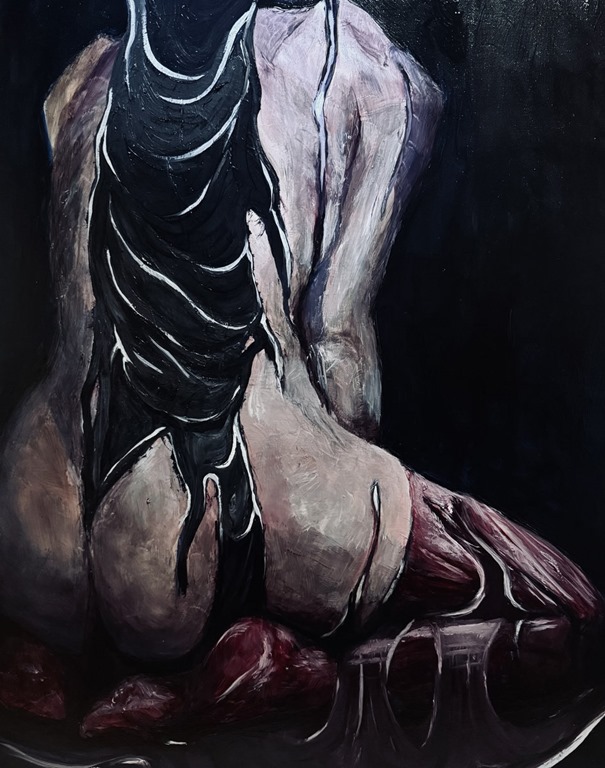
The title, Body Without Organs hints at a deep-seated sense of detachment, and this translates into the sonic experience: as I said, it’s a lot to digest just on paper. As a listening experience… well, it does feel like the slow – but rapidly accelerating – end of everything. A stentorious baritone vocal rings out through a clamorous clatter of churning discord on the album’s second track, ‘Acceleration’, on which, contradictorily, time slows to a doomy crawl. One might call it industrial goth, or gothic industrial: it’s dark and has all the hallmarks of sepulchral drama, against a dingy backdrop or gnarly metal-griding and wailing moorland wintering ambient noise. Moore sounds as if he’s lost and wandering, not just in a barren landscape / soundscape, but in a psychological desert. New sonic ruptures burst unexpectedly, only adding to the sense of discomfort.
‘Thug Bait’ is a dirgy, purgatorial crawl through subterranean depths: the vocals are low in the mix and swathed in reverb, swimming through a dank swamp, dense enough to drown in.
The production values are positively black metal: Body Without Organs sounds like it as recorded on a Walkman positioned in the room next door on a well-used tape. But it wouldn’t work any other way. The heavy, soul-dragging atmosphere, which is so integral to the experience, simply couldn’t come from a nice clean, crisp recording made in a plush digital studio. ‘Curse of 39’ is a particularly woozy, abstract piece, whereby Moore’s vocals float amidst a slow drift of slow-building tide of flotsam and debris, and ‘Space of Flows’ is a fractured, dissonant wail. And the debris is strewn across this album – the debris and wreckage of human existence. Body Without Organs is the sound societal collapse and the slow dawning of the reality of what this means.
Shit only gets weirder as the album progresses., with grinding earthworks and tectonic ruptures churning and dredging away, spun across slow-drifting sonic clouds and warping. There’s a mesh of static which drapes itself over ‘Capitulation’, while at the same time untuned guitars twang and unravel with a complete disregard for musicality or structure. ‘The Illusion of Completeness’ borders on the surreal, as guitars scrabble against notes like elastic bands and so much rumbling ambience and lurching noise. The seven-minute ‘Most Beloved’ is dark folk and quite nasty noise, and again, Moore’s voice floats around vampirically, like the very essence of of doom, to be afraid of.
The experience of listening to Body Without Organs is not an easy one: it slowly drags the listener down into murky waters and a troubled headspace, one where confusion and dissonance reign. It’s great, it’s powerful – but it’s probably not for everyone.
AA
AA