Archive for September, 2026

Ipecac Recordings – 18th September 2026

Christopher Nosnibor

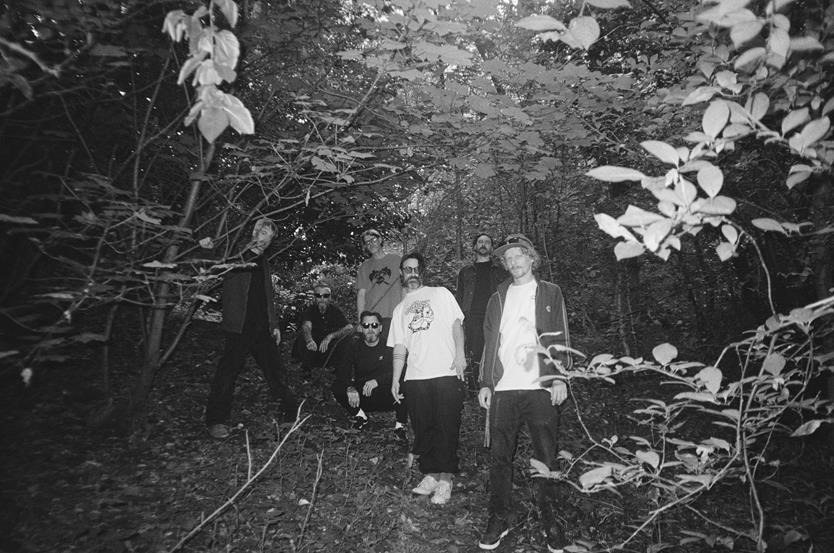
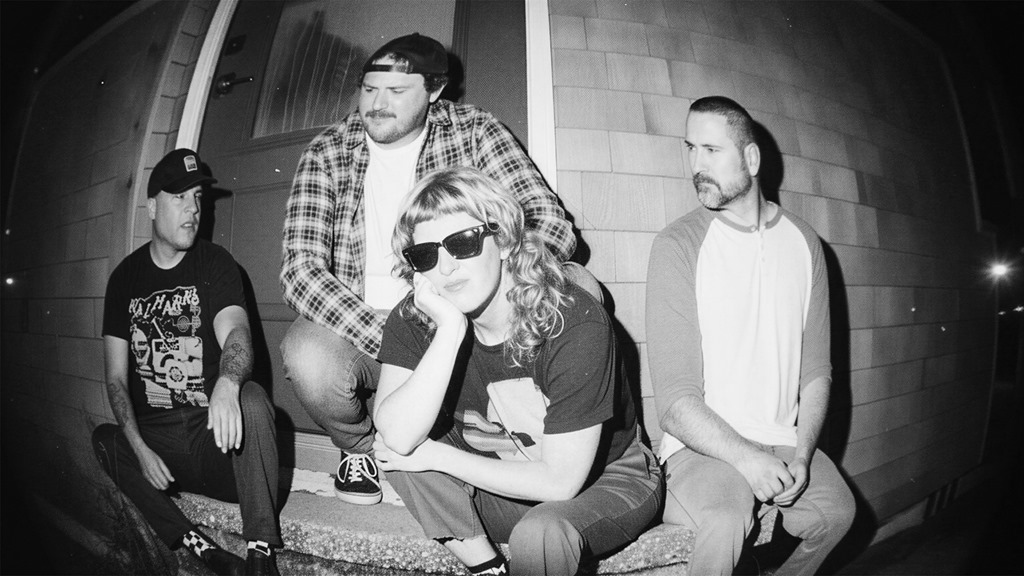
Their bio tells us that ‘Cor de Lux didn’t come out of a content pipeline, a shared folder, or an algorithmic moment. They came out of a rehearsal room,’ and their Bandcamp page describes them as ‘4 friends in a Post Punk-Noise Rock band. Melodic hints and synth tones that trickle into a garage angst progressive fury.’ These two snippets give an insight into what kind of band they are, and how they operate, but don’t really give the measure of Year of the Horse, an album which goes beyond both post-punk and noise-rock or any permutational crossover of the two to render something that’s varied, embraces experimentalism, and at times is quite off the wall.

Single cut ‘The Cringe’ is exemplary, crashing in on a lolloping rhythm and blistering squall of guitar by way of a backing to a dispassionate but nevertheless urgent-sounding dual vocals from Tim Lusk and Dawn Moraga, before suddenly pulling up and following a short but meandering moment of ponderous desert rock, swerves off in a vaguely trippy prog direction, with a swirling synth and strolling synth. In contrast, ‘Ping Pong’ – not a cover of the Stereolab classic – is a slice – and at six minutes long, a very generous one – of quintessential dream-pop. A laid-back, balmy indie song with a hint of C86 whimsy, gently melodic and evocative of dappled sunlight in woodlands in early summer, it’s neither post-punk nor noise-rock, but it’s easy on the ear – until the switch that lands around the four-minute mark when it unexpectedly takes off like a rocket. And it’s here that it becomes apparent why Ipecac would be interested in them. They’re a band unconstrained by genre boundaries: not necessarily weird, but different.

AA

‘Cannibal’ takes the chiming guitar and driving bass of the UK goth sound circa 1984 and spin them with slightly spiky vocals and a mid-80s indie twist – nothing that’s immediately specific to a band, but then not entirely generic either.

‘The Western’ whips up a choppy frenzy and is perhaps one of the most overtly post-punk-meets-noise-rock songs on the album, and it drives pretty hard, before ‘Bread Bag’ serves up a slice of mathy post-rock… but that’s not quite it. But I can’t think long enough to capture my thread because there’s a sudden explosion over overdrive, and then it’s off somewhere else again. As the album progresses, the harder it becomes to situate it in a way that feels in any way meaningful – but that doesn’t mean that Year of the Horse is in any way incoherent. The more wide-ranging and eclectic the songs are, the more the sound of Cor de Lux is defined.

‘The Deli’ is simultaneously motorik and noodly: Pavement might be an obvious touchstone, but it’s more obscure acts like Moderate Rebels that come to mind, and Rosa Mota, too, and as fast as can process and much faster than I can type, we’re into another post-rock noise burst and then some more breezy, jaunty indie rock. One thing that does stand out is just how un-American they sound, at least to my ear. Year of the Horse is quirky. It’s not a common American trait. It’s nuanced, and wile it’s by no means a flippant, inconsequential work – it’s anything but – it’s threaded with a kind of knowingness, a twinkle in the eye which hints at a certain humour. But more than anything, Year of the Horse is a work of genius, in that it brings together myriad incongruous elements and doesn’t just make them gel, but amalgamates them in a way which feels entirely natural. How do they do it? Magic, alchemy, or something, I guess.

So many acts strive to make hybridity work, and so many fail, because it feels forced, self-conscious, the segments don’t flow or connect up, and it sounds awkward, jarring. Not so with Cor de Lux, and Year of the Horse keeps it succinct with just nine songs and a run time of thirty-eight minutes, the majority of the songs sitting in the three-and-a-bit-minute bracket. It’s a rare beast, this: an album that will blow your mind, but subtly. It’s crazy, but it’s packed with tunes. Truly inspired.

AA
Photo_credit-_Jordan_Olivia_Howell_387686

Photo: Olivia Howe

Two decades have passed in the land of Gnod, yet the psychic travelogue only becomes more enthralling as it goes on. The page is turned, a new chapter begins… Chronicles of Gnowt (Vol. 2) will arrive via Rocket Recordings on 9th October.

Today, the band share the King Tubby-inspired ‘Old Gold’, taken from their transcendentally heavy middle instalment in the Chronicles of Gnowt trilogy.

Paddy comments, “The words for ‘Old Gold’ have been floating around the Gnod universe since 2008 waiting for the right rhythm. 18 years later the right rhythm appeared. This track was further enhanced by our (sometimes) sound engineer Raikes jumping on guitar, wah and space echo and Spud Murphy approaching the mix like King Tubby.”

Chris adds, “The rhythm came from jamming in the rehearsal room on a one note riff / rhythm that I was playing on the bass. It was one of those riffs that stuck & became a track.”

AA

000011010019GS-99079e045104513c

10th September 2026

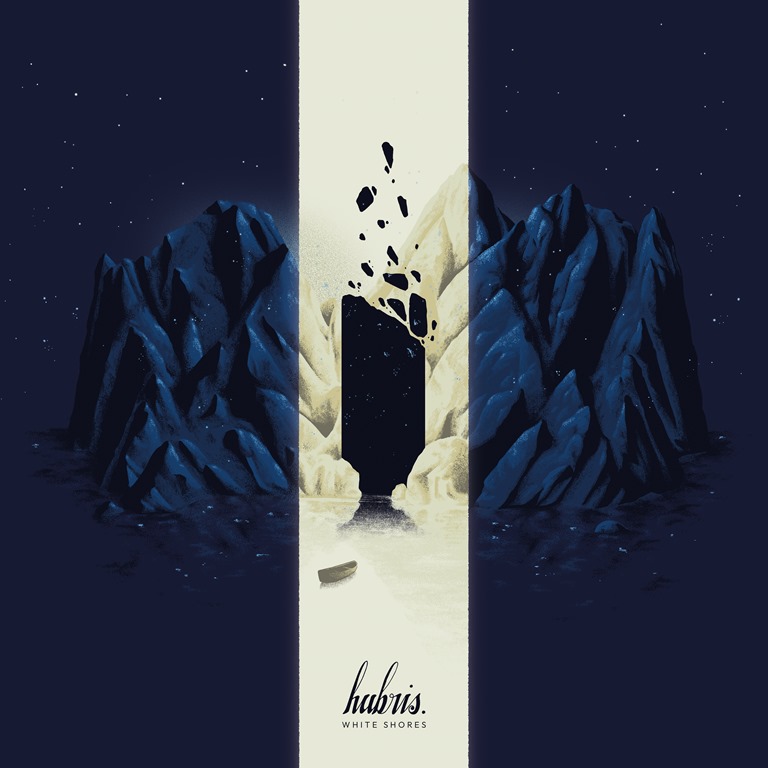
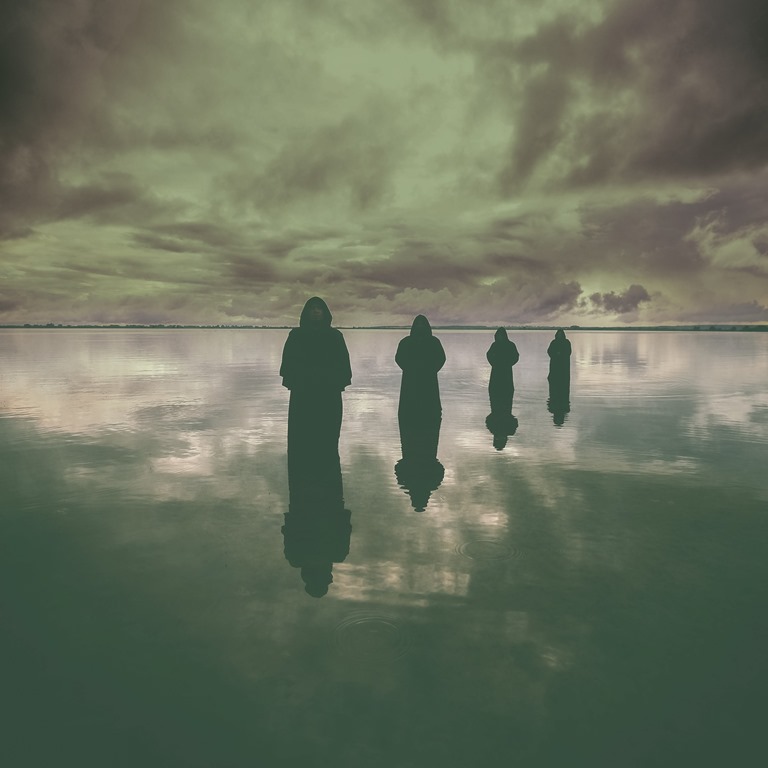
Having never felt compelled to explore Tolkien’s writing – and perhaps consequently even less compelled to watch Peter Jackson’s epic Lord of the Rings trilogy – I feel in some ways unqualified to review White Shores¸ the fifth album by Swiss post-rock band hubris. which follows four albums inspired by Greek mythology.

This is one of those albums which does require some grounding in context, not only in terms of its literary inspiration, but also the personal circumstances which prompted the shift in focus, and so I shall quote from the accompanying notes in order to avoid any misinterpretation.

In Tolkien’s legendarium, elves in spite of their immortality (a trait often coveted by humans) refer to death as the “Gift of Men.” This paradox offers a striking alternative to the Western perception of death as purely tragic. A “gift” implies something desirable, even fortunate. While Tolkien presents multiple perspectives on death throughout his works, the one that resonated most deeply with Jonathan comes from the main protagonist Frodo’s departure at the end of The Lord of the Rings: "the grey rain-curtain turned all to silver glass and was rolled back, and he beheld white shores and beyond them a far green country under a swift sunrise.”

In the wake of his grandfather’s passing, this perspective became Jonathan’s emotional and conceptual foundation of White Shores. The album unfolds across five movements, each representing a word in a single sentence: Death. Is. Just. Another. Path.

The sentence is drawn from Gandalf’s words to Pippin in Peter Jackson’s film adaptation. It was spoken in the face of what appears to be their last moments. This phrase serves as both a moment of respite and a thematic conception.

Inevitably, fans of the books and the films – and there are many – will appreciate White Shores in ways I simply cannot, in that they will be able to identify references and revel in the details. This is clearly an album where detail is important. Comprising five movements, the album is designed to reflect Dr. Kübler-Ross’ theory on the five stages of grief: Denial, Anger, Bargaining, Depression and Acceptance – although split into six tracks, with none making any obvious reference to this, it’s not readily apparent.

The first piece, ‘death’ is a delicate, rolling work, which is expansive and feels comparatively calm, particularly for the first three minutes. Additional layers of guitar with overdriven, choppy chords arrive at this point, but the same interweaving lead part continues to drift on through, before it all dissipates into a slow-motion ambience to fade near the end. This in turn segues into ‘is’, which is textured, and builds, but does so gently and in a way which remains easy on the ear. It’s pleasant, but there’s very little grab or bite to it, and as such, it’s music that’s easy to let slip into the background.

The nine-and-a-half-minute ‘just’ is the centrepiece in every way, and with its rolling drums, and a crashing snare which cuts through the rippling guitars which lap away for the first four minutes, it’s the first composition that feels like it’s going somewhere, and offers a glimpse of emotional intensity. The same overdriven guitar sound which brought the power chords on ‘death’ crunches in to underpin an arpeggiated lead line. There’s a definite tension which pulls through the weave of this cinematic composition, but while it conjures sweeping vistas and rolling hills, there’s no rugged, mountainous crescendo, nothing which conveys any palpable sense of anguish. As the final minutes taper down through a soft piano segment, there comes a greater sense of tranquillity, and a sense of ill-ease and frustration at the passage of time, but equally a sense of musical restraint placing limitations on what could have been an impactful epic, and what could have been.

The album’s shortest piece, ‘another’ goes a bit Radiohead, before the final movement, ‘path’ arrives. Split into two parts and with an overall run time of nearly twelve minutes, it unquestionably meets the ‘epic’ criteria. Around the four minute mark, they do finally cut loose, at least a bit, but it still feels lacking somehow.

White Shores is a most listenable album, but it’s not an album that makes you want to listen to it. Instead of grappling with the fundamentals which inspired in a way which demands attention, hubris. seem more interested in keeping things safe. The instrumental work is faultless in its execution, and the compositions are considered. The quieter passages are achingly magnificent and evocative… but they sound like they’re holding back, and the peaks don’t peak much: everything sits around the middle, rather than exploring a greater dynamic range which would have so much more impact, sonically and emotionally.

White Shores is pleasant, and near-flawless on a technical level. But perhaps that’s it’s greatest failing: it places technicality and production over dynamism and impact, and while I like it well enough, I simply find myself wanting more.

AA

hubris_White_Shores_COVER

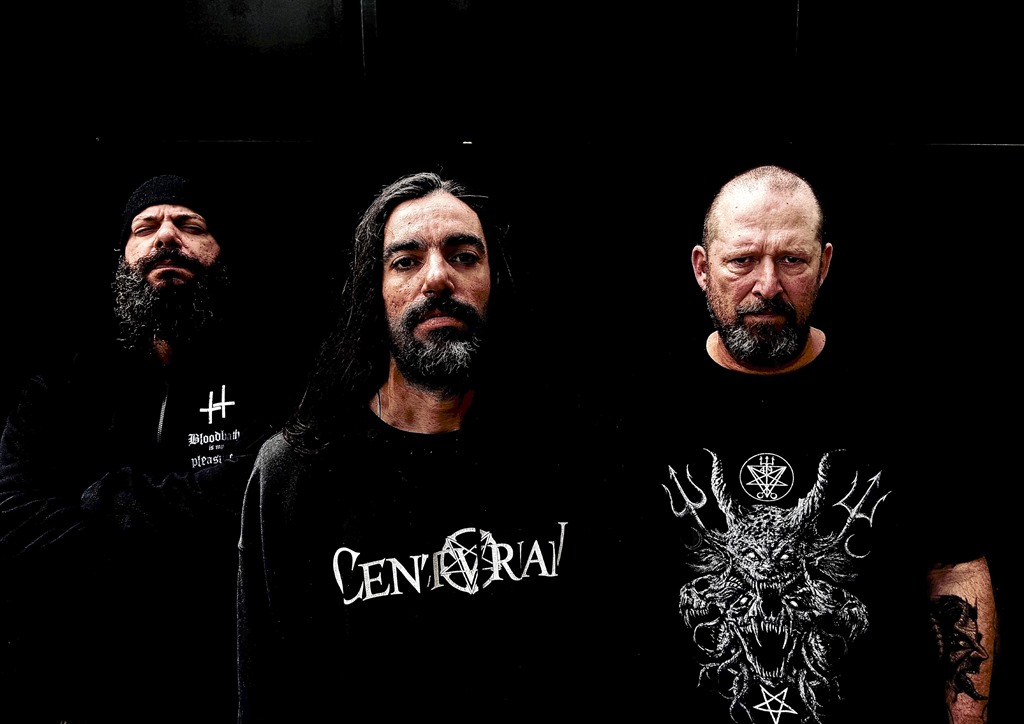
Celebrating 30 uninterrupted years of activity, Brazilian death metal troop NervoChaos is set to release their fourteenth album, Chaosmongers, via Black Lion Records on 13 November 2026 on CD and vinyl as well as digitally, while Tumba Records licenses the CD and vinyl editions for Brazil.

Drawing on chaos as its central creative force, the album contains twelve tracks, eleven of which are new, alongside ‘Porcos Sanguinários,’ a tribute to the legendary Brazilian band Ratos de Porão. Chaosmongers is a work that connects the cosmos, the occult, and human resilience, and is open to various interpretations, rejecting linear narratives and allowing listeners to create their own reading. At its core, an entity traverses death, explores unknown realms, faces suffering, and becomes sovereign of a kingdom beyond our understanding. This narrative reflects a personal journey through downfall, self-discovery, transformation, and empowerment. This duality is present throughout the album. The compositions act as narrative, atmosphere, and reflection, providing diverse experiences within a single work. Chaos appears not only as destruction but as a force capable of breaking boundaries and creating new realities.

The first single, ‘Embrace Chaos,’ offers a glimpse into the album’s central concept and is now available on all major streaming platforms.

AA

The album was produced by Edu Lane, recorded in São Paulo, Brazil, by Adriano Daga, and mixed and mastered by Fredrik Nordström. The visual identity for Chaosmongers, created by Niklas Sundin, combines imagery of the vast universe and cosmic explosions with the energy of the audience at the band’s shows. The central idea is that the chaotic force that moves galaxies and changes worlds also manifests in the human experience through creation, overcoming adversity, and collective expression.

AA

aece0824-935a-86c4-4943-32560e0cefc0

Metropolis Records – 4th September 2026

Christopher Nosnibor

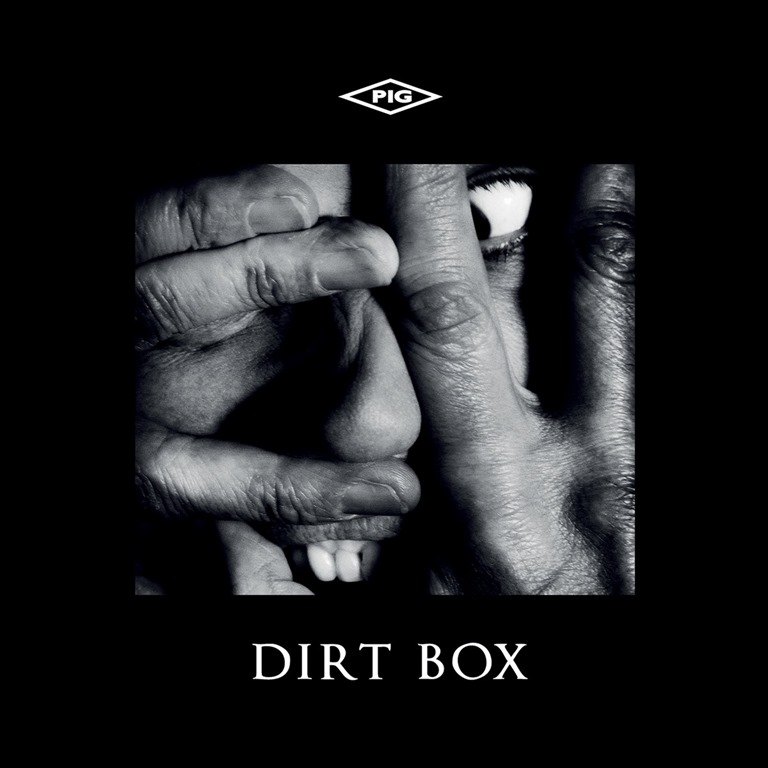
Lately, PIG’s rate of output has been nothing short of phenomenal. Having released the album Hurt People Hurt in May, they’ve just embarked on a substantial, two-month long tour of North America and Canada, and to coincide with that, they’ve not only got a remix EP, but also Dirt Box, which features four new songs paired with a remix of each, making for another album-length release.

There is, to an extent, a sense that if you’ve been following recent PIG releases, you’ll have a reasonable idea of what to expect. Since resurrecting his porcine project in 2016, Raymond Watts has discovered that the swine yields pearls when plundering a seam which places a uniquely gritty spin on glam ground up with industrial and greased with S&M sleaze and a dash of religion for that extra spice. This isn’t to say that PIG albums have fallen to the formulaic, so much as the fact that they’ve found their groove, and the new material over the last ten years hasn’t so much flowed, as been in full spate. It’s working out petty nicely, too. Despite touring as the support for Nine Inch Nails on the seminal Downward Spiral tour and having albums released on Reznor’s label in the mid-90s, PIG remained eternal outsiders, perhaps being just that bit too weird and eclectic for the prevailing tastes at the time. So while NIN were hailed by the press as being groundbreaking, Watts’ work, which tossed in classical samples, strings and all sorts into the grinding industrial mix, taking cues from mentor and collaborator JG Thirlwell, AKA Foetus, the outsider’s outsider – was simply three steps too far. But now… it seems that having tempered the hybridity and experimentalism a shade, the world has finally come around to PIG, with the likes of Classic Rock and Vive Le Rock raving about Hurt People Hurt. I think it was Genesis P-Orridge who made a comment along the lines that if you stick around long enough, you’ll come to be accepted, and whoever it was, this certainly seems true of PIG, who’ve been going nearly forty years now, with the release of debut single ‘Never for Fun’ and album A Poke in the Eye… With a Sharp Stick being released in 1988.

Lead single and EP opener, ‘An American Ideal of Beauty’ starts out sounding like Watts may have jumped the shark – or the wall of Marshall stacks – and gone straight-up spandex hair metal on us, or perhaps even all-out Kiss, but then the quintessential guitar chug of Jim Davies cuts in and grinds hard and we get to breathe a sigh of relief. And here we go: religious-sounding ululations ring out against a bubbling synth bass. ‘Put up, shut up! Do your duty!’ Watts snarls against a backdrop of chugging rhythm guitars and layer upon layer of detail – and the truth is, this is as boldly extravagant in its sonic span as the most revered work among fans, namely the material which featured on Red, Raw and Sore, Sinsation, and Wrecked, which saw Watts colliding insane ambition with some inspired songwriting. Yep, he’s still got it, and any recognition, however belated, is well-deserved. But does this mean that PIG are mainstream now, and beyond the remit of Aural Aggravation? I don’t think so. They’re not about to be played on the Radio 1 breakfast show, I’ve been a fan since the early 90s, and Raymond Watts will forever be one of my favourite interview subjects when we met in York a few years ago.

AA

After the rabid industrial glam grind of ‘Your Reptilian Overlord Presents’, ‘Infidel’ slows the pace and finds Watts go Bowie circa Outside with a heavy dose of darkwave in the mix. With a strong hook and a poppy undercurrent, it showcases the range and quality of the songwriting that sets PIG apart from many of their peers – not that they really have any at this point. They’ve diverged a long way from the acts that emerged around the same time on Wax Trax! evolving along a very different trajectory from, say, KMFDM (of whom Watts was a member) or Ministry. ‘Butterfly’ is a churning, mutant beast of a tune, and has the makings of a future classic given time to embed.

The remixes… well, they’re remixes. In their favour, they’re very different from the original versions. The Cyanotic remix of ‘Your Reptilian Overlord Presents’ is up first, and it’s a noisy, fucked-up industrial blast reminiscent of JG Thirlwell’s remixes of NIN. Admittedly, it’s nowhere near a extreme as his contributions on Fixed, but they set new precedents when it came to remixes, and the world has never been the same since. The beat calls to mind early 00s Pitch Shifter, and it makes for an intense four and a half minutes. The surprisingly mellow Combichrist remix of ‘Butterfly’ is the other standout: in stripping the song back and going for a more darkwave backing to Watt’s gnarly vocal, it makes for a radical transformation.

What’s remarkable is that in producing an album a year – give or take – plus EPs of offcuts and remixes in between – the standard of PIG releases hasn’t only been consistent, but continues to reach new heights. Instead of running out of ideas, PIG are surging with creativity and riding the crest of a wave.

AA

a2631396987_10

Japanese metal pioneers Sigh have unleashed Goh-Ka upon the world. The band’s 15th studio album is already being hailed by some as their finest work yet, adding another landmark release to a legendary career that has seen them release 14 previous studio albums, three live albums and embark on multiple sold-out tours around the globe.

To accompany the release, there’s a visualiser for ‘Kuso-Shi 1,2 and 3’. Watch it here:

AA

Goh-Ka is a new highlight of atmosphere, technical mastery, and meticulously arranged epics of metallic grandeur. Main-man Mirai Kawashima notes this as being as equally personal an album as ‘Shiki’, both musically and lyrically. From a musical perspective, if you were to place the main ingredients of Celtic Frost, Voivod, Black Sabbath, horror movies and Japan into a cauldron and stir it, you will get ‘Goh-ka’. Numerous additional spices such as psychedelic rock, prog rock and classical music are also evident over the album’s close to one-hour duration.

The album title ‘Goh-ka’ has a triple meaning, being: 業火 infernal fire scorching sinners, 劫火 a huge fire that burns down the world at the end of time, and 業果 karma.

The primary theme permeating the album is Kuso-zu; a series of Buddhist paintings or illustrations depicting the nine stages of a human body’s decomposition after death, created to encourage meditation on the impermanence of life, the inevitability of death, and the detachment from physical beauty and worldly attachment. It openly shows the harsh reality that no matter how beautiful you are, you’ll be dead and rot sooner or later. And Kuso-shi is a poem based on these paintings. The artworks on the cover and in the booklet of Goh-ka are therefore Kuso-zu themselves.

AA

Sigh....

Photo by Poka

4th September 2025

Christopher Nosnibor

So here we are in 2026, and while I’ve been suggesting that there’s a goth revival simmering up for a fair while now – I mean years rather than months – if finally seems to be upon us. TV:AM, Sick Man of Europe, and Mouth Ulcers in particular have been leading a(nother) new wave of bands whose sound is steeped in the old-school sound.

Perhaps Lol Tolhurst’s assessment in his recent book – plainly entitled Goth – is right. He devotes much verbiage to aligning the emergence of the first goth bands with Thatcher’s Britain in the late 70s and early 80s. This is by no means a groundbreaking, or even a new, framing of the birth of this disparate scene, and he really does labour this point throughout the book. Fair enough: he was there, living through it, and it was this, and a sense of being an outsider, which compelled him and Robert Smith to form The Cure. He also details how Manchester was the very definition of dereliction and deprivation, and that Joy Division ‘s bleak sound is the aural encapsulation of this. Also fair enough, but his entry for The Sisters of Mercy is barely a page long, reducing them to almost a footnote in the history of goth, while making no mention whatsoever of the other Leeds bands who emerged around this time. It’s his book, and his perspective, but to completely bypass the very epicentre of the emerging goth scene of the early 80s isn’t merely an oversight, it’s a misrepresentation.

This preface is necessary when approaching ‘Bourbon’, the debut single from Los Tres Mortales. While based between New Jersey, Ohio, and California, bringing together Caroline Blind and CWHK of Sunshine Blind with Troy Payne of The Wake. As the band bio recounts, ‘Following Sunshine Blind’s original run, Caroline continued making music with members of The Wake, Red Lorry Yellow Lorry, Faith and the Muse, The Sisters of Mercy, Sweet Ermengarde, Children on Stun and Switchblade Symphony’. As such, there’s a direct link between Los Tres Mortales and the original Leeds scene, which is as significant as that to the US scene and acts connected with the Cleopatra label (which was responsible for the release of the first comprehensive March Violets compilation, The Botanic Verses in the US in 1993).

Where I’m going here is in two directions at once: the first is that 2026 bears some strong parallels to those dark days of the late 70s and early 80s. Back then, the north of England copped it harder than London and its wider sprawl, and the same is true now, but the bottom line is that both here and in the US – supposedly wealthy nations – social divisions, particularly between class, and wealth have reached a new extreme. As a measure, CEOs earned the entire year’s salary of their average employee faster in 2026 than in any year previous – the 6th January, to be precise. Throw in climate change, world war, and the fact AI (not immigrants) is killing job opportunities and could well lead to the hastened demise of the species, and there’s reason to be pessimistic. Goth was always dark music for dark times, but unlike other genres – metal being perhaps an obvious example – goth balances nihilism with doomed romanticism and a certain poeticism.

And this is precisely what Los Tres Mortales give us with ‘Bourbon’. It’s dark, and revels in images of self-destructive rock ‘n’ roll excess. Because if the world’s going to end, why not see it out while spiralling into personal oblivion, soaked in booze and surrounded by chaos?

AA

Spindly guitars are nailed down by a thunking gritty bass, which is in turn melded to hefty rolling drums that are the absolute quintessence of that early 80s goth sound. Caroline’s dramatic vocals bring that Siouxsie / Skeletal family feel, while Troy’s brooding baritone whispers and growls a later below, replicating that taut dynamic that defined both The March Violets and Floodland-era Sisters. ‘Bourbon’ adds a dash of spice with the kind of filthy swagger reminiscent of The Batfish Boys (‘Swamp Liquor’ in particular). It’s a cracking debut, and one which brings together the different qualities of all of the contributors to deliver something which hits the bullseye on the first shot.

AA

Band w Logo

‘God’s Picture’ is the latest track to be taken from Emma Ruth Rundle’s These Killing Times, and described by Emma as the centrepiece and thesis statement of this record. The album will be released via her own imprint Errant Child on 18th September.

“’God’s Picture’ is a meditation on the state of the world, particularly climate disaster, global conflict and class. Musically this song feels like a segue from Engine of Hell, with its gentle piano and guitar, to These Killing Times, with its more lush arrangements and message. This song is also a plea for the demolition of Western hegemony. Accompanied by a music video collaboration with many friends and for which I painstakingly constructed the sets for in the winter of 2025/26, ‘God’s Picture’ is the thesis statement at the core of my new album These Killing Times.”

Watch the video for ‘God’s Picture’ here:

AA

EMMA RUTH RUNDLE LIVE IN EU/UK IN 2027:

22/03/2027 DE Berlin Festsaal
23/03/2027 DE Hamburg Bahnhof Pauli
24/03/2027 DE Leipzig UT Connewitz
25/03/2027 DE Cologne Gebäude 9
27/03/2027 CZ Prague Palác Akropolis
28/03/2027 AT Wien Arena Wien
30/03/2027 DE Munich Backstage
31/03/2027 CH Zurich Rote Fabrik
01/04/2027 FR Lyon L’Epicerie Moderne
02/04/2027 FR Lille L’aeronef
03/04/2027 FR Nantes Ferrailleur
05/04/2027 UK Bristol Fleece
06/04/2027 UK Manchester Gorilla
08/04/2027 UK Glasgow St. Luke’s
09/04/2027 UK Leeds Brudenell Social Club
10/04/2027 UK London Islington Assembly Hall
11/04/2027 UK Brighton Chalk
13/04/2027 FR Paris Elysee Montmartre
14/04/2027 BE Antwerp Trix
15/04/2027 NL Tilburg Roadburn

AA

ERR Mason Rose images

Photo: Mason Rose

Auf Abwegen – 3rd September 2026

Christopher Nosnibor

Is Internet radio really radio? There may still be live broadcasts, but they tend to be then saved and made available for streaming for a period of time, or indefinitely. This has certainly changed the way many of us listen to radio – for those who still do – in the same way streaming has completely changed out TV viewing habits. One obvious benefit of this for viewers / listeners is that there’s no cursing that you’re having to miss something because of another engagement or a clash or other external factor, but one thing that’s most definitely been lost is the way in which TV and radio schedules used to provide social and cultural cohesion. Of course, the near-infinite choice now available is also a factor in this, but even when a series captures mass attention, you simply don’t have a quarter of the nation stopping everything to tune into the same show at the same time. Rarely are schools and workplaces abuzz with the ‘did you see so-and-so last night?’ conversation anymore. There are a few things that still appear to have that pull on terrestrial television – the likes of Love Island and Strictly – but they’re increasingly rare. Even when series are released episodically, many viewers prefer to wait until the whole season is available, and ‘binge’ it. Personally, I don’t get how people have the time to watch six hours or so of a single show in just one weekend, but then, I hardly watch any television – live or streaming – because I’m usually reading or writing and / or listening to music.

It’s not simply nostalgia to reflect on the experience of tuning into John Peel on a night with a blank tape in the machine ready to record whoever was in session or anything else that was potentially interesting, not least of all because I don’t miss the days of tapes getting chewed, intros missed or spoken over, failing to catch the name of the artist, etc.. But it did make for a very different relationship with music, and one which made it more valued. Listening out for and also being introduced to new music in this way – or by being passed a compilation tape done by a friend – meant we were perhaps more invested than being fed endless recommendations selected by algorithms.

It’s in this context that we arrive at Senderkennungen, the first collaboration between Felix Kubin & Asmus Teitchens, of which the latter explains a follows:

‘In order to make radio stations acoustically recognizable they need a so called station ID. This audible signal is synonimous to a visible logo. Both logo and station ID create identities. The German word for station ID is „Senderkennung“. For the album Felix Kubin composed a series of unique Senderkennungen – each ca. 5 seconds long – which have been commissioned by various radio stations, who where in need of a station ID or were looking to relaunch their existing acoustic branding. Most of these miniature compositions are tonal but some verge towards an atonal or noisy character. Time and again Kubin and I discussed the possibility of creating pieces out of these ultra compressed and short Senderkennungen. This was realized for the album in applying the rule of keeping Kubin’s original musical material recognizable while at the same time using any form of manipulation, modification, stretching, shortening or expanding in the development of the new pieces. One limitation: Those new pieces should not be longer than three minutes each.’

The resultant double album contains an immense thirty-nine tracks, although the first nineteen, recorded by Kubin alone, are each around half a minute long. On the vinyl, these are all packed onto side A, meaning the remaining three sides are given to the collaborative pieces, which tend to be around the two and a half minute mark.

The nineteen initial station ID pieces are simple synth pieces, with a single motif – either a chord or two or some chiming notes – repeated a couple of times with some space between. Some sound as if they’ve been lifted from an album of sci-fi sound samples from the 60s and 70s, and occasionally – as in the case of ‘Radio Dipol’ and ‘Radio Schneekoppe’ – segues from old TV shows. Often weird, always unpredictable, Kubin seems to have a real thing for heraldic or faux-medieval-sounding motifs, and these microtunes are varied, as well as alien in that they have no place in the world of Internet radio and Spotify.

The newer, longer pieces, do mark something of a stylistic shift. It perhaps goes without saying that the expanded time markers give more room for sonic exploration which extends beyond simple motifs, but more than that, they feel like more fully realised compositions rather than functional sonic stamps. This is no doubt because that’s the fundamental difference: Kubin’s original commissions were created for a specific – and most utilitarian – purpose, rather than for musical entertainment, while the recent collaborative pieces are designed with being listened to, and perhaps even a sense of audience in mind. ‘Freies Danzig’ may be sparse initially, but builds from a multi-voiced synth piece into a layered work of tonal and textural contrast, while ‘Krimikanal’ leans towards dark ambient territory. ‘Paranorm Radio’ is eerie and squelchy, as good a sonic representation as you’re likely to hear, and there’s an abundance of reverberating, woozy weirdness on offer as the work progresses.

Senderkennungen feels less like an album of two halves, or even of one quarter and three quarters, but two quite separate albums, and the two sets of compositions make for very different listening experiences.

AA

AATP109 front

Deconstructing Sequence unveils a devastating video for the track ‘The Undying Void’, taken from their latest full-length, Tenebris Cosmicis Tempora, which was released last November via Black Lion Records. The album leans into undiscovered realms of black metal but also pushes even further forward into progressive and avant-garde territories. As an explosive reminder of what the new album encompasses, Deconstructing Sequence deliver a striking video for an unhinged and thoroughly heart-hammering song. The video was recorded at Two Shots Studio and produced by Łukasz Grosik from Remedy Brand.

“Łukasz Grosik perfectly captured the atmosphere behind the song and the band, showing a very dark, destructive vision,” states the band. “A vision that we, as Deconstructing Sequence, will follow.”

AA

Deconstructing Sequence was formed in 2012 in Taunton, Somerset (UK) by Tiberius. Alongside former Northwail bandmate Morph, the duo sought to explore more progressive and avant-garde territories within extreme music. Soon after, J. Nerexo (from Shadows Land) joined on drums, culminating in a more aggressive and twisted edge to the band’s progressive sound. This lineup produced two EPs and one full-length album.

The debut EP Year One (2013), mixed and mastered by Arkadiusz “Aro” Jabłoński at Monroe Sound Studio, laid the foundation for a new era of artistic freedom. The follow-up, Access Code (2014), featured a video created by Costin Chioreanu of Twilight13Media, hinting at an evolving musical vision. In 2017, Deconstructing Sequence’s first full-length album, Cosmic Progression: An Agonizing Journey Through the Oddities of Space, released via Polish label Via Nocturna in 2018, was praised worldwide for its unconventional approach and bold sound.
After relocating to Szczecin, Poland, Tiberius began shaping a new creative direction for what would become the band’s second full-length. With Morph stepping away, drummer Dark Soul joined in 2018, injecting fresh energy into the band. Over the next few years, Deconstructing Sequence meticulously constructed what would become Tenebris Cosmicis Tempora, recorded at Monroe Sound Studio under the supervision of Arkadiusz “Aro” Jabłoński between 2022 and 2025, with guest vocal contributions from Mazak and Adrian. In 2023, bassist Immortal joined as a full-time member, followed by Uruk on second guitar in late 2024, finalizing a complete and stage-ready lineup.

Tenebris Cosmicis Tempora, the sophomore album, blends the furious riffing of Mayhem, the majestic elements of DHG and Emperor, and the haunting depth of Akhlys, forging a journey through idiosyncratic sound and vision. While their previous album lent significant credence to death and post-metal in manifesting their progressive black metal art, this new opus sees the band truly deconstructing their earlier sequence — shapeshifting into a weirder and more unhinged black metal entity.

Tenebris Cosmicis Tempora unfolds as an allegory of humanity’s self-destruction and self-conceit. It follows the last human’s journey from Earth’s destruction to his transformation into a godlike being consumed by his own creation. Guided first by Lucifer and later corrupted by cosmic forces, he witnesses the collapse of faith, power, and meaning. In his quest to control and recreate existence, he becomes the very force of ruin he once fled — until only the void remains, reflecting the eternal flaw of humanity itself.

Looking ahead, the band is already working on new material, rehearsing demo tracks, and continuing their relentless pursuit of twisted, black metal innovation.

Wake up, the void is near!

AA

895ae2a9-1aa9-4b1c-73e9-d750eff728c0

Jarek Dulny Dulny Photo