Archive for September, 2026

Ev Gold (guitar, vocals), Michael Jung (bass), and Stephen Moses (drums) make up GoJuMo, a noisy punk rock trio from Brooklyn. The three musicians first met in January 2016 through BC35, a weekend project celebrating the 35th anniversary of Brooklyn’s historic BC Studio, run by Martin Bisi (Swans, Sonic Youth). Artists connected to the studio over the years gathered to collaborate in different combinations, with Bisi documenting the sessions, which were later released by Bronson Recordings in 2018.

In the years that followed, Moses and Jung’s respective bands, Mustafina and Um, shared the stage several times with Gold’s Cinema Cinema. Then, in fall 2024, Gold reached out to Moses about starting a new project. What initially looked like a potential duo soon expanded when Moses suggested bringing Jung into the lineup. “I had loved Stephen’s drumming for quite a while and finally got the nerve up to reach out to him about jamming that fall,” recalls Gold. “It was fortuitous that he would recommend that we include Michael in the action and even more so when he – a great guitar player in his own right – was willing to handle bass duties. We have discussed swapping roles in the future, so there could very well be a GoJuMo record that has him on guitar and me on bass soon, we shall see!” Jamming and songwriting began soon after, and GoJuMo played their first show that December. Two-fifths of Alice Donut plus one-half of Cinema Cinema equals a GoJuMo: Go – Gold: Ju for Jung and Mo for Moses.

Throughout the year, the band developed the material through intensive rehearsals and live shows before returning to BC Studio with Martin Bisi in fall 2025. Having all worked with Bisi before, BC was the obvious choice.

The sessions quickly confirmed that the ease behind the project translated naturally into the rehearsal room. “Playing with these guys is an absolute joy. The music feels really organic and fits right into my wheelhouse and besides the fact that they’re really great players, they’re really nice guys,” says Stephen Moses. Ev Gold adds: “A lovely musical experience. Michael and Stephen have played together for over thirty years, they have a musical language of their own. It is a fortunate scenario to have such a well attuned rhythm section.”

That strong rapport was matched by an unusually productive first rehearsal. “The very first idea worked on at the initial GoJuMo rehearsal was ‘Failed Math” says Gold. “Coming away with three songs from the first time we ever got together in a room was a strong indication to us to continue to get together as often as possible!”

The session also produced the skeletal structures of ‘Worm’ and ‘How Soon Is Again?’, with all three songs eventually making their way onto the album.

Hear ‘Failed Math’ here:

AA

At a time when AI-assisted music production is becoming increasingly prevalent and polished recordings are often treated as the goal, GoJuMo instead relied on the chemistry built through months of rehearsals and live performances. The band opted for as little studio manipulation as possible: there were almost no overdubs, most of the record was captured live off the floor at BC Studio, and no song required more than three takes, with several completed in just one.

That approach is particularly evident on ‘Failed Math’, the album’s single. Gold traces the song’s origins back to the night he learned of the death of famed professional wrestler “Rowdy” Roddy Piper. “He was a childhood favorite of mine and in an odd circumstance, I happened to be at home with my guitar on my lap when I heard the news of his passing,” he recalls. “The next thing I knew I was playing a pattern on guitar that would become the main figure of this song”. The idea, originally titled ‘The Pit’ after Piper’s talk show Piper’s Pit, remained in Gold’s demo folder for years before finding a new life with GoJuMo. The song eventually evolved into a reflection on Gold’s struggles with math during his senior year of high school, an experience that prevented him from graduating on schedule and led to a semester of summer school.

The finishing touches and mixing were handled at HizHaus by bassist Michael Jung, who also serves as the band’s documentarian. An avid photographer who regularly captures live shows around New York City, Jung also records each GoJuMo practice for the members to review and use as part of the songwriting process.
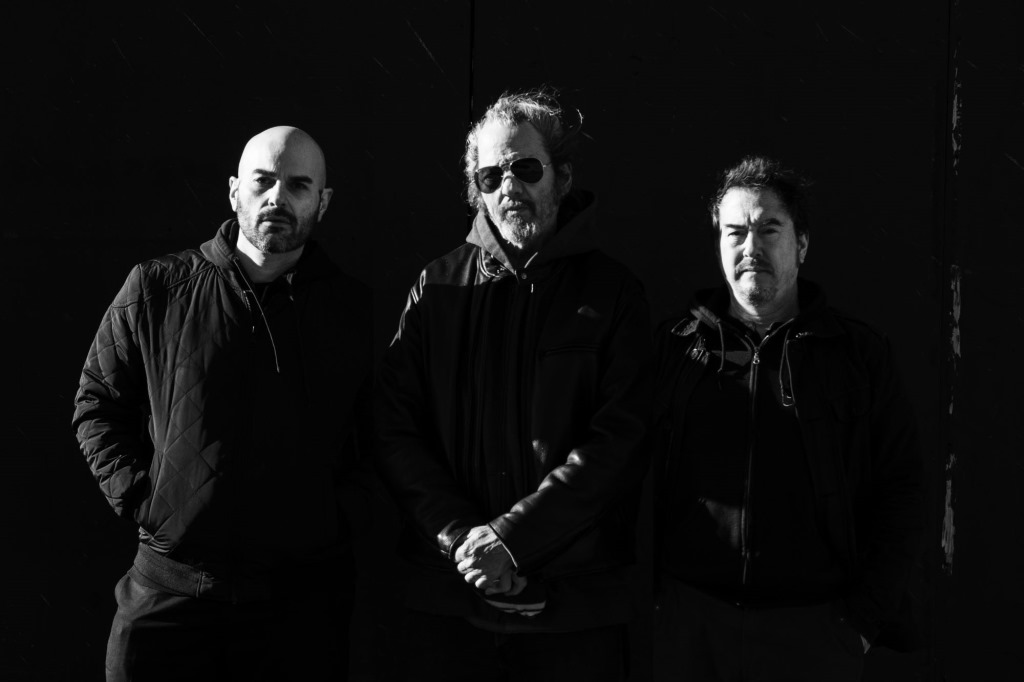
GOJUMO

Photo: Michael Jung

TWICE A MAN unveil a beautiful visualiser for ‘Desert Snow’, the first to be plucked as an advance single from the electronic environmentalists’ forthcoming album Reveries Before Silence. The Swedes’ new full-length has been chalked up for release on November 20, 2026.

Parallel to their new album, Twice A Man will also release a collection of rare tracks revolving around marine themes that have been gathered in a 48-page 2CD artbook under the title The Marine Trilogy on November 20, 2026

AA

Twice A Man comment: “The first single track, ‘Desert Snow’, is one of our musical footprints in a time marked by uncertainty, division, and change”, Karl Gasleben explains on behalf of the band collective. "This song reflects on the world we live in today while reminding us that hope and positive thinking can still be a path toward unity. As modern societies continue to challenge our sense of human connection, we need to find what brings us together rather than what drives us apart. If we can discover a common voice that leads us away from war, polarisation, and the climate crisis, there is still a future worth believing in. We want to be able to look our children in the eyes and speak about tomorrow with honesty, responsibility, and hope. ‘Desert Snow’ is our contribution to that conversation – a song that carries both reflection and faith in a better future.”

AA

Twice_a_Man_002_by_TaM

Fysisk – 4th September 2026

Christopher Nosnibor

The line ‘here we are now, entertain us’ from Nirvana’s ‘Smells Like Teen Spirit’ is on which has come to resonate with me more powerfully in recent years than it ever did at the time. It’s a sad fact that – and I like to think of it as being through no fault of my own – my attention span isn’t what it was, and I’m no longer quite as patient as I was. I can still listen to a twenty minute instrumental without any issue, but have to be in the frame of mind to do so. But then, as far back as 2018, Forbes reported that 24.14% of songs were skipped within the first five seconds by users of Spotify, some 29% skip in the first ten, and that increases to a 35.05% chance of a skip within the first 30 seconds. I very much doubt that we’ve grown more patient in the last eight years. An article published earlier this year at Mixreflect detailed the reasons listeners skip, and gave practical solutions like ‘How long should a song intro be on Spotify?’ with advice including ‘The practical target is 8 to 12 seconds for pop, hip-hop, and R&B; up to 20 seconds for rock and indie if something is actively developing throughout.’

It’s twenty-six seconds before the vocals start on the single edit of ‘Smells Like Teen Spirit’. The intro to one of my favourite singles of all time, ‘Alice’ by The Sisters of Mercy occupies the first minute of its three and a half minute duration. And how long is the fade-in on ‘India’, the opening track on the eponymous debut album by The Psychedelic Furs? All very different songs, but each a classic in its own right. Are we really in a place where most people would simply skip before things got going? Instant gratification is one thing, but there is so much to be said for a good build-up.

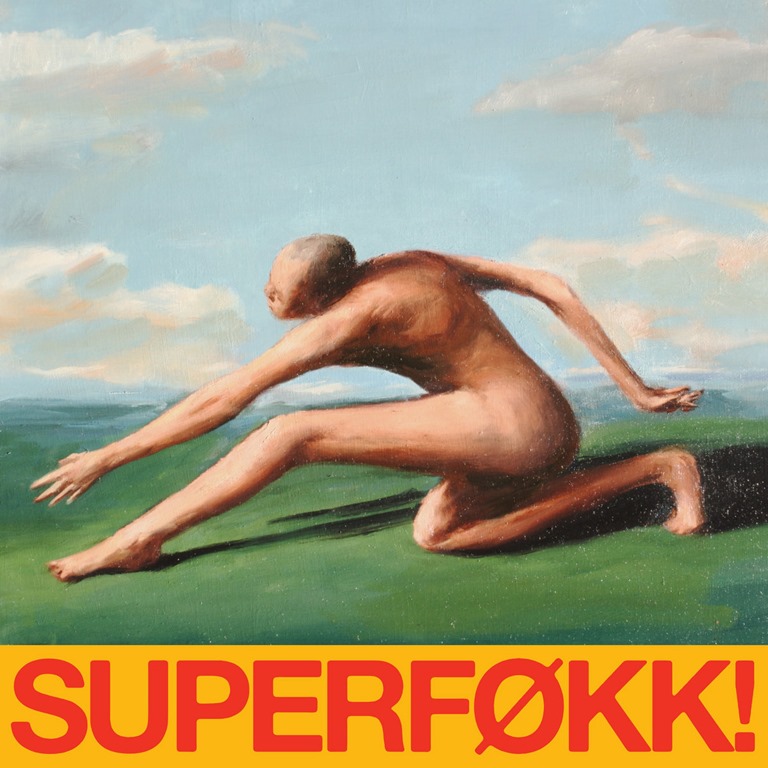
Thankfully, there are musical fields where a slow-build and an unravelling over time is appreciated, and Superføkk – pitched as ‘a bursting new raptus project that shoots off in inexplicable directions’ which is ‘neither background listening nor pop music’ they’re described as having ‘a foot in many camps’ and ‘aim[ing] to break down established genre conventions and create a sound that is distinctly their own…. drawing inspiration from jazz/noiserock, electronica, and no-wave’. And their debit album contains just three tracks, the shortest of which is six minutes long (there is a four-minute radio edit, but I doubt that it’ll get much airplay on the likes of Radio 1 or Kiss FM, or that it’s going to convince the Spotify casuals to stick around, not that the algorithm is likely to insert it amidst a lengthy cycle of Taylor Swift and Charlie XCX or whatever.

And so it is that ‘Grønn’ provides our introduction to Superføkk, and it may be brief (in comparative terms’, but it packs plenty in. It’s jazz in that cacophonic sense, horns blaring and doing so simultaneously in all directions – not smooth or noodly, but an instant riot – before an extended atmospheric post-rock passage in the middle before everything goes off at once, giving us an expansive post-rock surge topped with the most extravagant sax break. The twelve-minute ‘River Igjennom’ is remarkably light and easy going for the most part, but around three minutes in, the levels of tension explode with frenetic drumming and strains of the most demented fretwork colliding with crazed sax chaos, and it culminates on some kind of huge prog-like grand finale which on the one hand seems entirely incongruous, but on the other, perfectly fitting. I can’t say I’m entirely into it. And then there’s ‘Piggeple’, another twelve minute multi-segmented opus.

Around the mid-point, it drops down to a spare bass, squalling synth, and processed-sounding vocals, and it’s only after this that things really seem to kick off, with a locked-in drum beat, throbbing, insistent bass, and some crunky guitar dischord. Finally, the noise-rock element is freed! And they do go all-out in the final minutes.

When they write that ‘Superføkk is neither background listening nor pop music’, but that it’s ‘immediate and danceable, but also unhinged, hard-boiled, improvised, and idiosyncratic’, they’re mostly accurate. There are some deep bass-driven grooves buried in the mix here, but the chances of me actually dancing it any of it are non-existent.

Recent weeks and months have delivered some truly outstanding – not to mention angry, bleak, nihilistic, and highly political – noise rock releases, perhaps most notably from Chat Pile, Kings Sans, and Remote Viewing, and each has hit hard and resonated in a deep and powerful way. Superføkk (which continually reminds me of Superbock, which is great stuff) lands differently. Not only is it largely instrumental, its noise-rock elements are blended – and at times buried low – amidst an array of experimentalism, and an emphasis on the warped jazz leanings of the composition. But, being as hectic as it is, it’s no less tense that the aforementioned noise-rock works. In fact, there are moments which are little short of dizzying, and you wonder if your brain might burst.

AA

a0504777722_10

Static Abyss’s new album The Dying Hunt was released on 1st September via Peaceville Records. To mark the release, the band have unleashed an utterly skin-crawling new music video for ‘Sinew Leech’, plunging viewers further into the album’s nightmarish world of brutal death metal, doom-laden riffs and psychedelic darkness.

Watch ‘Sinew Leech’ below and experience the latest descent into the twisted sonic abyss of The Dying Hunt.

AA

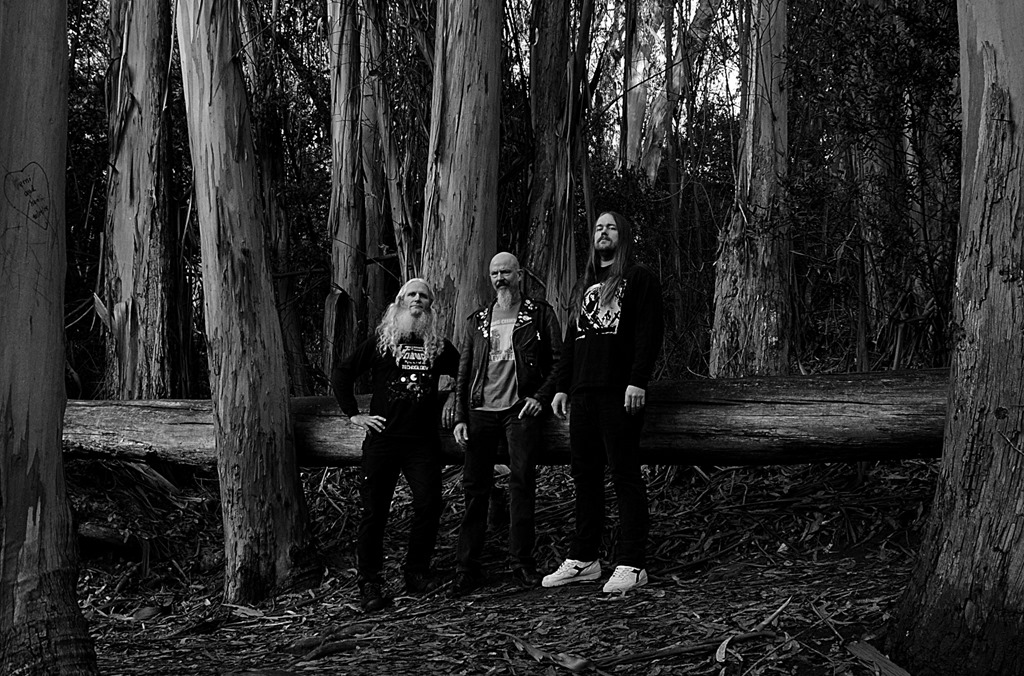
Emerging in the early 2020’s, Static Abyss is a monstrous hybrid of twisted, doom-laden brutal death, comprising of longstanding members of the US metal scene. The band consists primarily of the duo of Deathgrave’s Greg Wilkinson (Guitars/bass) & Chris Reifert (vocals), both also members of legendary American masters of sickness, Autopsy, with Chris also notably starting his career with genre pioneers, Death. The band’s debut, Labyrinth of Veins was released in 2022, and their second album Aborted From Reality followed in quick succession, surfacing in 2023.

Returning now for Static Abyss’ third studio album, and with the addition of Chad Gailey of fellow death merchants Necrot behind the drumkit for this release, The Dying Hunt plummets the listener again into the festering, psychedelic swamps of lunacy, with the spiralling melodies texturing the relentless savage riffs for an effective nightmare-inducing trip through the sonic abyss. Continuously and relentlessly flitting between brutal passages and hypnotic otherworldly craziness, ‘The Dying Hunt’ reflects the ailing world & the unravelling of the psyche of its inhabitants in this darkly dystopian landscape, for a masterful descent into sick Death Metal combined with Crust and Doom elements.

The Dying Hunt was recorded at Earhammer Studios in Oakland, CA, with engineering, mixing and mastering overseen by Greg Wilkinson himself. Cover art comes courtesy of Jon Santos.

AA

01cbw-1-scaled

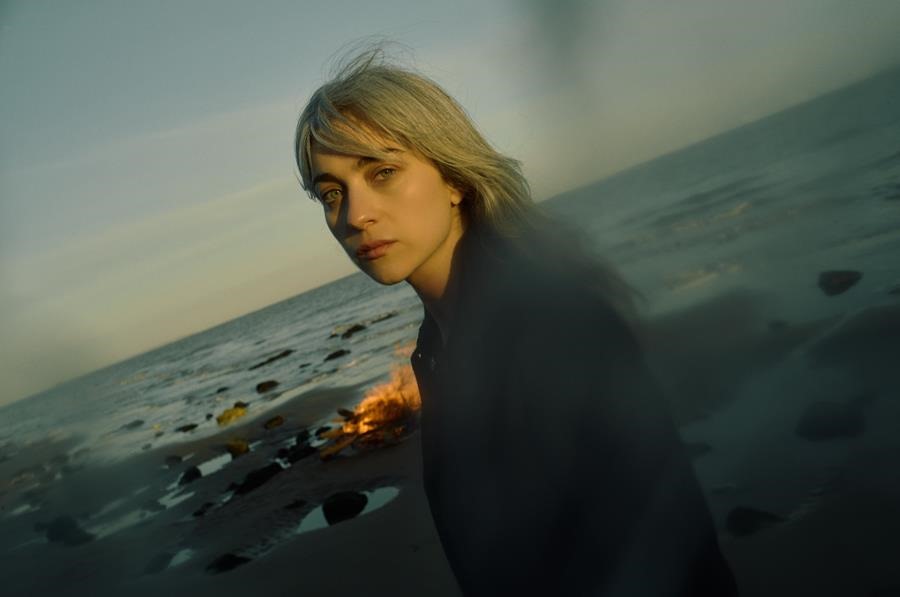
Burning Song is the new release from Kali Malone and the first new album of solo compositions since early 2024’s All Life Long. The album arrives via Ideologic Organ on October 30th and is previewed with today’s single and video for the song ‘Heavy with Fruit.’

Music that hovers in the moment just before understanding, where revelation lives. Moving through endings and beginnings, reflection and foresight, Burning Song represents a transformation in Malone’s compositional strategy towards a process that is more intuitive and direct. The album was recorded at the historic Thomaskirche in Leipzig, Germany, where J.S. Bach was cantor for the last 27 years of his life; his body rests beneath the sanctuary. Malone is the first musician to perform contemporary works on the church’s Bach Organ, an instrument completed in 2000 but with bespoke tuning and temperament systems based on historical norms of the baroque period.

She is joined by Lucy Railton on cello and Stephen O’Malley on bowed acoustic guitar, the same trio that honed a profound connection based on deep listening through the development of Malone’s work Does Spring Hide Its Joy. Recording took place over the course of two late nights in August 2025, with the engineer Francesco Donadello placing over 20 microphones throughout the room and closely upon the instruments, allowing the listener to locate themselves within the music as it fills the historic sanctum.

AA

Across the album, chord follows chord, each in slow succession, emerging like stones of various shades and shapes on a winding path. The trio moves as one, stepwise, through passages that are alternately ambiguous and radiant, at times triumphant as the tones rise towards the organ’s upper register. By discarding canon form, which has dominated much of her organ work, there is a clear sense of freedom that allows these pieces to unfold more gradually and speak more declaratively than ever before. Even with the presence of one of the most canonized and dissected composers of all time just underfoot, Malone felt the pressure of tradition lifting, an ease of being dictating the flow of the music. She is careful to never extend the narratives of any individual piece beyond what feels conclusive, resulting in a relatively compact cycle of compositions.

The metaphor of burning holds two meanings. Fire moves in ways that appear intuitive, changing shape moment by moment, and relentlessly insistent. Here, Malone moves from harnessing the fractaline beauty of mathematics to reveling in the impact of feelings, of foresight, of something more undefined and from within. But burning is a process of change in which transformation spreads from a nexus point to rapidly consume whatever it encounters. The freedom found in the process of composing and realizing Burning Song is one that opens innumerable doors of possibility. In the fertility of ashes grows whatever comes next.

Live dates 2026/2027

Wed. Sept. 23 – Lisbon, PT @ Culgurest *
Sat. Sept. 26 – Cologne, DE @ St. Gertrud [Brutalism] *
Sun. Oct. 11 – Bern, CH @ Berner Münster [bee-flat] ^
Sun. Nov. 29 – Bratislava, SK @ Novy evanjelicky kostol [NEXT Festival] ^
Thu. Jan. 28 – London, UK @ St. Martin #
Fri. Jan. 29 – London, UK @ St. Martin #
Sun. Jan. 31 – Vernier, CH @ Madeleine Chapel – Espace de la Madeleine [Festival Antigel] #

* = Electronic set
^ = Solo organ set
# = Burning Song set
Plus more to follow

AA

SOMA078KaliMaloneKingsleyIfill4-990000079e04513c

Photo: Kingsley Ifil