Archive for September, 2026

Room40 – 7th August 2026

Christopher Nosnibor

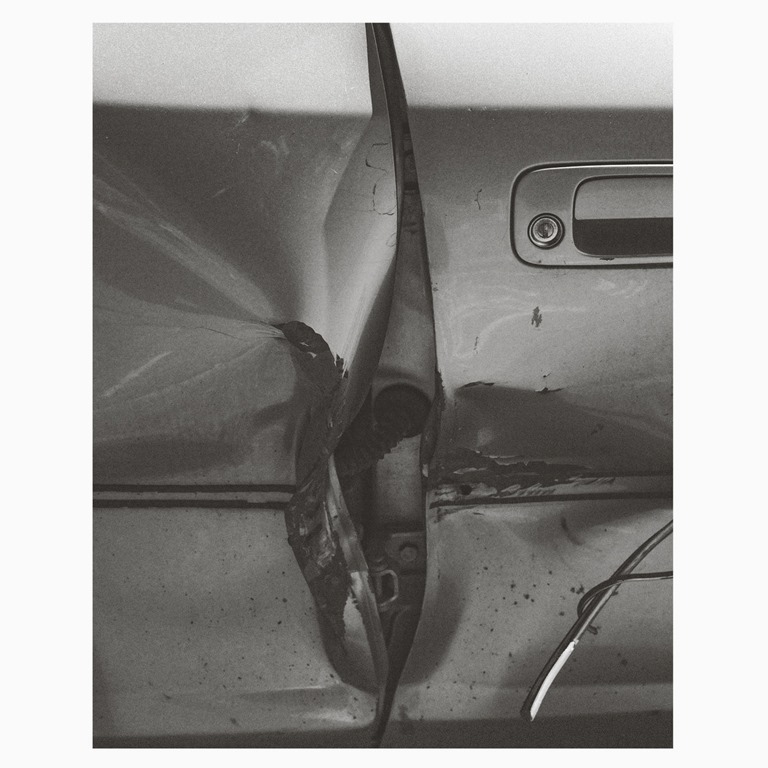
Three years on from Lasped Gasps, their collaboration with Jon Mueller, experimental duo Push For Night, consisting of Oliver Chapoy and James Elliott, decided they needed to take a slightly different approach and pull back on the intensity a tad and allow some hints of light into the darkness for the follow-up.

They write in the accompanying notes – as if offering reassurance to anyone who may be concerned that this means that their new album is some kind of breezy pop fun – that That Porous Line ‘is absolutely a collaged, flickering, chaotic, electro-acoustic record. The project is the project after all. Although our tomb-room isn’t fully hermetic (what is?), I think it is a place PFN will always reside. A total escape outside into harshly lit reality without mystery is fairly unappealing, for us anyway. Inside is personal, guarded from too much light; a dark terrarium of weird ghosts and peculiar shadows ripe for conjuring and harnessing in order to make them kick and howl in a way pleasing to us. Or at least be near enough to them to try and hear what they sing. That’s the motive. We decorate the cave, invite the specters to reveal a message, and try to capture something. Inside, cocooned in the semi-dark of our uncommon space, we bang our heads against the act of interpreting these shifty, chimeric, hidden sonic shadows. How big is it in here? How much further down can we go? Did something move in that corner over there? Can it touch us? Can we catch it? That’s where the fear is. That’s where the fun happens. That’s why we listen. That’s why we play.’

Compared to Lasped Gasps, pretty much anything would be lighter and less tense. But the first composition, the nine-and-three quarter-minute ‘A Good Hosing Down’ immediately makes clear the difference, opening with some scratchy strings and chiming notes which ring through a soft static and ambient mist. There’s no real sense of danger or threat here, and you don’t immediately feel as if you’re suffocating. But around seven minutes in, the atmosphere does change, and shit does get weird. Warped, spongy electronics rub against one another as they twist and turn in unpredictable directions.

The underlying structure of ‘Fang Vendor’ is a low, slow beat and swampy bass that’s almost a desert rock reimagining of Suicide, but over these are strains of retro-futurist space-age synths and random glitches and all kinds of sonic incursions that disrupt the flow.

At the centre of the album stand a brace of monolithic works: ‘It’s Sure To Be Dark If You Shut Your Eyes’ and ‘Idler’s Reward’ both pass the eight-minute mark, and place the collage nature of their approach to the fore. On the former, fragments of processed, glitched-out vocal samples and random snippets intersect with a piano motif which fades in and out while flickering beats flit around subtly in the distance, by no means driving or propelling the piece forward, instead adding further distraction to a palette already overloaded and blending to indistinction. Heavy drones, elongated organ sounds, ominous rumbles, and electronic explosions fizz and spark all over. Cymbals crash and tension builds. The latter provides some respite, with a slow, gradual glimmering change of hue accompanied by a sparse pulsation. I start to envisage the deep sea, the gentle, fluid movements of jellyfish… but then there’s a corrupted proggy synth break that utilises an awful farting synth sax sound or something, and further on, there’s some trilling jazz-infused woodwind. No two ways about it: That Porous Line explores experimentalism to the max. Asserting that the duo apply the collaging of materials indiscriminately may sound like a harsh criticism, but I make the observation more in the context of William S. Burroughs’ cut-ups, which brought collage to the page, and, shortly after, audio works, with the intention of creating art which was closer to life, and the way we experience an array of sensory inputs simultaneously. That Porous Line may be a fair bit smoother in its application of the methodological principles than early adopters of sound collaging – from John Cage to Throbbing Gristle and Cabaret Voltaire, but ultimately, this is about applying a technique established a long time ago in art to other media, specifically sound. And the aim is to be disorientating, to overlay fragments to achieve a certain effect.

‘Bait is Lowered’ is a dark, rippling wash of unsettling layers of sound, creeping, thrumming, before sputtering beats burst amidst a wail of siren-like sounds and everything dissolves into a panic-infused morass of sound. In many ways, it’s low-key: there are no brain-shredding walls of white noise here, but nothing about it is right, nothing about it is easy, comfortable.

That Porous Line isn’t one of those albums where you find yourself praying for it to finish, and it doesn’t suck the life out of you – but it’s no party, either. Culminating in the wall of static wash that is the final minute of ‘Turned Slowly and Slowly Turned’, and the somewhat proggy, somewhat Krautrock, somewhat ambient title track which draws the curtain remarkably gently. It’s a journey, and no mistake.

AA
a3365526305_10Push For Night

Belgium’s most unpredictable noise-rock troublemakers 30,000 Monkies have premiered their new single .Unsound Hero’.

Taken from the band’s forthcoming album Super Rebound, due September 18 via Fvn Kvlt Records, ‘Unsound Hero’ trades instant impact for a six-minute descent into tension, melancholy and crushing sludge.

AA

The band explains: “‘Unsound Hero’ is about almost wandering off to the dark side when hostile forces keep pushing all the wrong buttons. Unlike a lot of other tracks on the album, this one starts with a slow-burning intro. We had fun layering some deep melodic vocals with uncanny, autotuned choirs, trying to increase the tension with every added layer.”
But restraint was never going to last forever.

“Eventually, of course, we wanted to put the hammer down—BAM! After this, the hero drifts completely off the map, left with nothing but two clean guitars, screaming into an empty space. But then all of a sudden—BAM!—another hammer, arriving unexpectedly, used by our hero to flatten everything in his path once and for all: a reluctant but absolute obliteration for anyone who left him no choice.”

For more than a decade, 30,000 Monkies have occupied a unique place within the European underground. Emerging from the Belgian noise-rock scene, the band built their reputation through a string of increasingly adventurous releases that balanced cathartic chaos with an unmistakable sense of fun. From the dizzying riff storms of Somewhere Over The Painbow to the wild experimentation of I Ate Myself To Grow Twice As Big and HONESTY INTEGRITY FRIENDSHIP PASSION, the band have consistently followed their own path.
With Super Rebound, they may have finally arrived at the destination they have been chasing all along.

AA

598062be-dfa8-51db-1fc8-995cc5793db3

Everest Records – 25th September 2026

Christopher Nosnibor

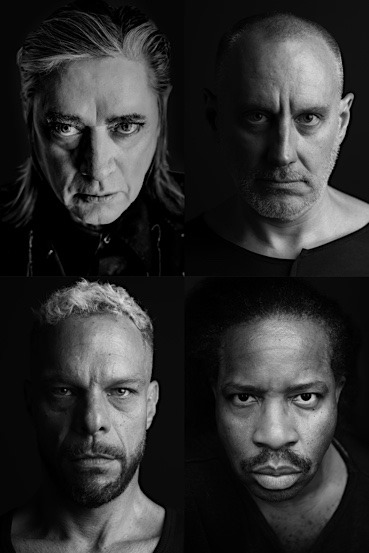
What we effectively have here is a pair of EPs from Swiss avant-garde act KiKu, led by trumpeter and composer Yannick Barman and drummer and percussionist Cyril Regamey, each one a collaboration – but rather than rendering them separate works, what we get is an album of two distinct halves, conceived, we’re told, as a diptych: ‘two distinct bodies of work held together by a shared musical architecture’, where, ‘on one side, Blixa Bargeld moves through language with precision, restraint and abrasion. On the other, Black Cracker turns language into rhythm, pressure and momentum. Between them, KiKu constructs a dense, unstable framework of trumpet, drums, sampler and electronics’. The result is something akin to a split album, on which the two sides of KiKu are as much a defining feature as their collaborators.

The first of the four works with Bargeld, ‘Orlando’s Victory,’ slides in with some retro-vibing electropop which isn’t a million miles away from late-career Leonard Cohen. Simmering synths strike some dramatic shapes and brooding tones atop a slightly shuffling, trip-hop infused beat. ‘The Number of the Millibeast’ is a slice of dark storytelling, a minimal, almost folky instrumental provides the backing for a half-sung, half spoken narrative, delivered with a theatrical flourish, before ‘Suzhou XX XY YX YY’ continues in the same sonic vein, while the lyrics become more abstract. The instrumentation becomes ever sparser and the lyrical cohesion crumbles with each successive piece, culminating in the flickering pulse and gasping weirdness of ‘Nonsense Rock ‘n’ Roll’, which seems to be a moan about some people playing music in the street in the night which rapidly escalates in divergent directions. The atmosphere is that of late-night, downtown, smoke and rough liquor, Bargeld adopting a persona that’s a bit Tom Waits, a bit Charles Bukowski, but which comes across with a hint of grizzled old man, chewed up and ground down by life, veering erratically between raconteur and curmudgeonly malcontent. ‘Do I like the music? No! Nonsense!”

While it’s Regamey’s percussion which sits to the fore on the Bargeld cuts, it’s Barman’s brass which takes the lead on ‘Bull Whip’, the first of four ‘bull’- themed tracks with Black Cracker. ‘So much road rage / so much road kill’, Black Cracker reflects. His delivery here is soulful yet sad, and the trip-hop vibe of ‘Suzhou’ makes a subtle but distinct switch to hip-hop on ‘It’s All The Rage’. ‘Leaping Bull (Chicago)’ is different again, and something deep within the song – the way the mournful trumpet which echoes out over stuttering beats, and Black Cracker’s grizzled, world-weary vocal, vaguely reminiscent in its patina to Mark Lanegan – tugs at half-forgotten emotions and a sense of memories of the past, hazed by time. And then, halfway through, it switches to a dense, droning slab of dark hip-hop, tense and twitching with angst. Coming out of nowhere, it hits hard, but paves the way for ‘The Running of the Bulls’, where bleak instrumentation and soulful but anguished vocals combine to convey a sense of conflict between the interior and the exterior. ‘Sleeping Bull’ notably is subtitled ‘Woke’ in parenthesis, and its lyrical and sonic latticework makes for a compelling combination while reminding us where the term ‘woke’ actually came from. It’s absurd to think that it’s been adopted as a pejorative term, predominantly by white, right-wing wanksacks. It’s high time to reclaim it, and to not only be woke, but woke and proud.

Decidedly more downtempo and downbeat than ‘Suzhou’, ‘It’s All The Rage’ feels less driven by anger or rage than it conveys an aching sadness, the kind that permeates the body to the core, and makes the limbs and the very heart weigh heavy. As a whole, Suzhou / It’s All The Rage is very much an album of two halves, precisely as intended. And as contrasting as the two sides are, they do, most definitely compliment one another, and, perhaps more importantly, they tap different triggers for response. It’s a multifaceted work, and most certainly an album to chew on.

AA

kiku-portraits-square

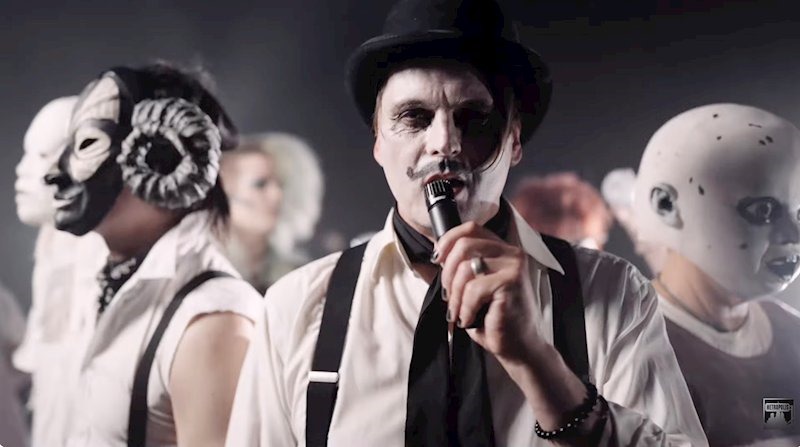
Stockholm post-punk trio Then Comes Silence presents ‘Remaker Redeemer’, the second single from their forthcoming Requiem Ballroom album, due in November via Metropolis Records. The music video, filmed by Damon Zurawski of Future Legends Films, captures the song perfectly, descending into the space between death and rebirth, where the final journey into darkness becomes a passage toward transformation, renewal and the possibility of another world.

Then Comes Silence has also just launched their European tour, which runs throughout September and October, bringing them to venues and like-minded music lovers in Belgium, the Netherlands, Germany, France, Italy and Czech Republic, before returning home to Sweden for the final show on this leg.

AA

A tightly focused trio since 2022, Then Comes Silence was formed in 2012 by vocalist-bassist Alex Svenson in 2012. Drummer Jonas Fransson and guitarist Hugo Zombie, round out the band in its most direct, powerful and uncompromising form. One of the leading names on today’s goth, post-punk and darkwave scene, they are driven by a fascination with horror, the occult and the raw intensity of underground music, having forged a distinctive sound and a devoted international following.

The Requiem Ballroom album itself is divided into two parts: ‘Ballroom’ was mixed by Jon Bordon (Nicole Sabouné, Melody Club, The Exploding Boy) and the ‘Requiem’ half was mixed byTom van Heesch (Rammstein, Apocalyptica, Backyard Babies). Svante Forsbäck / Chartmakers (Rammstein, Amaranthe, Ville Valo, The Rasmus, Apocalyptica) assumed mastering duties.
”Remaker Redeemer introduces the second part of the album ‘Requiem Ballroom’. It’s about new life, and being reborn with the old sins washed away. A kind of cleansing, a fresh start, and the feeling of beginning again. The choice of instruments and sound on this track is a way to explore something different this time,” says Alex Svenson.

“Death is generally regarded, across many cultures, as the final blackout where nothing follows. Yet in another sense, death can also serve as a metaphor for change and transformation. To take the next step, change is inevitable.”

Then Comes Silence earlier released ‘Judgement Day’, a driving anthem that embraces failure, reckless choices and the thrill of living without regrets, embracing a final celebration before the inevitable reckoning. The vivid behind-the-scenes documentary by Marzipan Moonlight offers a glimpse into the video’s creation and the thriving spirit of Stockholm’s goth community.

LIVE DATES
SEP. 11 -  Glain, Belgium @ Deux Ours
SEP. 12 – Rotterdam-Albrandswaard, Netherlands @ Baroeg Open Air 2026
SEP. 13 -  Rennes, France @ Brewklyn
SEP. 14 -  Paris, France @ Le Chinois
SEP. 15 -  Rezé, France @ Cold Crash
SEP. 16 -  Lyon, France @ Rock N’Eat
SEP. 17 -  Marseille, France @ Le Molotov
SEP. 18 -  Torino, Italy @ Ziggy Club
SEP. 19 -  Castelfranco Veneto, Italy @ Sale Improve
SEP. 20 -  Hlavní Město Praha, Czechia @ Subzero
OCT. 24 -  Stockholm, Sweden @ Kollektivet Livet

AA

TCS

7th August 2026

Christopher Nosnibor

What do Depeche Mode, Pink Floyd and Roger Waters, and The Cure have in common? No? A bit stumped? Well they’re all listed as touchstones for the new solo EP from Greg Bullock, who’s perhaps better known as co-founder and one half of Cyborg Amok, purveyors of goth-infused synth-rock – although he his solo career has always coexisted alongside. The band’s name seems particularly salient in context of the recent news of AI’s exponential self-advancements: what was essentially science fiction just a couple of years ago is now the reality of the world in which we live. And it’s the reality of the world in which 26EP is firmly routed, exploring, as he puts it ‘ideas we may not always find comfort in: persecution, contamination, ignorance, and mortality’.

It’s true: few find comfort in any of those topics, and while the romanticism of death is a fairly popular and eternal trope in art through the centuries, few find much by way of warmth when confronted with issues of mortality in immediate proximity. In fact, it’s strange how even the most philosophical – or nihilistic, or tough-seeming – individuals who are brazen about death wilt at the loss of friend and relatives and are suddenly moved to proclaim that someone in their sixties or seventies was ‘of no age’ and ‘taken too young’. In short, death in the abstract is fine, but the actuality is something we can’t even bear to contemplate. Meanwhile, persecution, contamination, and ignorance provide the daily fuel for fiery exchanges on social media and inflammatory reports in the news media. It seems that in recent years, we’ve come to thrive on these very things which tear us apart, as individuals, and as a society. I suppose it comes down to the separation of the keyboard to the life experience, the chasm which yawns between concept and corporality.

‘In Other Words’ starts with a bassline reminiscent of The Cure circa Faith, before plunging into a dark gothy post-punk space, somewhere underground and airless. ‘The deeper the trench / The higher the climb’, he croons in a reverb-soaked baritone, dry, crunched, but ringing clear. It’s a lyric based in logic rather than one which provides a revelatory insight, and yet… and yet, we seem to have become so mired in distractions and misinformation and futile infighting, that simple, basic truths have been cast by the wayside, and in this context, this plain observation carries unexpected weight, particularly as we continue to dig ourselves ever deeper, not only increasingly entrenched in polarised views, but also in embracing AI and practices which accelerate climate change. We’re digging our own graves, here. The trench is approaching the depth of very depths of the oceans. And still we dig.

The folksy ‘Thirty Pieces’ is sparse and dark, despite some lilting instrumentation. Bullock’s rasping vocal lands between Leonard Cohen and recent releases by James Ray, while ‘I Ain’t Goin!’ presents a hybrid of early post-punk and electropop, with a primitive production aesthetic reminiscent of the era, a basic drum machine with a whip-crack snare dominating the mix.

The riff on ‘Blu-Green Beauty’ leans on ‘You Really Got me’ by The Kinks, but filtered through Dr Mix and the Remix as Bullock rails against climate change and paints a bleak yet somehow encouraging picture in which there is still choice: ‘You can close the curtains / You can close your eyes / You can kill everything / You can kill, blu-green beauty.’ Do we still have a choice? If so, for how long?

26EP is pretty bleak, but still contains glimmers of optimism. Where I’m sitting, the future is dark, so I hope he’s right.

AA

a0905385165_10

The Body and Cel Genesis share ‘Whole Wide World,’ the title track and second preview from their debut collaborative album of the same name, out November 13 via Thrill Jockey.
The song wastes no time getting to the point, fusing the punishing force of power electronics with a bitter nihilism that runs throughout the record. Built on lyrics by Chip King and Pauline Poderoso about exhaustion and the limits of continuing to place hope in humanity, the track offers a direct distillation of what emerges when the two projects’ sounds and sensibilities collide.

That confrontation extends to the song’s construction. As Chris Danko of Cel Genesis explains, when bandmate Poderoso delivers the line “You want a key change?,” the song gives way not to a key change but to a crushing breakdown, a moment that plays with spectacle while deliberately addressing and challenging the listener.

About the track, Chris comments, “What was once before you – an exciting, mysterious future – is now behind you. Lived; understood; disappointing. You realise you are not special. You have struggled into existence, and are now slipping silently out of it. This is everyone’s experience.”

AA

The collaboration was first conceived on tour, with few parameters set in advance, letting Cel Genesis’ maximalist compositions and aggressive editing meet Body’s improvisational approach on even ground, with both projects pushing their ideas to their outermost limits. The resulting record draws heavily from trance, distortion, and experimental electronics, anchored by the visceral interplay of dual drumming from Lee Buford and Nick Cowman and the combined force of both groups’ vocals.

Recorded at Machines with Magnets by Seth Manchester, with additional recording by Andrew Oswald in California, Whole Wide World evolved over two years of recording and meticulous editing. Some songs began with electronic beds generated by Cel Genesis, while others grew from live drums, with each group reshaping and reimagining the material.

Whole Wide World is a dense and heavy album, but one that nevertheless feels joyful and fresh—an uncategorizable ode to egoless invention. It’s a work born of artists with disparate approaches, who feel compelled and comfortable to surrender them in service of the birth of new art. Whilst the album was made with joy, its themes confront today’s harsher realities; we see this play out through the eyes of an unrelenting optimist processing the death of possibility itself.

AA

AA

StudioGroupStillEditv1-990000079e04513c

Photo: Chris Danko

11th September 2026

Christopher Nosnibor

Numbering a debut album ‘II’ might seem rather odd, but it’s by no means a first: Throbbing Gristle’s debut was The Second Annual Report, after their first two cassette-only releases were entitled The Best of Throbbing Gristle (Vol I and II respectively). However, with Everything Decays, it follows their first EP, Requiem 1: The Serial Killer’s Symphony of Liberation, Deliverance and Relief, and the album, written as a story, continues an ongoing narrative in which each song is a chapter. So far, so conceptual. When it comes to plot, there are certainly no spoilers in the nots which accompany the album, which they describe as ‘A descent into the darkest corners of the human mind, where oppression breeds trauma, trauma ignites rage, and rage demands retribution. The album follows the journey of those who have been stripped of their humanity, rising against their oppressors only to discover that revenge comes at the cost of their own souls. It is a story of pain, resistance, justice, and the thin line between liberation and becoming the very evil they swore to destroy.’

The Dutch deathcore / hardcore quartet threaten ‘crushing riffs, filthy grooves, savage vocals and bone-shattering breakdowns, dragging hardcore aggression into one hostile wall of sound. They describe their music as an overload of quick and loud noise.’

Opener, ‘Miserere mei, Deus’ arrives with an unexpectedly folksy ring and a thick but elastic bass sound which sounds almost synthy, and the whispered vocal is soft but menacing… and over the course of two and a half minutes it builds… and it builds. But then faceripping guitar chords and thunderous drums crash in and the vocals turn rabid, driving into a complex but hard-hitting slab of metalcore rage, which dovetails directly into lead single ‘Crowd Control’ where shit really goes off. We’ve all seen how police and governments implement crowd control – and, at times, somewhat selectively at that – and Everything Decays approach the topic with a suitably extreme suite of imagery, with tendrils, bones, peeled flesh and spilling guts in a frenetic, kinetic, and frankly devastating metal explosion. The final section is a slow trudge that draws as much on the pulverising weight of Swans and Godflesh as anything from the death / hardcore end of the spectrum, but dropping the BPM to that of ‘barely alive’ means that ‘Broken Vessels’, which powers in at a hundred miles an hour has even more impact. And this is something that does stand out about Requiem II: We Will Slaughter the Lambs – the pacing, the switches. Unravelling the narrative may not be an easy task, or one most listeners are even willing to undertake, but the way in which the individual songs move between one segment to the next, and how the songs, in turn, slot together to build the album as a whole… it’s clear there’s been a great deal of thought and technical application gone into this. It certainly isn’t just a bunch of songs cobbled together in a fortuitous sequence.

AA

It is, however, a crafted sequence of compositions planned and pieced together for maximum impact, and Requiem II: We Will Slaughter the Lambs is both relentless and brutal. The album’s centrepiece – and the longest of the seven tracks – ‘Adrenaline – A Lifetime Filled With Rage’ rips the doors off their hinges as it enters the set. A spindly, serpentine intro tinged with esoteric Eastern flavours swiftly melts into a wall of annihilate anguish which goes straight-up Nu-Metal a couple of minutes in, lumbering low and heavy.

‘Guillotine’ is a rush of snarling, gnarly fury, although the contrasting dual vocals, which pitch a clean delivery sits alongside all the swirling chaos. Hints of accessibility eddy on the peripheries, until finally, we arrive at the exit and ‘Rejoice the Butcher’ with an unexpected but well-timed glimpse at an approximation of pop, or at least melodic metal. Ordinarily, I’d say that a song like this breaks the mood but here, now, the prospect of escape, and time time just to breathe has appeal. Because Requiem II: We Will Slaughter the Lambs is nothing short of breathtaking. Soak it in, and enjoy, while you can.

AA

098593

Pic: Dave van Hout

Lustmord Lombardo, the pairing of two of heavy and experimental music’s most respected musicians, ambient heavyweight Lustmord and percussive force Dave Lombardo, release ‘The Desolate Shore Part I: Submergence’ from the duo’s forthcoming album, The Pulse of Atoms (Oct. 2, Ipecac Recordings).

“’The Desolate Shore’ is a meditative landscape that feels like a slow descent into the abyss,” Lombardo says of the newly released track. “There is a sense of the ground moving beneath you as shifting rhythms make it feel like nothing is ever completely still beneath the surface.”

AA

Lustmord, discussing the duo’s approach to the album, shared: “One thing about an album like this is that you can’t really point it out as being part of any specific genre or hopefully any specific period. Is it from last year? Is it from 10 years ago, is it from 20 years ago, is it from 5 years in the future? It’s trying to create something that has its own sound, not tapping into whatever musical language or history you’re familiar with. It goes way, way further back. This is the sound of planets dying or of stars being born. It’s about a bigger picture. It’s the sound of the birth of the universe and the death of the universe; it’s not rock and roll.”

The two musicians met backstage at a Fantômas show, introduced by mutual friend Buzz Osborne, around the time that Lustmord and Melvins released their collaborative album. Nearly two decades later, Lombardo and Lustmord convened as Lustmord Lombardo, crafting an album that is as cold and distant as it is frantic and engaging. The Pulse of Atoms showcases an unheard side of Lombardo and brings Lustmord back to his industrial roots.

Rather than composing songs in a traditional sense, Lustmord built evolving walls and vortices of sound, leaving room for Lombardo to add percussion and various synthesizer layers. Once the editing and arrangement was complete, Lustmord mixed and mastered the record, which was a balancing act between the two players’ large, loud musical presences.

AA

LustmordLombardo-LeadPhoto1CreditLustmordLombardo-1-990000079e04513c

Cruel Nature Records – 14th August 2026

Christopher Nosnibor

Working under the Isn’tses moniker, London duo Lisa McKendrick and Tim Drage have spent more than a decade sculpting noise with their own unique slant, evolving not only their own methods and methodologies, but their own circuitry, perhaps most famously the ‘Chernobylizer’, a compact yet devastatingly powerful noise-generating device.

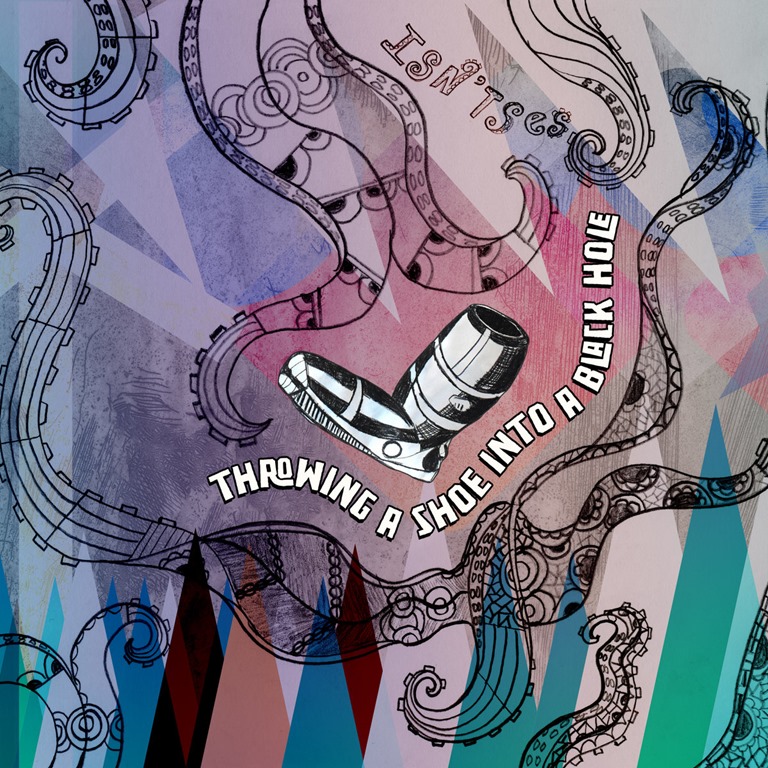
The notes which accompany this, their latest release in a prodigious and ever-expanding body of work, describe Throwing A Shoe Into A Black Hole as ‘raw and chaotic’, departing from noise alone to deliver a work where ‘a mix of complex beats, textures, unpredictable sounds and frenetic rhythms enter the music, at times with melody and screamy vocals as they push the boundaries of electronic music,’ and finally summarising it as ‘an intense mind-bending spacey journey of wild explosive emotion and sonic textures.’

It contains ten compositions – songs would be a hell of a stretch – the titles of which either seem purposefully incomplete and therefore impenetrable, or otherwise oblique, apart from those which include references to ‘rave’. There is certainly an abundance of heavy-duty pulsating electronic beats and whoops and cheers and yelps crop up with a certain frequency. But if this is to be considered in any way a ‘dance’ album, it’s in the context of late 70s and early 80s electronica – the warped groves and unsettling, detached vocals of Throbbing Gristle circa 20 Jazz Funk Greats, and Chris and Cosey’s Trance. The beats are industrial strength, but shudder and stutter, pulsing through fuzzed-out, distorted synth waves and an endless array of extraneous interjections. Demented shrieks and wailings rise though the thick atmosphere towards the end of the first track, ‘Sol Receiver’, and ‘I Spit on Your Rave’ only amplifies their commitment to melding propulsive beats and throbbing synths and melting them together with a sonic haze and disconcerting sense of psychopathy.

The majority of the pieces evoke a kind of derangement of the senses, repetition and disconcerting discord conjuring a trance-like evocation – but it’s dark and murky, and there’s a thick, squelchy analogue feel which contributes to a sound that feels more like the drug-induced hellish nightmare of a cult than spiritual transcendence. The thumping, clumping stomp or ‘Freekfall’ is nothing short of purgatorial, and you want to escape, but you find your limbs are leaden and limp, and you can’t move as you find yourself staring into a swirling vortex, even when you close your eyes. There is no escape.

‘Undo Fear Biases’ is an unadulterated seething miasma of heavy noise propelled by a palpating myocardial spasm of a beat, while ‘Free The Party’ is centred around an interview or some other monologue about the days of rave culture. In contrast, ‘I’m Not The’ is the soundtrack to the rave where the trip is bad, man. It’s like hearing The Prodigy and some shit shoegaze indie at the same time while your brain is exploding one lobe at a time and the fragments form small vortices as they cascade from your ears. Pleasant, it is not, and the same is true of ‘Do Or Die’, with its sonic allusions to ‘Discipline’ and ‘Whorl of Sound’, and which escalates to something akin to the detonation scenes in Threads. Total sonic annihilation, absolute obliteration. Sitting here with only a beer, my head is beginning to spin and my stomach is slowly starting to churn. This isn’t accidental: Isn’tses understand the impact of frequencies, and the way sounds interact.

Throwing A Shoe Into A Black Hole is by no means especially harsh as noise goes, but it is relentlessly, unyieldingly hellish in its conception and execution. It’s no criticism when I comment that this is hard work and a difficult album: it’s supposed to be. But why is the churning, shifting, reverberating discord of Throwing A Shoe Into A Black Hole more challenging than a screeding blast of continuous harsh noise? Everyone’s brain processes things differently, so I can only speak for myself when debating this, but it’s more often than not possible to allow waves of noise to wash over and flow across the mind, to go with the flow, as it were. Dance music is different in many ways, but by the same token, it’s easy to process a steady four-four beat, particularly when it’s the constant, consistent bass thump which defines the majority of dance music – it’s that beat, and that consistent tempo, which makes it music for dancing. You zone out the extranea, and focus on that core element. And that’s the common ground shared by dance and noise when it comes to how we process it – by zooming out and focusing on something within it. This isn’t possible with Throwing A Shoe Into A Black Hole. Everything about how each piece is assembled is built on continual disruption. There’s nothing to latch on to, there’s nothing consistent. Yes, there are rhythms, but they’re jarring, riven with irregularities, or what the brain will likely perceive as irregularities, and there’s so much else going on, disconnected and disjointed sounds flying in all directions, that any attempt to filter them out and focus is impossible.

Back in the late 70s, much of what Throbbing Gristle and Cabaret Voltaire were doing was inspired by the tape experiments of William S. Burroughs, and the proposed methods for psychic warfare using sonic weaponry as detailed in Electronic Revolution and The Revised Boy Scout Manual. There’s a palpable sense that with Throwing A Shoe Into A Black Hole, Isn’tses are returning to the origins of industrial music. And what’s remarkable is that even now, it’s absolutely devastating. Complete sensory overload. A derangement of the senses.

AA

a4029856349_10

With their album debut Nüwa Mends the Sky, UREDDA reveal themselves as musical alchemists who create pieces of utter beauty and a fascinating otherness, that appear to the listener as magic due to being at least one step ahead of their time. Their perfect amalgamation of elements from contemporary electronics, new wave, post-punk, krautrock, and drone among many other influences creates something excitingly new from some things old and beloved. Their sounds are born from experience as well as a deep understanding and mastery of their art.

The masterminds behind UREDDA have already left deep marks in circles of avant-garde music. Thighpaulsandra, previously a member of Coil and Spiritualized, has worked with Julian Cope among other influential acts – these include URUK, in which he was joined by Massimo Pupillo. Pupillo and Paolo Mongardi are probably best known as members of label mates Zu.

UREDDA sprang into being out of pure synchronicity – while those who believe in predetermination are welcome to view the meeting as glorious providence. Thighpaulsandra had travelled to Italy for a solo performance at a contemporary art museum while, at the same time, Massimo and Paolo were working at the studio of UREDDA guitarist Bruno to try out some new raw sketches. On a fateful whim, they invited Thighpaulsandra to join them. There was no prior blueprint, no rehearsal, and no intention of starting a band. Yet the sparks of creativity and inspiration were flying while music began to flow spontaneously.

The band name stems from the famous Italian ‘Caso Amicizia’ (‘Friendship Case’). This refers to alleged mass contacts between humans and extraterrestrial beings called W56 in the central Italian region of the Abruzzi between 1956 and the late 1970s. These aliens supposedly taught harmony and friendship. In this context, ‘Uredda’ was defined as the vital energy of love, friendship and wonder. This energy was not an abstract concept, but the literal fuel driving their advanced technology and the very core of their mission on Earth. “All I know is that a world on the precipice has a desperate need for beauty”, Massimo Pupillo states, discussing today’s single release. “Not a shallow and only cosmetic glamour, but real beauty – one that incorporates and transforms our deepest anxieties and fears. The diamond is born in the lotus, but the lotus is born from the mud.”

This philosophical approach ties UREDDA directly to an esoteric legend of early Krautrock, by mirroring the belief that musicians could collectively tap into a cosmic current and were able to communicate directly with their mixing desks, instruments and gear as living entities.

Ahead of the album, they’ve unveiled a video for ‘All He Knows’, which you can see here:

AA

unnamed-2-1

Photo: Sek