Archive for September, 2026

It’s a decent lineup and a pleasant evening. I’m down early doors and sitting with a pint of Vocation Heart & Soul listening to Slint and Drop Ninteens and Boris over the PA, and wondering where the fuck is everyone? It does seem to be a thing now, particularly at certain venues, where people will be outside the room until the band starts, and spend the time between acts outside, whether it be the bar or beer garden, as well. On a personal level, there are positives to this: it means I can make notes and sup in relative peace, and maintain a decent spot near the front, but it does seem a bit odd to see barely a handful of people around and a near-deserted bar, and with the number of people in the room barely touching double figures when the first act is due on, it feels like something’s amiss.

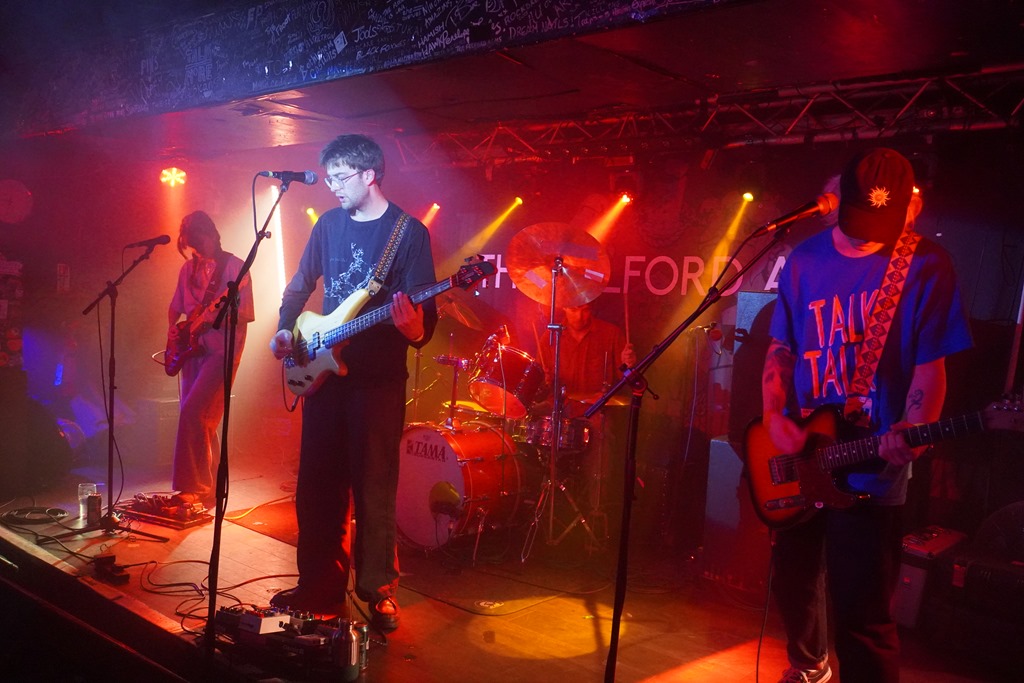
Still, Danny Barton’s a seasoned pro, and he’ll play to five people or five hundred without there being any difference in his performance. It seems like some time since he’s has been out as Wolf Solent, having been doing Sewage Farm stuff with Sam Forrest (Nine Black Alps) in recent months. They’re the kings of anti-promo, announcing the release of their new album by stating that they’re ‘deeply ashamed to announce that fuck it is our fifth and worst album yet. It’s out on 24 april as limited edition CD and all forms of digital garbage.’ For the record, Fuck It is brilliant. It’s still infinitely more promo than he gives Wolf Solent, and his solo work is a very different proposition from the roaring rock ‘n’ roll of Sewage Farm, which very much has all the hallmarks of a bedroom-based project – low-key, lo-fi slowcore with pedals, sequenced backing and drum machine. Switching his acoustic guitar for an electroacoustic 12-string, he conjures a swirling drone by way of a backdrop to his drawling vocals, delivered while hiding behind beard and hair.

DSC04766

Wolf Solent

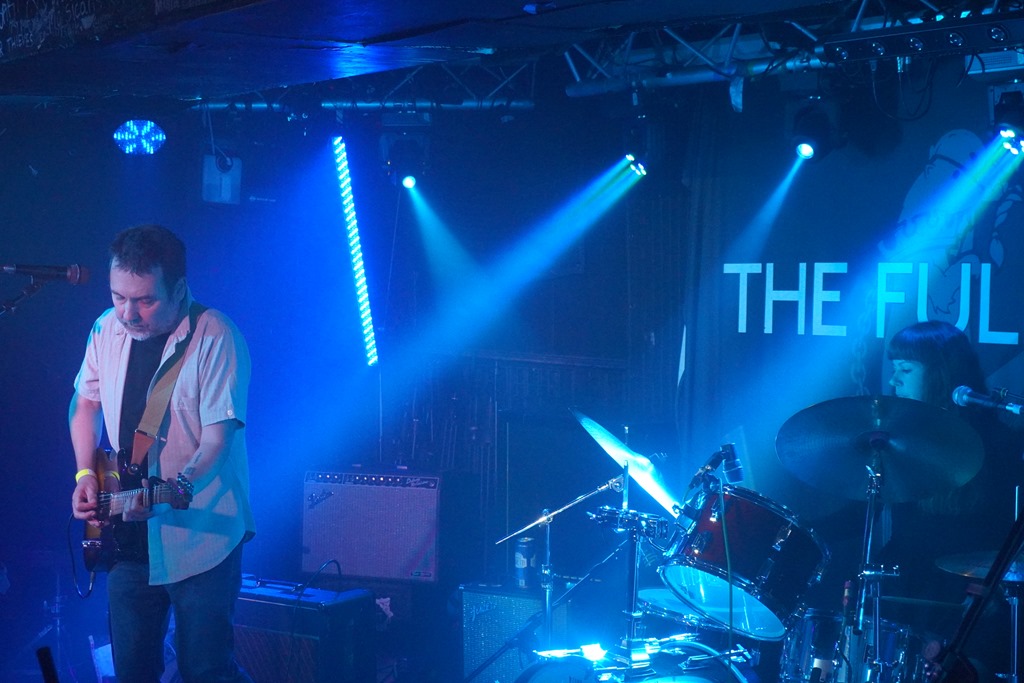
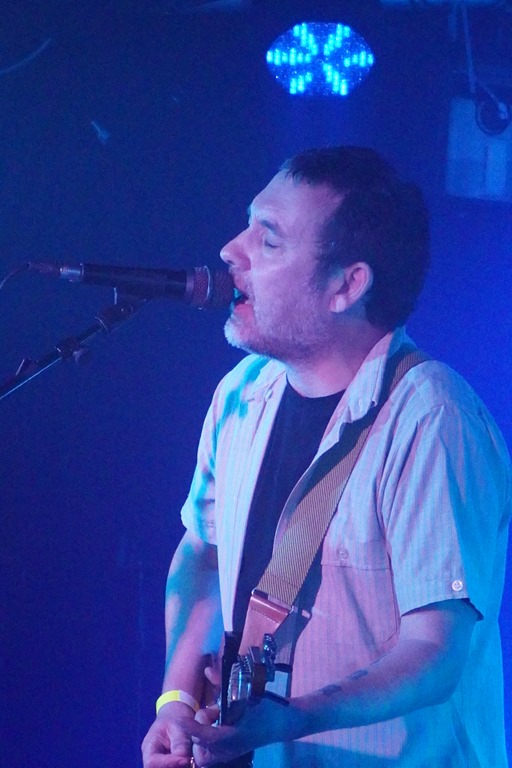
Speedreaders have often been represented by Dave Mudie performing solo on recent outings, meaning it’s been a while since I’ve caught a full-band set (my records indicate it was July last year, when they supported Needlework, and went on before Divorce Finance, who I’m still angry about. I know, I need to get over it, but fuck me. Anyway, Speedreaders. They’re consistent, they’re tight, they’re a quality act. There’s not much movement in terms of their set list, and no new material, but what they have is performed with assurance. They’re not a chatty band, and, on discovering Dave’s left his capo in the dressing room, there’s a protracted – and very quiet – pause. There’s considerable air between the notes during their slow, introspective, sad songs. They pick up the tempo for the final song, ‘Down Round’, which is a bit Wedding Present circa Bizarro, and ends abruptly and precisely on time.
DSC04800DSC04796

Speedreaders

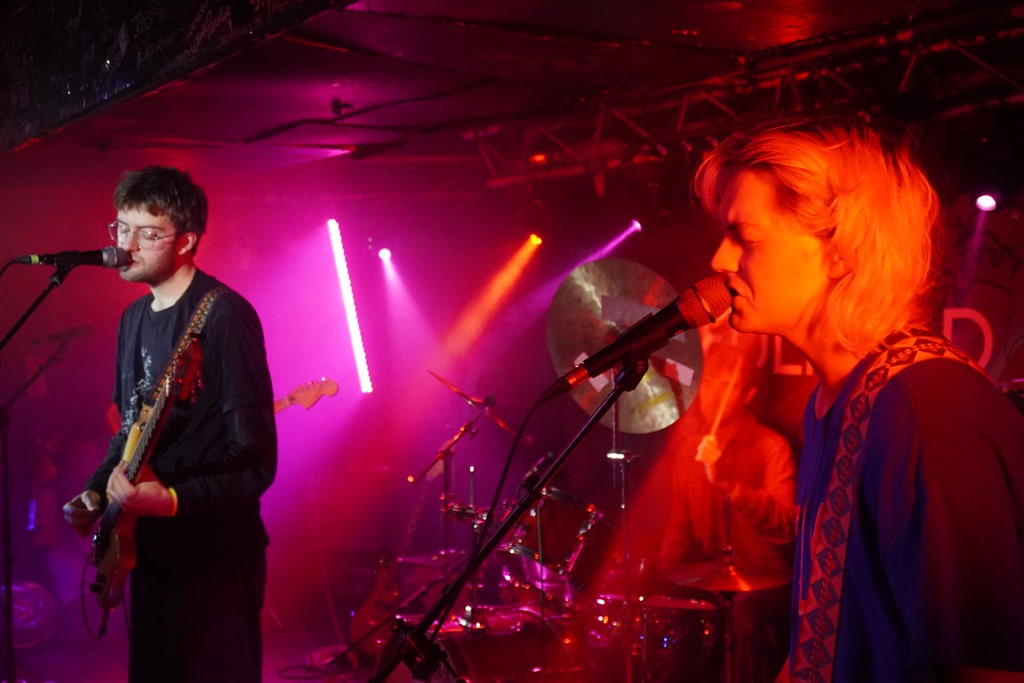
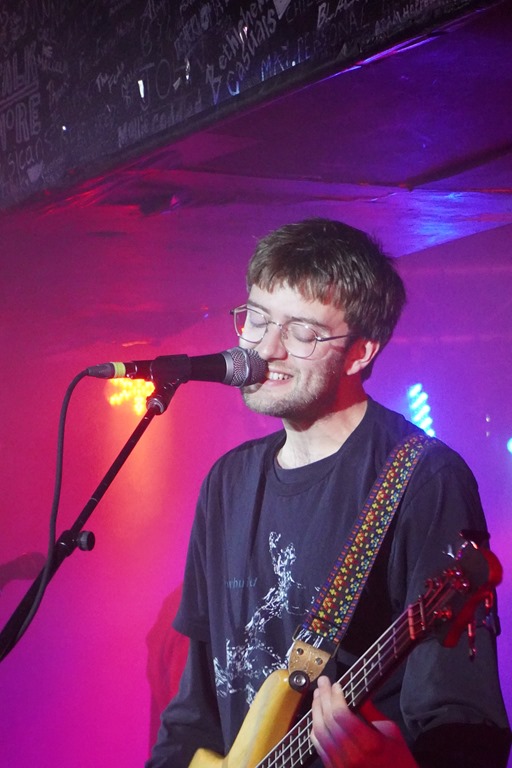
Brighton’s Glasshouse Red Spider Mite are making their first trip to York, and they don’t seem too distraught to be playing to around twenty-five people: quite the opposite, in fact. They seem pretty chuffed that there is an audience, and an enthusiastic and supportive one at that, and for those still present (it has thinned rather after the local supports), they turn in a solid and dynamic set, delivered with energy and enthusiasm. It starts with a cacophonous samplefest, and there’s dialogue and narrative about spiders / mites spun between almost every song.

The liberal use of samples is reminiscent of Maybeshewill, although Glasshouse Red Spider Mite have vocals. Their overall sound straddles post-rock and shoegaze. Tonight’s set presents a band which has evolved significantly since their debut EP, and this could not be rendered with greater clarity than when they delve back to play ‘Everyone Loves You’ from What Do You Mean The Monster?… Hahaha… released in May of last year, and the new song which follows, which is a driving 90s-flavoured blast of energy that hints and Ride and Loop.
DSC04847DSC04827DSC04807

Glasshouse Red Spider Mite

Comparing tonight’s performance with their recorded output to date suggests that Glasshouse Red Spider Mite are a band at a crossroads, and in the midst of a giant evolutionary leap. They sound absolutely fantastic, and seem like a band with a lot to give.

Time will tell, of course, but heading home in a heavy autumnal drizzle, it felt like this was one of those ‘I saw this band before they got big playing to barely any people’ moments. My mate always loves to tell me how we saw Editors at Fibbers in York play to three men and a dog before their debut album, and I saw The Young Gods play to barely more than that when touring Super Ready (and they were fucking incredible). Glasshouse Red Spider Mite have it all, and look and sound like they have the potential captivate a substantial crowd at The Brudenell. And if there’s any justice, in their next tour, they will.
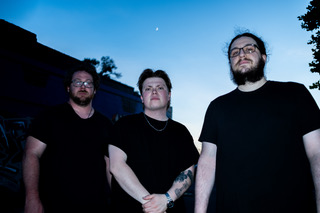
US-based rising instrumental progressive metallers, Sometime In February, are excited to release a brand new track titled ‘Nightlight’. Coming off the back of a string of Summer US live dates, the track is an exciting taste of what is to come. Check it here:

AA

Tristan Auman comments: “’Nightlight’ was written in a headspace similar to our 2024 single ‘Hiding Place.’ While in the trenches of writing our next record, we wanted to stretch our legs and write something free from the bounds of a bigger picture, and lean into styles that we may only dip our toes into. For this single, it was early-2010s era progressive metal/djent, something we appreciate but usually avoid when writing. In true SIF fashion, it also includes fun and upbeat highs, melodramatic lows, and singable hooks that might make you forget we’re an instrumental band.”

In 2023, the band introduced themselves with their first single under InsideOut, titled ‘Hiding Place’, which showcased their melodic approach. Now, with a full album of new material, Sometime in February presents 11 captivating tracks, from the fusion-metal opener ‘Palantir’ to the progressive complexity of ‘Outside In’ to the blues-infused, prog-metal closer ‘Funeral House.’

The trio’s connections extend into the progressive music world, featuring collaborations with Between the Buried and Me members Paul Waggoner and Dan Briggs. Tristan had been working for Waggoner in a local coffee shop. After getting to know Tristan, he went to see the band and was impressed by their live performance. He later invited Auman to fill in alongside Paul on BTBAM gigs. In return, Waggoner contributed to the track ‘The Bad Fight’ and appeared in the music video. “I had a part open for him on the song,” Auman recalls. "He sent over some ideas, and they were perfect, as expected."

Briggs added a unique touch, playing textural elements and additional instruments like mandolin, rather than bass. The BTBAM connection also extended to the album’s mixing, handled by engineer Jamie King, who previously worked with Scott’s former band, Trees on Mars. “Tristan knew right away he wanted to work with Jamie, and I was all for it,” Scott says. “Jamie was great in the studio with a positive vibe the whole time.”

To enhance the album’s sound design, the band brought in Eric Guenther, keyboardist for The Contortionist. “We discussed sound design, and The Contortionist was at the top of our list,” Morgan explains. “Eric was our first choice, and he was on board right away. He had seen Tristan on the BTBAM tour, and he elevated the entire project with his contributions.”

For Tristan, Where Mountains Hide represents a step forward, with an uplifting and optimistic feel. “For this album, I wanted the songs to stand alone more, instead of making everything flow together like typical prog albums. But in the end, it naturally felt cohesive. The album has a grand and fantastical vibe, and with instrumental music, it can be challenging to create a specific atmosphere, but that’s what I aimed for.”

AA

SIF

Photo: Eric Smeal

FKN KVLT REKORDS – 18th September 2026

The band describe their latest album, Super Rebound, as ‘is an action packed record with an unsound hero at the wheel. Wildly navigating through a landscape filled with leaden riffs, open harmonies, foghorns, and a dose of unadulterated joy and radiant bliss. Deranged, but sweet. Fuming with feels.’

This is only their third full-length album in their fifteen-year career, although they’ve maintained a steady flow of EPs, some of which have been on the longer side (their last release, HONESTY INTEGRITY FRIENDSHIP PASSION contained only four tracks, but due to the last one having a run time of twelve and a half minutes long, it spanned a full thirty minutes) – and they reckon this could be their definitive document, their magnum opus, the apogee of their riff-centric intent rendered concrete.

It’s certainly a big old guitar-driven racket, and it’s not without detail or humour, either. The first bars of the first song, ‘The Gums’, are kinda nicey-nicey, picked, melodic, a bit indie, a bit emo even, then all hell breaks loose with a thunderous slab of a riff and rabid vocals and I’ve no idea what the fuck they’re yelling about, but waaaauughh! It’s all good. Then there’s a rather Shellac-like mid-section where they persecute a single note for what feels like an eternity before going black metal in a blanket of fretwork and explosive percussion. It’s a lot to cram in to five minutes, but in keeping with the band’s name and general ethos, it’s chaotic and wildly unpredictable.

The punningly-titled ‘Prism Break’ melds driving repetition and the dingy riffery of early Melvins with something more fiery as they fire up all cylinders for a brutal sonic assault.

The three pieces with (quite self-explanatory) parenthetical titles are instrumental interludes where they lay down the guitars and explore very different territories. Consequently, after the meandering instrumental of [Horns Wailing], the sledgehammer sound of ‘Mountainesque 4’ his even harder by virtue of contrast. It’s six and a half minutes of unbridled raging racket, which hammers away relentlessly. The guitars are as dirty as they come and blur into the bass in a mess of overloading distortion, the barking vocals low in the mix… the midsection is, once again, a complete shift, venturing into almost neoprog territories, with swirling synths and pomp-filled bass runs. It borders on muso, but feels somewhat tongue-in-cheek – not quite parody prog, but the lilting, picked notes which play to the fade certainly mark a contrast. And then there’s the recent single, ‘Unsound Hero’, which tests the patience with the most protracted, strung-out intro, consisting initially of nothing but a crashing snare for the longest fifteen seconds imaginable, and then a clean guitar pulse enters the mix and… are they in time with one another? Something doesn’t seem quite right… Yes, of course it’s intentional. I’m momentarily reminded of The Melvins’ track ‘Mine is No Disgrace’ from The Crybaby, with JG Thirlwell – a sprawling eight-and-a-half minute behemoth that pushed the quite-loud dynamic thing to its absolute limit – because here, 30,000 Monkies drag that intro out, and out, teasing at when the levee will break and the riff will hit, exploring a melodic, proggy, Oceansize-like melodic drift… at two minutes and seven, there’s a pause. Silence. Nothing. Suspense. Two seconds is a long time when you’re teetering on the brink, when you’re hanging, waiting… But at two minutes and nine, BLAM! And that riff is low, grinding, and raw. The slow grinding notes ring long and resonate as they trudge into the domain of rib-crushing weight. Stripping it all away leaves the sound of a soul being torn apart and offers no solace – quite the opposite, in fact – before the devastating onslaught of the final minute.

AA

You might think these guys are fucking with you, and in a way, they probably are. The title track is nothing short of pure riffmania, nearly seven minutes of punishing, pulverising power that’s absolutely relentless, crushing, and again holding a single chord for what feels like an eternity in the final minute.

This is noise rock with the emphasis on the noise, the filthy overdrive and feedback cranked to the max, and any moments of respite are simply lulls and lures designed to amplify the impact of the most brutal, rib-cracking riffs when they land. The formula isn’t genius, or even new, but 30,000 Monkies know precisely how to utilise it for optimal impact. And ‘Swerver’ hits hard, alright.

The ringing layers of ambience which shape [Bells Ringing, Tale Melting] are a world apart from the rest of the album, and while the warping sounds which drag and drift aren’t entirely soothing, they’re on another plane from the fiery wall of guitars which dominate Super Rebound… until the final three minutes, when they pull out the most devastatingly crushing doom of the entire album. It feels like a trick, an ambush, and one we should have seen coming, because 30,000 Monkies just can’t help themselves. There has to be a bone-splintering, skull smashing riff at some point in every song. It’s just a question of when it lands.

Super Rebound is a work of genius, with 30,000 Monkies really delving into suspense and detail – but more than anything, it’s a riff-laden rager of an album.

AA

069301

Following the release of the new album from Brazilian duo DEAFKIDS, Cicatrizes Do Futuro (Scars of the Future), on Neurot Recordings earlier this year, they’re about to embark on a colossal tour of the EU and UK.

The nine-track album forges a path beyond the conventions and boundaries of static musical genres with early reviews calling it “utterly glorious” (Echoes and Dust), “tribalistic, guttural and utterly danceable” (NARC) and "on furious form as they blend glowering, glurping riffs and insanely danceable percussion" (Metal Hammer). In an Album Of The Week review The Quietus say, "Sonically, it’s both battlefield and zone of ecstatic, cathartic release" adding, “They remind us that these rhythmic patterns have evaded colonial regimentation through generations of diaspora… fir[es] forwards and back through music history while sounding like they’re mastering technology as well as breaking it.” The band declares, “This is probably our best material yet and we really hope you all enjoy it; play these songs loud and dance a lot!"

AA

A huge run of live shows throughout October and November have also been revealed today – dates and details below.

The band adds, "see you on the road. We want to play everywhere, and everyone is invited to come to our concerts. After 16 years, this is just the beginning, there’s much more to come. Much love from Brazil.” Tickets are available here via the Neurot website.

DEAFKIDS
CICATRIZES DO FUTURO TOUR
EU/UK AUTUMN 2026

10/02/2026 OUT.FEST – Barreiro, PT
10/03/2026 DINAAMO – Barroselas, PT
10/08/2026 Stapeltor – Duisburg, DE
10/09/2026 Soulcrusher Festival – Nijmegen, NL
10/12/2026 The Globe – Glossop, UK
10/13/2026 The Tin Music and Arts – Coventry, UK
10/15/2026 Coughtan’s Bar – Cork, IE
10/16/2026 Bello Bar – Dublin, IE
10/18/2026 Boom – Leeds, UK
10/19/2026 Strange Brew – Bristol, UK
10/20/2026 New Cross Inn – London, UK
10/21/2026 Klub9030 – Ghent, UK
10/23/2026 MS Stubnitz – Hamburg, DE
10/24/2026 Inkost – Malmo, SE
10/25/2026 Monument – Goteborg, SE
10/27/2026 Råhuset – Copenhagen, DK
10/28/2026 NeueZukunft – Berlin, DE
10/30/2026 Circolo Gagarin – Busto Arsizio, IT
10/31/2026 Rote Fabrik – Zurich, CH 
11/01/2026 Cave12 – Geneva, CH
11/02/2026 La Poudriere – Belfort, FR w/ Eyehategod 
11/03/2026 Schungfabrik – Luxembourg, LU w/ Eyehategod
11/04/2026 Glazart – Paris, FR w/ Eyehategod
11/05/2026 Magasin 4 – Brussels, BE
11/06/2026 Le Guess Who? – Utrecht, NL

AA

DEAFKIDS_2026_H_01_CROPPED_CREDIT_IVIMAIGABUGRIMEN-99079e079e04513c

Photo: Ivi Maiga Bugrimenko

This Friday sees the release of Year of the Horse, the Ipecac debut from exciting new signings Cor de Lux, which very much gets the Aural Aggravation vote.

Across nine songs, the Kill Devil Hills quartet balances post-hardcore urgency, shoegaze bliss, and guitar-driven catharsis. Recorded and produced by J. Robbins (War on Women, Mary Timony), Year of the Horse preserves the raw chemistry that defines the band while pushing their songwriting into sharper, more immediate territory.

‘Blind Smile’, the track described by Loud Women as “bright, melodic and eccentric” now has a music video. About the video, Dawn says, “The video is about someone stuck in a world of complacency. It’s her journey to break free and show color to the world around her. Much like the meaning of the song it’s about being your true self.”

“The blind man smile, the deaf laugh for all to hear, to be so brave, you can’t hear anyone.”

Watch the video here:

AA

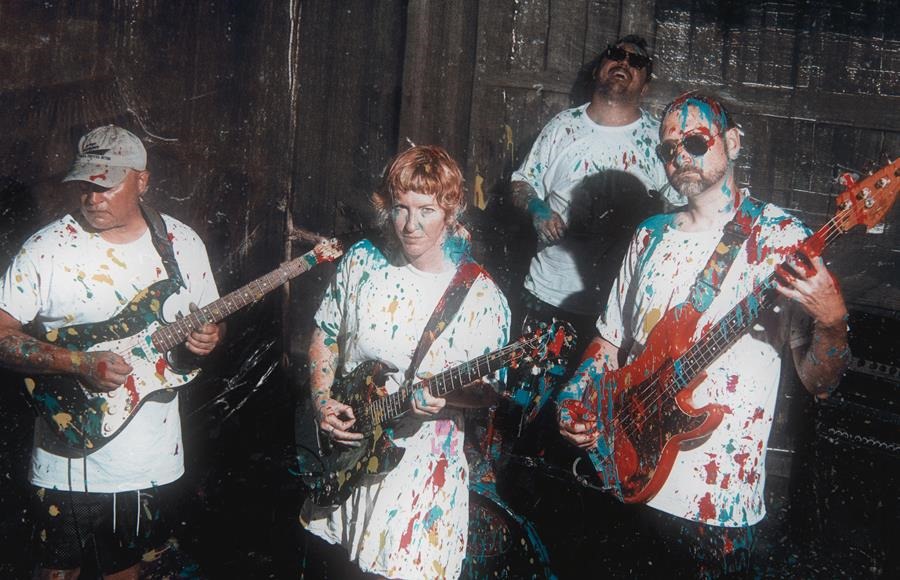
CordeLuxPaint-creditBoboGrunwald-990000079e04513c

Photo: Bobo Grunwald

Metropolis Records – 11th September 2026

Christopher Nosnibor

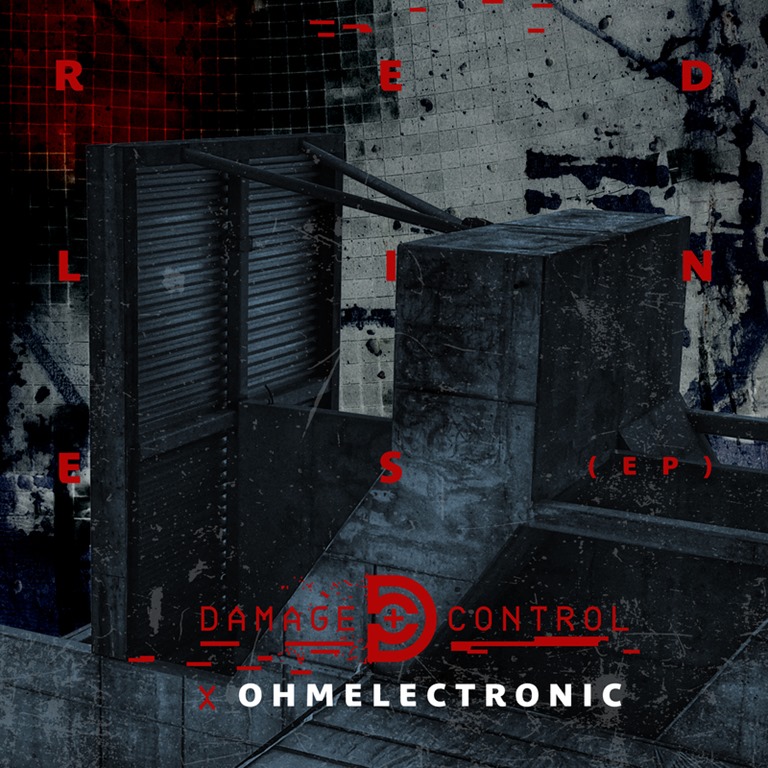
Red Lines, the new EP from international electro-industrial group Damage Control – centred around a core quartet of Bill Barsby, Richard Thacker and Alex Wise (all based in Australia), plus Markus App from Germany – and finds them in collaboration with the Canadian duo OHMelectronic.

“‘Red Lines’ is about psychological warfare, the endless cycle of human conflict and the hunger for power that lies in the hearts of men,” says Huxtable of the EP title track. “While the lyrics were inspired by the Russian invasion of Ukraine, the same themes haunt America and it’s global conflicts. As tyranny and the fog of war repeats itself through every age, so too does the hope that we learn from our mistakes.”

I only wish I had that same hope, could share that optimism: the trouble is, we never do seem to learn from our mistakes. One might have thought that we – as a species – would have learned from the outcomes of two worlds wars, the second of which involved genocide and nuclear annihilation. Yet somehow, we’re in a place where to suggest that there’s a genocide taking place in Gaza is controversial, and we have world leaders who are so unpredictable that in recent months, I’ve taken to checking news sites on my phone on waking at 5am to make sure the world hasn’t ended. But then, it’s not just world leaders who seem perilously close to the button – because despite myriad dystopian sci-fi works detailing how AI will destroy us, those who run the multi-billion dollar corporations developing it are more interested in next year’s profits than the future of humanity. I say humanity, but something has changed in recent years. A trigger has flipped. Where is the humanity?

Russia had seemingly been biding their time during the pandemic, and pounced on Ukraine the moment restrictions were lifted. But the whole world changed during the pandemic: people emerged from restrictions fired up and angry. The mask – and the gloves – were off. The evidence was plain to see: people were suddenly ok driving aggressively, yelling at random strangers in the street, and being openly racist. Politics turned a new shade of ugly, and while America leads the way there, the rest of the world isn’t far behind, and war is all around us and escalating by the week, to the point that much conflict around the globe goes unreported in Western media. Even the ongoing conflicts in Ukraine, Gaza, Iran, have seemingly faded into the background in much of the news media, giving the impression that it’s mundane and life goes on. What the actual fuck happened? Is this really where we are, who we are?

Before we arrive at ‘Red Lines’, the EP’s lead – and title- track, the percussion-driven ‘Manifesto’ pounds in, and thunders and pumps hard under a thick sonic haze. It’s a quintessential techno-electro / industrial cut, which reaches back to the late 80s and early 90s Wax Trax! catalogue for references.

The title track is tight and oppressive, quiet, queasy, dense, grinding bass with serrated edges, and thudding beats are welded together as the backdrop to minimal synths wavering cautiously. The vocal is understated, monotone, but breathy, while reeling off a list of horrors. By the end, the sensation is suffocation, and there is no room, and no air, to breathe. It’s not only Damage Control at their absolute best, but one of the most gripping tracks in the genre in a while. It’s the claustrophobic intensity that makes it.

‘Modernity’ is tense and dense, a pumping hard-edge disco groove, and a snarling response to the to the dark and difficult word in which we find ourselves. It marks a fitting close to a powerful document of these difficult and alienating times.

AA

440008

Adelaide sludge merchants Sundowner are back, and things haven’t gotten any prettier.

Three years after Lysergic Ritual dragged listeners through a feedback-soaked wasteland of nihilism and decay, the Australian quartet have announced their third full-length, Cesspool, due out October 15 via Melbourne’s Disdain Records.

The band are offering the first taste of the album with ‘Intoxication Blues’, a filthy, swaggering slab of NOLA-inspired sludge accompanied by a brand-new visualizer.

Built around poisoned blues riffs, suffocating grooves, walls of feedback and a thick layer of distortion, ‘Intoxication Blues’ provides an appropriately nasty introduction to an album designed to soundtrack a world going up in flames.

AA

Cesspool sees Sundowner take the caustic, slow-burning sludge that has defined them since their 2021 debut Guns, Knives and Tyre Irons and push it into even more punishing territory across ten new tracks.

The band explain: “Cesspool continues on with our brand of sludge, further melding influences from the classic ’90s pioneers of the genre through our own lens out of Adelaide, South Australia.”

For Sundowner, that lineage has always been clear. The poisoned blues of Eyehategod, the ugliness of Iron Monkey and Buzzov-en, and the smoke-filled grooves of Weedeater remain embedded in their DNA. But Cesspool isn’t interested in simply recreating the past. Instead, those influences are fed through Sundowner’s own distinctly Australian strain of hostility.

The album also sees Sundowner reunite with the production team behind Lysergic Ritual. After handling virtually everything themselves during the band’s early years, Sundowner brought Jason Fuller of Goatsound Studios into the fold to mix their second album, with Dav Byrne of Iridium Audio handling mastering.

“We went with the same production team as our last album, but pushed everything further for a more punishing and abrasive sound,” says the band.

Across its ten tracks, Cesspool doubles down on everything Sundowner do best: filthy blues, crushing grooves, abrasive riffs and pure sludge-soaked hostility. It’s heavier, nastier and more punishing, without straying from the band’s uncompromising roots.

60fab216-f0b2-9e05-87ad-48f1dbc9ae75

Room40 – 7th August 2026

Christopher Nosnibor

Three years on from Lasped Gasps, their collaboration with Jon Mueller, experimental duo Push For Night, consisting of Oliver Chapoy and James Elliott, decided they needed to take a slightly different approach and pull back on the intensity a tad and allow some hints of light into the darkness for the follow-up.

They write in the accompanying notes – as if offering reassurance to anyone who may be concerned that this means that their new album is some kind of breezy pop fun – that That Porous Line ‘is absolutely a collaged, flickering, chaotic, electro-acoustic record. The project is the project after all. Although our tomb-room isn’t fully hermetic (what is?), I think it is a place PFN will always reside. A total escape outside into harshly lit reality without mystery is fairly unappealing, for us anyway. Inside is personal, guarded from too much light; a dark terrarium of weird ghosts and peculiar shadows ripe for conjuring and harnessing in order to make them kick and howl in a way pleasing to us. Or at least be near enough to them to try and hear what they sing. That’s the motive. We decorate the cave, invite the specters to reveal a message, and try to capture something. Inside, cocooned in the semi-dark of our uncommon space, we bang our heads against the act of interpreting these shifty, chimeric, hidden sonic shadows. How big is it in here? How much further down can we go? Did something move in that corner over there? Can it touch us? Can we catch it? That’s where the fear is. That’s where the fun happens. That’s why we listen. That’s why we play.’

Compared to Lasped Gasps, pretty much anything would be lighter and less tense. But the first composition, the nine-and-three quarter-minute ‘A Good Hosing Down’ immediately makes clear the difference, opening with some scratchy strings and chiming notes which ring through a soft static and ambient mist. There’s no real sense of danger or threat here, and you don’t immediately feel as if you’re suffocating. But around seven minutes in, the atmosphere does change, and shit does get weird. Warped, spongy electronics rub against one another as they twist and turn in unpredictable directions.

The underlying structure of ‘Fang Vendor’ is a low, slow beat and swampy bass that’s almost a desert rock reimagining of Suicide, but over these are strains of retro-futurist space-age synths and random glitches and all kinds of sonic incursions that disrupt the flow.

At the centre of the album stand a brace of monolithic works: ‘It’s Sure To Be Dark If You Shut Your Eyes’ and ‘Idler’s Reward’ both pass the eight-minute mark, and place the collage nature of their approach to the fore. On the former, fragments of processed, glitched-out vocal samples and random snippets intersect with a piano motif which fades in and out while flickering beats flit around subtly in the distance, by no means driving or propelling the piece forward, instead adding further distraction to a palette already overloaded and blending to indistinction. Heavy drones, elongated organ sounds, ominous rumbles, and electronic explosions fizz and spark all over. Cymbals crash and tension builds. The latter provides some respite, with a slow, gradual glimmering change of hue accompanied by a sparse pulsation. I start to envisage the deep sea, the gentle, fluid movements of jellyfish… but then there’s a corrupted proggy synth break that utilises an awful farting synth sax sound or something, and further on, there’s some trilling jazz-infused woodwind. No two ways about it: That Porous Line explores experimentalism to the max. Asserting that the duo apply the collaging of materials indiscriminately may sound like a harsh criticism, but I make the observation more in the context of William S. Burroughs’ cut-ups, which brought collage to the page, and, shortly after, audio works, with the intention of creating art which was closer to life, and the way we experience an array of sensory inputs simultaneously. That Porous Line may be a fair bit smoother in its application of the methodological principles than early adopters of sound collaging – from John Cage to Throbbing Gristle and Cabaret Voltaire, but ultimately, this is about applying a technique established a long time ago in art to other media, specifically sound. And the aim is to be disorientating, to overlay fragments to achieve a certain effect.

‘Bait is Lowered’ is a dark, rippling wash of unsettling layers of sound, creeping, thrumming, before sputtering beats burst amidst a wail of siren-like sounds and everything dissolves into a panic-infused morass of sound. In many ways, it’s low-key: there are no brain-shredding walls of white noise here, but nothing about it is right, nothing about it is easy, comfortable.

That Porous Line isn’t one of those albums where you find yourself praying for it to finish, and it doesn’t suck the life out of you – but it’s no party, either. Culminating in the wall of static wash that is the final minute of ‘Turned Slowly and Slowly Turned’, and the somewhat proggy, somewhat Krautrock, somewhat ambient title track which draws the curtain remarkably gently. It’s a journey, and no mistake.

AA

a3365526305_10Push For Night

Belgium’s most unpredictable noise-rock troublemakers 30,000 Monkies have premiered their new single .Unsound Hero’.

Taken from the band’s forthcoming album Super Rebound, due September 18 via Fvn Kvlt Records, ‘Unsound Hero’ trades instant impact for a six-minute descent into tension, melancholy and crushing sludge.

AA

The band explains: “‘Unsound Hero’ is about almost wandering off to the dark side when hostile forces keep pushing all the wrong buttons. Unlike a lot of other tracks on the album, this one starts with a slow-burning intro. We had fun layering some deep melodic vocals with uncanny, autotuned choirs, trying to increase the tension with every added layer.”
But restraint was never going to last forever.

“Eventually, of course, we wanted to put the hammer down—BAM! After this, the hero drifts completely off the map, left with nothing but two clean guitars, screaming into an empty space. But then all of a sudden—BAM!—another hammer, arriving unexpectedly, used by our hero to flatten everything in his path once and for all: a reluctant but absolute obliteration for anyone who left him no choice.”

For more than a decade, 30,000 Monkies have occupied a unique place within the European underground. Emerging from the Belgian noise-rock scene, the band built their reputation through a string of increasingly adventurous releases that balanced cathartic chaos with an unmistakable sense of fun. From the dizzying riff storms of Somewhere Over The Painbow to the wild experimentation of I Ate Myself To Grow Twice As Big and HONESTY INTEGRITY FRIENDSHIP PASSION, the band have consistently followed their own path.
With Super Rebound, they may have finally arrived at the destination they have been chasing all along.

AA

598062be-dfa8-51db-1fc8-995cc5793db3

Everest Records – 25th September 2026

Christopher Nosnibor

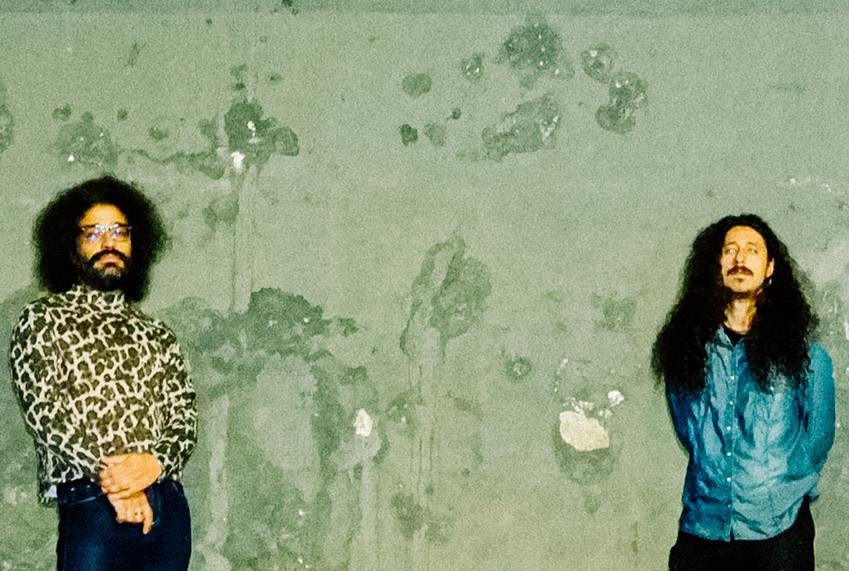
What we effectively have here is a pair of EPs from Swiss avant-garde act KiKu, led by trumpeter and composer Yannick Barman and drummer and percussionist Cyril Regamey, each one a collaboration – but rather than rendering them separate works, what we get is an album of two distinct halves, conceived, we’re told, as a diptych: ‘two distinct bodies of work held together by a shared musical architecture’, where, ‘on one side, Blixa Bargeld moves through language with precision, restraint and abrasion. On the other, Black Cracker turns language into rhythm, pressure and momentum. Between them, KiKu constructs a dense, unstable framework of trumpet, drums, sampler and electronics’. The result is something akin to a split album, on which the two sides of KiKu are as much a defining feature as their collaborators.

The first of the four works with Bargeld, ‘Orlando’s Victory,’ slides in with some retro-vibing electropop which isn’t a million miles away from late-career Leonard Cohen. Simmering synths strike some dramatic shapes and brooding tones atop a slightly shuffling, trip-hop infused beat. ‘The Number of the Millibeast’ is a slice of dark storytelling, a minimal, almost folky instrumental provides the backing for a half-sung, half spoken narrative, delivered with a theatrical flourish, before ‘Suzhou XX XY YX YY’ continues in the same sonic vein, while the lyrics become more abstract. The instrumentation becomes ever sparser and the lyrical cohesion crumbles with each successive piece, culminating in the flickering pulse and gasping weirdness of ‘Nonsense Rock ‘n’ Roll’, which seems to be a moan about some people playing music in the street in the night which rapidly escalates in divergent directions. The atmosphere is that of late-night, downtown, smoke and rough liquor, Bargeld adopting a persona that’s a bit Tom Waits, a bit Charles Bukowski, but which comes across with a hint of grizzled old man, chewed up and ground down by life, veering erratically between raconteur and curmudgeonly malcontent. ‘Do I like the music? No! Nonsense!”

While it’s Regamey’s percussion which sits to the fore on the Bargeld cuts, it’s Barman’s brass which takes the lead on ‘Bull Whip’, the first of four ‘bull’- themed tracks with Black Cracker. ‘So much road rage / so much road kill’, Black Cracker reflects. His delivery here is soulful yet sad, and the trip-hop vibe of ‘Suzhou’ makes a subtle but distinct switch to hip-hop on ‘It’s All The Rage’. ‘Leaping Bull (Chicago)’ is different again, and something deep within the song – the way the mournful trumpet which echoes out over stuttering beats, and Black Cracker’s grizzled, world-weary vocal, vaguely reminiscent in its patina to Mark Lanegan – tugs at half-forgotten emotions and a sense of memories of the past, hazed by time. And then, halfway through, it switches to a dense, droning slab of dark hip-hop, tense and twitching with angst. Coming out of nowhere, it hits hard, but paves the way for ‘The Running of the Bulls’, where bleak instrumentation and soulful but anguished vocals combine to convey a sense of conflict between the interior and the exterior. ‘Sleeping Bull’ notably is subtitled ‘Woke’ in parenthesis, and its lyrical and sonic latticework makes for a compelling combination while reminding us where the term ‘woke’ actually came from. It’s absurd to think that it’s been adopted as a pejorative term, predominantly by white, right-wing wanksacks. It’s high time to reclaim it, and to not only be woke, but woke and proud.

Decidedly more downtempo and downbeat than ‘Suzhou’, ‘It’s All The Rage’ feels less driven by anger or rage than it conveys an aching sadness, the kind that permeates the body to the core, and makes the limbs and the very heart weigh heavy. As a whole, Suzhou / It’s All The Rage is very much an album of two halves, precisely as intended. And as contrasting as the two sides are, they do, most definitely compliment one another, and, perhaps more importantly, they tap different triggers for response. It’s a multifaceted work, and most certainly an album to chew on.

AA

kiku-portraits-square